
Home / Extra Strong / Pablo Exclusive Strawberry Kiwi Nicotine Pouches
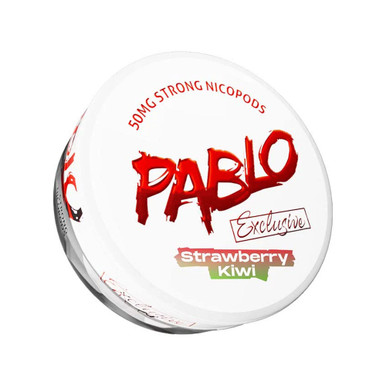
Pablo · 50mg
Read the full guide
Pablo Exclusive Strawberry Kiwi Nicotine Pouches
£3.85
✔ In stock — ready to ship
100% tobacco-free
Free over £20
Same-day dispatch
Secure checkout
Pablo Exclusive Strawberry Kiwi Nicotine Pouches are listed at £3.85 with one declared strength, 50mg. One variant, one product image, and the availability flag read in stock when this description was written. That flag updates on the listing and this paragraph does not, so take the listing's word over ours.
This can carries more shelf tags than most — five of them. It appears on the Pablo brand page alongside fifty-five other listings from the same house. Its declared figure files it on the Extra Strong band, ninety-eight listings deep. On flavour it is triple-tagged: the Berry shelf at seventy-six, the Strawberry shelf at nineteen, and the Tropical shelf at fifty-eight.
The full guide to Pablo Exclusive Strawberry Kiwi Nicotine Pouches
4,964 words on how it eats, who it suits, how to serve it and what to put beside it.
Pablo Exclusive Strawberry Kiwi on our shelf
That third flavour tag deserves a comment straight away, because it is the loosest fit on the page. Kiwi is filed under tropical on this site. It is a stretch and we know it — kiwi is not a mango, not a pineapple, not a passion fruit, and it does not behave like any of them in a flavouring. It has ended up on our tropical shelf because there is nowhere better for it to go, and a shopper browsing those fifty-eight listings expecting a family resemblance will not find one here. The tagging is a filing decision, not a description.
The cans-per-pack field on our record for this listing is empty. We do not fill that kind of gap with a plausible number. £3.85 is the price attached to the listing as displayed, and the listing page is where to read what it covers. The same goes for how many portions a can holds — that count is printed by the manufacturer and we do not hold a copy of it.
What kiwi does to the strawberry
Nineteen strawberry listings sit on our shelves, so what matters about any of them is the second ingredient. Here it is kiwi, and kiwi is one of the more interventionist partners a strawberry can be given.
Left alone, a strawberry flavouring drifts towards jam. It goes round and thick and sweet, loses its edges and starts to read as cooked rather than picked. Kiwi stops that happening. Kiwi is acidic in a plain, direct way — not the citric snap of a lemon and not the dark tartness of a blackcurrant, but a steady sourness with a green vegetal quality running underneath it. There is also a faint astringency at the back of it, the slightly rough, mouth-drying edge you get from the real fruit when it is a touch underripe. That astringency is the part that does the actual work, because it cuts through the strawberry's sweetness rather than sitting beside it.
The practical result is a strawberry that reads as fresher than it would alone. Not literally fresher, but pitched in the register of fruit picked rather than fruit cooked. The sweetness is still the largest thing in the can, but it is held in check the whole way through instead of expanding as the portion goes on. That is an unusual arc for a fruit pouch and it is the main thing to know about this one.
The aroma is the giveaway. Open the can and there is a green note over the top of the fruit — grassy is too strong a word, but it is in that direction, and it is completely absent from a plain strawberry can. Underneath, the strawberry smells brighter and thinner than a jammy one would. Nothing about the smell is creamy or dessert-like.
Kiwi as a flavouring also has a quirk worth naming: it is not very loud. It does not announce itself the way a citrus or a mint does, and on a first portion some people simply register a slightly sour strawberry without identifying the second fruit at all. It becomes more obvious across a can than within a single pouch. If you try one and think the kiwi is missing, it is worth giving the can a fair run before deciding.
Across the life of a portion the two fruits trade places. The strawberry leads the opening — it is the louder of the two and the easier to name — and for the first stretch this could be mistaken for a straightforward red fruit can. The kiwi builds behind it, and by the middle of the portion the green sourness is the more prominent of the two. Towards the end, when the sweetness has thinned, what remains is largely the astringent edge, which is drier than most fruit pouches finish. That reversal is the reason two people can describe this can quite differently depending on how long they kept the portion in, and it is worth knowing before you conclude that the kiwi is or is not there.
On our own tags, honestly. Berry, strawberry and tropical. Two of those three are accurate and the third, as covered above, is a filing compromise. Nothing in our data records the astringency, the green note or the sourness, which are the three things that actually distinguish this can from the rest of the strawberry shelf. Our filters will get you to the right neighbourhood and no further. That is what prose on a product page is for.
Pairing this across the range: what to keep alongside it
This is the section most worth your time, because almost nobody runs one flavour indefinitely and the decision people actually get wrong is not which can to buy but which two or three to keep in rotation. A rotation of three near-identical fruits is not a rotation; it is one flavour with three labels on it.
The obvious pairing: something with no fruit in it at all
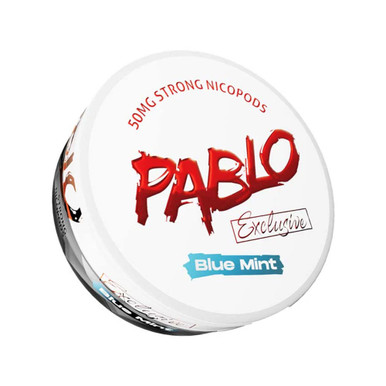
If this can is your fruit choice, the most useful second can is the one that does not compete with it. Within the same house and at the same £3.85, Pablo Exclusive Blue Mint is in stock and is the clean counterweight — cooling with no fruit sweetness carrying it, which is about as far from a sour green-and-red fruit as the Exclusive line goes. Two cans like that will each keep tasting like themselves for a great deal longer than two fruit cans will.
The near-pairing: the same idea done by other houses
Strawberry and green fruit is a recognised combination and three other listings on our shelves attempt it. XQS Strawberry Kiwi at £39.90 is in stock and is the direct like-for-like by name. Iceberg Kiwi Strawberry, also £39.90, puts the kiwi first in the name — though it is currently out of stock, so that page is one to look at rather than buy from today. And Edge Strawberry at £14.95 is the plain-fruit reference point against which the pairing makes sense, except that it too is not currently available.
Both of those unavailable pages are still worth reading if you are trying to understand the shelf, but neither will get you a can this week. On the price gap: £3.85 against £39.90 is not a quality judgement, it is a difference in how the listings are configured, and our record for this page holds their prices without recording what sits behind them. Open each listing before treating those numbers as comparable.
The contrast pairing: the same fruit treated differently
If you want to stay with strawberry but hear it said another way, Denssi Strawberry Freeze at £39.90 and in stock replaces the green sourness with a cooling note, which is a completely different method of stopping a strawberry going jammy. Velo Strawberry Ice at £4.19 and in stock does something in the same family at a price much closer to this one, and is the only listing on this page whose price is genuinely in the same bracket as £3.85. Fumi Strawberry at £27.90, in stock, and 77 Strawberry at £39.90, also in stock, are two further houses' readings of the fruit. Killa Exclusive Strawberry Watermelon at £33.50 and in stock pairs it with a watery fruit instead of a sharp one, which softens and lengthens the strawberry rather than cutting it.
The clean break: a different fruit family entirely
For a rotation that actually resets the palate, leave the strawberry shelf. Cuba Black Apple Juice at £39.90 and in stock is a pale, crisp fruit rather than a red one. Clew Blueberry, also £39.90 and available, goes dark and jammy — the exact register this can is built to avoid, which is what makes it a good foil. And the Cuba shelf as a whole is a reasonable place to wander if you want to see a single house's approach across several fruits at once.
Pairing across price brackets rather than across flavours
There is a second axis to a rotation that gets very little attention, and it is price configuration. Every can named in this section other than the Pablo siblings is listed at a different sort of number from £3.85 — £4.19, £14.95, £27.90, £33.50 and £39.90 all appear. Those are not five grades of quality. They are listings put together differently, and our record for this page stores their price without storing what the price covers. It is entirely reasonable to keep one inexpensive single-tin listing and one of the larger-priced configurations in rotation for different purposes, but that is a decision you can only make sensibly after opening each listing and reading what is actually being sold. We would rather say that twice than have anyone treat £3.85 and £39.90 as a like-for-like comparison on the strength of a product description.
How many to keep
Two or three is what most people settle on, and the useful rule is that they should differ on more than the fruit — one fruit can, one cooled can, one with no fruit at all is a rotation that stays interesting. We are describing what people do, not telling anyone what to do or how much to consume, and nothing in this section should be read as encouragement to buy or use more than you already would.
The format in practice
The portion is a small dry rectangle, soft, with rounded ends. It goes under the upper lip and sits there unheld. There is no device and nothing to charge; the can and the portion are the entire object.
Most people find a spot slightly off-centre at the front rather than dead centre, and most people fidget with it for the first day and then stop noticing. It moves a little when you talk and gets pushed back with the tongue automatically. None of that is technique, it is just habit forming.
A new tin behaves slightly differently from an opened one. The seal is tighter on the first opening and the lid needs a firmer twist; the portions are packed closely enough that the first one usually has to be lifted with a fingernail rather than pinched out. After that the stack loosens. The portions themselves are uniform, soft and distinctly dry to the fingers — they do not stick to each other, they leave nothing on your hand, and that dryness is the defining physical property of this style of pouch and the reason a tin of them is practical to carry at all.
How long a portion stays in is personal and we do not publish a figure for it. What we can say descriptively is that this particular flavour has a longer useful life than a sweeter can does, because the sourness does not fade as quickly as a sugar-led note and the green edge is still detectable when a jammier can would have flattened out. People tend to keep a sour can in a little longer for that reason. That is an observation about flavour duration, not a recommendation about use.
The used portion goes into the catch compartment in the lid — twist the top plate, drop it in, close it. From there it goes into general waste. Not a sink, not a toilet, not out of a window, and never left loose on a table or a car seat where a child or an animal might get to it. The compartment is the reason the format works away from a bin, and emptying it when you open a fresh can is the habit that keeps the tin pleasant to use.
Fifty milligrams, as a printed figure
The can states 50mg. We record that string exactly as given, and we use it to decide which strength shelf the listing goes on. That is the sum total of our involvement with the number.
We do not hold what the figure is measured against. Our record has no unit basis stored alongside it, and makers state these things differently, so the can's own wording is the authoritative version and the place to read it. We are not going to supply a unit we have not been given.
Nor will we interpret it. We cannot advise which strength suits any individual, and nothing on this page is a recommendation to buy a particular figure. We do not know who is reading and we have no basis on which to give that kind of steer, so we do not give it in any form, including by implication.
It should also be said flatly that the number is not a score. A higher declared figure does not make a can better, more advanced or more worth having, and there is no progression here that anyone is supposed to be working through. We stock the Medium Strength shelf and the Strong shelf alongside the extra strong one, and those are not junior shelves — between them they hold a very large share of the catalogue. The extra strong grouping that this can sits on contains ninety-eight listings and a real spread of printed numbers, so two cans on the same band are not necessarily stating the same thing.
Carrying it, and whose rules apply where
This angle needs handling carefully, because it is the one where product copy most often drifts into telling people something a shop has no business telling them. So: the physical facts first, then the part that is not ours.
What the format is actually like to carry
The tin is small, rigid and pocketable. It survives being sat on, does not deform under a laptop in a bag, and has no loose parts. It needs no accessories — no case, no charger, no spare anything — so carrying it is a single-object decision rather than a kit decision. That is the practical difference people notice most when they first carry one.
In use it is a quiet format. Nothing is switched on, nothing is held, and nothing is put down on a surface mid-use. The aroma is mostly a can-open event rather than a continuous one. A portion in place is not visible to anyone who is not looking for it, though it is not invisible either — it sits under the lip and there is a slight shape to it if someone is paying attention.
The can itself is the less discreet half. It is brightly printed, it is obviously a product tin, and it does not pass for anything else on a desk or a table. People who care about that keep it in a pocket rather than out.
Where it may and may not be used is not our call
Here is the part that matters. We do not tell anyone where they may use a nicotine product, and we will not. That is not modesty — it is that the rules are set by other people and they differ from place to place.
Venues set their own house rules. Employers set their own workplace policies, and those vary widely between organisations and sometimes between sites of the same organisation. Transport operators set conditions of carriage, and airlines in particular have their own requirements about what may be carried and where. Landlords, schools, hospitals and licensed premises all set conditions of their own. None of those rules are written by us, none of them are consistent with each other, and it would be irresponsible of a shop to summarise them as though they were.
The correct place to find out is the organisation whose rules they are. Ask your employer about your workplace. Check the operator before you travel. Look at the venue's own stated policy. If you are going somewhere and you are not certain, the answer exists and it is published by them, not by us. What we can tell you is what is in the tin and what it costs; what we cannot tell you is where you are permitted to have it.
It is worth adding that none of the carrying characteristics above are being offered as an advantage or a reason to buy. They are simply what the object is like: small, rigid, self-contained, unremarkable in a pocket. A tin is a tin. We describe it because a shopper reasonably wants to know what they will be carrying around, not because there is a case being made for it, and there is nothing about any of it that should be read as a suggestion to use the product in a setting where you would not otherwise.
One more thing that is not ours to say
We also make no claim about whether anyone around you will notice or mind. That depends entirely on the room and the people in it, and any attempt by a product page to reassure you on the point would be a claim we cannot support. The descriptive facts above are as far as we go.
The Pablo Exclusive line on these shelves
Fifty-six Pablo listings sit here in total and the Exclusive range does most of the flavour work. The six nearest siblings to this can are all in stock and all at the same £3.85, which makes the comparison unusually clean — the price, the tin and the declared figure are constants, and flavour is the only variable.
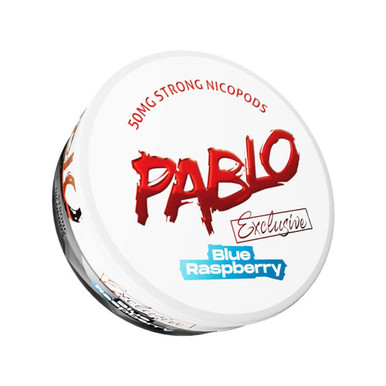
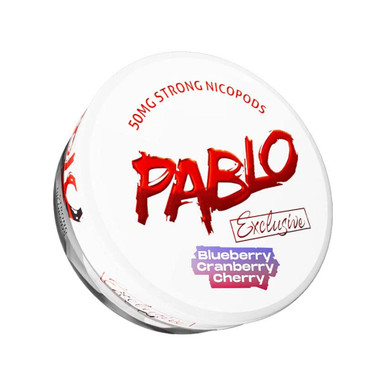
Closest in intent is Pablo Exclusive Blue Raspberry, which is the range's other sharp-edged fruit, though its sharpness comes from a confectionery blue-raspberry idea rather than from a green fruit, so it reads as a sweet-shop flavour where this one reads as fruit. Pablo Exclusive Blueberry Cranberry Cherry stacks three dark fruits with no cooling and no sour edge, and is the heavy, jammy end of the line. Pablo Exclusive Blueberry Peach Ice does something more layered, softening dark fruit with stone fruit and running a cooling note under the whole thing.
For the soft end, Pablo Exclusive Banana Ice is the creamy, cooled option and the range's furthest point from a sour fruit. Pablo Exclusive Bubblegum abandons fruit entirely for an openly confectionery flavour. Between those and the mint mentioned earlier, the Exclusive line covers a wider spread than the uniform packaging suggests. The Pablo shelf holds the other fifty and their current availability.
Keeping a can usable
Very little can go wrong with a dry pouch tin, and what can go wrong is mostly heat and carelessness with the lid.
Heat first. A can that has spent an afternoon on a dashboard, on a radiator shelf or in a sunlit bag comes out warm, and a warm can gives up more of its aroma the moment it is opened. What is left is flatter. On a sour can like this one the loss is particularly noticeable, because the green top note is the lightest element in it and the first to go. Keep it in a drawer, a cupboard or a bedside table and the problem does not arise.
Second, the lid. The seal is good but not airtight, and the twist plate on the catch compartment can be left a fraction short of closed without you registering it. A can left ajar overnight is drier and quieter in the morning.
Third, the used compartment. It sits directly above the fresh portions, separated by a plate rather than a seal, and a compartment left full for a fortnight starts to affect what is underneath it. Empty it when you open a new tin.
Cold is a less common question and the honest answer is that we have no position on it. Some people keep tins in a fridge and report that they prefer them that way. We hold no information on whether that does anything at all and are not going to invent a view for the sake of a complete-looking storage section.
We do not publish storage instructions of our own; the manufacturer's are on the can and those are the ones that govern. The only additional point is the sensible one — a small brightly printed tin attracts the attention of children and animals, so keep it somewhere deliberate rather than on a coffee table or a kitchen worktop.
What there is to choose between here
Nothing, on this listing. One variant is recorded: 50mg at £3.85. No second strength, no alternative tin, no multipack. Anyone expecting a dropdown will not find one, which is worth knowing because a good number of pages on this site do have one and the two kinds look the same until you reach the buy box.
Different declared figures live on the strength shelves rather than inside this product, and those shelves are a filing system. We describe what is on them and we do not steer people between them.
On pack size, the answer is the one given at the top: no cans-per-pack figure exists in our record, so we will not state one. The listing sets out what is sold, and given that the comparable cans linked from this page run from £4.19 to £39.90, it is worth the ten seconds.
Ordering, delivery and age verification
Buying is ordinary: listing, basket, checkout, confirmation, at the price shown when you order.
Age verification is the part to expect. This is an age-restricted product sold only to adults aged 18 or over. Checks may be carried out when the order is placed, and ID may also be requested on delivery. A courier who asks and is not satisfied will not hand over the parcel; that is not a judgement call on their part. If the order is going to an address where somebody else will receive it, that person has to be able to meet the same check.
Stock, as ever, is the live figure on the listing. Two of the pages linked from this description were unavailable as written, and both are flagged as such where they appear. We have linked them anyway rather than quietly dropping them, because an unavailable listing is still the best description of a product you may want later, and pretending it does not exist would leave a gap in the comparison this page is trying to draw. What we will not do is send anyone to a page that cannot be bought from without saying so first.
Where this page sits in the site
Five shelves reach this can, which is more than most carry. The Pablo listings by house. The Extra Strong band by declared figure. And three flavour routes: Berry at seventy-six, Strawberry at nineteen and Tropical at fifty-eight, the last of which is the loose one discussed at the top of this page.
Above those, Medium Strength and Strong are the neighbouring bands, and the full catalogue is the everything-view. Brand shelves such as Cuba's work in exactly the same way as Pablo's.
A note on using those shelves well: the flavour shelves are broad and will hand you results that share a fruit family and nothing else. Starting from a house whose style you already know and browsing its flavours is usually faster than starting from a fruit and browsing the houses. All counts quoted here are live as written and may have moved.
Questions people ask about this one
Can you actually taste the kiwi?
Yes, but it is quiet and it is not the first thing you will notice. Kiwi as a flavouring is low-volume compared with citrus or mint — what it contributes is a green note over the top and a sour, faintly astringent edge that holds the strawberry in check. On a single portion some people register only a sour strawberry. It becomes clearer across a can. If that sounds like a hedge, it is an honest one.
Why is kiwi filed under tropical?
Because our flavour shelving has nowhere better to put it. Kiwi is not tropical in any meaningful sense and it does not resemble the mangoes and pineapples that make up most of those fifty-eight listings. We have flagged the mismatch here rather than let the tag imply something about the taste. It is a filing decision and nothing more.
Is this sharper than a plain strawberry can?
In character, yes — that is the entire point of the pairing, and it is described in detail in the flavour section above. In any measurable sense we cannot say, because we do not hold that kind of data on any listing and would not publish it if we did. Everything here is a description of taste.
What does 50mg refer to?
It is the strength figure the manufacturer prints on the can. We record it as given and use it for shelf filing. Our record does not store what it is measured against, so we cannot tell you from this page whether it is per portion or by weight — the can's own wording is authoritative. We do not publish any account of what the figure does, because that is not ours to give.
Should I buy this or something weaker?
We will not answer that, and no retailer should. We have no information about you and no basis for a recommendation, so we do not make one. What we can tell you is the factual position: this listing is one variant at one figure, and the strength shelves show what else exists on our site.
How many cans do I get for £3.85?
Our record has no cans-per-pack figure for this listing, so we are not going to state one. The product page says what is being sold. That check matters more than usual here because the neighbouring listings on this page span a very wide range of prices.
How many portions are in the tin?
We do not hold that number. Portion counts are printed by the manufacturer and vary by brand and format. Putting a plausible figure on a product page without having verified it would be worse than leaving it blank, so it is blank.
Can I use this at work or on a flight?
That is not a question we can answer. Employers set their own workplace policies and transport operators set their own conditions of carriage, and both vary. The organisation concerned publishes its own rules and those are the ones that apply. We sell the product; we do not determine where it may be used.
Is this the same as the other strawberry and kiwi cans you list?
No, and we would not present it as such. Two listings sharing a fruit pairing in their names can be built very differently, and the house behind the can tends to shape the result more than the fruits named on the lid. The XQS version at £39.90 is in stock and is the one to compare directly if you want to hear the same pairing from another maker. We hold no information that would let us rank the two, and we are not going to invent one.
Why does this can have five shelf tags when others have three?
Because it names two fruits and one of them belongs to a second family. Berry and strawberry cover the red fruit, tropical catches the kiwi, and then the brand and strength shelves apply as they do to everything. More tags is not a sign of a more complex product — it is a sign that the product name crosses two of our flavour groupings. A can with a single-word fruit name will usually carry fewer.
Is it in stock?
It was when this was written, and the live marker on the listing is the answer that counts. Where this page links to something unavailable — the Iceberg kiwi and strawberry listing is one — the text says so at the point of linking.
Does the image show the current can?
There is one image on the listing and it is representative. Manufacturers change artwork without telling retailers, so a can may arrive looking slightly different. The written details — brand, product name, declared figure, price — are what we stand behind.
Can I buy a single portion to test the flavour?
No. We sell by the can and do not split them, there is no sampling, and opened age-restricted goods cannot be returned. The cheapest way to test a flavour is to buy the smallest configuration of it that we list.
Age restriction, addictiveness and what this product is not
This is an age-restricted product for adults aged 18 or over who already use nicotine. It is not sold to under-18s, and nothing on this page is addressed to anyone who does not already use nicotine products.
Nicotine is an addictive substance.
This product is not a licensed stop-smoking medicine and is not offered, described or intended as one. It is not intended for non-smokers, non-nicotine-users, under-18s, or anyone who is pregnant or breastfeeding. We make no health claim about it in any direction whatsoever.
ID may be requested on delivery, and age verification may also take place at the point of order. If you have questions about whether a nicotine product is appropriate for you, those belong with a healthcare professional and not with a retailer.
The short version
A £3.85 single-variant can from the Pablo Exclusive line, declared 50mg, filed extra strong, tagged berry, strawberry and — loosely — tropical. The kiwi cuts the strawberry rather than rounding it, adding a green top note and a steady sour, slightly astringent edge that keeps the fruit from going jammy. Quiet second fruit, clearer across a can than in one portion. No cans-per-pack figure on record, in stock as written. If the sour treatment is not what you want, the rest of the strawberry shelf takes the same fruit somewhere else.
More from Pablo
More extra strong pouches

More berry pouches
Where this sits
Pablo Exclusive Strawberry Kiwi Nicotine Pouches appears in these categories. Browse them, or jump to something close.
You might also like