Home / Medium Strength / Fumi Strawberry Nicotine Pouches
Fumi · 4mg–8mg · 10-can pack
Read the full guide
Fumi Strawberry Nicotine Pouches
£27.90
✔ In stock — ready to ship
100% tobacco-free
Free over £20
Same-day dispatch
Secure checkout
This page describes Fumi Strawberry Nicotine Pouches, listed as a pack of ten cans at £27.90, declared in two strengths — 4mg and 8mg — at the same price for either. Our record files it under two flavour groupings, berry and strawberry, shows it in stock at the time of writing, and holds one product image. Everything factual below is taken from that record.
Ten cans at £27.90 divides out at £2.79 a can. The sum is ours rather than the manufacturer's and it exists so this box can be compared sensibly with the single-can listings sold elsewhere on the site; the figure that applies at checkout is £27.90 for the ten. We do not publish a portion count per can, because our record does not hold one. The printed can carries that number and we are not going to put a guess in front of it.
The full guide to Fumi Strawberry Nicotine Pouches
5,188 words on how it eats, who it suits, how to serve it and what to put beside it.
What this listing holds
Before anything else: this is an age-restricted nicotine product for adults aged 18 or over who already use nicotine. Nicotine is an addictive substance. Full compliance wording closes the page. Nothing written here is intended to persuade anybody to consume anything — it is a long, plain description of a box, two numbers, a fruit and a price.
Two flavour tags, which is more than most listings get
Worth a paragraph because it is unusual. This product is filed under both the berry grouping, which runs to 76 listings, and the strawberry grouping, which runs to 19. Most listings on this site carry one flavour tag. Some carry a tag that argues with the product name. At least one carries none at all, which makes it invisible to every flavour filter we run.
This one is filed properly, at two levels of detail, which means both the wide net and the narrow one will find it. That is worth knowing because it tells you something about how to shop the rest of the site: the filters are entered by people and they are not uniformly complete, so a shelf is a reliable guide to what is on it and an unreliable guide to what is not. Where a record is good, as here, the filter is the fastest route. Where it is thin, the product name and the brand page do the work instead.
Strawberry, described as taste and aroma
This section is about flavour and smell and about nothing else.
Strawberry is the most widely used fruit flavour in confectionery and one of the hardest to talk about honestly, because almost nobody means the fruit when they say the word. There are two very different readings and most products pick one without saying which.
The two strawberries
The fruit reading is what a ripe strawberry actually tastes of: light, watery, mildly sweet, with a low acidity and a delicate floral character sitting behind it. It is a subtle flavour in real life — far subtler than raspberry or blackcurrant — and it is the more difficult of the two to carry in any format, because subtlety is the first thing lost.
The confectionery reading is what a strawberry sweet tastes of: much sweeter, much louder, with a heavier perfumed note and a candied, jam-like body. It bears only a family resemblance to the fruit and it is not a failure to hit the fruit reading — it is a separate target that most manufacturers are aiming at deliberately, because it is instantly recognisable and it survives repetition.
Our record holds the word strawberry and the two groupings. It does not tell us which of those two readings this can takes, and we are not going to write a tasting note on a manufacturer's behalf. What we can do is tell you what to listen for: the fruit reading is light and floral with a watery finish; the confectionery reading is sweet and jammy with a longer, thicker one.
Against the rest of the berry family
Strawberry sits at the soft end of the berry shelf. Raspberry is sharper, with real acidity and a rose-edged aroma. Blackcurrant is darker and leafier, with a genuine tartness and a slightly bitter depth. Blueberry is rounder and jammier, low in acid but heavier in body. Strawberry is the mildest of the four and the most floral, which makes it the berry least likely to tire a palate and the one most easily buried if it is put next to anything louder.
That last point matters when you look at the shelf: a good number of strawberry products are pairings rather than solo flavours, precisely because strawberry sits happily underneath other things. Killa Exclusive Strawberry Watermelon at £33.50 and XQS Strawberry Kiwi at £39.90 are both pairings, and in a pairing the strawberry is usually the softer half.
Aroma on opening
Strawberry declares itself through the nose more than most fruits. A confectionery reading smells sweet and jammy immediately; a fruit reading smells lighter and greener, closer to the smell of the fruit in a bowl. Either way, a can that smells of very little on opening is usually telling you something about how it has been kept rather than about how it was made, which is the subject of a long section further down this page.
Seven cans, one word, and what the word does not guarantee
Moving between cans is the thing customers do most and the thing product pages explain least. This listing is an unusually good case for it, because the shelf around it holds several products carrying the same fruit word at four different prices.
The word is a name, not a specification
There is no standard that defines what a product called strawberry must taste like. The word is a name chosen by a manufacturer, not a specification enforced by anybody, and two makers using it are not making the same promise. That is the single most important thing to understand before comparing cans, and it applies to every flavour word in the category.
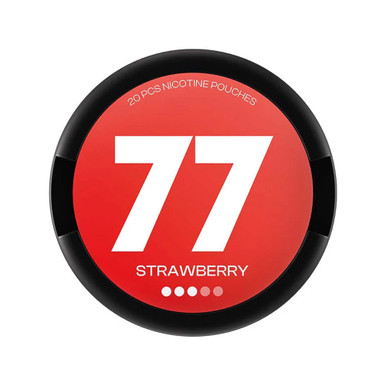
Look at what the titles around this one actually say. 77 Strawberry at £39.90 names the fruit plainly, as this box does. Velo Strawberry Ice at £4.19 adds a cooling word, which by convention means a cold element layered over the fruit. Denssi Strawberry Freeze at £39.90 does the same thing with a colder word again. Cuba Ninja Strawberry at £39.90 names the fruit plainly but sits inside a sub-range whose own conventions apply, and Edge Strawberry at £14.95 names it plainly again at a third of the price of some of the others. And Pablo Exclusive Strawberry Cheesecake at £3.85 pairs the fruit with a dessert reading, which is a different construction altogether.
Seven products, one fruit, at least five intentions. The word tells you the family. The rest of the title tells you the treatment. Nothing tells you the intensity, and no shop can honestly supply that from a database.
What actually changes when you move
Four variables move between listings, and it is worth knowing which ones are worth weighing.
- The declared figure. A number on a can is a manufacturer's declaration about that product. It is not a measurement of anybody's experience and it is not reliably comparable between brands, because makers do not all declare on the same basis. Same digit, different companies, two unrelated statements.
- The pack arrangement. Ten cans here; other listings may be single cans or other counts. Comparing headline prices across different arrangements is the most common error on a shelf like this, and £3.85 against £27.90 is a comparison that means nothing until you know what each price buys.
- The treatment. Cooled or uncooled, solo or paired. This is the variable most visible from the title and the one most likely to change whether you enjoy a can.
- The brand's own conventions. Sub-range names, edition names and prefixes mean something inside a brand and nothing outside it.
What does not change
The object does not change. A small sealed portion in a squat can with a friction lid and a catch compartment, placed between the upper lip and the gum, not chewed, not swallowed, disposed of in general waste. That is true of this box and of SYX Blueberry at £29.90 and of Nordic Spirit Blueberry at £4.49 equally. There is nothing to relearn when you change brand.
The legal position does not change either. Every product in this category here is 18+, sold to adults who already use nicotine, subject to an age check at order and possibly again at the door.
Changing one thing at a time
The practical advice, such as it is, is procedural rather than about taste. If you want to learn something from a comparison, change one variable. Move from this box to another brand's plain strawberry and you learn what a brand does with a fruit. Move from this box to a cooled strawberry and you learn what cooling does to it. Move from a plain strawberry at 4mg to a cooled strawberry pairing at a different declared figure from a different maker in a different pack size, and you learn nothing at all, because four things moved at once.
That is as close to advice as this page goes, and it is about method rather than about what to buy. We do not recommend products, figures or flavours to anybody.
What a shop can and cannot tell you about a switch
It is worth being explicit about where the limits of a page like this fall, because the limits are the same for every retailer and most of them do not say so.
We can tell you what is on the invoice and in the record: brand, product name, declared strengths, price, pack size, flavour groupings and whether we are holding stock. We can tell you what the conventions of the category are and how to read a title, because those are observable across hundreds of listings rather than claims about any one product. We can tell you what does not change between cans, because the format is standardised.
We cannot tell you how intense a flavour is, how long it reads for, how one brand's declared figure relates to another's, how many portions a can holds, or whether you will prefer this to something else. None of that is in a product record, none of it is published by manufacturers in a comparable form, and a shop that states it confidently has either tested every can it sells or is filling gaps with sentences. Treat every page on this site, including this one, as a description of what is known plus an admission of what is not.
The object itself: portion, can, lid
A pouch is a small soft sealed portion, roughly the size and shape of a flattened jellybean. It goes between the upper lip and the gum and stays where it is put. It is not chewed, not moved around the mouth and not swallowed. Most people find a preferred position within their first few and stop thinking about it after that.
The can is the standard squat cylinder — jar-lid diameter, a few coins deep, press-on friction lid rather than a thread. Cans in this format conventionally carry a shallow catch compartment under the lid for used portions, which is the most useful piece of design in the category and the one people notice last.
How long anybody keeps a portion in varies enormously between people. We hold no usage data for this product and would not publish guidance if we did, because how much of anything somebody uses is not a shop's business to direct. Disposal is brief: catch compartment or general waste, never a sink, a drain or the ground.
Keeping cans in usable condition
This is the long practical section on this page, and it earns the space because ten cans will be in your house for weeks and because storage is the easiest way to spoil something you have already paid for. None of what follows is about safety; it is about whether the last can in a box is as good as the first.
Dry styles, moist styles, and why the distinction matters
Products in this category come in drier and moister styles, and they do not keep the same way. A drier style is more tolerant of ordinary room conditions and tends to lose its aromatic character slowly. A moister style is more sensitive to warmth and to being left open, and people who use them commonly keep them somewhere cool for that reason.
We do not hold the moisture format for this product. It is not a field in our record, so we cannot tell you which of the two this is, and we are not going to infer it from the brand or the flavour. The practical answer is to treat it conservatively, because the conservative approach suits both: cool, dry, dark, closed. Nothing in that costs you anything if it turns out to be a drier style, and it protects you if it is not.
Heat
Heat is the main enemy. Aromatic character is the first thing to go, and in a fruit the aroma is not a garnish on the flavour — it is most of what makes the fruit identifiable. A strawberry that has been kept warm loses the light floral part and keeps the sweetness, which is how a delicate fruit reading turns into a vague sweet one.
In practical terms: not a windowsill, not the top of a radiator, not the shelf above a kettle or a hob, not a car in summer, not a bag left in direct sun. A cupboard in a cool room, a drawer, or a shelf away from any heat source is all that is needed. The bar is low and it is mostly about noticing where the warm places in a house actually are.
The lid, and the can in use
Keep the lid pressed home rather than resting it on the rim. It is a friction fit and it is doing a job — keeping the contents from drying out and keeping the aroma in. An open can left out overnight will not be what it was in the morning, and a can that has spent a week with the lid balanced on top is a can you have partly wasted.
Empty the catch compartment regularly into general waste. Beyond the obvious reason, a can carrying a fortnight of used portions is not the same object as a fresh one, and people who care about the aroma on opening tend to keep it clear for exactly that reason.
The box versus the can
With a ten-can pack the box deserves more thought than the open can, because the cans at the bottom will sit unopened for as long as it takes you to work down to them. A cupboard that is cool in January and warm in July is only half a good storage place, and the tenth can out of a box that spent a summer near an oven is not going to be what the first one was.
Most people break into the outer pack one can at a time and leave it otherwise intact, which keeps the remaining cans together and makes the depth of the box obvious at a glance. That is also the only information a reorder rhythm needs.
What a tired can is like
Worth knowing so you can tell storage trouble from a flavour you simply do not like. A can that has been kept badly usually smells of less than it should on opening, and reads flatter and sweeter than expected, with the distinctive part of the fruit faded and the generic part left behind. A flavour you dislike, by contrast, will be perfectly vivid and still wrong for you. The first is avoidable; the second is a preference and no amount of careful storage fixes it.
The question about the fridge
People ask, so here is the honest answer. Some users of moister styles keep a can somewhere cool, and manufacturers occasionally print storage guidance to that effect. We do not know whether this product is one of those, because the moisture format is not in our record, and we are not going to issue instructions about a product we hold no storage guidance for. Read the printed can. Whatever it says about storage takes precedence over anything on this page, and if it says nothing, cool, dry, dark and closed is the position that cannot go far wrong.
One last point that is not about condition at all: keep the box out of reach of children and away from pets. That applies to every product in this category and it applies more to ten cans in a house than to one.
Two numbers, one price
This listing declares 4mg and 8mg, and the price does not move between them. What follows is information about what those numbers are. It is not advice, and we do not suggest a figure to anybody.
A printed figure is a manufacturer's declaration about a product. It is a label number rather than a measurement of anybody's experience, and it is not reliably comparable across brands, because makers do not all declare on the same basis. Within a single brand and flavour the comparison is a fair one: the 4mg and the 8mg here are the same product from the same maker with one figure doubled, which is a relationship that means something. Across brands, the same two digits mean nothing of the sort.
Our strength bands follow declared figures. This box sits on the medium shelf, currently 135 listings and the largest of the three; the strong shelf holds 132 and the extra-strong shelf the highest declared figures we carry. Bands are filing, not ranking. A listing lands in one because of a number on a label and for no other reason, and the shelf makes no statement about who anything suits.
The brand's sixteen, flavour by flavour
Fumi runs to sixteen products with us, all at £27.90 for ten cans, with no variation between flavours and none between strengths where a listing declares several. A flat price across a brand removes a whole dimension from the decision — nothing is the budget choice and nothing the premium one — and it makes the brand unusually easy to compare within.
The range sorts into groups. Dark fruits, including Fumi Blackcurrant with its sharper, leafier reading and Fumi Chilled Cherry, which puts a cooling element over a stone fruit. Bright and sharp fruits, including Fumi Fiery Lime and Fumi Fiery Mango. A mint presence in Fumi Fiery Mint. And the outliers, most obviously Fumi Dark Spice, which leaves fruit behind entirely for a warm savoury direction.
Against that lot, this listing is the soft one. Strawberry is the mildest fruit in the range by the plain meaning of the word, and the title carries no prefix and no cooling word — it is presented as the fruit and nothing else. The Fiery prefix appears on several siblings and we hold no definition of what the brand means by it, so we will not tell you; its absence here is the useful part.
Nineteen strawberries and seventy-six berries
This box sits on two flavour shelves of very different sizes, and they are useful for different things.
The strawberry grouping is a short shelf at 19 listings, which makes it one of the few flavour filters on the site you can read end to end in a sitting. If strawberry specifically is what you want, that is the efficient route, and it is worth scanning it for treatments rather than for brands — the cooled ones, the pairings and the plain ones separate at a glance from the titles.
The berry grouping at 76 is a different proposition: too long to browse casually, and containing four distinct sub-families that have little in common. Red berries, sharp and bright. Blue and purple berries, round and jammy, as in the SYX blueberry can at £29.90. Dark berries with a leafy bitterness, which the blackcurrant and forest-fruit titles announce in their own names. And compound berries paired with something that is not a berry at all.
Using the wide shelf to browse and the narrow one to choose is the sensible order, and it only works on this listing because the record happens to be filled in at both levels.
Something to keep alongside
Ten cans of one soft fruit is a lot of one soft fruit, and the usual remedy is a second can kept deliberately different. Two directions are worth naming.
The first is contrast by intensity: something louder to reset a palate that has stopped noticing a mild flavour. the Killa strawberry and watermelon pairing at £33.50 stays in the fruit family while adding a second note, and the Pablo cheesecake edition at £3.85 takes the same fruit somewhere else entirely and is cheap enough to try on a whim.
The second is contrast by temperature: a cooled version of the same fruit, so the change is a treatment rather than a subject. the Velo iced strawberry at £4.19 is the cheapest way to hear what cooling does to this fruit, and the Denssi freeze can at £39.90 takes the same idea further. Either makes a useful pair with an uncooled box, because you can move between them without changing the fruit.
What a box of ten changes about buying
Pack size is not just a quantity; it changes the kind of decision you are making, and it is worth a short section of its own.
A single can is reversible. You try it, and if it is wrong you have lost a few pounds and an afternoon. A box of ten is not reversible in any practical sense — it is a decision you live with for weeks, and the per-can arithmetic that makes it look like the sensible purchase only holds if you finish it. With a mild, easy flavour like this one the risk is lower than it would be with something divisive, because mildness is the quality least likely to wear out its welcome. That is a statement about repetition, not a recommendation.
The other thing a box changes is the reorder rhythm. People who buy in tens generally work one out after getting caught short once: note when the box is opened, note when the last can comes out, and reorder at that interval minus however long delivery and an age-verified handover take in your household, with a few days in hand. Doing that once gives a number good for as long as the pack size and price stay put, and both have been constant across this brand.
The short list of decisions
- Strength: 4mg or 8mg. Same product, same price, one declared figure doubled.
- Pack size: none. Ten cans at £27.90 is the only arrangement we list.
- Flavour: decided, if you are reading this page.
We will not advise on the strength question and you should be wary of anybody who does. Both figures cost the same, so nothing financial hangs on it. If you would rather test a direction before committing to a box, the single cans on this page at £3.85, £4.19 and £4.49 are priced for exactly that, though none of them is this brand and only some are this fruit.
Buying it, and the checks that apply
Orders on this site go through age verification. This is an 18+ product sold only to adults who already use nicotine. The check is part of the order process, and ID may be requested again at the door — the courier can ask, and can take the parcel away again if there is no adult there to receive it. If you know you will be out, send it somewhere a named adult will be.
The listed price is for the ten-can box. Delivery timescales and the rest of the mechanics sit on the site's own delivery and terms pages, which is where things that change belong. Stock showed as available when this page was written, and the listing carries the live position; if the two disagree, the listing is the authority. We hold no restock dates and will not publish a guess at one.
Four ways into this page
Four paths lead here, which is more than most listings have. By brand, from the Fumi page and its fifteen siblings. By strength, from the medium band. By flavour, from either the wide berry shelf or the narrow strawberry one. That redundancy is a direct result of the record being properly filled in, and it is the reason this page is easy to find again and some others on the site are not.
The complete catalogue is the place to start if you are browsing rather than hunting. Two brand pages are useful landmarks even if you did not arrive through them: the Pablo pages and the Cuba pages are both large and split into sub-ranges, which makes them a different shopping experience from a flat sixteen-product shelf like the Fumi one.
Questions worth asking about this box
Is this the fruit strawberry or the sweet-shop one?
We do not know and we will not guess. Our record holds the word strawberry and two flavour groupings, and nothing about how the flavour has been built. The two readings are genuinely different — the fruit reading is light, floral and watery; the confectionery reading is sweeter, jammier and longer — and most manufacturers pick one deliberately. The can will tell you within a few seconds of opening, and no database field on our side can.
Why is it filed under two flavours?
Because whoever entered the record filled in both the family and the specific fruit, which is the ideal case and not the universal one. It means the product appears on the 76-listing berry filter and on the 19-listing strawberry filter. Elsewhere on this site you will find listings with one tag, with a tag that argues with the product name, and in at least one case with no flavour tag at all. Good filing is worth noticing precisely because it is not consistent.
Does the box keep well?
Kept cool, dry, dark and closed, there is no reason for it not to. The honest caveat is that we do not hold the moisture format for this product, and drier and moister styles behave differently over time, so we cannot be more specific than the conservative advice. Heat is the main risk to a fruit flavour, and the cans at the bottom of a ten-pack are the ones most exposed to whatever the storage place does over a season. Whatever the printed can says about storage outranks this page.
How many pouches are in a can?
Not a figure we hold, for this or any other listing. Our record carries the brand, the flavour groupings, the declared strengths, the price, the pack size and the stock position — no portion count. The printed can states it. We would rather admit that than publish an invented number that you might plan a reorder around.
Is 4mg or 8mg the right choice?
Not something we will answer. A declared figure is a manufacturer's declaration about a product rather than a measure of anybody's experience, and recommending one would be advice we are in no position to give. Both cost the same here, so the decision has no financial element to it. Any retailer telling you which number to pick is overstepping what a shop can know.
Can I buy one can instead of ten?
Not from this listing, which is sold only as a pack of ten at £27.90. Our record holds no single-can option for it. Several products on the site are sold as single cans at lower unit prices — including ones naming the same fruit — but they are other brands and other treatments. Whether a single Fumi can exists anywhere else is not visible to us, so we will not say.
Is there cooling in this one?
Our record does not say. The title is Strawberry with nothing after it, and it carries none of the words — Ice, Freeze, Frost, Chill — that the category conventionally uses to flag a cooling element, which by that convention suggests the fruit stands on its own. That is an inference from a naming habit rather than a fact from our system, and the can is the authority.
How does it compare with the other strawberry cans you sell?
On treatment we can be useful; on taste we cannot. The titles tell you that some are cooled, one is paired with a dessert reading, one is paired with another fruit and some are plain. That is a real difference and it is visible before you buy. What none of us can tell you from a listing is the intensity or the balance of any of them, because no standard defines what the word strawberry must taste like and no manufacturer publishes the detail.
Why is everything by this brand £27.90?
Because that is the price our record holds for all sixteen listings, for ten cans, regardless of flavour and regardless of declared strength. We do not know the commercial reason and will not invent one. The effect is that price carries no information within this brand, which makes flavour the only thing you are really choosing.
Is it in stock?
It showed as in stock when this page was written, and the listing itself carries the live position — believe the listing over this paragraph if they ever disagree. We hold no restock dates and would not publish a guess at one, because guessed dates get planned around and then held against you.
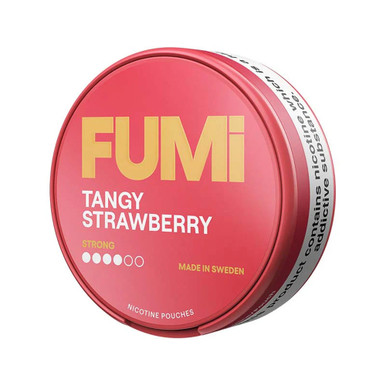
What does the image show?
One image is held against this product, which is normally the can front. Manufacturers revise packaging without notice, so treat it as an indication of what will arrive rather than a guarantee, and treat the printed can as the authority on anything printed on it.
The legal footing
This product is sold only to adults aged 18 or over who already use nicotine. We do not sell it to anybody under 18, and it is not intended for, aimed at or suitable for anybody who does not already use nicotine.
Nicotine is an addictive substance.
It is not a licensed stop-smoking medicine and is not offered as one. It is not intended for non-smokers, for people who do not already use nicotine, for under-18s, or for anybody who is pregnant or breastfeeding. Nothing on this page is medical advice, dosage guidance, or a suggestion that any particular strength is suitable for any particular person or circumstance. Health questions about nicotine belong with a qualified professional, not with a product description.
Age verification applies to orders placed on this site, and ID may be requested on delivery. Keep this product out of reach of children and away from pets, and dispose of used portions in general waste.
Summing up
Ten cans at £27.90, declared at 4mg and 8mg with no price difference between them, filed under both berry and strawberry, in stock. Strawberry is the mildest and most floral of the berries, which makes it the least tiring of them over a box of ten and the easiest to lose if a can has been kept badly — which is why the storage section on this page is the longest one.
We hold no portion count, no moisture format and no manufacturer's tasting note, and we have said so where each gap falls rather than filling it with a confident sentence. If this is not the one, the other eighteen strawberry listings are a short shelf worth reading end to end, and every page on this site is written from the same records with the same holes admitted in the same places.
More from Fumi

More medium strength pouches

More berry pouches

Where this sits
Fumi Strawberry Nicotine Pouches appears in these categories. Browse them, or jump to something close.
You might also like