Home / All Pouches / Watermelon
Watermelon Nicotine Pouches
Twenty-three listings carry the watermelon tag and this shelf gathers all of them. Eighteen can be ordered today; five are listed but unavailable and the grid marks them. Prices run £3.85 to £39.90, declared strengths 3 mg to 50 mg, across fourteen brands.
One thing to know before you scroll: plain melon is filed here as well. Melon and watermelon are different fruits, our tag does not distinguish them, and several cans on this shelf say melon on the lid and nothing about watermelon at all.
Energy PouchesLow StrengthMedium StrengthStrongExtra StrongPabloCubaIcebergKilla77ZYNVeloFumiNordic SpiritXQSRushDenssiUBBSSYXClewMaggiePouch NurdzElf BarWhite FoxKlintSiberiaEdgeMintBerryTropicalCitrusWatermelonCherryStrawberryColaMangoGrapeSweetEnergyCoffee
Related categories
Other ways into the range.
Mint 148Berry 76Tropical 58Citrus 25Cherry 20Strawberry 19Cola 17Mango 16Grape 14Sweet 12Energy 10Coffee 9
What these listings have in common
Superficially, a word. More precisely, a filing decision: each of these 23 listings was given the tag watermelon because somebody on our side judged that to be the nearest available label for what the lid says. The tags are ours, not the manufacturers'. They exist so a catalogue this size can be browsed at all, and they were never designed to be a specification.
What the listings genuinely share is narrower than the shelf implies. Most of them name a melon of some kind. Many of them also name something else — a second fruit, or a cooling element — which our single tag does not record. And a fair few of them appear on another shelf at the same time. That is the shape of this grid: a narrow-sounding word covering a slightly wider set than it should, with a great deal of information living in the titles rather than in our data.
The melon problem, which is the main one
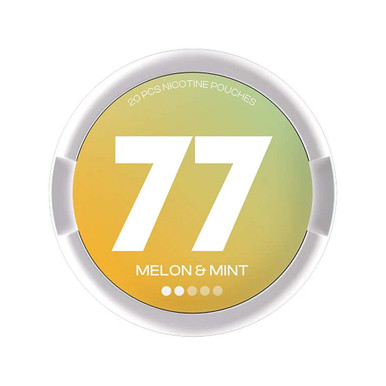
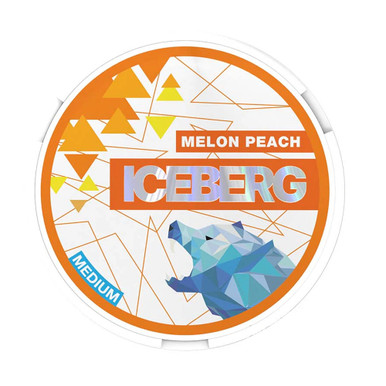
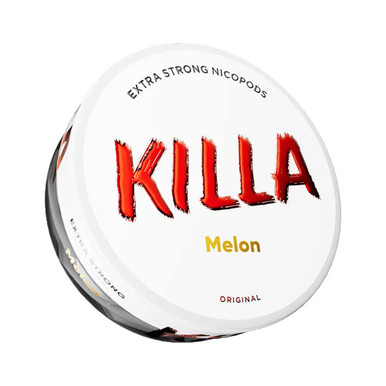
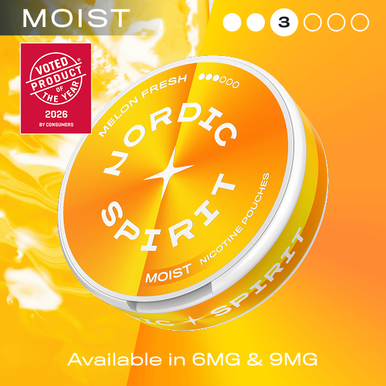
This shelf is named watermelon and it contains cans that are not watermelon. Killa Melon at £33.50 says melon. Nordic Spirit Melon Fresh at £4.49 says melon. 77 Melon Mint says melon. Iceberg Melon Peach, currently unavailable, says melon and peach. None of those four lids claims to be watermelon, and all four are on this shelf because our tag list has no separate word for melon.
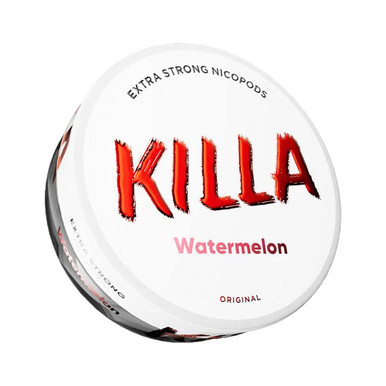
It gets sharper than that. Killa sells both a watermelon can and a melon can, both at £33.50, and in our flavour data the two are identical. The brand drew a distinction, priced them the same, and our filing erased the distinction entirely. If the difference between melon and watermelon matters to you — and for a lot of people it does — this shelf cannot serve you. Read the titles, and where a title is ambiguous, read the can. It is the only place a manufacturer states what a product is, and it is the one source on this shelf that our catalogue is not standing between you and. Nothing in the grid layout, the tag or the price column can substitute for it, and on a shelf built around a fruit our filing cannot name properly, that gap is worth stating twice rather than once.
Where the listings diverge from each other
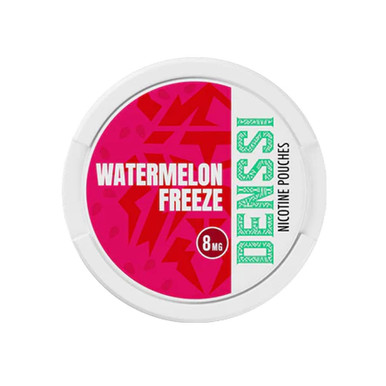
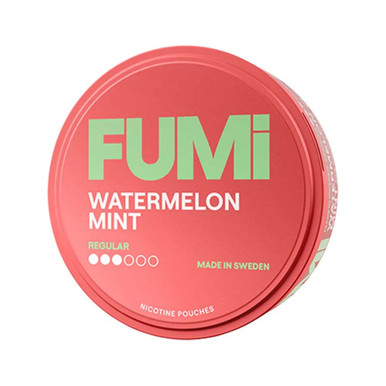
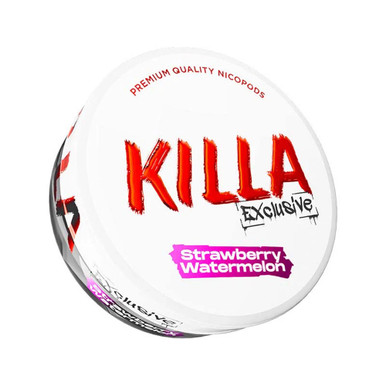
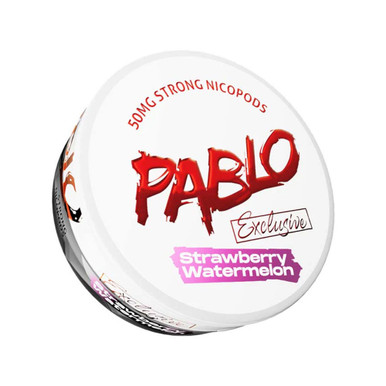
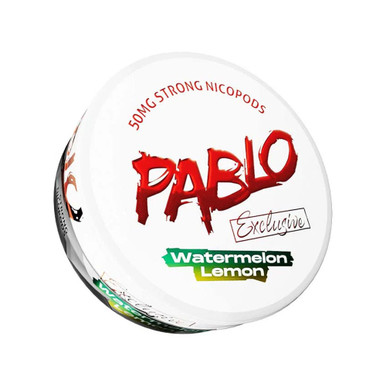
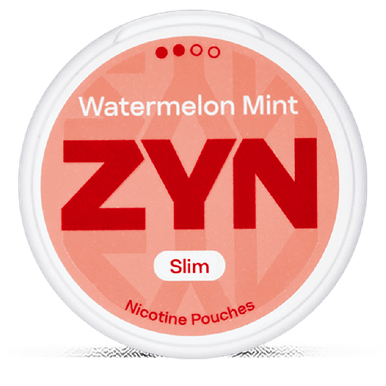
Six different flavour tags appear across these 23 listings, which means a substantial share of the shelf is filed somewhere else as well. Killa Exclusive Strawberry Watermelon is also on the berry and strawberry shelves. Pablo Exclusive Watermelon Lemon at £3.85 is also on citrus. ZYN Watermelon Mint at £19.99, Fumi Watermelon Mint at £27.90 and Denssi Watermelon Freeze are all on the mint shelf too, because a cooling word in a title is enough to earn that tag.
These are not duplicate products. One listing can wear several labels, and that is how a catalogue of this size gets browsable. But it does mean a count is not a count of distinct cans in the way you might assume, and that the same tile will follow you between shelves.
The cans that reach no shelf at all
None of the 23 listings here is missing a flavour tag. That reads like a clean bill of health until you notice it cannot be otherwise: a listing without a flavour tag cannot appear on a flavour shelf, by definition. Untagged listings do exist in the catalogue and no amount of scrolling here will surface them, because nothing files them anywhere. They are reachable only through the full catalogue in one list or through a brand shelf. This grid is a reasonable way to browse and a poor way to establish what we do and do not stock.
Choosing between cans that our data treats as identical
This shelf has an unusual concentration of near-duplicates, several of them from the same brand, and the catalogue gives you very little to separate them. Rather than pretend the grid can decide for you, here is what is actually available to go on.
Two cans, one brand, one tag
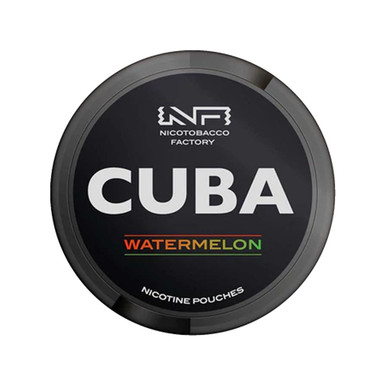
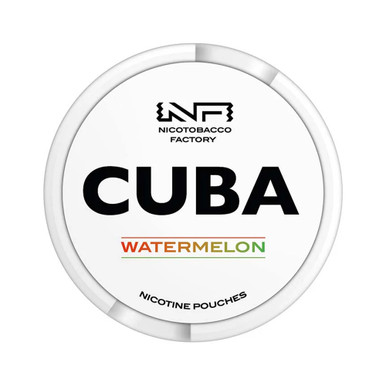
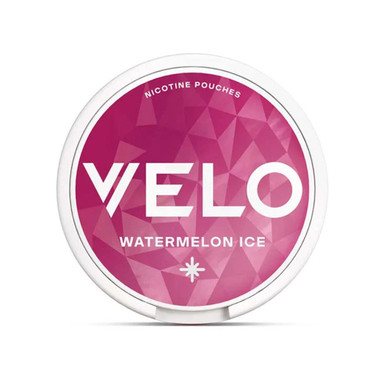
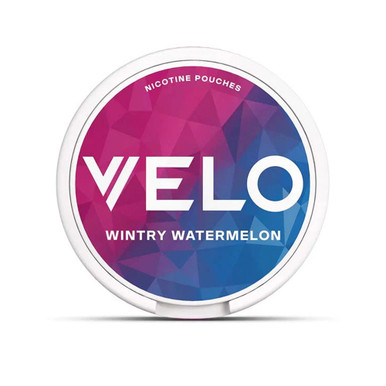
Cuba lists a Black watermelon and a White one, both at £39.90. Velo lists Watermelon Ice and Wintry Watermelon, both at £4.19. Killa lists a watermelon and a melon, both at £33.50. In each pair the brand has drawn a distinction it thought worth making, priced the two the same, and our records reduce both halves to the identical word.
What can you use? The title, first — Black and White are line names within the Cuba range, and Ice against Wintry are two different descriptions the brand chose deliberately. Our catalogue holds none of that as structured data; there is no field for the Cuba line and no field that records a cooling element. Second, the declared milligram figure on each product page, which does sometimes differ between two otherwise similar listings. Third, the can itself. Beyond those three, our data is exhausted, and any further distinction we offered would be something we made up.
When the second flavour is the deciding factor
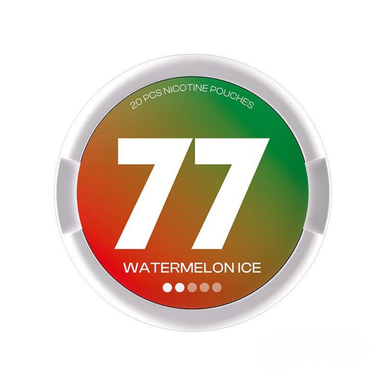
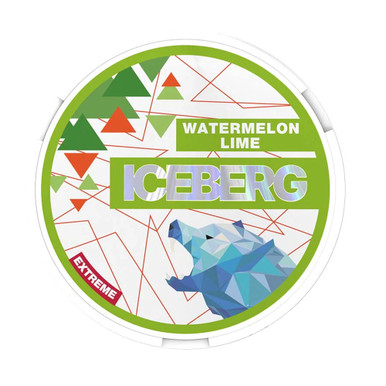
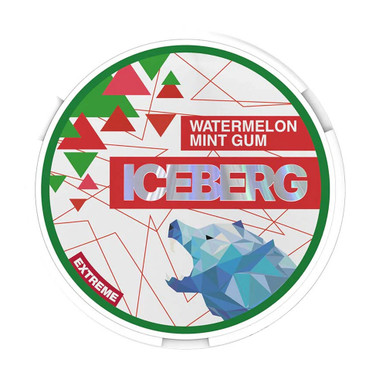
Several listings here are blends where the watermelon is only half the story, and that half is often what decides it. 77 Watermelon Ice at £39.90 carries a cooling element. Iceberg Watermelon Mint Gum, currently unavailable, names a third element on top of the other two. Pablo Exclusive Strawberry Watermelon at £3.85 pairs it with strawberry, and Iceberg Watermelon Lime, also unavailable, pairs it with citrus.
Our tag records only the watermelon in each of those. The second word is visible in the title and nowhere else in our records, so it will not narrow a search and it will not appear as a filter. On a shelf where so many cans differ chiefly in their second flavour, that is a significant gap, and it is the reason this page keeps pointing you back at the titles.
The simpler cans
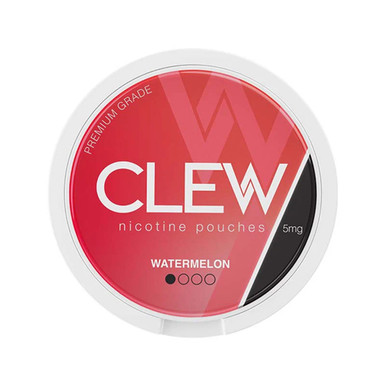
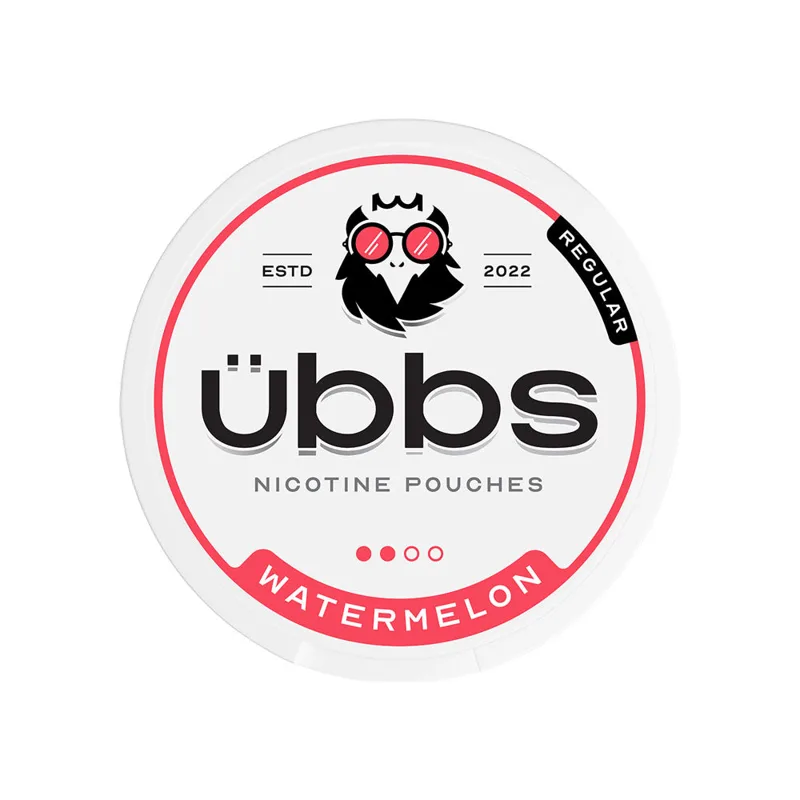
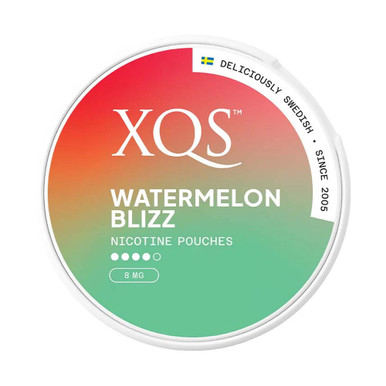
For completeness, some listings here really are just watermelon and nothing else: Clew Watermelon at £39.90, UBBS Watermelon at £19.95 and XQS Watermelon Blizz, which adds a word without adding a second fruit. If you want the flavour plain, those are the shortest route through the grid.
Five brand words for the same idea
Something else the titles carry and our filing does not: this shelf holds at least five different words that all point at a cooling element, one per brand, with nothing in our data connecting them. Nordic Spirit calls it Fresh. Denssi calls it Freeze. Velo uses Ice on one can and Wintry on another. XQS uses Blizz. ZYN and Fumi simply write Mint.
Each of those is a naming choice rather than a shared standard, and we hold no field that records any of them. The only structural trace they leave is that most of those listings also pick up the mint tag and appear on that shelf as well, which is why a watermelon search and a mint search overlap more than you would expect. It also means you cannot browse for a cooling element on this shelf — you can only recognise the words, brand by brand, as you read the titles.
If that is the thing you actually care about, the honest advice is to stop using the flavour grids for it. Pick a brand whose vocabulary you already know, read its shelf, and treat its naming as the specification. Nothing we hold will do that job for you, and a tag that flattens Fresh, Freeze, Ice, Wintry and Blizz into one word is not going to start distinguishing them on the next page.
Prices, and what they do not tell you
The spread is £3.85 to £39.90. Very little of that is a quality difference and most of it is a quantity difference: some listings are a single tin and some are a multi-can pack, and the figure on the tile is the price of whatever the listing contains, not a price per can.
17 of the 23 listings here carry no can count in our data at all. For those, the catalogue simply cannot tell you whether a price buys one tin or several, and we will not estimate. The pattern by brand is still visible and worth using: the Pablo listings sit at £3.85, Velo at £4.19, Nordic Spirit at £4.49, UBBS at £19.95, ZYN at £19.99, Fumi at £27.90, Killa at £33.50, and the Cuba, Clew, 77, XQS, Denssi and Iceberg listings at £39.90. Price on this shelf tracks the brand almost perfectly and tracks nothing else, which is a strong hint that what is really varying is the unit.
The practical response is to compare within a brand rather than across the grid. The Cuba range of 47 listings, the 56 from Pablo and the 40 Iceberg listings each use one pack structure and one naming scheme, so two listings on those shelves can be weighed against each other fairly. Two listings on this one frequently cannot.
Stock: one brand's entire presence here is unavailable
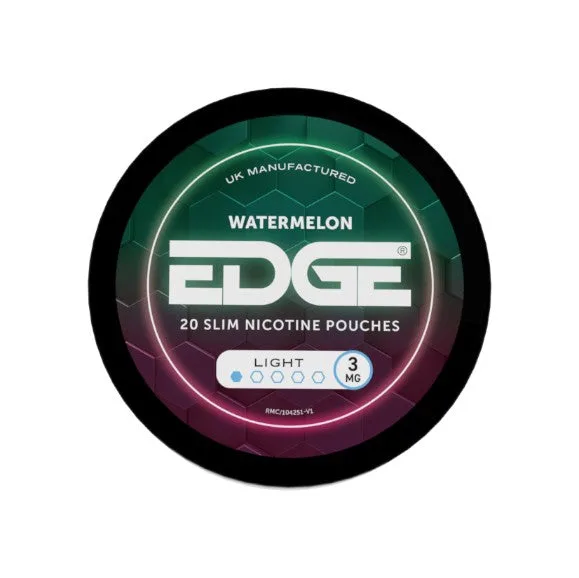
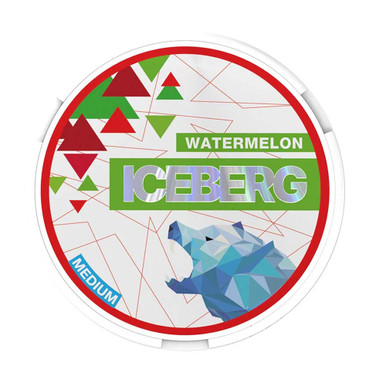
Five of the 23 listings cannot be ordered, and four of them are Iceberg. Iceberg Watermelon, Watermelon Lime, Watermelon Mint Gum and Melon Peach are all out of stock at the time of writing, which means the brand's whole showing on this shelf is currently unavailable. Edge Watermelon at £14.95 is the fifth.
Those five pages still load and still carry their details, so they are worth reading if you want to know what a listing is — but nothing can be added to a basket from them right now, and following one of those links expecting to buy will be a wasted click. We keep unavailable listings on the shelf because most of them return and because a listing that vanished would be far harder to find again than one clearly flagged. Stock moves faster than page copy, so the product page is the authority rather than this paragraph.
The effect on browsing is worth naming: the unavailable listings are all at the same end of the shelf, so the £39.90 group is thinner in practice than the grid suggests, while everything under £5 is currently orderable.
What the milligram figures mean
Declared strengths run from 3 mg to 50 mg on this shelf. Those are figures printed on cans and reproduced by us. They are label information, which is the beginning and the end of their function here.
We cannot advise which strength suits you. We hold a number and no knowledge of any individual, and anything beyond the number would be invention dressed as guidance. Strength is also not a ladder, a tier or a level to work up to — a 50 mg listing is not an improved version of a 3 mg one, and nothing on this site ranks them.
Manufacturer naming makes this murkier than it needs to be. Words such as Extra Strong, Exclusive and Fresh are part of a product name and are not measured against any scale shared between brands. Our strength shelves ignore names entirely and file by the declared figure, which is why Medium Strength gathers 135 listings, Strong gathers 132 and Extra Strong gathers 98. Several listings on this shelf are titled plainly while carrying the words extra strong inside the web addresses they were created with, which is a useful reminder that an address is an artefact of record-keeping and not a description.
The fourteen brands on this grid
Fourteen brands have at least one listing filed under watermelon. Almost all of them have exactly one or two, which is different from the larger flavour shelves where a handful of brands dominate. The consequence is that this grid is broad and shallow: you are seeing a single can from most of the shop rather than a range from anyone.
That makes it a decent shelf for sampling what different brands do with one flavour, and a poor shelf for deciding between two cans from the same maker, since in most cases there is only one to look at. If you like what a brand does here, its shelf is where the rest of the range lives, filed under whatever other flavours it covers.
Keeping a can, and ordering one
We hold no storage instructions for any listing, so anything specific comes off the can and not from a catalogue page. The general points are unremarkable: a tin keeps better with its lid properly closed, and a can left on a warm dashboard is in a worse place than one in a drawer. Whether a particular product is better kept somewhere cool is a matter for the manufacturer's printed instructions, which we do not reproduce. Keep cans where children cannot reach them and away from anyone under 18, and where a lid carries a catch compartment, use it so a used pouch has somewhere to go other than a pocket.
On ordering: the five unavailable listings cannot be added to a basket and the grid marks them. For the eighteen that can, the figure on the tile is the price of the listing rather than the price of a can, and for most of this shelf our records do not establish which. Age verification runs at the checkout and may happen again at the door — ID can be requested on delivery and an order will not be handed over where age cannot be confirmed, so a parcel left in a porch or with a neighbour is not how this works.
Where to go from here
If watermelon was a starting point, the shelves nearest it in size are the easiest to read: citrus holds 25 listings, cherry 20, strawberry 19, cola 17 and mango 16. The larger ones gather more loosely by the same mechanism described above — mint holds 148 listings, berry 76 and tropical 58, and each is correspondingly coarser about what it puts together.
Whichever you use, the reliable method is the same: fix one axis and browse the other, rather than asking one broad flavour word to carry an entire search. And if the format is unfamiliar, our plain explanation of what a pouch is covers it without any of the catalogue arithmetic above.
Age restrictions and required notices
Everything on this shelf is sold to adults aged 18 or over who already use nicotine. Nicotine is an addictive substance. These products are not a licensed stop-smoking medicine and are not intended for non-smokers, non-nicotine-users, under-18s, or anyone who is pregnant or breastfeeding. ID may be requested on delivery, and an order will not be handed over where age cannot be confirmed.
Frequently asked questions
Why are plain melon cans on a watermelon shelf?
Because our tag list has no separate word for melon. Killa Melon, Nordic Spirit Melon Fresh, 77 Melon Mint and Iceberg Melon Peach all say melon on the lid and none of them claims to be watermelon, yet all four are filed here. It is a filing limitation rather than a claim about the fruit. If the distinction matters to you, read the product titles, because our data does not hold it anywhere.
Killa sells both a melon and a watermelon. How do I tell them apart?
By the title, and only by the title. Both listings sit at £33.50 and both carry the identical watermelon tag in our records, so neither price nor filing separates them. The brand clearly thought the difference was worth making or it would not have produced two cans. Our catalogue simply does not record what that difference is, so the product pages and the cans themselves are the only places to look.
Why do two Cuba watermelon cans cost the same?
The Black and White listings are both £39.90 and both tagged watermelon. Black and White are line names within the Cuba range, and our catalogue holds no field that records which line a listing belongs to — the words exist only inside the product title. We cannot tell you what the brand intends by the distinction, and we are not going to guess. Both product pages carry their own declared figures, which is the place to compare them.
Does the watermelon tag tell me whether a can has anything else in it?
No, and on this shelf that matters more than usual. Several listings are blends where the second flavour is the real decider — strawberry, lime, a cooling element, or in one case all of that plus another note. Our tag records only the watermelon part. The rest is visible in the product title and nowhere else in our data, so it cannot be filtered or searched as a separate attribute.
Which listings here can I not currently buy?
Five of the 23, and four of them are Iceberg: Watermelon, Watermelon Lime, Watermelon Mint Gum and Melon Peach are all out of stock, which means that brand's entire presence on this shelf is unavailable. Edge Watermelon at £14.95 is the fifth. Their pages still load and are worth reading for detail, but nothing can be added to a basket from them until stock returns.
Why does the price range run from £3.85 to £39.90?
Mostly because the listings are not all the same quantity. Some are a single tin and some are a multi-can pack, and the grid shows the price of the listing rather than the price of a can. Price on this shelf tracks the brand almost perfectly — every Pablo listing is £3.85, every Velo one £4.19 — which tells you the variation is between manufacturers and units, not between better and worse cans.
How many cans am I getting for the price shown?
For most of this shelf our records do not say. 17 of the 23 listings carry no can count at all, so the catalogue cannot answer it and an estimate from us would be a guess presented as a fact. A few listings state the quantity in the product name or on the product page. Where neither does, treat the quantity as unconfirmed rather than assuming a single tin, particularly at the top of the price range.
What do the mg figures mean and which one should I pick?
The figure is the declared nicotine content printed on the can, which we reproduce as label information. Listings here declare from 3 mg to 50 mg. We cannot advise which strength suits you and will not imply an answer — we hold a printed number and know nothing about any individual. The figures are a specification rather than a ranking, and the order a grid happens to display them in means nothing.
Is a can named Extra Strong stronger than one without the words?
Not dependably. Those words are part of a manufacturer's product name and are not calibrated against any scale shared between brands. Our strength shelves file by the declared milligram figure instead of by name, which is why a dramatically named can and a plainly named one can sit on different shelves than you would expect. Several listings here are titled plainly while carrying extra strong inside their web addresses. Read the number.
Are there watermelon cans you stock that are not on this shelf?
Possibly. Listings carrying no flavour tag cannot appear on any flavour shelf, so they are invisible to this kind of browsing and are reachable only through the full catalogue list or a brand shelf. Beyond that, a blend naming watermelon second might have been filed under its other flavour instead. Use this grid to browse rather than to confirm that something is not stocked — the full list is the place for that.
Is this a good shelf for comparing brands?
Better than most, as it happens. Fourteen brands are represented and almost all of them have only one or two listings here, so the grid is broad and shallow — you see one can from most of the shop rather than a range from anyone. That makes it a reasonable way to see what different makers do with a single flavour. It makes it a poor shelf for choosing between two cans from the same brand.