Killa · 16.5mg
Read the full guide
Killa Watermelon Nicotine Pouches
£33.50
✔ In stock — ready to ship
100% tobacco-free
Free over £20
Same-day dispatch
Secure checkout
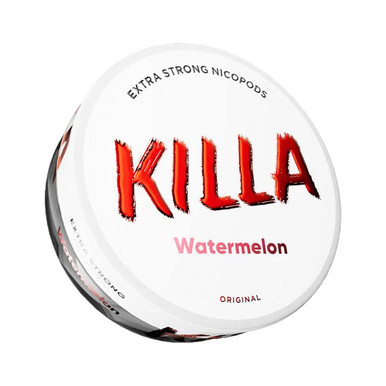
This page covers Killa Watermelon Nicotine Pouches. The brand recorded is Killa, the product name is Watermelon, and the price shown is £33.50. A single strength is declared, 16.5mg, which — being the only one — is both the top and the bottom of the range we hold. The listing is marked in stock at the time of writing, with one product image attached rather than a gallery. The flavour tag is watermelon. That is the complete record.
It is worth noting one small thing that goes right here, because on most of our listings it does not. The flavour tag and the product name say the same word. There is no broader family heading standing in for the fruit and no second element in the name that our filing cannot see. If you want this fruit specifically, the watermelon shelf and its 23 products is a genuinely precise route rather than an approximate one. That is unusual enough in our catalogue to be worth pointing out.
The full guide to Killa Watermelon Nicotine Pouches
5,032 words on how it eats, who it suits, how to serve it and what to put beside it.
Killa Watermelon: the listing as our system records it
What goes wrong is the same field that goes wrong everywhere else. Cans per pack is not recorded for this product. The field is empty. We therefore cannot tell you whether £33.50 buys a single tin or a multi-can roll, and we are not going to work backwards from what other listings cost to produce an answer, because that is a guess with the appearance of a fact. Since this page spends a long section on how people buy and reorder, that gap sits right at the centre of it, and we deal with it there rather than hoping you do not notice.
Everything below is built from those fields, from comparison against other listings on the same shelves, or from a plain statement that we do not know. No ingredient lists, no description of what a pouch does once in place, and no statement about anyone's wellbeing in either direction. Where an obvious question would need invention to answer, the answer is that we do not hold the information.
This is an adult nicotine product, listed on the basis that the buyer is 18 or over and already uses nicotine. The required wording has its own section at the foot of the page.
About the words on the label
The brand word is Killa, and the address of this page carries the phrase extra strong. Both are the manufacturer's. We reproduce them because that is how somebody looking for this product finds this page, and for no other reason at all.
A brand name is a trademark — a word registered and printed because somebody decided it read well on a lid. A range phrase is how a manufacturer partitions its own catalogue. Neither is an assessment we have made or verified, and neither implies this tin is a better buy than one with a quieter name. We state that at length rather than briefly, because naming of this kind does persuasive work on its own if nothing interrupts it.
Which leads to the point that matters most on a page in this part of the catalogue. Nothing in the naming describes a level to be reached. There is no progression in our catalogue, intended or implied. A product name is not a grade. A figure on a lid is not a score. Using a particular tin is not an achievement and is not evidence of anything about the person using it. We hold no view on what anybody should be using, we are not qualified to hold one, and we would keep it off the page if we did.
Our own filing disagrees with the naming, and we would rather show that than smooth it over. The URL contains the range phrase, but our shelf placement puts this tin in the Strong grouping of 132 products rather than on the shelf named after that phrase. Two labelling systems that do not align. We are not going to pick one and present it as the truth.
Watermelon as a taste and as a smell
Watermelon is one of the more distinctive flavour names in this category because the fruit itself is defined as much by what it lacks as by what it has.
Actual watermelon is mild. It is watery, lightly sweet, faintly green at the edge, with very little acidity and almost no aromatic weight. It is refreshing rather than intense, and that mildness is the whole character of the fruit. Flavourings named for it, though, rarely reproduce that faithfully, because a faithful reproduction would be extremely quiet. Most watermelon flavourings amplify — they bring the sugar forward and add a candied, slightly artificial top note that reads instantly as watermelon even though it is some distance from the fruit on a plate. That gap between the fruit and the flavouring is not a criticism of either; it is simply how the category works, and being aware of it sets more accurate expectations than the product name does on its own.
The result is a flavour profile that typically sits high on sweetness, very low on sharpness, and light rather than heavy in body — refreshing in register even without any cooling element in the name. The aroma on opening a tin tends to be immediate and unmistakable, because the amplified top note is the volatile part and it lifts straight out.
Whether this particular can leans towards the mild, watery reading or the amplified, candied one, we cannot tell you. We have not tasted it, we operate no tasting panel, and inventing the findings of one would be the least defensible thing we could put here. What we can state with confidence is the narrow fact: the product is named Watermelon, our tag says watermelon, and the flavouring is built to read as watermelon.
One further observation about how the flavour behaves in this format, offered as a category note rather than a claim about this tin. Light, sweet profiles of this kind generally lead strongly and fade fairly quickly, because there is no heavy element underneath to carry a long finish. A cooled version, of which we stock several, uses the cold element to extend the impression. This listing is not named for one.
The tin and the pouch, in practical terms
Beneath the naming, the object is a small round tin holding a ring of soft rectangular pouches, closed with a two-part lid.
Format and placement
Pouches are produced in several formats and the practical difference between a standard one and a slim or mini one is how aware of it you are. A pouch goes between the gum and the upper lip, usually off to one side, and stays there. A larger pouch fills more of that space and is more likely to register as a change in the lip line; a smaller one less so. Our record states no format size for this product, so we are not going to assert one. The tin says, and the first pouch out of it tells you more than a paragraph can.
Exactly where to place one is a small personal knack rather than a method with a correct answer. Some people seat a pouch flat along the gum, others push it further back, others move between sides through the day. We are not in a position to teach a technique and will not imply that a right one exists.
How long one stays in
The honest range runs from roughly ten minutes to the better part of an hour. Flavour usually drives the decision, since flavouring releases hardest at the start and thins from there, and with a light profile of the kind this name suggests the interesting part arrives and departs sooner than it would with something heavier. We publish no recommended duration. A recommendation about how long to keep a nicotine product in the mouth is dosage advice whatever language it is wrapped in, and that is not ours to give in any form.
The catch well and disposal
The upper part of the lid is hollow and serves as a catch well: somewhere for a used pouch to go when there is no bin nearby. It is temporary holding, not storage. Left loaded it stops the lid seating, which lets air at the pouches still in the ring, and after a day or two it makes the tin unpleasant to open.
Empty it at the next bin. Used pouches go into general waste, wrapped if you prefer — not into a sink, not into a drain, not into food waste and not onto the ground. Keep used pouches and the tin itself away from children and animals. A small tin of soft objects is exactly what a dog will get into, and this is a nicotine product.
What 16.5mg is for
The declared figure is 16.5mg, and this section is about how much weight that number can honestly carry.
It is a per-pouch figure declared by the manufacturer and reproduced by us from the supplier record. It is label information. It is the number to quote when setting this listing against another, because it is the only number both listings will provide. That is the whole of its usefulness.
It is not a measurement anybody independent has verified, and certainly not us. Manufacturers do not all declare on an identical basis, so two tins showing the same figure are not guaranteed to be describing precisely the same thing. It is not a description of how anything will feel, because that does not live in a number. And it is not a tier, a level or a rank. A larger figure is a larger figure — not an upgrade, not a milestone, not a target, not proof of anything about the person holding the tin. Nobody should be working towards a number, and nothing about how our catalogue is arranged suggests they should.
We cannot advise which strength suits anyone. That is the position, not a disclaimer appended to a recommendation. Suitability is a question about a particular person; we know nothing about anybody reading this, we do not ask, and we would not act on an answer if we had one. What we can show is our sorting. This tin is filed as Strong, and we keep further shelves for products filed as Extra Strong and Medium Strength. Those are filters on declared numbers, built for browsing. They are not advice, and the order they appear in implies nothing at all.
How people actually buy this format, and the question we cannot settle
This is the section worth the most of your attention, because it is where the missing field in our record does real damage, and because the mechanics of buying this format are genuinely less obvious than they look.
The single tin and the roll
Products in this category are conventionally sold two ways: as an individual tin, or as a sealed multi-can roll, which is several tins banded together as one unit. The distinction matters enormously for reading a price, because a roll costs several times what one tin costs and a listing price alone does not tell you which you are looking at.
For this product, we cannot tell you which it is. Our cans-per-pack field is empty. That is not us being coy — the data is simply absent from the supplier record we hold, and rather than fill the gap with an inference we are naming it. £33.50 could reasonably describe either arrangement depending on the supplier's convention, and reasoning from the figure to the answer is exactly the kind of confident guess we will not publish.
The two places that will settle it are the basket page, which shows what is actually being added to your order, and the packaging itself, which states the contents. Check one of them before ordering rather than relying on any product description, including this one. That advice sounds like we are passing the problem back to you, and in a sense we are — but a shop that invents a quantity is worse than a shop that admits it does not have one.
How reordering tends to work in practice
Setting aside what our data does not say, there are a few practical observations about how this format is bought that are worth making, none of which are encouragements to buy more.
The first is that the reorder point for a physical product is easy to miss, because a tin gives very little warning. Unlike something that empties gradually and visibly, a ring of pouches looks reasonably full until quite suddenly it is not. People who buy this format regularly tend to notice they have run low at an inconvenient moment rather than a convenient one, and the practical response is simply to check the tin occasionally rather than to keep a larger stock than you would otherwise want.
The second is that buying in larger units and buying more often are different decisions that often get conflated. A roll, if that is what a listing is, does not change how much anyone uses; it changes how often they place an order and how much is tied up at once. Those are logistics and cost questions rather than anything else, and we would not present a larger unit as a reason to use more. We have no interest in that framing and it is not one we will write.
The third concerns condition, which connects to the storage section below. An unopened tin held for a while and a tin in daily use are in different situations, and a spare held in a drawer will keep its condition considerably better than one carried in a pocket for weeks. If you do hold more than one, the practical point is rotation: open the older tin first. Almost nobody does, which is why a drawer eventually produces a flat tin from the back that gets blamed on the brand rather than on the sequence it was opened in.
Comparing prices without the quantity
The missing field also undermines price comparison across our shelves, and it is worth spelling out how badly. At £33.50 this tin sits in the upper-middle of our listed prices. Above it are listings at £39.90, which is the common price at the top of our range. Below it sit listings at £29.90, £27.90, £14.95 and, at the bottom as printed, £4.19.
Laid out like that it looks like a value ladder and it is nothing of the sort. Cans-per-pack is not consistently recorded across our catalogue, so a listing at £4.19 and a listing at £39.90 are very probably not describing the same quantity of goods at all. The gap between them therefore measures nothing you can act on. The only sound use of price is a comparison where the quantity is visible on both sides; where it is not, a price tells you the amount that leaves your account and nothing whatsoever about what arrives.
Within this brand the point is slightly different but no more helpful. Nearly every listing we carry from this manufacturer is £33.50, which looks like consistent pricing and may only be consistency of listing rather than of contents. We cannot confirm either reading.
Keeping a second flavour in rotation, and which ones contrast
The second thing worth going into properly is what people keep alongside a tin like this. A single flavour becomes background faster than two do, and people who use one steadily often hold a second of something unlike it. That is a pattern shops observe rather than a finding we can evidence, and it is offered as an organising idea for browsing rather than as a suggestion to buy more.
Staying with the same fruit
If watermelon is the thing you want and variation within it is enough, our shelf gives you several different treatments of it. The Clew watermelon at £39.90 and the Cuba White watermelon, also £39.90 are both plain single-fruit takes, and the Iceberg watermelon at £39.90 is a third. Those three are the closest comparisons to this listing and the most direct way to find out how much brands can differ on an identical fruit name. Denssi's watermelon freeze at £39.90 and the Velo wintry watermelon at £4.19 both add a cold element to the same fruit, which changes the profile substantially: cold lengthens what is otherwise a short, light flavour. The Killa Exclusive strawberry and watermelon at £33.50 pairs it with a second fruit instead, adding body rather than coolness.
Moving to a different fruit
For genuine contrast, the useful move is towards something with more acidity or more weight, since watermelon flavourings generally have little of either. Fumi's fiery lime at £27.90 goes hard in the sharp direction, which is about as far from a soft watery fruit as our shelves reach. Elf Bar's blueberry and raspberry at £29.90 moves into darker berry territory with more depth, and the 77 Ghost Mini mango listing at £39.90 is a heavier tropical fruit in a smaller format.
Leaving fruit altogether
Mint is the usual second tin for people who want a complete change rather than a variation, on the straightforward basis that it shares nothing with a sweet fruit profile. Edge Mint at £14.95 is the least expensive mint on our shelves as listed, and it is the only mint among the cans our record groups near this one, so if mint is the direction you want, the mint shelf rather than this page's neighbours is the place to browse. The quantity caveat given above applies to that price and to every other figure in this section.
This tin's place in the Killa listings we carry
We stock 31 products from this manufacturer, collected on the brand shelf. This is the watermelon entry at the £33.50 that most of the range shares, and the range itself varies by flavour rather than by declared figure in what we hold.
Among the fruit listings, the apple can at £33.50 is the crisp, higher-acidity entry and sits a long way from a soft watery fruit. The blueberry listing is darker and rounder, and Killa Banana Ice combines a heavy soft fruit with a cold note, which is the range's one example of the cooling axis being used deliberately.
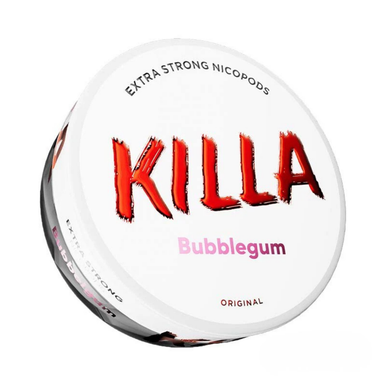
Away from fruit, the bubblegum can is the confectionery-named entry and is probably the closest thing in the range to this one in register, since both are built on sweetness with little acidity behind it. The cola listing is sweet but carries the spiced edge cola flavourings usually have, and the cappuccino can is the heaviest thing we stock from the brand — creamy and rounded, and the only listing in the set that goes anywhere near a bitter note.
Since the price is flat across almost all of those, price cannot help you choose within the brand. Flavour name is the only differentiator our data offers, and a flavour name is a name rather than a specification. That is an unsatisfying answer to "which of these is best" and it is the one our records support.
Looking after a tin once it is open
Storage is not complicated. Most of it is the obvious thing done consistently rather than occasionally.
Press the lid home rather than leaving it balanced on the rim. Flavourings are volatile — the reason a fresh tin smells of anything is that some of it is escaping — and a tin that is not properly closed loses aroma between uses while the pouches stiffen. Neither goes into reverse. With a light, sweet profile the amplified top note is the most volatile part and generally the first thing air takes, which is a category observation rather than a measurement of this product, but it is the practical reason to be fussy about the lid here.
Keep it out of heat and direct sunlight. The reliable offenders are a car dashboard in summer, a windowsill that catches the afternoon, the shelf above a radiator, and a coat left over a heater with the tin still in a pocket. A drawer, a cupboard, a bedside table or a zipped bag pocket are all better. The effect accumulates over weeks rather than hours and shows up as a tin that reads noticeably flatter than the identical one before it.
On refrigeration: we have no instruction to give in either direction. Storage guidance is the manufacturer's to issue and is printed on the packaging. The only general point we will add is that consistency beats cycling — a tin that stays in one environment usually holds better than one moved back and forth between a cold fridge and a warm room. Store tins upright where you have the space, which keeps pouches in their ring rather than bunched to one side. And on dates, check the packaging: our record carries no date information at all, so we can neither confirm a marking exists nor estimate a shelf life.
What this listing gives you to choose between
Not much, and that is worth saying rather than dressing up. The listing carries one variant: 16.5mg at £33.50. No second strength, no alternative pack size on the page, no bundle. The decisions available are whether to buy it and how many to buy. If you wanted to change strength while keeping this flavour, this listing does not offer that.
Comparing across listings instead, the method is short and the same every time. Read the declared figure and treat it as label information. Check whether a quantity is stated, because a price without one is not a comparison. Treat a flavour name as a name. Then decide yourself, which is the step we cannot take for you.
Ordering, delivery and proving your age
The purchase is ordinary. The tin goes into the basket at £33.50, you check out, the order is dispatched. Our record marks it in stock at the time of writing, though stock is live and any listing can change between reading a page and placing an order — ordinary for any shop rather than specific to this one.
Age verification is the part that is not ordinary and it belongs in plain sight rather than in small print. This is an 18+ product sold to adults who already use nicotine. Checks apply at the point of ordering and ID may be requested on delivery. If the person at the door cannot produce it, the courier is entitled to take the parcel away again. A check that cannot fail is not a check.
Three things follow. Keep ID to hand when a delivery is due. Do not arrange for a parcel to be left in a porch, with a neighbour or in a safe place, because nobody is verified in any of those cases. And do not order on behalf of anyone under 18, which reads like boilerplate and is not.
Finding your way here and onwards
Three shelves carry this tin. The strength grouping holds 132 products, the brand grouping 31, and the flavour grouping 23. As noted at the top, the flavour route is unusually precise for our catalogue because the tag matches the product name exactly, so if the fruit is what you are after, that shelf is the one to bookmark.
Above all three sits the full catalogue on a single page, with brand and flavour shelves branching off it. Other brand shelves work the same way — everything we list from Pablo and the Cuba brand shelf are two of the larger ones and worth opening if either name already means something to you. There is no correct route through the site and no reason for us to steer you along one.
Common questions, and the ones we cannot answer
Is £33.50 for a single tin or for several?
We cannot tell you. The cans-per-pack field is empty for this product, so our record does not distinguish between a single tin and a multi-can roll. It is the most consequential gap on this page and we would rather name it than paper over it. The basket page shows what is actually being added to your order and the packaging states the contents; either will settle it before you commit.
How many pouches are in a tin?
Our record does not hold a pouch count and we will not state one. It is printed on the packaging. An estimate risks being wrong for the version of the tin that reaches you, and deriving one from price or from other brands' conventions would be guesswork presented as information. This is simply another field our supplier data leaves blank.
Does the flavour actually taste like watermelon?
We cannot tell you, because we have not tasted it. What we can say is that the real fruit is mild, watery and lightly sweet with very little acidity, while flavourings named for it usually amplify the sugar and add a candied top note that reads as watermelon more emphatically than the fruit itself does. Where this tin sits between those two readings is a question the tin answers.
Is there a cooling element in this one?
Nothing in the name suggests one and our record gives no indication of one. Products built around a cold element are almost always named for it — freeze, ice, wintry and so on — and several watermelon listings on our shelves are. This one is not, and that naming convention is the only evidence available to us either way.
Which strength should I buy?
We cannot answer that and will not approach it from any direction. Suitability is a question about a person and we know nothing about anyone reading this page. The listing declares one figure, 16.5mg, and offers no alternative. If you want to see how the catalogue sorts by declared number, the strength shelves do that sorting and nothing more.
Does a bigger number mean a better product?
No. A declared figure is label information and nothing else, and larger is not better, more advanced, or a stage anyone should be aiming for. We would also say plainly that nothing in our catalogue is arranged as a sequence to move along, whatever the naming on any particular range might suggest to a reader.
Should I keep a spare tin?
That is entirely your call and depends on how you order rather than on anything we can advise. The only practical observations we will make are that an unopened tin kept somewhere cool and dark holds condition better than one carried daily, and that if you hold more than one it is worth opening the older first. Nothing about holding a spare should be read as a suggestion to use more.
How long should a pouch stay in?
People range from around ten minutes to close to an hour and we publish no recommended figure, because a recommendation on duration is a form of dosage guidance. The thing worth knowing is that flavour comes through hardest at the start and tails off, and that lighter profiles tend to complete that arc sooner than heavier ones.
What is the hollow part of the lid for?
It is a catch well for used pouches, so one has somewhere to go when a bin is not nearby. Temporary holding rather than storage. Emptying it matters practically for two reasons: a loaded well stops the lid seating, which lets air at the remaining pouches, and a tin left full becomes unpleasant to open.
How do I dispose of a used pouch?
General waste, wrapped if you would rather. Not down a sink, not down a drain, not in food waste and not on the ground. Keep used pouches away from children and animals, along with the tin itself. A used pouch from an age-restricted product is still part of that product and worth treating accordingly.
Why does the same fruit cost £4.19 on one listing and £39.90 on another?
Most probably because the two listings are not describing the same quantity of goods, though we cannot confirm that, because cans-per-pack is not consistently recorded in our data and is absent for this product. A figure that low and a figure that high are unlikely to refer to the same unit. Until the quantity is visible on both listings, the gap between two prices tells you nothing you can act on, and we would rather say that than let a price table imply a ranking it does not support.
Does our record say anything about pouch size?
No. Format size is another empty field, so we cannot tell you whether this is a standard, slim or mini pouch, and we will not infer it from the brand or from the price. The packaging states it. This is one of several fields where our supplier information stops short of what a buyer would reasonably want, and listing them openly seems better than leaving you to discover them one at a time.
Is there a best-before date on the can?
Check the packaging — if a marking exists that is where it will be printed. Our record holds no date information for this product, so we can neither confirm one is present nor estimate a shelf life. Telling you where to look is more useful than inventing a figure that would look authoritative and mean nothing.
Is it in stock right now?
Our record marks it in stock at the time of writing, with one product image on the listing. Stock is live, so the basket page rather than this paragraph is the authority. If it has sold out since this page was written, the site will say so at the point you try to add it.
The legal and compliance notice for this listing
This product is for adults aged 18 or over who already use nicotine. It is not sold to anyone else and it is not directed at anyone else.
Nicotine is an addictive substance.
This product is not a licensed stop-smoking medicine. It is not intended for non-smokers, for people who do not already use nicotine, for anyone under 18, or for anyone who is pregnant or breastfeeding. Nothing on this page is medical advice, and we give no guidance on suitability for any person or any condition.
ID may be requested on delivery. Age verification applies to this order, and a parcel may be refused or returned if proof of age cannot be provided.
Keep out of reach of children and animals.
The short version
Killa Watermelon is a single-flavour tin at £33.50 with one declared figure of 16.5mg, tagged watermelon on a shelf of 23 — one of the few listings where our tag and the product name agree exactly — marked in stock, with one product image and no cans-per-pack figure recorded at all. Those are the facts we hold. The rest of this page has been the flavour described as taste, an honest account of why we cannot tell you what £33.50 buys, the tins people keep alongside this one, and a plain statement of where our information stops.
More from Killa
More strong pouches

More watermelon pouches
Where this sits
Killa Watermelon Nicotine Pouches appears in these categories. Browse them, or jump to something close.
You might also like