Elf Bar · 6mg–20mg
Read the full guide
Elf Bar Blueberry Raspberry Nicotine Pouches
£29.90
✔ In stock — ready to ship
100% tobacco-free
Free over £20
Same-day dispatch
Secure checkout
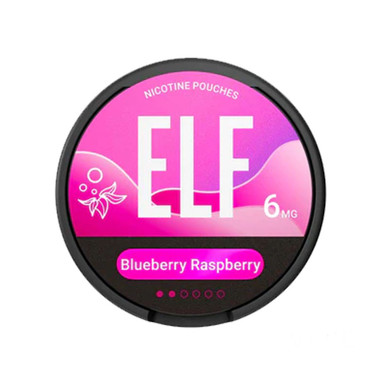
The can on this page is Elf Bar Blueberry Raspberry Nicotine Pouches. Our record gives the brand as Elf Bar, the product name as Blueberry Raspberry, and the price as £29.90. Three strengths are declared against it — 6mg, 12mg and 20mg — and all three carry the same £29.90 figure, so nothing about the number on the lid changes what you pay. The flavour tag we hold is berry. The stock field reads in stock as this page was written. One product image is attached to the listing.
That short list is the whole of our data. We did not write the recipe, we do not hold a specification sheet, and we are not going to fill the gaps with a confident guess dressed up as a detail. Where this page seems to stop short of a question you wanted answered, that is deliberate: the honest version of "we do not have that" is worth more to somebody deciding between two cans than a plausible sentence we made up. Everything below is either a description of the physical object, a comparison against other cans on the same shelves, or a plain statement of the limits of what we know.
The full guide to Elf Bar Blueberry Raspberry Nicotine Pouches
5,511 words on how it eats, who it suits, how to serve it and what to put beside it.
Blueberry Raspberry from Elf Bar: what the listing actually holds
This is an adult nicotine product. It is listed for people aged 18 or over who already use nicotine, and the full wording on that sits in its own section at the foot of the page. None of the description above it is addressed to anyone else.
Two berries, written down as a taste and nothing more
The name puts two fruits side by side, and the name is the most reliable thing anyone can say about what is inside. Blueberry and raspberry are not interchangeable notes. Blueberry, as flavour houses tend to render it, is the rounder and duller of the two — dark, slightly jammy, low on acid, with the sort of sweetness that sits flat rather than spiking. Raspberry is the brighter partner: thinner, sharper at the edges, with a small sour catch that shows up early and fades quickly. Put them together and you get a berry note with a soft body and a lifted top, which is roughly what most people mean when they say a pouch tastes of berries rather than of one specific fruit.
Whether this particular can leans blueberry or leans raspberry is not something our record states, and the order of the words on the lid is a naming decision rather than a ratio. We cannot tell you which fruit dominates. What we can say is what the tag means on our site: filing this under berry puts it with the other dark and red fruit cans rather than with the mint, citrus or cola families, and that is the only claim the tag is making.
Aroma is worth separating from taste, because the two do not always match in a dry pouch. Lifting the lid on a berry can usually gives a short burst of scent that is more concentrated than anything you get once a pouch is in place — the ring of pouches sits in a closed tin and the smell collects above them. That first note fades in the room within seconds. It is not an indication of how the can will behave in use, and a can that smells faint on opening is not necessarily a can that tastes faint.
The last thing to say about the flavour is that it will not hold at one level. Dry pouches of every brand and every flavour family taste strongest early and taper from there, and the taper is usually faster than people expect. A berry pouch that is vivid for the first stretch is likely to be quietly generic by the end. That is the format behaving normally, not a fault in the can, and it is the same story on a citrus or a mint pouch.
What the pouch does once it is in place
Out of the tin, a pouch from a can like this is a small soft rectangle with rounded ends, dry rather than wet to the touch, and light enough to vanish in a closed hand. It goes between the lip and the gum and stays put. We do not publish the pouch count, the pouch weight or the tin diameter for this product, because our record does not carry those figures and the can itself does. If you want the number of portions, read the top of the tin.
The first minute is the part people notice. A fresh pouch feels bulkier than it looks, and then the impression of bulk fades as it settles into the shape of the space it is in. After that most people stop being aware of it except when they move their lip deliberately. Talking is unaffected for almost everyone. Drinking is fine. Eating with one in is possible and plenty of people do it, though a pouch that has been pushed around by a meal often ends up needing repositioning.
How long anybody keeps one in is entirely a matter of habit, and the spread is wide. Some people take a pouch out after ten minutes because the flavour has gone flat and that is the part they were there for. Others leave one in for the better part of an hour and forget about it. We have no view on which is correct and we are not going to suggest a duration, because that is an instruction about consumption and it is not ours to give. The practical observation is simply that the flavour arc and the length of use are different questions, and people who chase the flavour tend to cycle through a can faster.
Disposal is the part that decides whether a can is pleasant to carry. The lid of a tin like this is hollow underneath — a shallow well with a lip around it — and that well is the catch compartment. A used pouch goes in there, the lid presses back down, and the tin holds the lot until you are somewhere with a bin. Two or three sit in that space comfortably. More than that and the lid stops seating flush, which you notice as a slight sponginess when you press it. The compartment is a courtesy to whoever empties your pockets, not a storage solution: emptied at the end of the day it is fine, left for a week it is unpleasant, and a used pouch does not belong down a drain or out of a window.
6mg, 12mg and 20mg read as numbers on a lid
The milligram figure is a declaration about the pouch, printed by the manufacturer. It is a way of ranking cans against each other on a shelf, and it is not a dose instruction, a recommendation, or a statement about what any individual will experience. We publish it because it is on the can and because people sort by it. We do not interpret it.
Across our catalogue the published figures run from low single digits to well past thirty, and the shelves we file cans on are cut from those numbers. This product spans an unusually wide slice of that range on its own: at 6mg it sits toward the gentler end of what we stock, at 12mg it is mid-table, and at 20mg it is firmly in the upper band. One product name, three quite different positions on the shelf. That is worth knowing before you add a variant to the basket, because the name on the lid will be identical in all three cases and the number is the only thing distinguishing them.
| Variant | Price | Where the number sits in our range |
|---|---|---|
| 6mg | £29.90 | Toward the lower end of the figures we publish |
| 12mg | £29.90 | Middle of the published range |
| 20mg | £29.90 | Upper band, alongside our Strong shelf stock |
One caution about reading across brands. A figure printed by one manufacturer and the same figure printed by another are not guaranteed to describe the same thing, because we do not know how each company arrives at its published number and we are not going to pretend otherwise. Comparing 20mg here against 20mg on a different brand's can tells you they have both chosen to print 20mg. It does not tell you they are equivalent in use. Within a single brand the numbers are at least internally consistent, which is why the ladder inside the Elf Bar range is the more meaningful comparison and the cross-brand one is the looser.
Buying rhythm: one can, a spare, and the reorder that never quite lands on time
This is the section most product pages skip, and it is the one that decides whether a purchase is a nuisance or not. The question is not which can to buy. It is how often you are going to be doing this, and what happens on the day the tin is empty.
Start with the unit. Our listing for this product is priced at £29.90 and our record does not carry a cans-per-pack figure, so we are not going to tell you whether that price covers one tin or several. The variant table above is the honest limit of what we hold: three strengths, one price each. If the pack composition matters to your order — and it will, because it changes the arithmetic completely — the product packaging and the basket at checkout are the places that state it, and you should read the basket before you confirm rather than after.
That caveat matters more here than on some other listings because the neighbouring shelf prices vary so widely. Velo Icy Berries is listed at £4.19 and Nordic Spirit Max Foresty Berry at £4.49 — figures that only make sense as a single tin. Pablo Gold Edition Blue Raspberry sits at £19.95, Killa Blueberry at £33.50, and Clew Blueberry at £39.90. A price list spanning £4.19 to £39.90 inside one flavour family is not a quality ranking, and it is not a per-pouch comparison either. It is a signal that different listings are selling different quantities, and that comparing headline prices across them without checking what each one contains will give you a wrong answer every time.
How people actually reorder
There are, broadly, three patterns, and most people drift between them without ever deciding which they are on.
- Reactive. The can runs out, you notice, you order. This is the most common and the worst, because delivery takes days and the gap between the empty tin and the doorstep is the gap that sends people to whatever the nearest shop happens to stock. It also means every order is placed in a hurry, which is exactly when you stop comparing and start clicking.
- Threshold. You order when a can drops to roughly a quarter left. It requires you to look in the tin occasionally, which sounds trivial and is the whole discipline. Done properly it removes the gap entirely, and it is the pattern that most reliably turns the shelf price into the price you actually pay rather than the price you would have paid if you had planned.
- Calendar. A standing order on a fixed interval. Tidy if your rate is genuinely stable, and quietly expensive if it is not, because a drawer full of cans you did not need is money spent early on a product that does not improve with keeping.
Nobody needs to formalise this. The point of laying it out is that the reactive pattern is a default rather than a choice, and noticing that it is a default is usually enough to move somebody onto the threshold pattern without any further effort.
The case for a spare, and the case against a cupboard full
A single spare tin sitting behind the one in use is the cheapest insurance available. It covers the delivery window, it covers a delayed courier, and it covers the day you discover the tin in your coat was the last one. It costs nothing beyond bringing one order forward, and there is no downside to it beyond the shelf space.
Stockpiling beyond that is a different proposition. A can is a sealed tin of a dry product and it is not fragile, but it is not improving in a drawer either, and a large hold of one flavour is a bet that you will still want that flavour in three months. Flavour fatigue on a single note is real and widely reported by people who buy in bulk: the can that was vivid in week one is wallpaper by week six, not because the can changed but because the palate stopped noticing it. A large single-flavour hold is the most direct route to that. Two or three flavours in rotation, bought in smaller quantities, is the arrangement most heavy buyers end up at, and it costs the same.
Where the spare should live
Not in a car. The interior of a parked car in summer is the harshest environment a tin of anything is likely to meet, and a can that has cooked repeatedly is a can with a flatter flavour and a drier pouch than the one you bought. Not on a windowsill, for the same reason. A drawer indoors, a bedside cabinet, a kitchen cupboard away from the hob — anywhere with a stable indoor temperature and no direct sun — is entirely sufficient. This is not a product that needs special handling. It just needs to be kept away from the two things that do it harm, which are heat and daylight.
One practical note on switching cans mid-rotation
If you are running two flavours, open the second one before the first is finished rather than after. A half-used can that has been open a while and a brand-new can of the same thing do not always taste identical, and the difference is much easier to read when you have the two side by side than when you are working from memory a week later. It is a small habit and it tells you more about how you actually store your cans than any general advice on this page can.
Six Elf Bar cans, and what separates them on our shelves
Our Elf Bar category holds six listings. That is a small range by the standards of this site, and a small range is easier to describe honestly than a large one, because there is no need to generalise — you can simply name the cans.
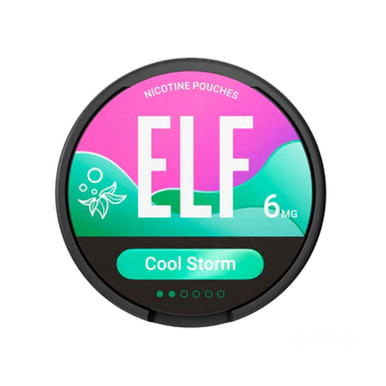
The first thing that stands out across the group is how consistent the commercial side is. This can is £29.90. Elf Bar Cool Storm is £29.90. Elf Bar Grape Ice is £29.90. Elf Bar Pineapple is £29.90. The strengths repeat too: 6mg, 12mg and 20mg appear on the listings we hold. What that means in practice is that choosing between Elf Bar cans is very nearly a pure flavour decision. There is no cheaper option to trade down to and no premium tier to trade up to. You are picking a taste, and then picking a number, and the two choices do not interact.
That is unusual and it is genuinely useful. On most of our brand shelves the flavour you want and the price you want pull against each other, and somebody ends up compromising. Here they do not. Somebody working through the range can try a second flavour without doing any arithmetic at all, which is why the Elf Bar shelf tends to be browsed rather than searched.
The flavour split inside the range
Set out by taste rather than by name, the range divides cleanly. This can is the dark-and-red berry entry — the two-fruit combination described above, sweet-bodied with a sharp lift. Cool Storm is the mint entry, and mint is the family that behaves least like the fruit cans in the group: cooler, drier in character, and the one people reach for when a sweet note has started to cloy. Grape Ice sits between the two camps, a fruit flavour built on a cool base, which is a different proposition from either a plain fruit or a plain mint. Pineapple is the tropical corner — a sharper, more acidic fruit note than the berries, and the most distinct of the fruit options.
Which of those suits any given person is not something we can or should decide. What we can do is describe how people tend to move around a range of this shape. Somebody who arrived at a berry can usually finds the next stop is either Grape Ice, because it keeps a dark fruit character while adding a cool edge, or Pineapple, because it is the biggest change available without leaving the brand. Cool Storm is the reset rather than the next step — the can people keep for the days when fruit is too much of a good thing. That is a pattern of behaviour, not a recommendation, and plenty of people go straight from berries to mint and never look back.
Who each can suits, stated carefully
The honest version of "who each one suits" is narrow, because the useful answer is about preference and nothing else. If you like a soft dark fruit with a bright edge, this can is the one in the range built for that. If you want cold rather than sweet, Cool Storm is the one. If you want both at once, Grape Ice is the compromise the range offers. If you want sharp and tropical, Pineapple is it. Those four sentences are the whole of the guidance we are prepared to give, and any page that offers more than that about a flavour is guessing on your behalf.
The strength decision runs alongside and independently. Every one of these listings carries the same three figures, which means moving flavour does not force you to move number and moving number does not force you to move flavour. If you have already settled on a figure that suits your habit, you can change can without changing anything else, and that is the practical benefit of a range this uniform.
Where this can sits among the berry stock
Our Berry shelf holds 76 listings, which makes it one of the larger flavour families we carry and one of the harder ones to navigate, because "berry" covers a great deal of ground. Blueberry, raspberry, strawberry, blackcurrant, mixed forest fruit and every iced variant of each are all filed there.
Against that backdrop, the two-fruit naming on this can is a narrowing rather than a broadening. It tells you more than a can simply labelled berry would. Denssi Blueberry Freeze, at £39.90, names one fruit and adds a cooling word, which is a different construction again. Fumi Blackcurrant, at £27.90, names a single fruit with no modifier at all, and blackcurrant is a sharper and more tannic note than either of the berries on this lid. Cuba Ninja Strawberry, also £39.90, goes to the sweetest and most immediately recognisable of the red fruits.
Further along the same shelf, 77 VB Edition Mini Arctic Berry at £39.90 is a mini-format can with a cold berry note, which changes the physical pouch as well as the flavour. The Cuba shelf is worth a look on its own if berries are the family you stay in, because Cuba runs a wide fruit line and most of it is filed alongside this can.
What people keep alongside it
Almost nobody runs one can. The tins are small, they sit in a drawer without complaint, and having a second flavour open is the simplest defence against getting bored of the first. Some pairings that come up repeatedly, with the reason each one works:
- A second blueberry, for comparison. Clew's blueberry can at £39.90 is the obvious candidate, because running two interpretations of the same fruit side by side is the fastest way to work out what you actually like about a flavour rather than what you assume you like.
- A blue raspberry, which is its own thing. The Pablo blue raspberry can at £19.95 names a confectionery flavour rather than a fruit, and it lands sweeter and more artificial by design. Useful as a contrast to a can that is trying to taste like fruit.
- A mint, as a palate break. Edge Mint at £14.95 is the cheapest way on our shelves to keep a cold can in the drawer, and a cold can is what most berry users reach for when the sweetness has stopped registering.
- A mixed-berry rather than a named one. The Velo icy berries can at £4.19 goes broad where this one goes specific, and the two do not compete for the same slot in a rotation.
- A forest-fruit note. The Nordic Spirit foresty berry can at £4.49 leans darker and more hedgerow than either fruit named on this lid.
- Something outside the berry family entirely. The Elf Bar pineapple can keeps you on the same brand and the same £29.90 while changing the flavour completely.
The thing all of those have in common is that none of them is an upgrade. A rotation is not a ladder. It is two or three cans that are different enough from each other to stay noticeable, which is the entire mechanism at work.
Storage, and what a neglected can looks like
A tin of dry pouches asks very little. Keep the lid on. Keep it out of direct sun and off anything warm. That is the whole of it, and it is enough for a product that is going to be finished in weeks rather than years.
The failure modes are worth naming so they are recognisable. A can that has been left somewhere hot — a car dashboard, a radiator shelf, a windowsill in July — tends to come back with a flatter flavour than it had. A can that has been left with the lid off or ajar dries further than it was meant to, and a drier pouch feels different in place and gives up its flavour faster. A can that has been rattling loose in a bag with the lid partly unseated will have pouches sitting out of their ring, which is cosmetic rather than important but does make it harder to take one out cleanly.
None of that renders a can unusable. It just means the last third is a worse version of the first third, and given the tins are inexpensive to store properly, there is no reason to accept that. A drawer is free. A dashboard is not.
On carrying a can day to day: a tin of this size goes into a jacket pocket, a bag pocket or a glovebox without difficulty, and a coat pocket is fine. The only thing worth being deliberate about is the catch compartment. Emptying it when you get home, rather than when it stops closing, is the difference between a tin you are happy to hand to someone and one you are not.
Choosing between the three strengths
Because all three variants of this product cost £29.90, the strength choice carries no financial consequence at all. That is unusual enough to state plainly, because on a lot of listings the higher figure costs more and the price quietly steers the decision. Here it does not steer anything.
What we can set out is what each figure means in terms of where it sits on our shelves, which is information rather than advice. The 6mg variant belongs with the gentler figures we publish and overlaps with the Medium Strength shelf stock in the way people compare cans. The 12mg sits mid-range. The 20mg is upper-band, sharing territory with the 132 cans we file as Strong, and above that the Extra Strong shelf carries the figures that go higher still — the Killa blueberry can at £33.50 being one example from the same flavour family.
We will not tell you which of the three to pick. Suggesting a strength as suitable for a particular person is advice we are not qualified or permitted to give, and anyone who tells you otherwise on a product page is doing something they should not be. The figures are published so you can compare cans. What you do with the comparison is yours.
On quantity: the same reasoning applies. We hold no cans-per-pack figure for this listing, so we cannot help you convert the price into a per-tin or per-pouch number. Check the basket. It is the only place on the site that will tell you exactly what you are buying, and it takes ten seconds.
Ordering, delivery and the age check
Our record marks this product in stock at the time of writing, which means it was available to order when this page was compiled. Stock moves, so the listing itself is the current answer and this sentence is not.
This is an age-restricted product and the sale is conditional on the buyer being 18 or over. We may ask for identification, and the courier may ask for identification at the door. A delivery that cannot be verified at handover does not get left. That includes leaving it with a neighbour, leaving it in a porch, or leaving it behind a bin — none of those are options on an order like this, however convenient they would be. Ordering to an address where somebody 18 or over will be present is the practical answer, and ordering to a workplace where a colleague may sign is not.
Beyond that there is little to say that is specific to this can. It is a small light tin, it posts easily, and it is not fragile. Delivery times, carriers and costs are handled at checkout and on our delivery pages rather than here, because those change and a product description that quotes them goes stale within a month.
Finding this can again, and what sits next to it
Three shelves carry this listing. It is on the Elf Bar brand page with the other five cans in the range, on the berry listing with the other 76 berry entries, and on our Strong shelf alongside 132 others. Which of those three is the useful route depends entirely on what you have already decided. If the brand is settled, the brand page is the shortest path. If the flavour family is settled and the brand is not, the berry page is. If you are sorting by the number on the lid, the strength shelves are the ones built for that.
The full shop listing is the place to start if none of the three is settled yet, though it is a long page and most people find a shelf faster. The Pablo range and everything Cuba we carry are the two other brand shelves most often browsed alongside this one, largely because both run broad fruit lines of their own.
Questions we are asked about this can
Does it taste more of blueberry or of raspberry?
We do not know, and we are not going to guess. The name lists both fruits and the order of the words is a branding decision rather than a stated ratio. Our record holds the product name, the price, the strengths, the stock position and a single flavour tag of berry — nothing about proportions. If the balance matters to you, the only reliable way to find out is to try a can, and that is an unsatisfying answer we would rather give than a fabricated one.
How many pouches are in a tin?
Our record does not carry a portion count for this product and we are not going to estimate one. The number is printed on the packaging, which is the authority on it. The same applies to the weight of an individual pouch and the dimensions of the can. Where the packaging states something and our data does not, the packaging wins and we defer to it rather than filling the gap.
Why do all three strengths cost the same £29.90?
That is how the listing is priced in our system: 6mg, 12mg and 20mg all show £29.90. We do not set manufacturer pricing structures and we cannot explain the reasoning behind this one. What we can confirm is the practical effect, which is that moving between the three variants of this product has no effect on what you pay. The choice of number is separated entirely from the choice of spend.
Is a 20mg can here the same as a 20mg can from another brand?
Not necessarily, and we would not rely on it. The figure is declared by each manufacturer and we do not hold information on how any of them arrives at their published number. Comparing the same figure across two brands tells you both chose to print it; it does not establish that the two cans behave alike. Comparisons within a single brand's range are the sounder ones, because at least the same company set all of them.
Where is this can made?
We cannot tell you. Country of manufacture is not in our product record and we do not publish facts we have not verified. Anything printed on the tin itself is the manufacturer's own statement and will be more reliable than anything we could reconstruct from a catalogue field.
Can I mix strengths or flavours in one order?
Yes. Each variant and each product is a separate line, so a basket can hold a 6mg of one flavour and a 20mg of another without any difficulty. People running a rotation usually do exactly that, and putting two or three cans in a single order is also the tidiest way to handle the delivery window rather than ordering one at a time.
How long does an opened can stay good?
We do not publish a figure for that and it would depend on storage in any case. What is fair to say is that a can kept lidded in a cool indoor drawer holds its condition better than one that has been through a hot car, and that a can left open dries out further than it was meant to. Any best-before information is on the packaging. Ours is a practical observation about keeping, not a shelf-life statement.
Is this suitable for me?
We cannot answer that. Suitability is a question about a person, and we are a shop with a product record, not anyone's adviser. We will not suggest a strength as appropriate for an individual or a circumstance, and we will not comment on anybody's situation. What we publish is the number on the can and where it sits relative to the other cans we stock. The decision is entirely yours to make.
Do you have this in a bigger pack?
Our record lists three strength variants at one price and holds no cans-per-pack figure, so we cannot confirm whether a larger format exists for this product. The basket at checkout states exactly what a given line contains, and that is the place to check before confirming. If a multi-can option is offered it will appear there rather than being something we can promise here.
What is the difference between this and Elf Bar Grape Ice?
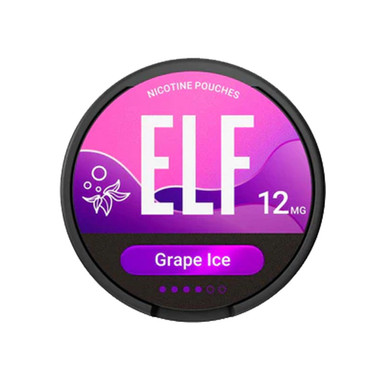
Flavour, and that is essentially all. Both are £29.90, both carry 6mg, 12mg and 20mg, and both sit on the same brand shelf. This can is a two-berry note; Grape Ice is a grape note built on a cool base, which puts it in a different family and gives it a cold edge this one does not have. Choosing between them is a taste decision with no price or strength consequence attached.
Will it stain or leave a residue?
We do not hold information on that and it is not something we are going to speculate about, since anything we said would be a claim about the product's effects rather than a description of it. The tin, the pouch and the catch compartment are what we can describe. What happens beyond that is outside what our data covers, and outside what we are prepared to guess at.
Is it back in stock quickly if it sells out?
We cannot commit to a timescale. Our record shows the current position and nothing about future deliveries, and a restock date we invented would be worse than no date at all. The listing page is the live answer. If it shows as unavailable, the rest of the Elf Bar range is the nearest equivalent shelf to look at while you wait.
The legal position, in plain terms
This product is sold to adults aged 18 or over who already use nicotine. We do not sell it to anyone under 18, and it is not offered or described to people who do not currently use nicotine.
Nicotine is an addictive substance.
This product is not a licensed medicine and it is not a stop-smoking aid of any kind. We make no claim that it assists with anything, and nothing on this page should be read as suggesting a health outcome in any direction. It is not intended for non-smokers, for anyone who does not already use nicotine, for under-18s, or for anyone who is pregnant or breastfeeding.
Proof of age may be requested when you order and may be requested again by the courier on delivery. An order that cannot be verified at the door will not be handed over. If you have any concerns about nicotine use, a qualified healthcare professional is the person to speak to, not a product page.
In short
A £29.90 can from a six-strong brand shelf, carrying a two-fruit berry name, available at 6mg, 12mg and 20mg for the same money. The flavour is a soft dark berry with a brighter edge; the format is a dry pouch in a lidded tin with a catch well underneath. What we do not know — the portion count, the ratio between the two fruits, where it is made — we have said we do not know rather than filled in. Everything else on this page is either on the can, in our record, or a plain comparison with the other cans sitting next to it.
More from Elf Bar
More strong pouches

More berry pouches
Where this sits
Elf Bar Blueberry Raspberry Nicotine Pouches appears in these categories. Browse them, or jump to something close.
You might also like