
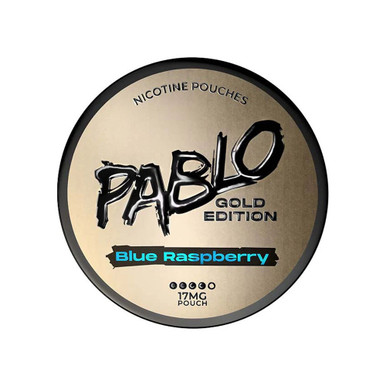
Pablo · 17mg
Read the full guide
Pablo Gold Edition Blue Raspberry Nicotine Pouches
£19.95
✔ In stock — ready to ship
100% tobacco-free
Free over £20
Same-day dispatch
Secure checkout
This listing is Pablo Gold Edition Blue Raspberry Nicotine Pouches at £19.95, declaring a single strength of 17mg. The flavour record carries one entry: berry. One variant, one product image, and the listing is available at the time of writing.
Those few items are the entirety of what our catalogue holds. Brand, product name, price, declared figure, a single flavour tag, stock position. Everything further down this page is one of three things — a description of the physical object, which belongs to the format rather than to this particular tin; a comparison against other listings on our own shelves, where we can quote recorded prices and figures; or a straightforward acknowledgement that something is not in our record. The third category is larger than most product pages admit, and we would rather show the gaps than paper over them.
The full guide to Pablo Gold Edition Blue Raspberry Nicotine Pouches
5,072 words on how it eats, who it suits, how to serve it and what to put beside it.
The record behind Pablo Gold Edition Blue Raspberry
Two of those gaps deserve naming before anything else, because both bear directly on what you are buying.
The first is the flavour tag. The can is named Blue Raspberry; our record files it under the single word berry. That is not a contradiction so much as a loss of resolution. Our shelf tags sort cans into families so that they can be found, and the berry family takes in raspberry, blueberry, strawberry, blackcurrant and everything adjacent to them without distinguishing between them. The tag tells you which aisle the can stands in. The name on the lid is the more specific of the two, and where they differ in detail the name is what to read.
The second is pack quantity. Our record carries no cans-per-pack figure for this listing. The price we hold is £19.95, and nothing in the record says how many tins that covers. This catalogue contains listings priced at £4.19 and listings priced at £39.90, and differences on that scale usually indicate that a listing holds more than one can — but usually is not the same as recorded, and for this product we have not been given the number. Treat the listing page and the basket as authoritative rather than drawing a conclusion from the price.
And the point that governs the whole page: this is an age-restricted nicotine product for adults who already use nicotine. The full position is set out at the foot.
Berry, and the particular problem of the words "blue raspberry"
Our record gives one flavour word. The can gives two more. Between them there is rather more to unpack here than on most pages, because "blue raspberry" is not a description of a fruit.
There is no such thing as a blue raspberry you could buy in a shop. The phrase belongs to the vocabulary of confectionery and soft drinks rather than to horticulture — it names a flavour-and-colour convention that anyone who has been near a sweet shop recognises instantly, and which does not correspond to anything growing on a plant. That is worth stating plainly, because a buyer expecting a raspberry note and getting a confectionery note is a buyer who has misread the name rather than been misled by it.
What the convention conventionally tastes of is a sweet, bright, slightly synthetic berry shape — recognisably in the raspberry direction, but louder and rounder than the fruit, with the tartness smoothed off and the sweetness pushed forward. It is the sort of flavour that reads as a sweet first and a fruit second. People who like it tend to like it precisely because of that; people who want the actual fruit usually find it too broad. Neither reaction is wrong, and knowing which camp you fall into before you order is worth more than anything else on this page.
Our own tag, berry, is silent on all of that. It puts the can on a shelf with 75 others and stops there. It cannot tell you whether a listing leans sweet or tart, whether it reads as fruit or as confectionery, which berry leads, or how any of it develops over the time a pouch is in place. A one-word tag is a filing decision, not a description, and it should not be read as one.
One absence is worth flagging since it changes the character of a can substantially: nothing in this product's name or record carries a cooling descriptor. No ice, no freeze, no arctic, no frost. If a cold finish matters to you, the presence or absence of that word in a name is the only signal available on either side of this transaction, and a can that prints one is the surer purchase.
Turning two or three words into something you can actually taste
It is worth spending a section on how flavour naming works in this format generally, because it accounts for most of the surprises people report when they move between cans.
Start with the structural point. A drink delivers flavour with enormous assistance: volume, temperature, sometimes carbonation, the act of swallowing, and a quantity large enough to fill the whole mouth at once. A dry pouch has none of those advantages. It is a small object sitting still in one position, releasing a flavour gradually and locally rather than all at once and everywhere. Every difference between how a name reads on a can and how it reads in the mouth traces back to that.
Names are references, not reproductions. A blue raspberry note in this format is identifiable as blue raspberry. It is not a mouthful of anything, and it was never built to be. Most disappointment in this category comes from expecting the second thing and being handed the first.
Bright notes survive the format better than subtle ones. A flavour with a sharp, high, immediately recognisable shape holds up in a small dry object. A quiet, complex or savoury note tends to collapse into general sweetness. This is why confectionery-style names are so common across these shelves and why so many of the cans in the berry family lean loud rather than delicate. Nordic Spirit Max Foresty Berry at £4.49, in stock, is an example of the opposite approach — a name reaching for a woodland, mixed-berry character rather than a confectionery one.
Blends and single fruits behave differently. A single named fruit gives you one thing to judge. A blend gives you a composite in which no individual note is meant to dominate, and the proportions are never published. Elf Bar Blueberry Raspberry at £29.90, available, names two berries outright; Killa's blueberry can at £33.50, also in stock, commits to one. Neither approach is better and our record cannot tell you which suits you.
A cooling descriptor changes the whole reading of a fruit. Cold and sweet is a different experience from sweet alone, and the fruit half is often perceived as sharper when something cold sits underneath it. Denssi Blueberry Freeze, £39.90 and in stock, and Velo Icy Berries at £4.19, also available, both print that signal in the name; this can does not.
And the same tag covers wildly unlike things. Clew Blueberry at £39.90 and Cuba Ninja Strawberry, also £39.90, are both in stock, both filed in the berry family, and neither is a substitute for this can or for each other. Our shelf groups them. It does not equate them.
What the format involves, mechanically
The product is a small white sachet, soft, dry, roughly bean-shaped and bean-sized. It rests between the upper lip and the gum, usually towards one side, held there by the lip without anything further being required of you. There is no apparatus attached to it: nothing to charge, no battery, no cartridge, no refill, no spare component, nothing to clean and nothing that can stop working. The tin and what is inside it constitute the whole product.
In use it is still and soundless. Nothing is held, nothing is operated, no gesture is involved. That is a statement about the object's physical properties, nothing more — the question of where it may be used is dealt with in its own section below and is not one we answer.
Duration is a matter of individual habit and our record says nothing about it. Some manufacturers print guidance on the can; where they do, the can governs. We are not going to publish a length of time, a number per day, or any other quantity, because that would be instructing you in the use of a nicotine product, which a shop should not do.
On disposal: used pouches go in a bin. Not down a sink, not down a drain, not on the pavement. Tins in this format usually include a separate compartment under the lid so that a used pouch has somewhere to sit until a bin is available; it is meant to be emptied rather than filled up. Cans, sealed or open, belong out of reach of children and animals.
17mg, and what a printed figure does and does not mean
The listing declares 17mg and offers no other option, so the figure describes the can rather than presenting you with a decision on this page.
The number is a manufacturer's declaration. It is printed on the tin by whoever made it, and we reproduce it exactly as supplied because accurate reproduction is the useful thing a retailer can do with a label. We put it to one further use: filing. Declared figures sort cans onto strength shelves, which is why this one sits on the Strong shelf among 132 listings, while the catalogue separately maintains an Extra Strong shelf and a medium shelf for cans printing other numbers.
It is not a score. It is not a grade, a ranking or a target, and a higher printed figure does not make a can better, more serious, or more worth owning. The shelves are a filing system and not a sequence — there is no order to move through, nothing at one end to arrive at, and no sense in which a can declaring a larger number represents an accomplishment. A can printing a low figure is exactly as much a product as one printing a high figure, and this paragraph would read the same on either page.
The figures are also not portable between brands. Every manufacturer declares by its own method, we hold none of those methods, and we could not reconcile them if we did. Two cans printing identical numbers from two different houses are not equivalent products.
And the part that matters more than the rest of this section combined: we cannot advise you on which strength suits you. Not on the basis of what you have used before, not by build, not by frequency, not by anything. We do not know you, we are not qualified, and a retailer offering that judgement would be doing something well outside its competence. The figure is on the lid, accurately reproduced. What you do with it is yours to decide.
Carrying one, and the questions we decline to answer
The format is unobtrusive, and people naturally ask what follows from that. Some of what follows is a plain fact about an object. The rest is a question about permission that we are going to refuse clearly, along with the reasons.
The plain facts first. The whole product is one rigid tin, small enough for a coat pocket, a bag's inner compartment, a glovebox or a drawer. There is no second item, nothing to remember to charge, nothing that runs flat, nothing needing a surface or a spare hand. In use there is no sound and no equipment. All of that is true of every can on the Pablo shelf and of every can elsewhere in this catalogue, because it describes the format rather than the brand.
Now the questions. People ask whether they can use one at a desk, in a meeting, in a restaurant, at a cinema, in a hospital, on a bus, on a train, on a flight, in a hire car, in a gym, on a building site. They ask what they may pack in hold baggage and what they may carry through customs. Those are all reasonable questions and we answer none of them, for the following reasons.
We are not the party that sets the rule. Whoever controls a space decides what happens in it. Employers publish policies and those policies differ between companies and often between two sites of the same company. Venues set house rules. Rail, bus, coach, ferry and air operators set conditions of carriage, and airlines maintain separate rules for what may be carried, what may go in the hold and what may be used in the cabin. Schools, hospitals and public buildings run their own policies. None of these organisations has told us anything, none is bound by what we print, and any of them may change position tomorrow.
An answer from us would carry no weight and some risk. If a product page confidently stated that something is permitted somewhere, and it was not, the person holding the can would carry the consequence and our page would have caused it. That is a straightforwardly bad trade for the customer.
Cross-border rules are their own category. Nicotine products are regulated very differently from one country to the next, and what is ordinary here may be restricted or prohibited elsewhere. A UK retailer's product description is not a source of customs guidance and should not be used as one. Check the destination's own rules before travelling with anything.
So the answer is always the same: ask whoever runs the place. Read the notice, consult the staff handbook, check the conditions of carriage, ask at the desk. It takes a minute and produces a reliable answer, which is more than this page can offer.
One thing we will say outright rather than leave implied. The fact that this format does not announce itself is a property of the object, not a selling point we are promoting, and it is emphatically not a way around a rule. This product is for adults aged 18 or over who already use nicotine. Nothing here should be read as suggesting it be used to circumvent a policy, a restriction or an age limit.
Gold Edition, Exclusive, and what the names do not tell you
Pablo runs to 56 listings with us, split across named lines, and this can sits in the Gold Edition line. The name invites an assumption and we should deal with it directly, because it is the single most common misreading of this part of the range.
Gold Edition is the manufacturer's name for a line. It is not a quality grade, and it is not one we have verified. On our records the Gold Edition listings differ from the Exclusive listings in exactly two respects: the declared figure and the listed price. There is no third field in our data describing better materials, better flavouring, better anything. If you read the word gold as a promise of a superior product, that reading comes from the word and not from us, and nothing in our record supports it.
It is worth looking at what the two lines actually do on our shelves, because the pattern is not the one people expect. This Gold Edition can declares 17mg and lists at £19.95. The Exclusive siblings we hold declare a considerably larger figure and list at £3.85 apiece — a lower price attached to a higher printed number. Whatever else that tells you, it rules out the simplest story, in which a premium line costs more because it delivers more. The price difference much more plausibly reflects what a listing contains rather than what a can is, and since our record carries no cans-per-pack figure for this listing, we cannot close that question for you.
Within the Gold Edition line itself, Gold Edition Blueberry Peach Ice at the same £19.95 is in stock and is the direct in-line comparison — same price, same declared figure, a considerably busier flavour name, and a cooling descriptor this can does not have.
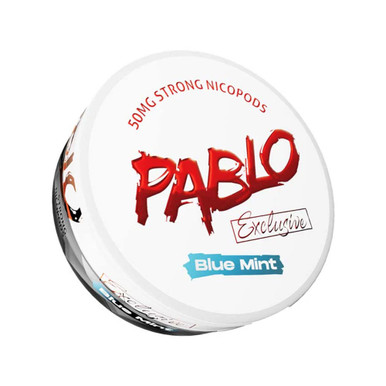
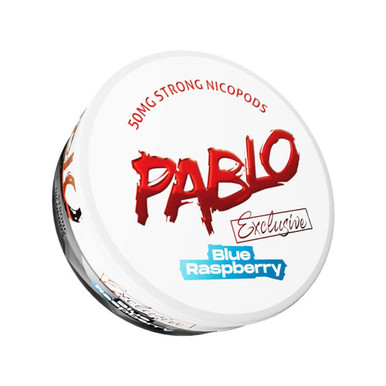
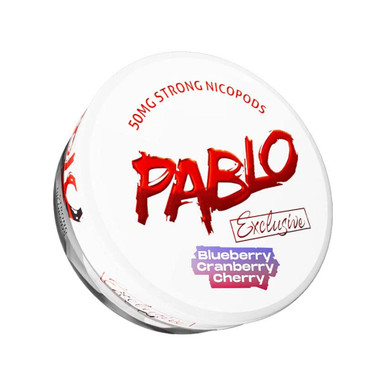
Across in the Exclusive line, the fruit names are where most of the range lives. Exclusive Blue Raspberry at £3.85, in stock, carries the same flavour name as this can in the brand's other line, which makes it the most direct comparison available anywhere in the catalogue. Exclusive Blueberry Cranberry Cherry, also £3.85, stays in the berry family and names three fruits rather than a confectionery flavour. Exclusive Banana Ice at £3.85 leaves the berry family entirely and adds a cold descriptor. Exclusive Bubblegum, £3.85 and available, is the line's other confectionery-named can and the closest thing to this one in spirit if not in fruit. And Exclusive Blue Mint at £3.85 is the mint-forward option for anyone who wants the brand without a fruit.
Other cans people keep in rotation with this one
Running a single can is unusual among regular buyers. A flavour you have every day stops registering after a week or two, and a spare tin is useful for its own sake. What follows are comparisons drawn from our own shelves, with price and availability stated so nothing comes as a surprise at the basket.
Closest in flavour family and cheapest to try is the Velo Icy Berries listing at £4.19, which is in stock and adds the cold note this can lacks. At the other end of the price range, the 77 VB Edition Mini Arctic Berry can at £39.90 is available and is a smaller-format listing in the same broad fruit territory.
If you want the berry family from a different house altogether, the options are unusually good. Clew's blueberry can and the Denssi blueberry listing with a cold descriptor are both £39.90 and both in stock. Cuba Ninja Strawberry at £39.90 moves to a different berry entirely and is available; the wider Cuba brand pages are worth browsing if that house style appeals. The Killa blueberry can at £33.50 and the Elf Bar two-berry listing at £29.90 sit between those extremes on price and are both in stock.
The efficient route, rather than picking one listing at a time, is the berry shelf, which holds 76 listings including this one and covers nearly everything you would consider. The full catalogue is there if you would rather browse without a filter at all.
One caution so you do not waste the click: the Iceberg Raspberry page is out of stock at the time of writing. It is the nearest thing on our shelves to a single-raspberry can, and the listing is live at £39.90, but it cannot be ordered at present.
Keeping a tin in usable condition
Press the lid home after each use rather than resting it on the rim. Air is what changes an open can over time, and a lid that is merely sitting in place is an open can in practice.
Store it somewhere cool and away from direct sunlight. A car parked in the sun is the worst place for a tin by a distance, and a bright windowsill is not far behind. Heat does not undo itself — a can left somewhere warm does not return to its previous condition once it cools down. Ordinary room temperature in a drawer, a cupboard or a bag is all that is needed; there is no special requirement beyond that.
Leave sealed tins sealed until you are ready to use them, and if you keep several, run them one at a time rather than opening the lot at once. Three open tins are three tins ageing. On whether to refrigerate, we take no view: our record is silent and the manufacturer's own labelling is the place to look.
Whatever else, keep cans out of reach of children and animals, whether open or sealed. A small, brightly printed container that rattles when shaken is exactly the sort of object that attracts the people who should not have it.
What there actually is to choose on this page
Very little, which is unusual and worth stating rather than padding around. The listing offers one declared figure, 17mg, at one price, £19.95. There is no variant selector and no recorded pack-size choice, so the decisions this section would ordinarily cover mostly do not exist here.
The choosing that remains is outward. If 17mg is not the number you are after, the answer is a different listing rather than a different option on this one, and the strength shelves are the fastest filter: 132 listings share the Strong shelf with this can, with the Extra Strong and medium shelves holding the cans that print other figures. Filter first, then read individual listings, because a strength shelf sorts by one number and tells you nothing whatever about how a can tastes.
On quantity, the answer is the one given at the top of this page: we hold no cans-per-pack figure. If it matters whether £19.95 covers one tin or several — and at that price it reasonably might — the listing page and the basket are where to settle it. Do not infer it from the price, and do not infer it from anything written here.
Ordering, delivery and the age check
The listing shows as available at £19.95 at the time of writing. Stock positions move and the live listing, not this paragraph, is the authority wherever they disagree.
This is an 18+ product. An age check forms part of checkout and applies to every order without exception, however long an account has existed. ID may also be requested on delivery, and where it is requested and no adult present can produce it, the parcel will not be handed over. The courier has no latitude on that and neither have we.
Dispatch follows a cleared age check. Delivery timings, carriers and postage are set out in the shop's own delivery information rather than here, because they apply across the whole catalogue and change independently of any single listing — an estimate written into a product description would be the first thing on the page to go out of date.
If a parcel arrives damaged, or a tin does not match what the listing described, contact us rather than resolving it yourself. One limitation is worth stating plainly in advance: opened age-restricted consumables are not generally returnable, which is a matter of hygiene and law rather than of commercial preference.
Where to find this listing again
Three filters and one unfiltered route. By brand, the can sits on the Pablo shelf with the other 55 listings in the range, Gold Edition and Exclusive together. By declared figure, it is filed under Strong. By flavour, it appears on the berry shelf, which at 76 listings is the broadest of the three and the best place to browse if you are open to something adjacent rather than identical.
The unfiltered route is simply the whole catalogue in one list, which is worth a scroll when you are not sure what you want. The site's filters stack — brand with strength, or flavour with strength — and combining two of them is almost always quicker than working down a long shelf by eye.
Questions that come up about this can
Is there really a blue raspberry?
No. The phrase belongs to confectionery and soft-drink naming rather than to any fruit you could pick or buy, which is why the flavour reads as a sweet-shop berry rather than as the fruit itself. That is not a criticism of the can — it is what the name has always meant. Our own record simplifies it further to the single tag berry. If you want a can that tastes of an actual raspberry, a listing that names the fruit without the colour is the better bet.
Why does your tag just say berry?
Because tags are a filing system, not a description. Ours sort cans into families so that people browsing the berry shelf find everything in that family, and the family swallows raspberry, blueberry, strawberry and the rest without distinguishing between them. The name printed on the can is the specific version; our tag is the coarse one. Where the two differ in detail, read the can's name.
Is Gold Edition better than the Exclusive line?
Our record gives no basis for saying so. The two lines differ in declared figure and in listed price and there is no further field describing quality, materials or anything else. Gold Edition is the manufacturer's name for a line, not a grade we have checked. Note also that this Gold Edition can declares a lower figure than the Exclusive cans while listing at a higher price, which is the opposite of what a premium-tier reading would predict.
Why is this £19.95 when Pablo Exclusive cans are £3.85?
Because listings differ in what they contain, and a price attaches to the listing rather than expressing a verdict on the product. A listing holding several tins will naturally carry a larger figure than one holding fewer. Our record does not state how many cans £19.95 covers for this product, which is precisely why we flag it rather than explain it away. Check the listing and the basket before ordering, and do not read the gap as a quality difference in either direction.
How many pouches are in the tin?
We do not hold that number and we will not estimate one. Counts differ between brands and between lines within a single brand, and two tins of identical outside dimensions do not necessarily contain the same number of pouches. The figure is printed on the can. A number invented for a product page would be worse than an honest gap.
Is there a chilled version of this flavour?
Not under this name. Nothing in the product name or our record carries a cooling descriptor, so there is no iced Gold Edition Blue Raspberry to point you towards. Cans that print ice, freeze, frost or arctic in their names are the ones to look at, and within the berry family the Velo and Denssi listings mentioned earlier both do. Within this brand's own Gold Edition line, the Blueberry Peach Ice can is the one carrying that signal.
Can I take these on a plane or use them at work?
We cannot tell you, and we would be an unreliable source if we tried. Airlines set their own conditions of carriage and separate rules for cabin and hold; employers publish their own policies, which differ between organisations and sometimes between sites. Other countries regulate nicotine products very differently from the UK. Ask the airline, read the staff handbook, and check the destination's own rules before you travel.
Do sealed cans go off?
Manufacturers apply date markings and the can is the authority on itself. Our record carries no shelf-life figure for this listing, so we cannot give a period in months and are not going to invent one. In practice the sensible approach is the ordinary one: keep sealed tins cool and out of sunlight, buy what you will actually get through, and read what is printed on the tin.
Can I run this alongside another can?
Plenty of people do, and nothing about the format prevents it. The only real consequence is the storage one: two open tins are both ageing where one open tin is only one, so keep the spare sealed until it comes into rotation. If the point of the second can is contrast rather than backup, something from outside the berry family will give you more of it than another berry listing will.
Does the tin have the compartment for used pouches?
Most tins in this format do, and it is the most practical piece of design in the category — a separate shallow space under the lid, sometimes a full false floor and sometimes a smaller crescent, so that a used pouch has somewhere to go when there is no bin nearby. Our record does not state which style this particular tin uses and we are not going to guess, but the can in your hand answers it in a second. Empty it into a bin rather than letting it accumulate.
Why does the lid carry the strength figure?
Because the lid is the only face of a can you ever actually read once it is in a drawer or a bag, and manufacturers across this catalogue have converged on putting the brand mark, the flavour name and the declared figure on that surface. It is a genuinely useful convention if you keep more than one tin about the place. A lid that does not declare its own number is a lid you end up prising off simply to work out which can you are holding.
Will you tell me which strength to pick?
No — not here, and not by email either. We do not know you, we are not qualified to make that assessment, and pointing anyone toward a particular nicotine strength is not something a shop has any business doing. What we will do is reproduce the declared figure exactly as it is printed and file the can on the right shelf so you can find what you are looking for. The decision itself is yours alone.
Legal and compliance information
Nicotine is an addictive substance.
This product is sold only to adults aged 18 or over who already use nicotine, and on that basis alone. We do not sell to anyone under 18. An age verification step runs at checkout, and ID may be requested on delivery; where it is requested and no adult at the address can produce it, the parcel will not be released.
Pablo Gold Edition Blue Raspberry Nicotine Pouches are not a licensed stop-smoking medicine and are not authorised, licensed or intended for any such purpose. This product is not intended for non-smokers, for anyone who does not already use nicotine, for under-18s, or for anyone who is pregnant or breastfeeding. Nothing on this page is medical advice, and nothing on it should be read as encouragement to begin using nicotine or as a recommendation of any strength for any individual.
Keep this product out of reach of children and animals. Every factual detail on this page — the product name, the brand, the £19.95 price, the declared 17mg figure, the berry tag and the stock position — comes from our own product record for this listing. Where the record is silent, the page says so rather than estimating. The can itself, and the manufacturer's labelling printed on it, is the authoritative source for anything appearing on the packaging.
Summary
Pablo Gold Edition Blue Raspberry: one declared figure at 17mg, one price at £19.95, a single flavour tag reading berry behind a confectionery-style name, in stock as this was written, and no cans-per-pack figure on our record. It sits among 56 Pablo listings, on the Strong shelf among 132, and on the berry shelf among 76.
Close the lid properly, keep the tin out of the sun, bin used pouches, and keep the can away from children and animals. What we hold is set out above, and so is what we do not.
More from Pablo
More strong pouches

More berry pouches
Where this sits
Pablo Gold Edition Blue Raspberry Nicotine Pouches appears in these categories. Browse them, or jump to something close.
You might also like