Elf Bar · 6mg–20mg
Read the full guide
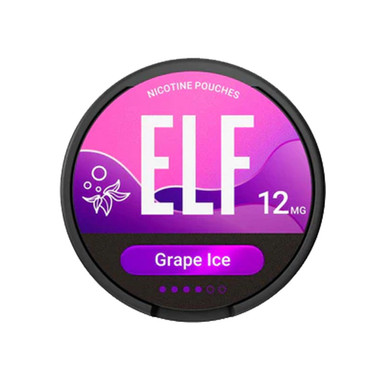
Elf Bar Grape Ice Nicotine Pouches
£29.90
✔ In stock — ready to ship
100% tobacco-free
Free over £20
Same-day dispatch
Secure checkout
Elf Bar Grape Ice Nicotine Pouches is listed at £29.90 and held in three declared strengths — 6mg, 12mg and 20mg — each of which carries the same £29.90 figure. Our catalogue files two flavour tags against it, mint and grape, in that order. Stock showed as available at the time of writing. One product photograph accompanies the entry. That is the sum of what we hold, and every line below is built either from those facts, from arithmetic we have done on them, or from comparisons against other cans sitting on our own shelves.
Where our record is silent, this page says so rather than filling the gap. The clearest example is pack structure: our catalogue does not record how many cans the £29.90 buys on this listing, so we are not going to name a number. Some products on the site are recorded as multi-can boxes and some are not, and the absence of a figure here means absence of a figure, nothing more. The listing page itself and the packaging you receive are the authorities on that, and if it matters before you order, ask us rather than reading an assumption into the price.
The full guide to Elf Bar Grape Ice Nicotine Pouches
5,085 words on how it eats, who it suits, how to serve it and what to put beside it.
Elf Bar Grape Ice, as our record has it
This is an adult product containing nicotine. It is sold only to people aged 18 or over who already use nicotine. The full wording sits in its own section further down, and nothing on this page is written to encourage anybody to consume anything.
The three figures and the one price
| Declared strength | Price |
|---|---|
| 6mg | £29.90 |
| 12mg | £29.90 |
| 20mg | £29.90 |
A flat price across a three-step ladder is worth noting because it is not universal. On plenty of listings elsewhere in everything we stock, the number printed on the lid moves the price. Here it does not, which means the decision between 6mg, 12mg and 20mg is made on grounds other than cost. We will come back to what those figures do and do not tell you, and we are not going to suggest which one belongs in your basket.
What the name describes: grape, and a cold finish
Two things are being named on this lid and they do different jobs. Grape is the fruit note. Ice is the convention this trade uses for a cooling character, and our own catalogue backs that up by filing mint against the listing alongside grape. So the tag pair is not an error or a duplication — it is the site recording, in its own vocabulary, that there is a cool element here as well as a fruit one.
On the fruit side, grape in a pouch generally reads as the dark purple sort rather than the pale green sort: rounded, slightly jammy, closer to cordial than to a bunch off the vine. It is a note with a lot of body and very little edge. It does not prickle. The aroma when a can is first opened is the same thing in miniature — sweet and confected, more like a sweet shop shelf than a fruit bowl, and noticeable enough that opening a can in a quiet room is not a discreet act.
The cool element arrives over the top of that rather than mixed evenly through it. In practice a grape-and-cool combination tends to present the fruit first and the chill a beat later, and the chill is what remains once the fruit has faded. Whether you read that as two flavours or one depends largely on how much attention you are paying. Casual use reads it as one thing. Deliberate tasting separates them without much difficulty.
Everything in this section is a description of taste and aroma. It is not a statement about what is inside the pouch, which we do not publish, and it is not a statement about anything the product does.
Placing this one on the cool, sweet, sharp and bitter axes
It helps to have a fixed set of axes when you are comparing cans, because brand copy across the whole category leans on adjectives that do not survive contact with a second opinion. Four axes cover most of what people actually notice: how cool it reads, how sweet it reads, how sharp it reads, and whether there is any bitterness on the finish. Here is where this can lands on each, described as taste and nothing else.
Cool
Present and clearly deliberate, but not the dominant reading. The name puts Ice second for a reason and the fruit is the headline. If you want the cool axis pushed as far as our shelves push it, the cans built around it as the whole point are a different proposition altogether — Clew Cool Mint at £39.90 and Denssi Cold Mint at the same £39.90 both sit at that end, and Klint Avalanche Mint at £36.90 names the intensity in the product title. Against those, a grape can with a cold finish is a moderate reading of the cool axis, not an extreme one.
Sweet
This is the axis the can is built on. Dark grape is one of the sweetest fruit readings in the category and it does not have a natural counterweight the way citrus or berry do. Expect confected rather than fresh, sustained rather than fleeting. The cool finish stops it becoming cloying, which is arguably what the cool element is there to do. If sweetness is the axis you want turned down, the mint-led cans are the obvious place to look — Edge Mint at £14.95 is the least expensive route to finding that out.
Sharp
Low. Grape carries almost no acidity in this format, and nothing in the flavour pairing here introduces any. Sharpness in a pouch tends to come from citrus or from an under-ripe berry reading, and neither is in play. This matters if sharpness is what you have been enjoying elsewhere, because moving to this can is a move away from it rather than a variation on it. Fumi Fiery Mint at £27.90 is a different kind of edge — a mint one rather than a fruit one — and worth a look if you want something less rounded.
Bitter
Essentially absent, which is the ordinary outcome for a fruit-and-cool can. Bitterness in this category usually signals a coffee, tea or botanical note, or a very dry finish on a strong mint. There is none of that here. The finish closes cool and clean and then stops.
Reading the four together
Put plainly: high sweet, moderate cool, low sharp, no bitter. That combination sits near the middle of the grape shelf, which currently holds fourteen listings, and it is a long way from the middle of the mint shelf and its hundred and forty-eight. Two other grape cans on the site give you the range: Killa Grape Ice at £33.50 and Pablo Gold Edition Grape Ice at £19.95 are the direct comparisons by name, and the £13.55 spread between those two prices is a fair illustration of how little the flavour name on a lid tells you about what a can costs.
The can, the lid and the everyday handling of it
Whatever the flavour, the physical routine is the same across almost everything we sell, and it is worth setting out once for anyone who is comparing formats rather than tastes.
The container is the standard round tin used across the category: shallow, flat-lidded, roughly the footprint of a large coin and a good deal thicker. The lid lifts clear and presses back down. It is deliberately stiff enough not to open in a bag and loose enough to open one-handed once you have done it a few dozen times. Cans from different brands are close enough in size that they store together in a drawer without fuss.
The catch compartment
The upper section of the lid on cans of this shape is a separate recess, usually called the catch. It exists so a used pouch has somewhere to go when a bin is not to hand: lift the outer cap, drop the used pouch in, close it. That is the whole mechanism. It is unglamorous and it is the single most useful piece of design on the object.
Two honest limitations. We do not hold a figure for how many used pouches the recess will take, and it would vary anyway with how damp they are, so we are not going to publish one. And the catch is not sealed the way the main body is — leave used pouches in there across several days and you will notice, by smell if nothing else. Empty it into a bin when you get the chance and the issue does not arise.
Portion and duration
Our record does not classify this listing by portion size — slim, regular or large — so we will not classify it for you. That information is on the packaging. On duration, the honest answer is that it varies by person and by can, that fifteen to forty minutes covers most of what people report across the category generally, and that flavour typically fades well before anyone chooses to take the pouch out. None of that is advice about how long to keep one in, and we are not going to give any.
A related point that catches people out when they move between formats: a pouch sits under the lip and is meant to stay put. Anyone used to something they hold or handle will find the first few sessions odd for that reason alone, and the oddness is about the position rather than the product. A pouch that will not settle is usually either badly placed or a portion size that does not suit the person, and both are things you work out by doing it rather than by reading about it. We can describe the format; we cannot do the sitting for you.
The other thing worth saying plainly is that the object does not signal anything about itself while it is in use. There is no indicator, no timer and no marker of any kind. People keep track by habit and by the fading of the flavour, which is imprecise, and that imprecision is simply a property of the format rather than a fault in this can or any other.
Disposal is straightforward. Used pouches go in general waste, in a bin — not down a drain, not on a pavement. The tin is plastic and goes wherever your council directs plastic of that kind; that varies by authority, so check yours rather than ours.
What 6mg, 12mg and 20mg are, as numbers
The milligram figure on a can is a declared quantity per pouch, printed by the manufacturer. That is the entirety of what it is. It is a label on a product, and this page treats it as information and nothing else.
Three things follow that are worth knowing and are not obvious. First, the figure is declared per pouch, not per can, so a comparison between two cans is only a like-for-like comparison if you already know both pack structures — and, as noted above, we do not hold this listing's. Second, brands do not all measure or declare on an identical basis, so a number from one manufacturer and the same number from another are not guaranteed to be describing quite the same thing. Third, and most often overlooked, the declared figure tells you nothing whatsoever about flavour intensity. A 6mg can and a 20mg can from the same range taste the same. People regularly expect the higher number to taste stronger, and it does not work that way.
Against our own shelves, a three-step 6–20mg ladder is unusually wide for a single listing. Most entries sit in a narrower band. That width is the practical reason to note this one: the same flavour is available across a spread that, elsewhere on the site, would require moving between three different products. For context on how we sort the catalogue, our Medium Strength shelf runs to a hundred and thirty-five listings, the Strong shelf holds a hundred and thirty-two, and the Extra Strong shelf takes the top of the range. This listing is filed under Strong even though its lowest option is 6mg; shelf placement follows the listing as a whole rather than each individual variant, and we would rather point that out than have you discover it as a surprise.
There is also the question of how the number is written, which sounds pedantic and turns out not to be. Some listings across the catalogue carry round figures and some carry awkward ones — you will find 4mg, 11mg and 15mg on other entries as readily as 6mg, 12mg and 20mg here. A round ladder like this one is a manufacturer's presentational choice rather than a sign of anything else, and an awkward figure elsewhere is not evidence of greater precision. Both are simply printed numbers, and comparing them across brands is a rougher exercise than the tidy arithmetic suggests.
What we will not do is tell you which of the three figures suits you. That is not a question a shop can answer, and any page that answers it is doing something it should not.
How a grape note gets built in a dry pouch
This is the part of the category people ask about most and get told about least, so it is worth taking slowly — with one boundary stated up front. We do not publish what is inside a pouch, we are not going to describe how any of it works, and nothing in this section is about contents. It is entirely about how a flavour presents in this format, which is a question about experience and timing rather than about materials.
A dry format holds one note and cannot change it
The first structural fact is that a pouch is finished at the point of manufacture and does not get adjusted afterwards. There is no dial. Whatever grape-and-cool balance the maker settled on is the balance you get, identically, in the first pouch of the can and the last. That sounds trivial until you compare it with the way people talk about flavour elsewhere in their lives, where quantity and dilution are usually adjustable. Here the only variable you control is which can you open.
The note arrives in stages, not all at once
The second structural fact is that a flavour in this format is experienced over time rather than in one hit, and makers build accordingly. There is an opening, which is the loudest and most confected part and which in a grape can is almost entirely the fruit. There is a middle, where the fruit settles and the cool element becomes equally audible. And there is a finish, which in a can named Ice is where the cool element is left holding the room on its own. A well-built can of this type is one where those three phases hand over cleanly rather than one where a single note simply gets quieter.
This is also why two cans with the same flavour name can be genuinely different products rather than copies. The Killa grape can and the Pablo Gold Edition one both carry the same two words on the lid as this one. All three are making a different decision about where the handover between fruit and cool happens, and that decision is most of what distinguishes them.
Why fruit names sit on top of a cool base so often
Look down our mint listings and then down the fruit shelves and you will notice how much overlap there is — a great many fruit cans carry a cool element as well, and a great many are named for it. There is a plain practical reason. A sweet fruit note with nothing behind it tends to flatten quickly and read as one-dimensional; a cool finish gives the palate somewhere to go and stops the sweetness sitting still. Grape, being about as sweet and as low-acid as fruit readings get in this category, benefits from that arrangement more than most. The same logic is visible in 77 VB Edition Mini Arctic Berry at £39.90 and Cuba Ninja Ice Cool at the same price, both of which put a cold word in the title next to something else.
Why the aroma and the taste do not always match
Opening a can gives you a concentrated version of the opening note only. It is the fruit, amplified, with the cool element barely represented. People who buy on the strength of a first sniff are sampling a third of the product. This is not a criticism of anyone's manufacturing — an aroma in a closed tin is a different physical situation from a pouch in use, and there is no reason the two should read identically. It is simply worth knowing before you conclude that a can smells nothing like it tastes.
Elf Bar's corner of our shelves
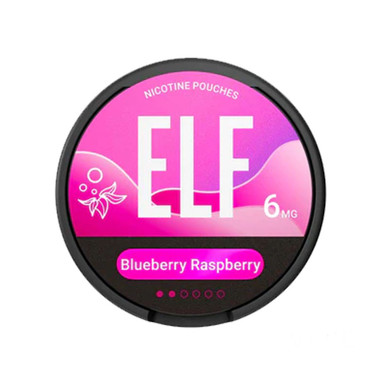
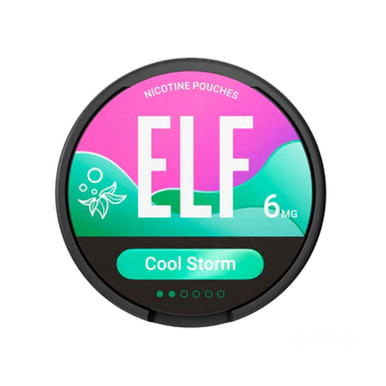
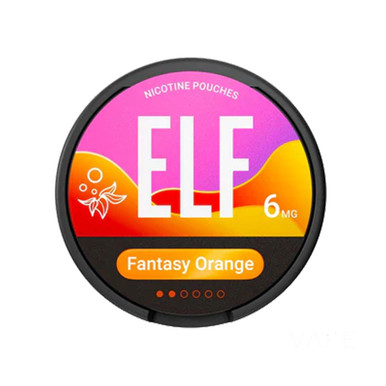
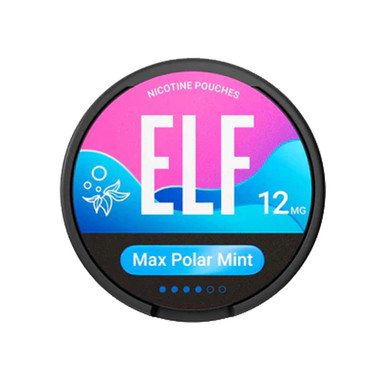
The Elf Bar shelf is one of the smaller brand collections here, at six listings, and it is priced with unusual consistency: this can, Elf Bar Blueberry Raspberry, Elf Bar Cool Storm, Elf Bar Pineapple, Elf Bar Fantasi Orange and Elf Bar Max Polar Mint all sit at £29.90. Whatever else you conclude about the range, price is not a variable within it, so a move from one to another is purely a move of flavour.
Read across the six and the shape of the range becomes clear enough. Blueberry Raspberry is the berry position. Pineapple is the tropical one and Fantasi Orange the citrus one. Cool Storm and Max Polar Mint both name a cool character in the title without naming a fruit at all, which puts the pair of them at the opposite end of the shelf from this can. Grape Ice occupies the dark, sweet, low-acid fruit position with a cold finish attached. Six listings covering five distinct flavour territories, with only the two cold entries treading anything like the same ground. That is a tidier range than a lot of larger ones manage.
One caveat on that shelf worth knowing before you click through: the Max Polar Mint entry was showing no stock when this page was written, so of the two cold options only Cool Storm was orderable. Its own page carries the current position and will be more up to date than this sentence.
Cans people keep alongside this one
Very few people run one flavour and nothing else. Palate fatigue is real, and a sweet, low-acid can is the sort that produces it fastest, so a second can in rotation is the ordinary arrangement rather than an indulgent one. Some sensible directions, each with a reason drawn from our own listings.
- For a straight contrast rather than a variation, a plain mint can is the usual partner. The Edge mint listing at £14.95 is the cheapest way to hold one in reserve.
- For the same grape name bought as cheaply as we sell it, Rush Grape Ice Extreme at £19.99 is the lowest-priced entry on the grape shelf and the quickest way to test how far two makers can take one fruit in different directions.
- For the same idea done at greater expense and with more emphasis on the cold end, Denssi's cold mint and Clew's cool mint both sit at £39.90.
- For a fruit note that keeps you away from grape entirely, the Elf Bar pineapple can at £29.90 stays inside the same brand and the same price, which makes it the least disruptive swap on this list.
- For something with a mint character that is not simply cold, the Fumi mint listing at £27.90 comes at it from a different direction.
- For cross-brand comparison on the same fruit, keeping Pablo's grape can at £19.95 alongside this one is the cheapest way to find out how differently two makers read the same word.
Choosing between the three figures
Since the price is identical at 6mg, 12mg and 20mg, the usual tiebreaker is removed and the decision rests entirely on the number. Here is what we can properly say about that.
We can tell you that all three carry the same flavour build, so nothing about taste is at stake in the choice. We can tell you the figures are declared per pouch. We can tell you that a 6mg can and a 20mg can from this listing will look and handle identically and that only the printed figure differs. We can tell you which of our shelves each end of the ladder would sit closest to if it were listed alone.
We cannot tell you which figure is appropriate for you, we are not permitted to, and we would not want to. That is not a question with a retail answer. If you have used nicotine products before, you will have a sense of where you sit; if you are uncertain about it in any way that touches your own circumstances, a healthcare professional is the right person to ask and a shop is not.
On pack size there is no choice to make here, because our record holds a single structure for this listing and does not state what it is. If you want a can count confirmed before ordering, ask us and we will read it off the product rather than guess in public.
Keeping a can in usable condition
Storage for this format is undemanding but not quite nothing. Cans keep best somewhere cool, dry, dark and stable — a drawer, a cupboard, a bedside table. The two conditions that actually degrade a can are heat and repeated temperature swings, which is why a car glovebox in summer and a windowsill are the two worst places people routinely choose.
Keep the lid properly closed between uses. It is a press-fit rather than a seal, and a can left ajar in a bag will lose aromatic character over days rather than hours. A can that has gone flat has usually been stored badly rather than manufactured badly, and a can that seems noticeably duller than the one before it is worth thinking about in that light before you blame the batch.
Buying several cans at once is fine on storage grounds provided they are kept in the same undramatic conditions. Use the packaging for a best-before date; we do not hold dating information in our catalogue and are not going to estimate a shelf life we cannot verify. Finally, and obviously: store cans where people under 18 cannot reach them.
Finding your way around from here
If this can is not quite the thing, the site is arranged so you should not have to guess. By flavour, our fourteen grape listings are the nearest neighbourhood, and the very much larger mint collection is one click further out. By brand, the six Elf Bar listings we hold are the shortest route to something at the same £29.90. By declared figure, the Medium, Strong and Extra Strong shelves split the catalogue three ways.
Two other brand shelves are worth knowing about because they turn up in comparisons throughout this page: the Pablo shelf and the Cuba shelf. And if you would rather scroll than filter, the full catalogue is one page.
Ordering, delivery and proving your age
The listing is £29.90 at every declared strength, so the basket total does not move with your choice of figure. Stock showed as available when this page was written, and the listing itself is the live position — if it has changed since, the product page will say so before checkout does.
Age verification is not optional and is not a formality. This is an 18+ product, we sell it only to adults who already use nicotine, and checks are applied at the point of purchase. ID may also be requested on delivery, so the person accepting the parcel should be prepared to produce it. A courier who is not satisfied is entitled to refuse to hand the order over, and that is the system working rather than failing.
Orders are dispatched in ordinary parcel packaging. We do not publish courier timings on product pages because they change; delivery information lives in its own part of the site and is kept current there. If something arrives damaged, short or not as listed, contact us with the order reference and we will deal with it.
Questions we are actually asked
Does the grape taste artificial?
It reads as confected rather than as fresh fruit, yes — closer to a cordial or a boiled sweet than to something off a vine. That is characteristic of grape across this whole format rather than particular to one maker, and whether you call it artificial or simply call it grape-flavoured is a matter of vocabulary. If you have found other grape products in this category too sweet, this one is unlikely to correct that. It is a description of taste and nothing more.
How many cans do I get for £29.90?
We do not hold that figure for this listing and we are not going to invent one. Our catalogue records a price and three declared strengths and does not record a pack structure. The packaging states it plainly, and if you need to know before ordering rather than after, ask us and we will check the product itself instead of estimating.
Is the 20mg version more grape-flavoured than the 6mg?
No. The declared milligram figure and the flavour build are separate things, and all three variants of this listing carry the same flavour. People often expect the higher figure to taste more intense and it is a reasonable assumption, but it is not how the numbering works. If you want a different taste, change the can rather than the number.
Why is this on the Strong shelf when it comes in 6mg?
Because our shelving follows the listing rather than each variant within it, and this listing tops out at 20mg. We would rather flag that than have you filter by strength and be surprised. If you are browsing by declared figure specifically, read the strengths on each entry as well as the shelf it sits on, because a wide ladder like this one will always look slightly odd in a three-way sort.
How does it compare with the other grape cans you stock?
By name they are direct equivalents; by price they are not. This one is £29.90, the Killa version is £33.50 and the Pablo Gold Edition version is £19.95. On taste, all three are working the dark, sweet, low-acid fruit position with a cool finish, and the differences are in where each maker puts the handover between fruit and chill. We cannot rank them for you and would not try.
Does the can smell strongly when opened?
Noticeably, yes. The opening aroma is the fruit note concentrated, and it carries across a small room. If discretion matters to you, opening the can is the conspicuous part of the routine rather than anything that follows it. This is true of most sweet fruit cans in the category and is not specific to this one.
Is this the same product as the mint cans you sell?
No, though our catalogue files a mint tag against it alongside grape, which is how the site records the cool element in the name. A can built entirely around mint is a different thing — the flavour is the whole proposition rather than a finish. If that is what you are after, the mint shelf is where to look rather than here.
Can I keep used pouches in the lid all day?
You can, and the compartment is designed for exactly that, but it is a temporary measure rather than storage. The recess is not sealed like the main body of the can, so several days of accumulated used pouches will announce themselves. Emptying it into a bin daily is what most people settle into, and it removes the problem entirely.
Where is this made?
We do not hold that information and we are not going to guess at it. Our catalogue records the brand, the price, the declared strengths and the flavour tags, and it does not record a country of manufacture. Any origin details are on the packaging, which is the only source worth relying on for it.
Do all three strengths ship in the same size can?
Our record holds one price and one flavour build across the three declared figures and gives no indication that the physical container differs between them, but it does not state can dimensions for any variant, so we are describing the general pattern of the format rather than confirming a specification. Cans in this category are close enough in size across brands that they stack together, and there is no reason to expect a difference within one listing. If exact dimensions matter, the packaging is the place to check.
Does opening a can more often make it go off faster?
Not in any way we can put a number on, and we are not going to pretend otherwise. What we can say is that the lid is a press fit rather than an airtight seal, that aromatic character is the first thing to fade in a can that has been left open or stored warm, and that people who notice a can tasting flat have usually stored it somewhere hot rather than opened it too many times. Closing the lid properly each time is the whole of the maintenance.
Will you tell me which strength to buy?
No. We can set out what the figures are, that they are declared per pouch, and that the price does not change between them — which is all factual and all of it above. Which one is right for an individual is not something a shop is in any position to judge, and it is not something we are permitted to advise on. If the question is really about your own circumstances, put it to a healthcare professional rather than to a retailer.
The legal position, in full
This product is for adults aged 18 or over who already use nicotine. We do not sell it to anyone under 18. Age checks apply at the point of purchase, and ID may be requested on delivery.
Nicotine is an addictive substance. That applies to this can at every declared strength on the listing, from 6mg to 20mg, and to every nicotine product on this site.
This product is not a licensed stop-smoking medicine and is not licensed as a medicine of any kind. It is not intended for non-smokers, for anyone who does not already use nicotine, for anyone under 18, or for anyone who is pregnant or breastfeeding. We make no health claim about it in any direction, and nothing on this page is medical advice. Questions touching your own circumstances belong with a healthcare professional rather than with a shop.
To sum up
Elf Bar Grape Ice is a £29.90 listing available in 6mg, 12mg and 20mg at that one price, carrying a dark, sweet, low-acid grape note with a cool finish behind it. On the four axes it is high on sweet, moderate on cool, low on sharp and free of bitterness. It sits on a six-listing brand shelf priced flat, among fourteen grape entries, and its nearest comparisons by name cost £33.50 and £19.95. If that is the can you want, the listing is above it; if it is not, the shelves and product pages linked through this page will take you somewhere more useful.
More from Elf Bar
More strong pouches

More mint pouches
Where this sits
Elf Bar Grape Ice Nicotine Pouches appears in these categories. Browse them, or jump to something close.
You might also like