Rush · 20mg
Read the full guide
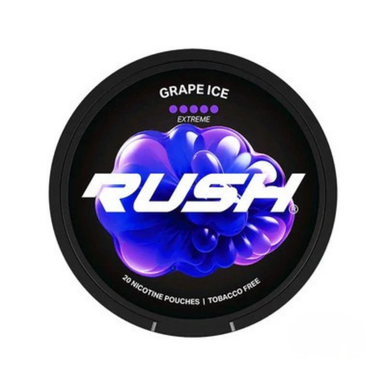
Rush Grape Ice Extreme Nicotine Pouches
£19.99
✔ In stock — ready to ship
100% tobacco-free
Free over £20
Same-day dispatch
Secure checkout
Start with the part that changes what you do next. Rush Grape Ice Extreme Nicotine Pouches are unavailable. The stock flag on our record reads out of stock, and it read out of stock on the day this description was written. No order can be placed against this listing. Putting that in the opening line is the only honest way to lay out a page like this, because the alternative is letting somebody read two thousand words about a can and discover at the bottom that there is nothing to buy.
The gap is not confined to this flavour. All twelve Rush listings in our catalogue read out of stock, so there is no in-brand swap available either. Every Rush can named below carries the same flag, and we say so at each mention rather than assuming anyone will carry the caveat in their head. Cans from other brands appear later on the page precisely because most of them can be ordered, and their stock position at the time of writing is stated alongside each one.
The full guide to Rush Grape Ice Extreme Nicotine Pouches
5,145 words on how it eats, who it suits, how to serve it and what to put beside it.
Grape Ice Extreme: availability first, then the facts
The record, then, in full. Title: Rush Grape Ice Extreme Nicotine Pouches. Brand: Rush. Price: £19.99. Declared strength: 20mg, one figure only, with a single variant line at that strength and price. Flavour tags: grape and mint, two of them. Images: one. The cans-per-pack field is empty, and there is no pouch count recorded anywhere against the listing.
Both of those blanks have consequences a shopper should know about. With no pack quantity, there is no per-can price on this page, and we will not construct one. £19.99 is what the listing asks. Whether that covers a single can or a sleeve is a question our record does not answer, and a guess dressed up as a figure would poison every price comparison further down. Similarly, with no pouch count, nothing can be said about cost per pouch. Those gaps get printed as gaps here, and they are the reason the money talk on this page stays coarse.
Everything after this section falls into one of three categories: a description of how the format works in practice, a comparison against other listings using figures we actually hold, or a flat admission that something is not in our record. No ingredients, no explanation of what happens after a pouch goes in, no claim about effects of any kind in any direction. The page is written for adults who already use nicotine.
Two grape cans, one range, and what we can honestly separate
This is the section most likely to save somebody a wasted decision, so it comes early rather than being buried in a comparison table at the end.
Rush lists two grape cans and this is one of them. The other is Icy Grape Pro. Set the two records side by side and here is what you get: same brand, same £19.99 price, same two flavour tags — grape and mint — on both. Where they part company is the declared figure. This can declares 20mg and carries the word Extreme; the other declares 11mg and carries the word Pro. Both are out of stock.
So the useful statement is the uncomfortable one. On taste, our catalogue gives no basis whatsoever for telling these two cans apart. The flavour data is identical. The price is identical. The brand is identical. The only difference our record holds is the declared milligram figure and the adjective on the lid. A shop that wanted to sell both would happily write two different flavour descriptions here and imply that one grape is brighter or rounder or colder than the other. We are not able to do that, because nothing in our record supports it, and writing it anyway would be invention rather than description.
What you may reasonably conclude is limited and worth stating precisely. The names differ. The declared numbers differ. Beyond that, if there is a genuine difference in the flavouring between the two cans, it is a difference the manufacturer has not expressed in anything we hold, and the labelling on the cans themselves is the only place to look for it. Treat the two as the same flavour profile at two declared figures until something more reliable than an adjective tells you otherwise.
Grape and cool, as flavour and nothing else
This section is about taste and aroma only. It is a considered reading of a two-tag flavour profile written to help somebody choose between listings, not a forecast of what any particular mouth will report.
Grape as a flavouring in this category behaves in a specific and fairly predictable way. It is almost never the taste of fresh table grapes. The reference points are purple: grape soda, boiled sweets, the grape flavour of a cordial or a chewy confection. There is a floral edge to it that people either like a great deal or find slightly perfumed, and that edge is the single most divisive thing about grape across the whole catalogue. If you have found grape flavourings soapy in other products, there is little reason to expect a different result here.
The second tag is mint, and that changes the reading considerably. In a can carrying both a fruit tag and a mint tag, the two do not usually sit as equal partners. The cool element tends to act on the fruit rather than beside it — the grape reads colder and tighter than grape normally does, the sweetness gets a sharper edge, and the finish is cleaner than a fruit-only can would give you. Whether you perceive that as mint in any leafy sense depends on how far the manufacturer has pushed it, and our record does not quantify it. The word Ice in the name and the mint tag in our filing are the same claim stated twice, and neither of them is a measurement.
Over the life of a pouch, this kind of pairing usually follows a pattern. The cool note is at its most obvious in the first minutes and in the aroma as the lid comes off. The grape holds through the middle. Towards the end the sweetness thins out first and what remains is the drier, cooler part of the profile. People who dislike sweet cans often find the final stretch the most tolerable part; people who came for the grape sometimes swap at that point. That is a description of how sweet fruit profiles generally behave in this format, not a claim about this can specifically.
What a pouch does, physically
The mechanics are nearly identical across every listing we publish, and being precise about them is more useful to a reader than another sentence about purple flavourings.
A pouch is a small sealed sachet holding dry material. It is soft enough to compress between finger and thumb and firm enough to keep its shape in a pocket. It sits between the upper lip and the gum, generally pushed to one side rather than centred, and it stays put once positioned. There is nothing mechanical about it — nothing to switch on, charge, refill or maintain. Nothing needs spitting out. Nothing is emitted that anyone else in the room would be aware of.
Our record does not state a physical size for this pouch, so we cannot tell you whether Grape Ice Extreme is a slim format or a wider one. Across the shelves in general, slim formats are longer and narrower and disappear under the lip with very little showing; standard widths are shorter and thicker and are more obvious to the wearer; minis are smaller again in both directions. Which of those applies here is a question the can's own labelling answers and we cannot.
Duration is decided by people rather than by products. Some take one out after ten minutes; others leave one in for the better part of an hour. Flavour is generally most defined early and tails off gradually, which is why most sessions end when the taste stops being interesting rather than at any particular time. We do not suggest a length of time, a frequency or a quantity, because that would be advice about use and this page does not give advice about use.
Used pouches go in general waste. Not down a sink, not down a drain, not into a lavatory. Cans of this general type usually include a small chamber under the lid for holding used pouches until a bin is available, which is a convenience rather than a storage solution — it fills fast and wants emptying regularly. Keep the can closed between uses and keep it well out of reach of children and animals.
20mg as a printed figure, and where we file it
The declared strength here is 20mg. Our shelves file products by the declared figure and by nothing else, which puts this can on the Strong shelf among 132 listings.
That will look wrong to anybody reading the lid, so let us deal with it directly. The word Extreme suggests the top of the range. It is not at the top of ours. The extra strong shelf sits above the Strong one and holds the cans whose declared figures run higher than 20mg. Grape Ice Extreme is filed one band below that, because filing follows the number and the number is 20mg. Extreme is a word chosen by a manufacturer for a lid. It measures nothing and it ranks nothing on our site.
The same applies to the rest of the brand's vocabulary, and it is worth being blunt because the names invite exactly the wrong reading. Light, Pro and Extreme are labels, not levels. None of them is a grade, a tier, a difficulty setting or a stage that anybody advances through. Sorting Rush cans by their adjectives produces a different order from sorting them by their declared figures, and only the figures are measurements. Read the milligrams; treat the word as decoration.
What a declared figure is good for is paper comparison. It lets you line up two listings and see which declares more, and it lets our medium band, Strong band and extra strong band function as a filter. What it does not do is describe an experience or predict how a can lands for an individual. And on the question everybody wants answered — which figure is right for you — we cannot advise, we are not qualified to advise, and nothing on this site suggests a declared strength is suitable for any particular person. The bands are shop furniture.
Buying rhythm: one can, a sleeve, and the spare in the drawer
How people buy in this category is a more practical subject than flavour notes, and it is a subject where we can be useful even about a listing that is currently unavailable, because the same arithmetic applies across the shelves.
Single cans against multi-can listings
Our catalogue contains both, and the price tags look wildly inconsistent until you notice that they are measuring different things. Edge Mint is listed at £14.95 and in stock. Klint Avalanche Mint is £36.90 and in stock. Clew Cool Mint is £39.90 and in stock. Those are not three prices for the same quantity of product, and reading them as if they were is the commonest mistake a shopper makes on a shelf page.
Where our record holds a cans-per-pack figure, that comparison can be made properly and the page in question makes it. Where the field is empty — as it is on this listing and across the whole Rush range — it cannot. This is the honest limit of what we can say about value here: £19.99 is the listed price, and we do not know how many cans that covers. If quantity is central to your decision, buy from a listing that states it, or read the figure printed on the can before you commit to a repeat order.
How reordering actually happens
The pattern people fall into is fairly consistent and it has little to do with marketing. Somebody works out roughly how long a can lasts them, and then reorders on a rhythm that puts the next one in the cupboard before the current one is finished. The reason is unromantic: running out is annoying, and a shelf being out of stock on the day you need it is more annoying still — a point this very listing illustrates better than any argument could.
That is why multi-can listings are popular even with people who only use one flavour, and why the spare in the drawer is the normal state of affairs rather than hoarding. It is also why the dated can matters: there is no advantage in buying six months ahead, because flavourings are volatile and a can kept too long is not the can you paid for. The sweet spot is enough cover to absorb a delivery delay or a stock gap, and not much more.
Keeping a spare, sensibly
If you keep a spare, keep it somewhere cool, dark and out of reach of children and pets, with the lid fully closed. A cupboard indoors is ideal. A car is not, in any season — a car interior in summer is the harshest storage in most people's lives. Do not decant pouches into another container, because the can is designed for the job and nothing improvised does it better.
The other half of keeping a spare is knowing what to do when the spare is the wrong flavour, which is where the variety section below comes in. Most people who keep two cans on the go do not keep two of the same, and the reason is that a single profile becomes wallpaper faster than anybody expects.
What a stock gap does to a buying rhythm
This listing is a live demonstration of the thing that breaks a settled routine, so it deserves a paragraph rather than a shrug. A brand going out of stock across its whole range is not the same as one flavour selling through. When a single can disappears, the obvious move is a sibling at the same price from the same maker, and the rhythm survives. When twelve listings disappear together, that move is unavailable, and anybody who had settled on a Rush can is choosing between brands whether they wanted to or not.
The practical consequence is that brand loyalty in this category is expensive in a specific way: the narrower the range you are willing to buy from, the more exposed you are to a gap like this one. People who keep a second brand in the drawer are not being indecisive, they are absorbing exactly this risk. It is also why the pairing section below is weighted towards cans from five or six different makers rather than a neat set from one — a shortlist spread across brands is a shortlist that still works when a shelf empties.
One more thing worth being straight about: we cannot tell you how long a gap will last, because we do not know. Restocking is not something our product record holds any information about, and a page that guessed at a return date would be making a promise the shop has not made. The availability flag is the whole of what we can tell you, and it currently reads unavailable.
Pairing across the shelves: what sits well beside grape and cool
Since this can cannot currently be ordered, this is the section with immediate practical use. Everything named here was in stock at the time of writing, with one clearly flagged exception, and every one of them is a can you could actually put in a basket.
Staying in grape
If grape with a cool edge is precisely the thing you want, three in-stock listings cover it at three different prices. Pablo Gold Edition Grape Ice at £19.95 is within four pence of this can's price and the nearest equivalent on money. Elf Bar Grape Ice at £29.90 sits in the middle. Killa Grape Ice at £33.50 is the dearest of the three. All three pair grape with a cool character the way this listing's two tags do, and the full grape shelf holds fourteen listings if none of those three suits.
Cool without fruit
The standard pairing for a sweet fruit can is a plain cool one, because the contrast is what keeps both interesting. Our mint shelf is the largest flavour shelf on the site at 148 listings, so the practical problem is narrowing it rather than finding something. Five worth naming, all in stock: the Edge mint can at £14.95, which is the cheapest listing mentioned anywhere on this page; Clew's cool mint at £39.90; Denssi Cold Mint at £39.90; Cuba Ninja Ice Cool at £39.90; and the Klint avalanche mint at £36.90. Those five are not interchangeable with one another, but they occupy the same broad territory, and the price spread between the cheapest and dearest is nearly twenty-five pounds.
Something deliberately unlike this
The pairing people most often regret is sweet against sweet, because two confectionery profiles blur into one another. If contrast is the aim, go further afield. Fumi Fiery Mint at £27.90 pushes in a warmer direction than a plain cool can. the 77 VB Edition mini arctic berry can at £39.90 moves to berry and to a mini format at once, so both the taste and the physical size change. Both were in stock when this was written.
And if you want the comparison closest to home, the honest answer is the one from earlier on this page: the nearest thing to Grape Ice Extreme in our catalogue is the other Rush grape can, and we cannot tell you how its taste differs, only that it declares 11mg instead of 20mg and that it is equally unavailable.
Rush, shelf by shelf
The Rush brand page carries twelve listings and one blanket caveat: not one of them can be ordered at present. What follows describes a range rather than a set of choices, which is still worth reading if you intend to check back later.
Pricing across the brand is flat. Every Rush listing we hold is £19.99, this one included. That is unusual and it simplifies things: within Rush there is no budget option and no premium one, so a decision inside the brand comes down to flavour and declared figure alone. It also means the missing pack quantity affects all twelve equally, so no per-can comparison is possible anywhere in the range.
On the Extreme side, its sibling is Rush Cherry Chill Extreme, which matches this can on the 20mg declared figure and the £19.99 price and differs by carrying a cherry tag alone where this one carries grape and mint. On the lower-declaring side sit the Pro cans — Rush Green Mint Pro in mint and Rush Berry Ice Pro in berry — and the Light cans, Rush Berry Ice Light and Rush Ice Cool Light. Rush Boost Mint rounds out the group named here. All six are £19.99 and all six are out of stock.
Read as a family, the naming is internally coherent: Extreme cans declare higher, Pro and Light cans declare lower. Read against the rest of the catalogue it means nothing at all, because no other brand calibrates its adjectives against Rush's. That is why our filing ignores the words entirely and files on the figure.
Storage, and what actually degrades a can
Three things work against a can: heat, air and time, in that order of severity.
Heat does the most damage and does it fastest. A can on a dashboard, a windowsill, a radiator shelf or in a sunlit bag is being cooked gently, and flavourings are volatile by nature. Air is next: a lid that has been left loose, or a can sitting open through a long conversation, dries out the contents. Time is the mildest of the three but not nothing, which is why the date printed on the can deserves a glance and why buying far ahead is a false saving.
The routine that follows from that is dull and effective. Lid firmly closed between uses. Can kept somewhere cool and out of direct light. Used-pouch chamber tipped into general waste regularly rather than left to fill. Can kept out of reach of children and pets without exception. Refrigeration is not necessary for anything we sell and we do not suggest it, because shuttling a can between cold and warm produces condensation, which is exactly the problem you were trying to avoid.
On the dry-versus-moist question: some pouches across the catalogue are drier in the hand and some feel moister, and that is a manufacturing choice rather than an indicator of freshness. Our record says nothing about which of those describes this can, so we cannot tell you, and the labelling on the can is where that question is settled.
The options on this listing, and there is only one
This is brief because the record is brief. One declared strength, 20mg. One variant line, £19.99. No second strength, no alternative pack size, no larger or smaller option. If you wanted to weigh two figures against each other within this listing, it does not offer that, and the choice becomes a choice between products instead.
For a different declared figure, the band pages are the quick route. The medium strength listings number 135 and sit below this can's figure; the strong band holds 132 including this one; the extra strong band sits above. Those are three filing drawers in a shop, not three recommendations, and we make no suggestion about which drawer anyone should be opening.
On pack size, the position is the one already stated twice and worth stating once more because it is the most consequential gap on the page: the cans-per-pack field is empty, so we cannot tell you what quantity £19.99 covers. Comparing this listing's price against a £4.49 listing or a £39.90 one is therefore comparing two unknowns, and any conclusion drawn from it would be worthless.
Ordering, delivery and proving your age
These mechanics are identical for every product on the site.
Sales are restricted to adults aged 18 or over. Age verification runs as part of the checkout process and cannot be skipped, and ID may be requested on delivery. If it is asked for and no adult at the address can produce it, the parcel will not be left. That applies to every order without exception and is not negotiable at the door.
Orders can contain as many listings as you like, provided each is available. What no order can contain right now is this can or any of its eleven siblings. If you want to see the whole picture rather than a shelf, everything we stock is the full catalogue; the shelf and brand pages linked throughout are faster when you already know what you are looking for.
We do not run a back-in-stock alert on this listing and would rather say so plainly than imply that a notification is coming. If this particular can is what you want, checking the brand page from time to time is the only reliable method, because the availability flag shown there is the same flag this page reads.
Finding this page again
This listing is filed in four places, each a different way in. By declared figure it sits on the Strong band with 131 other cans. By brand it is one of twelve on the Rush page. By flavour it appears on both the mint category, our largest at 148 listings, and the grape category, one of our smallest at fourteen — a two-tag product appears on two flavour shelves, which is worth knowing when you are browsing rather than searching.
Above those sit the hub pages. The complete shelf is the right starting point with no shortlist in mind. Brand hubs are the fastest route when the maker matters: the Pablo range and the Cuba shelf are two of the biggest we carry and, unlike Rush, both hold plenty of orderable listings at the moment.
Questions people ask about this can
Is it coming back into stock?
We do not know, and we are not going to imply otherwise. The flag currently reads unavailable, and the same is true of all twelve Rush listings. There is no notification list on this page. Checking the brand page occasionally is the honest answer, since it reads from the same availability data this description does.
What is the difference between this and Rush Icy Grape Pro?
In our record: the declared figure and the name. This can declares 20mg and says Extreme; that one declares 11mg and says Pro. Both are £19.99, both carry grape and mint tags, both are out of stock. On taste we have nothing that separates them, so we are not going to describe two different flavours where our data shows one. The cans' own labelling is the place to look for a difference we cannot document.
Why is a can called Extreme filed as Strong rather than Extra Strong?
Because we file on the declared number and the number is 20mg. Cans declaring higher figures than that sit on the extra strong shelf. The word on the lid is the manufacturer's choice of name and plays no part in where a product is filed. Where the adjective and the figure disagree, the figure is the one carrying information.
How many pouches does a can hold?
Not recorded. Our record holds the title, brand, price, one declared strength, two flavour tags, an image count and a stock flag, and a pouch count is not among them. The cans-per-pack field is blank as well. The can itself states these things and we are not going to estimate them to seem better informed than we are.
Does the mint tag mean it tastes of mint?
It means our filing records a cool element alongside the grape. In practice, in cans built this way, the cool part usually behaves like a temperature applied to the fruit rather than a second flavour standing beside it, but how far it has been pushed is not something our record quantifies. So: a cool character, almost certainly; a leafy herbal mint taste, we cannot say.
Is grape a sweet flavour here?
Grape flavourings in this format generally read as confectionery rather than fresh fruit — grape soda, boiled sweets, cordial — with a floral edge that divides opinion sharply. Whether this particular can leans heavily sweet or is tightened by the cool note is not in our record. If you have disliked grape flavourings elsewhere, there is nothing here to suggest a different outcome.
How long is a pouch meant to stay in?
That is a question about use and not one we answer. People range from a few minutes to close to an hour. Flavour is generally strongest early and fades. We do not recommend a duration, a frequency or an amount, and nothing on this page should be read as doing so.
Which of your strengths should I choose?
We cannot tell you. Our bands sort a catalogue; they do not assess a person. This listing offers a single declared figure with no alternative, so the only decision available is between products. No part of this site presents a declared strength as appropriate for any individual.
Who makes it and where?
We do not hold that. Our record has the brand name Rush and nothing about manufacturers, countries, dates or company history, and we are not going to fill those fields from imagination. The can's own labelling is the authority on anything of that kind.
Can I keep used pouches in the lid?
Cans of this type generally have a chamber for exactly that, and it is meant as a temporary holding place until a bin is to hand. It fills after a few, and leaving used pouches in a warm pocket for days does the fresh side no favours. Used pouches belong in general waste. Our record does not confirm whether this particular can is built with such a chamber.
Is a £19.99 can good value against a £39.90 one?
Unanswerable from our data, and we would rather say that than fudge it. Without a pack quantity on this listing, the two prices might cover very different amounts of product. Price comparisons on this page are therefore made between listings whose quantities are equally unknown, and treated as rough rather than meaningful.
Why does this can appear on two flavour shelves?
Because it carries two flavour tags, grape and mint, and our shelves file a listing under each tag it holds. So it turns up when you browse grape and again when you browse mint. A can with one tag appears on one shelf. That is worth knowing if you are working through a flavour page and wondering why a fruit can keeps appearing among the cool ones — it is not a filing error, it is a two-tag product doing what two-tag products do.
Is there anything in your record you have not printed here?
No. Title, brand, £19.99, 20mg, two flavour tags, one image, an empty pack field and an out-of-stock flag — that is the whole record and all of it is above. Every place this page says we do not know something is a literal statement of the position.
The required wording
Nicotine is an addictive substance.
Rush Grape Ice Extreme Nicotine Pouches are sold only to adults aged 18 or over who already use nicotine. Age verification is part of checkout, we do not sell to anyone under 18 in any circumstances, and ID may be requested on delivery; if it is requested and cannot be produced by an adult at the address, the parcel goes back undelivered.
This product is not a licensed stop-smoking medicine and carries no authorisation of that kind, nor is it offered, described or intended as one. It is not intended for non-smokers, for anyone who does not already use nicotine, for under-18s, or for anyone pregnant or breastfeeding. Nothing here is medical advice, nothing here encourages anybody to begin using nicotine, and nothing here presents any declared strength as suitable for a particular person. We make no health claim about this product in either direction.
Store the can closed and out of reach of children and pets, and dispose of used pouches in general waste. Every product fact above — title, brand, price, declared strength, flavour tags, image count, pack quantity and stock status — comes from our own record for this listing. Empty fields are shown as empty rather than filled in, and the manufacturer's labelling on the can is the authority for anything printed on the packaging.
The short of it
Grape Ice Extreme is a grape-and-cool can from Rush at £19.99 with one declared figure of 20mg, and it cannot be bought at present, along with every other Rush listing. The 20mg figure files it on Strong rather than Extra Strong, which contradicts the word on the lid — Extreme, Pro and Light are names a manufacturer printed, not ranks and not stages anyone works up through. Rush lists a second grape can, Icy Grape Pro, at the same price with the same two flavour tags and a lower declared figure, and our catalogue offers no basis for describing the two tastes differently, so we have not pretended to. With no pack quantity recorded, no per-can price appears anywhere above. For grape you can order today, the Pablo Gold Edition grape can at £19.95 is the closest match on price and was in stock when this was written. Everything our record holds is above, and the gaps are labelled as gaps.
More from Rush
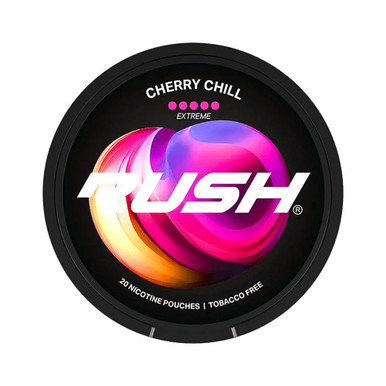
More strong pouches

More mint pouches
Where this sits
Rush Grape Ice Extreme Nicotine Pouches appears in these categories. Browse them, or jump to something close.
You might also like