Home / Low Strength / Rush Ice Cool Light Nicotine Pouches
Rush · 6mg
Read the full guide
Rush Ice Cool Light Nicotine Pouches
£19.99
✔ In stock — ready to ship
100% tobacco-free
Free over £20
Same-day dispatch
Secure checkout
Start with the unhelpful part. Rush Ice Cool Light Nicotine Pouches is marked unavailable in our record, and so is every other Rush listing we carry. There is no configuration of this page that ends in a purchase today. We have left the listing up because a catalogue that deletes anything it cannot currently sell is a catalogue nobody can navigate, and because the comparisons below are still worth something to a person working out what to buy instead. But nothing here is an offer, and if you need a can this week the useful links are the ones pointing at shelves rather than at Rush.
The record itself is brief. Price, £19.99. One declared strength, 6mg, in a single variant row at that price. Brand, Rush. One flavour tag, mint. One image. No can count, which means the number of pouches in the tin is not something we are able to tell you. That is the entire structured record, and this page is built out of those fields plus a description of the format in general terms plus a number of open admissions that we do not hold something.
The full guide to Rush Ice Cool Light Nicotine Pouches
5,171 words on how it eats, who it suits, how to serve it and what to put beside it.
Ice Cool Light: what the listing holds, and why you cannot order it
Two conventions apply to this page and to every product page on the site. We do not print composition or technical information — the manufacturer's labelling does that, and it is the authority. And we make no statement in any direction about what this or any other product does to a person. Where a question would need one of those two things to answer it, the answer here is that we do not hold the information. There is no way to make that entertaining and we have stopped trying.
Everything below is written for adults who already use nicotine. The full wording is at the foot of the page.
The words on the lid are Rush's, not our assessment
This range puts a tier word in nearly every product name. Light is on this can. Pro is on others. Extreme is on two more. Before anything else on this page is read, it is worth being exact about what those words are and are not, because they are the part of this range most often misread.
They are manufacturer naming. Rush prints them, we repeat them because they are part of the product's name and we are not going to rename someone else's can. That is the whole of it. They are not a scale we recognise, not a sequence, not stages, and not a description of the person holding the can. There is no first rung and no last rung. Nobody moves along them, nobody is ready for one and not another, and no can in the range is an improvement on any other can in the range. If you have seen this range laid out as a progression somewhere, that presentation was not ours and we would not endorse it.
It is worth adding that the tier words travel across flavours rather than tracking a single line. The same word appears on a berry can and a mint can; a different word appears on a cherry can and a grape can. That pattern tells you the words belong to the naming scheme rather than to any property you could verify by comparing two cans side by side.
Our own filing is a separate system that happens to sit in the same catalogue. We file this can, with its declared 6mg, on our low band, which holds fifteen listings. We file the 11mg cans in the range on the medium band. Those band labels are ours, they exist so that several hundred products can be narrowed down to something browsable, and they are neither a ranking nor a recommendation. Where the manufacturer's word and our band appear to line up, that is a coincidence of two systems, not confirmation of either.
Ice Cool as a flavour, described as taste
The only flavour classification in our record for this can is mint. The rest of the name is Rush's wording. "Ice" and "Cool" are flavour-naming conventions, and in flavour terms they point at a register rather than at an ingredient: the cold-reading end of mint, the register of a cold lozenge or a strong peppermint rather than the leafy, garden-herb end. Flavours read warm or cool the same way colours read warm or cool. Cinnamon reads warm. Peppermint reads cool. That is a property of the taste and of how it sits in the mouth, and it is the only sense in which we use words like cool or cold on this page.
We want to be precise about that, because names of this kind get read as promises about what a product does. They are not. A flavour named for ice is a flavour that tastes and reads cold. It is not a claim about a sensation the product produces, and we make no claim of that sort about any product on the site.
What varies inside the cold end of mint, and what is worth knowing when you are choosing between cans, is sweetness and dryness. Some cold mints are built with an obvious sweetness under them and land rounder. Others are built dry and land sharper, with a slight bitterness at the back of the taste. Both are honestly describable as cold mints and they are not interchangeable. Our record holds one tag for this can, mint, and does not tell us where inside that range it falls — so neither will we.
The wider point is that the mint grouping runs to 148 listings, which makes it comfortably the largest flavour shelf on the site, and that two cans sharing the tag can taste very little alike. The tag places a can in a family. It does not describe it.
The low band, and what this can is filed beside
This is the comparative section of the page, and it sets out to answer a practical question: this can is filed on our lowest band, so what else is there, and how do they differ? Three honest caveats shape the answer, and they come first because without them the comparison reads as more authoritative than it is.
Three caveats before any comparison
First, our record for this page holds the names, prices and availability of nearby cans, not their declared figures. We are not going to print another can's milligram number on this page from memory, because a number copied between pages goes stale as soon as a label changes. Each product page carries its own figure from its own record.
Second, figures are not comparable across manufacturers in any case. Different companies declare on different bases and there is no shared convention. Two numbers from two brands cannot be lined up and subtracted.
Third, and most importantly, nothing in this section is a recommendation. We can tell you what is on a shelf and what it costs. We cannot advise which strength suits anyone, and no arrangement of cans on this page should be read as one can being the right answer for a particular reader.
What the low band actually is
Fifteen listings, which makes it the smallest of our strength shelves by a long way. The medium band holds 135. That imbalance is worth knowing because it shapes what browsing the low band feels like: the choice is narrow, the flavour spread is thinner than elsewhere in the catalogue, and a fair number of the listings on it belong to brands that only put one or two cans in that band. If you filter to it and find nothing appealing, that is the shelf being small rather than the catalogue being empty.
Cans on our shelves that you can actually order
Since this can is not orderable, the useful comparison is with cans that are. In the mint direction, Edge Mint is listed at £14.95 and is in stock, which makes it the cheapest straight mint among the cans we hold near this one. Denssi Cold Mint at £39.90 is in stock and sits, by name, in the same cold register as this listing. Clew Cool Mint is also £39.90 and in stock. XQS The Spearmint at £39.90 is in stock and moves sideways into spearmint, which is a related but distinctly different taste.
Two further mint-adjacent options: 77 Melon Mint at £39.90 is in stock and puts a melon note in front of the mint, and Elf Bar Cool Storm at £29.90 is in stock with a name that points at the same cold register without naming a fruit.
Outside mint altogether, UBBS Spicy Cherry at £19.95 is in stock and is within pennies of this listing's price, Cuba Black Apple Juice at £39.90 is in stock in a straightforwardly fruit direction, and Fumi Dark Spice at £27.90 is in stock in a spice register that has nothing in common with any of the above.
One more name belongs here with a warning attached: ZYN Apple Mint is listed at £19.99, the same price as this can, and it is also out of stock. We are naming it because it is one of the closest cans to this one on price and flavour family, not because you can buy it. If you follow that link expecting to order, you will be disappointed in exactly the same way this page has already disappointed you.
What price does and does not tell you
The cans named above run from £14.95 to £39.90, and that spread is mostly about pack configuration rather than about what is inside a single can. Some listings are one tin. Some are multi-can packs. Our record does not carry a count for every listing, including this one. Comparing two headline prices without knowing what each one covers is the fastest way to reach a wrong conclusion about value, and it is worth checking the individual listing before assuming that the cheaper number is the cheaper product.
Handling the tin: lid, ring, well
The physical format is consistent enough across brands that it can be described without straying into anything specific to this can. A pouch tin is a shallow cylinder, wider than deep, sized to sit in a closed hand. The lid lifts clear and presses back with a definite seat. The printing on the lid face carries the brand, the flavour name and the declared figure, which is the practical way you tell cans apart when several are stacked in a drawer.
Inside, pouches sit in a ring, flat and close-packed. The first one out of a full tin takes a fingernail; after that they come easily. Our record holds no count for this listing so we will not estimate one, and the same applies to the tin's dimensions and the weight of a pouch. If it is printed on the packaging, the packaging is where to read it.
The lid's underside is hollow, with a lip around a shallow well. That well is the catch compartment and it is where used pouches go. It is the reason the format works away from a bin — on a train, in a passenger seat, at a desk. It takes several before it needs emptying, and when it is full the contents go into general waste. Not a sink, not a plant pot, not a window. Used pouches are small and pale and easy to lose on a surface, which is the practical reason to keep the lid on when there are children or animals about.
A pouch itself is a soft rounded rectangle, dry rather than wet to the touch. It goes under the upper lip and stays put. It reads bulkier in the first minute than afterwards, as it settles into the shape of the space. How long people keep one in varies so widely that quoting an average would be inventing a rule: some take one out inside ten minutes, others leave one seated the better part of an hour, and the same person varies through a day. Most people change when the flavour thins out, which is a preference rather than an instruction from us.
Six milligrams, read as a number on a lid
The figure declared on this listing is 6mg. It is printed by the manufacturer and repeated by us. It is not a measurement we have taken, not a grade we have awarded, and not a prediction of anything.
The two things worth understanding about that number are both limitations. It is not comparable across brands, for the reason given above. And it is not a scale of suitability — there is no sense in which a lower figure is for one kind of person and a higher one for another. The catalogue contains cans with figures well above and well below this one, and their existence is a fact about the market, not a route anyone should be walking.
We file this can on the low band on the strength of its 6mg, which is the whole basis for that filing. Other cans in the same brand carry 11mg and sit on our medium band. The bands above that — the strong band and the extra strong band — exist as browsing filters for people who already know what they are looking for. They are not tiers of achievement and they are not there to be worked through.
Worth saying once more in this section, because it is the one people arrive with: we cannot tell you which strength to buy. We do not know who is reading, we are not qualified to judge it, and a retailer making that call about a nicotine product is exactly what we will not do. The number on the can and the shelf we filed it on are the extent of what we can offer.
Condition: dry pouches, damp pouches, heat, and a tin worth opening
Storage is the second substantial subject on this page, and it deserves the space because it is the one area where an owner's habits genuinely change what is in the tin — not in terms of anything to do with a person, but in terms of the state of the product itself.
Why texture matters at all
Pouches in this format are supplied dry to the touch rather than wet. That texture is part of how they behave: a pouch that has dried out further than it started sits differently and its flavour reads flatter and thinner. A pouch that has been through repeated heat and cooling can come out with the flavour dulled. Neither of those is a safety point and we are not making one — it is the same class of observation as noting that bread goes stale, and it is about whether the tin is still worth opening.
The three things to keep a can away from
Heat is the first and much the largest. A parked car in summer reaches interior temperatures that nothing in a house approaches, and it does it repeatedly over days. A glovebox is the worst common storage place for a pouch tin for exactly that reason. A windowsill in direct sun is the second-worst. A radiator shelf in winter is a quieter version of the same problem.
Sunlight is the second, and it is partly the same problem — direct sun heats a tin and heats it unevenly. A closed drawer costs nothing and removes both variables at once.
Air is the third, and it is the one people actually get wrong. A lid left off, or pressed on at an angle so that it looks closed and is not, dries a tin out steadily over days. This is the highest-value habit in the whole section: seat the lid properly every time. A lid that has been seated properly gives a small definite resistance as it goes on. One that has not simply sits there.
Fridges, freezers and what we will not claim
Some people keep cans in a fridge. It is a thing people do, we have no objection to it, and we are not going to tell you it is necessary or that it improves anything. If you do it, the one practical point is condensation: a cold tin opened straight away in a warm kitchen picks up moisture on the inside of the lid. Let it come up to room temperature with the lid on. Freezing is further than anyone needs to go, and we would not.
Rotation, labelling and the drawer
If you keep two or three cans on the go — which is what most people who use pouches do — the practical storage problem stops being about a single tin and becomes about telling them apart. Lids up in a drawer beats a pile in a bag. Cans from one brand tend to share a colourway with only a word changing, and every Rush can is priced identically at £19.99 with no packaging cue in the price to help you either, so reading the lid is the only reliable method within a single brand.
An open can and time
We are not going to print a shelf life or a use-by window, because our record does not carry one and any figure we invented would be exactly as authoritative as a guess. If there is a date on the packaging, the packaging is the source. What we can say generally is that a can kept closed, cool and out of the sun stays in the condition it arrived in for considerably longer than one kept open on a sunny desk, and that the difference is obvious the moment you open both.
Where this falls among the twelve Rush cans
The Rush shelf holds twelve listings and every one of them is currently marked unavailable. The brand page is therefore a reference rather than somewhere to shop, and we would rather say that here than let you find it out by clicking.
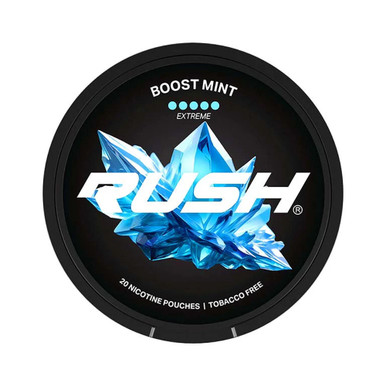
The can most directly related to this one is Rush Green Mint Pro, listed at the same £19.99 with a declared 11mg against this can's 6mg, and out of stock like everything else in the range. In the same mint direction, Rush Boost Mint is £19.99 and unavailable.
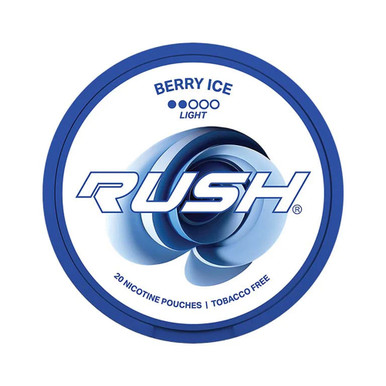
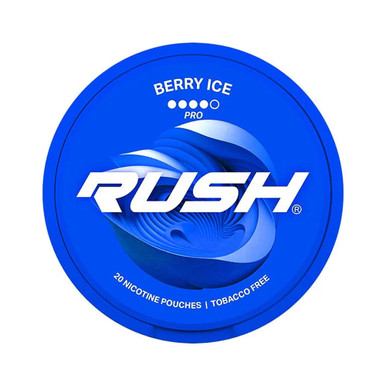
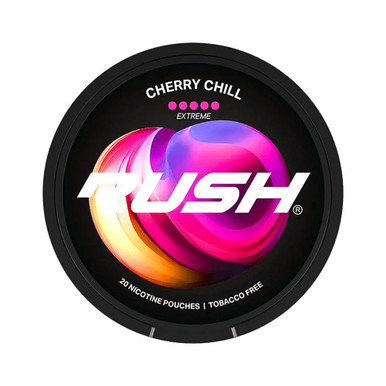
Moving away from mint, the berry pair — Rush Berry Ice Light and Berry Ice Pro — are both £19.99 and both out of stock, and between them they illustrate the point made at the top of this page: the same flavour appears under two different tier words, which is what a naming scheme looks like from the outside. The two remaining cans we hold are the Cherry Chill can and the Grape Ice entry, again £19.99 each and again unavailable. Our record on this page does not carry their declared figures; their own pages do.
The flat observation about the range is that price carries no information at all within it. Twelve listings, one price. Whatever separates these cans, it is not what they cost.
Something else in the drawer
Most people who use pouches run two or three cans rather than one, because a flavour you use constantly becomes less distinct and a second can with a different character resets that. Normally the easiest companion to a can is another can from the same brand. That advice is unavailable here, so the practical suggestions are cans on the shelves.
For a second cold mint that is genuinely orderable, the Denssi and Clew cold-mint entries are the two obvious candidates at £39.90 each, and Edge's mint can at £14.95 is the budget end of the same idea. For a mint that is recognisably different rather than nearly the same, XQS's spearmint entry moves into a related family with its own character.
For contrast rather than variation, the fruit and spice directions are the usual answers: Cuba's apple juice can, UBBS's spicy cherry, and Fumi's dark spice are three different ways of not being a mint. If you would rather browse than take a shortlist, the full catalogue is one page, the Cuba brand pages carry one of the broadest flavour ranges we stock, and Pablo's own shelf is another large single-maker view.
What this page actually offers you to choose between
Very little, and it is better to say so than to manufacture a decision. The record holds one variant row: 6mg at £19.99. There is no second strength on this listing, no alternative pack size and no can count. There is nothing here to weigh against anything else on the same page.
The real choices are between listings, and they break down into three straightforward questions. If the flavour family is what brought you, the mint shelf is where to browse and it is large. If the price point is what brought you, the cans within a few pounds of £19.99 are the comparison set, and several of them are in stock. If the brand is what brought you, the Rush shelf will tell you honestly that nothing is available. None of those three questions is one we can answer on your behalf.
Buying, dispatch and the check at the door
This listing cannot be added to a basket while it is marked unavailable, so what follows describes how orders work for the cans that can be bought.
Checkout carries an age check. We do not sell to anyone under 18. Orders ship from our own stock, and the carrier may ask for identification on delivery; where ID is asked for and no adult at the address can produce it, the parcel goes back rather than over the threshold. That is not a step we are willing to be relaxed about.
We do not run per-listing restock alerts and we are not going to imply that we do. We also cannot tell you whether or when this can returns, because we do not hold that information and a confident guess would be worth nothing. The brand page shows the live position across the range, which is the closest thing to an answer that exists.
Meeting this listing again while browsing
An unavailable can does not drop off the shelves it is filed on. This one still sits on the brand shelf, the low band and the mint grouping, which means anybody working through those three will run into it again — and on a brand shelf where every entry is in the same position, will run into twelve of them in a row.
That is worth knowing because it changes how a shelf page should be read. A shelf lists what we hold, not what can be ordered today, and on this part of the catalogue those are not the same set. The live position sits on each individual listing rather than on the shelf above it, so a shelf is a shortlist to check through rather than a set of results to take at face value.
The consequence is a small habit rather than a grievance. If you are going through every mint can we hold, or down the fifteen entries in the low band, open the listings in turn and read the position on each one instead of assuming the shelf has already filtered them for you. On a short shelf that costs a minute. On one of 148 it is the difference between a shortlist and a run of dead ends.
It also means this page keeps a use while the can itself is away. The tags are still on the record, so those three shelves remain accurate routes into the parts of the catalogue this can belongs to, and the comparisons further up still stand — they were built on names and prices, and neither of those moves when stock does.
Ways out of this page
Three shelves hold this listing: the brand shelf with its twelve Rush entries, the low band with its fifteen, and the mint grouping with its 148. Those are the three natural directions, depending on whether you are following the maker, our filing or the flavour.
Past those, the medium, strong and extra strong bands are browsing filters rather than steps on anything, the complete catalogue page is the widest view we have, and the two large single-brand shelves named earlier are the best way to see a maker's whole range at once rather than one can at a time.
Questions this listing raises
Can I buy it?
No. The record marks it unavailable and every Rush listing we carry is in the same position at the time of writing. The brand page reflects the live position, which this paragraph does not — it was written on one particular day and nothing updates it automatically. If you need something orderable, the mint shelf and the full catalogue are the places to look.
Is "Light" a starting point, or a gentler version?
Neither, as far as we are concerned. Light is a word Rush prints on some of its cans, alongside Pro and Extreme on others. It is naming, not a grade, not a stage and not a description of who should hold the can. The only figure on this listing is a declared 6mg, and that figure is a manufacturer's declaration rather than a comparative rank.
What is the difference between this and the Pro version of Ice Cool?
Two things, honestly. The number declared on the can — 6mg here, 11mg there — and our own shelf filing, which puts this one on the low band and that one on the medium band. Both carry the same single flavour tag, mint, and both are priced at £19.99. We are not going to invent a taste difference we have not verified, and we will not characterise either as the better can.
Why is the flavour tag just "mint" when the can is called Ice Cool?
Because our flavour tags are a small controlled set and "mint" is the one that applies. Ice and Cool are part of the manufacturer's product name rather than separate tags in our data, so there is no shelf on this site called Ice and none called Cool. If the tag looks thinner than the name, that is the tagging system being deliberately coarse rather than an error in the record.
How many pouches are in a tin?
We do not hold that figure for this listing and we will not estimate it. The count printed on the packaging is the count, and a guess from us would add nothing but a number people might rely on. If it matters before you commit to a purchase on any listing, ask us to check rather than assuming.
What is in them?
We do not publish composition or technical information on any product page on this site. That is a consistent editorial policy rather than a gap in this record. The manufacturer's labelling on the can carries that information and is the authoritative source.
Is a 6mg can comparable to a 6mg can from another brand?
Not reliably. Manufacturers declare figures on different bases and there is no shared industry convention that would make two numbers from two companies directly comparable. We list what is printed. We do not build league tables out of it, and we would gently discourage anyone from doing so.
How long does a pouch stay in?
There is no single answer, and quoting one as a rule would be inventing something. The range people report is wide, from under ten minutes to the better part of an hour, and the same person varies through a day. Most people treat the flavour thinning as their own signal to change. That is a description of what people do, not an instruction.
Does keeping the tin in a fridge help?
We would not put it that strongly. Some people do it, it does the tin no disservice, and we are not going to claim a benefit for it. The one practical caution is condensation on a cold lid opened in a warm room, so let a chilled tin come up to temperature before opening. Freezing is unnecessary as far as we can see, and we would not recommend it.
Can I take a can out of the country?
Rules on bringing nicotine products into a country vary widely and some countries restrict or prohibit them. We hold no list of national rules and we will not guess at one. Check the destination's published requirements and the airline's before travelling with any nicotine product.
Will you tell me when it is back in stock?
We do not operate notifications for individual listings, so no. And we cannot tell you whether it will return, because that is not information we hold. The Rush shelf shows the current position for all twelve listings, and checking it is more reliable than anything this page could promise.
What if I order something and dislike the flavour?
Flavour is personal and there is no way to sample one without opening the can, which is the difficulty in a sentence. Our standard returns policy applies, but an opened tin cannot be resold. With an unfamiliar flavour the sensible approach is to treat the first purchase as a small experiment, and a cheaper listing in the same family is a less expensive way to find out whether the family suits you at all.
Is there more than one photograph of the tin?
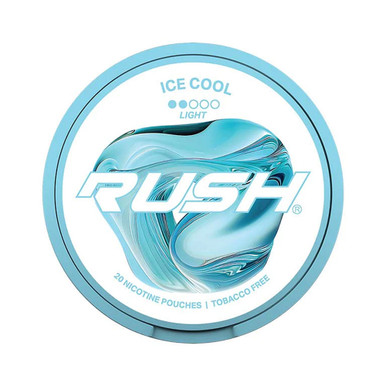
No. Our record holds a single image against this listing, which is the ordinary position across the catalogue rather than anything particular to this can. There is no gallery, no view of the back of the tin, and nothing in the frame to give a portion a sense of scale. On a listing that also carries no pouch count, that is a genuine limit on what can be worked out in advance, and stating it is more use than letting one picture imply a fuller record than we have.
Legal and compliance information
Nicotine is an addictive substance.
Rush Ice Cool Light Nicotine Pouches are sold only to adults aged 18 or over who already use nicotine. There is an age check at checkout, we do not sell to under-18s, and ID may be requested on delivery; if it is requested and no adult at the address can produce it, the parcel will not be handed over.
This product is not a licensed stop-smoking medicine and carries no authorisation of that kind. It is not intended for non-smokers, for anyone who does not already use nicotine, for anyone under 18, or for anyone pregnant or breastfeeding. Nothing on this page is medical advice, nothing on it suggests that anyone should begin using nicotine, and nothing on it recommends a strength to any reader.
Keep the tin closed and out of reach of children and animals, and put used pouches in general waste. Every fact above — name, brand, price, declared strength, flavour tag and availability — comes from our own record for this listing. Where the record holds nothing, we have said so instead of estimating, and the manufacturer's labelling is the authority for anything printed on the can.
In short
Rush Ice Cool Light is a single-variant listing at £19.99 carrying a declared 6mg and one flavour tag, mint, which we have filed on the smallest of our strength shelves. It is out of stock, as is the entire Rush range, so this page is a reference rather than a route to a purchase. The word Light on the lid is the manufacturer's naming and means nothing more than that — not a rung, not a starting point, not a judgement about anyone. The only differences we can honestly state between this can and its Pro-named counterpart are the declared figure and the shelf we filed each on. If you need a can you can order today, the mint shelf holds 148 listings and several of the cans named on this page are in stock. What we know is here; what we do not know, we have said we do not know.
More from Rush
More low strength pouches


More mint pouches
Where this sits
Rush Ice Cool Light Nicotine Pouches appears in these categories. Browse them, or jump to something close.
You might also like