Rush · 20mg
Read the full guide
Rush Boost Mint Nicotine Pouches
£19.99
✔ In stock — ready to ship
100% tobacco-free
Free over £20
Same-day dispatch
Secure checkout
Before anything else: Rush Boost Mint Nicotine Pouches are out of stock. Our record flags this listing unavailable and it is unavailable as this page is written. You cannot order it today and nothing below is written to suggest you can. A product page that leaves that fact to the small print wastes the reader's time, so it goes first and it gets repeated wherever it matters.
The same applies right across the brand. Every Rush listing we carry is currently out of stock — twelve products, none of them orderable. Every Rush can named on this page is unavailable, and we say so at each one rather than trusting you to remember. Where this page points at cans you could actually buy, those come from other brands and were in stock when this was written.
The full guide to Rush Boost Mint Nicotine Pouches
5,361 words on how it eats, who it suits, how to serve it and what to put beside it.
Rush Boost Mint: out of stock, and what the record says
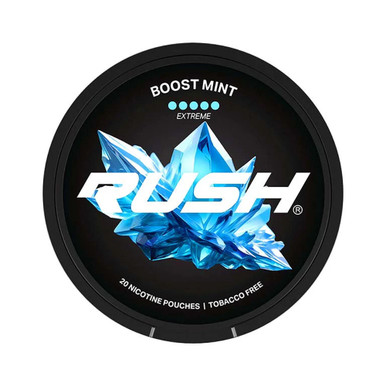
The record for this listing reads: Rush Boost Mint Nicotine Pouches, brand Rush, price £19.99, one declared strength of 20mg, a single variant line at that figure and price, flavour tags mint and energy, one product image, stock flag unavailable. The field that would tell you how many cans £19.99 covers is empty. We hold no pouch count for the tin. Those blanks stay blank on this page rather than being filled with something that sounds right.
What follows is a description of the format, a set of comparisons against other listings using figures and prices we genuinely hold, and a running set of admissions about what we do not know. No ingredient information, no account of what a pouch does once it is in place, and no statement about effects on anybody in any direction. This is a shop page for adults who already use nicotine.
The object: tin, lid, pouch
The can is a shallow round tin. The lid lifts clear and presses back on, and its underside is hollow — a shallow well with a lip around it. That well is the catch compartment, where used pouches go until a bin is available. It holds several, which is enough for most journeys, and it is the single design feature that makes the format workable away from a bin. Empty it into general waste when you can. Used pouches do not belong down a sink or out of a window.
A pouch itself is a small soft rectangle with rounded corners, dry to the touch on the outside. It goes under the upper lip and stays where it is put. Most people notice a minute or so of feeling bulkier than expected, after which it settles into the shape of the space and stops registering. People talk and drink with one in place; some eat with one in and some take it out first, which is preference rather than procedure.
Duration has no correct answer and a very wide honest range — some people are done inside ten minutes, others leave one seated for the better part of an hour, and the same person varies through a day. The flavour does not hold level across that time. It arrives early, plateaus, and then thins towards a dry background note, and most people act on the thinning rather than on a clock.
We do not hold the portion count for this can, nor its dimensions. Those are printed on the packaging and the packaging is the authority. We are not going to work backwards from what other brands do, because an inferred number on a product page reads exactly like a known one.
Moving between cans on our shelves: what actually changes
Since this can and its entire brand are unavailable, the useful question is what moving to something else on our shelves actually involves. This is the part of the page worth the most attention, because most of the anxiety around switching cans is about differences that turn out not to matter, while the differences that do matter get overlooked.
The declared figure is the least portable thing on the label
People treat milligram figures as a common currency and they are not one. A declaration is made by a manufacturer on that manufacturer's own basis. Pouch sizes differ between houses. What the figure is expressed per is not always stated on the front of a label. We hold no methodology for any manufacturer's declaration and cannot reconcile them for you, so the 20mg on this listing and a 20mg on somebody else's listing are two accurate label statements rather than two measurements of the same thing.
Our strength bands exist on top of those declarations. A listing goes on a band because its printed figure falls inside a range, full stop. That makes the strong band, with its 132 listings, a good filter and a poor conversion table. If you already know the figure you tend to buy, the bands are the fastest way to cut a catalogue of hundreds down to something readable. That is navigation. It is not, and cannot be, a recommendation about which band anyone should be in.
Formats differ more than the category suggests
From the outside every brand in this category looks like it is selling the same object, and physically they are not. Pouch width and length vary between houses. Some brands run a deliberately smaller portion and signal it with the word mini in the product name — 77 VB Edition Mini Arctic Berry at £39.90 is an example on our shelves, and it is in stock. Worth noting on that one: the listing title we hold says Mini Arctic Berry, while its URL carries extra-strong and a misspelling of arctic. That is a tidiness problem in our own slugs rather than information about the product, and the listing page itself is where to check what it declares.
Moisture level at the point of sale also varies between makers and is almost never published. Some cans come out dry, some come out with a slight dampness. Neither is a fault. It does mean that two cans with identical figures and similar flavour names can feel noticeably different in the first minute, and that difference is a format characteristic rather than anything to do with strength.
Price is the field most worth checking, and the least comparable
Our prices run from under five pounds to around forty, and that spread is mostly about what a listing covers rather than about quality. Nordic Spirit Max Frosty Mint at £4.49 and Edge Mint at £14.95 sit low; Klint Avalanche Mint at £36.90 and Clew Cool Mint at £39.90 sit high. All four are in stock. All four are, broadly, mint cans. The gap between £4.49 and £39.90 is not a quality ranking and reading it as one will lead you badly astray.
The £19.99 on this Rush listing sits in the middle of that spread, and because our pack-size field is empty we cannot tell you whether it buys one tin or several. That single blank makes a price-per-can comparison impossible for this product, which is why you will not find such a table on this page. Where another listing states a quantity and this one does not, the stated one is the sounder basis for working anything out.
Flavour vocabulary does not travel either
Brands name flavours independently and there is no controlled vocabulary behind any of it. Mint on one can and mint on another are two companies' interpretations, and the modifiers stacked in front — cool, cold, frosty, arctic, avalanche, fiery, storm — are marketing words rather than a graded scale of coldness. Denssi Cold Mint at £39.90, Elf Bar Cool Storm at £29.90 and Fumi Fiery Mint at £27.90 are three in-stock cans whose names promise three different things and whose actual relationship to one another we cannot chart for you. Our flavour groupings collect listings that share a tag as a browsing aid, not as a promise that anything inside a grouping tastes alike.
Slugs and titles sometimes disagree, and we will say so
A second example of the same housekeeping problem: Killa Banana Ice at £33.50, in stock, has a URL containing extra-strong while the title we hold carries no strength word at all. Where our own filing and our own naming pull apart like this, the listing page and the manufacturer's packaging are the authorities, not the address bar and not this paragraph.
What does not change at all
The constants are dull, which is why nobody writes about them. The tin and catch-lid design is essentially universal. Storage behaves the same way regardless of brand. Disposal is the same. Age rules are the same whatever goes in the basket. And the basic mechanics of the format — pouch goes in, settles, flavour arrives and thins — do not vary by maker. If you already use this format, moving between brands is a smaller adjustment than the packaging differences imply.
The name on this can, and the tag underneath it
Two things on this listing need unpacking, because both are easy to misread.
First, the word Boost. It is part of the product name the manufacturer chose. It is not a description of what the can does, it is not something we have verified, and we make no claim of any kind about effects. Rush also sells cans named Light, Pro and Extreme, and those tier words are naming too. They look like a sequence and we are not going to present them as one — there is nothing here to work up through, no rung to reach, and no can in the range that is more advanced than another. We stock all twelve Rush listings at a single price and we file each one by the number printed on its label.
Second, the energy tag. This listing is filed under both mint and our energy flavour grouping, which holds ten listings. Energy in that context is a taste family — cans whose flavouring resembles the profile of an energy drink, which generally reads as a sweet, slightly synthetic citrus-and-tropical character rather than as any single identifiable fruit. It is a description of how something tastes. It is not a statement about what the product does for anyone, and it should not be read as one.
The tag is also worth flagging as a discrepancy, because the product name does not mention it. A can called Boost Mint carrying a mint tag is unsurprising; the same can carrying an energy tag as well is our filing adding something the name does not say. We cannot tell you from this record whether that reflects a genuine second flavour element in the blend or a filing decision made on the strength of the word Boost. It is in our data, so we print it, and we flag that we cannot explain it.
Twenty milligrams, as a number
The declared figure here is 20mg, and it is the highest of the Rush cans we carry — shared with the two Extreme-named listings, both of which declare the same 20mg. That figure puts this listing on the strong band alongside 131 others.
Note what that does and does not establish. It establishes where we file the can. It does not establish what the can will be like for you, it is not a dose recommendation, and it is not comparable across brands in the way people assume. We cannot advise which strength suits anyone. That is not modesty — a shop simply does not have the information that question requires, and a retailer answering it confidently should worry you.
For orientation, the other bands are the medium strength band and the extra strong band, and the low band sits below both. Each collects listings whose printed figures fall in a range. That is all a band is.
Keeping a can usable: travel, half-used tins and the sealed spare
Condition is the most common avoidable disappointment in this category, and most of it comes down to where a tin spends its days rather than anything about the product itself.
The can that lives in a bag or a pocket
A tin carried daily has a harder life than one that stays in a drawer. It gets warm against a body, cools down outdoors, and gets opened repeatedly. Each of those pushes an open can in the same direction, which is drier. The single habit that matters most is pressing the lid back on square rather than balancing it — a lid seated properly holds condition noticeably better across a fortnight than one that has been half-on since Tuesday.
Keep the tin level rather than on its side where you can. Pouches sitting in their ring stay in better order than pouches that have shuffled into a heap, and a heap makes it much easier to drop a used pouch back among the unused ones, which is a mistake that is easy in the dark and grim to discover later. And do not decant pouches into a bag or a different container to save space. The can is the container designed for them; anything else trades a small convenience for a faster decline.
Heat, and the car
Heat accelerates everything, and a vehicle is the worst place a tin can be. A glovebox or a door pocket in summer reaches temperatures nothing indoors does and swings through a wide range every single day. A can that has spent an afternoon in a parked car is not the can it was that morning. Windowsills in direct sun, radiator tops and the worktop beside a cooker are the next worst places. A cool, dark, dry cupboard is genuinely the whole of the advice, and consistency matters as much as coolness — a tin that stays at one ordinary indoor temperature holds up better than one that swings.
Damp rooms are the other extreme
Bathrooms get mentioned less often than cars and are worth avoiding too. A room that swings from dry to steamy several times a day is not a stable place for anything in a permeable wrapper, and a tin stored on a shelf above a shower will pick up more moisture variation than one in a bedroom drawer. Neither state is dangerous; both push the can away from how it was when you bought it.
What a poorly kept pouch is like
Dried out, a pouch sits harder against the lip, gives up its flavour more slowly, and runs out of it faster. It can feel scratchy rather than soft. That is the whole of the phenomenon and it is not interesting — it is simply a worse version of what you paid for. The reason to care about storage is entirely that: not danger, not anything to do with a person, just the difference between a can that performs as bought and a can that does not.
Sealed stock ages far more slowly
If you buy more than one tin at a time, open one and leave the rest sealed in a cupboard. Sealed cans hold condition dramatically better than open ones, and the common error — opening three at once to compare flavours — mostly produces a comparison of how long each has been open. Any date printed on the packaging is the manufacturer's statement and outranks anything on this page. We hold no storage guidance and no shelf-life figure for this listing and are not going to invent either.
The rest of the Rush range
The Rush brand page holds twelve listings, all at £19.99. A single price across an entire brand is unusual on our shelves and it makes the range easy to reason about: flavour and declared figure are the only variables. It also means every Rush can below is out of stock, exactly as this one is. They are here to map the range, not to shop from.
Rush Green Mint Pro at £19.99, unavailable, is the other mint-led listing in the range, named around a green mint character rather than a boost. Rush Ice Cool Light, same price and also unavailable, is the cool note without a fruit in front of it.
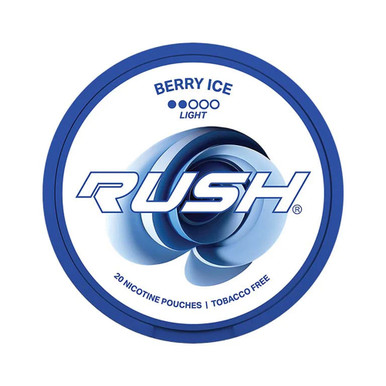
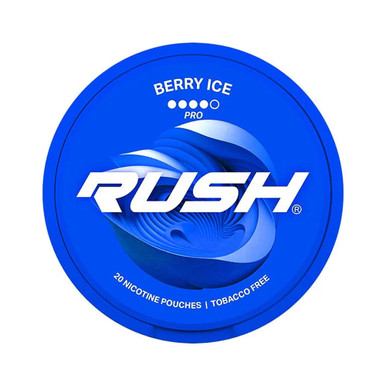
Rush Berry Ice Light and Rush Berry Ice Pro are the range's fruit pair — the same Berry Ice flavour, the same mint and berry tags, the same £19.99, declared at 6mg and 11mg respectively, and filed on our low and medium bands because of those numbers. Both are out of stock. The words Light and Pro distinguish the two cans on the label and tell you nothing about who should buy which.
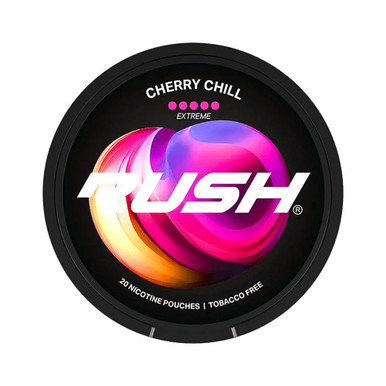
Rush Cherry Chill Extreme, £19.99 and unavailable, is tagged cherry alone despite the chill in its name. Rush Grape Ice Extreme, also £19.99 and also unavailable, is tagged mint and grape. Both declare 20mg, the same figure as this can, and both sit on the strong band rather than the extra strong one — the declared number decides the shelf and the word Extreme has no vote in it.
In-stock cans in similar territory
Because nothing in the Rush range can be ordered, this section is the practical one. Every listing named here was in stock at the time of writing, which is the whole reason it is here.
For plain mint at the cheaper end, Edge Mint at £14.95 and Nordic Spirit Max Frosty Mint at £4.49 are the two least expensive mint listings on this page, and the gap between them is large enough to make Nordic Spirit the low-cost way to test a flavour family before spending more.
For mint at the other end of our price range, Clew Cool Mint at £39.90, Klint Avalanche Mint at £36.90 and Denssi Cold Mint at £39.90 are three in-stock cans built on the same basic idea by three different houses. Their names all gesture at cold; how they actually relate to each other is not something we can chart, and buying one of each is the only reliable way to find out.
For mint with something else layered in, Fumi Fiery Mint at £27.90 and Elf Bar Cool Storm at £29.90 both put a modifier in front of the mint, and 77 VB Edition Mini Arctic Berry at £39.90 swaps the fruit in while keeping the cold framing.
Staying with the energy tag rather than the mint one, Cuba Ninja Energy at £39.90 is the in-stock listing closest to this can on that axis, and it is filed in the same ten-listing grouping. Again, energy there names a taste family and nothing else. If you want a complete departure, Killa Banana Ice at £33.50 is the furthest thing from a mint can on this list.
Strengths and quantities, as listed
This listing has one variant: 20mg at £19.99. No second strength under this product, no second pack size, so there is nothing to choose between on the page itself. Within the brand, the other declarations are 6mg and 11mg on the two Berry Ice cans and 20mg on the two Extreme-named ones, all at the same price and all unavailable.
The pack-size blank is the meaningful gap. Without it we cannot say whether £19.99 is one tin or several, and any comparison you make with a listing that does state a quantity should account for that uncertainty rather than assume in our favour. The packaging and the live listing page will settle it when Rush stock returns.
Ordering, delivery and the age check
The mechanics are standard: basket, checkout, delivery options and costs presented at checkout rather than estimated here. This is an 18+ purchase. The age check is part of checkout and not optional, and ID may be requested on delivery — where it is requested and no adult at the address can produce it, the parcel is not handed over. We are not flexible on that.
None of this currently applies to this listing, because there is nothing to add to a basket. We do not take payment for unavailable products and we will not give you a restock date, because we do not have one and inventing one would be worse than saying nothing. If you want something that can be dispatched, everything we stock filters by availability and every listing in the section above qualified when this page was written.
Where this listing sits on the site
Four shelves hold it. The strong band takes it on the strength of a 20mg declaration, among 132 listings. The Rush brand page holds it with eleven siblings at a shared £19.99, all unavailable. The mint flavour grouping is our largest at 148, and the energy grouping is one of our smallest at 10, which makes the latter far more useful as a filter than the former.
From there, the medium strength band and the extra strong band cover the neighbouring declarations, and two brand pages come up repeatedly across the site: the Pablo brand page and the Cuba brand page. The full catalogue is the top of the tree.
What a shelf count includes, and what it does not
This listing appears on four shelves and cannot be bought from any of them, which has a consequence people rarely think about: the numbers we print beside a shelf count listings, not things you can order today.
The strong band holds 132 listings and this can is one of them. The mint grouping holds 148 and this can is in that too. So is every other unavailable product in the catalogue, and there are a good many. The twelve Rush listings make the point at its cleanest — not one of them is orderable, and the brand page still says twelve, because it is describing our catalogue rather than what is on a shelf in a warehouse.
The practical effect is that a shelf is a starting point and the badge on the individual listing is the filter that decides anything. Working down the 132-listing strong shelf without reading badges wastes time in direct proportion to how much of it is unavailable that week, and we do not publish that proportion because it moves daily. The catalogue in full is where filtering by availability is most straightforward.
Why keep an unorderable page up at all? Because the record on it is still accurate. The price, the declared figure, the flavour tags and the brand do not stop being true when stock runs out, and somebody comparing cans has a real use for all four. Taking the page down would remove the information along with the button. What we will not do is soften the badge or bury it — it is in the first line of this page, in the closing paragraph, and beside every Rush can named in between.
Picking something orderable instead: what to read on the listing you land on
If this page has done its job you will finish on a different listing, so here is what is worth checking there before ordering. It is short, and none of it is particular to this brand.
Read the declared figure on that listing itself rather than trusting the band it sits in, because a band is a range and two cans on one shelf need not print the same number. Read the pack-size field, since that blank is precisely what makes this Rush listing impossible to compare on price — where another listing states a quantity, the arithmetic is there and worth doing. Read the flavour tags rather than the name, because our groupings are built from tags and a name can carry a word the tags do not, which is the discrepancy flagged further up this page. And read the stock badge at the moment you order rather than at the moment you began browsing.
Of the mint cans named here, the £14.95 Edge listing is the nearest on outlay to this one's £19.99 and the Clew mint can at £39.90 is the furthest from it; both were in stock when this was written, and both state more on their own pages than we are able to state on this one. Within Rush, the mint-led alternatives would have been the Green Mint Pro can and the Ice Cool Light listing, but both are out of stock along with the rest of the brand, so neither is an option today.
Common questions
Can I order this can now?
No. Rush Boost Mint is out of stock, and so is every other Rush listing in our catalogue. There is nothing to add to a basket and we are not accepting back-orders. This is worth stating flatly because pages of this kind often imply availability through their tone even when the stock field says otherwise. For something orderable, use the in-stock listings named above or filter the full catalogue by availability.
When will Rush be back?
We do not know. Restock depends on supply into us, not on anything we control, and a speculative date on a product page is a small dishonesty that costs more than it gains. The live listing reads from the same record this page quotes, so it is the only reliable place to check the current position.
Why is a can called Boost Mint tagged with energy?
Because our record carries both a mint tag and an energy tag against it, and we print what the record holds. Energy is the name of a flavour grouping on this site, covering cans whose taste resembles energy-drink flavouring; it describes a taste family and says nothing about what the product does. We cannot tell you whether the tag reflects a second element in the blend or a filing decision made from the word Boost, so we flag it as a discrepancy rather than explaining it away.
Does Boost mean it is stronger than the other Rush cans?
No. Boost is part of the name printed on the can. On the only measure we hold — the declared figure — this listing is at 20mg, the same as the two Extreme-named cans in the range and higher than the two Berry Ice cans. The naming and the numbers are separate things, and we do not treat the naming as a ranking of any kind.
Is 20mg from Rush equivalent to 20mg from another brand?
Not necessarily. Both figures are accurate as label declarations made on each manufacturer's own basis. Pouch sizes differ and the basis of a declaration is not always visible on the front of a label. We hold no methodology for any of them, so we group listings whose printed figures fall in the same range and treat that grouping as a filter rather than an equivalence.
How many pouches are in the can?
We do not hold that figure. It is normally printed on the packaging and the packaging is the authority for it. We will not infer it from comparable brands, because an inference published on a product page is indistinguishable from a fact within about a day.
Does £19.99 buy one tin?
We cannot tell you. The pack-size field is empty and the variant line reads 20mg at £19.99 with no quantity. All twelve Rush listings share that price, which is consistent and unhelpful for this particular question. Treat it as unresolved when comparing with listings that state a quantity.
What is in the pouches?
We do not publish ingredient or composition information for any listing on the site. The manufacturer's labelling on the can is the authoritative source and we are not going to paraphrase it. That is a standing policy rather than a gap specific to this product.
Which strength should I get?
We cannot advise on that, and we will not. A shop knows what a label declares and nothing whatsoever about the person reading the page. Filing listings by their printed figures so that you can find the band you already use is the extent of what we are able to do usefully.
How should I store an opened can?
Cool, dark, dry, lid pressed on square, tin kept level, and away from vehicles, sunlit windowsills, radiators and steamy bathrooms. If you have bought more than one, open one and leave the rest sealed. Any date on the packaging is the manufacturer's statement and takes precedence over anything here. We hold no storage guidance for this listing and are not going to invent a temperature or a shelf life.
Why do some of your URLs say things the product titles do not?
Because slugs were generated at different times from different source data and a few of them carry words the current title does not. Two examples appear on this page. Where our own naming disagrees with itself, the listing page and the packaging are the authorities, and we would rather point at the inconsistency than quietly hope you do not notice.
Do your shelf counts tell me how many cans I can buy?
No. A count is a count of listings we hold, and it includes every unavailable one. The brand page for Rush says twelve while none of the twelve can be ordered, which is the starkest example on the site but not the only one. Use the counts to judge how wide a shelf is, and use the badge on each listing to judge whether it can go in a basket.
If it comes back, will the price and the declared figure be the same?
We cannot say. What we hold today is £19.99 and 20mg, and that record stands while the listing is unavailable. Whether either changes when supply returns depends on the manufacturer and on what reaches us, neither of which we are going to predict on a product page. The live listing carries the current position and is the only thing worth trusting on it.
Which of the four shelves is the most useful to browse from here?
The narrowest one, usually. The energy grouping holds ten listings and the mint grouping holds 148, so the first can be read through in a couple of minutes and the second cannot. The strong band at 132 sits with the broad ones. If you are trying to find a replacement rather than to browse, starting narrow and widening is faster than the reverse.
Is there anything you know about this product that is not on the page?
No. Name, brand, price, one declared strength, two flavour tags, one image and a stock flag reading unavailable is the whole record, and it is all above. Every place this page says we do not know something is a literal statement of the position.
The legal wording, in full
Nicotine is an addictive substance.
Rush Boost Mint Nicotine Pouches are sold only to adults aged 18 or over who already use nicotine. An age check runs at checkout, we do not sell to anyone under 18, and ID may be requested on delivery; where it is requested and cannot be produced by an adult at the address, the parcel will not be handed over.
This product is not a licensed stop-smoking medicine and holds no authorisation of that kind. It is not intended for non-smokers, for people who do not already use nicotine, for anyone under 18, or for anyone who is pregnant or breastfeeding. Nothing on this page is medical advice, nothing on it should be read as encouragement for anybody to begin using nicotine, and nothing on it recommends one declared strength over another for any person.
Keep the can closed and out of reach of children and pets, and put used pouches in general waste. Every product fact above — name, brand, price, declared strength, flavour tags, image count and stock status — comes from our own record for this listing. Where the record holds nothing, we have said so rather than estimating, and the manufacturer's labelling on the can is the authority for anything printed on the packaging.
The short version
Rush Boost Mint is a mint-tagged can that our filing also places in the energy flavour family, listed at £19.99 with one declared strength of 20mg, and it is out of stock, as is every other Rush product we list. Boost is a word on the lid rather than a claim, and the tier words across the range — Light, Pro, Extreme — are manufacturer naming rather than a sequence to move through; which strength suits anyone is not something a shop can tell you. The 20mg declaration is why it sits on the strong band, which is filing, not advice. Store any can cool, dark, dry and properly closed, and expect an open tin to trend drier rather than better. If you need something orderable, Nordic Spirit Max Frosty Mint at £4.49 is the cheapest mint named here and Edge Mint at £14.95 the next; both were in stock when this was written. Everything we hold is on this page, and every blank in the record is named as a blank.
More from Rush
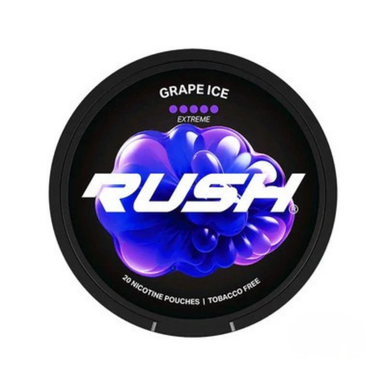
More strong pouches
More mint pouches
Where this sits
Rush Boost Mint Nicotine Pouches appears in these categories. Browse them, or jump to something close.
You might also like