Cuba · 30mg
Read the full guide
Cuba Ninja Energy Nicotine Pouches
£39.90
✔ In stock — ready to ship
100% tobacco-free
Free over £20
Same-day dispatch
Secure checkout
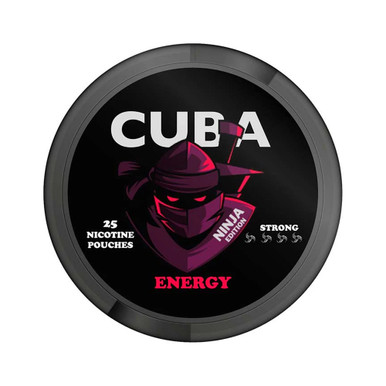
Cuba Ninja Energy Nicotine Pouches is listed at £39.90 with one declared strength of 30mg. It is in stock as this is written. Energy is the name of the flavour.
That last sentence is the one to read twice, because the word on the lid causes more confusion than any other flavour name we stock. Energy here is a taste description and nothing else. It refers to the flavour register that people recognise from energy-drink flavourings, in exactly the way that "cola" refers to the flavour register of a cola drink. It is not a statement about what this product does, and this page makes no claim of any kind about effects — none about alertness, none about concentration, none about performance of any sort, and none about anything else. We describe a taste. That is the entirety of what the word means here and the entirety of what we will say about it.
The full guide to Cuba Ninja Energy Nicotine Pouches
5,087 words on how it eats, who it suits, how to serve it and what to put beside it.
The listing, and one thing to clear up first
Beyond name, price, figure, flavour and stock, we hold nothing. No pouch count, no can count, no weight, no dimensions, no dates, no origin. Where our records are empty this page says so and sends you to the printed can, which is the only document that can answer those questions.
On the rest of the name: Cuba is the brand and Ninja is a line within it. Neither word tells you where anything is made, we hold no origin information, and we are not going to read character or meaning into a line name the manufacturer has not explained.
The standing note: this is an adult nicotine product, sold only to over-18s who already use nicotine. The compliance section lower down sets that out properly.
What the energy flavour register actually tastes like
Our flavour record for this listing is the single word energy, and it files on our energy flavour shelf, which is one of the smaller ones at 10 listings.
The flavour it names is a recognisable one, even though it corresponds to no fruit. It is the flavour family that energy-drink flavourings occupy: sweet, sharp, broadly citrus-adjacent without being a named citrus, with a slightly synthetic tutti-frutti quality and a faint bitter edge sitting underneath. Most people identify it immediately and very few could break it down into components, which is the defining characteristic of the whole category.
Two things follow from that, both purely about taste. First, it does not belong to the fruit families — it is not a berry, not an orchard fruit and not a tropical one, even though it borrows brightness from all three. Second, it is one of the few flavour names on a pouch shelf where nearly everybody arrives already knowing what it should taste like, because the reference point is a drink rather than a fruit.
The aroma off a freshly opened tin is the same thing concentrated, and a stronger impression than the pouch gives. That is normal for a sealed can.
Placing this one on the four axes
The most useful way we have found to describe any pouch flavour, and to compare one against another, is to place it on four axes: how cool it is, how sweet it is, how sharp it is, and how much bitterness sits behind it. All four are descriptions of taste and nothing else. This section spends some time on that framework because it makes the whole catalogue easier to read, and because this particular can is an unusually good illustration of why one axis alone will not do.
Cool
Coolness is the axis people notice first and the one most closely tied to mint. It runs from cans with no cooling character at all, through cans with a light freshness sitting over the top of something else, to cans built around the cold sensation as their main event.
On this axis the energy register sits low. It is not a cool flavour. Nothing about it is built around a frost, and there is no mint named in our record for it. If coolness is what you are after, this is not the can for it — Klint Avalanche Mint at £36.90 and Edge Mint at £14.95 are two mint listings at very different prices that sit at the opposite end of this axis, and Cuba Black Cold Dry at £39.90 is the same idea from within this brand.
Sweet
Sweetness is the axis on which most pouch flavours live, and the one that does the most work in making a flavour name recognisable. It runs from cans that are barely sweet at all to cans that read as confectionery.
The energy register sits high here — sweetness is a defining part of what makes the flavour identifiable, not an addition to it. Take the sweetness away and the rest would not read as energy at all. That places this can alongside the sweeter fruit listings rather than the drier ones, and it is a large part of why people either take to it immediately or find it too much.
Sharp
Sharpness is the bright, acidic, tongue-catching quality that citrus and some berries have. It is separate from coolness, which people conflate with it constantly: a flavour can be sharp without being cold and cold without being sharp.
The energy register sits high on sharpness as well, which is the more interesting fact about it. Very few flavours are both distinctly sweet and distinctly sharp at once — most sit high on one and moderate on the other. This one does both, and the combination is what gives the category its slightly fizzy, soft-drink character. Fumi Fiery Lime at £27.90 is the nearest pure example of sharpness on its own, without the sweetness carrying it, and putting the two side by side is the clearest way to feel the difference between sharp-and-sweet and sharp-alone.
Bitter
Bitterness is the axis nobody markets and almost every flavour has a little of. It is the quality sitting under the more obvious characteristics, usually noticed only when it is absent or when it is unusually present.
The energy register carries a faint bitterness, and it is part of what makes the flavour read as a drink rather than as a sweet. Without it the whole thing would taste like a generic fruit confection. It is subtle, it is not the point of the flavour, and it is the characteristic most likely to become noticeable in the long tail after the sweetness has begun to fade.
Why one axis is never enough
The reason we use four axes rather than one adjective is that most disappointments with a pouch flavour come from a customer and a product agreeing on one axis and disagreeing on another. Somebody who says they want "something sweet" and is handed a sweet-and-sharp can may find it too bright. Somebody who says they want "something fresh" may mean cool, or may mean sharp, and those are different requests that lead to entirely different shelves.
It is also why "strong flavour" is a phrase we try to avoid, because it means at least three different things depending on who is saying it. A high-cool can, a high-sharp can and a high-sweet can are all describable as strong-tasting, and none of them is a substitute for the others. Separating the axes makes the request answerable.
The practical use of this when browsing is that you can usually place an unfamiliar can approximately from its name alone. A name containing ice, frost, cool or menthol is telling you about the cool axis. A named citrus is telling you about sharp. A dessert or confectionery name is telling you about sweet. A soft-drink name, like this one or a cola, is usually telling you about a combination rather than a single axis, which is precisely why those names are harder to predict and why they warrant a section like this.
Putting the four together
Summarised on all four axes, this can reads as low on cool, high on sweet, high on sharp and slightly bitter underneath. That combination is what distinguishes the energy register from everything near it. A berry can is sweet and moderately sharp but rarely both at full volume, and usually has less bitterness. A mint can is high on cool and low on everything else. A cola can, like Cuba Black Cola at £39.90, is the closest structural relative on this shelf: another soft-drink flavour, also sweet, but with less sharpness and a different kind of bitterness behind it.
For a direct comparison within the same flavour family from another brand, Killa Energy at £33.50 is the one to look at — the same flavour category at a lower price and with its own declared figure on its own page. Comparing two brands' readings of the same category is the fastest way to work out which characteristics you were actually responding to.
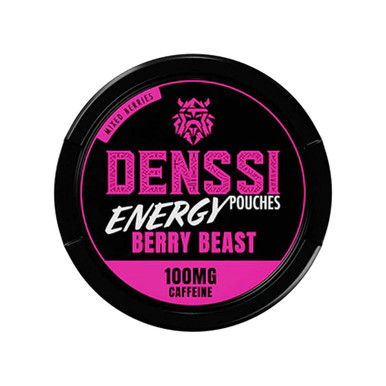
One listing worth naming carefully: Denssi Berry Beast Energy Pouches at £39.90 will appear near this can when you browse by flavour, because the categorisation picks up the word. It is a differently-labelled product from a different brand, and what it is and what it declares are set out on its own page rather than inferred from this one. We mention it because it will show up beside this listing and it is better that you know why.
The can, the pouch and the routine
None of the format is specific to this listing. A nicotine pouch is a small sealed pouch placed in the mouth between the lip and the gum and left there. It is not chewed and it is not swallowed.
The container is the usual shallow round plastic tin with a press-on lid, small enough to close a hand around and flat enough to sit in a pocket without making a shape. The lid printing gives brand, line, flavour and declared figure, which is the only part of the can anyone reads when picking between several in a drawer.
One goes in at the front of the mouth, generally up under the top lip, held in place by the lip. It can be shifted across if it sits awkwardly. If it is uncomfortable everywhere, take it out — comfort varies between people and nothing about the format asks anyone to persist with something that does not suit them.
Duration we cannot give you a number for. The variation between individuals is wide enough that an average would mislead most readers. The usual trigger for taking one out is that the flavour has finished, and on a flavour with this much sweetness in it that tends to be a noticeable moment. We set no time, we cannot tell you yours, and the manufacturer's printed guidance on the can is what applies.
Under the lid is a catch compartment, walled off from the unused pouches, for a used one when there is no bin nearby. Empty it regularly, because a full compartment stops the lid seating flush and a lid that does not seat flush means the can is open whether or not it looks shut. Final disposal is general waste — a bin, not a sink, not a toilet, not out of a window. The tin is plastic and goes in household recycling as far as your council accepts that plastic.
We hold no pouch dimensions and no format designation for this listing, so this page will not tell you whether these are slim or regular. Every pouch in a can matches the others in it, and the can itself carries the specification.
Thirty milligrams, read as a number on a lid
One figure is declared here: 30mg, at £39.90, with no second variant to weigh against it. It is the nicotine content the manufacturer declares and prints on the can, reproduced exactly as supplied — not rounded, not converted, not restated.
It exists on our site for navigation. Somebody who already knows the number they want can filter to it rather than opening every page in the catalogue. It is not a rating, not a rank and not a recommendation, and this section is not written to help anybody choose one. We do not advise on what figure is appropriate for any person, and we will not.
Thirty puts this listing on the Strong band, our largest strength shelf at 132 listings. The Medium Strength band and the Extra Strong band are the other two. A can files on one of them purely because of the number printed on it. They are three boxes for sorting stock, not a scale and not a progression, and it would be a misreading to treat them as steps of any kind.
On comparing figures between brands: manufacturers declare against different formats and express the number in different ways, so the same printed figure on two cans does not establish that the cans are equivalent. We publish each manufacturer's declaration as given, do not convert between them, and do not hold the technical detail that would let anyone do so honestly.
This listing's place on the Cuba shelf
The Cuba range runs to 47 listings here, spread across more than one line. Ninja is one line and Black is another, and each listing carries its own declared figure on its own page — a figure read here tells you nothing about a page you have not opened.
Within that range, an energy flavour is an outlier. Most of what the brand does is fruit, with a smaller cold and dry wing at the other end. A soft-drink flavour sits in neither camp, which makes this can and the Cola listing at £39.90 the two odd ones out, and arguably the two most similar cans in the range to each other despite having quite different flavour names.
It is worth saying plainly what a line name does and does not tell you, because people over-read them. A line groups a set of products together under one lid design and one commercial identity. It is not a statement about flavour direction, and on the evidence of this brand's own shelves it is not a reliable guide to a declared figure either, since figures vary between listings regardless of which line they sit in. The only safe reading of a line name is that the manufacturer decided to group certain products under it.
The other Ninja listing in this pack's neighbourhood is Cuba Ninja Coconut at £39.90, which shares this can's line and its declared figure of 30mg but sits at the opposite end of every axis described above: low on sharp, low on cool, sweet in a soft and creamy way rather than a bright one, with no bitterness to speak of. Two cans from the same line could hardly be less alike, which is a reasonable illustration of how little a line name tells you about a taste.
Building a set: what goes alongside an energy can
This is the other section worth real space, because a flavour this distinctive is one people rarely use on its own. Repeat orders are usually two or three cans kept together, and the reason is simply that a taste you have had continuously for a fortnight stops registering the way it did at the start. Everything below is on the basis of flavour, brand and price only.
Pairing by contrast
The most common approach, and the one that works best with a flavour sitting high on both sweetness and sharpness, is to keep something that does neither. A mint can is the standard answer because it occupies a completely different axis: high on cool, low on sweet, low on sharp. Edge Mint at £14.95 is the least expensive way to do that, and Klint Avalanche Mint at £36.90 is the same idea at a price closer to this listing's.
Within the brand, Cuba Black Cold Dry at £39.90 does the contrast job without leaving the Cuba shelf. It is named for a cold and dry character rather than a flavour, which puts it about as far from a sweet-sharp soft-drink register as anything we carry.
Pairing by adjacency
The other approach is to keep something in a neighbouring register rather than an opposite one, so the two cans feel related without being repetitive. Berries do this well, because they share the sharpness without sharing the soft-drink character.
Clew Blueberry at £39.90 is the single-berry version and the most direct adjacency. Elf Bar Blueberry Raspberry at £29.90 doubles the berries up for a slightly more complex reading at a lower price. Nordic Spirit Max Foresty Berry at £4.49 is the cheapest berry option on this list by a wide margin and the easiest way to test whether berry is the direction you want before spending more.
Staying inside the brand, Cuba Black Cherry at £39.90 is the sharpest fruit on the Black shelf and the closest thing in the range to this can on the sharpness axis, while Cuba Black Blueberry at the same price is the darker, rounder berry reading.
Pairing by register change
A third pattern is to keep something that is neither a contrast nor an adjacency but simply a different kind of thing altogether — a flavour that resets the palate because it has no relationship to the first can at all.
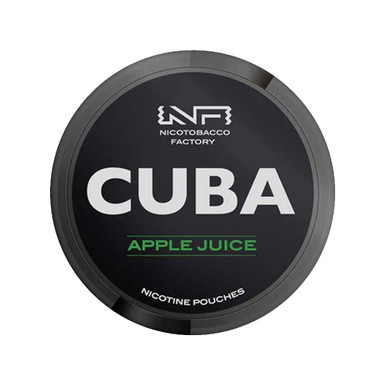
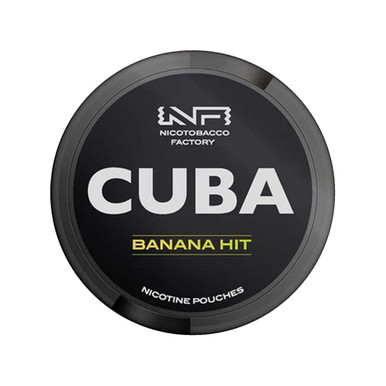
Cuba Ninja Coconut at £39.90 does exactly that, and has the practical advantage of sharing this listing's line and its 30mg declared figure. Cuba Black Banana Hit at £39.90 is the same idea from the Black line — soft, sweet and low on sharpness. 77 Ghost Mini Mango at £39.90 brings a tropical fruit in, and Cuba Black Apple Juice at £39.90 is the orchard-fruit reading, sweet without the sharp edge.
How many to keep going at once
A practical note that cuts against buying too many at a time. Every can that is open is deteriorating, slowly, from the moment the seal is broken, while every can still sealed is not. Keeping five flavours on the go therefore costs you something on four of them, and the loss is real even though it is gradual.
Two or three open at once is the point most people settle at, and it is a reasonable compromise between having a choice and not wasting anything. Beyond three, the cans at the back of the drawer tend to be flatter than they should be by the time they come forward. If you want more variety than that, the better approach is to keep a small number open and a larger number sealed, and to open the next one only when one is finished.
This also argues for trying a flavour before committing to several listings of it. Energy is a distinctive register and people's reactions to it are not evenly split — it is a taste that divides opinion more than a plain berry does. Buying one and deciding afterwards is the less wasteful sequence, and the cheaper listings named on this page exist partly for that purpose.
Pairing by price rather than flavour
Worth naming because it is how a good many people actually decide. Not everybody wants two £39.90 listings open at once, and the cheaper options give you a second flavour for a fraction of a second full-price listing. The Nordic Spirit berry listing at £4.49 and the Edge mint listing at £14.95 are the two lowest-priced entries on this page, and Fumi Fiery Lime at £27.90 and the Killa energy listing at £33.50 fill the middle.
If none of those is the shape of it, the energy shelf holds ten listings in this flavour family, the Pablo shelf is a whole separate brand to browse, and the complete catalogue is there if you would rather start from the top.
Keeping a can in decent shape
Storage is short and mostly one habit: press the lid back on until it seats, straight away, every time. Not resting on top, not left at an angle.
What goes wrong otherwise is gradual. The pouches dry out slowly and the flavour gets quieter than it was when the can was opened. A flavour built on sweetness and sharpness shows that reasonably early, so this is a can where you would notice. That is a statement about taste and about the physical state of the pouches, and we take it no further, because anything beyond that is not information we hold.
The usual cause of a lid that will not seat is an over-full catch compartment, which is why emptying it is a storage matter rather than housekeeping.
Otherwise: room temperature, out of direct sunlight, in a drawer or a cupboard or a bag. The places that cause trouble are a car in summer first and by some distance, then a sunny windowsill, then a bathroom shelf with its steam and temperature swings. On refrigeration — asked about often — we hold no manufacturer storage instructions for this product and will neither recommend it nor advise against it. If the can carries storage guidance, that outranks this page.
We hold no shelf life, no best-before period and no production date, and will not estimate any of them. If there is a date printed on the can, that date is the answer and this page is not. Sealed cans keep better than opened ones, so where you have several, run one at a time.
One thing we will not do is tell you whether a can that has been open for a month is still acceptable to use. That is a judgement about your own experience of it rather than a fact about the object, and we are not in a position to make it for you. If a can smells or tastes wrong, the sensible response is not to use it, and that is as far as a retailer can reasonably go.
What there is to choose
On this page, almost nothing: one flavour, one declared figure of 30mg, one price of £39.90, and no can count in our records, so no pack size to weigh either.
The choices sit one step out. A different flavour within the brand, where the Black line holds steady at £39.90. A different brand at a different price — the listings named above run from £4.49 to £39.90. Or a filter by declared figure using the Strong shelf, the Medium Strength shelf or the Extra Strong shelf.
Which to pick is not something we will advise on. A shop steering people towards particular nicotine strengths is doing something it should not, and we do not.
Placing an order, and the age check
Into the basket at £39.90 and out through checkout as normal. It shows in stock as this is written, though stock moves and the live listing page is always the more current of the two.
Age verification applies and is not a formality. Sales are to over-18s only and ID may be requested on delivery. Where a check is asked for and cannot be met, the parcel is not handed over — so keep ID to hand and make sure the name on the order matches the name on the ID. Do not order on behalf of anyone under 18, in any circumstances.
Delivery timings, packaging and courier arrangements are covered on our checkout and delivery pages, which stay current in a way a product description cannot.
Finding it again
Three routes. The Cuba shelf, 47 listings across several lines, is the brand route. The energy flavour shelf, 10 listings, is the flavour route and the smallest of the three. The Strong band, 132 listings, is the figure route.
If scrolling suits you better, the whole shop sits on one page, and the Pablo range and the Extra Strong band are the shelves people most often step across to from here.
Questions we are asked about this one
Does "Energy" mean this product does something?
No. Energy is the name of the flavour and refers to a taste — the register familiar from energy-drink flavourings — in the same way that cola names a taste. It is not a claim about effects, and we make no claim of any kind about what this or any other product on our site does. If you are reading the word as a promise of something, it is not one, and we would rather say that plainly than leave it ambiguous.
Does it contain caffeine, or anything besides what is on the can?
This listing is a nicotine pouch, and our record for it shows a declared nicotine content of 30mg. Beyond that we do not publish composition, because we do not hold it — what is in a pouch is manufacturer information and belongs on the manufacturer's packaging. We will not summarise, paraphrase or estimate it. Read the can, which is the authoritative document for anything of that kind.
What does the flavour actually taste of?
A sweet, sharp, broadly citrus-adjacent register with a slightly synthetic tutti-frutti quality and a faint bitterness underneath — the flavour family of energy-drink flavourings rather than any single fruit. Most people recognise it at once. On our four axes it reads low on cool, high on sweet, high on sharp, and mildly bitter behind all of it.
What does £39.90 actually get me?
We do not hold a can count or a pouch count for this listing. Both fields are empty in our data, and we are not going to put a number there that we cannot stand behind. The printed packaging carries it. That is an unsatisfying answer at this price and it is still the correct one.
Does Cuba mean it comes from Cuba, and what does Ninja mean?
Cuba is a brand name and Ninja is a line name within it. Neither tells you where the product is made, and we hold no country-of-origin information for this listing. Nor will we read meaning or character into the word Ninja — it is a name given to a line, and that is the whole of what we know about it.
How does this compare with the other energy-flavoured cans you stock?
On flavour family they are relatives; on everything else, check each page. Killa Energy at £33.50 is the closest direct comparison, being the same flavour category from a different brand with its own declared figure. Denssi Berry Beast at £39.90 appears alongside both when browsing by flavour, and what it is is set out on its own page rather than assumed from this one.
Is 30mg here the same as 30mg elsewhere?
Not necessarily. Manufacturers declare against different formats and express the number in different ways, so identical printed figures on two cans do not establish equivalence. We reproduce each manufacturer's declaration as supplied and do not convert between them, because we do not hold the underlying detail that would allow it. Each product page carries its own figure and that page is the source.
How long should one stay in?
We cannot tell you. Individual variation is wide enough that publishing an average would mislead more people than it helped, and advising anyone on their own use is not something a shop should do. Descriptively, the commonest reason people give for taking one out is that the flavour has finished, and on a sweet flavour that is usually a distinct moment. The can's printed guidance is the guidance that counts.
Should the can go in the fridge?
We hold no manufacturer storage instructions for this listing, so we will not recommend refrigeration and will not advise against it. Some people do it. In general, heat and direct sunlight are what people end up regretting, and a car in summer is where most complaints about a flat-tasting can start. If the can carries its own storage guidance, follow that over anything on this page.
I want something similar but cheaper. What is there?
Nothing we stock is the same flavour at a much lower price, but the adjacent registers are well covered. Fumi Fiery Lime at £27.90 gives you the sharpness without the sweetness carrying it, Elf Bar Blueberry Raspberry at £29.90 is the double-berry reading, and Nordic Spirit Max Foresty Berry at £4.49 is the least expensive listing named anywhere on this page.
Is this a good first flavour to try?
We would not put it that way, because we do not know what you like. What we can say descriptively is that it is a distinctive register rather than a neutral one, and that people's reactions to it are more divided than to a plain berry or a plain mint. If you have not had an energy-flavoured pouch before, it is a less predictable purchase than a named single fruit, and that is a fact about the flavour category rather than about this particular can.
Why does the energy shelf only have ten listings?
Because it is a smaller flavour category than mint or fruit, which is simply how the market we buy from is shaped. The energy shelf holds 10 listings against 132 on the Strong band, and the fruit and mint shelves are larger again. We do not read anything into that beyond what it is: fewer manufacturers make this flavour than make mint.
Is this listing available right now?
Listed as in stock at the time of writing. Stock moves, and the live listing page will always be more current than this text. If it shows unavailable when you arrive, the energy shelf and its ten listings is the place to look for something in the same flavour family meanwhile.
Compliance, unabbreviated
This is an age-restricted product. None of the following is small print.
- 18+ only. Cuba Ninja Energy is sold exclusively to adults aged 18 or over who already use nicotine products. We do not sell to under-18s in any circumstances, and we do not sell to adults who do not already use nicotine.
- Nicotine is an addictive substance. That applies to this can exactly as it applies to every other nicotine product we list, and the flavour name on the lid changes nothing about it.
- This is not a licensed stop-smoking medicine. It is neither authorised nor intended for that purpose, and it is not intended for non-smokers, for anyone who does not already use nicotine, for under-18s, or for anyone pregnant or breastfeeding.
- ID may be requested on delivery. Age verification applies at checkout and may be repeated at the door. Where a check cannot be satisfied, the order is not handed over.
Questions about nicotine and your own health or circumstances belong with a qualified healthcare professional rather than with a retailer. We sell products. We do not give medical advice, we do not assess whether a product is appropriate for any individual, and nothing on this page should be read as either.
To sum up
Cuba Ninja Energy is a £39.90 listing with one declared figure of 30mg, filed on the Strong band and on the energy flavour shelf. The flavour name describes a taste — sweet, sharp, faintly bitter, in the register of energy-drink flavourings — and describes nothing else; this page makes no claim about what the product does. We hold no can count, no composition and no origin for it, and have said so rather than filling the gaps with something that reads better than it is true.
More from Cuba
More strong pouches

More energy pouches
Where this sits
Cuba Ninja Energy Nicotine Pouches appears in these categories. Browse them, or jump to something close.
You might also like