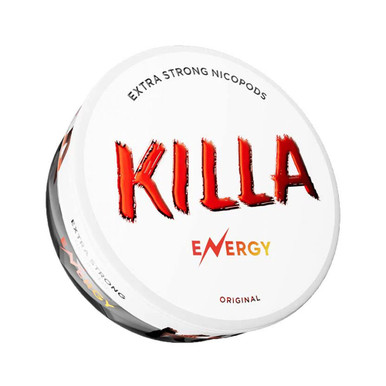
Killa · 16.5mg
Read the full guide
Killa Energy Nicotine Pouches
£33.50
✔ In stock — ready to ship
100% tobacco-free
Free over £20
Same-day dispatch
Secure checkout
The listing in front of you is Killa Energy Nicotine Pouches. Our catalogue holds six things about it: the brand is Killa, the product name is Energy, the price is £33.50, there is a single declared strength of 16.5mg, the flavour field contains one entry reading energy, and the availability flag says in stock as this page is being written. We hold one photograph. There is no cans-per-pack figure anywhere in the record.
Beginning with the limits of what we know is deliberate. A description this long could easily be filled with detail nobody could check — a factory, a heritage, a ranking, a reason why this can beats the one beside it. None of that would be true, so none of it appears below. What fills the space instead is the physical object, the shape of the flavour as a taste, the other cans on our own shelves and what they cost, the parts of the record that are blank, and a plain account of how ordering and delivery work. Where a question has no honest answer from our data, the answer given is that we do not hold it.
The full guide to Killa Energy Nicotine Pouches
5,245 words on how it eats, who it suits, how to serve it and what to put beside it.
What our record holds for this can, and nothing beyond it
One administrative note before the detail. This is an age-restricted nicotine product for adults who already use nicotine. The full legal wording has its own section at the foot of the page and is worth reading rather than skipping.
Reading 16.5mg as a printed specification
There is one strength attached to this listing and it is 16.5mg. No second variant sits behind it, no lighter edition of the same flavour, no dropdown offering choices. One flavour entry, one figure, one price of £33.50.
The figure is label information. A manufacturer prints a declared nicotine content per pouch on the lid, we reproduce that printed figure in our catalogue without altering it, and it appears on this page for one reason only: so that two cans placed side by side can be told apart on a specification. That is the whole of the honest work the number does in a shop listing. It behaves the same way a declared capacity behaves on a battery or a percentage on a bottle — a manufacturer's statement, faithfully copied.
What the figure is emphatically not is a recommendation, and it is worth stating that flatly rather than leaving it to be inferred. We cannot advise which strength suits anyone. We have no knowledge of who is reading this page, no way of acquiring that knowledge, and no business offering guidance we are unqualified to give. A larger printed figure does not make a can better, more advanced, or a destination anyone should be aiming at. It makes it a different declared figure on a different tin. The only person in any position to judge is the adult nicotine user holding it, who knows far more about their own use than a product page ever could.
That distinction carries extra weight on this particular listing, for two reasons that both come down to naming. The first is the web address. The URL for this page contains the words extra strong, and the same construction turns up across much of our Killa range. Those words arrived with the product from the manufacturer's own naming and from the way the item entered our catalogue. They are a name. They are not a grade we assigned, not an assessment we endorse, and not a rung on any ladder. It is worth noticing that the title our record actually holds is simply Killa Energy Nicotine Pouches, with no such words in it, and that the strength category we genuinely file this can under is our Strong shelf and its 132 products, not the Extra Strong shelf. Where manufacturer naming and our own filing disagree, we would rather show you the disagreement than quietly choose whichever version reads more impressively.
The second is the brand name itself. Killa is a blunt, aggressive piece of branding, and it is branding and nothing else. It describes no effect, promises no experience, and is certainly not an invitation to treat a tin as a test of anything. There is no challenge here, nothing to work up to and nothing to prove. We list the product under the name the manufacturer gave it, because that is the name printed on the lid and the name you typed into a search box. We do not write copy that plays along with what the name is gesturing at.
Energy as a flavour name: what the taste is like
The flavour field for this can holds exactly one entry, energy, and the product name agrees with it. No secondary note is recorded — no ice, no mint, no fruit listed underneath. As far as our data is concerned this is a single flavour, sold on its own.
Before describing it, the obvious point needs making plainly. Energy here is the name of a flavour, in the same way that cola or bubblegum is the name of a flavour. It refers to a recognisable taste profile borrowed from a familiar category of soft drink, and it refers to nothing else. It is not a description of what the product does, we make no claim about any effect of any kind, and nothing on this page should be read as one. The word is on the can because that is the taste the manufacturer was aiming at.
As a taste, the profile is one most adults can name blind. It leads with a sharp, bright, slightly synthetic citrus front — closer to a sherbet lemon than to a squeezed fruit, more tart than sweet in the first second. Beneath that sits a rounded sweetness with a faintly candied edge, and beneath that again a tang that people variously describe as tropical, medicinal or simply sour, sitting along the sides of the tongue rather than the tip. There is a mild bitterness at the back of the whole arrangement that stops it reading purely as confectionery. The overall impression is loud, tart, sweet and recognisable rather than subtle.
The aroma from a freshly opened tin follows the same line in miniature: a sharp citrus-sherbet note that reaches you before the lid is fully off, then flattens quickly into something quieter and slightly sweeter once the can has been open a while. Aroma in this format is a small part of the experience and fades with the tin's age, which is worth knowing simply so that a duller-smelling half-used can does not come as a surprise.
On the tongue the flavour is at its most assertive in the opening minutes, tapering steadily after that. The tartness goes first, the sweetness holds slightly longer, and what remains towards the end is a thin, faintly sour trace. Whether that arc is appealing is entirely a matter of taste, and taste is not something a shop can settle for you. If you already know this flavour family and want it in this format, it is here. If you have never got on with sharp citrus-candy flavours, this can will not change your mind about them.
The physical thing: tin, pouch, lid, disposal
Set aside the flavour and the number for a moment, because the format is the same across most of the cans we list and it is worth describing once, properly.
The container is a shallow cylindrical tin, roughly the footprint of a small jar lid and about as deep as a stack of a few coins. It is light enough that you stop noticing it in a pocket, and it fits comfortably in the small coin pocket of a pair of jeans, in the inside pocket of a coat, or in the front pouch of a bag without adding meaningful bulk. The lid pushes on and comes off with a twist and a small amount of thumb pressure; the seal is snug but not difficult.
Inside the lid, on almost every can of this type, there is a shallow secondary compartment — the catch lid, sometimes called the disposal compartment. It is a small recess with its own inner cover, and its purpose is to hold used pouches until you can get to a bin. That is a genuinely practical piece of design rather than a marketing flourish: it means you are not looking for somewhere to put a used pouch at an awkward moment. It also means the lid needs emptying, because a can left with three or four used pouches sitting in the top for a week will smell noticeably less pleasant than one that was emptied. Empty it into a bin, the same as any other small waste. Do not flush pouches and do not leave them loose where a child or an animal might pick them up.
The pouches themselves are small, soft, white rectangles with rounded corners, closer in feel to a folded fabric pad than to anything rigid. They sit in a ring inside the tin, and they are designed to be tucked under the upper lip and left there, out of sight and without anything to hold or manage. Once placed, a pouch stays where it is put; there is nothing to hold, nothing to press, and nothing that requires attention.
How long people keep one in varies widely from person to person, and any figure a shop quotes is a generalisation rather than an instruction. In practice the commonly reported range across pouches of this kind runs from a handful of minutes to around half an hour or a little beyond, with most of the flavour arriving early in that window. We are describing what people report, not telling anyone what to do. Removal is exactly as undramatic as placement, and the pouch goes into the catch lid or straight into a bin.
Buying rhythm: the single can, the roll, and the spare in the drawer
This is the section where the gap in our record matters most, so it is worth dealing with head on rather than glossing over it.
Nicotine pouches are sold in two obvious shapes across the trade: as a single tin, and as a multi-can roll, which is simply a sleeve of identical tins shrink-wrapped or boxed together. Which of those a given price refers to changes everything about how you read that price, and our record does not tell us which one applies here. The cans-per-pack field on this product is empty. That is not a coy omission — it is genuinely blank, and we are not going to fill it with an inference.
What we can do is give you the surrounding numbers and let you draw your own conclusions. This can lists at £33.50. Elsewhere on our shelves, Nordic Spirit Max Foresty Berry lists at £4.49 and Edge Mint at £14.95, while Klint Avalanche Mint sits at £36.90 and Clew Blueberry at £39.90. Prices across the category clearly span more than one kind of unit. If the exact quantity matters to your order — and for a figure of this size it probably should — check the product photograph on the listing itself and the wording on the listing page, or ask us before you place the order rather than after.
With that caveat stated, the practical question of buying rhythm is still worth walking through, because it is the thing most regular buyers get wrong at least once.
Buying a single tin at a time is the low-commitment approach. You are not tying money up in a flavour you might tire of, you can move around the shelves freely, and if a flavour turns out to be wrong for you the mistake costs one tin. The cost of that flexibility is frequency: more orders, more delivery waits, and more occasions on which you run out at an inconvenient moment because an order did not arrive when expected.
Buying in volume reverses both sides of that trade. Fewer orders, less waiting, and a cupboard that does not run dry — but a larger sum committed up front and, more to the point, committed to one flavour. A multi-can quantity of a sharp citrus-candy profile is a lot of the same thing. People who buy this way tend to do it for a flavour they already know they will still want in a month, and they tend to have arrived at that certainty by buying singles first.
The pattern that seems to work best for people who order regularly is neither extreme. They keep one flavour as the default and buy it in whatever the larger unit is; they keep one or two other tins alongside it as variety, bought singly; and they reorder when the default can is opened rather than when it runs low. That last habit is the useful one. Ordering at the moment you break the seal on the last tin, instead of at the moment you take the last pouch out of it, converts a panic into a non-event and costs nothing except thinking of it once.
The spare is a related discipline. A single unopened tin kept somewhere separate — a desk drawer, a glovebox, a bag pocket — is not about stockpiling. It is about the ordinary failure modes of home delivery: a courier delay, a missed doorstep, a weekend that eats two working days. A spare turns all of those into minor irritations. Worth noting that a tin kept as a long-term spare should be kept somewhere cool and dark rather than somewhere warm, for the reasons set out further down this page, and that the spare is best rotated into use occasionally rather than left in a hot car for six months.
One last point on rhythm. Whatever quantity £33.50 buys, the useful comparison when you are budgeting is not tin against tin across brands, because the units differ. Fumi Fiery Lime at £27.90 and Rush Boost Mint at £19.99 may or may not be comparable units to this listing. Worth saying plainly about that second one: the Rush can is showing as out of stock in our catalogue at the moment, so it is a price reference here rather than something you can add to a basket today. Compare like with like, or compare nothing at all.
The Killa shelf: what else carries this brand's name
We list 31 products under the Killa brand page, and this can is one of them. The range is broad, it is almost entirely built around flavour rather than around a ladder of strengths, and the six siblings our record connects to this listing all carry the same £33.50 price and the same declared 16.5mg figure. That is the important structural fact about this brand on our shelves: within this group, the variable is taste, not specification.
Taking them in turn, and describing each by what it tastes of rather than by who ought to buy it:
Killa Cola is the closest neighbour to this can in spirit — another soft-drink flavour, another compound profile most people can identify instantly. Where Energy leads with sharp citrus-sherbet, cola leads with a spiced, faintly medicinal warmth and a rounder sweetness. If the sharpness of this can is the part you like least, cola is the same idea with the corners taken off.
Killa Bubblegum is the sweetest thing in the group and the least like a real fruit — a pink, soft, distinctly confectionery flavour with no sourness to speak of. It is the opposite end of the brand's sweet spectrum from the tartness here.
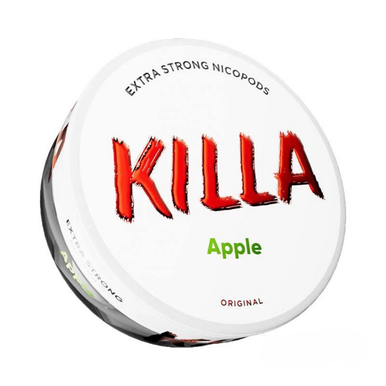
Killa Apple sits between the two. Green-apple flavourings tend to carry a crisp, slightly sour bite over a clean sweetness, which makes it the fruit in this group that has most in common with the tart front of an energy profile, without the candied depth underneath.
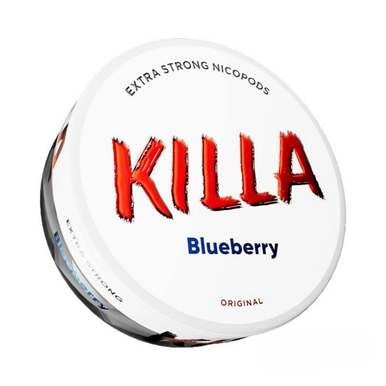
Killa Blueberry is darker and jammier: a rounded berry sweetness with much less acidity than apple and none of the sherbet quality of this can. Of the six it is the most straightforwardly fruity.
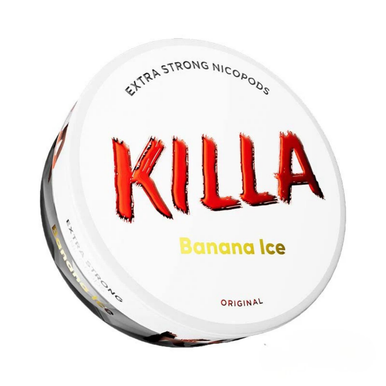
Killa Banana Ice is the one with a cooling element recorded in its name. Banana flavourings run soft, creamy and slightly artificial, and a cool note laid over the top changes the finish rather than the fruit. It is the only one of the six where the ending of the flavour is noticeably different from the beginning.
Killa Cappuccino is the outlier — a roasted, milky coffee profile with a genuine bitter edge, and the only savoury-leaning flavour in the group. People who like it tend to like it exclusively; people who do not tend to bounce off it immediately. There is not much middle ground with coffee in this format.
What emerges from that list is that the brand's shelf is a flavour catalogue, not a strength ladder. Every one of those six is £33.50 and every one declares 16.5mg. Moving between them changes only what it tastes of. That is a genuinely useful thing to know when you are browsing, because it means the choice you are making on this brand's page is a choice about flavour and price, with the specification held constant. It also means that nothing about moving from one to another constitutes a step up or a step down. They are siblings, not a sequence.
The brand's full 31 listings extend beyond those six, and the quickest way to see the rest is the brand page rather than this description. If you want to see the brand in the context of everything else we carry, the full shop listing is the wider view.
Against the rest of the shelf
Outside its own brand, this can sits among a broad spread of prices and profiles. The comparison worth making is on flavour family and price rather than on anything else, since we make no claim about one being better than another.
| Can | Listed price | Flavour direction |
|---|---|---|
| This listing, Killa Energy | £33.50 | Sharp citrus-candy |
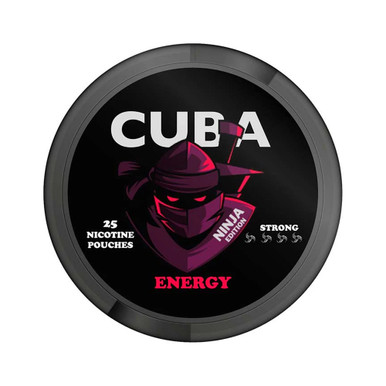
| Cuba Ninja Energy | £39.90 | The same flavour family, different brand |
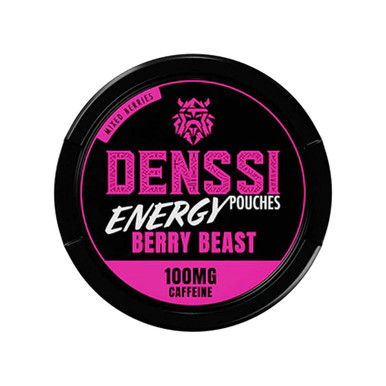
| Denssi Berry Beast | £39.90 | Berry crossed with the same drink profile |
| 77 Ghost Mini Mango | £39.90 | Soft tropical fruit, mini format |
| Elf Bar Blueberry Raspberry | £29.90 | Two-fruit berry blend |
| Klint Avalanche Mint | £36.90 | Cold mint, no fruit |
The two closest relatives by flavour are the ones sharing this drink profile. The Cuba version and the Denssi berry-crossed take on it both list at £39.90, and both approach the same recognisable tartness from a slightly different direction — one straight, one with fruit laid over it. If the profile is what you are here for, those are the obvious things to look at next, and the energy flavour shelf collects all ten of the cans we file under that taste in one place.
Further out, the comparisons stop being about similarity. Edge Mint at £14.95 and the Klint mint can at £36.90 are cold rather than sweet, and represent the other half of this category entirely. Fumi Fiery Lime at £27.90 shares the citrus but drops the candy. The Nordic Spirit berry can at £4.49 is the lowest price on this comparison set by a wide margin, which is a unit-size point as much as anything else.
Keeping a tin in usable condition
Pouches of this type are a relatively forgiving product to store, but they are not indifferent to how they are treated, and the two things that spoil a tin are heat and air.
Heat dries pouches out and dulls flavour. A can left on a sunny windowsill, on a dashboard, next to a radiator or in a car through a warm afternoon will not be dangerous, but it will very likely be less pleasant than the same can kept in a drawer. The flavour goes flat first and the texture stiffens after that. Cool, dark and dry is the whole of the advice: a cupboard, a drawer, a bag pocket that does not sit in the sun.
Air is the other factor, and it is mostly a matter of closing the lid properly. These tins seal well when the lid is pushed fully home, and less well when it is left resting on top. A can that has been sitting half-closed in a bag will have lost aroma noticeably faster than one that was shut each time. Making sure the lid clicks down properly after each use is, in practical terms, the single most effective storage habit there is.
Some people keep tins in a refrigerator. There is nothing wrong with that and it will do no harm, though it is not something we tell anyone to do; it is simply a thing some regular buyers prefer. If you do, let the tin come back to room temperature before opening it, so that condensation does not form inside the lid. A fridge is also an obviously bad place to keep something that must stay out of reach of children, so judge accordingly.
Whatever you do with an open can, keep unopened ones somewhere out of reach of children and animals, and keep the catch lid emptied. For the manufacturer's own storage wording, best-before marking and batch information, the printed tin is the authority — we do not reproduce those markings in our catalogue.
Choosing between what this listing offers
There is, on this particular page, very little to choose between. One strength of 16.5mg, one price of £33.50, one flavour, one variant. The choice is whether you want this flavour at this price, and nothing else.
If you are comparing declared figures across the shop rather than within this listing, the strength shelves are how the site is arranged for that. The Medium Strength shelf collects the cans with lower declared figures, the Strong shelf holds the 132 products this can is filed with, and the highest shelf holds those declaring more still. Those are browsing tools. They sort the catalogue; they do not rank it, and they are not a route anyone should be travelling along in a particular direction.
The same applies to pack size, to the extent that our record supports the question at all. We hold no cans-per-pack figure for this product, so we cannot lay out a per-can comparison for it, and we are not going to pretend otherwise by assuming a number.
Ordering, delivery and proof of age
Ordering works the way the rest of the shop works. The listing carries the price and the add-to-basket control, checkout takes a delivery address and payment, and dispatch follows once the order clears. Stock is shown as accurately as we can manage, but the flag on this page describes the position at the moment of writing and not a guarantee for next month. Supply in this category depends on import timing rather than on anything within our control, and flavours do come and go without notice.
Age verification is not optional and is not a formality. This is an 18+ product. We check age at the point of order, and our couriers may ask for identification when they hand a parcel over. A delivery can be refused where age cannot be established, and a parcel refused on those grounds comes back to us. The practical consequence is worth planning for: if you will not be in, consider whether the person who will be in can satisfy that check, because leaving an age-restricted parcel with a neighbour or in a porch is not always possible.
If you have a question about your order rather than about the product, the order confirmation email is the fastest route to us. If you have a question this page has not answered about the can itself, there is a reasonable chance the answer is on the printed tin rather than in our catalogue, and we would rather point you there than guess.
Finding your way around from here
This page sits at three intersections in the site's navigation, and each of them leads somewhere useful depending on what you are actually looking for.
By strength, it is filed on the Strong category, alongside 131 other products declaring figures in a similar band. By brand, it belongs to Killa's 31 listings. By flavour, it is one of the ten cans we file under the energy taste profile. Those three shelves are the natural next steps from here, and between them they will show you far more than a single product description can.
Beyond those, the wider shelves are worth knowing about. Everything we stock is the unfiltered list. The Pablo brand page and the Cuba brand page are the two other large brand collections on the site, and both carry flavour ranges broad enough to be worth a browse if you are comparing across manufacturers rather than within one. The Medium shelf and the Extra Strong shelf are the other two strength filters, offered here as navigation and not as a suggested direction of travel.
Questions we are actually asked
How many tins does £33.50 buy?
We do not know, and we are not going to guess. The cans-per-pack field is empty in our record for this product, which means we have no figure to give you. The price sits well above what a number of single tins cost elsewhere on our shelves, which may tell you something, but an inference is not a fact and we will not print it as one. Check the product image and the listing page itself, or contact us before ordering if the quantity is the deciding factor.
Is this the strongest can you sell?
No, and that is a question we would rather redirect than answer as asked. This listing declares 16.5mg. Other cans on our shelves declare higher figures and others declare lower ones, and the strength shelves in the navigation will show you the distribution. What we will not do is present any of that as a ranking to climb. A declared figure is a specification, not a score, and we cannot advise which one is appropriate for any individual.
Why does the web address say extra strong when the product title does not?
Because the two come from different places. The URL was built from the name the product arrived under, which included those words as part of the manufacturer's own naming. The catalogue title is the cleaner form, Killa Energy Nicotine Pouches. Our own strength filing puts this can on the Strong shelf rather than the higher one. We have left the address alone because changing it would break links, and we have flagged the mismatch here rather than quietly resolving it in whichever direction sounded better.
Does the energy flavour do anything?
No, and the word is not there to suggest that it does. Energy on this can names a flavour — a recognisable tart, sweet, citrus-led profile borrowed from a category of soft drink. It is a taste reference in exactly the way cola is a taste reference. We make no claim about any effect whatsoever, and anyone reading the flavour name as a promise about how they will feel is reading something into it that is not there.
How long does one pouch last?
It varies between people more than any single figure would suggest. Reported use for pouches of this type generally falls somewhere between a few minutes and around half an hour or a little longer, with the flavour strongest early on and tapering steadily. That is a description of what people report rather than an instruction. We are not in a position to tell anyone how long to keep one in, and we do not.
Can I keep used pouches in the lid?
That is what the catch compartment in the lid is for, yes — it holds used pouches until you reach a bin. It is meant as a temporary holder rather than storage. Emptying it regularly makes a noticeable difference to how a can smells when you open it, and a lid left full for days will be unpleasant. Empty it into an ordinary waste bin. Do not flush pouches, and do not leave them where a child or an animal could reach them.
Do you have this flavour in a lower strength?
Not on this listing. Our record carries a single variant for the energy flavour under this brand — one strength, one price, nothing behind a dropdown. Other cans across the shop carry other declared figures, and the strength categories are the way to browse them. We are not going to point at a particular figure as the right one for you, because we have no basis for that judgement and it is not a judgement a retailer should be making.
Will this flavour still be here in three months?
We cannot promise it. It shows as in stock today and that is a statement about today. Availability in this category follows import and supply timing that sits outside our control, and flavours are discontinued and reintroduced without much warning. If this specific profile matters more to you than general availability, that is an argument for keeping a spare tin; if you are comfortable moving between flavours, it matters considerably less.
Where am I allowed to use these?
That is genuinely not ours to say. Rules covering nicotine products on workplaces, licensed premises, transport networks, sports grounds and public buildings are set by the operator, the employer or the carrier. They differ from venue to venue, they change without anyone telling a retailer, and we are not party to them. Ask whoever runs the premises you are on. And note that the absence of a stated rule is not the same thing as permission.
Is there information on the tin that is not on this page?
A considerable amount. Pouch count, pouch weight, batch codes, date markings, the manufacturer's own storage instructions and any warnings required on the packaging are all printed on the can and none of them are in our catalogue. We hold six fields for this product and this page has used all six. Anything beyond that appearing on a retail description has been invented somewhere along the way, and we would rather send you to the tin.
Do you publish reviews or ratings for this can?
No. We do not run a ratings system, we do not print testimonials, and we do not label anything on the site as popular or recommended. Manufacturing the impression of a crowd where we have no data would be dishonest, and it would also be a poor substitute for the things we can actually tell you: the price, the declared figure, the flavour record, the stock position, and a straight list of what we do not know.
Legal and compliance information
Please read this before ordering.
- Strictly over-18s. This product is sold only to adults aged 18 or over, and only to adults who already use nicotine. Age is verified at the point of order.
- Nicotine is an addictive substance. This product contains nicotine at a declared strength of 16.5mg.
- This is not a licensed stop-smoking medicine. It holds no medicinal authorisation, and it is not intended for non-smokers, for anyone who does not already use nicotine, for anyone under 18, or for anyone who is pregnant or breastfeeding.
- Identification may be requested on delivery. Couriers may ask for proof of age before handing over a parcel, and may refuse to complete a delivery where age cannot be established.
- Keep out of the reach of children and animals. Dispose of used pouches in a bin.
Closing note
That is the complete contents of our record on this can, set out at length: Killa Energy Nicotine Pouches, £33.50, one declared strength of 16.5mg, one flavour entry, in stock as written, a single image on file, and no quantity figure. The words in the web address are manufacturer naming, the brand name is a brand name, the flavour name describes a taste and nothing more, and none of the three is a statement about the product or a suggestion about anyone's use of it.
If you know this flavour profile and want it in this format, the listing above is where to go. If you are comparing, the brand page, the flavour shelf and the strength shelves will give you a far wider view than one description can. And if the question you came with is which strength is right for you, the answer is the one given three times already on this page: that is not something we are able to tell you, and pretending otherwise would be doing you no favours at all.
More from Killa
More strong pouches
More energy pouches
Where this sits
Killa Energy Nicotine Pouches appears in these categories. Browse them, or jump to something close.
You might also like