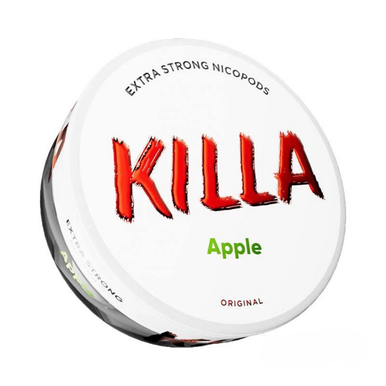
Killa · 16.5mg
Read the full guide
Killa Apple Nicotine Pouches
£33.50
✔ In stock — ready to ship
100% tobacco-free
Free over £20
Same-day dispatch
Secure checkout
This page belongs to Killa Apple Nicotine Pouches. The brand is Killa, the product name on our listing is Apple, and the price we show is £33.50. One strength is declared against it, 16.5mg, and that single figure is both the top and the bottom of the range we hold for this product. Our record marks it in stock at the time of writing, and there is one product image attached to the listing rather than a gallery. That is the complete set of facts our system carries about this can.
Everything below is built out of those facts, out of comparison with other cans sitting on the same shelves, or out of a plain admission that we do not know something. There is no third source. We do not print ingredient lists, we do not explain what a pouch does once it is in place, and we make no statement about anybody's wellbeing in either direction — not a favourable one and not an unfavourable one. Where a sensible question would need us to invent an answer, the answer on this page is that we do not hold the information. That reads as less helpful than a confident paragraph. It is the only version worth publishing.
The full guide to Killa Apple Nicotine Pouches
5,661 words on how it eats, who it suits, how to serve it and what to put beside it.
Killa Apple, and what our record actually holds
One point deserves to sit at the very top rather than be buried. The web address of this page contains the words extra strong, and those words come from the way the product is named and filed, not from anything we are telling you about it. Our own shelf placement puts this can on the Strong shelf, alongside 132 other products, which is not the same label. We are not going to reconcile the two by guessing which one is the manufacturer's intent. The manufacturer names its products; we file them; the two systems do not always line up, and when they do not, the honest move is to show you both and leave it there.
This is an adult nicotine product. It is listed and sold on the basis that the person buying it is aged 18 or over and already uses nicotine. The full wording sits in its own section at the foot of this page, and nothing above it is directed at anybody else.
Brand naming, category naming, and why neither is a recommendation
The brand name is a loud one and the range naming is louder. It is worth being direct about how we treat that. A brand name is a trademark. A phrase like extra strong attached to a product line is a manufacturer's descriptor of its own range. Neither is a claim we are making, neither is an endorsement, and neither carries any information about whether a given can suits a given person. We copy the naming because copying it accurately is how you find the product you were looking for. We do not amplify it.
That distinction matters more here than on a quieter listing, because loud naming invites a particular kind of writing — the sort that treats a milligram figure as a score, a stronger can as an achievement, and a range as something to work through. You will not find that framing on this page. A higher declared figure is not a better product, it is a different product with a different number printed on the lid. There is no ladder here, nothing to graduate from, and nothing to prove by choosing one can over another. We shelve products by the figures the manufacturer declares because that is a neutral way to sort a catalogue, not because the shelves are arranged in order of merit.
We also want to be plain about the limit of our role. We cannot advise which strength suits anyone. Not you, not a friend you are buying for, not a general reader. We do not know what a person already uses, we have no way to find out, and even if we did, telling somebody which nicotine product to put in their mouth is not something a shop counter should be doing. What we can do is tell you accurately what is printed on each can we sell and how those figures relate to each other as numbers. Everything past that is outside what we are able to say responsibly, and we would rather state that flatly once than dance around it for five paragraphs.
If you want to see how the naming spreads across the catalogue rather than this one product, the Extra Strong shelf collects the listings that carry that descriptor, and the Medium Strength shelf collects the ones at the other end of our sorting. Both are simply filters on declared figures. Neither is a suggestion.
Apple on the lid: the flavour as a name and as a taste
The product name is Apple, with no qualifier attached — not green apple, not red apple, not apple with anything else stacked on top of it. That plain naming is worth pausing on, because apple is one of the broadest flavour words in the category, and the single word does not tell you which direction the manufacturer went.
Apple as a taste tends to sit somewhere on a line between two poles. At one end there is the sharp, green, slightly astringent character people associate with a cooking apple or an unripe eating apple — bright, a little sour at the edges, with a clean finish that does not hang around. At the other end there is the rounder, sweeter, almost confectionery version, closer to apple juice concentrate than to fruit off a tree, softer in outline and longer on the sweetness. Most apple flavourings in any product land somewhere between the two rather than at either extreme, and the difference between one brand's apple and another's is usually a matter of where on that line it sits and how much sweetness has been laid over the top.
We cannot tell you where this particular can lands, because our record holds the name and not a tasting note from the manufacturer. Writing you a paragraph of confident sensory detail would mean inventing it, and an invented tasting note is worse than none. What we can say honestly is what the word on the lid signals in general terms, and that is what the paragraph above does.
On aroma, the same limit applies. Opening a can of any fruit-named pouch generally releases the flavouring more noticeably than holding a single pouch does, simply because the tin has been closed around it. Whether this one reads sharp or sweet in the tin is something you will find out when you open it, and we are not going to pre-empt it with a description we made up.
The flavour tag on our own record does not say apple
Here is something we would rather flag than quietly leave in the data. The flavour tag our system holds against this product is tropical. The product name is Apple. Those two things do not agree, and an apple is not a tropical fruit by any normal reckoning.
We are not going to invent a story that makes them agree. We do not know whether the tag was applied in error, whether it was inherited from a supplier feed that groups fruit flavours loosely, or whether it reflects something about the flavour's character that the single word apple does not capture. All three are possible and we have no way to choose between them. What it means in practice is that this can appears on our Tropical shelf with 58 other products, so if you were browsing by flavour and found an apple-named can among the tropicals, that is why. If you are shopping by flavour tags, treat ours as a rough sorting aid rather than a precise description, and read the can itself as the authority on what it contains.
The pouch in practice: size, where it sits, and how long it stays
The format is the part of this product that is genuinely describable, so this section goes into more detail than the flavour section could.
The object you buy is a shallow cylindrical tin, wider than it is tall, sized to be held in a closed hand and to sit flat in a pocket or a drawer without rolling much. The lid lifts clear and presses back on. The face of the lid carries the brand, the flavour name and the milligram figure, and that last detail is the one that earns its place when three or four cans are stacked in a drawer and you are reading the tops rather than picking each one up. Inside, the pouches sit in a ring around the base, flat, even and soft-edged.
A single pouch out of the tin is a small soft rectangle with rounded corners. It is dry to the touch rather than wet, and light enough that you stop noticing it in a closed hand almost immediately. Our record does not state how many pouches are in a tin, and we will not estimate, because the number is printed on the can and a guess from us adds nothing but the risk of being wrong. The same applies to the weight of an individual pouch and to the dimensions of the tin. If it is stamped on the packaging and not in our data, the packaging is where to read it.
How it sits
In use, a pouch goes under the upper lip and stays where it is put. The first impression most people report is that a fresh pouch feels slightly bulkier than it looked in the hand, and that the impression of bulk settles within a minute or two as the pouch takes the shape of the space it is in. After that it is largely unremarkable to keep in place. People talk with one in. People drink with one in. Some eat with one in and some do not, which is a matter of preference rather than a rule, and the ones who do not tend to say it is about the food rather than the pouch.
Where exactly the pouch sits is personal. Some people keep it central above the front teeth, some park it further round towards the side, and plenty of people move it about during the time it is in. There is no correct position and we are not going to pretend there is one. The practical point is that a pouch that has been moved once tends to stay more securely in its second position than its first, because it has flattened slightly and the shape has settled.
How long people keep one in
Duration varies enormously between people and we are not going to give you a number and call it standard. What is true across the format is that it is not instant and it is not indefinite. People generally take a pouch out well before the point where it has gone soft and shapeless, and a good many take it out a fair while before that. Some keep one in for a few minutes and think of it as a short thing. Some keep one in far longer and treat the tin as something they open a couple of times a day. Both are common. Neither is more correct.
The right answer for any individual is the one they arrive at themselves, and we are not able to supply it for them. If you are moving to this can from a different one, the sensible expectation is that your own habit will be roughly what it was on your last can rather than something the can dictates.
The catch lid and disposal
The underside of the lid on this style of tin is hollow — a shallow well with a lip around it. That well is the catch compartment. Its purpose is entirely practical: a used pouch goes into it, the lid presses back on, and the pouch is contained until you are somewhere you can put it in a bin. It exists because used pouches are otherwise an awkward thing to be holding in a room, on a bus or in somebody else's car.
Two notes on using it. First, the well holds a limited number before the lid stops seating properly, so it is a temporary store rather than a bin, and emptying it when you pass a bin keeps the can working the way it was designed to. Second, the compartment sits directly above the unused pouches, so leaving used ones in there for days is not doing the fresh ones any favours in terms of how the tin smells when you next open it.
On disposal itself: a used pouch goes in general waste. It does not go down a toilet or a sink, and it does not go on the ground. That is not an environmental claim of any sort, it is just the correct bin.
16.5mg as a figure on a lid
The number declared against this product is 16.5mg. Here is what that is, precisely and narrowly: it is the figure the manufacturer prints, expressed per pouch, and we reproduce it exactly as given. It is a label fact. It is not a dose we are recommending, not a measure of quality, and not a target.
What the figure is useful for is comparison between cans, and only between cans that declare on the same basis. A can declaring a higher number and a can declaring a lower number differ in what is printed on them. That is a real and usable piece of information when you are deciding which of two products to put in a basket, and it is where the usefulness stops. It does not tell you how any individual will find either can, because that depends on the person and not on the tin, and we have no visibility of the person.
Our shelves sort by these declared figures. The Strong shelf we mentioned above is where this can is filed, and there are 132 products on it. The shelf is a filter, not a verdict. A product sitting on a shelf with a particular name has been sorted by a number, not assessed, ranked or approved.
Repeating the important part rather than assuming it carried: we cannot tell you which figure suits you. There is no version of that question we can answer, including the softened versions — what most people choose, what would be a sensible starting point, what to move to next. All of those are the same question wearing a different hat, and the answer to all of them is that a shop is not in a position to advise on it and we are not going to imply otherwise by phrasing it cleverly.
One more piece of plain information about this particular listing. It has a single variant. There is one strength, 16.5mg, at one price, £33.50. There is no lower option and no higher option under this product name. If a second figure is what you are after, it will be a different product on a different page, not a dropdown on this one.
Moving between cans on our shelves: what changes and what does not
Most people who buy pouches buy from more than one line over time, and the practical question this raises is what actually differs when you pick up an unfamiliar can. It is worth separating the things that genuinely change from the things that only appear to.
What changes: the declared figure, and the basis it is declared on
The number on the lid is the most visible difference between cans, and it is real in the narrow sense described above — it is the manufacturer's figure, and different products carry different figures. What is easy to miss is that the number alone does not make two cans comparable unless both are declaring the same quantity in the same way. Brands are not obliged to present the figure identically, and a figure that looks directly comparable across two lids may be measured on a different basis. We publish what each manufacturer publishes. We do not normalise the numbers, and we would be making something up if we tried.
So the honest version of "how does this compare to that" is: here are both figures as printed, and the comparison is only as sound as the assumption that they are declared the same way. That is a weaker statement than most product pages make. It is also the accurate one.
What changes: format and the physical object
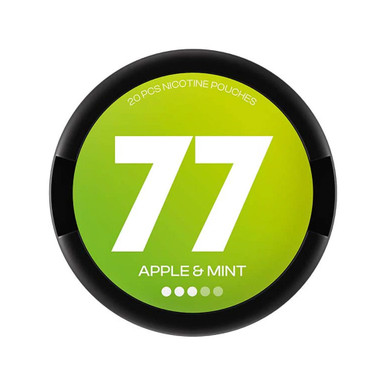
Pouch size varies between lines. Some lines run a slim or mini format that is noticeably narrower and shorter than a standard pouch; others run a broader, fuller pouch. This is one of the few differences you can actually feel straight away, and it is often a larger practical difference than the numbers on the two lids. 77 Apple Mint at £39.90 is a useful example of a can that shares a flavour word with this one — apple appears in both names — while being a different brand at a different price, which is exactly the sort of comparison where format and price differ even when the flavour language overlaps.
Tin construction varies too. Most cans in the catalogue use the same broad design — lift-off lid, catch well underneath, pouches in a ring — but the depth of the well, the stiffness of the lid and how firmly it seats are not identical between brands. If a can you have used feels right in the pocket, a different brand's can will not necessarily feel the same, and that is worth knowing before you assume all tins are interchangeable.
What changes: price, and why prices here are not like for like
This is the part of the catalogue that confuses people most, so it is worth spelling out. Our listed prices span a very wide range. On the cans neighbouring this one, Velo Tropical Mango is listed at £4.19, Edge Mint at £14.95, Pablo Gold Edition Blueberry Peach Ice at £19.95, Fumi Fiery Peach at £27.90, Elf Bar Pineapple and SYX Tropical at £29.90 each, this can at £33.50, and Cuba Ninja Coconut, Clew Blueberry and Denssi Blueberry Freeze at £39.90 each.
Those numbers look like a straightforward ladder and they are not one. Our record for this product has an empty field where the number of cans per pack would go, and the same is true of several others. A listing at £4.19 and a listing at £39.90 may not be selling the same quantity of the same thing, and without a cans-per-pack figure we cannot tell you the ratio. We are not going to guess it from the price, because reasoning backwards from a price to a quantity is exactly the kind of invention this page avoids. Read the quantity from the listing and the packaging, and treat a price comparison across brands as unreliable until you have done that.
What does not change
Against all of that, a good deal stays constant. The pouch still goes under the upper lip and still stays where it is put. The catch well is still under the lid. The tin still wants to be kept closed and out of direct heat. Used pouches still go in general waste. The age restriction is identical on every can in the catalogue regardless of brand, flavour or figure, and so is the requirement that the buyer already uses nicotine. None of that is affected by which shelf a product sits on.
And one more constant: our position on advice does not change from product to product. It is the same on the cheapest listing and the most expensive one, the lowest declared figure and the highest. We describe; we do not steer.
Where this can sits in the Killa range we carry
We hold 31 products under this brand, and they are gathered on the Killa shelf. Within that, the Apple listing sits in a group of flavour-named cans that share its £33.50 price exactly.
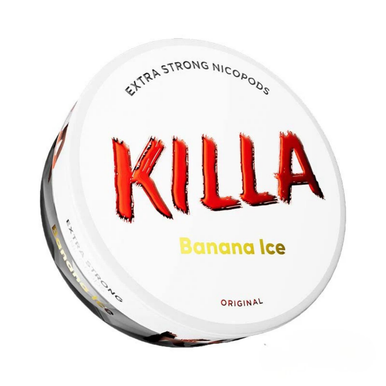
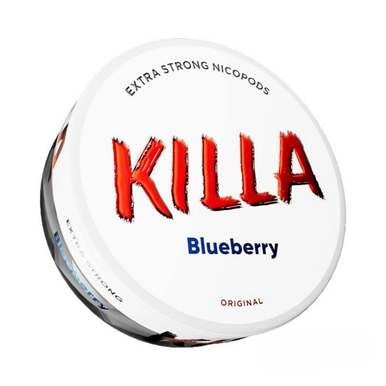
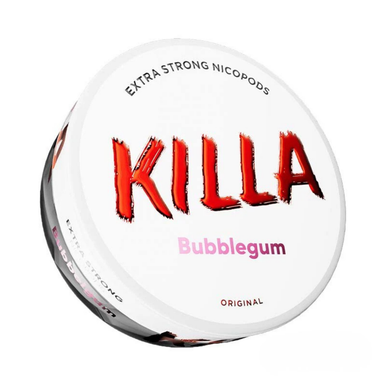
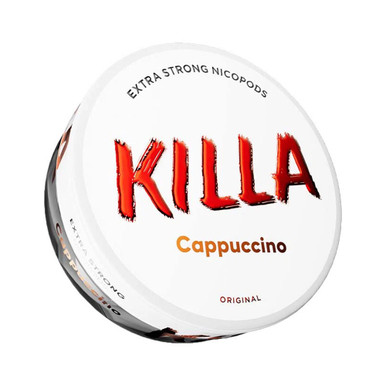
The closest neighbours by price and range are Killa Banana Ice, Killa Blueberry, Killa Bubblegum, Killa Cappuccino and Killa Cola, each listed at £33.50, the same figure as this page. Because the price is identical across that group, price is not a deciding factor between them, which leaves flavour name as the practical difference on our end. Killa Cold Mint, also £33.50, is the mint-named option in the same group for anyone who wants something off the fruit and sweet side of the range entirely.
We are not going to rank these against each other. They are the same brand at the same price with different names on the lid, and which of them a person reaches for is a matter of what they want to taste, which is not something a shop can predict.
Cans people keep alongside this one
Buying more than one flavour at a time is common, and the usual reason given is simply that the same taste every time gets dull. If that is what you are doing, here is the neighbouring stock with a plain reason attached to each, rather than a list.
Staying close to the fruit-sweet side, Killa Bubblegum is the sweetest-named option in the brand group at the same £33.50, and Killa Blueberry is the darker-fruit option at that price. Moving out of the brand, SYX Tropical at £29.90 shares the tropical shelf tag that this can carries, which makes it an obvious pairing for anyone who found this listing through that shelf rather than through the brand. Elf Bar Pineapple at £29.90 is another single-fruit name at a similar price.
If you want a mint-named can in the basket as a contrast to a fruit one, Edge Mint at £14.95 is the cheapest such option in this group of neighbours, and Killa Cold Mint keeps that contrast inside the same brand. For berry names, Clew Blueberry and Denssi Blueberry Freeze are both £39.90, and Pablo Gold Edition Blueberry Peach Ice at £19.95 pairs a berry with a stone fruit under one name. Cuba Ninja Coconut at £39.90 is the outlier of the group on flavour naming, coconut being a direction very few other cans in the neighbourhood go in, and Velo Tropical Mango at £4.19 is the lowest-priced listing among these — though, as set out above, the cans-per-pack field is the missing piece that would make that figure comparable, and we do not hold it.
Fumi Fiery Peach at £27.90 rounds out the stone-fruit end. If none of those is the direction you want, everything we stock is browsable in one place, and the brand shelves for Pablo and Cuba are two of the larger collections to work through.
Keeping a can in reasonable condition
Storage for this format is not complicated, and most of it is the obvious thing done consistently.
Keep the lid on. A tin left open loses its flavouring to the air and the pouches dry out, and there is no way back from that. Press the lid down until it seats rather than resting it on top, particularly if the can is going into a bag where it will be knocked about.
Keep it out of direct heat and direct sun. A dashboard on a bright day, a windowsill, the top of a radiator and the inside of a parked car in summer are all worse places for a can than a drawer, a cupboard or a bag pocket. Heat and light do flavourings no favours over time.
Some people keep tins in a fridge and some do not. We have no instruction to give either way, since the manufacturer's storage guidance is the manufacturer's to give and ours to not invent. What we will say is that whatever you do, doing it consistently is better than moving a can between a cold fridge and a warm room repeatedly.
Empty the catch well when you pass a bin, for the reasons given earlier. And store cans upright if you have the space, which keeps the pouches in their ring and stops them bunching to one side — a small thing, but it makes opening the tin tidier.
On dates: check the packaging. If there is a best-before or use-by marking, it is printed on the can. Our record does not carry dates and we are not going to estimate a shelf life for you.
Choosing between what this listing offers
There is not much to choose between on this page, and saying so plainly is more useful than manufacturing options.
The listing carries one variant: 16.5mg at £33.50. There is no second strength and no alternative pack size on this product. The only decisions available are whether to buy this can and how many of it to buy.
If you are comparing across products rather than within this one, the practical steps are the same each time. Read the declared figure on each listing and treat it as label information. Check whether either listing states a cans-per-pack figure, because a price without a quantity is not a comparison. Look at the flavour naming and accept that it is a name, not a specification. And then make the choice yourself, because the last step is not one we can do for you.
If you want to see the sorting we apply rather than working product by product, the strength shelves are the fastest route: the Strong grouping this can belongs to, the Extra Strong grouping, and the Medium Strength grouping are all simply filters on declared numbers, arranged for browsing rather than for guidance.
Ordering, delivery and proof of age
The buying process is ordinary. The can goes in the basket at the listed price, you check out, and the order is dispatched. Our record marks this product in stock at the time of writing; stock is live and a listing can change between you reading this page and placing an order, which is the usual position for any shop.
The part that is not ordinary is age verification, and it is worth being clear about it rather than tucking it into the small print. This is an 18+ product. We sell it to adults who already use nicotine. Age checks apply at the point of ordering, and ID may be requested on delivery. If the person at the door cannot produce it, the courier is entitled to take the parcel away. That is not us being obstructive — it is how an age-restricted product is supposed to move through a delivery network, and the only way to make a check meaningful is for it to actually be capable of failing.
Practical consequences worth knowing. Have ID to hand if you are expecting a delivery. Do not have the parcel left with a neighbour, in a porch or in a safe place, because nobody is checked in that scenario. And do not order on behalf of anyone under 18, which is the sort of sentence that looks like boilerplate and is not.
Finding this page and what sits around it
Three shelves carry this can and each is a different route in. The strength grouping it is filed under holds 132 products. The brand grouping holds 31. The flavour grouping — tropical, with the mismatch described earlier — holds 58. Any of the three will bring you back here, and which one is most useful depends on whether you shop by brand, by declared figure or by flavour word.
Above those, the full catalogue is one page and the brand shelves branch off it. If you came in through a search for a flavour word, the flavour shelves are the most direct way to see what else carries the same tag; if you came in through a brand you already know, the brand shelf is a shorter list and easier to read end to end. There is no single correct path through the site and no reason to prefer one.
Questions, answered as far as we are able
How many pouches are in the can?
We do not hold that figure in our record for this product, so we are not going to state one. The count is printed on the packaging. We would rather tell you that we do not know than give you a number that turns out to be wrong for the version of the can you receive, and estimating from the price or from other brands would be a guess dressed up as information.
Does £33.50 buy one can or several?
The cans-per-pack field on this product is empty, so we cannot tell you. This is a real gap and we would rather flag it than paper over it. Check the listing details and the product page imagery at the point of ordering, since that is where the quantity will be stated if it is stated anywhere. The same caution applies when you compare this price to a listing at a very different figure — the two may not be selling the same quantity.
Why is an apple-flavoured can tagged as tropical?
We do not know. The flavour tag in our data is tropical and the product name is Apple, and those do not agree. It may be a tagging error, it may come from how a supplier feed groups fruit flavours, or it may reflect something the single word "apple" does not capture. We cannot choose between those possibilities honestly, so we have left the tag as it is and told you about the mismatch instead of quietly correcting it to match the name.
Which strength should I pick?
We cannot advise on that, and the answer does not change however the question is phrased. We do not know what you already use, we have no way of finding out, and a shop telling a customer which nicotine strength to choose is not something we are willing to do. What we can give you is the declared figure on each listing, printed exactly as the manufacturer gives it. The decision itself is yours and it stays yours.
Is a higher number better than a lower one?
No — and it is not worse either. The figure on a lid is a label fact, not a rating. Different products carry different numbers because they are different products. There is no ladder in the catalogue, nothing to progress through and nothing to demonstrate by choosing one can over another. We sort shelves by declared figures purely because it is a neutral way to organise a few hundred listings for browsing.
How long should I keep a pouch in?
That varies between people to the point where a single number would be misleading, so we are not going to give one. Some people keep one in for a few minutes, some for considerably longer. Neither habit is the correct one. If you already use this format, your own habit is the best guide you have, and it is unlikely to change much because the name on the tin changed.
What is the hollow section under the lid for?
It is a catch compartment for used pouches. A used pouch goes in the well, the lid goes back on, and the pouch stays contained until you reach a bin. It is a temporary store rather than a bin in itself — it fills up, and once it does the lid stops seating properly. Emptying it regularly also keeps the tin from smelling stale when you next open it, since the well sits directly over the unused pouches.
How do I get rid of a used pouch?
General waste. Not down a toilet, not down a sink, not on the ground. The catch well under the lid is there to hold used pouches until you find a bin, which is the whole reason the lid is built that way.
Can I taste the difference between this and another brand's apple?
Probably, in the sense that flavourings differ between manufacturers even when the flavour word is identical. What we cannot do is describe the difference in advance, because we hold the flavour name for each product and not a tasting note. If you want to compare within the catalogue, 77 Apple Mint is the other apple-named can among this product's listed neighbours, at £39.90 and from a different brand.
Does the can have a use-by date?
If it does, it is printed on the packaging. Our record does not carry dates for this product and we will not estimate a shelf life. Keeping the lid firmly on and the can away from heat and direct sunlight is the general advice for the format, and beyond that the packaging is the authority.
Is it in stock right now?
Our record marks it in stock at the time of writing. Stock moves, and the live listing is always more current than a description page. If the product page shows it as unavailable, that is the accurate position and this paragraph is simply out of date.
Will I need ID when it arrives?
Possibly, yes. ID may be requested on delivery, and the courier can decline to hand over the parcel if it is not produced. Have it available, and do not arrange for the parcel to be left unattended or with a neighbour, since no check can take place in that situation.
The legal and compliance notice for this listing
This product is for adults aged 18 or over who already use nicotine. It is not sold to anyone else and it is not directed at anyone else.
Nicotine is an addictive substance.
This product is not a licensed stop-smoking medicine. It is not intended for non-smokers, for people who do not already use nicotine, for anyone under 18, or for anyone who is pregnant or breastfeeding. Nothing on this page should be read as medical advice, and we do not give guidance on suitability for any person or any condition.
ID may be requested on delivery. Age verification applies to this order, and a parcel may be refused or returned if proof of age cannot be provided.
Keep out of reach of children and animals.
In short
Killa Apple is a single-flavour can from a brand we carry 31 products from, listed at £33.50 with one declared figure of 16.5mg, marked in stock, with one product image and — we will say it once more because it matters — no cans-per-pack figure in our record and a flavour tag that reads tropical rather than apple. Those are the facts. The rest of this page has been the format, the shelves around it and a fairly long list of things we are not in a position to tell you.
If this is not the can, the brand shelf and the flavour shelf are both short enough to read through properly, and the full catalogue is there for a broader look. If it is the can, the buying process is the ordinary one, with the age check at the end of it.
More from Killa
More strong pouches
More tropical pouches
Where this sits
Killa Apple Nicotine Pouches appears in these categories. Browse them, or jump to something close.
You might also like