Killa · 16.5mg
Read the full guide
Killa Cold Mint Nicotine Pouches
£33.50
✔ In stock — ready to ship
100% tobacco-free
Free over £20
Same-day dispatch
Secure checkout
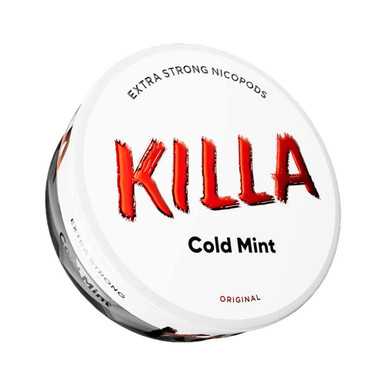
This page is for Killa Cold Mint Nicotine Pouches. The brand recorded is Killa, the product name is Cold Mint, and the displayed price is £33.50. A single strength is declared against it — 16.5mg — which is therefore both the ceiling and the floor of what we hold for this can. The flavour field contains one tag, mint. The stock record reads available as this was written. One image is attached. The pack-quantity field is empty, and that blank is a real limitation rather than an oversight we can talk our way round.
That short list is the entire factual basis of this page. What follows is drawn from it, from comparison against other cans in our own catalogue, or from an explicit statement that we do not know something. We do not reproduce ingredient panels, we do not describe what happens after a pouch goes in, and we do not make statements about anybody's wellbeing in any direction at all. A dull, accurate page is the objective here, and we would rather write one than a livelier page that strays.
The full guide to Killa Cold Mint Nicotine Pouches
4,981 words on how it eats, who it suits, how to serve it and what to put beside it.
Killa Cold Mint: what the listing says, and nothing beyond it
One small point of interest before anything else, because it happens to be true of this listing specifically. Most of the Killa range we carry has the phrase extra strong baked into its web addresses, inherited from the way the manufacturer names its line. This one does not. Its address is simply the flavour. And yet it declares exactly the same 16.5mg as the ones whose addresses do carry that phrase, at exactly the same £33.50. That is about as clean a demonstration as you could ask for that the wording in a product name is naming and not measurement. Our own filing puts all of them on the same shelf regardless: the Strong shelf, 132 products deep.
This is an adult nicotine product, sold only to people aged 18 or over who already use nicotine. The full wording has its own section at the foot of the page.
Same number, different cans: how this sits among the 16.5mg listings
The most useful thing a shop can do for somebody comparing cans is lay the shelf out honestly. This can declares 16.5mg and sits on a shelf of 132 listings that our system files as Strong. Here is what that shelf actually looks like from where this can stands.
Price is the widest variable, and it is not comparable at face value
Within the mint listings we shelve near this one, the prices run from Nordic Spirit Max Frosty Mint at £4.49 up to the £39.90 group. That is nearly a ninefold spread for products that occupy the same broad part of the catalogue. In between: Edge Mint at £14.95, Pablo Gold Edition Blueberry Peach Ice at £19.95, Fumi Fiery Mint at £27.90, Elf Cool Storm at £29.90, this can at £33.50, and Klint Avalanche Mint at £36.90. At the top end sit Clew Cool Mint, Denssi Cold Mint, Cuba Ninja Ice Cool and 77 VB Edition Mini Arctic Berry, all at £39.90.
Before anyone draws conclusions from that spread: we cannot tell you what any of those prices buys, because the pack-quantity field is blank across most of the catalogue including this listing. A £4.49 line and a £39.90 line may be a single can and a box of ten respectively, or they may not. Comparing headline prices without knowing the unit is a way of reaching a confident wrong answer, and we would rather flag the hole than let you fall into it.
Flavour names in the same family are not interchangeable
The mint shelf is the largest we run — 148 listings — and the names in it look more similar than the products behind them. Denssi Cold Mint shares this can's flavour name exactly, from a different manufacturer at £39.90. Clew Cool Mint uses the adjacent adjective. Cuba Ninja Ice Cool and Elf Cool Storm both describe a cooling character without naming mint in the title at all, and Klint Avalanche Mint leans on a cold-weather image. Our flavour field flattens every single one of them to the same tag: mint. That tag is how we sort; it is not a claim that they taste the same, and we hold nothing in our data that would let us rank them against one another.
What the shelf does not tell you
It is worth being explicit about the limits of this comparison. A shelf sorted by declared figure tells you what each manufacturer has printed on each can. It does not tell you how two cans from two different manufacturers compare in practice, because a declared figure is each brand's own statement about its own product and not a common scale that brands have agreed between themselves. And it certainly does not tell you which of them suits any individual. We cannot advise which strength suits anyone — not the reader of this page, not somebody being bought for. We do not know what a person already uses and it is not a retailer's place to prescribe.
Cross-shelf, for completeness
If you want to see where this figure sits in the catalogue as a whole rather than within one shelf, the Medium Strength shelf holds the listings we file below this band and the Extra Strong shelf holds those above it. Reading all three in sequence is the clearest picture of the distribution anyone can get from our site, and it is a good deal more informative than a single number in isolation.
Cold Mint, described as taste and aroma
The word doing the work in this name is cold, and the flavour follows it. Lift the lid and the aroma is sharp, clean and immediately recognisable as peppermint rather than spearmint — the bright, slightly medicinal top note rather than the softer, greener, sweeter one. There is very little sweetness in the smell. It is a thin, high aroma rather than a round one, and it clears the nose in the way a strong mint does.
In the mouth the cooling character is the dominant impression and the mint flavour sits underneath it rather than the other way round. That ordering is what the name is pointing at. A can named for a mint leaf tends to lead with the herb; this one leads with the chill and lets the peppermint follow. The result reads as clean and rather austere — there is no fruit in it, no vanilla, no confectionery edge, and not much sugar-like sweetness to soften the front of it.
The finish is the longest-lasting part. Mint-led flavours generally outlast fruit ones in this format, and the cooling sensation in particular tends to persist after the flavour proper has thinned out. So the experience is front-loaded on aroma, chill-dominated in the middle, and ends on a long quiet cool note with the mint mostly gone.
Two honesty notes. First, this is a description of a taste written by a retailer, not a manufacturer specification; our record holds the single word mint and nothing finer. Second, taste is subjective and the words cold, cool and ice are used inconsistently across this entire category by every brand in it. We can tell you how we would describe this can. We cannot tell you that our vocabulary matches the vocabulary in your head.
The format itself: the pouch, not the tin
Most product copy in this category talks about the can and skips the thing inside it, which is backwards. This section is about the pouch.
Portion size, and a field we do not hold
A pouch here is a small soft rectangle with rounded ends, white, dry to the touch, slightly yielding when pressed between finger and thumb. It is designed to be held in one position and then forgotten about, and the dimensions follow from that — large enough to stay put, small enough not to be a presence.
Our record does not carry a portion-size field, so we cannot state whether this is a standard or a slim format from the data. What we can say is what the naming indicates: where a product in our catalogue is a reduced-size format, the word mini or slim usually appears in the title, as it does with the 77 VB Edition Mini. It does not appear here. That is an observation about naming conventions and not a specification, and if portion size is your deciding factor, the can states it and this page does not.
Where it sits, and what that is actually like
The pouch goes under the upper lip and stays there. There is nothing to hold, nothing to put down and nothing to switch on or off, which is the whole reason the format exists in the shape it does. Most people stop noticing the physical object within a couple of minutes; before that there is a distinct sensation of something being there, and with a chill-led flavour like this one that sensation is more pronounced at the start than it would be with a fruit can.
It is discreet in the sense of being quiet and hands-free. It is not invisible. Somebody looking directly at you at the wrong moment may notice a slight fullness. That is the honest position and it is worth knowing before you assume otherwise in a setting where it matters.
How long one stays in
This varies between people and we are not going to publish an average, because we have not measured one and a made-up figure would be quoted back at us forever. What we can describe is the shape of it. Flavour is most defined at the beginning and thins steadily; for most people the signal to take one out is the taste going rather than a clock. Mint-led cans complicate that slightly, because the cooling sensation outlasts the flavour, so the point at which a mint pouch feels finished is later than the point at which it tastes finished. Some people take that as a reason to keep one in longer. Others do the opposite. Neither is a rule and we are not issuing one.
Out, and then into a bin
Removal is the same motion in reverse, and what you are left with is a small damp object that needs disposing of. The compartment in the lid is the temporary answer; a bin is the actual one. Not a drain, not a car door pocket, not out of a window. Used pouches do not break down into anything useful and they are thoroughly unpleasant for whoever finds one. This is the part of the format that draws the most criticism and it is entirely within the user's control.
16.5mg on a lid, and what the figure is for
The number exists so that a catalogue can be sorted and so that a customer can read a label. That is the whole of its function on this site. It is a manufacturer's declaration of strength per pouch, it is printed on the can, and we reproduce it exactly as given.
What it is not: a grade, a score, a difficulty level or a measure of quality. A higher number does not indicate a better product and a lower one does not indicate a lesser one. There is no ladder in this catalogue, nothing to progress through and nothing demonstrated by picking one can over another. We sort by declared figures because sorting by a number is the least opinionated way to organise several hundred listings, not because the shelves are ranked.
We will say the important sentence again in plain terms, because it is the thing most often left out of pages like this one. We are not able to advise which strength is right for any individual. That holds regardless of what the customer tells us about themselves, because it is not a question a retailer should be answering. Our contribution is to print each declared figure accurately, keep the shelves consistent, and leave the decision where it belongs.
The tin, the lid and the well underneath it
The container is the standard slim cylinder used across effectively every brand we stock. Body holds the portions, lid pushes on over the top, and the underside of the lid is a shallow well for used pouches when a bin is not to hand. It is a simple design and its uniformity across brands is a genuine convenience — a can you have never bought before behaves exactly like the last one.
The lid is a friction fit rather than a screw thread, which makes it quick to open one-handed and also means a tin under side pressure in a packed bag can be levered open. Loose pouches in the bottom of a rucksack usually have that explanation. Keep the well empty between uses, too: anything left in it scents the fresh portions, and with a sharp peppermint aroma the transfer is quick and obvious. Tip it into a bin daily and the issue never arises.
Because there is no window in the side, the only way to gauge how much is left is weight and rattle. A full tin is quiet and has a definite heft; an emptying one gets louder and looser as the contents start to move. Most regular users end up reordering on sound without ever consciously deciding to.
Where this can sits in the Killa range
We list 31 products on the Killa brand page. What is unusual about the range, viewed from behind the counter, is its internal consistency: the Killa cans we hold are overwhelmingly 16.5mg at £33.50. When the number and the price do not move, flavour is the only real variable, and comparing within the brand becomes a straightforward question of taste rather than a trade-off between taste and figure.
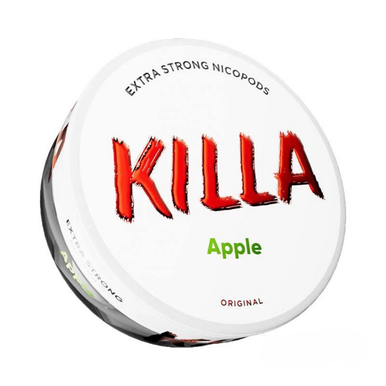
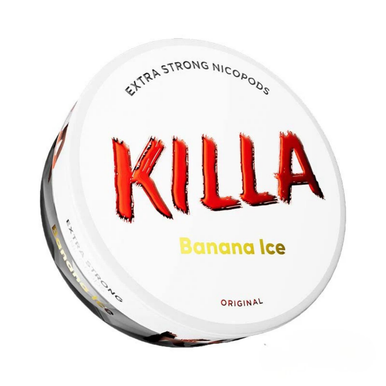
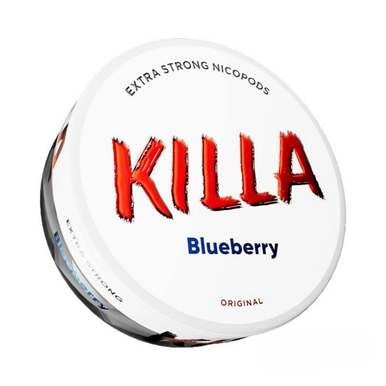
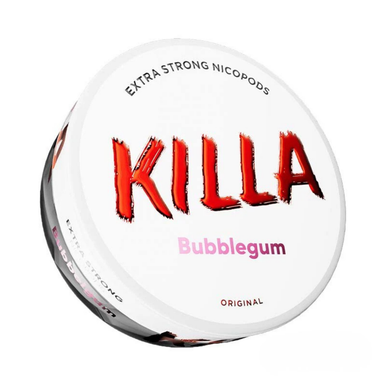
Across the range, the fruit-led side includes Killa Apple and Killa Blueberry, with Killa Banana Ice combining a fruit with a cooling element and so sitting partway between this can and the plain fruit ones. The sweeter and drink-derived end holds Killa Bubblegum and Killa Cola, while Killa Cappuccino is the roast-flavoured outlier and about as far from a cold mint as the brand goes. All of them are £33.50. The brand page carries the remainder of the range, including the other mint-named listings we stock under this label.
On the naming, briefly: the brand name is aggressive and so is the line naming. Both are trademarks. A manufacturer picks its own words for its own commercial reasons, and those words carry no information about the product beyond identifying it. We copy them accurately, because accuracy is how you find what you came for, and we decline to write a page in their register.
Mint cans people keep alongside this one
Very few people who buy mints buy only one. The usual pattern is two or three tins in rotation, either several mints that differ in character or one mint plus something from another family entirely.
If you are staying in mint, the obvious near-neighbours are Denssi Cold Mint at £39.90, which carries the identical flavour name under a different brand, and Clew Cool Mint at the same price, which swaps the adjective. Edge Mint at £14.95 is the least expensive mint in this neighbour set and Klint Avalanche Mint at £36.90 among the dearest. Fumi Fiery Mint at £27.90 puts a contrasting word in front of the mint, and Nordic Spirit Max Frosty Mint at £4.49 is the outlier on price.
If you want the second tin to be a genuine change of direction, Pablo Gold Edition Blueberry Peach Ice at £19.95 keeps a cooling element but puts fruit in front of it, and Cuba Ninja Ice Cool at £39.90 and Elf Cool Storm at £29.90 both describe cold without naming a specific leaf. The fuller ranges behind two of those sit on the Pablo brand page and the Cuba brand page. We are not ranking any of these. We are telling you they exist and what they cost.
Why we do not standardise the word "cold"
Anyone browsing the mint shelf for more than a minute notices that the adjectives repeat and overlap. Cold, cool, ice, iced, icy, frosty, arctic, freeze, chilled, polar, avalanche, storm. Several of those appear in the neighbour products listed further up this page. It is reasonable to ask whether there is a scale behind them, and the honest answer is no — not one we have access to, and not one the industry shares.
Each manufacturer invents its own vocabulary for its own range and uses it internally. Within one brand, the words may well be ordered deliberately, so that a can named cold and a can named cool from the same manufacturer sit in a considered relationship to each other. Across brands, no such relationship exists. One company's cool may be another company's arctic. There is no agreed unit, no reference point and no independent test we could cite.
We have thought about imposing our own scale on top — rating each can's cooling from one to five and letting people sort by it. We have not done it, and we are not going to. It would require us to taste and score several hundred products consistently, publish the results as though they were measurements, and then defend a subjective ranking as if it were data. The first customer who disagreed with a score would be right to. So the flavour field stays as it is: a broad family tag, mint, applied to all 148 of them, with the manufacturer's own name preserved next to it.
What that means practically is that the adjective in a product name tells you what the manufacturer decided to call it, and the only reliable way to place one can against another is to have used both. That is unhelpful in the short term and it is true, which on this site is the order of priority. Where you see us describe the character of a flavour — as we have done above for this can — read it as one retailer's description and not as a position on a scale that does not exist.
Buying rhythm and reordering
Something worth saying about how people actually buy in this category, since it affects what a page like this is for. Very few orders are exploratory. Most are replacements, placed by somebody who already knows what they want and is checking price and availability rather than reading a description. That is why this page leads with the facts and the shelf position, and leaves the taste notes until after them.
Because our pack-quantity field is blank, we cannot help you calculate how long an order lasts, and that has a practical consequence: your reorder point has to come from your own experience rather than from arithmetic on this page. Most regular users of the format work it out within a couple of cans and then never think about it again, generally by weight and rattle rather than by counting.
The other thing that shapes a reorder is rotation. People who keep a single flavour in use tend to order one line repeatedly and notice when a price moves. People who keep two or three tins on the go — a mint, a fruit, occasionally something odd — order less predictably and are more affected by availability, because a rotation with a gap in it is a rotation that changes. If you are in the second group, the brand and flavour shelves are more useful to you than a single product page, since they show what is on the shelf right now rather than what one listing says.
A last practical point. Stock records on this site are updated continuously but product descriptions are not rewritten every time one changes, so the availability sentence near the top of this page is a snapshot from the day it was written. Treat it as context and treat the cart as fact. If a line you rely on has gone, the shelf it sits on is the fastest way to find what else is there at the same declared figure.
Keeping a tin in good order
Lid on. That is the substance of it. An open can dries out, and a dried pouch is a weaker version of what you bought — flavour first, texture second. The most common way people spoil a can they have paid for is leaving it open on a desk all afternoon.
Avoid heat. A car dashboard in summer is the worst place in an ordinary day for a sealed tin and a radiator shelf is the winter equivalent. A drawer, a cupboard or a bag pocket is fine. Cold seems to do no harm and some people keep spare tins in a fridge; we hold no manufacturer instruction either way, so that is a thing people do rather than a thing we advise.
Empty the lid well daily. Keep tins out of reach of children and animals — not storage advice so much as a basic condition of having a nicotine product in the house, and it applies to every listing we carry.
What is actually on offer to choose between
On this listing: one variant, 16.5mg, at £33.50. No second strength of Cold Mint, no alternative pack size in our record, no multipack line. Where a page has options we set them out; here there are none, and constructing a fake comparison would only waste your time.
The real choice is between listings. If the flavour suits and the figure does not, the strength shelves either side are the place to look. If the figure suits and you want a different taste, every Killa listing shares the number, so the brand page functions as a flavour menu with the arithmetic already settled. And if you would rather see the lot unfiltered, everything we stock is one page.
Ordering, identification and delivery
The mechanics are the same across the site: the listing adds to the basket, the basket carries the displayed price, checkout confirms the total. Our record shows this can in stock as written, but a description is a slower-moving thing than a warehouse and the cart is the live position rather than this paragraph.
Age verification is compulsory and not a formality. This is an 18+ product; age is confirmed as part of the order and an order that cannot be verified will not ship. Separately, a courier may ask for identification on the doorstep and may decline to hand over a parcel where age cannot be established, in which case it returns to us. Keep something to hand if a delivery is due.
We do not publish courier timings, order cut-offs or postage costs in product copy, because they change more often than descriptions do and a stale figure is worse than no figure at all. Checkout carries the current position on all three.
Getting around from this page
Three shelves hold this can and each is useful for a different question. The Mint shelf is by some distance our largest at 148 listings, so it is comprehensive rather than quick. The Strong listing, at 132 products, groups by declared figure. The Killa page, at 31, groups by manufacturer and is the fastest of the three to read end to end.
Above those are the hubs. The full catalogue is the unfiltered view; the three strength hubs cut it by declared figure; the brand hubs cut it by manufacturer. Most people find it quicker to start from flavour or brand and check the strength shelf afterwards, rather than starting from a number.
Questions we are asked about this can
How many pouches are in a tin?
We do not hold that figure. The pack-quantity field on this listing is empty and there is no portion count in our record, so any number here would be fabricated. It is printed on the can, and the cart shows what the £33.50 covers. We would rather leave a visible gap than fill it with something plausible that we have not checked.
Is this the same as the Cold Mint from Denssi?
Same flavour name, different manufacturer, different price — £33.50 here against £39.90 there. Our record holds the identical mint tag for both and no tasting detail that would let us describe how they differ. If the comparison matters to you, both are on the shelf and buying both is a more reliable method than reading us speculate about it.
Why does this one not say extra strong when the rest of the range does?
Because the phrase is part of how the manufacturer names particular products, and it was not applied to this one. It is not a statement about relative strength: this can declares 16.5mg, the same as the Killa listings whose addresses do carry the phrase, at the same price. Our own filing puts them all on the Strong shelf regardless. If anything, this listing is a useful illustration that product naming and declared figures are separate systems.
Is this a peppermint or a spearmint?
As we taste it, peppermint — the sharper, cleaner, more medicinal of the two rather than the softer, greener, sweeter one. But our record holds only the word mint, so that is a description rather than a specification, and different people draw the line between the two in different places. If the distinction is important to you, treat this paragraph as a starting point and not as a guarantee.
Which strength should I get?
We cannot tell you. We do not know what you already use, we have no way of establishing it, and a retailer that answers that question is answering something it has no business answering. What we do instead is publish every declared figure accurately and keep the shelves sorted so you can compare them for yourself.
How long does one pouch last?
That differs from person to person and we will not invent a number. What is generally true is that the flavour is clearest early and thins steadily, and with a mint the cooling character tends to outlast the taste. Most people go by when it feels finished rather than by a clock. Your own established habit is a better guide than anything we could write here.
Do you have ratings or customer reviews?
No. We do not publish ratings, testimonials or popularity claims on product pages and we are not going to manufacture the appearance of a verdict we have not collected. What you get instead is the price, the declared figure, the flavour tag, the stock status, one image and a clear statement of what we do not know.
What is in a pouch?
Not something we publish. Composition is the manufacturer's information and it appears on the packaging; approximating it from memory or from someone else's page would be worse than saying nothing. If you need it before ordering, the can carries it.
Is the cooling in this can stronger than in the others you sell?
We cannot rank them, and we would be making it up if we tried. Every mint-named can in our catalogue carries the same single flavour tag, and we hold no measurement of cooling intensity for any of them. What we can say is what each product is called and what it costs. Comparing the character of two cans in practice requires having tried both, and that is your experiment rather than our claim.
Is the stock status on this page current?
It was accurate at the time of writing, which is the most a static page can honestly claim. Availability moves. Use the cart as the test: if the listing adds to your basket, it is there; if it does not, this page has simply aged since it was written.
Do you sell this in a multipack?
Not as a separate listing, and our record shows no alternative pack size for it. There is one variant only: 16.5mg at £33.50. Whether that price itself covers more than one can is the question we genuinely cannot answer, because the quantity field is blank. The cart is the place that resolves it, and we would rather say that flatly than construct an answer that sounds better.
Why is the mint shelf so much larger than the others?
Because that is what the market produces, not because of a preference on our part. We hold 148 mint listings against single-figure counts on some other flavour shelves, and that ratio reflects what manufacturers make and distributors supply. We do not trim shelves down to a favoured selection, so the sizes you see are the catalogue as it actually is rather than a curated view of it.
Can I buy this for somebody else?
Only where that person is 18 or over and already uses nicotine. Age verification applies to the order whoever the can is intended for, and a courier may still ask for identification at the door regardless of who placed it. We will not knowingly supply an age-restricted product destined for anyone under 18.
Legal and compliance information
Please read this before placing an order.
- Over-18s only. This product is sold only to adults aged 18 or over, and only to adults who already use nicotine. Age is verified as part of the order process.
- Nicotine is an addictive substance. This product contains nicotine at a declared strength of 16.5mg.
- This is not a licensed stop-smoking medicine. It carries no medicinal authorisation, and it is not intended for non-smokers, for anyone who does not already use nicotine, for under-18s, or for anyone who is pregnant or breastfeeding.
- Identification may be requested on delivery. Couriers may ask for proof of age at the door and may refuse to release a parcel where age cannot be established.
- Keep out of the reach of children and animals. Used pouches belong in a bin, not a drain.
To finish
That is the complete position on this can: Killa Cold Mint Nicotine Pouches, £33.50, one declared strength of 16.5mg, a single flavour tag reading mint, in stock as written, one image on file, and no pack quantity in our record. The taste description above is our own wording about a taste, not a manufacturer's specification. The declared figure is a label, not a rating.
If a chill-led peppermint is what you came for, the listing above is where to go. If you are comparing, the mint shelf, the Strong shelf and the Killa page will get you further than another paragraph from us. And if the question underneath everything is which figure to choose, the answer has not changed anywhere on this page: that is not ours to answer, and we are not going to pretend it is.
More from Killa
More strong pouches
More mint pouches
Where this sits
Killa Cold Mint Nicotine Pouches appears in these categories. Browse them, or jump to something close.
You might also like