Velo · 6mg–17mg
Read the full guide
Velo Tropical Mango Nicotine Pouches
£4.19
✔ In stock — ready to ship
100% tobacco-free
Free over £20
Same-day dispatch
Secure checkout
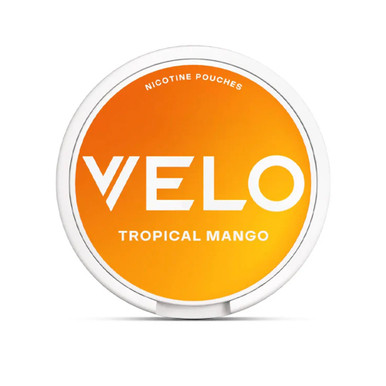
Velo Tropical Mango Nicotine Pouches is listed here at £4.19, and unusually for a listing with several options, that one price covers every version of it. Our record holds four declared strengths against this product — 6mg, 10mg, 14mg and 17mg — and all four variants carry the same £4.19 figure. The stock state on our record is in stock. Two flavour tags are filed to it, mango and tropical. There is one product photograph. That is the complete contents of our data on this can, and the rest of this page is built out of three things only: a description of the object, comparisons with the other cans on our shelves, and direct statements about the things we do not know.
That third category is not a rhetorical flourish. A product record of this kind has real gaps in it, and a description that papers over them is worse than one that names them. We do not publish what is in a pouch. We do not describe what happens after one is in place. We make no statement about anybody's wellbeing in any direction, and we cannot advise which of the four figures above suits you — not as a hedge, but because that is a judgement about a person rather than a fact about a product, and we do not have any business making it.
The full guide to Velo Tropical Mango Nicotine Pouches
5,060 words on how it eats, who it suits, how to serve it and what to put beside it.
What the Tropical Mango listing carries
The reader this page is written for is an adult who already uses nicotine and is choosing between cans. Nothing here is addressed to anyone else, and the formal wording on age, addictiveness and what this product is not sits in its own section near the bottom.
The tin in the hand
The physical object is a shallow circular tin, low enough to sit flat in a shirt pocket and small enough to close a fist around. The lid comes off completely rather than hinging, and goes back on with a click you can feel. That click is worth paying attention to, because a lid that has only half-seated is the beginning of most of the problems described further down this page. Printed on the top face are the brand, the flavour name and the milligram figure of the variant you bought — the last of those being the reason people who keep several tins in one drawer can sort them by looking down at the lids instead of lifting each one.
Lift the lid and the pouches are arranged in a ring, flat, even and white. An individual pouch is a small rectangle with rounded corners, soft, and dry to the touch rather than damp. It weighs almost nothing. Our record does not state how many pouches are in the tin, and we are not going to estimate: the count is printed on the packaging, and a guess from a shop is exactly the sort of thing that gets repeated as fact. The same goes for the tin's diameter and the weight of one pouch. Both are on the can, neither is in our data.
The pouch is placed between the lip and the gum and left there. The usual account is that it feels more noticeable in the first minute than afterwards, settling as it takes up the shape of the space. From then on it mostly stays out of the way. People hold conversations and drink with one seated. Eating with one in is a matter of personal preference and we have no advice to offer on it, because there is no correct answer and pretending otherwise would be filling space.
Duration is the question with the widest honest answer. Some people change after ten minutes; others leave one in for the better part of an hour; the same person will do both on the same day depending on what they are doing. What is consistent is that the flavour is not constant. It rises early, holds, and then thins away towards something faint. Plenty of people treat that fading as the cue to swap rather than working to a set time, which is a sensible habit rather than a rule.
One detail matters more on this listing than on most, because this one comes in four versions. The only thing distinguishing a 6mg tin from a 17mg tin, once both are open on a table, is the figure printed on the lid. The pouches themselves are not marked, our record holds nothing about them differing in size, colour or texture between variants, and we are not going to suggest a way of telling them apart by eye or by feel, because we do not have one. If you keep more than one variant of this flavour, keeping each in its own tin with its own lid is the entire system, and decanting pouches from one can into another is how people end up not knowing what they have.
Removal is done with a fingertip. The lid is not solid on its underside — there is a shallow well moulded into it, with a lip, and that well takes used pouches. It holds several, which is enough to get through a commute or an afternoon away from a bin, and its contents go into general waste when you next pass one. Not into a sink, a drain or a plant pot. Used pouches are pale, small and easy to lose sight of, which is the plain practical reason a tin belongs shut and out of reach in any house with children or animals in it.
Mango, taken as a taste
This is one of the more specific flavour names on our shelves, and that specificity is the single most useful thing about the listing. Where a flavour name gives you a family and no more, you are guessing at the fruit. Here the fruit is named, and mango happens to be one of the most recognisable notes in the whole fruit vocabulary — hard to mistake for anything else once it is in front of you.
What a mango flavour usually does, in general terms, is come in thick rather than sharp. It is a soft, rounded, heavy sweetness, much lower in acid than a citrus and much less crisp than an orchard fruit. Behind the sweetness there is often a slightly resinous top note, the faintly piney edge that a properly ripe mango has and that distinguishes it from a generic sweet-fruit flavouring. Whether a given flavour leans towards that ripe, resinous reading or towards a smoother, jammier one is the main axis along which mango flavours differ, and our record does not tell us which end this can sits at. That is the honest limit of the description.
Now the second tag, because it can look like more information than it is. Our record files this can under both "mango" and "tropical", and those two are not independent facts — a mango is a tropical fruit, so the second tag is a filing bucket rather than a second flavour note. It places the can among the 58 listings in our tropical grouping, which holds both named single fruits like this one and unnamed blends, and it sits alongside the 16 cans tagged mango specifically, which is one of our narrower flavour shelves. What neither tag tells us is whether anything else has been put in the blend alongside the mango. If there is a second fruit in there, or a cool note, our record does not say so, and we would rather flag the gap than fill it in.
Worth noting what is absent, since it is the thing a careful reader will check. There is no mint tag on this listing and nothing in the name suggesting a cool character. On our data, then, this reads as a fruit flavour without a cooling layer filed against it — which is a genuine point of difference from a great many of the fruit cans on these shelves, most of which carry a mint tag as well. We are describing what the record says, not making a promise about the tin.
On aroma, the general pattern with mango is that the tin smells more strongly and more sweetly than the pouch tastes. That surprises some people. It is a common characteristic of the format rather than a fault in any particular can, and it is worth knowing in advance so the first tin does not read as a disappointment. As always: this is a description from a shop that stocks the product, not a specification, and where our paragraph and the packaging disagree, the packaging is correct.
Storage, and keeping a can worth opening
Of everything on this page, this section is the one most likely to change how a tin performs for you, and it is the one most product pages leave out entirely. A pouch is a dry product, but dryness is a range rather than a state, and flavour is volatile. Both of those things move if the can is kept badly, and neither moves back.
Almost every problem starts with the lid
The lid is the seal. A tin whose lid is clicked properly home holds its contents in the condition they arrived in for as long as most people take to finish it. A tin whose lid is resting on rather than seated does not, and the usual reason a lid stops seating is that the catch well underneath it has been allowed to fill up. That is the whole mechanism behind most complaints about a can going off: the well fills, the lid sits proud, air moves freely, the pouches dry and the flavour goes. Emptying the well before it needs it is the single highest-value habit with this format, and it costs nothing.
Heat, and the places cans actually get left
The enemy is warmth, and the places people habitually leave tins are the warm ones. A car dashboard in summer. A windowsill in the sun. A coat pocket on a radiator. The shelf above a kettle or a cooker. None of that is a safety matter and we are not going to dress it up as one — it is a quality matter. A tin that has spent an afternoon at dashboard temperature usually comes back flatter and more generic in flavour, and the pouches can stiffen. The remedy is unexciting: a cool, dark, dry cupboard or drawer. A bathroom cabinet is a poor choice for the opposite reason, since the humidity swings are large and the surfaces are frequently wet.
Dry pouches and moist pouches
Different products leave the packing line at different moisture levels, and that is a deliberate difference between them rather than a defect in any one. A drier pouch usually feels less noticeable in place and gives its flavour up more gradually. A moister one usually reads as more immediate and fades sooner. Both behave normally. The condition to watch for is not moist or dry as such but stiff and papery — a pouch that has clearly lost moisture it was meant to keep, generally after weeks in a warm room with an imperfect lid. Flavour tends to leave with the moisture, and you will know from the first pouch you take out.
Cold storage, honestly answered
We get asked about fridges and freezers often enough that a straight answer is worth the words. Some people keep tins refrigerated and report the flavour holds for longer. Others find that a cold tin opened in a warm kitchen collects condensation, and that the damp does more harm than the cold prevented. We hold no manufacturer guidance on cold storage for this listing, so we are not going to issue an instruction in either direction. Two practical observations that do not require us to know anything: letting a cold tin come up to room temperature before opening avoids most of the condensation problem, and no amount of cold will restore a can that has already dried out.
Buying for use rather than for a cupboard
The consequence of all of the above is that tins are better bought to be used than bought to be hoarded. Where people keep several in rotation, the tidy habit is to work through the oldest first, and to keep spares in the same cool dark place as the open one rather than in a glovebox or a bag as a convenience. We do not publish a shelf life or a best-before date for this product — any date there is will be printed on the can. A tin that has been at the back of a drawer for a year is not something we can assess from here, and the first pouch out of it will tell you more than we could.
Travel, pockets and bags
In a bag, a tin travels best where it will not be crushed or rolled repeatedly, because a lid knocked loose in transit is the same problem as a lid left off at home. In a pocket, body heat is modest and brief enough not to matter much, though a tin that lives permanently in a trouser pocket spends its life a few degrees warmer than one in a drawer. If you carry a spare, carrying it sealed and unopened is better than carrying two open tins — an unopened can is doing nothing at all, which is exactly what you want from a spare.
Four numbers on one listing: reading the strength ladder
This listing offers four declared figures, and that makes it a good place to explain what the ladder on a can actually is. The numbers here are 6mg, 10mg, 14mg and 17mg, they are declared amounts per pouch given by the manufacturer, and every one of them is £4.19 on our listing. Price is not a variable across the four, which removes the most common distortion from the comparison.
What the number is
It is a figure the manufacturer prints on the can, and we reproduce it exactly as given. We publish it because it is on the packaging and because it is the field people sort and filter by. Within a single product line like this one, the four numbers are at least being generated on a consistent basis by a single manufacturer, so the ordering between them — 6 below 10 below 14 below 17 — is meaningful as an ordering.
What the number is not
It is not a quality score, and a higher figure is not a better can. We want that stated flatly, because a four-rung ladder on one listing invites people to read the top rung as the full version and the bottom rung as a reduced one, and that is not what the numbers mean. It is also not a measurement of how anything will seem to you — the declared figure describes what is in a pouch, not what a person experiences, and those are different kinds of claim. And it is not comparable across brands with any confidence: different manufacturers do not necessarily measure or present the figure the same way, and pouch size, moisture and flavour load vary between products. Two cans from two brands both printed 14mg are two numbers that happen to match.
What we will not do with it
We will not tell you which rung to pick. That applies whether you ask it generally or with details about yourself attached: we cannot advise which strength suits anyone, and a shop that offers to is making a judgement it has no basis for. We do not know your history, we are not qualified to weigh it, and a product page is the wrong place for that conversation entirely. What we can do is print the four figures accurately, tell you they are the same price, and show you where they sit on our shelves.
How the shelves treat this listing
Because the listing's declared range runs up to 17mg, it is filed on the Strong shelf, alongside 132 other listings — even though it also offers a 6mg and a 10mg version that would look at home lower down. That is worth knowing if you browse by shelf, because it means our medium grouping will not show you this can despite two of its four variants being modest figures. The shelves take account of the whole range on a listing rather than any single variant. Above the Strong shelf, the Extra Strong listings are the top grouping we run. All three shelves are browsing aids and none of them is a recommendation.
Velo's shelf, and where this can sits on it
We list twenty-one products from this brand, all of them viewable on the Velo category page, and every single one is £4.19. A range where price is constant is genuinely rare, and it changes how people shop it — the decision collapses to flavour and declared figure, with nothing to weigh on cost. This can is one of the brand's fruit listings and one of the few that names a single fruit outright rather than gesturing at a family.
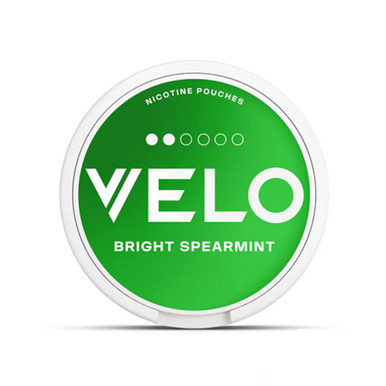
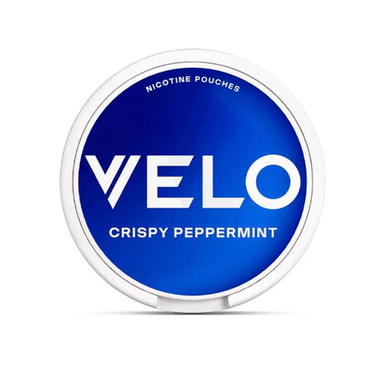
Across the brand's mint-led cans, Crispy Peppermint and Velo Freezing Peppermint both take the peppermint route, with the second name pointing at the colder of the two readings, while the Bright Spearmint can goes to the sweeter spearmint side instead. If the appeal of this listing is the fruit and not the format, those three are the opposite corner of the same brand's shelf, all at £4.19 and all in stock on our record.
On the fruit side, Velo Cherry Ice pairs a named stone fruit with a cool note, and the Icy Berries listing does the same with a berry mix rather than a single fruit. Velo Lime Flame moves to citrus and, on its name, in a warm rather than a cool direction. Closest of all to this can within the brand is Velo Mango Flame, also £4.19 and also in stock, which keeps the same named fruit and takes it somewhere else entirely — the two mango listings from one brand are the most direct comparison available anywhere on our shelves, and if the fruit is the reason you are here, that is the other half of the pair.
What people keep beside a mango can
Most people running pouches keep two or three tins on the go. The reason is not complicated: a flavour you have constantly becomes less distinct, and a second tin with a different character puts the edges back on both. The choice is between a variation on the same idea and a deliberate contrast.
Other mango, other tropical
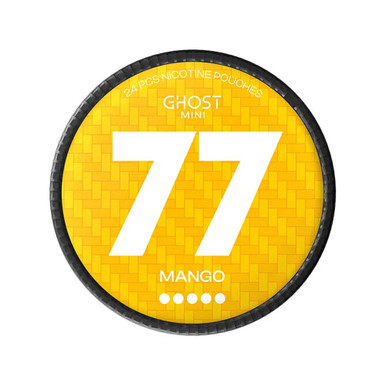
Sticking close to this flavour, Denssi Mango Freeze at £39.90 is the same fruit with a cool element named in the title, which is the clearest single-variable comparison you can make against this can. the 77 Ghost Mini mango can, also £39.90, keeps the fruit and changes the format — the Ghost line is described on its packaging as mini, so that is the route to the same flavour in a different physical size. Broadening slightly, SYX Tropical at £29.90 goes back to an unnamed blend rather than a named fruit, which is the opposite trade to the one this listing makes.
Other fruit, similar sweetness
For a soft, sweet fruit that is not mango, Fumi Fiery Peach at £27.90 is close in weight and body while going somewhere warmer, and the Elf Bar pineapple can at £29.90 keeps the tropical family and swaps in the sharper, more acidic member of it. Pablo Gold Edition Blueberry Peach Ice at £19.95 stacks two fruits under a cool layer and is the cheapest of the multi-fruit cans named on this page. Cuba Ninja Coconut at £39.90 stays tropical and moves from a fruit note to a creamier, nuttier one, which is about as different as you can get while staying in the same family.
A deliberate contrast
If the point of a second tin is to be unlike the first, the Killa apple listing at £33.50 puts a crisp, acidic orchard fruit against this can's soft sweetness, which is the sharpest contrast available inside the fruit world. One more worth naming for completeness: Iceberg Apple Lemon Pineapple at £39.90 stacks three fruits at once, but our record marks it as out of stock, so it is listed here for interest rather than as something you can order today.
Browsing rather than picking
If none of those is quite it, the shelves are faster than reading pages one at a time. The mango shelf and the tropical shelf are both linked earlier and will show you the flavour neighbours in one view. For brand-led browsing, the Pablo range and the Cuba shelf are where several of the cans above come from. And the complete product list is a single page if you would rather scan the lot.
Choosing between the four variants
Because every variant is £4.19, the decision here has an unusually small number of moving parts. There is no pack-size choice on this listing — our record does not hold a can count for it, so we cannot tell you whether the price buys one tin or several, and the listing page and packaging are the places that answer settles. What there is to choose is the number.
Laid out plainly, the four options are these.
| Declared strength | Price |
|---|---|
| 6mg | £4.19 |
| 10mg | £4.19 |
| 14mg | £4.19 |
| 17mg | £4.19 |
That table is information, not a ladder to climb. The four rows are four declared figures at one price, and the only person who can decide between them is you. We are not going to suggest a starting point, an ordering, or a direction of travel, and if you have read anything on this page as an encouragement to pick the largest number, that reading is not one we intended or endorse. The flavour, on our record, is identical across all four; what the manufacturer prints on the can is what differs.
Ordering it, and the age check
The listing shows £4.19 and our record says in stock, which means available when this page was written rather than at the moment you are reading it. Stock moves. The live listing at the top of the page is always more current than a description composed in advance, and if it says unavailable, it is right and this paragraph is out of date.
This is an age-restricted product and we sell it only to people aged 18 or over. Identification may be asked for on delivery, and whoever takes the parcel has to be able to produce it, which is worth a thought if deliveries at your address are usually taken by somebody else. A courier is within their rights to refuse the handover when the check cannot be met, and that is the process working as designed rather than an error to complain about.
A small practical note on ordering more than one thing. Since every listing from this brand is priced identically, adding a second flavour to a basket is arithmetically simple, which is why brand-led rotations are common here. That is an observation about how the pricing is structured, not a suggestion that you buy more than you came for.
Finding this page again
This can is reachable from four shelves. By declared range it sits in the Strong grouping; by brand it sits with the other twenty listings from Velo; by flavour it appears on both the mango shelf and the broader tropical shelf. All four are linked above, and any of them leads back here.
The site's structure is deliberately flat: strength, brand, flavour, then products. There is no deeper tree to get lost in. If browsing by category is not how you like to shop, the full catalogue linked earlier lists everything on one page and you can filter by eye. Either route reaches the same places.
Questions we get about this one
Is there anything in the flavour besides mango?
Our record does not say. The two tags we hold are mango and tropical, and since mango is itself a tropical fruit, the second tag is a filing category rather than a second ingredient note. If there is another fruit or any other element in the blend, it is not in our data. The packaging is the place that would list it, and we would rather point you there than describe something we have not been told about.
Does it have a cooling note like the "ice" cans?
Not according to our record. There is no mint tag on this listing and the name does not indicate one, which on our data means it reads as a fruit flavour without a cool layer filed against it. That is a statement about what our record contains, not a guarantee about the tin. If a cool element matters to you, several cans named above put it in the product name, and that is the more reliable signal.
Why are all four strengths the same price?
Because that is how the listing is priced, and every product we stock from this brand carries the same £4.19 figure regardless of flavour or declared strength. We do not know the commercial reasoning and will not speculate about it. Practically it means the number on the can is not something you pay more or less for here, which removes price from the comparison entirely.
Which of the four should I get?
We cannot tell you. That is not a polite deflection — matching a person to a milligram figure is a judgement about the person, and we know nothing about you and are not in a position to make it. We publish the four declared figures accurately and we publish the price. Beyond that, the decision is yours, and any shop that offers to make it for you is guessing.
How many pouches come in a tin?
Our record does not carry that number for this product, so we cannot state it. It is printed on the packaging. We also do not hold a can count for the listing, which means we cannot tell you whether £4.19 buys a single tin or more than one — the listing page itself is the place to check that before you order.
Is 14mg here the same as 14mg from another brand?
They are the same number and that is as far as the comparison goes. Declared figures come from manufacturers and there is no guarantee they are measured or presented on the same basis from one brand to the next, and pouch size, moisture and flavour content all vary between products. People who move between brands regularly report that identical figures do not read identically to them. Use the number to sort a list, not to predict an experience.
How long does the flavour last?
Less time than the pouch is usually in. The general shape is that the flavour comes up over the first minute or two, holds for a period, then thins out to something faint. Where each of those stages ends varies by person and by can, and a great many people take the fading flavour as their signal to change rather than watching the time. We cannot give you a figure in minutes, because there is not an honest one to give.
Should I keep it in the fridge?
We hold no manufacturer instruction on that for this listing, so we are not going to issue one. Some people refrigerate tins and say the flavour holds longer; others find condensation on a cold tin opened in a warm room is a worse problem than the one it solves. If you do keep one cold, let it reach room temperature before opening. Nothing cold will recover a tin that has already dried out.
Where is it made, and by whom?
We do not hold that information and will not publish a guess. The fields in our product record are name, brand, price, declared strengths, flavour tags, stock state and photograph count, and manufacturing location is not among them. Whatever is printed on the packaging is the authoritative answer to that question.
Are any of the cans you have compared it with unavailable?
One is. The Iceberg three-fruit listing named in the comparison section is marked out of stock on our record, and we have flagged it in the text rather than leaving you to discover it on the page. Everything else named on this page was in stock when this description was written, though stock states do change and the product page is always the live answer.
Can I tell the variants apart once the tins are open?
Only by the lids. Our record holds nothing about the pouches differing in size, colour, texture or marking between the four declared figures, so we cannot offer a way of identifying one by eye. The printed figure on the lid is the marker, which is a practical argument for keeping each variant in its own tin rather than combining part-used cans, and for not decanting pouches between them.
Does the price ever cover more than one tin?
We cannot tell from our record. The can count field is empty for this listing, which means we do not know whether £4.19 buys a single tin or a pack of them, and we are not going to infer it from the price. Several of the cans compared on this page carry much larger figures, and part of that gap may be pack size rather than value — which is exactly why we flag the missing field instead of drawing a conclusion from it. The listing page is where to check before ordering.
Do you publish reviews or ratings for it?
No. We do not carry ratings, review counts or popularity indicators on product pages, and we do not imply them in prose either. What we hold is what is in the first paragraph of this page: name, brand, price, four declared figures, two flavour tags and a stock state. If you see a description on this site claiming a can is well regarded, it is doing something we do not do.
The notices this page has to carry
This is an age-restricted nicotine product, sold only to adults aged 18 or over who already use nicotine, and never to under-18s. Nicotine is an addictive substance. This product is not licensed as a stop-smoking medicine and it is not offered, described or intended as one. It is not suitable for non-smokers, for under-18s, for anyone who does not already use nicotine, or for anyone who is pregnant or breastfeeding. Nothing on this page is medical advice and nothing on it recommends a strength for any individual. Identification may be requested on delivery and the parcel may be refused if that check cannot be satisfied. Questions about nicotine and your own circumstances belong with a qualified professional rather than with a shop.
To close
Velo Tropical Mango is a £4.19 listing with four declared figures on it — 6mg, 10mg, 14mg and 17mg, all at that one price — tagged mango and tropical, filed on the Strong shelf because of the top of its range, and in stock as this was written. The useful thing about it is that the fruit is named rather than implied, and the useful gap is that our record says nothing about whether anything sits alongside the mango or whether there is a cool element in the blend. Both of those are on the can. If you want the same fruit taken in a different direction, the brand's other mango listing is linked above and costs exactly the same.
More from Velo

More strong pouches


More tropical pouches
Where this sits
Velo Tropical Mango Nicotine Pouches appears in these categories. Browse them, or jump to something close.
You might also like