

Iceberg · 20mg
Read the full guide
Iceberg Apple Lemon Pineapple Nicotine Pouches
£39.90
✔ In stock — ready to ship
100% tobacco-free
Free over £20
Same-day dispatch
Secure checkout
This page covers Iceberg Apple Lemon Pineapple Nicotine Pouches. The listed price is £39.90. There is one declared strength on this listing and one only, 20mg, and at the time of writing our record marks the product as out of stock. The flavour tags we hold against it are citrus and tropical. That handful of fields — name, brand, price, the single strength, the stock position and two flavour groupings — is the entire contents of our product record for this can, and everything below is either a description of the object and the format, a comparison against other cans on the same shelves, or a plain statement that we do not have something.
The out-of-stock line matters enough to put near the top rather than bury near the bottom. If you have arrived here from a search or from a shelf listing and you were planning to order today, the page you are on is not going to let you do that. We have left the listing up because the record, the price and the strength are still worth reading, and because the comparisons further down point at cans that are on the shelf now. We do not publish an expected return date, because we do not hold one and a guessed date is worse than an honest blank.
The full guide to Iceberg Apple Lemon Pineapple Nicotine Pouches
5,046 words on how it eats, who it suits, how to serve it and what to put beside it.
Iceberg Apple Lemon Pineapple: what the listing actually says
The second thing our record does not hold is a can count. For a number of Iceberg listings we carry a figure for how many cans make up the purchase; for this one that field is empty. The price sits at the same £39.90 the brand's multi-can listings carry, which is suggestive and is not evidence, and we would rather say the field is blank than reason our way to a number and print it as fact. If the packaging states a count, the packaging is the authority. We will say the same thing about pouch counts, weights and dimensions further down, for the same reason.
Everything on this page is written for an adult who already uses nicotine and is choosing between cans. It is not written to interest anybody else, and the full wording on who this product is and is not for sits in its own section at the foot of the page.
Apple, lemon and pineapple in one pouch
A three-fruit name sets an expectation that the can then has to manage, and the interesting part of describing this one is how the three are arranged rather than simply listing them again. They are not equal partners. What comes through first is the pineapple — the sweet, slightly resinous, yellow-fleshed fruit note that is the loudest thing in almost any blend it turns up in. The apple sits under it and gives the blend its body: a pressed, orchard, green-skinned apple rather than a soft red dessert one, and it is the part of the flavour that keeps the whole thing from reading as pure confectionery. The lemon is the smallest of the three by volume and does the most work per unit, because it is the sharpness that cuts across the sweetness of the pineapple and stops the blend going flat and syrupy.
Aroma off an open tin runs in a slightly different order from the taste. The first thing up is the citrus, bright and rindy, because that is the lightest of the three notes and the quickest to lift. The pineapple follows it and is the note that lingers around an open can. The apple is barely present as a smell at all and arrives properly only in the taste, which is a common pattern with apple flavourings and not a fault in this one.
In the mouth the arc is reasonably steady. The sharp edge shows early and softens; the pineapple holds through the middle and is the last thing to go; the apple runs underneath the whole way and is what you notice when you go looking for it rather than what announces itself. There is no cooling layer in this blend. Nothing on the name or in our flavour tags points at mint or menthol, and the can is not built around a cold note the way a large part of our range is. That is worth knowing if most of what you keep in a drawer is cold, because this one will read as noticeably warmer and rounder next to those.
Both of the flavour groupings we file it under are defensible and neither is exact. Our citrus shelf, twenty-five listings deep, is the narrower and more literal of the two: the lemon in the name is a citrus fruit and that is the whole of the reasoning. The tropical grouping is much broader at fifty-eight listings, and it is where pineapple sits along with a lot of other fruit that a greengrocer would not necessarily file together. Apple is not tropical fruit by any sensible definition, and it is not why the can carries that tag — the pineapple is.
The usual limit applies to every sentence above. This is a description written by people who stock the can, not a specification, and taste is not a fixed property that everyone reads the same way. What is fixed is the pair of tags on the record, because those come out of the database rather than out of anybody's opinion.
The format, taken slowly
The physical object is a shallow round tin with a lift-off lid that presses back down onto a lip. The lid face carries the brand, the flavour name and the milligram figure. That last detail sounds trivial and is the single most useful piece of design on the whole can, because cans are stored stacked and read from above, and being able to tell one from another without picking each one up is most of what a lid is for.
Inside, the pouches sit flat in a ring. A pouch out of this can is a small soft rectangle with rounded corners, dry rather than wet to the touch, and light enough to lose track of in a closed hand. We do not print how many are in the tin, and we are not going to estimate; the number on the packaging is the number.
In use the pouch goes under the upper lip and stays where it is put. A fresh one feels slightly bulkier than it looks for the first minute or so, and that impression fades as it settles into the shape of the space. After that it is largely unremarkable to hold in place, and people talk, drink and in many cases eat with one seated without giving it much thought. Whether you eat with one in is a personal preference rather than a rule, and we are not going to invent a rule about it.
How long a pouch stays in has no single answer. The honest range is very wide — some people take one out inside ten minutes, others leave one in for the better part of an hour, and the same person will vary that across a single day. The flavour is not level across the time either: it arrives early, holds through a middle stretch and then thins out until what is left is more of a background impression than a taste. Plenty of people use the flavour fading as the cue to change rather than watching a clock, which is a practical habit rather than an instruction from us.
Taking one out is a matter of hooking it with a fingertip. Used pouches go into the well in the underside of the lid, which is what that hollow is for and which will take several before it needs emptying. That well is the reason a can works in a car, on a train or at a desk where there is no bin within reach. When it is full, the contents go into general waste — not down a sink, not into a planter, not out of a window. Used pouches are small, pale and easy to lose sight of, which is the practical reason a tin should be kept closed and out of reach in any household with children or pets in it.
20mg as a number printed on a lid
The figure on this can is 20mg, it is the manufacturer's declared figure per pouch, and this listing comes in no other strength. We publish it because it is on the can and because it is the field people sort and filter by. What it is not is a description of how anything will seem to you, and the distinction is worth being exact about.
The number is a label fact. It sits alongside the brand name and the flavour as one of three things printed on a lid, and its usefulness is mostly navigational: it tells you which shelf a can lives on and lets you compare one listing with another on a consistent basis. It does not tell you how a pouch will read, it does not translate into an experience, and a higher figure is not a better can, a more advanced can or a can that anyone has graduated to. We sort by the number because sorting has to be done on something. That is the whole of the meaning we attach to it.
On our shelves, 20mg puts this listing among the 132 cans we file as Strong. Above that sits the Extra Strong shelf and its 98 listings, and below it the medium-strength shelf. Those three groupings are how the site is organised and nothing more; they are bands for filtering, not a ladder, and we do not present them as steps to be worked through in either direction. Which band you browse is a decision you have already made before you get to a product page, and it is not one we are going to make a recommendation about here or anywhere else on the site.
One consequence of this listing having a single declared strength is that there is no in-page choice to make. Where a product carries two figures, the page has to set them side by side and describe what the record says about each. Here there is one number, one price, and the only comparison available is with other listings, which is what the rest of this page is for.
Carrying a can: discretion, and the places people take one
The practical property people mean when they call this format discreet is a plain physical one. There is no device, nothing to charge, nothing to hold, nothing to put down and lose, no sound, and nothing that needs a hand free. A can is roughly the diameter of a coin purse and a little over a centimetre deep. It goes in a jacket pocket, a jeans pocket, the small zip pocket of a rucksack, a glovebox, a laptop-bag slip pocket, or the same shirt pocket a phone will not fit in. That is the beginning and end of the claim we are making about discretion: it is a statement about size, silence and the absence of hardware, not a statement about anything else.
Before the settings themselves, one thing has to be said clearly, because it governs all of them. Venues, employers, airlines, rail operators and site managers set their own rules about nicotine products on their premises, those rules vary widely, they change, and they are frequently not what people assume. We are a shop; we do not know the policy of your workplace, your airline or your building, we cannot interpret it for you, and nothing in this section should be read as us telling you that a can is permitted anywhere in particular. Check the actual rule that applies where you are. Everything below assumes you have done that.
At a desk
Desk use is mostly about where the can lives rather than anything else. A tin in a drawer goes soft-edged and scuffed from sliding against staplers and cables; a tin standing upright at the back of a drawer, or in a small box with other cans, stays legible. If you keep more than one flavour at work, stacking them lid-up makes the difference, because the printed face is the only part that distinguishes one from another at a glance.
The second desk consideration is the lid well and the bin. An office bin is emptied by somebody else, and a used pouch dropped loose into it is an unpleasant surprise for whoever does that. Keeping used pouches in the lid compartment and emptying the compartment into a bin, rather than dropping them in one at a time, is a small courtesy that costs nothing.
On a flight
Long-haul is the setting where the absence of a bin matters most, and the lid well is the entire answer to it. A can also survives a cabin bag better than most things of its size because it is rigid and flat. Two points of caution. First, airline policy on nicotine products in the cabin is set by the airline and by the jurisdictions at both ends of the route, and it is not uniform — check it before you fly rather than at the gate. Second, the rules on carrying nicotine products into a country are a customs matter and vary considerably; that is a question for the relevant border authority, not for a shop's product page, and we are not going to summarise foreign law here.
On trains and in cars
On a train the relevant fact is that the format needs no hands beyond the moment of taking a pouch out of the tin, which makes a can workable in a seat with a table and a laptop already on it. In a car the same applies, with the significant caveat that opening a tin is a two-handed action and belongs in a stationary vehicle. The lid well again does the work that the absence of a bin creates. Cans left on a dashboard cook in sunlight, which is covered in the storage section below and is the most common way a tin gets ruined in a car.
On site and in workwear
The site case is mainly about the tin as an object rather than about use. A can in a trouser pocket on a working day takes knocks, and the lid is a press-fit rather than a screw, so a tin that has been sat on will sometimes have a lid that seats less firmly than it did. That is a good reason to keep the can in a jacket or a bag pocket rather than a back pocket. Gloves and dusty hands are the other practical issue, and they are exactly the reason the lid-well habit is worth having — a used pouch you have nowhere to put is a used pouch that ends up somewhere it should not.
Front of house, and other people
The last thing under this heading is not about rules at all. A seated pouch is visible to anybody who is looking at your face, and in a meeting or across a counter people do notice. Some people mind that and some do not. It is worth knowing rather than being surprised by, and it is another reason the honest version of the word discreet here means small, quiet and device-free rather than invisible.
What people keep beside a fruit can like this
Very few people who buy pouches keep one flavour and nothing else. The common pattern is two or three cans in rotation, and the reason is unglamorous: any flavour becomes less distinct the more consistently you have it, and a second can with a different character resets that. Because this particular can is out of stock, this section is doing double duty — it is the usual pairing discussion, and it is also the list of places to look if you came here to buy and cannot.
Staying with the citrus edge
Clew Citrus at £39.90 is the closest thing we stock to the lemon part of this can taken on its own. It is the same price as this listing, which makes it an unusually clean comparison: you are trading a three-fruit blend for a single-idea citrus and paying the same for it. Fumi Fiery Lime at £27.90 approaches citrus from the lime side instead and sits £12 below this can's price, which makes it the cheaper route into a sharp fruit. Velo Orange Spark at £4.19 is the other end of that scale entirely and moves the citrus into orange, which is rounder and sweeter than either lemon or lime.
Following the pineapple
If the pineapple is the note you are here for, Elf Bar Pineapple at £29.90 is the most direct substitution on our shelves — the same fruit as the loudest third of this blend, without the apple and lemon around it. SYX Tropical, also £29.90, does the opposite and keeps a blend rather than a single fruit, so it is the nearer match in structure even though the specific fruits differ. Cuba Ninja Coconut at £39.90 stays in the same broad fruit family while going somewhere this can does not go at all: coconut is heavy, creamy and low rather than sharp and bright, and it is the obvious contrast pick for somebody who wants tropical without wanting acid.
Chasing the apple instead
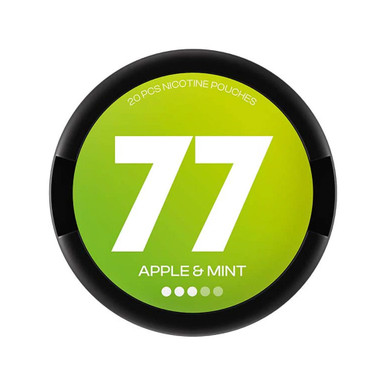
Apple is the quietest third of this blend and the hardest to find on its own. Killa Apple at £33.50 is the most literal apple can we stock, and it is filed on the Extra Strong shelf rather than the Strong one, so it is a different shelf as well as a different flavour. 77 Apple Mint at £39.90 keeps the apple and adds the cooling layer this can does not have, which makes it the better pick if what you want beside this is a contrast in temperature rather than in fruit.
Something genuinely unlike it
The second can in a rotation is often chosen to be as unlike the first as possible. Denssi Blueberry Freeze at £39.90 is berry rather than orchard or tropical fruit and cold rather than warm, which is about as far as you can go while staying in the fruit category at the same price. Pablo Gold Edition Blueberry Peach Ice at £19.95 stacks two fruits under a cold layer for half the price of this listing, and the size of that price gap is on its own a reason people keep one of each rather than two of either.
The price ladder, briefly
Across the cans named in this section the spread runs from £4.19 to £39.90, which is wide enough that it is worth naming as a thing in its own right. The £39.90 listings on our site are generally the multi-can ones and the sub-£5 listings are generally single cans, which is most of what that spread represents rather than anything about the pouches themselves. If you want to see the whole spread rather than the slice quoted here, the full catalogue sorts on price, and the Pablo shelf and the Cuba shelf are two of the larger brand groupings to browse it through.
Where this can sits in the Iceberg range
The Iceberg shelf holds forty listings, which makes it one of the larger single-brand groupings on the site. Those forty cover a wide spread of flavour ideas and a wide spread of declared strengths, and this three-fruit blend is one of the fruit-forward and non-cooling entries within it.
Two structural things are worth saying plainly. First, our product record for this listing does not carry a list of specific sibling cans, so we cannot name individual Iceberg products here with prices attached the way we can for the neighbouring brands above. The brand shelf is the accurate place to see what else the range holds, and pointing you at it is better than filling this section with names we cannot price. Second, this listing's single 20mg figure places it on the Strong grouping, while a good number of the brand's other listings sit on the Extra Strong shelf. That means browsing the brand and browsing by strength will not return the same set, and if you filter by both at once you will see a smaller slice than either filter alone.
Keeping a can in reasonable condition
Storage for this format is simple and mostly consists of not doing three things. Do not leave a tin in direct sunlight, do not leave it somewhere hot, and do not leave the lid off. A car dashboard in summer manages all three at once and is the single most reliable way to ruin a can. Heat is the main enemy of a fruit flavouring in particular, because the lighter, brighter notes are the first to go and the citrus edge on this blend is exactly that sort of note.
A cool cupboard, a drawer away from a radiator, or a bag pocket are all fine. Some people keep cans in a fridge. Our record does not carry a manufacturer storage instruction for this product, so we will not tell you that refrigeration is recommended or that it is unnecessary — what we can say is that a fridge is cool and dark, which is consistent with the general principle, and that the packaging is where an actual instruction would be printed if there is one.
Keep the lid seated between uses. It is a press-fit and it does its job, and a tin left open on a desk for an afternoon is a tin whose contents have dried at the edges. If you buy several cans at once, keep the unopened ones together and away from the one in use rather than carrying the lot around, which is as much about not losing them as about condition.
Last and most important: store cans out of reach of children and pets, closed, and preferably somewhere that is not a coat pocket or an open bag left on the floor. The same applies to the used pouches in the lid well, which is a reason to empty it rather than let it fill up in a bag at home.
Buying it, and the position as it stands
This listing is £39.90 at the 20mg figure, which is the only variant our record holds for it. There is no second strength to compare against and no separate price to weigh, so the choice here is between this can and the other cans on the shelves, not between options within the listing.
As set out at the top, the product is currently marked out of stock. We do not take a view here on when that will change, because we do not hold a restock date and inventing one to keep a page tidy is not something we will do. The practical options are to check the listing again later, or to use the fifty-eight cans on the tropical shelf and the citrus grouping to find something on the shelf now. The alternatives named further up this page are all drawn from the same pack of neighbours and are the more specific version of that suggestion.
On delivery and age verification, the rules are the ones that apply to every nicotine product we sell. This is an 18+ product. Age verification applies at the point of sale, and identification may be requested on delivery — the carrier may ask for it, and where they do, an order cannot be handed over without it. That is a legal requirement rather than a shop policy, and it applies regardless of what has been ordered before or what is in the basket alongside it. Orders are packed and dispatched as stock allows, and a listing marked out of stock cannot be dispatched at all, which is the practical meaning of the flag on this page.
Finding your way around from here
If this page is a dead end for today, the useful exits from it are the shelves. The brand grouping for Iceberg is the obvious first one and holds forty listings. By flavour, the two shelves this can is filed under are the tropical and citrus groupings linked above, and they overlap less than you would expect — the tropical shelf is more than twice the size of the citrus one and holds a great deal that has nothing to do with lemon.
By strength, the three bands are the medium grouping, the Strong shelf and the Extra Strong listings, and this can sits in the middle of those three. By brand, beyond Iceberg, the two largest groupings worth knowing about are the Cuba brand shelf and Pablo's listings, both of which turn up repeatedly in the comparisons above. And the full product listing is the place to start if you would rather filter than browse a shelf.
Questions we get about this can
How many cans do I get for £39.90?
We do not know, and this is a case where we would rather say so than reason our way to a number. The can-count field on this listing is empty. Other Iceberg listings on our site carry a count of ten at the same price, which makes a similar arrangement plausible here, but plausible is not the same as recorded and we are not going to print an inference as a fact. The packaging carries the definitive answer. If the count is the deciding factor for you, check it there before ordering.
How many pouches are in a single can?
Not stated in our record, and we will not estimate. Pouch counts vary between brands and sometimes between products within a brand, so a number borrowed from another listing would be a guess wearing a suit. The figure is printed on the packaging.
Is there a stronger version of this flavour?
Not on this listing. Our record holds one variant at 20mg and no other. Some Iceberg products on our shelves carry two declared figures, but this one does not, and we cannot create an option that the record does not contain. The Extra Strong shelf linked above holds cans from other brands and other flavour families if a higher declared figure is what you are filtering on, though we make no recommendation about which band anyone should be browsing.
Is it cold or minty at all?
Nothing in the name or in our flavour tags points to mint or menthol, and we describe it as a fruit blend without a cooling layer. If you want the cooling element alongside the fruit, the apple-and-mint and the iced-berry cans named in the pairing section are the nearer things on our shelves. As always, this is a description of a flavour rather than a specification of one.
Why is apple filed under tropical?
It is not, strictly. The tag follows the pineapple. Our tropical grouping is a broad fruit bucket rather than a botanical category, and a can lands in it if any significant part of the blend belongs there. Apple on its own would not earn the tag. The citrus tag follows the lemon in the same way. Neither tag is a claim that every fruit in the name belongs to that group.
When will it be back in stock?
We do not hold a date. The listing is marked out of stock and that is the extent of what our record tells us. We would rather leave this blank than publish a date we would then have to move. Checking the listing again, or browsing the shelves it sits on, are the two practical options.
Can I take a can on a plane?
That depends on the airline and on the countries at both ends of the route, and it is not a question a shop can answer for you. Airline policy on nicotine products in the cabin varies, and the rules on bringing them into a country are a customs matter that also varies. Check with the airline and with the relevant border authority before you travel rather than relying on a product page.
Is it allowed at work?
Your employer decides that, not us. Workplace policies on nicotine products differ a great deal between organisations and between sites within the same organisation, and plenty of them are more specific than people expect. The honest answer is to read the policy that applies to you. We have no view on it and nothing on this page should be read as saying a can is permitted anywhere in particular.
How long should I keep one in?
There is no should, and we are not going to supply one. People vary from well under ten minutes to the better part of an hour, and the same person varies across a day. A common practical habit is to change when the flavour has thinned out, on the basis that a pouch with no flavour left is not doing what it was picked for, but that is a description of what people do rather than an instruction from us.
What is the difference between this and the other Iceberg cans?
Flavour, and in some cases the declared strength and the shelf that follows from it. This listing is a non-cooling three-fruit blend at 20mg, which puts it in the Strong band, while a good part of the brand's range sits in the Extra Strong band. Our record for this product does not name individual sibling cans, so the brand shelf is the accurate place to compare them side by side rather than a list we would have to assemble by guesswork.
Do you have customer reviews for it?
No, and you will not find invented ones here. We do not publish ratings, testimonials or sales rankings on product pages, and nothing on this page is written to suggest that a can is popular, well regarded or widely bought. What is on the page is the record, a description of the object and the format, and comparisons with other listings.
Legal position, and who this product is for
This is an 18+ product. It is sold only to adults who already use nicotine, and it is not offered to anyone else.
Nicotine is an addictive substance.
This product is not a licensed stop-smoking medicine and is not presented as one. It is not intended for non-smokers, for people who do not already use nicotine, for anyone under 18, or for anyone who is pregnant or breastfeeding. Nothing anywhere on this page should be read as a suggestion that anybody begin using nicotine, and nothing on it makes a claim about health, safety or harm in any direction.
Age verification applies to every order. Identification may be requested on delivery, and where the carrier asks for it and it is not produced, the order will not be handed over. Keep cans and used pouches out of the reach of children and pets.
In short
Iceberg Apple Lemon Pineapple is a £39.90 listing at a single declared strength of 20mg, tagged citrus and tropical, with a pineapple-forward three-fruit character, no cooling layer, no can count on our record, and an out-of-stock flag at the time of writing. That is the honest whole of it. The comparisons above are there because they are the more useful thing this page can offer while the listing is unavailable, and the shelves are the place to carry on from here.
More from Iceberg

More strong pouches

More tropical pouches
Where this sits
Iceberg Apple Lemon Pineapple Nicotine Pouches appears in these categories. Browse them, or jump to something close.
You might also like