
Home / Extra Strong / Iceberg Black Currant Nicotine Pouches

Iceberg · 20mg–50mg · 10-can pack
Read the full guide
Iceberg Black Currant Nicotine Pouches
£39.90
✔ In stock — ready to ship
100% tobacco-free
Free over £20
Same-day dispatch
Secure checkout
This page covers Iceberg Black Currant Nicotine Pouches, sold as a pack of ten cans at £39.90, in two declared strengths — 20mg and 50mg — both priced identically. Two things need saying before anything else, because they change how you should read the rest of the page.
The first is that we currently show this product as out of stock. That is the position our record holds as this is written. The description below is a description of the can, not an invitation to buy something we cannot send you today; stock does move, and the product page itself is the live position rather than this text. If the basket button is unavailable when you arrive, the page is telling you the truth and this paragraph is simply confirming why.
The full guide to Iceberg Black Currant Nicotine Pouches
5,205 words on how it eats, who it suits, how to serve it and what to put beside it.
Iceberg Black Currant: the listing, and its current position
The second is a marker that belongs at the top. This is an age-restricted nicotine product, sold only to adults aged 18 or over who already use nicotine. Nothing written here is intended to persuade anyone to consume anything, and the complete compliance wording has its own section near the bottom of the page.
Ten cans at £39.90 is £3.99 a can. That division is ours and it exists only so this listing can be compared with the single-can products elsewhere on the site. The number that matters when a pack is available is £39.90.
One more piece of housekeeping about the name. Black Currant here is the manufacturer's spelling of the blackcurrant berry — it is a flavour label, and the word black in it describes the fruit rather than making any claim about where the product comes from or what is in it. Our record holds a single flavour tag against this listing and that tag is berry, not blackcurrant. That is broader than the name on the can, so the shelf this product appears on is the general berry shelf rather than a blackcurrant-specific one. We have flagged that because it affects how you find the page again, which is covered further down.
Blackcurrant as a taste, and what it smells like
Blackcurrant is one of the most recognisable flavour directions on a pouch shelf and one of the most distinct from its neighbours, which is worth setting out properly since the record only gives us the word berry to work from.
As a taste it is dark, dense and slightly tart. It is the deepest of the common berry notes — heavier than strawberry, less bright than raspberry, and without the rounded mildness of blueberry. There is a jammy quality to it, a sweetness that reads as cooked rather than fresh, and running underneath that is a distinctly astringent edge that stops it becoming syrupy. That tart undertow is the characteristic most people either like about blackcurrant or dislike about it, and it is the main thing separating a blackcurrant listing from every other berry listing on our shelves.
There is also a faint herbaceous or leafy note that belongs to blackcurrant specifically. It is subtle and it is part of why the flavour reads as adult rather than confectionery. Whether Iceberg has leant into that note or smoothed it out into something closer to a fruit cordial is not something our record tells us, and we are not going to invent an answer.
Aroma on opening
A blackcurrant can gives a dark, sweet-sharp smell when the lid comes off, closer to fruit preserve than to fresh fruit. It is a lower and heavier aroma than a citrus or melon can produces and it does not carry across a room in the same way. It tends to smell a shade sweeter than it tastes, which is common in the berry family generally and worth knowing so the first pouch is not a surprise.
How a dark fruit note behaves over time
Flavour in a dry pouch is at its most defined early and thins from there. With dark berry flavours the sweetness usually fades before the tartness does, which means a blackcurrant note tends to get drier and sharper as it recedes rather than simply getting quieter. Some people regard that finish as the best part of a blackcurrant can. Others find the sweetness the point and the dry ending a disappointment. Both reactions are common and neither is wrong.
What our record does not tell us about the flavour
Our data does not say whether this can carries a cooling note alongside the fruit. A great many berry pouches do, and a great many do not, and the difference is substantial — a blackcurrant with a cold edge is a different object from a plain blackcurrant. The listing name does not declare one and the tag does not either, so the can is where that gets answered. We would rather point at the packaging than fill the gap with a guess.
20mg and 50mg: reading the figure on the lid
This listing is offered at 20mg and 50mg. Both are label information — the declared nicotine content the manufacturer prints on the can, reproduced here exactly as our record gives it. We publish the figures because anyone buying is entitled to know what the can declares before they buy it. That is the whole of the reason.
We will not tell you which figure to pick, and we want to be explicit about why rather than just declining. A larger declared figure is not a better product, a more advanced product or a product for a more experienced person. It is a larger number printed on a lid. Framing a higher figure as an achievement or an upgrade would be both dishonest and irresponsible, and we are not going to do it. We also will not attach a strength to a type of person or a situation. If you want guidance about nicotine and your own circumstances, a pharmacist or a doctor is the right source and a shop page is not.
What is fair to explain is the shelf mechanics. We sort products into bands by declared figure so that they can be browsed, and both figures on this listing put it in the Extra Strong band, which currently holds 98 products. Below it sit the Strong band and the Medium Strength band, the latter holding 135 listings. Those bands exist to organise a catalogue. Their existence is not a suggestion that anyone should travel through them in any direction.
Note too that price does not separate the two options here: 20mg and 50mg are both £39.90. There is no financial signal at all between them, which we think is the honest arrangement for a shop to have.
Moving between cans on our own shelves
The angle this pack asks for is what actually changes when you move from one can to another across our shelves, and what stays the same. It is a more useful question than it sounds, because a catalogue this size can give the impression that everything in it is a variation on everything else, and that is not true.
What changes: price, and it changes enormously
The widest variable is price, and the reason is almost always pack arrangement rather than the product being dearer. Set the nearby listings against one another and the spread is stark. Nordic Spirit Blueberry at £4.49 and Pablo Exclusive Blue Raspberry at £3.85 are single-can listings. Fumi Blackcurrant is £27.90 for a ten-can pack, which is £2.79 a can. Killa Blueberry is £33.50 and Elf Bar Blueberry Raspberry is £29.90. This listing and several of its neighbours sit at £39.90.
The first question to ask of any price on our shelves, then, is what it buys. A £3.85 row and a £39.90 row can be close to equivalent once you divide by the number of cans. We would rather say that than let the headline figures do misleading work.
Setting the nearby listings out as a table makes the point faster than a paragraph can. Every price below is from our own record; the notes are ours.
| Listing | Listed price | What the price covers |
|---|---|---|
| This listing, Iceberg Black Currant | £39.90 | Ten cans — £3.99 each — currently out of stock |
| Pablo Exclusive Blue Raspberry | £3.85 | Single-can listing, the lowest headline price named here |
| Nordic Spirit Blueberry | £4.49 | Single-can listing |
| Fumi Blackcurrant | £27.90 | Ten cans of the same fruit from another maker |
| Elf Bar Blueberry Raspberry | £29.90 | Two berries in one listing |
| Killa Blueberry | £33.50 | A single berry, mid-range on price |
| Clew Blueberry | £39.90 | Same headline price as this listing |
| Cuba Black Blueberry | £39.90 | Same headline price again, different maker entirely |
Three of those rows share a headline price with this one and none of them is the same object. That is the lesson of the table: matching prices signal nothing about matching products, and a price that looks low often buys a tenth as much. Check the pack arrangement first on every comparison you make, here or anywhere else on the site.
What changes: flavour construction, which nothing else predicts
Two cans can share a strength band, a price and a flavour tag and still be built entirely differently. Clew Blueberry at £39.90 and Cuba Black Blueberry at the same price are both berry-tagged cans at the same money, and there is no reason to expect them to taste alike. 77 Strawberry at £39.90 sits in the same berry family and heads in a lighter, sweeter direction than a blackcurrant does. Maggie Original Jamaican Cherry Tonic Wine at £39.90 is a berry-adjacent listing that does something quite unlike any of them.
And Denssi Berry Beast Energy Pouches at £39.90 is a reminder to read a listing title properly rather than assuming: products whose names differ from the pattern usually differ in substance too, and every product page on this site states its own facts. Do not carry an assumption from one page to another.
What changes: format, quietly
Pouch format varies between manufacturers and sometimes within a single manufacturer's range. Pouches differ in footprint and in how they feel under the lip, and manufacturers describe those differences with words like slim, mini and regular that are not standardised across the market. Our record does not hold a format designation for this listing, so we do not state one. It is one of the attributes most likely to surprise someone moving between brands for the first time, and the one our data is least able to help with.
What does not change
Some things hold constant across every listing here. The physical routine is the same everywhere — a pouch goes under the upper lip, it is not chewed or swallowed, and it goes in a bin afterwards. The lid arrangement is broadly the same across brands. The age restriction is identical on every page and not negotiable on any of them. And the honesty rules we apply are constant: the facts on a page come from the product record, and where the record is silent we say so rather than filling in.
What also does not change is that the declared figure tells you nothing about taste. A 20mg can and a 4mg can from different makers can carry identical flavour words. Strength bands and flavour shelves are two separate axes and they are meant to be used together — the berry shelf, which holds 76 listings, cuts straight across the strength bands, and for hunting a taste it is far more use than a strength band will ever be.
The can as an object
The second angle here is the physical can, and it earns a proper section because it is the part of the purchase people handle every day and the part our record describes least.
The tin itself
The standard format is a squat cylindrical plastic tin with a press-on lid — roughly the footprint of a small jar lid and about as deep as a stack of coins. It sits flat, it does not roll far, and ten of them arrive as a boxed pack rather than as a pocket item. The lid carries the brand and the flavour name; the declared figure is printed wherever the manufacturer has chosen to put it, which on most cans is the lid or the base.
The lid and the catch compartment
Cans of this type generally have two spaces: the main body holding fresh pouches, and a shallow compartment in the lid intended to hold used ones until they can be binned. That upper compartment is the single most useful piece of design on the object, because it means a spent pouch has somewhere to go when there is no bin within reach. Whether this particular can includes it is not confirmed in our record, so we will not assert it. You will see within a second of picking one up.
The lid is a friction fit rather than a screw thread on most cans in this category. Pressed home properly it is a reasonable seal. Left part-open it is not, and a can that has sat with a half-lifted lid for a day will read flatter than one that has been shut. That is the most common avoidable way to lose flavour from a can.
Portion count, which we cannot give you
Our record does not hold a pouch count per can for this product. It is among the questions we are asked most and among the few we genuinely cannot answer from our data, so we will not estimate. Where the manufacturer declares a count, it is printed on the can. The same applies to the weight of an individual pouch: not in our record, therefore not on this page.
What fits in a pocket
A single can fits comfortably in a coat pocket, a jacket pocket or a bag. It is noticeable in a trouser pocket and it is the kind of object that presses a circular outline into a thin pocket over time. A ten-can box is not a pocket item at all — it is a shelf or drawer object, and the usual arrangement is to keep the box at home and carry one can from it.
Carrying a can loose in a bag alongside keys and coins is how lids end up part-lifted. People who carry one daily tend to give it a fixed pocket and stop thinking about it. That habit does more for the condition of a can than anything else you could do.
Disposal, stated plainly
A used pouch goes in a bin. Not down a sink, not into a drain or a toilet, not onto a verge. It must never be left anywhere a child or an animal could pick it up, and a spent pouch left on a table or a windowsill is exactly the kind of thing that gets picked up. The lid compartment, where a can has one, exists to carry a used pouch to a bin rather than to store it indefinitely.
Where this sits in the Iceberg range
We list 40 products under the Iceberg shelf, which makes it one of the larger brand ranges on this site. The range spreads widely across flavour families — mint and cool listings, single fruits, layered fruit combinations and a number of confectionery-leaning names — and a good deal of it sits in the higher declared-strength bands.
Our record holds six same-brand cans against this listing, and the honest thing to put in front of them is the stock position rather than the flavour: all six are out of stock at the time of writing, exactly as this listing is. They are named below because they are the closest comparison we hold and because each has its own page carrying its own declared figures — not because any of them can be ordered today. The full Iceberg range runs to forty listings and availability moves across it one line at a time, so the shelf is the better place to check what is actually buyable.
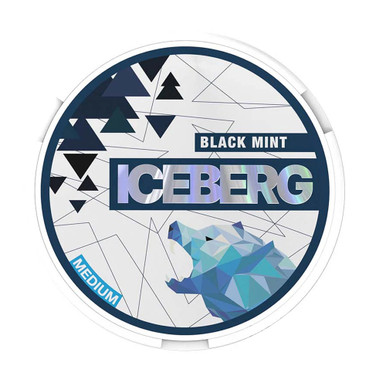
Two of the six share the word black with this can, which is a naming convention rather than a flavour family. Iceberg Black at £39.90 carries no flavour tag at all on our record, so where this listing at least gives you the family, that one gives you nothing to read. Iceberg Black Mint at the same £39.90 puts the word in front of a cool note instead of a fruit one, which is roughly as far from dark berry as the brand's own naming travels.
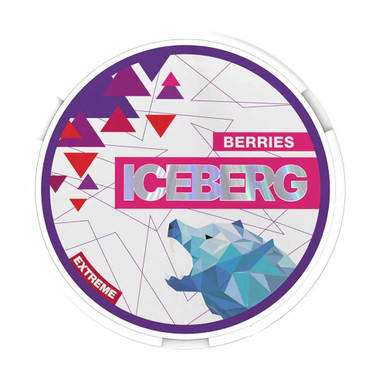
The nearest sibling by taste direction is Iceberg Berries, also £39.90, which stays inside the same fruit family rather than crossing out of it — the plural in its name is the main thing separating it from this can as far as anything we hold shows. Moving outward, the Iceberg Apple Lemon Pineapple can is the range's sharp mixed-fruit direction at the same price, Iceberg Bubble Gum is its confectionery corner, and the Iceberg Arasaka listing offers no flavour word to read at all. Every one of those is unavailable as this is written, as this can is, so they are worth following to understand the shape of the range rather than as a purchase to make instead.
Within that range, a blackcurrant listing occupies the dark-fruit corner. It is not a cool can and it is not a confectionery can; it is the deepest and most tart of the fruit directions a brand usually carries. If you know the Iceberg range already, that is the slot to place it in.
It is also worth saying what a large brand range does and does not imply. Forty listings under one name means the maker has covered a lot of flavour ground, not that the listings are graded against one another or arranged as a progression. They are forty separate products that happen to share a label. People sometimes read a big range as a ladder with a beginning and an end, and there is no ladder here — there is a shelf. Pick by the flavour words and the declared figure printed on the can, and ignore any implied ordering, because none was intended and we certainly are not supplying one.
The other consequence of a forty-listing range is that the brand shelf is the better browsing tool than any individual product page's suggestions, even on a page such as this one that names its siblings outright. A product page can name a handful. The shelf shows the lot, with each listing's own price and declared figures alongside it, which is the comparison most people are actually trying to make.
What people keep alongside a dark fruit can
Buying ten cans of one flavour is a commitment to that flavour, and the usual response is to keep a second, unlike can on the go. Taste fatigue is real: a flavour met repeatedly becomes less distinct, and rotating two cans that are not alike keeps both of them reading as themselves.
For a lighter berry beside a dark one, the 77 Strawberry pack at £39.90 is the obvious contrast — sweeter, brighter and without the tart undertow. For a rounder, milder berry, the Clew blueberry can at the same price goes in the other direction. Elf Bar Blueberry Raspberry at £29.90 stacks two berries rather than presenting one.
For a direct comparison rather than a contrast, the Fumi blackcurrant pack at £27.90 is the same fruit from a different maker at a lower price for the same ten-can arrangement, and having the two side by side is the clearest way to understand how much interpretation sits behind a single flavour word. If you would rather step further out, the Pablo range and the Cuba range are both substantial enough to browse on their own, and the Cuba Black Blueberry listing at £39.90 is a reasonable place to start in the second of those.
Keeping cans in good condition
These are dry goods and they keep the way dry goods keep. Heat, sunlight and an open lid are the three things that cost you flavour, in that order of severity.
Keep cans somewhere cool, dry and dark — a cupboard or a drawer, not a windowsill and not a shelf above a radiator. A car glovebox in warm weather is the classic error; heat drives off the aromatic part of a flavour quickly and a can that has spent an afternoon cooking comes back noticeably flatter, permanently. Nothing recovers that.
With a ten-can pack the sensible arrangement is obvious: open one, leave the other nine sealed in the box until each is needed. A sealed can keeps far better than an opened one, and that is the main practical argument for a multi-can pack over a run of separate purchases.
On the subject of seals: a ten-can pack arrives as a boxed unit with the cans inside it, and each can carries whatever seal the manufacturer applies to it. Our record does not describe that sealing arrangement, so we are not going to specify it beyond saying the packaging will show you. What matters practically is the habit rather than the mechanism — nine cans left as they arrived will be in better condition when their turn comes than nine cans opened out of curiosity on the first day.
We hold no shelf-life figure or best-before date for this product, so we publish none. Whatever the manufacturer prints on the packaging is the figure to go by. Keep the box out of reach of children and animals, and keep cans out of the fridge unless the packaging specifically says otherwise — condensation is not what you want on a dry product.
Choosing between the options this listing offers
There is one decision on this listing and it is the declared figure: 20mg or 50mg. There is no pack-size decision, because ten cans is the only arrangement we hold, and there is no price decision, because both figures are £39.90.
We are not going to guide that choice. Recommending a strength for a person is advice about nicotine, and it is not something a shop page should offer and not something we are qualified to give. What we can do instead is state the facts cleanly: two declared figures, 20mg and 50mg, both from the manufacturer's own labelling, both at the same price, both filed in the Extra Strong band. If you already know which figure you want, it is on the variant selector on the product page. If you do not, that question belongs with a pharmacist.
If pack size is the sticking point rather than strength, other listings on this site are sold as single cans — the £3.85 and £4.49 products named earlier are examples — and those are worth looking at if ten cans of a single flavour is more than you want to hold. Each product page states its own pack arrangement.
Buying, delivery, and the current stock position
Because this listing is showing out of stock as this is written, the practical answer today is that it cannot be ordered. The product page is the live position and it will change before this description does. There is no reservation, waiting list or backorder mechanism described in our record, so we are not going to promise one. Checking the page is the only reliable method.
When stock is available, the process is the standard one for an age-restricted product. Age confirmation is required at checkout, orders may be verified before dispatch, and photographic identification may be requested by the courier on delivery. If no adult is present to receive the parcel, it is not handed over. That is applied strictly rather than as a formality.
Orders are dispatched from within the UK. If you are having a parcel sent to a workplace, make sure someone over 18 will be there to receive it, because a parcel that cannot be given to an adult goes back.
Finding this listing again
Three shelves carry this product. By declared figure it sits on our Extra Strong shelf alongside 97 others. By maker it is on the Iceberg brand page with the other 39 listings we hold from that range. By flavour it appears on the general berry shelf, which holds 76 products.
That third one deserves the flag we gave it at the top. The tag on our record is berry and not blackcurrant, so this can is filed with strawberries, blueberries, raspberries and everything else in the family rather than in a blackcurrant-specific group. If you are hunting for it and expecting a narrower shelf, that is why you cannot find one. Everything we stock is the widest starting point if the shelves are not getting you there.
Questions we get asked about this can
When will it be back in stock?
We do not know and we will not invent a date. Our record shows the current position and nothing about future deliveries, and a made-up restock date is worse than an honest blank. The product page reflects stock as it changes, so checking it is the only reliable approach. We would rather disappoint you now than mislead you into waiting for something on a timetable we cannot see.
Why does the flavour shelf say berry when the can says blackcurrant?
Because the tag on our record is the broader word. Flavour tags are filing labels, and this one has been applied at the family level rather than the fruit level. It does not mean the flavour is a generic berry; it means our filing is coarser than the product name. The can's own label is the more precise description and it says Black Currant.
Does the 50mg figure mean this is a professional or advanced can?
No, and we would not describe any product that way. A declared figure is a number the manufacturer prints on a lid to state content. It is not a grade, a rank or a qualification, and a higher number is not a better can or a more accomplished purchase. We publish figures so that you know what is declared; we attach nothing else to them.
How many pouches does a can hold?
Not something our record holds for this product, so we will not state it. Counts vary between manufacturers and between formats within one manufacturer's range. Where a count is declared it is printed on the can. We would prefer to have that figure on the listing and at present we do not, and saying so is more useful than guessing at it.
Is there a cooling note in this one?
Our record does not say, and the product name does not declare one either. A good many berry cans carry a cool edge and a good many do not, and the difference is significant enough that we are not prepared to assume. The packaging will tell you. This is a genuine gap in what we hold rather than an evasion.
Can I buy any of the other Iceberg cans named on this page?
Not at the moment. Our record holds six same-brand cans against this listing and every one of them is out of stock, as this one is. They are linked because they share the brand and the £39.90 price and because each page carries its own declared figures, which makes them the most direct comparison the site can offer — not because they are an order you can place today. Forty Iceberg listings sit on the brand shelf and stock tends to return to a brand rather than to one line at a time, so the shelf is a more reliable thing to watch than any single product page.
Is this the same product as the Fumi blackcurrant pack?
No. Same fruit, different manufacturer, different price — £39.90 for ten cans here against £27.90 for ten cans there — and different declared strengths. Two makers working from the same flavour word routinely produce cans that taste noticeably different from one another. Neither is a substitute for the other and we would not present them that way.
Can I buy one can rather than ten?
Not on this listing, which exists only as a ten-can pack. Several products on the site are sold as single cans and some of them are named earlier on this page. Each listing sets out its own pack arrangement on its own page, and it is worth checking that before adding anything to a basket, since the headline prices look wildly different for exactly that reason.
Does the lid compartment hold used pouches for long?
It is a carrying space rather than storage. The compartment, on cans that have one, is shallow and exists so a spent pouch has somewhere to go between using it and reaching a bin. Leaving used pouches in it for days is not what it is for, and it makes opening the can less pleasant. Empty it into a bin when you next pass one. Whether this particular can has that compartment is not confirmed in our record.
Will a blackcurrant can overpower a milder flavour if I rotate two?
Dark fruit notes are among the more persistent ones, and people who rotate a blackcurrant can with something delicate sometimes find the blackcurrant still faintly present afterwards. That is an observation about taste and nothing else. It is one reason a cool or plain can is the usual partner for a dark fruit one — an assertive, unlike flavour is the least likely to be overshadowed by the one before it.
Where is it made?
Not in our record, so not on this page. Country of manufacture and importer details appear on the packaging, which is the only place we would point anyone for them. We do not publish facts of that kind from inference.
Is this one right for me?
We cannot answer that and we will not try. We sell cans to adults who already use nicotine, and we are not qualified to assess anyone's individual circumstances. Anyone with questions about nicotine and their own health should put them to a pharmacist or a doctor, who can actually answer them.
Compliance, in full
This product is sold only to adults aged 18 or over who already use nicotine. We will not knowingly sell it to anyone else. Age confirmation is required at checkout, orders may be verified before dispatch, and photographic identification may be requested by the courier at the point of delivery.
Nicotine is an addictive substance. That statement is here because it is true, and because the description of an age-restricted nicotine product has no business leaving it out or reducing it to small print.
This is not a licensed stop-smoking medicine and it is not offered, described or intended as one anywhere on this site. It is not intended for non-smokers, for anyone who does not already use nicotine, for anyone under 18, or for anyone pregnant or breastfeeding. We make no health, medical or safety claim about this product in any direction. Questions about nicotine and your own health belong with a pharmacist or a doctor; we sell cans, and we do not hold that expertise.
The short version
Iceberg Black Currant is a ten-can pack at £39.90 — £3.99 a can — declared at 20mg and 50mg for the same price, carrying a dark, jammy, tart fruit note with a dry finish. It is currently out of stock, it is filed in the Extra Strong band, it appears on the broad berry shelf rather than a blackcurrant-specific one, and our record holds six same-brand cans against it, all named above at the same £39.90 and all out of stock as well, which is why the Iceberg brand shelf is still the thing worth checking. Where a fact is missing — pouch count, format, cooling note, origin, restock date — we have said so rather than filling the space. The can and the manufacturer's labelling outrank every word above.
More from Iceberg

More extra strong pouches
More berry pouches
Where this sits
Iceberg Black Currant Nicotine Pouches appears in these categories. Browse them, or jump to something close.
You might also like