
Home / Extra Strong / Iceberg Berries Nicotine Pouches
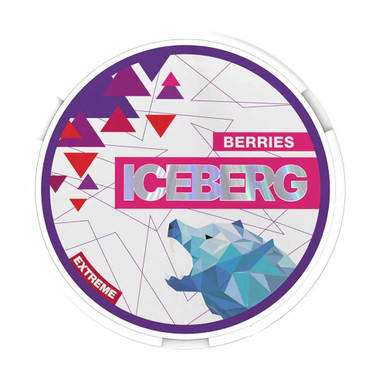
Iceberg · 20mg–50mg · 10-can pack
Read the full guide
Iceberg Berries Nicotine Pouches
£39.90
✔ In stock — ready to ship
100% tobacco-free
Free over £20
Same-day dispatch
Secure checkout
This is the page for Iceberg Berries Nicotine Pouches. The record we hold gives a price of £39.90 for a pack of 10 cans, two declared strengths of 20mg and 50mg at that same price, and a single flavour tag: berry. At the time of writing the listing is marked out of stock.
Those few fields are the whole of our data on this product, and it is worth being clear at the outset about which parts of this page come from them and which do not. The price, the strengths, the pack count, the stock flag and the flavour tag are recorded facts. The description of the format is a description of how this style of can works, which is consistent across the category. The comparisons are drawn from other listings on our own shelves and quote their prices as we hold them. Where something is genuinely unknown to us, the page says so rather than reaching for a plausible sentence, and there is at least one significant gap on this listing — covered in the next section — where that applies.
The full guide to Iceberg Berries Nicotine Pouches
4,981 words on how it eats, who it suits, how to serve it and what to put beside it.
Iceberg Berries: the listing in plain terms
The out-of-stock position is the first practical thing to register. If you came here to order today, this listing will not let you. We have not taken the page down, because the record and the comparisons still have some use, and because the section on buying rhythm further down is largely about exactly this situation. We do not hold a restock date and we will not print a guess at one.
This page is written for adults who already use nicotine and are choosing between cans. Who the product is and is not for is set out in full at the foot of the page.
A plural in the name, and what it leaves open
The name is Berries, and the plural is doing something specific: it declines to say which ones. Our record does not narrow it either — the flavour tag we hold is the general berry grouping, not blueberry, not raspberry, not blackcurrant. So there is a real limit on what this section can tell you, and it is better stated up front than discovered halfway down a paragraph. We know the flavour family. We do not know the composition of the blend, and we are not going to assemble one from the picture on a lid or from what other brands tend to do with the same word.
What is worth writing instead is the territory the word covers, because berry is a broad family and the differences inside it are larger than people expect. At one end there are the dark, round, low-acid berries — blueberry above all, which is sweet, soft-edged and slightly jammy, and which is the single most common berry flavour on our shelves. In the middle sit raspberry and strawberry: brighter, more perfumed, with more acid in them, and with a confectionery association that a lot of flavourings lean into. At the sharp end are blackcurrant and sour cherry, which are dark like blueberry but carry a genuine tartness underneath and read as much less sweet even when they are not.
A can named for the plural is usually pointing at a blend rather than at any of those individually, and blends behave differently from single-fruit cans in a way that is worth knowing. A single fruit is easy to place and easy to tire of. A mixture is harder to name while you are tasting it, because the components are doing different things at different points, and it tends to hold interest slightly longer for that reason. What it gives up is precision: if you specifically want blackcurrant, a blend that includes something like blackcurrant is not the same purchase as a can that names it.
On aroma, all we can say honestly is the general pattern for this flavour family — dark berry flavourings tend to smell rounder and less bright than citrus or orchard fruit, and the smell off an open tin is usually softer than the taste that follows. We cannot tell you what this specific tin smells like, and a confident sentence about it would be invention.
One more limit, which applies to every flavour description anywhere on this site: taste is subjective, descriptions are written by people who stock the product rather than measured, and yours may land somewhere different. The tag on the record is the part that is not a matter of opinion.
What the pack contains and how the format behaves
The purchase here is ten cans for £39.90, which works out just under four pounds a can. Our record gives the count and not the presentation, so we can tell you there are ten and not whether they arrive as a roll, in a sleeve or boxed.
Each can is a shallow round tin with a lift-off lid that presses back down over a lip. The printed face carries the brand, the flavour name and the milligram figure. With a pack this size that printed face earns its keep: ten identical tins in a cupboard are only usable if you can read the top of one without picking it up, and it is the reason people who keep two or three different packs going tend to store them lid-up rather than stacked on their sides.
The pouches inside sit flat in a ring. Each is a small soft rectangle with rounded corners, dry to the touch rather than damp, and light. Our record does not carry a pouch count per can and we will not estimate it — counts differ between brands and sometimes between products from the same brand, so a borrowed number would be a guess. The packaging carries the figure, along with the weight and any manufacturer instructions.
In use, a pouch goes under the upper lip and stays where it is put. There is a short settling period — a fresh pouch reads as bulkier than it looks for the first minute or two and then takes the shape of the space — after which most people stop noticing it. Talking and drinking with one seated is normal. Eating with one in is a matter of preference; some people do and some take it out, and there is no rule we are aware of to quote at you.
Time in is the question with the least satisfying answer, because the honest range is enormous. Ten minutes and an hour are both ordinary, and the same person will do both on the same day. The flavour does not hold level across it: it arrives early, runs through a middle stretch and thins toward a background impression. Plenty of people treat that fading as the signal to change rather than watching a clock. That is a description of a common habit rather than an instruction from us.
Taking one out is a fingertip job, and used pouches go in the well under the lid. That compartment holds several before it needs emptying and is the reason a can works on a train, in a car or at a desk with no bin nearby. The contents then go into general waste — not down a drain, not into a plant pot, not out of a car window. Used pouches are small, pale and easy to lose track of on a worktop, which is the practical reason a tin should be kept shut and out of the way in any household with children or pets in it.
Reading the two numbers on the lid
This listing carries two declared strengths, 20mg and 50mg, both at £39.90. They are manufacturer-declared figures per pouch, printed on the can, and they are what the site sorts and filters on.
The important thing about them here is what they are not. They are not a quality scale, they are not a sequence, and the 50mg variant is not the better or the more serious version of this product. It is the one with a different number stamped on it. We do not describe a higher figure as an upgrade, we do not suggest that anybody should be moving between them in either direction, and we are not going to tell you which one suits you, because that is not a judgement a shop can make about a person. The figures are label information and this page treats them as nothing more.
There is a filing consequence worth explaining, because it puzzles people who browse by strength. A listing gets filed once, and a listing carrying two figures is filed on the shelf that matches the higher one. So this product sits on the Extra Strong shelf and its 98 listings as a whole, including its 20mg variant, rather than appearing on the Strong grouping or the medium band. If you filter by strength and cannot find this can where you expected, that is the reason. The three bands are filters for navigating a catalogue, not a ladder anyone is expected to climb.
Because both variants carry the same £39.90, the number on the lid has no effect on what you pay, which removes cost from the comparison entirely.
What else goes in the drawer alongside a mixed berry can
Almost nobody who buys pouches regularly keeps a single flavour and nothing else. Two or three cans in rotation is the normal arrangement, and the reason usually given is that a flavour used consistently becomes less distinct, while something different alongside it keeps both readable. With a ten-can pack the question is more pressing than usual, because ten cans is a serious commitment to one idea and the people buying at that volume are generally the ones who most want an alternative in the drawer.
With a berry blend specifically, the pairing question has a particular shape. Berry is the second-largest flavour shelf we run at 76 listings, so there is an enormous amount of it about, and putting a second berry can next to this one is the easiest thing in the world and often the least useful. The more interesting choices either move within the berry family to something with a different balance, or leave it altogether.
Staying in the family, moving the balance
Clew Blueberry at £39.90 is the same price as this pack and takes the dark, round, low-acid end of the family on its own. Against a blend, a single-fruit can like that is the cleaner and more predictable thing to reach for, and the pairing works because it is the mixture and the component side by side. Cuba Black Blueberry, also at £39.90, is a second reading of the same fruit from a different brand, which is the pairing for somebody who wants to compare interpretations rather than flavours.
Moving toward the sharp end, Fumi Blackcurrant at £27.90 is the most genuinely tart berry can named on this page and £12 cheaper than this listing. Blackcurrant is dark like blueberry but carries real acid underneath it, so it sits next to a sweet blend as a contrast rather than as a variation. Killa Blueberry at £33.50 is the middle of the price range here and stays with the blueberry idea.
The lighter, brighter berries
77 Strawberry at £39.90 moves to the perfumed end of the family — strawberry is brighter and more confectionery-leaning than the dark berries, and it changes the character of a rotation more than swapping one dark berry for another does. Elf Bar Blueberry Raspberry at £29.90 is itself a two-berry blend rather than a single fruit, which makes it the nearest structural match on this page to what the name of this can implies, and the more direct comparison if blends specifically are what you like.
Leaving the berry shelf
The most useful second can is often the one that shares nothing with the first. Maggie Original Jamaican Cherry Tonic Wine at £39.90 has the most specific name of anything in this comparison set and points at a tonic-wine character alongside the cherry, which is a drier, less straightforwardly sweet idea than any fruit can here. It is the pick for somebody who finds a run of berry cans starts to blur.
Denssi Berry Beast at £39.90 is listed on our shelves as part of an energy line rather than as a plain flavour can. We hold its title and its price and not much else, so rather than describe what it is, we will point you at its own listing, which is where its details belong. It is named here because it is one of the neighbours our record attaches to this product and because the name signals berry, not because we are making any claim about what sort of product it is.
The cheap spare
Two of the neighbours are single-can listings at prices that make them the obvious way to add variety without a second large purchase. Nordic Spirit Blueberry at £4.49 and Pablo Exclusive Blue Raspberry at £3.85 both sit under a fiver, both are in the berry family, and either one answers the variety question for less than an eighth of what this pack costs. The gap between £3.85 and £39.90 is almost entirely the difference between one can and ten, rather than a difference in the pouches, and it is the single most useful thing to understand about pricing on our shelves.
Buying rhythm: ten at once, or one at a time
The pack count changes how buying this product works more than any other field on the record, and it is worth a proper section rather than a line in the FAQs. Ten cans is not a top-up purchase. It is a decision about the next several weeks, made in one go, usually by somebody who already knows what they are buying.
What a multi-can pack actually changes
Three things. The unit price comes down, which is the obvious one — under four pounds a can here against single cans that mostly sit above that. The frequency of ordering drops, which matters more than people expect, because the most common reason for an unplanned purchase is running out at an inconvenient moment rather than genuinely wanting something new. And the cost of being wrong goes up: ten cans of a flavour that turns out not to suit you is ten cans of it, and there is no way to unpick that after the fact.
That last point is the one to weigh on a listing like this, where the flavour name is a plural that does not specify its components. If you already know this product, the pack size is straightforwardly good arithmetic. If you do not, the sensible order of operations is to find out what the blend actually is before committing at this volume, and the sub-£5 single cans named above exist for precisely that sort of caution.
How people actually reorder
In practice there are two patterns and they are quite different. The first is calendar-led: an order goes in at roughly the same interval regardless of what is left, which suits people whose usage is steady and who would rather not think about it. The second is trigger-led: the order goes in when the stock on hand drops to some threshold — the last two cans, the last one, the point at which the pack looks thin. Trigger-led buyers run out more often, because the trigger is noticed at the worst possible moment and because dispatch takes however long it takes.
There is a third pattern, which is not really a pattern: ordering when you remember. It is the most common one and the one that produces the most gaps. If any of this is useful, it is the observation that a multi-can pack makes calendar-led buying much easier and makes the consequences of forgetting much worse, because the gap between packs is long enough that you stop thinking about it in between.
The spare can, and why people keep one
The habit of keeping one unopened can separate from the working stock — in a different bag, a different drawer, a car — is common among people who buy at pack quantity, and it solves a specific problem rather than being general good sense. The problem is that a ten-can pack gets stored in one place, and being away from that place when the working tin empties is exactly when a shop cannot help you. A spare is the answer to a timing gap, not to a supply one.
The other reason people keep a spare of something different is variety insurance: one can of a completely unlike flavour, bought cheaply, sitting untouched until the main pack starts to blur. The single-can listings named in the previous section do this job well because they are inexpensive enough that nothing is lost if the spare sits unopened for months.
What an out-of-stock listing does to all of this
This is the part that applies right now, since this listing is currently unavailable. A rhythm built on one product is only as reliable as that product's availability, and availability is not something anybody can promise. That is not an argument for stockpiling, which mostly converts one problem into a storage problem and does nothing about a flavour you might tire of. It is an argument for knowing your second choice before you need it, which is what the pairing section above is for.
If this pack was your regular purchase, the practical move is to identify one or two listings on the berry shelf, which runs to 76 listings, that you would be content with, rather than waiting on a restock date we cannot give you. If it was going to be your first purchase of this product, the honest advice is that starting a ten-can commitment with an unavailable listing is not something to wait around for when the shelves have alternatives on them today.
Choosing between what this listing offers
Within the listing itself the choice is narrow: two declared figures, 20mg and 50mg, one pack size of ten, one price of £39.90. There is no smaller pack to step down to and no cost difference between the strengths. So the only decision the listing itself presents is which number you want printed on the lid, and as set out above, that is not a decision we will make for you or offer a view on.
One structural point does follow from it, though, because people ask. A pack is a pack of one figure. There is no mixed pack on this listing and no option to split ten cans across the two declarations, so anyone who wants both ends up with two packs and twenty cans rather than one pack of ten split down the middle. That is worth knowing before the basket stage, since twenty cans is a different order of commitment from ten and the price doubles with it. The storage section below applies twice over in that situation, and so does the point about tiring of a flavour.
The related practical nuisance is the one every dual-figure listing creates: two packs of the same product, same name, same tin, differing only in a printed number. Our record holds a single image against the listing rather than one per variant, so this page cannot tell you what visibly separates them. Keep the two packs apart from the outset rather than sorting it out later from half-used tins.
Iceberg's shelf, and a berry can's place on it
The Iceberg brand shelf carries forty listings, one of the biggest single-brand groupings we run, spanning a wide spread of flavour ideas and both of the declared figures this product comes in.
Our record for this listing does not include a list of named sibling products with their prices, which means this section cannot set five Iceberg cans side by side with figures attached the way it can for neighbouring brands. We would rather point at the shelf than reconstruct that list from memory and risk printing a price or a strength that has since moved. Forty listings is a browsable number and the shelf shows live prices and current availability, which a paragraph written months ago does not.
Two things follow from the way the brand is filed. Browsing the brand and browsing by strength return overlapping but different sets, so combining both filters narrows things faster than people expect. And within the brand, a berry blend is one of a number of fruit-family entries, so if the blend on this can turns out not to be the specific berry you were after, the brand shelf rather than the flavour shelf is the more likely place to find a closer match from the same maker.
Looking after ten cans
A pack this size spends most of its life in storage, so the storage question is more relevant here than it would be for a single tin.
Three things to avoid: heat, direct sunlight and a lid left off. Heat is the one that does the real damage to a flavouring over time, and it takes the lightest and brightest notes first — which, on a berry blend, means the sharper top edge goes before the round base does, leaving something flatter than it started. A dashboard, a sunny windowsill and the top of anything warm are the usual offenders. A cool dark cupboard or a drawer away from a radiator is all that is required.
Some people keep cans in a fridge. Our record holds no manufacturer storage instruction for this product, so we will neither tell you refrigeration is recommended nor that it is pointless; a fridge is cool and dark, which is consistent with the general principle, and the packaging is where an actual instruction would be printed if one exists.
With ten cans, keep the sealed ones together and away from the tin in use. It keeps the pack from migrating around the house, makes the remaining count obvious at a glance — which is what a trigger-led reorder depends on — and means only one lid is being handled. Keep that working lid seated between uses; it is a press-fit and it does its job, and an open tin left out for an afternoon dries at the edges.
The part that is not optional: store cans closed, out of reach of children and pets, and not in an open bag on the floor. Empty the lid well rather than letting used pouches accumulate in it.
Ordering, dispatch and the age check
The listed price is £39.90 for the ten-can pack at either declared strength. The stock flag currently reads out of stock, and our record holds that flag against the product as a whole rather than per variant, so we cannot tell you that one of the two figures is available while the other is not.
We hold no restock date and will not publish an estimate. A page that invents a date and then moves it quietly is worse than a page that admits the gap. Checking back, or picking an alternative from the shelves linked throughout this page, are the two real options.
On the checks, the rules are the same as for everything else we sell that contains nicotine. This is an 18+ product. Age verification applies at the point of sale, and identification may be requested on delivery; where the carrier asks for it and it is not produced, the order will not be handed over. That is a legal requirement rather than a shop policy, and it applies to every order regardless of what has been bought before. A ten-can pack is treated exactly as a single can is in this respect.
Two practical consequences of that check are worth spelling out, because they are the ones that cause returned parcels. The first is that a delivery instruction asking for the parcel to be left in a porch, behind a gate, in a bin store or with a neighbour cannot be honoured, since nobody is present to be checked. Those instructions are useful on ordinary parcels and actively counterproductive on this one. The second is that a workplace post room, a reception desk or a parcel locker is a poor choice of address for the same reason: whoever signs there is generally not the person who ordered, and a check that reaches the wrong person has not been performed. An address where an adult of age will actually be at the door is the one that works.
On the parcel itself, a ten-can pack is a small, light box rather than anything bulky, and it goes out in plain outer packaging with no indication on the outside of what is inside. Carriers, timings and any postage thresholds are shown at checkout, where they are current, rather than fixed into a description that was written once and read later.
Routes on from this page
The shelves are the useful exits. By flavour, the berry grouping is the biggest set of directly comparable cans we have. By brand, Iceberg's listings are the nearest neighbours, and the two largest other brand shelves that turn up in the comparisons above are the Cuba shelf and Pablo's range.
By strength, this listing sits on the Extra Strong shelf, with the Strong band and the medium grouping alongside it as the other two filters. And the full catalogue is where to start if sorting on price or checking what is actually available today matters more than browsing a category.
Questions people ask about this pack
Which berries are in it?
We do not know, and this is the one significant gap on the listing. The product name is a plural and our flavour tag is the general berry grouping, neither of which names a specific fruit. We are not going to guess a composition from a lid design or from what similar names usually mean elsewhere. The packaging is where the flavour is described. If a specific berry is what you want, a can that names that berry is the safer purchase, and several are linked above.
Is it sweet or sharp?
Unknown for this particular can, for the same reason. Within the berry family both are common — the dark berries tend to be rounder and sweeter, blackcurrant and sour cherry carry genuine tartness — and a blend can sit anywhere between them. We have described the territory rather than placing this can inside it, because placing it would mean inventing the information.
How many cans and how many pouches do I get?
Ten cans, recorded. Pouches per can, not recorded, and we will not estimate it because counts vary between brands and products. The packaging states it. The ten-can figure works out at a little under four pounds per can at the £39.90 price.
Can I buy a single can instead?
Not through this listing. Our record holds one purchase shape for this product — a ten-can pack — and no single-can variant. The sub-£5 listings named in the pairing section are sold as single cans if that is the format you want, and the shelves linked above will show which other products are sold that way.
Why do the 20mg and 50mg cost the same?
Because that is what our record holds against both. We do not set the pricing and we have no explanation to offer beyond the fact. The practical effect is that the declared figure carries no cost implication here, so the choice between the two variants is not a budget question.
Which strength should I choose?
Not something we will advise on. We publish the declared figures because they are printed on the can and because the site filters on them. We do not present a higher number as better, and we do not make recommendations about which figure is appropriate for any individual.
Why is the 20mg version filed under Extra Strong?
Because a listing is filed once and a listing with two figures is filed by the higher of them. The whole product sits on the Extra Strong shelf as a result, including the 20mg variant. It is a cataloguing consequence and not a description of the lower-figure variant.
When will it be back?
We do not have a date. The record carries a stock flag and nothing else, and it currently reads out of stock. Rather than publish a guess we would have to revise, we leave it blank and point at the shelves.
Is this the same as the other berry cans on your site?
No, and we cannot tell you exactly how it differs, because we do not hold the blend composition for this one. What we can say is that the berry shelf runs to 76 listings, that they range from round sweet blueberry to genuinely tart blackcurrant, and that several of the closest comparisons are linked above with their prices.
How long does a can last?
That depends entirely on how many pouches you use a day, which is a figure only you have. We do not publish a per-can pouch count and we do not make assumptions about usage, so any lifespan figure from us would be two guesses stacked on each other. The arithmetic is straightforward once you have the count from the packaging.
Do you show reviews or ratings for it?
No. We do not publish reviews, star ratings or sales rankings on product pages, and nothing here is written to imply that a can is popular or well regarded. What this page contains is the record, a description of the format, an honest account of what the record does not say, and comparisons with other listings.
Legal position and who this is for
This is an 18+ product, sold only to adults who already use nicotine.
Nicotine is an addictive substance.
It is not a licensed stop-smoking medicine and is not offered as one. It is not intended for non-smokers, for anyone who does not already use nicotine, for under-18s, or for anyone pregnant or breastfeeding. Nothing on this page encourages anybody to begin using nicotine, and nothing on it makes a claim about health, safety or harm in any direction.
Age verification applies to every order, identification may be requested on delivery, and an order will not be handed over where it is requested and not produced. Keep cans, packs and used pouches out of reach of children and pets.
The short version
Iceberg Berries is a ten-can pack at £39.90, listed in 20mg and 50mg at the same price, tagged to the berry family without naming which berries, filed on the Extra Strong shelf, and currently out of stock. The pack size makes it a commitment rather than a top-up, which is worth weighing against the fact that the blend is not specified on our record. The shelves and the alternatives above are the practical next step from here.
More from Iceberg



More extra strong pouches
More berry pouches
Where this sits
Iceberg Berries Nicotine Pouches appears in these categories. Browse them, or jump to something close.
You might also like