Home / Extra Strong / Cuba Black Black Currant Nicotine Pouches
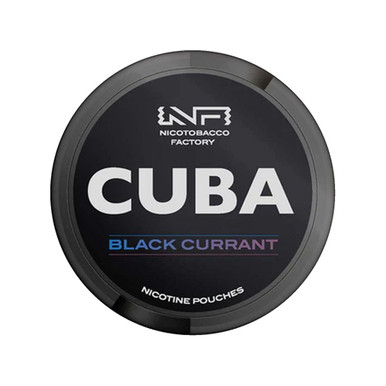
Cuba · 43mg
Read the full guide
Cuba Black Black Currant Nicotine Pouches
£39.90
✔ In stock — ready to ship
100% tobacco-free
Free over £20
Same-day dispatch
Secure checkout
This page covers Cuba Black Black Currant Nicotine Pouches, listed at £39.90 in a single declared strength of 43mg. One variant, not a range. We hold one image of it.
At the time of writing this product is showing as out of stock. We have put that in the second paragraph rather than leaving you to discover it at the basket, because a product page that reads like an invitation to buy something unavailable is wasting your time. The page is still worth keeping up: the information on it is accurate whether or not the can is on the shelf today, and a good deal of this page is about how to find something comparable in the meantime. There is a section further down that does exactly that.
The full guide to Cuba Black Black Currant Nicotine Pouches
4,922 words on how it eats, who it suits, how to serve it and what to put beside it.
The listing, and its current status
We also do not hold a pack count for this listing. The field is empty in our data, which means we cannot tell you how many cans £39.90 covers and cannot work out a per-can figure. That is a real gap and we would rather flag it than paper over it. Some listings on this site are multipacks and some are not, and without the count we genuinely do not know which this is. The listing page itself is where that is confirmed.
Stock positions change, sometimes quickly. Whatever the live listing says takes precedence over this sentence, and if the two disagree, the listing is right.
This is an age-restricted nicotine product sold only to adults over 18 who already use nicotine. The compliance section at the foot of this page applies to every order.
The name, which contains the word Black twice
The full product name is Black Black Currant, and the repetition is not a typing error on our part. Cuba is the brand. Black is the name of the line within that brand. Black Currant is the name of the flavour. Put them together in the brand's own order and the word appears twice, doing two entirely different jobs.
Worth spelling out because the doubled word causes two specific confusions.
It is not a statement about origin. Neither Cuba nor Black tells you anything about where this product is made, by whom, or under what arrangements. We hold no country of origin or manufacturing information for it and we make no claim in any direction. A brand name that happens to be a place name is still a brand name.
It is not a statement about contents. Black Currant is a flavour name printed on a can. It is not a declaration of what is inside, and nothing on this page should be read as telling you what this product contains. We do not publish contents or composition information for any product on this site. The can is where the manufacturer declares that, and the can is the only reliable source for it.
Both points apply across the whole line, and they are worth carrying with you when reading any product name in this category — the names are chosen to describe a flavour, not to document a recipe or a geography.
Berry, as a single classification term
Our flavour data holds one term for this can: berry. That places it on the berry flavour shelf with 75 others and on no other flavour shelf. There is no mint term, no ice term, nothing indicating a cooling element alongside the fruit.
That single term is doing less work than the product name is. Berry is a broad classification covering a wide span — strawberry through to blackcurrant, soft red fruits through to dark ones — and the name on this can points at a much more specific place within it than the classification does. So the honest position is that the name tells you more here than our data does, and we are not going to pretend our classification is more precise than it is.
On blackcurrant as a flavour, described strictly as taste and aroma: it is one of the darker and more assertive fruits in the berry family. Where strawberry is soft and light, blackcurrant has depth and a distinct tartness running underneath the sweetness. That tartness is the defining feature — it is what keeps the flavour from reading as flat or jammy, and it is what separates a blackcurrant character from a generic dark-fruit sweetness. There is also a slightly astringent, drying quality that belongs to the fruit and to its leaves, and which flavourings reaching for blackcurrant usually reach for too. The aroma is concentrated and recognisable, and as with most cans, what you get off an opened tin reads sweeter than what follows.
In short: sweet with real tartness behind it, dark rather than bright, more structure than a soft red berry has. Whether that appeals is a matter of taste and not something a product page can settle for you.
The absence of a cooling term in our data is worth registering, because a great many fruit cans across this category pair fruit with a cool element and people often assume it is standard. On our classification, this one is fruit alone. If a cooling element is what you specifically want, a can that names one is the more reliable choice.
The strength ladder, and why "ladder" is the wrong word for it
This can carries a single declared figure of 43mg and sits on the Extra Strong shelf among 98 listings. People commonly picture the strengths across a catalogue as a ladder — a sequence of rungs running from low to high that you stand somewhere on. It is an intuitive picture and it is wrong in at least four ways, each of which matters when you are reading a number on a lid.
A ladder implies evenly spaced rungs. These are not.
Across this site, declared figures do not arrive at tidy intervals. Some products list four figures in even steps; others list one figure and nothing either side of it, as this one does. The numbers that exist are the numbers manufacturers have chosen to make and declare, and they cluster and gap according to commercial decisions rather than according to any scheme. A figure is not a rung on a shared ladder. It is a fact about one product.
A ladder implies one ladder. There are many.
This is the point that trips up most comparisons. Different brands declare on different bases, so a figure from one maker is not directly interchangeable with the same figure from another. Two cans showing the same number are two separate statements made by two separate manufacturers, not two positions on one shared scale. Line them up in a table and you get something that looks rigorous and is not. Within a single product that lists several figures, the numbers do order that product's own range — but that ordering is internal to the product and does not extend beyond it.
A ladder implies climbing. We are not suggesting that.
This is the most important one and the reason the metaphor is worth attacking at all. A ladder invites the idea of progression — of being at one point and moving to another. We are not suggesting that anyone should move between figures in any direction, and nothing on this page should be read as encouraging it. We do not advise on strength. We will not tell you which figure to choose, will not describe any figure as suitable for any person, circumstance or level of experience, and will not characterise what any figure is like. A shop giving personal guidance on nicotine strength would be doing something well outside what a shop should do, and a high number on a can is a reason to hold that line more firmly rather than less.
A ladder implies the rungs mean something about quality. They do not.
A declared figure says nothing about how well a can is made, how good its flavour is, or how much it costs. Flavour and strength are two separate pieces of information printed on the same lid and there is no relationship between them. On price the lack of correlation is easy to see across our own shelves: Pablo Exclusive Blue Raspberry is listed at £3.85, Fumi Blackcurrant at £27.90, Killa Blueberry at £33.50, Siberia Mini at £39.50 — and much of that spread reflects pack basis rather than anything printed on a lid.
So what are the bands actually for?
Filing. The Medium Strength shelf, the Strong shelf and the Extra Strong one exist so that a catalogue of several hundred listings can be navigated. They are a finding aid. They are not a measurement, not a rating, not a ranking and not a recommendation, and the count attached to each is a count of listings rather than of distinct products — a multi-figure product can contribute several entries, sometimes across more than one band.
The one genuinely useful comparative habit, and it costs nothing: check the basis before you compare the number. That goes for prices, where a pack count changes everything and we do not hold one for this listing, and it goes for declared figures, where the basis is the manufacturer's and varies between them.
Storage, condition, and keeping a can usable
This is the practical subject people most often get wrong, and getting it right costs nothing at all. Start with the distinction that underlies it.
Dry and moist: the distinction, and what we can say about this can
Pouch products across the category are broadly made in drier and moister styles, and the two behave differently once a can is open. It is one of the more useful things to know about a product because it determines how much attention storage needs.
We do not hold a dry or moist classification for this product. It is not in our data, so we cannot tell you which this is, and we are not going to infer it from the brand or from anything else. That is declared by the manufacturer on the packaging. What follows is therefore general — the sensible treatment for a pouch can whichever style it turns out to be — rather than product-specific instruction.
The general principle is simply that a can's condition when you open it is the best condition it will be in, and everything after that is about not degrading it unnecessarily. A drier product is generally less affected by being open for a while; a moister one is generally more sensitive to it. Since you may not know which you have until you read the can, treating any can carefully is the low-effort approach that works either way.
The lid is most of the job
Press it fully home every time. A lid that is not seated is the single commonest cause of a can changing condition faster than expected, and it is rarely a fault with the lid. It is almost always the catch compartment.
Cans in this style have a recess inside the lid, separate from the main chamber, intended for a pouch you have finished with. It fills up faster than people expect, and once it is full it holds the lid proud without that being visible from the outside. So the habit that protects the can is not really a storage habit at all — it is emptying the recess regularly. Used pouches go into general waste, never down a sink or a toilet, and they need keeping away from children and animals exactly as unused ones do.
Heat is the other half
Heat and direct sun are what cans suffer from, and there are three places where it reliably happens: the windscreen shelf of a parked car, a radiator or anything above one, and a sunny windowsill. All three are places people put things down without thinking, and a car in summer is by some distance the worst of them — a closed vehicle in sun reaches temperatures that nothing in a pocket is designed for.
Where to keep cans instead is unremarkable: a drawer, a cupboard, a bag pocket, anywhere at ordinary room temperature and out of the light. There is nothing more to it than that.
Some people keep cans in a fridge. That is a habit rather than an instruction. We are not going to tell you it achieves anything, because we hold no storage guidance from the manufacturer for this product, and inventing storage advice is the same category of error as inventing a tasting note. Whatever is printed on the can, including any date marking, overrides everything in this section.
Physical damage
These tins are not built to be crushed. A can that has been sat on, or pressed at the bottom of a bag, can end up with its lid unseated without it being obvious, and a lid that comes loose in luggage empties into the luggage. If a can is travelling in a bag rather than a pocket, keeping it in outer packaging or somewhere it will not be compressed takes a few seconds. The shape — a flat disc — goes into a jacket or bag pocket well and into a tight trouser pocket badly, where the geometry works against it and the lid is more likely to be levered off.
More than one can
Since we do not hold a pack count for this listing, we do not know how many cans will arrive. If more than one does, the general approach is the same as for any multipack: keep the unopened ones in the outer packaging rather than loose in a drawer where lids get knocked, and open one at a time rather than several. Several part-used cans sitting open means most of them are ageing rather than being used, and a cheap can that sits unfinished is not cheaper than an expensive one that gets used.
Worth a moment on arrival, too: check the lids are seated, check the printed figure is what you ordered, and read what is on the can — the date marking, the declared information, the manufacturer's own detail. That printed face is the authoritative document for everything this page has told you we do not hold.
What "keeping a can usable" actually amounts to
Strip the above down and the whole of storage is four habits, none of which takes any effort: seat the lid, empty the recess so the lid can seat, keep it away from heat and sun, and do not let it get crushed. There is no fifth thing. Every more elaborate routine people describe is either a personal preference or an attempt to compensate for not doing one of those four.
It is worth saying what the failure actually looks like, since people sometimes expect something dramatic. A can that has been left open, left hot or left with a proud lid does not become unusable in any obvious way — it simply is not in the condition it was in when it was sealed, and the flavour is generally the first thing to reflect that. Nothing about it is an emergency. It is just a slightly worse version of the thing you paid for, and avoiding it is free, which is the only argument this section is making.
The other honest point is that none of this changes the date marking on the can. Storage habits are about not degrading something before its time; they are not a way of extending anything, and we are not suggesting they are. What is printed on the packaging governs, and if that and this page ever disagree, the packaging wins.
And the obvious one
Store all of it, used pouches included, where children and animals cannot get to it. That is not a formality and it is not a box being ticked at the end of a section.
The pouch, and handling a can
A nicotine pouch is a small sealed pouch placed in the mouth between the lip and the gum and left there. It is not chewed and it is not swallowed. That is the whole format, and it is the same across every product on this site.
The can is the standard shallow round tin, the pouches lying flat in a ring around the inside wall with the centre open, which is what lets you take one out with a finger rather than tipping it. Lid off, one out, lid back on. Most people place it at the front under the top lip, where the lip holds it. It stays where it is put until moved. If it is uncomfortable in one position, move it; if it is uncomfortable in all of them, take it out — no product page should be encouraging anyone to persist with something that is bothering them.
Duration varies widely between people and we do not publish a recommended length of time, because publishing one amounts to advising on how much to consume. Flavour generally reads strongest early and fades from there.
We do not hold a portion count for this can, nor pouch dimensions, nor a size or format classification. We will not estimate any of them from what other brands do, because those things vary. The can carries the numbers.
The Cuba Black line
The Cuba brand page holds 47 cans, making it one of the larger ranges here and large enough to be organised into lines rather than a flat list. Black is one of those lines, and the six siblings we list alongside this can are all £39.90 — the same as this one — so within that group price is not a variable and flavour is the whole decision.
Where they sit relative to a dark, tart berry: Cuba Black Blueberry is the nearest neighbour, another dark berry but a rounder and less tart one. Cuba Black Cherry moves into stone fruit, sweeter with a different kind of depth. Cuba Black Banana Hit goes to the soft and heavy end of the fruit range, about as far from blackcurrant's tartness as the line gets — and, as with this can, its name is a flavour name and the word in it is not a description of an effect. Cuba Black Apple Juice is the one in the line our data files as carrying a cooling element as well as fruit, which makes it the nearest thing here to a fruit-and-cool build. Cuba Black Cola leaves fruit altogether for the confectionery-drink family, and Cuba Black Cold Dry sits at the cool end of the line.
Forty-seven against the seven described here means most of that shelf is not covered on this page. Rather than characterise cans we have not listed, we would send you to the full Cuba range, which is always more current than body copy.
While this one is unavailable: the berry shelf
Given the stock position, this is the section most likely to be useful today, so it is worth being specific rather than gesturing at a category.
The closest match by flavour name is Fumi Blackcurrant at £27.90, which is the other can on our shelves named for the same fruit. If it is specifically blackcurrant you are after rather than berry in general, that is the obvious first place to look.
Staying dark but moving off blackcurrant, there is a good deal of choice. Clew Blueberry at £39.90 and Killa Blueberry at £33.50 both take the dark berry in a rounder, less tart direction. Nordic Spirit Blueberry at £4.49 is a third reading of the same fruit again — and note that its listed price sits on a pack basis we do not hold, so it is not a like-for-like price comparison with anything else on this page. Elf Bar Blueberry Raspberry at £29.90 pairs two berries rather than presenting one.
Lighter and sweeter, if the tartness was not the part you wanted: 77 Strawberry at £39.90 sits at the soft red end of the berry shelf, which is about as far from a dark tart fruit as the category goes while still being a berry. The Pablo blue raspberry can at £3.85 is a confectionery reading of berry rather than a fruit one.
Two to look at carefully before adding to a basket. Maggie Original Jamaican Cherry Tonic Wine at £39.90 has a long name of which every word is part of a flavour name — it is not a statement about contents, any more than this can's name is. And Denssi Berry Beast at £39.90 is listed as energy pouches rather than nicotine pouches, which makes it a different category of product on our shelves entirely. It appears close to this one when browsing by berry, so it is easy to pick up by accident. Read the listing before ordering. Siberia Mini at £39.50 is a further alternative, named for its format rather than for a fruit.
If none of those is right, the berry shelf's full 76 cans is the complete set to work through, and it is a large enough shelf that something on it will be close to whatever you were after.
What is left to decide while it is unavailable
Very little, and less than usual. There is no strength choice: 43mg is the only figure listed. There is no visible pack-size choice, because we do not hold a pack count — what the listing states is what governs. And at the time of writing there is no availability, which makes the immediate decision either to wait or to take one of the alternatives above.
If you do come back to it when it returns, the thing worth weighing is whether a dark, tart berry with no cooling element listed is what you want, and whether the quantity on the listing is a sensible amount to buy of something you may not have had before. Since we cannot tell you that quantity, checking it at the basket is the sensible step.
Ordering, stock and the check at the door
You must be 18 or over to buy, and we sell only to adults who already use nicotine.
Age verification is carried out at checkout, and you may be asked to confirm your age before an order is accepted. The courier may also ask for identification at the door. If there is nobody aged 18 or over present to receive the parcel and show ID, it will not be left. That applies to every order without exception and is easier to plan around than to be caught by.
On the stock position: this product shows as out of stock at the time of writing, which means it cannot be ordered until it returns. We do not publish restock dates, because we do not hold them and a guessed date is worse than no date. The live listing is the only accurate source for availability, and it is always more current than this page.
Prices are in pounds sterling. Nothing here is an inducement to buy more than you intend to.
Where this page sits on the site
Three shelves lead here. By band, the 98 listings filed as Extra Strong. By brand, Cuba's 47-can shelf. By flavour, the berry shelf, which with 76 cans is one of the biggest flavour categories we run.
The bands below this one are the Strong band and the medium band. Another large brand range to browse sideways into is the Pablo brand page. And when filtering is getting in the way of simply looking, the full shop listing is everything in one place.
A navigation note worth knowing: browsing by brand or by flavour is more reliable than browsing by band, because a product listed across several figures can appear under more than one band while a single-figure product like this one appears in just one. If you remember finding something on a band shelf and cannot find it again, that is usually why.
Questions we are asked
Why is "Black" in the name twice?
Because Black is the name of the line within the Cuba brand, and Black Currant is the name of the flavour. Two different words doing two different jobs that happen to be the same word. It is the brand's naming, not a duplication on our part.
Is it made in Cuba?
Cuba is a brand name and Black is a line name. Neither tells you where the product is made, and we hold no country of origin or manufacturing information for it. We are not going to guess. The packaging carries whatever the manufacturer declares, and that is the only reliable source.
When will it be back in stock?
We do not know and we do not publish restock dates, because we do not hold them. A date we invented would be worse than no date at all. The live listing is the only accurate source for availability, and the berry alternatives set out above are the practical answer in the meantime.
How many cans do I get for £39.90?
We genuinely cannot tell you — the pack count field is empty in our data for this listing. That is why this page does not state a count and does not work out a per-can price. Check the listing itself at the basket, and be careful comparing this price with others on the site, since some are multipacks and some are not.
Does it have any mint or ice in it?
Not according to our flavour data, which holds the single term berry with no cooling term alongside it. If a cooling element is what you want, a can that names one outright is more reliable — the Cold Dry can in the same line sits at the cool end of this brand's range, at the same £39.90.
Is 43mg suitable for me?
We cannot say and are not permitted to. We do not advise on strength, do not describe any figure as suitable for any person or level of experience, and do not characterise what any figure is like. 43mg is the single declared figure for this product and it is filed in our Extra Strong band. That is the whole of what we can tell you.
How does 43mg compare to another brand's numbers?
Less directly than it looks. Brands declare on different bases, so the same number from two makers is not the same statement. Comparing figures across brands gives you something that appears precise and is not. Within a single product listing several figures the numbers do order that one product's range, but this product lists only one.
Is this a dry pouch or a moist one?
We do not hold that classification for this product, so we cannot tell you. It is declared on the packaging. The general storage advice on this page is written to work either way, precisely because we could not assume.
How many pouches are in a can?
We do not hold a portion count for this product and will not estimate one from other brands, since counts vary. That number is printed on the can.
Does blackcurrant taste like the fruit?
We hold no tasting notes for this specific can, so we cannot tell you where it lands. As a flavour family, blackcurrant is characterised by depth and a definite tartness underneath the sweetness, with a slightly drying quality. Whether a particular can captures that is something you would find out by trying it, and we are not going to write a tasting note we cannot support.
Do you have reviews or a rating for it?
No. We do not publish reviews, ratings, rankings or sales figures for any product, so we cannot tell you what anyone else makes of it and would not want to imply anything either way. Everything comparative on this page comes from our own catalogue data — prices, brands, flavour classifications and shelf counts.
What should I do with used pouches?
Use the lid recess as a temporary holding space and then put them in general waste. Do not flush them and do not put them down a sink. Empty the recess regularly, since a full one is the usual reason a lid stops seating flat, and keep used pouches away from children and animals.
Required legal wording
Sold to adults aged 18 and over only. We supply nicotine pouches exclusively to adults who already use nicotine. Age verification is carried out at checkout and ID may be requested on delivery; a parcel will not be handed over to anyone who cannot show they are aged 18 or over.
Nicotine is an addictive substance. That applies to this product at its declared figure of 43mg, and to every can we sell at every figure.
Cuba Black Black Currant is not a licensed stop-smoking medicine and is not supplied as one. It is not intended for non-smokers, for anyone who does not already use nicotine, for anyone under 18, or for anyone who is pregnant or breastfeeding. Nothing on this page is medical advice and nothing on it is guidance on how much to use. Questions about nicotine and your own health belong with a qualified healthcare professional rather than with a shop.
Keep all nicotine products, used pouches included, out of the reach of children and animals.
To close
Cuba Black Black Currant is a single-variant listing at £39.90 with one declared figure of 43mg, filed under the single flavour term berry with no cooling element listed, and out of stock at the time of writing. We do not hold a pack count for it, we do not hold a dry or moist classification, and we make no claim about where it is made — three gaps stated plainly rather than filled with plausible guesses.
What this page has tried to be useful about instead is the two things we can speak to honestly: why the strengths across a catalogue are not a ladder and should not be read as one, and how to keep a can in the condition it arrived in. If you need something today rather than when this returns, the berry shelf is the place to start and the Fumi take on the same fruit is the nearest match on it.
More from Cuba
More extra strong pouches
More berry pouches
Where this sits
Cuba Black Black Currant Nicotine Pouches appears in these categories. Browse them, or jump to something close.
You might also like