Home / Extra Strong / Cuba Black Cherry Nicotine Pouches
Cuba · 43mg
Read the full guide
Cuba Black Cherry Nicotine Pouches
£39.90
✔ In stock — ready to ship
100% tobacco-free
Free over £20
Same-day dispatch
Secure checkout
This is the page for Cuba Black Cherry Nicotine Pouches. Brand: Cuba. Line: Black. Flavour on our records: cherry. Declared strength: 43mg. Price: £39.90. There is one variant on the listing — 43mg at £39.90 — and our record shows it in stock at the time of writing.
A note on the name before anything else, because this particular can invites a misreading. "Black" here is the line name and "Cherry" is the flavour. It is not one phrase. Several other listings in our catalogue use "black cherry" as a single flavour descriptor — the dark, sweet kind of cherry as opposed to a bright sour one — and the ZYN can at £19.99 and the XQS can at £39.90 are both named that way. This can shares two words with them and is a different product from a different brand. Worth knowing if you are comparing tiles in a search result.
The full guide to Cuba Black Cherry Nicotine Pouches
5,175 words on how it eats, who it suits, how to serve it and what to put beside it.
Cuba Black Cherry, listed plainly
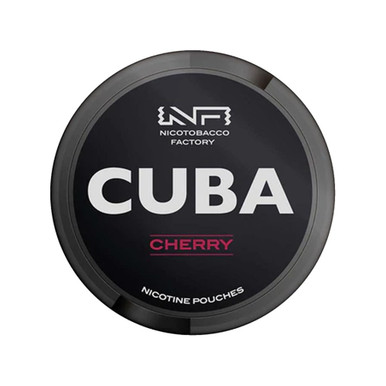
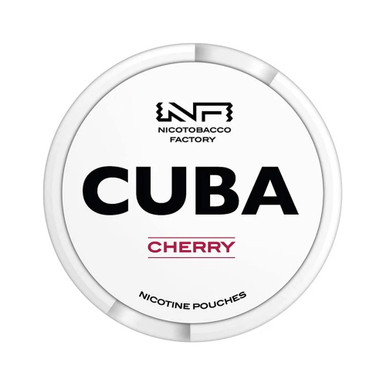
The can itself is the standard round tin: shallow, circular, a lid that lifts clear and presses back down, printing on the lid face carrying brand, line, flavour and the strength figure. Pouches sit inside in a ring; the upper section of the can is the catch compartment for used ones. We hold one image for this listing.
What we do not hold, and therefore do not print: pouch count, weight, dimensions, manufacturer, country, dates, or any figure not listed above. Our record carries what it carries. Where it is empty we say so on the page rather than estimating, and the can's own printed labelling is authoritative for anything the manufacturer has stamped on it. The word "Cuba" is a brand name on a lid and says nothing about where this product comes from.
An adult nicotine product, sold to over-18s who already use nicotine. Nicotine is an addictive substance. Full compliance wording sits at the foot of the page.
Cherry, as taste and as aroma
Cherry is one of the most recognisable flavours in the category and one of the least neutral — people tend to have a settled opinion about it before they open anything. It is worth describing it properly rather than writing "sweet fruit" and moving on.
The first thing to be clear about is that cherry is not a berry, and it does not behave like one. It is a stone fruit, and stone-fruit flavours have a different structure: rounder in the middle, more aromatic in the nose, and carrying a faint edge at the back that berries do not have. If you have arrived here from the dark-fruit cans in this line expecting a variation on the same theme, this is a genuine change of direction rather than a shade of the same colour.
As a taste, cherry arrives sweet and arrives quickly. The sweetness is syrupy rather than clean — it has body to it, closer to the texture of a cordial than the flatness of plain sugar. Behind that comes the part that makes cherry cherry: a distinct sweet-sour bounce, a little lift of acidity that cuts across the sweetness about halfway through and keeps it from going cloying. That bounce is the signature. Take it away and you have a generic red sweetness that could be almost any fruit.
At the back there is a faint kernel note — the taste people usually describe as almond-like, and the thing that separates a cherry flavour from a strawberry or a raspberry one. In the real fruit that character belongs to the stone rather than the flesh, and flavour builders reproduce a hint of it because without it cherry reads as incomplete. To be clear, this is a description of how the flavour tastes, not a statement about what is in the can — we do not publish composition.
Against the line's other dark cans the difference is easy to state. Its blueberry is soft, evenly sweet and low in acidity, and ends cleanly. Its blackberry is darker and drier, with a faintly astringent grip at the finish. Cherry is louder than both: sweeter on the surface, more aromatic in the nose, with the sour bounce in the middle and the kernel edge at the end that neither of the berries carries. If the berries are quiet cans, this is the one that announces itself. The blueberry can at the same £39.90 is the direct comparison to make if you want the gentler reading, and the line's blackberry sits on the brand shelf alongside it.
The aroma off an open can is the most forward of the three. Cherry has real volatility to it — it is an aromatic fruit, and a cherry pouch can announces itself when the lid comes off in a way a blueberry can does not. Expect a sweet, slightly syrupy, faintly sharp smell that reads as cherry immediately.
Standard caveat: our record holds "cherry" and nothing more granular. The description above is our honest account of the flavour family and the name on the lid rather than a manufacturer specification, and taste varies between people more than any other thing on a product page.
Plotting it: cool, sweet, sharp, bitter
The four-axis read is the most useful shorthand we have for comparing cans, because "cherry" tells you the family but not the shape. Here is where this one lands on each, with the reasoning attached rather than a number pulled from nowhere. These are descriptions of taste and nothing else — no axis here says anything about strength, quality or suitability.
Coolness: essentially absent
There is no cold register on this can. It is not built with a cooling note laid over the fruit, and nothing about it reads as icy, minty or menthol-adjacent. That is a deliberate design position rather than an omission — a plain fruit can is trying to taste like fruit, full stop.
The contrast is available on our shelves if you want to hear it. Fumi's Chilled Cherry at £27.90 and Velo's Cherry Ice at £4.19 are both the same fruit with a cold note built over the top, and the cold changes the fruit rather than simply sitting beside it: it pushes the sweetness back, sharpens the front edge, and makes the finish read as much longer than it actually is. Within this line, Black Double Fresh at £39.90 is the cold end of the range if you want to compare a warm fruit can and a cold can from the same shelf.
Sweetness: high, and the dominant axis
Sweetness is the loudest thing on this can and the first thing you notice. It is a syrupy, full-bodied sweetness with weight to it rather than a light one, and it sets the level everything else has to work against.
Among fruit cans this sits at the upper end. It is sweeter on the surface than a blueberry, considerably sweeter than a blackcurrant, and in a different register from the sweetness of a cola note, which is caramel-shaped rather than fruit-shaped. Sweetness is also the axis that varies most between brands sharing a flavour name, which is why comparing cherry cans across manufacturers is rarely a waste of time.
Sharpness: moderate to high, and the axis that makes it work
Sharpness is the interesting one here. A cherry flavour with no acidity is a failure — it reads as flat and syrupy and stops being identifiable. The sweet-sour bounce in the middle is what gives this can its shape and keeps the high sweetness from becoming heavy.
It is not a sharp can in the way a citrus or a blackcurrant is sharp. The acidity is a lift within a sweet flavour rather than the main event. SYX Wild Cherry at £29.90 and the UBBS cherry can at £19.95 are two other readings of the same fruit if you want to hear how differently that balance can be struck — where the acidity sits, and how much of it there is, is most of what separates one cherry can from another.
Bitterness: low, but genuinely present
Bitterness on this axis means the kernel note at the back rather than anything coffee-like or ashy. It is low, but it is not zero, and it matters out of proportion to its size: it is the part of the flavour that gives cherry an ending instead of just a fade.
Cans that carry real bitterness are a different proposition. Killa's Cherry Cola at £33.50 brings the root-and-spice bitterness of a cola note in behind the fruit, which is a much more pronounced use of the axis, and the Maggie Original Jamaican Cherry Tonic Wine can at £39.90 is built on an even more assertive bitter-aromatic idea. Against either of those, this can is a straightforwardly sweet fruit with a small edge on it.
The four axes together
Put plainly: no coolness, high sweetness, moderate sharpness through the middle, and a low but audible bitterness at the finish. That is a warm, forward, aromatic fruit can. It is the loudest of the fruit cans in this line and it makes no attempt to be subtle, which is either the reason to buy it or the reason not to, depending entirely on what you want — a question we cannot answer for you.
How a cherry note gets built in a dry pouch
Having described what the flavour does, it is worth covering how a flavour of this kind is put together as a piece of design, because it explains why cherry cans differ from each other so much more than, say, spearmint cans do.
The limit first: we do not publish composition, and nothing in this section describes what any product contains or how it is produced. This is about flavour as a perceived structure, which is the only part of the subject we can discuss honestly.
Cherry has two reference points, and they fight
Most fruit flavours have one obvious reference. Cherry has two, and they are quite different from each other.
The first is the fresh dark cherry: firm, moderately sweet, with real acidity, a slight winey depth and not much aroma until you bite it. The second is confectionery cherry — the flavour of boiled sweets, glacé fruit, cordials and jams, which is far sweeter, far more aromatic, and only distantly related to anything grown. Nearly every cherry product in existence sits somewhere on the line between those two, and where a manufacturer chooses to sit is the single biggest decision in the build.
In a dry pouch the pull is towards the confectionery end, for a structural reason rather than a commercial one: the format gives a flavour very little to work with. No temperature, no texture beyond the pouch, no aroma arriving through a drink, no chewing. A subtle fresh-fruit reading would simply not register. So pouch cherries tend to be drawn in the bolder, sweeter, more aromatic style — not because it is more appealing, but because it survives the format.
Building a flavour that has to last
Dry pouches present a problem food flavours do not: the flavour has to arrive over a long stretch rather than in a mouthful, and it fades as it goes. That changes the design. The identifying cues have to be front-loaded so the thing is recognisable immediately, and there has to be enough underneath for the middle of the session to hold its shape.
This is why the tapering is a characteristic of the format rather than a fault of any one can. The first portion of the time is the loudest and the most defined; the back half is quieter across every dry pouch on our shelves.
What a cold note does to the build
Adding a cooling register is not a garnish — it is a structural change, and it forces the fruit to be rebuilt around it. A cold note occupies the front of the flavour, so the fruit has to be pushed back or strengthened to still be heard; it flattens perceived sweetness, so the sweetness usually has to be raised; and it dominates the finish, so the fruit's own ending is largely lost.
That is why a chilled cherry and a plain cherry from the same manufacturer are two different products rather than one product with a feature added. The chilled reading at £27.90 and the iced one at £4.19 are both worth trying if you want to understand what the cold does to a fruit, and neither tells you much about what this can tastes like.
Blending, and the identification problem
A blend is easier to make interesting and harder to make identifiable. Pablo's blueberry, cranberry and cherry can at £3.85 is three fruits in one construction, where the cranberry supplies acidity, the blueberry supplies rounded body and the cherry supplies the aromatic lift. The result can be very good and will never read as cleanly "cherry" — that is the trade, and it is made deliberately.
Cherry and cola together at £33.50 is a different kind of blend again, because cola is not a fruit and brings spice and bitterness rather than more sweetness. The cherry in that construction is doing a supporting job rather than leading. The plain cola can in this line at £39.90 is the unblended version of that other half if you want to taste them separately.
Why the same word means different things on different lids
There is no standard for what a cherry pouch should taste like — no scale, no definition, no requirement that two manufacturers aim at the same point on the fresh-to-confectionery line. A flavour name is a category, not a specification.
That is why our cherry shelf of 20 listings is a starting point rather than a promise. Those 20 cans agree on a word. Beyond the word, the spread between them is wide, and the only way to find the reading you prefer is to try more than one.
The pouch in practice
These are standard-format pouches rather than minis — a small soft rectangle with rounded ends, shorter than a fingernail is long, a little thicker than folded card, firm enough to hold its shape and soft enough to compress between finger and thumb. We publish no millimetre figures because our record holds none. Where a listing is a mini we flag it: the Siberia Mini can at £39.50 is one we mark that way, and it is a smaller article in the hand.
The pouch goes between lip and gum, usually the upper lip, and stays there. No device, nothing to charge, nothing to press, nothing to hold. Most people settle on a side out of habit; some move it across. We have no advice on any of that. Seated properly it lies flat rather than rolling, and how much a pouch moves about is a genuine difference between brands that no product page can honestly predict for you.
The range people generally describe for this format runs from about twenty minutes to an hour, with wide variation either side. We publish no figure for this can, there is no correct duration, and none of this is a recommendation about timing or quantity. What is generally true of dry pouches is that the taste and the time do not run on the same curve: flavour is at its most defined in the early part and tapers across, which is why people who keep one in for a long stretch usually describe the last part as considerably quieter than the first.
A practical point about the can rather than the pouch. Cans of this type are opened and closed a great many times, and the lid is the part that decides whether that is a pleasant experience. A lid that seats cleanly and comes off without a fight is worth more day to day than any amount of description on a product page, and it is one of the genuine differences between manufacturers. It is also something we cannot tell you in advance, because it is not in our data and it varies between production runs. The same goes for how tightly the pouches are packed in the ring, which decides whether getting the first one out is easy or fiddly.
One more practical note specific to a fruit can rather than a cold one. Aromatic flavours make themselves known through a closed lid more than quiet ones do, so a cherry can kept loose in a bag with other things is more noticeable than a plain can would be. That is neither good nor bad, but it is worth knowing if you keep several cans together and want to be able to tell them apart without reading the lids.
The lid's upper section is the catch compartment — somewhere for a used pouch to go when there is no bin. It is a stopgap rather than storage, and emptying it when you pass a bin is the sensible habit. Used pouches go in general waste, never down a drain or a toilet, and never anywhere a child or an animal could reach them. That is the one piece of handling guidance here that is not optional, and it applies with particular force to a can whose lid says "cherry" on it.
What 43mg is, as a number
43mg is the declared strength as our record holds it, attached to the single variant on this listing. We do not hold the basis on which the figure is expressed and we will not guess at it — the can's labelling is where that is properly read.
Its function on our site is to decide a shelf. Listings are filed into three bands, and this figure puts the can in the extra strong band, currently 98 listings, above the strong shelf and the medium shelf. The bands are a way of narrowing a large catalogue. They are not a ranking, not a progression, and not advice.
We do not tell anyone which strength to buy and we describe no figure as suitable for any person. Nothing on this page is a recommendation about strength, and this listing offers one figure in any case.
Cherry's position in the Cuba range we carry
The Cuba brand page holds 47 listings, one of the larger single-brand shelves on the site, and the Black line accounts for a good part of it. The single-flavour cans in the line share a price of £39.90 and a declared 43mg, which makes moving between them purely a flavour decision — no price to weigh, no strength trade-off, no change of format. That is not true across the catalogue generally, and it makes this line unusually easy to compare with itself.
Cherry is the line's stone fruit, and the only one. Around it, Black Apple Juice is the bright, juicy orchard end; Black Banana Hit is the soft, creamy, low-acid direction with almost no sharpness in it at all; Black Cold Dry is the can our record holds with no flavour classification whatsoever, a name rather than a fruit; and the dark berries — blueberry and blackberry — sit either side as the quieter readings of dark fruit. If you want the line's cold register rather than a fruit, Double Fresh is where that lives.
Cans people keep beside a cherry
Keeping two or three cans on the go at once is ordinary, and with a loud flavour like this one it is more common than usual — a high-sweetness aromatic fruit is exactly the sort of thing people tire of faster than a quiet can.
For a near neighbour, the other cherry listings are the obvious route, and they are spread across a wide price range: UBBS at £19.95, ZYN's black cherry at £19.99, SYX's wild cherry at £29.90 and XQS at £39.90 are four separate readings of the same fruit from four different manufacturers.
For the same fruit with a cold note over it, Fumi's chilled version at £27.90 and Velo's iced one at £4.19 are the two on this list. For a deliberate contrast that will not blur into it, the blueberry can in the same line is the quiet opposite at the same price, and the Maggie tonic wine can at £39.90 is a much more unusual direction for the same money.
A necessary warning about the price spread on that list, because it looks like it means something it does not. Our records carry no cans-per-pack figure for most listings, this one included. A £39.90 listing and a £4.19 listing are not necessarily the same quantity of product, and we cannot tell you the ratio because the field is empty in our data. Comparing listings by the number on the tile will give you the wrong answer. Read each listing on its own page.
If you would rather browse than be pointed anywhere, the whole catalogue is open, and the Pablo shelf is a reasonable example of another manufacturer's range laid out in the same way.
Keeping the can in decent condition
Cool, closed, out of direct sun. A drawer, a cupboard or a bag pocket is fine. A windowsill in summer, a dashboard, the top of a radiator or a parked car in the sun is not — heat is what flattens a flavoured pouch, and the parts of a cherry note that go first are exactly the parts that make it identifiable: the aroma and the sharp lift in the middle. A heat-tired cherry can reads as generic sweetness.
Press the lid down properly each time. A can left ajar in a bag dries at the edges and loses its top end, and an aromatic flavour has more to lose there than a quiet one. Keep it upright where you can, so the catch compartment stays separate from the unused pouches.
On fridges: some people keep cans cold and we neither advise it nor advise against it. Our record carries no storage instruction for this product, and the printed can is where a manufacturer's instruction belongs. The one practical note is that a can going back into a fridge should be closed and dry, since condensation does a dry-format can no favours.
Keep it out of reach of children and pets, and keep it away from where food lives in the house. A tin with a fruit name on the lid should be stored like a nicotine product rather than like a sweet tin, because that is what it is.
What there is to decide on this listing
Not much, and it is more honest to say so than to imply otherwise. One variant: 43mg at £39.90. No lower or higher version of this can on our shelves, and no multi-can option on this page. The decisions available are whether you want this flavour and what you keep alongside it.
If 43mg is not the figure you were looking for, the route is a different band rather than a different version of this can — the strong shelf and the medium shelf hold different products entirely, and we have no view on which band anyone should be browsing.
Some listings in the catalogue are sold as multi-can packs and say so. This one does not, and our record holds no cans-per-pack value, so we cannot tell you what £39.90 covers in units. A gap, stated as a gap.
Ordering it, and the check at the door
Our record shows this listing in stock at the time of writing, though stock is the fastest-moving thing on any product page and the listing itself is the live answer.
Buying works as it does across the site: basket, checkout, age check. This is an 18+ product and an age verification step operates at checkout. We do not sell nicotine products to under-18s in any circumstances, and the check cannot be bypassed.
ID may be requested on delivery. If it is requested and no adult at the address can produce it, the delivery will not be completed and the parcel goes back. That is worth knowing before the driver arrives, particularly where a parcel is going to a workplace, a neighbour or a collection point and the person receiving it is not the person who ordered it.
Baskets mix freely across brands, flavours and bands, with no minimum per brand, and standard delivery and returns terms apply to this listing as they do to everything else we list.
Where this page sits
Three shelves lead here. By strength, the 98-listing top band. By brand, the Cuba shelf and its other 46 cans. By flavour, the cherry shelf, 20 listings deep — one of the smaller flavour shelves we operate, which makes it an easy one to read end to end.
Crossing two filters is the fastest way through a catalogue this size: flavour family first, then band, then compare prices. Everything at once is also available if you would rather scroll.
Questions we get about this can
Is this the same as ZYN Black Cherry or XQS Black Cherry?
No. Those are different products from different brands that happen to share two words with this listing. On this can, "Black" is the Cuba line name and "Cherry" is the flavour; on theirs, "black cherry" is a single flavour descriptor meaning a dark sweet cherry rather than a sour one. The ZYN listing is £19.99 and the XQS listing is £39.90, and each has its own page.
What is the pouch count?
We do not know. The field is empty in our product record for this listing, and we do not fill empty fields with estimates. The printed can is where that number is read. Any pouch count quoted for this product elsewhere did not come from us and should be treated with the caution due to any unsourced figure.
Does it taste like cherry sweets or like fresh cherries?
Closer to the confectionery end than the fresh end, which is the usual position for this flavour in a dry pouch — the format gives a subtle fresh-fruit reading very little to work with. Expect syrupy sweetness, a sweet-sour lift through the middle and a faint kernel note at the back. We hold no manufacturer tasting notes for this product, so that is our own honest description of the flavour family rather than a specification.
Is there a cold or iced version of this can?
Not within this listing, which has one variant and no cold register. Other manufacturers list chilled cherry cans — Fumi's at £27.90 and Velo's at £4.19 are both on our shelves — and within the Cuba Black line the cold direction is Double Fresh at £39.90 rather than a cold cherry. A cold note changes a fruit substantially rather than simply sitting on top of it, so those are different products rather than variants.
How is it different from the blueberry can in the same line?
Flavour only: same £39.90, same declared 43mg, same line, same format. Blueberry is soft, evenly sweet, low in acidity and ends cleanly. Cherry is a stone fruit — sweeter on the surface, considerably more aromatic, with a sour lift in the middle and a faint kernel edge at the finish. Blueberry is the quiet can of the two and cherry is the loud one.
What does the strength figure on the lid mean?
It is the declared strength figure as our record holds it and as it appears on the listing. On our site it decides which strength shelf the can is filed on, which is the extra strong band. We do not hold the basis on which the figure is expressed — the can's labelling covers that — and we do not interpret strength figures on behalf of individuals.
Which strength or which cherry should I buy?
We will not advise on strength: we describe no figure as suitable for any person, and this listing offers one figure regardless. On which cherry, we can describe how the cans differ but not which you will prefer — the spread across the 20 listings on our cherry shelf is wide, and taste is not something a shop can predict for you.
How long is one usually kept in?
Generally somewhere between about twenty minutes and an hour, with plenty of variation. There is no correct duration, we publish no figure for this can, and none of this is a recommendation. The general characteristic of the dry format is that flavour is at its strongest early and tapers through, so the back half of the time is quieter than the front.
Will you tell me what it contains?
We do not publish composition or production information for any listing on this site. The manufacturer's labelling on the can carries that, and it is the only place we would point you. This applies to the flavour as well — the kernel note described above is a characteristic of how cherry flavours taste, not a statement about contents.
Which country does this come from?
We do not hold that information and will not guess at it. Our record carries brand, line, flavour, strength, price and stock status, and nothing about manufacture or origin. The brand name on the lid is a brand name and is not a statement about where the product comes from.
Is this can available?
Marked in stock at the time of writing. Stock changes faster than page copy, so the listing itself is the reliable answer. Where a can is unavailable we say so clearly on its own page rather than letting you find out at checkout.
Can I order it with other things?
Yes — baskets mix brands, flavours and strength bands without restriction. The one thing worth checking as you browse is what each listing actually is, since a few cans in the catalogue are not nicotine products at all, and a flavour name on a tile does not tell you which kind of product you are looking at.
Compliance, age and the law
Nicotine is an addictive substance.
This product is sold only to adults aged 18 or over who already use nicotine, and on no other basis. We do not sell to anyone under 18. An age verification step operates at checkout, and ID may be requested on delivery — if it is requested and cannot be produced by an adult at the address, the delivery will not be completed.
Cuba Black Cherry Nicotine Pouches are not a licensed stop-smoking medicine and are not authorised or intended for any such purpose. This product is not intended for non-smokers, for anyone who does not already use nicotine, for anyone under 18, or for anyone who is pregnant or breastfeeding. Nothing on this page is medical advice, and nothing on it should be read as encouragement to start using nicotine or to use any particular strength.
Keep this product out of reach of children and pets, and dispose of used pouches in general waste where they cannot be reached. Every factual detail on this page — name, brand, price, declared strength, flavour classification and stock status — comes from our product record for this listing. Where that record is empty we have said so rather than estimating. The can and the manufacturer's own labelling are authoritative for anything printed on the packaging.
Last word
Cuba Black Cherry is the line's stone fruit and its loudest can: high sweetness, a clear sour lift through the middle, a faint kernel edge at the finish and no cold register at all. It lists at £39.90 in one declared strength of 43mg, and it sits on the top strength band, on the 20-strong cherry shelf and among the wider Cuba range. If you want the same fruit read differently, the cherry shelf runs from £19.95 to £39.90 across four other manufacturers. Everything we hold on this can is on this page, and everything we do not hold has been marked as such.
More from Cuba
More extra strong pouches

More cherry pouches
Where this sits
Cuba Black Cherry Nicotine Pouches appears in these categories. Browse them, or jump to something close.
You might also like