Home / Medium Strength / Velo Cherry Ice Nicotine Pouches

Velo · 10mg
Read the full guide
Velo Cherry Ice Nicotine Pouches
£4.19
✔ In stock — ready to ship
100% tobacco-free
Free over £20
Same-day dispatch
Secure checkout
This listing is Velo Cherry Ice Nicotine Pouches, priced at £4.19, with one declared strength against it — 10mg — and therefore no variant to choose before it goes into a basket. Our record marks it in stock as this is written and attaches one image to it. Two flavour tags sit against the product: mint and cherry.
One field in our record is empty and it is the field people most want filled: we do not hold a can count for this listing. We cannot tell you how many tins £4.19 buys, and we are not going to assume. There is a section below devoted to why that gap matters more than it looks.
The full guide to Velo Cherry Ice Nicotine Pouches
5,283 words on how it eats, who it suits, how to serve it and what to put beside it.
Velo Cherry Ice, and the small amount we actually know
Those are the facts. Brand, price, one figure, stock state, two tags, one photograph, and one conspicuous blank. Everything that follows is a description of the object, an account of the flavour as taste and aroma, or a comparison with the other cans sharing this one's shelves. We publish no ingredient list, describe nothing about what happens once a pouch is in place, and make no statement about anybody's wellbeing in any direction. Where a fair question outruns our data, the answer given is that we do not hold the information.
This is an adult nicotine product listed for people aged 18 or over who already use nicotine. The full wording on age, addictiveness and the legal position is set out in its own section towards the foot of the page.
The tasting note: cool, sweet, sharp and bitter
Four axes cover most of what is useful to say about a flavour in this format, and running a can along all four is more informative than a paragraph of adjectives. Here is where this one lands, as taste and aroma.
Cool. High, and structurally so. The "Ice" in the name is the category's standard convention for a cool mint-family direction, and our tag set confirms a mint element is present. The cool here is not a garnish on top of the fruit; it is the floor the fruit stands on. In a dry format a cool base is what keeps a flavour legible through the long quiet middle, and a cherry can with "Ice" in its name is telling you that the cherry has that structure underneath it rather than standing alone.
Sweet. Present but moderate, and lower than you might assume from a fruit name. Cherry flavouring can be pitched anywhere from a boiled-sweet sugariness to something much drier and more stone-fruit-like, and a cool base pulls the whole arrangement away from the sweet end because a mint note reads as clean rather than sugary. The result is a fruit flavour that registers as fruit without registering as confectionery — sweeter than a plain mint can, a good deal less sweet than a fruit can with no cool element in it.
Sharp. Moderate, and this is where cherry earns its place. Ripe cherry carries a real acidity at its edge — the thing that stops the fruit tasting flat — and that acidity is the most identifiable part of a cherry flavouring. Against a cool base it reads as brighter than it would on its own, because mint and acidity both occupy the clean, high end of the palate and reinforce each other. Sharp here means defined rather than sour; nothing in this flavour is puckering.
Bitter. Low to negligible. Cherry has a faint stone-fruit bitterness in its deeper register, the quality that distinguishes a dark cherry from a glacé one, but it is not the point of this can and a cool base does nothing to bring it forward. If bitterness is what you want from a can, the coffee-flavoured listings on our shelves are where it lives, and they are a different proposition entirely.
The aroma from an open tin follows the same map. Fruit arrives first and reads sweeter in the air than it does in the taste, with the cool element turning up a beat later and cleaning up behind it. As with every can in this format, the tin smells more strongly than a pouch delivers, which is normal and not a defect: a small dry parcel cannot match the intensity of a tin full of them.
Across the arc, the four axes do not move together. The sweetness and the fruit acidity are most pronounced in the opening minute. The cool element holds its ground longest, which is why the tail of a fruit-over-cool can reads as cooler and less fruity than the start did. That is the format behaving normally rather than the can fading unevenly.
What the two words in the name are doing
Cherry is the fruit and needs little explanation, except to say that cherry flavourings differ from one another more than most people expect. There is the dark, deep, stone-fruit reading — the black cherry direction, with weight to it. There is the bright, almost synthetic cherry-drop reading, which is sweeter, higher and less fruit-like. And there is the pale glacé reading, which is sweeter still and flatter. A cherry name on a can does not tell you which of the three is being aimed at, and neither does our tag.
Ice is a naming convention rather than a description. It appears on cans from a great many brands across our shelves and signals the cool mint-family direction of a flavour. It is not a claim about temperature. It is not a description of anything the pouch does to a person. It has no definition agreed between brands, which means it indicates a direction rather than an intensity — an "Ice" can from one brand and an "Ice" can from another are not promising the same thing to any measurable standard.
Our two flavour tags, mint and cherry, put this listing on both the cherry shelf, a compact grouping of twenty listings, and the mint shelf, which at a hundred and forty-eight listings is the largest flavour grouping we run. On this can the tags and the name agree with each other, which is worth noting because there are listings on our shelves where they do not.
Two cherry cans from two brands: what really separates them
We stock cherry cans from more than one brand, and the comparison comes up often enough to deserve a straight answer rather than a flattering one. The most instructive comparison on our shelves is between this can and the cherry cans from UBBS, and the honest account has two halves.
What our catalogue does support. The declared figures differ: 10mg here against 6mg on both of the UBBS cherry listings. The prices differ, £4.19 here against £19.95 there, and the units differ too — UBBS states five cans for its price while our record states nothing at all for this one, so the two prices are not comparable without reading the listings. The brands differ, the tins differ in their printing, and the shelf placements follow from the figures. Those are real, checkable differences and they are the only ones we can vouch for.
What our catalogue does not support. A flavour distinction. This is the part worth saying plainly. Our system files this can under mint and cherry. It files the spiced cherry listing from UBBS under mint and cherry as well — identical tags, despite one product having the word "spicy" in its name and the other having "ice". On the tag data alone there is nothing whatever to tell the two apart, and anyone trying to choose between them using our categories will get no help from them.
So what can be said about the difference? Only what the names point at, described as taste, with the reasoning shown so you can judge it for yourself. A cherry-and-ice arrangement puts a cool, green mint-family note over the fruit: the effect is to lift the cherry's acidity, clean up its sweetness and leave the flavour reading high and defined. A cherry-and-spice arrangement does the opposite — it puts baking-spice notes such as clove and dark cinnamon underneath the fruit, which adds weight and depth at the bottom end and makes the cherry read rounder and darker rather than brighter. In the aroma you would expect the cool one to come across as sharper and the spiced one as deeper. Those are two genuinely different flavour ideas built on the same fruit, and the words "warm" and "cool" as used here are tasting vocabulary for those note families, not descriptions of temperature or of anything a pouch does to anyone.
But that is a reading of two product names by people who know the category, and it is not a claim supported by anything in our data. We would rather set out the reasoning and label it as reasoning than present it as fact. If you want the difference settled properly, one tin of each settles it and nothing on a website will. For the plainer comparison — cherry with no second word attached — UBBS Cherry at £19.95 for five cans is in stock in our record and is the straightest version of the fruit we hold. Fumi Chilled Cherry at £27.90, also available, is a third brand's take on the cherry-over-cool idea, and puts another data point on the same question.
10mg, and what a number on a lid is for
This listing declares a single figure, 10mg. It is what the manufacturer prints, we reproduce it unchanged, and it determines which of our strength bands the listing appears on — here, the Medium Strength band, which holds a hundred and thirty-five listings. That is the figure's entire function in this catalogue: a label and a filing key.
It is not a rating and not a rank. A higher printed number does not make a better can, a more serious one or a more advanced one, and the bands above — Strong and Extra Strong — are groupings of printed numbers rather than steps on any sort of ladder. We say this on every page because figures invite ranking simply by being numbers, and ranking is the one thing they should not be used for here.
We also cannot tell you whether 10mg suits you, and we will not imply an answer by how we present the shelves. That is not caution for its own sake. A retailer knows nothing about the person reading, and a confident answer to that question would be an invention dressed as service. The figure is published on every listing we sell precisely so that the comparison is yours to make.
Because only one figure is declared here, there is no selector on this listing. The £4.19 price is the 10mg price and that is the whole of the choice. Some listings in this brand's range declare more than one figure at the same price, where the decision is a real one; on this can it is not.
£4.19, and the question our record cannot answer
A four-pound listing sitting in a grid beside a twenty-pound listing looks like an obvious saving. On our shelves that impression is frequently wrong, and this listing is one of the cases where we cannot even check it.
Our catalogue records a can count against some listings and leaves it blank on others. Where it is populated, the arithmetic is trivial: a listing stating five cans at £19.95 works out at £3.99 a can, which sits below this listing's headline figure rather than far above it. Where the field is blank, as here, there is no unit for us to state and therefore no per-can figure to calculate.
So the honest answer to "what does £4.19 buy" is that we do not know, and this page is not going to pretend otherwise. The listing itself and the packaging are the places that answer it, and both are better sources than a description guessing at its own missing data.
The general rule this produces is worth carrying around the whole catalogue: compare what listings contain, not what they cost at the top. On the shelves around this can you will find Nordic Spirit Frosty Berry at £4.49 and XQS Arctic Freeze at £39.90, both in stock and both cool cans. That near-tenfold gap is not a gap in declared strength or in quality; it is a gap in units, and for one of the two our record does not even say what the unit is. Treating those headline numbers as directly comparable means comparing two things neither of us has identified.
The tin, the pouch, and what happens at the end
The can is the shallow round tin the category has standardised on: flat base, straight sides, a lid that lifts clear of the rim and presses back onto it. The lid face carries the brand, the flavour and the declared figure, and having the figure on top matters once more than one tin shares a drawer, because tins get read from above rather than picked up and turned over.
Lift the lid and the pouches sit in a ring around the inner wall, flat and regular, so the first one out leaves the rest undisturbed. Each is a small pale rectangle with softened corners, dry rather than moist, light enough to be easy to forget in a closed hand. Our record does not state how many are in a tin, and we will not estimate it — the packaging carries the count and an invented number would only compete with the real one.
The underside of the lid is a shallow recess with a raised lip: the catch compartment. Used pouches go there, it holds several before it needs emptying, and it exists so the tin works when no bin is within reach. It is not a store for fresh pouches.
In use, the pouch goes under the upper lip and stays put. A fresh one registers as slightly bulkier than it looked for the first minute or so, then settles into the shape of the space and becomes largely unremarkable. People talk and drink with one in place without difficulty. Eating with one in is a preference that people split on, and it is not our business to convert a preference into guidance.
Duration has no honest single answer. Under ten minutes and close to an hour are both common, the same person varies across a day, and the spread between people is wider than the spread between cans. Most people go by the flavour rather than a clock — the fruit thins out, the cool element outlasts it, and a pouch with nothing left in it is not doing what it was picked up to do. No schedule is printed anywhere and we are not going to invent one.
Removal is a fingertip job and the pouch comes out in one piece. Into the lid well while you are out; into general waste when the well fills. Not into a sink, a drain, a plant pot or out of a car window. Used pouches are small and pale and very easy to lose sight of, which is why a closed lid is the sensible default in any household with children or animals in it.
What people keep alongside a cherry can
Almost nobody runs one flavour indefinitely. The pattern people settle into is two cans in rotation, occasionally three, and the useful principle behind a good rotation is contrast — two cans that are meaningfully different taste like a change, whereas two cans that are nearly the same taste like the same can twice and make both of them duller.
Mapped onto the four axes above, this can is high on cool, moderate on sweet, moderate on sharp and low on bitter. A second can that improves on that is one that moves at least two of those axes rather than one.
The plain cool partner. The commonest second can is a straight mint with no fruit in it, which drops the sweetness to near zero and takes the fruit acidity out entirely. That is a real change and it is why the pairing is so common. Within the same brand, Velo Crispy Peppermint and Velo Freezing Peppermint both sit at £4.19 and both are available; "Crispy" names a clean snappy reading of peppermint and "Freezing" a colder, more intense one. Outside the brand, SYX Cool Mint at £29.90 and White Fox Double Mint at £34.90 do the same job from a different direction, the latter using its name to signal intensity of one idea rather than two ideas. Both are in stock.
The different-mint partner. If you would rather stay cool but change the type of cool, spearmint is a genuinely different flavour from peppermint rather than a milder version of it — rounder, greener, more herbal, noticeably sweeter. Velo Bright Spearmint at £4.19 declares three figures on one listing, 6mg, 8mg and 14mg, all at the same price, and Edge Spearmint at £14.95 is another brand's reading of the same mint. Both available. Against a cherry can, a spearmint rotates better than a peppermint does, because the herbal quality is further from the fruit than a sharp mint is.
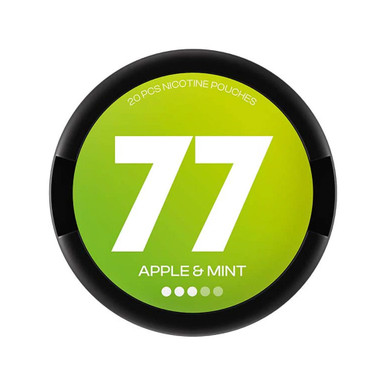
The different-fruit partner. If you want to keep fruit in the rotation, the point is to pick a fruit that does not overlap with cherry. Berries sit closest and therefore contrast least — Velo Icy Berries at £4.19 is the same brand's mixed-berry-over-cool listing and is a near neighbour rather than a contrast. Apple moves further: 77 Apple Mint at £39.90 is crisp and green rather than dark and stone-fruited. Stacked tropical fruits move further still, as in Pablo Silver Edition Blueberry Peach Ice at £39.90. All three are in stock in our record.
The leave-the-category partner. The third slot in a rotation, where people have one, usually goes to something that fits neither camp. Within the brand, the two "Flame" listings take that role — Velo Lime Flame and Velo Mango Flame, both £4.19 and both available, using "Flame" as the brand's word for a warmer, spiced reading of a fruit in the tasting sense rather than as a description of temperature. Further afield, Klint Arctic Mint at £36.90 goes hard in the opposite direction on the cool axis. It is rarely the can anybody gets through fastest, and it is usually the one that stops a rotation going stale.
One caution about rotations. Nothing in this section is a suggestion to buy more than you otherwise would; it is a description of how people who already buy in this category tend to arrange what they buy. Two cans chosen for contrast is a tidier arrangement than four chosen at random, and that is the entire point.
The Velo range on our shelves
The Velo collection runs to twenty-one listings with us. Every one of the six nearest relations to this can is priced at £4.19, which makes movement inside the brand purely a matter of flavour, and for none of them does our record state a can count — the blank described earlier runs right across the range.
The brand divides into three groups on our shelves. There are the peppermint cans, distinguished from each other by naming convention rather than by fruit. There is a spearmint can, which declares the widest strength spread in the range at three figures on one listing. And there are the fruit cans, of which this cherry listing is one, alongside a mixed-berry option and the two "Flame" listings that pair a fruit with a spiced reading of it. All six have been named and linked above in the rotation section, and all six are marked in stock in our record at the time of writing.
Structurally, this can sits in the fruit-over-cool group, sharing its architecture with the berry listing and differing from the two Flame cans, which put their second element underneath the fruit rather than over it. That is a more useful way to navigate a brand than flavour names alone, because it tells you which cans will actually taste different from each other in a rotation.
Keeping a can in good condition
These are dry pouches, which makes them the easy ones to look after. Cool, dry, out of direct sunlight, lid closed. A drawer or a cupboard is the whole answer and nothing specialised improves on it.
Heat is the realistic problem and the usual locations are predictable: a dashboard in summer, a sunny windowsill, a bag left in a boot, a coat over a radiator. A warmed tin is not ruined, but the effect accumulates, and a tin repeatedly warmed and cooled will not taste as it did when opened. A fruit-over-cool can has a particular vulnerability here, because the fruit's aromatic character is the first thing to thin out and the cool base is the last — so a badly stored cherry can drifts towards being a mint can, which is precisely the distinction you bought it for.
The lid does the rest of the work. An open tin gives off aroma continuously and aroma leaving the tin is character that never reaches a pouch. These lids press back on properly and there is no reason to leave one off between pouches. Keep the catch well for used pouches only, and do not decant fresh pouches into anything else — the tin is the only thing carrying the flavour name and the declared figure, and a loose unlabelled pouch in a bag is one nobody can identify with confidence.
We publish no shelf life, no best-before date and no storage temperature range, because we hold none of them. The packaging is the authority on all three, and where the packaging is silent, so are we. A tin that has been open a long while and has lost its character is a judgement to make by tasting, not by consulting a date we would have had to make up.
Working out whether to order it
The decisions on this listing are few. There is no strength choice, because one figure is declared. There is no pack-size choice, because our record does not describe one. What is left is whether a cherry-over-cool can is the flavour you want, and whether an unstated unit at £4.19 is a purchase you are comfortable making without knowing what it contains.
On the first: if you already like fruit-over-cool arrangements, this is a conventional and unsurprising example of one, and cherry is among the more distinctive fruits used in the category. If you have only run plain mint cans, a fruit-over-cool can is a genuine change rather than a variation.
On the second: check the listing page for the unit. It is a dull instruction and it is the right one. If a known quantity matters to you more than a low headline price, the listings that state a can count are the ones to work from, and several are linked from this page.
On which strength anybody should choose, across this or any listing: we cannot advise, and we are not going to imply an answer through emphasis, ordering or omission.
Ordering, delivery and the check at the door
Buying is straightforward. The £4.19 listing goes into the basket with no variant to pick, and the stock position displayed on the listing is the live one — trust it over this page, which was written before you arrived at it.
Age verification applies and is not a formality. It happens when the order is placed, and identification may be requested on delivery. A parcel will not be handed to anyone who cannot show they are 18 or over. If someone else in the household is likely to take the delivery, it is better to know that in advance than to discover it at the door.
Carriers, delivery windows and returns are set out on the site's own delivery pages, which hold the current position. Product pages are the wrong place to freeze that kind of detail. The same applies to availability: every stock note on this page describes our record at the time of writing and may have moved since.
How to get around from here
Four shelves carry this listing, which is more than most. The strength band groups listings by declared figure. The brand collection holds the twenty-one Velo listings. The cherry shelf is a compact twenty, small enough to read end to end. The mint shelf is the largest flavour grouping on the site, and this can appears on it because of the cool element in the name.
If filtering is not what you want, the full catalogue in a single list is always available. For brand-led browsing, the Pablo collection and the Cuba collection are two of the larger ranges we carry, both running at higher declared figures than this listing. For figure-led browsing, the strength bands linked further up do the same job from the other end.
Questions we actually get
How many cans does £4.19 buy?
We do not know. The can-count field is empty in our record for this listing and we will not fill it with an assumption. The listing page and the packaging are where that is answered. We raise it rather than staying quiet because a four-pound price looks like an obvious saving next to a twenty-pound one, and that comparison means nothing until you know what each covers.
Does "Ice" mean it is cold?
No. It is a naming convention used across this category to signal the cool mint-family direction of a flavour. It is a taste description, not a statement about temperature and not a description of anything the product does to a person. Brands do not use it to a shared definition, so it indicates the direction of a flavour rather than its intensity.
How is this different from the spiced cherry can you stock?
By our data, not at all — both carry the same two flavour tags, mint and cherry, so our categories will not separate them for you. By name, they point in opposite directions: a cool mint-family note over the fruit here, baking-spice notes under the fruit there, which reads brighter in one case and deeper in the other. That is a reading of two names rather than a fact we can substantiate, and we would rather label it as such than assert it.
Is 10mg strong?
It is the figure the manufacturer prints, and our shelves file it in the medium band. We are not going to characterise it beyond that, because "strong" means something different to everyone asking and we cannot answer it for an individual. Higher and lower printed figures both exist in our catalogue, none is better than another, and we cannot tell you which suits you.
Is there any mint in it, or is that just the Ice?
Our record carries a mint tag against this listing alongside the cherry tag, which is the clearest indication we hold that a mint-family element is part of the flavour. What we cannot tell you is how prominent it is, which mint it is, or how it is balanced against the fruit, because our tags are shelving categories rather than recipes. The can itself is the better authority.
How many pouches are in a tin?
We do not hold that figure and so we do not print one. It is stated on the packaging. We could offer an estimate based on what tins in this category usually hold, but an estimate published beside real data tends to get read as data, which is the confusion these pages exist to avoid.
How long does a pouch last?
There is no honest single answer. Under ten minutes and close to an hour are both ordinary, and the same person varies from day to day. Most people go by the flavour: the fruit is most pronounced in the opening, the cool element outlasts it, and the tail reads cooler and less fruity than the start. We are not going to publish a duration figure we would have to invent.
Where is it made?
We do not hold that information and will not guess at it. Our record carries a brand name and nothing about manufacturing, origin or the business responsible for the product. Whatever the packaging says on those points is the real answer and a far better source than a shop page repeating something it cannot verify.
Are all the cans linked on this page available?
Every neighbouring listing named here is marked in stock in our record at the time of writing, which is not true of every page on this site — plenty of our pages link to cans that are currently unavailable, and we flag those when we do. Stock does move, and the listing itself carries the live position, so treat these notes as accurate when written rather than as a promise for today.
Do you publish ingredients or nutritional information?
Neither. We do not publish ingredient lists or nutritional detail, and we do not describe what is inside a pouch or what happens once one is in position. Those belong to the manufacturer's printed material. This page covers the object, the flavour as taste and aroma, the format in practice, storage, and the neighbouring listings on our shelves, and stops there deliberately.
Can I keep a tin in the car?
You can, and plenty of people do, but a parked car in sun gets much hotter than a drawer and stays hot for hours. Repeated warming does not ruin a tin; it wears down flavour character over time. A fruit-over-cool can loses its fruit before it loses its cool element, so a badly stored cherry can drifts towards tasting like a plain mint one — which is the opposite of why you bought it.
Why is it on the mint shelf when it is a cherry flavour?
Because it carries both tags, and a listing appears on every flavour shelf its tags put it on. The mint tag reflects the cool element the name signals. That places it on the largest flavour grouping we run alongside a hundred and forty-seven other listings, and on the much smaller cherry shelf alongside nineteen. Both are legitimate routes to the same page.
Age, addictiveness and the legal position
This product contains nicotine. Nicotine is an addictive substance. That applies to this can and to every other can on every shelf we run, at every declared figure. It is the most important sentence on the page.
Sales are 18+ only. This is listed and sold to adults aged 18 or over who already use nicotine, and to nobody else. Nothing above is written to interest a person who does not already use nicotine, and nothing here suggests that anyone should begin.
This product is not a licensed stop-smoking medicine and is not offered, described or intended as one. It is not intended for non-smokers, for people who do not already use nicotine, for anyone under 18, or for anyone pregnant or breastfeeding. We make no health or medical claim about it in any direction, and we give no dosage guidance of any kind.
Identification may be requested on delivery. Age verification applies when the order is placed and again at the door, and a parcel will not be released to anyone who cannot show they are 18 or over. Keep tins closed and out of reach of children and animals, and dispose of used pouches in general waste.
In summary
Velo Cherry Ice is listed at £4.19 with one declared figure of 10mg, tagged mint and cherry, and in stock as this is written. On the four axes it is high on cool, moderate on sweet, moderate on sharp and near-zero on bitter — a fruit flavour built over a cool base rather than standing on its own, which keeps it defined rather than sugary. Two things on this page are worth more than the tasting note: we cannot tell you how many cans £4.19 buys, because our record does not say, and we cannot separate this can from the spiced cherry listing on our shelves using our own data, because their flavour tags are identical. Both gaps are real, and we would rather show them to you than write around them.
More from Velo
More medium strength pouches
More mint pouches
Where this sits
Velo Cherry Ice Nicotine Pouches appears in these categories. Browse them, or jump to something close.
You might also like