Home / Medium Strength / 77 Fresh Mint Nicotine Pouches
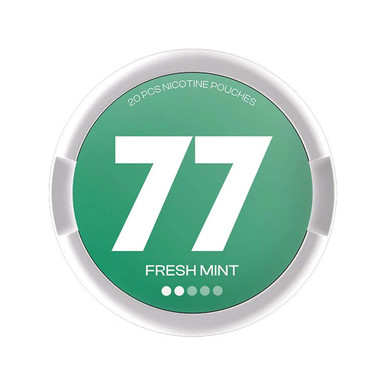
77 · 10.4mg
Read the full guide
77 Fresh Mint Nicotine Pouches
£39.90
✔ In stock — ready to ship
100% tobacco-free
Free over £20
Same-day dispatch
Secure checkout
Start with the thing you need before anything else on this page is useful. 77 Fresh Mint Nicotine Pouches are currently showing as out of stock. The listing is live, the product is one we carry, and it is not available to order as this is written. Everything below is written on the assumption that you are either waiting for it, deciding whether to wait, or looking for the nearest thing we do have on the shelf at the moment.
The listing itself is straightforward. The price is £39.90. There is one declared strength, 10.4mg, and no second variant. The flavour record carries a single entry: mint. Nothing else is filed against it — no fruit, no cooling word, no secondary note — which makes this the plainest reading of mint that 77 offers on our shelves.
The full guide to 77 Fresh Mint Nicotine Pouches
4,956 words on how it eats, who it suits, how to serve it and what to put beside it.
77 Fresh Mint: the listing, and the stock position first
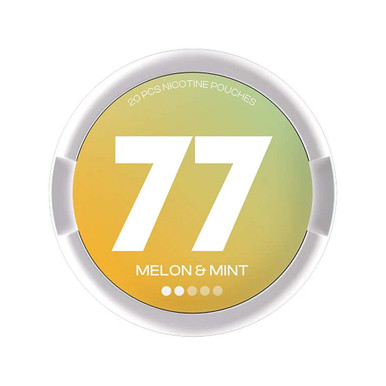
Physically it is the round pouch tin used across almost the whole catalogue: a shallow cylinder, a lid that lifts clear and presses back, brand and flavour and strength printed on the top face, a catch compartment under the lid, pouches laid flat in a ring inside. We do not publish a pouch count for it and our record carries no cans-per-pack figure either, so we cannot tell you from this page whether £39.90 covers a single tin or more than one. That gap matters for the buying discussion further down and we have not papered over it.
This is an age-restricted nicotine product sold to adults aged 18 or over who already use nicotine. The compliance section at the foot of the page states the position in full, and it is the part of this page we would least like you to skip.
Mint on its own, described as a taste
Mint is the hardest flavour on a pouch shelf to write about honestly, because there is very little to say and an enormous temptation to say it anyway. So, plainly: this is mint. One entry on the record, nothing filed beside it. Not mint with a fruit under it, not mint with a spice cutting across it, not mint with a cooling agent doing most of the work. The word on the lid is fresh and the word in the record is mint, and those two things are consistent with each other in a way that is not always the case in this catalogue.
Described as taste and aroma only: a green, cool, direct mint character of the sort you would recognise instantly and could not easily distinguish blind from any other competent mint. There is coolness, because mint reads as cool to nearly everyone. There is a sweetness of the kind mint flavourings generally carry, sitting inside the mint rather than layered on top of it as a separate sweet note. Opening the tin gives you the same thing in smaller measure, arriving straight away rather than developing.
What cannot be said is where it sits on any scale, because there is no scale. No manufacturer publishes a cooling figure, a sweetness figure or an intensity figure, and our record holds none, so any page that tells you a mint is a seven out of ten for chill has made the number up. What is worth knowing is the structural point: mint is not one flavour but a family covering spearmint at one edge, peppermint in the middle and frost-forward products at the other. The 148 listings on our mint shelf spread across the whole of that, and a single-entry mint record like this one points at the middle of it rather than either edge.
The 77 range on our shelves, and what each part of it is for
This is the section worth reading if you are considering the brand rather than this specific can. There are 29 77 listings here, gathered on the brand page, and it is a broad range rather than a narrow one. Everything in it is priced at £39.90, which is unusual and useful — nothing is positioned above anything else by cost, so the range can be read purely on flavour and declared strength.
The mint group
Fresh Mint is the plain end of this group: one flavour entry, no partner. The rest of the group adds something to the mint rather than intensifying it. 77 Apple Mint is the clearest example — a sharp orchard fruit set against the cool base, which is a genuinely different proposition from mint alone and suits anyone who finds a plain mint monotonous over a whole tin. Other mint-paired listings in the brand follow the same logic with different fruits, and all of them are on the brand page.
The soft-drink and dark group
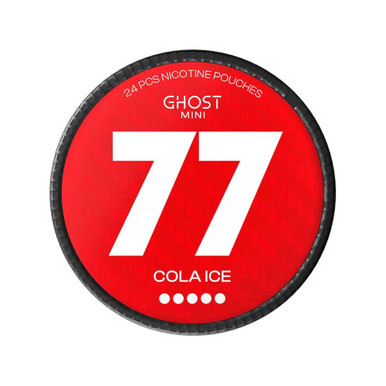
Two listings sit here and they are the opposite corner of the range from this can. 77 Cola Ice takes a cola flavouring and runs a cold note across it, so it shares the cool sensation with Fresh Mint while sharing none of the flavour. 77 Cola Vanilla goes the other way, with cola and coffee on its record and nothing cool filed against it at all — it is the darkest-reading can in the range and suits anyone who wants a sweet flavour with no chill in it whatsoever.
The fruit group
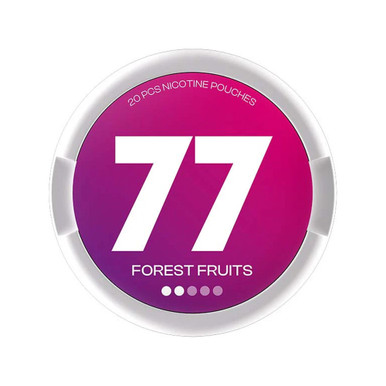
77 Forest Fruits is the one to know about here for a reason that has nothing to do with flavour: our record carries a cans-per-pack figure of ten against it, which is the only 77 listing where we hold a pack quantity at all. Its flavour record, by contrast, is completely empty, so we cannot tell you what it tastes of. It suits somebody who already knows the product and wants a quantity; it is a poor choice for somebody who does not.
The mini group
The brand keeps its smaller pouches in a separate sub-line under the Ghost name, and we carry two: Ghost Original Mini and Ghost Mini Mango, both £39.90. The mini format is a physically smaller pouch and that is a real difference in the mouth regardless of what any lid says. This group suits anyone for whom the standard slim pouch has never quite sat right, and it is worth trying before concluding that pouches in general do not suit you.
The rest
Beyond those groups the brand also runs teas, confectionery-leaning flavours and a set of special editions filed under their own names. We are not going to characterise listings individually that we have not linked here, but they are all on the same brand page and all at the same price, so browsing the range in full is quick and costs nothing.
Reading the range as a map rather than a list
Taken together, the useful thing about the 77 range on our shelves is that it varies along two axes and only two. One is flavour family — mint, fruit, soft drink, tea, confectionery. The other is format, where the Ghost sub-line is the only departure from the standard pouch. Declared strength varies too, but not in a way that maps neatly onto the flavours: some listings carry two figures and some carry one, and there is no pattern to it that we could describe without inventing one.
What does not vary is price. Every one of the 29 listings is £39.90. That single fact does more to make the range readable than anything else about it, because it removes the usual temptation to infer quality or position from cost. Whatever separates one 77 can from another, it is not what the brand is charging, and any page that implies otherwise about this range is reading something into a flat price list that is not there.
The format, and what a pouch involves
A pouch is a small sealed sachet that goes between the lip and the gum and stays there. It is not chewed, not swallowed, and not sucked in any deliberate sense. That description covers every product on this site, so there is nothing format-specific to say about this listing beyond the fact that it is a standard pouch rather than one of the brand's minis.
In practice: lid off, one out, lid back on. It goes in at the front, usually under the top lip, and the lip holds it. It will sit where it is put and can be moved from one side to the other with the tongue if it is uncomfortable. If no position is comfortable, take it out — nothing is gained by persisting and there is no technique being acquired. Talking is unaffected after a minute or so; a large drink will make its presence obvious.
How long anyone keeps one in is individual habit, and we are not going to publish a figure or a range. It varies widely between people, and the same tin therefore represents a very different number of days to two different buyers. That is also why we cannot tell you how long a purchase will last you, even approximately, which is directly relevant to the buying section below.
Finished pouches go in the lid compartment and from there into household waste at the first opportunity. Nothing goes down a sink, a drain or a lavatory. The empty tin goes in household waste too unless your local authority has something specific to say about it, which is a question for them rather than for a shop.
10.4mg on the lid, and what it is
One figure is declared for this product and it is 10.4mg. That is the manufacturer's own declaration per pouch, printed on the packaging and reproduced in our listing without adjustment. We do not round it to 10, we do not convert it into another brand's convention, and we do not calculate anything from it.
The number has limits that are worth being blunt about. It does not describe how a pouch will feel. It does not support a like-for-like comparison with another brand printing a similar figure, because pouch size, moisture and flavour balance all sit outside it and we hold no data on any of them. And it tells you nothing about you — we do not know what you use, we will not guess, and we will not tell you whether this figure is the right one for you. That is the line between describing a product and advising on its use, and we stay on one side of it deliberately.
For finding your way around, our own bands are the better instrument. This listing is filed in the medium band, which holds 135 products, with the strong band at 132 above it and the extra strong band above that. Those bands are applied consistently by us across every brand in the catalogue. The printed figures are not applied consistently by anybody, which is exactly why the bands exist.
Buying rhythm: how a can actually gets reordered
This is the part of the page that a stock-out makes genuinely useful, so it gets proper space. The question is not really "should I buy this" — at the moment you cannot — but "how do people arrange their buying so that a stock-out does not matter", and that is answerable without advising anyone to consume anything.
Single can against a quantity
Our record holds no cans-per-pack figure for this listing, so we cannot tell you whether the £39.90 covers one tin or several, and the listing page and basket are the authoritative statement of that. Where we do hold a pack figure elsewhere in the brand — the Forest Fruits listing records ten cans — it is stated on that page. The difference between those two pages is a difference in our data, not necessarily a difference in the products, and it would be wrong to read it as one.
The general shape of the trade-off is the same everywhere, though. A larger quantity of one flavour reduces how often you think about ordering and increases how committed you are to that flavour. A smaller quantity does the reverse. Neither is better; they suit different levels of certainty about what you like. Somebody who has used the same can for a year is in a different position from somebody trying a brand for the first time, and the second person has no business buying in quantity.
How people actually reorder
Two patterns dominate, from what we see. The first is reactive: you notice the tin is nearly done and you order then. It is simple, it needs no planning, and its weakness is exactly the situation this page is currently describing — if your product is out of stock at the moment you go looking, you are without it until it returns, and that is entirely outside your control.
The second is anticipatory: you keep one unopened can behind the one in use and reorder when you break into the spare, not when you finish it. It costs one extra can's worth of outlay once, at the start, and after that it costs nothing at all. What it buys you is a buffer roughly the length of one tin's use, which is usually enough to cover a delivery delay or a temporary stock-out without noticing either.
Keeping a spare, in practice
The spare has to be stored properly or the arrangement is self-defeating. Sealed, cool, out of direct sun, not in a vehicle — a drawer is fine, and the storage section below covers the rest. A sealed tin in those conditions changes very slowly, which is what makes a buffer viable in the first place. A spare kept on a sunny windowsill for six weeks is not a buffer, it is a disappointment scheduled in advance.
The other half of the practice is to open one tin at a time. If the spare gets opened alongside the current can because both happen to be in the house, you no longer have a buffer, you have two half-used tins ageing together. That is the single most common way a sensible arrangement stops working.
Why two of anything is usually enough
People who run a buffer sometimes extend the logic and end up with five or six tins in a cupboard, and past a certain point the arrangement stops paying for itself. The reason is that stock is not free to hold: every unopened tin is money sitting in a drawer and time passing on a product that does not get better for waiting. A single spare gives you nearly all of the protection at a fraction of the outlay, because the thing you are insuring against is a gap of days or a week rather than a gap of months.
The exception is a listing sold in quantity, where the decision has been made for you by the pack. That is worth understanding as a separate kind of purchase rather than as a bigger version of this one — a quantity buy is a bet on a flavour you are already certain about, and the certainty is the part that matters rather than the price per tin.
Ordering more than one flavour at a time
The other rhythm worth describing is the mixed order: two or three different cans bought together and rotated. It costs more in one go, it leaves you with several tins in the house, and it solves a different problem from the buffer — variety rather than supply. Uniform pricing across a brand makes this easier to reason about, since within 77 every listing costs the same £39.90 and there is no penalty for choosing one flavour over another.
Where it goes wrong is storage, and specifically the temptation to open all of them at once because they arrived together. Three open tins age at the same rate as one, so the cost of running a varied rotation is that everything in it is on a clock. Opening one at a time and holding the rest sealed is the whole of the discipline, and it is not a demanding one.
What to do while this one is unavailable
There is no notification arrangement we can promise from this page, and the honest position is that stock here arrives in whole deliveries rather than trickling in, so a listing can go from unavailable to available without warning and back again. Checking the listing periodically is the only reliable method.
Meanwhile, the mint shelf is large and the nearest alternatives are easy to find. Within the brand there is no other single-entry mint we can point you to, so the substitutes are outside it. SYX Cool Mint at £29.90 sits in the middle of the mint range at a middling price and is the closest thing to a direct like-for-like on price and character. White Fox Double Mint at £34.90 leads with the mint itself rather than with cold. Klint Arctic Mint at £36.90 does the opposite and leads with the chill. If price is the binding constraint, Edge Spearmint at £14.95 and Velo Bright Spearmint at £4.19 are the two cheapest mints on our shelves, both in spearmint rather than plain mint.
Cans people keep beside a plain mint
A single-note mint is the flavour people most often pair with something completely unlike it, for the simple reason that there is nothing in it to alternate within. Each of these is a can we stock, with the fact that makes it relevant.
For a hard change of direction, Fumi Dark Spice at £27.90 is spiced with no fruit and no cooling — about as far from a plain mint as our catalogue goes. UBBS Cola Ice at £19.95 brings a soft-drink flavour with a cold edge, so it keeps the sensation and changes everything else. The Cola Vanilla can from this brand does the same at £39.90 without the cold.
For fruit, Nordic Spirit Frosty Berry at £4.49 is the least expensive berry can we carry and the cheapest way to add a second flavour to a drawer. Pablo Silver Edition Blueberry Peach Ice at £39.90 layers two fruits under a cold finish at the same price as this listing.
For more of the same sensation rather than less, XQS Arctic Freeze at £39.90 is built around cooling rather than around a flavour, which makes it the opposite of a plain mint in construction even though it shares the cold. And the Apple Mint listing is the in-brand way to keep the mint base and add something sharp over it.
Storage and the condition of a tin
Three things determine whether a can is as good as it was when it arrived, and none of them is complicated.
Moisture is the first. Pouches lose it and never take it back, so an open tin is on a clock and a sealed one is very nearly not. Close the lid every time, including when the next pouch is only ten minutes away. A tin left open across a weekend produces pouches that feel stiffer, sit differently and release their flavour faster and more briefly than they would have done on day one — that is not a fault in the product, it is what leaving a container open does.
Heat is the second, and vehicles are the classic offender. A tin on a dashboard in summer goes through a temperature cycle nothing designed for a pocket was built around, and once is enough to change it. Radiators, sunlit windowsills and the shelf above a cooker are slower versions of the same thing. Any part of the house that stays at room temperature will do, and nothing here requires refrigeration.
The lid is the third, because it is the entire storage system. A tin that has been dropped or stood on may not seat flush afterwards, and a lid that does not close properly will let a can dry out regardless of where you keep it. If that happens, work through that tin rather than holding it in reserve.
We publish no shelf life, no best-before and no after-opening window, and we will not estimate one. Date markings, where a manufacturer applies them, are printed on the packaging and the can is the authority.
What there is to choose here
Not much, and saying so is more useful than manufacturing a decision. Fresh Mint has one declared strength, one price and one flavour, and our record holds no pack quantity for it. The only genuine choice is between this can and a different one, which is why so much of this page is given over to the rest of the shelf.
Where the brand does offer a choice of figure it does so at a single price — the Forest Fruits listing and the Cola Vanilla one each carry 5.2mg and 10.4mg at £39.90 either way. That uniform pricing means the number is the only variable in those decisions, and it means price cannot be read as a signal about anything.
Ordering, delivery and age verification
An age check forms part of the checkout process and an order does not proceed without clearing it. On delivery the courier may ask for ID, and if it is asked for and no adult present can produce it, the parcel is not handed over. Having something available on the delivery day is the straightforward way to avoid a failed attempt and a second trip.
On availability: this listing is showing as out of stock at the time of writing. Stock arrives in whole deliveries rather than gradually, so a product can return to the shelf without notice. The basket is always the live position and a page is only ever a snapshot. Prices across the site run from £4.19 to £39.90 among the cans named here alone, and that range reflects brand, format and pack contents rather than any ranking we are making.
Where this page lives on the site
Three filters lead here: the 148-listing mint shelf, the 77 brand page with its 29 products, and the 135 listings in the medium band. Combining a brand with a band, or a flavour with a band, narrows the catalogue faster than either filter on its own.
For broader browsing, the full catalogue is the starting point. Among the larger brand pages, the Cuba listings and the Pablo listings are both big enough to be worth reading through on their own rather than reaching through a filter.
Questions about this can
When will it be back in stock?
We do not know, and we would rather say that than invent a date. Stock on this site arrives in whole deliveries rather than continuously, which means a listing can return without much notice and can also stay unavailable for a while with no signal beforehand. The listing page is the live position. We hold no restock schedule for this product and will not estimate one.
Is there another plain mint from this brand?
Not one we can point you to on our shelves. The other 77 mint listings we carry pair the mint with something else — Apple Mint being the clearest case. If a single-note mint is specifically what you want while this is unavailable, the substitutes are outside the brand, and the mint shelf is the fastest way to see them all together.
How cold is it?
We do not hold that information. The record carries mint and nothing else — no cooling entry, no ice word in the name. Cooling intensity is not something any brand we carry declares in a standard, comparable way, so even ranking two cans that both mention it is not a like-for-like exercise. What can be said is that mint reads as cool to most people as a property of the flavour itself, and beyond that the can is the only authority.
Does £39.90 buy one tin or several?
We cannot tell you from this page, because our record carries no cans-per-pack value for this listing. That is a genuine gap in our data rather than an evasion. The listing page and the basket state exactly what is included at the price shown, and those are the lines to read before paying. Elsewhere in the brand we do hold a pack figure for one product, and that page says so.
Why 10.4mg rather than a round number?
Because that is the figure the manufacturer declares, and we publish declared figures as given. Different brands arrive at and express their strength declarations differently, which is why our catalogue contains round numbers and one-decimal numbers side by side. An unusual-looking figure is not an error on our part and is not a signal of anything unusual about the product.
Is it the same as the Apple Mint can with the apple taken out?
No, and that is not how flavour records work. The Apple Mint listing is a separate product with its own flavour entries; this one is a separate product with a single mint entry. Two listings from the same brand sharing a flavour family are not versions of one another, and we hold nothing that would let us describe the relationship between them beyond the fact that both are filed under mint.
How many pouches are in a tin?
We do not hold that figure and we will not estimate it. Our record carries no pouch count for this listing. Quantity information declared by the manufacturer is printed on the packaging and the can is the authoritative source. Where a page on this site states a quantity it is because our record holds one; the silence on this page means it does not.
Can I be notified when it returns?
There is no notification arrangement we can promise from this page. Practically, the reliable approach is to check the listing periodically, and to keep an unopened spare of whatever you use once a product returns — the buying rhythm section above sets out why a one-can buffer is the cheapest insurance against exactly this situation.
Do you know where it is made or who makes it?
No. We hold the brand, the product name, the price, the declared strength, the flavour record and the stock position, and that is the whole list. There are no origin claims, founding stories or manufacturing details on this page because we do not have them. The packaging is the next place to look, and if it is silent as well, asking us gets you an honest "we do not know" instead of a guess.
Are other 77 cans cheaper than this one?
No — the brand is uniformly £39.90 across all 29 listings we carry, so there is no cheaper corner of it to find. Cheaper cans exist elsewhere in the catalogue, from £4.19 upward among the products named on this page. Price on this site reflects brand, format and what a listing contains; it is not a quality ranking from us and should not be read as one.
If it comes back and I do not get on with it, what then?
Our standard returns policy applies to this listing exactly as it does across the site, and its terms live on the policy page rather than here. Taste is individual and we cannot predict yours, which is the practical argument against buying any quantity of an unfamiliar flavour. The mint shelf and the rest of the shop are both built for moving sideways quickly.
Does an out-of-stock listing mean the product is being dropped?
Not as far as we know, and we would not read anything into it. A listing showing as unavailable means exactly that and nothing more — it carries no information about whether the product is returning, being replaced or being withdrawn, and we hold nothing on our side that would let us say. Products on this site move in and out of availability routinely. If a listing were being removed from the catalogue altogether, it would come off the site rather than sit here marked out of stock.
Is the mini format worth trying instead?
It is a different object rather than a smaller edition of this one, and whether that suits you is not something we can judge. The brand's two mini listings on our shelves are the Ghost Original Mini can and Ghost Mini Mango, neither of which is a plain mint, both at £39.90. If the physical size of a standard pouch has been the sticking point for you, that sub-line is the place to test the question; if it has not, the format difference is unlikely to be the thing you are looking for.
Compliance, stated in full
Nicotine is an addictive substance.
This product is sold only to adults aged 18 or over who already use nicotine. We do not supply anyone under 18. An age check runs as part of checkout, and ID may be requested on delivery; if it is requested and no adult present can produce it, the courier will not release the parcel.
77 Fresh Mint Nicotine Pouches are not a licensed stop-smoking medicine, hold no authorisation of that kind, and are not offered for any such purpose. The product is not intended for non-smokers, for anyone who does not already use nicotine, for under-18s, or for anyone who is pregnant or breastfeeding. Nothing on this page is medical advice, and nothing written here should be read as encouragement to begin using nicotine or as a recommendation of this declared strength for any particular person.
Keep the product out of the reach of children and animals. Every factual statement above — brand, product name, price, declared strength, flavour record and stock position — is taken from our catalogue record for this listing. Where our record holds nothing, this page says so rather than estimating. The manufacturer's own labelling on the can is the authority for anything printed on the packaging.
In summary
Fresh Mint is 77's plainest mint on our shelves: one flavour entry, one declared strength at 10.4mg, one price at £39.90, and currently unavailable. If you are waiting for it, the practical lesson of this page is the buffer — one unopened tin behind the one in use turns a stock-out from a problem into a detail.
If you are not waiting, the wider mint shelf has 148 listings on it and several of them sit close to this one on price and character. The brand's other 28 products are all at the same £39.90, and everything we hold about this particular can is set out above, gaps included.
More from 77
More medium strength pouches
More mint pouches
Where this sits
77 Fresh Mint Nicotine Pouches appears in these categories. Browse them, or jump to something close.
You might also like