Cuba · 16mg · 10-can pack
Read the full guide
Cuba White Cherry Nicotine Pouches
£39.90
✔ In stock — ready to ship
100% tobacco-free
Free over £20
Same-day dispatch
Secure checkout
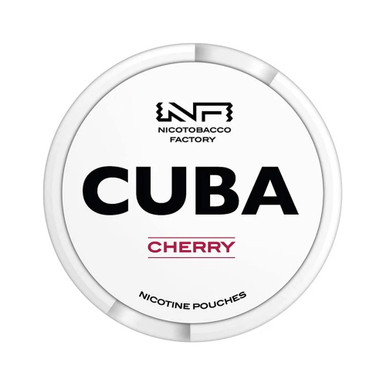
This listing covers Cuba White Cherry Nicotine Pouches — Cuba's White line, flavour Cherry, filed by us under cherry rather than under the broader berry heading. The declared strength is 16mg, the only figure on the listing, with no alternative variant behind it. The price is £39.90 and that covers ten cans. One image accompanies the listing. Unlike several of its siblings, this one is in stock at the time of writing.
Two of those details deserve emphasis because they are unusual among the Cuba products we carry. The first is the pack configuration: our record states ten cans for this listing, where for a number of neighbouring products it states nothing at all. That makes the price directly interpretable here in a way it is not elsewhere on the brand's shelf. The second is the stock position, which is the one piece of information on any product page that changes without anybody rewriting the words around it — so treat the flag on the listing as current and this paragraph as a snapshot.
The full guide to Cuba White Cherry Nicotine Pouches
5,080 words on how it eats, who it suits, how to serve it and what to put beside it.
The can on this page, and what we know about it
Everything else on this page is a description of the object, a comparison with other cans we stock, or a statement that our record does not hold something. Two sections go deeper than the rest: one on the milligram figure and the shape of the strength shelves, and one on storage, which matters more for a ten-can purchase than for a single tin.
The preliminary that comes before all of it: this is an age-restricted nicotine product, sold only to adults aged 18 or over who already use nicotine. The compliance wording appears in full further down, and nothing on this page is written to persuade anyone to begin.
Cherry, and why it is not a berry
The first thing to establish about this flavour is a piece of botany that turns out to matter on a flavour shelf. Cherry is a stone fruit. It belongs with peach, apricot and plum rather than with blackcurrant, blackberry and blueberry, and that is why we file it on its own cherry shelf of 20 listings rather than lumping it in with the 76 berries. The distinction is not pedantry: stone fruits and berries taste different in ways that are consistent and describable.
Start with what the dark berries share and cherry does not. Berries are, broadly, deep and slightly murky flavours — blackcurrant with its green leafy pungency, blackberry with its woody, seedy, tannic finish, blueberry with its powdery skin note and floral quietness. All three have something behind the fruit that is not sweetness. Cherry has almost none of that. It is a glossier, cleaner flavour: bright rather than deep, with the sweetness forward and unobstructed, and a definite sour edge that arrives cleanly and leaves cleanly instead of drying the mouth the way a tannic berry does.
Then the signature, which is the thing no berry can produce. Cherry carries an almond-like note — a marzipan or bakewell character that comes from the stone rather than the flesh, and which anyone who has eaten a cherry bakewell will recognise immediately. It is present in almost every cherry flavour ever constructed, it is what makes cherry unmistakable, and it is also what makes cherry read as slightly confectionery even when nothing sweet has been added to the idea. If you find a cherry flavour reminds you of a sweet shop rather than an orchard, that almond note is why.
Within cherry itself there is a second axis worth knowing, because it separates two quite different flavours sharing one name. At one end is the dark or black cherry reading: deeper, winier, lower in acid, closer to a preserve. At the other is the red or sour cherry reading: brighter, sharper, more acidic, closer to a cherry drop. Most constructed cherry flavours sit somewhere along that line and the position is what gives a particular tin its character. Our record gives us the flavour name and the family and nothing about where on that axis this one falls, so we will describe the axis and decline to place this can on it — that is a judgement about a specific product that our data does not support.
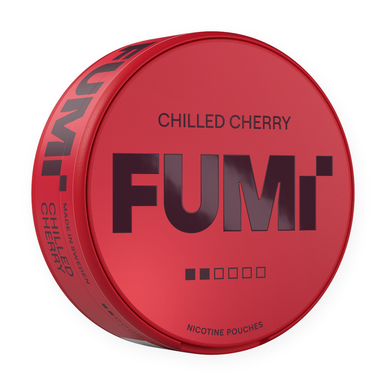
Two comparisons on our own shelves make the range audible. Pablo Gold Edition Dark Cherry at £19.95 is named for the deeper end of that axis. Fumi Chilled Cherry at £27.90 adds a cooling component, which changes the fruit considerably — cold sharpens the perception of acidity and pushes a cherry toward its brighter reading. And two more show how readily cherry combines with things berries do not: Killa Exclusive Cherry Cola at £33.50 pairs it with a soft-drink character, and Maggie Original Jamaican Cherry Tonic Wine at £39.90 builds it into something more composed and less fruit-forward than a plain cherry. Cherry pairs well because it is bright and clean enough to sit on top of another flavour without muddying it. A tannic berry is not.
What this can is, then, is a single-note cherry: one fruit, stated plainly, with nothing layered across it and no cooling recorded against it. That makes it a useful reference point — the plain version of a flavour that is more often found combined with something else.
The can, the pouch, and the ten-can box
The packaging is the round tin the category has standardised on: a shallow cylinder, push-fit lid, flat enough to sit in a pocket without shaping it. The lid face carries brand, line, flavour and the declared strength, and having the number printed there is genuinely practical rather than decorative, because a drawer with several tins in it is a drawer identified entirely by lids.
The upper part of that lid is a separate catch compartment for used pouches. That is what makes the format self-contained — nothing has to be carried until a bin appears, and nothing goes down a sink, a drain or a lavatory. Empty the compartment into a bin when it fills. Used pouches, like unused ones, stay away from children and animals, which is the single most important handling point on this page.
Inside, the pouches lie flat in a ring, and the gap in that ring works as a rough portion counter — you can see how much of a tin is left without counting. These are dry white pouches rather than moist ones. A pouch goes under the lip, stays where it is put, and is not chewed. How long anyone keeps one in varies far more between individuals than between products; twenty minutes and an hour are both ordinary answers. We publish no recommended duration anywhere on this site, because we do not hold one and because issuing one would be advice rather than information.
Because this listing is a ten-can box, there is a layer above the tin. Nine cans will be sitting unopened while one is in use, which makes this as much a storage question as a usage one — and that is why storage gets a full section further down rather than a passing mention. We do not publish a pouch count per tin; that is on the manufacturer's labelling along with weight and dimensions, and the printed packaging is the authority for all of it.
The strength shelves, and the shape of the ladder
The milligram figure is the number people shop on, and the most useful thing to explain about it is not what it means in isolation but what the ladder looks like once you step back and see how the catalogue is actually arranged. That is what this section does. All of it is information about filing and about numbers. None of it is guidance about what anyone should buy.
What the figure is, briefly
A declared figure is the manufacturer's statement about the contents of a pouch. It is not a score, not a rating, and not a forecast of anyone's experience of the product. Higher is not better and lower is not worse; they are different declarations. It is also stated per pouch rather than per can or per box, which is worth holding onto when a listing like this one contains ten cans — the figure describes the smallest unit in the purchase, not the largest.
Listings with a ladder, and listings without one
Some products on this site carry several declared strengths behind a single listing, so that choosing a strength is a decision made inside the product page. Others, including this one, carry exactly one figure, and the choice of strength is therefore a choice between products rather than within one.
That structural difference changes how a shelf is browsed more than people expect. Where a listing has internal variants, the flavour is fixed and the number moves. Where it does not, moving the number means moving the flavour too, and often the brand — which is why a single-strength catalogue tends to be shopped by flavour first and band second. On this listing there is one figure, 16mg, and no ladder inside the page at all.
How our three bands sort the catalogue
We file by declared strength into three bands, and the populations are uneven in a way that is worth seeing. The strong band holds 132 listings including this one, which makes it the busiest shelf of the three. The medium band sits below it and the extra strong band above.
Those boundaries are ours. They are a filing convention adopted so that several hundred products can be browsed in a sensible order, not a regulatory classification, and the edges between them are correspondingly soft. A product filed at the top of one band sits closer to one filed at the bottom of the next than their separate pages imply. Anyone treating the three shelves as a precise instrument is using them for something they were never built to do.
The ladder on a small shelf
The cherry shelf is a short one — 20 listings, against 76 on the berry shelf — and that has a practical consequence for anyone shopping this flavour by band. On a large shelf you can usually find the same flavour family at more than one band without leaving it. On a short shelf you often cannot, and the choice becomes a trade between the flavour you want and the band you were looking in.
The cherry cans linked on this page illustrate the spread. The Killa tin at £33.50 sits in the extra strong band. The Pablo tin at £19.95 and the Fumi tin at £27.90 are filed elsewhere again. Four cherry listings, four different prices, and no two of them equivalent — which is the clearest available demonstration that a strength band is a filing heading rather than a specification anyone can shop on alone.
What we will not do with the ladder
We will not use it as a recommendation engine. We publish the declared figure, file the product by band, and explain what the filing means. Choosing between bands belongs to the buyer, and anybody with a specific reason for caution should be asking a qualified person rather than reading a shop page. There is no strength on this site that we describe as suitable for anyone, and there will not be.
Storage, condition, and a box that will outlast the tin in use
Storage is usually a footnote. On this listing it is not, because ten cans is a quantity that will be in a cupboard for a while, and the difference between a well-kept box and a badly kept one is the difference between the tenth can reading like the first and reading like a disappointment.
Dry against moist, and what each is vulnerable to
The two pouch formats age differently. A moist product has moisture in it that it can lose, which makes it the more demanding of the two to keep and the one people most often refrigerate. A dry product, which is what this is, has far less to lose and is correspondingly more stable — it will sit in a cupboard for a long time without complaint.
What a dry tin is vulnerable to is heat, and secondarily light. Neither of those spoils anything in a dramatic way; what they take is flavour, and they take the most delicate parts of it first. That is worth knowing specifically for a cherry, because the almond-like note that makes cherry identifiable is one of the more fragile components in the flavour. A tin that has been cooked in a car loses the thing that made it recognisably cherry and keeps a general fruit sweetness, which is a more disappointing outcome than simply becoming fainter.
The specific places that do damage
Dashboards in summer. Windowsills in direct sun. A shelf directly above a radiator. The inside pocket of a bag that spends all day pressed against a running laptop. A glovebox, which is a car interior with the disadvantages of a car interior and none of the ventilation. None of those are exotic scenarios, and between them they account for most of the tins people describe as having gone flat.
The remedy is dull and complete: a drawer or cupboard at ordinary room temperature, out of the light. No refrigeration is needed for a dry product and there is nothing to gain from it — the cold does not improve anything and moving a tin repeatedly between cold and warm invites condensation, which is the one thing a dry product genuinely does not want.
The lid, and rotating a box
The lid is the part most often got wrong, and it is the easiest thing on this page to fix. Press it fully home rather than resting it on top. A tin travelling half-closed in a bag for a fortnight is not a faulty tin; it is an open tin. That single habit does more for the condition of the last pouch than anything else.
For a ten-can box there is a second habit worth adopting: work through it in order rather than at random, so that no single can sits at the back for months while the rest go. Keep the box itself somewhere settled rather than moving it around, and keep the unopened cans out of the bag and the car — there is no reason for nine cans to travel when one is enough.
What we do not know about condition
We publish no date or shelf-life information for this product. Whatever the manufacturer prints on the packaging is the source for that, and it is the only authoritative one. We also hold nothing about how long a tin remains at its best, and we are not going to estimate it — the honest position is that flavour drifts gradually once a tin is open and that nothing we hold lets us put a number on it.
Keep the box, the tins and any used pouches out of reach of children and pets, and store them somewhere they will not be picked up by mistake. That instruction is not softened by the fact that the cans are sealed.
Cherry's position on the Cuba shelf
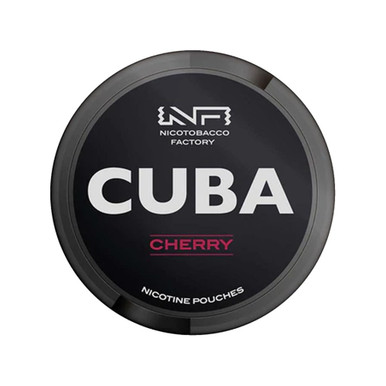
We list 47 Cuba products and the brand's page shows the shape of them quickly. Cuba runs several lines — White, to which this belongs, Black, and Ninja — and flavour names recur across them. That repetition is the brand's principal navigational trap. Cuba Black Cherry at £39.90 is a separate listing from this one rather than a second label for it, and the two share a flavour name and not much else that we can evidence. We hold the line, the flavour and the declared strength for each, and nothing from Cuba setting out what else distinguishes its lines. Rather than invent a difference, we will say plainly that we cannot tell you, and recommend reading the line name on the lid as carefully as the flavour.
Moving outward from cherry, the brand's other corners run like this. Cuba Black Apple Juice at £39.90 is the orchard fruit — crisper and lighter, and the closest thing in the range to cherry in brightness if not in character. Cuba Black Blueberry at £39.90 is the soft dark berry, quieter and more floral, with none of cherry's sour edge or almond note. Cuba Black Banana Hit at £39.90 is the creamy low-acid tropical, about as far from a sharp stone fruit as a fruit gets. Cuba Black Cola at £39.90 leaves fruit for a soft-drink character — and given how naturally cherry and cola sit together, it is the one most worth knowing about from this page. Cuba Black Cold Dry at £39.90 is the plain, unsweetened far end of the range.
All of those carry the same £39.90 price, so moving around inside the Cuba range costs nothing and is purely a matter of taste. That is not true across the wider site: a cherry from the Pablo shelf is a very different outlay, and comparing prices between brands without knowing what each pack contains is how people talk themselves into bad comparisons.
What people keep alongside a plain cherry
Most people run two or three tins rather than one, and the principle behind a working rotation is contrast rather than quantity. A bright, clean, sweet-and-sour stone fruit with an almond edge is distinctive enough that the things kept beside it tend to be deliberately unlike it.
The obvious first contrast is a dark berry, because it differs from cherry on nearly every axis — deeper, murkier, and with something other than sweetness behind the fruit. Clew Blueberry at £39.90 is the soft, quiet version of that and Elf Bar Blueberry Raspberry at £29.90 is the composed one, two fruits set against each other in a single tin rather than a single note.
The second is cold. Cherry has no cooling component recorded against it, so a chilled tin is a genuinely different object rather than a variation — Denssi Blueberry Freeze at £39.90 is the clearest example among the neighbours listed here, with the cold running on past the point where the fruit has faded.
The third is a clean break from fruit altogether, which is what most rotations use their remaining slot for. Edge Mint at £14.95 is the least expensive of those on this page and Klint Avalanche Mint at £36.90 the fuller one. A rotation made of three fruits is not really a rotation.
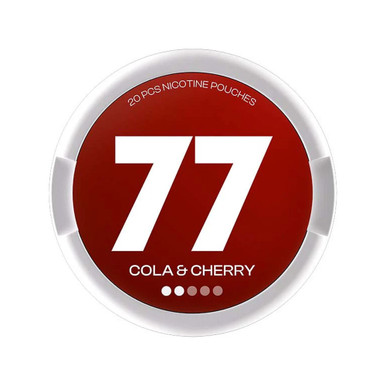
Worth a mention as a curiosity rather than a contrast: the 77 Ghost Mini Mango can at £39.90 is a mini-format product, and pouch size changes how a tin reads independently of anything printed on the lid. If you have only ever used one size, that is the cheapest way to find out whether the format matters to you as much as the flavour does.
Nothing in this section is a suggestion about quantity. Describing how people arrange a rotation says nothing about how much of anything gets used, and it is not written to imply otherwise.
What is actually adjustable here
Less than the length of this page might suggest. One declared strength, 16mg. One price, £39.90. One configuration, ten cans. No variants behind the listing offering anything different.
The one real decision this listing does present is the quantity itself, and it is a fair thing to weigh. Ten cans is a substantial commitment to a single flavour, and cherry is distinctive enough — that almond note in particular — that it is not a safe assumption for someone who has not met it. If a smaller trial is what you want, several of the cherry cans linked above are sold in far smaller units at lower prices, and buying one of those first is the cautious route. The full catalogue filters by strength and flavour from the top of the site if you would rather approach it from that direction.
We will not tell you that a particular strength suits a particular sort of person. That is not information we hold, and offering it would be neither accurate nor appropriate.
Ordering, delivery and the age check
This one is in stock as this page is written, which makes it the straightforward member of its family. The stock flag on the listing is the live answer and updates independently of this text, so check there rather than relying on this sentence — but at the time of writing there is nothing standing between an order and a dispatch.
The price is £39.90 for the ten-can box. One basket covers the whole site, so this can be ordered alongside any other brand, flavour family or strength band without a separate transaction, and mixing them makes no difference to how an order is processed, packed or delivered.
Age verification happens twice and neither instance is optional. There is a check at checkout, which every order on this site passes through. Then there is the door: ID may be requested on delivery, and the courier will not release a parcel to anyone unable to produce it. If no adult aged 18 or over is present to receive it and show identification when asked, the delivery does not complete and the parcel goes back for a second attempt. Having something with a date of birth on it to hand on the delivery day avoids a wasted journey. Nothing is handed to anyone under 18, and no delivery instruction left on an order changes that.
Where this page sits in the filing
Three shelves carry this listing, which is three separate routes back to it. It sits in the strong band with 131 other products, on the Cuba brand page with the other 46 products we list from the brand, and on the cherry shelf with 19 other cherry listings. That last one is the smallest shelf of the three by a wide margin, which makes it the quickest to read end to end if what you are actually shopping for is the flavour rather than the maker.
Above those sit the broader hubs: the medium and extra strong bands on either side of this one, and the main shop page from which the whole catalogue is reachable. Three routes is deliberate, because the commonest reason a product proves hard to find again is that it was filed under a heading the customer did not think to look under.
Questions that come up at the counter
What does £39.90 actually buy?
Ten cans. This is a box rather than a single tin, which is worth stating twice because several of the products linked from this page are single cans at much lower prices and comparing the headline figures without noticing the difference would give a badly distorted impression of relative cost. Our record states the configuration for this listing explicitly, which is not the case for every product on the Cuba shelf.
How many pouches are in each can?
We do not hold that figure. Our record carries the number of cans in the box but not the number of pouches inside each one, so we are not going to print a number we cannot support. The manufacturer's labelling on the packaging is the authoritative source for it, along with weight and dimensions.
Is cherry a berry flavour?
No — it is a stone fruit, which is why we file it on its own shelf rather than with the berries. In practice that means it reads brighter and glossier where a dark berry reads deep and slightly murky, with the sweetness forward, a sour edge that arrives and leaves rather than drying the mouth, and an almond-like note off the stone that no berry produces. If you have tried the berry cans on this site and found them too deep or too tannic, cherry is a genuinely different proposition rather than a variation on one.
Why is it on a cherry shelf instead of the berry shelf?
Because the two groups taste consistently different and filing them together would hide that. The cherry shelf holds 20 listings against 76 on the berry shelf, so it is the smaller and quicker of the two to read end to end. The practical consequence of a short shelf is that you cannot always find the same flavour at more than one strength band without leaving it, which is worth knowing before you start filtering.
Can I order this alongside other brands and flavours?
Yes. A single basket covers the whole catalogue and mixing brands, flavour families, pack sizes and strength bands in one order has no effect on how it is processed, packed or delivered. The age verification applies to the order as a whole rather than line by line, so one check covers everything in it.
Is it a dark cherry or a sharp red cherry?
We cannot tell you. Cherry flavours run along an axis from deep and winey to bright and tart, and where a particular one sits is the most useful thing to know about it — but our record gives us the flavour name and family and nothing that would place this can on that scale. Placing it would be a guess. The neighbouring cherry listings linked above include one named for the darker end, if that is the reading you are after.
Does it have any cooling or mint in it?
No. Our record lists a single flavour family for this product, cherry, with no ice or mint component recorded against it. It is an uncooled fruit. A chilled cherry is a different can rather than a different expectation of this one, and there is one among the neighbours linked earlier on this page.
Is 16mg strong?
It falls in the band we label strong, which sits above medium and below extra strong on this site. That is a statement about where we shelve it and nothing further. The number is a manufacturer's declaration about a pouch, not a prediction about a person, and how any particular strength reads for a given individual is not something we are able to tell you.
Which strength should I buy?
Not a question we answer. We publish the declared figure, file the product by band, and explain what the bands mean as filing. The choice belongs to the buyer, and anyone with a specific reason to be careful about it should be asking someone qualified rather than reading a product description.
How is this different from the Black version of the same flavour?
Both exist, both are £39.90, and they are separate listings for separate products sharing a flavour name. What we hold for each is the line, the flavour and the declared strength — and we hold nothing from the manufacturer explaining what else distinguishes the White line from the Black one. We are not going to fill that in with a plausible story. Check the line printed on the lid before ordering either.
Should I keep the cans in the fridge?
There is nothing to gain from it with a dry product, and moving a tin repeatedly between cold and warm invites condensation, which is the one condition a dry tin genuinely does not want. A cupboard or drawer at ordinary room temperature, away from direct sunlight and anything that gets warm, is the whole requirement. That applies to the nine unopened cans as much as to the one in use.
How long does an opened can stay good?
We do not hold that information and we are not going to estimate it. What can be said honestly is that flavour drifts gradually once a tin has been opened and closed a few times, that pressing the lid fully home slows that considerably, and that heat accelerates it. Any date printed on the packaging comes from the manufacturer and the packaging is the authority for it.
Do you publish ingredients or technical specifications?
No, for any listing on this site. Ingredient information and technical detail come from the manufacturer's own labelling printed on the packaging, and we will not restate a label second-hand. On an age-restricted product the difference between a label and somebody's paraphrase of one is worth keeping.
Do you know who makes it or where it comes from?
We do not, and we publish nothing about it. Our record holds a brand name and no information about origin, ownership or manufacture. Whatever the can says on the subject is the manufacturer's own statement, and the can is where to read it.
What if ten cans turns out to be a mistake?
It is a real risk on a distinctive flavour and we would rather name it than talk around it. Cherry's almond edge is the part people divide over, and there is no way to know in advance which side of it you fall on. If you have not met this flavour before, a single can of one of the other cherry listings linked above costs a fraction of this and answers the question properly. Our standard returns policy applies here exactly as it does elsewhere on the site.
Legal and compliance
Nicotine is an addictive substance.
We sell this product only to adults aged 18 or over who already use nicotine, and on no other basis. Sales to under-18s do not happen in any circumstances. Every order is subject to an age check at checkout, and ID may be requested on delivery — where a courier asks and no adult present can produce it, the parcel is not handed over.
Cuba White Cherry Nicotine Pouches are not a licensed stop-smoking medicine, carry no such authorisation, and are not supplied for any such purpose. This product is not intended for non-smokers, for anyone who does not already use nicotine, for anyone under 18, or for anyone who is pregnant or breastfeeding. Nothing on this page is medical advice, and nothing on it should be read as encouragement to begin using nicotine or to move to a different strength.
Store the product, and dispose of used pouches, out of reach of children and animals — a point that carries extra weight on a ten-can listing, because most of what is bought here will be sitting in a cupboard rather than in a pocket. Every factual statement above — name, brand, line, price, declared strength, flavour family, pack size and stock position — is taken from our own product record for this listing. Where that record is silent, this page says so rather than estimating, and the manufacturer's printed packaging remains the authority for anything appearing on the can.
Closing note
Cuba White Cherry is a ten-can box at £39.90, declared at 16mg, filed on the cherry shelf, the strong band and the Cuba brand page, and in stock as this is written — which makes it the most straightforward of the White line's fruit listings to actually buy. As a flavour it is a stone fruit rather than a berry, and it behaves like one: bright and clean where the dark berries are deep and murky, sweet with a sour edge that arrives and leaves rather than lingering, and carrying an almond note off the stone that nothing on the berry shelf can produce. Everything we hold about it is on this page, and the few things we do not hold — the pouch count, the position on the dark-to-sharp cherry axis, and anything about the can beyond our own record — are marked where they arise.
More from Cuba
More strong pouches

More cherry pouches
Where this sits
Cuba White Cherry Nicotine Pouches appears in these categories. Browse them, or jump to something close.
You might also like