
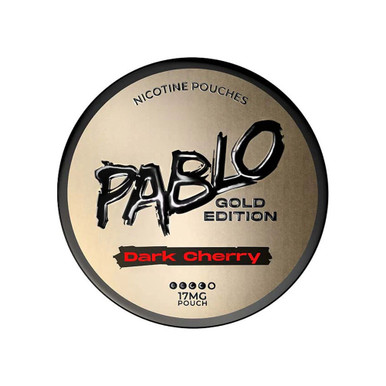
Pablo · 17mg
Read the full guide
Pablo Gold Edition Dark Cherry Nicotine Pouches
£19.95
✔ In stock — ready to ship
100% tobacco-free
Free over £20
Same-day dispatch
Secure checkout
This page describes Pablo Gold Edition Dark Cherry Nicotine Pouches. Our product record holds six things about it and no more: the name, the brand, a price of £19.95, one declared strength of 17mg, a single flavour tag reading cherry, and a stock flag currently set to available. There is one variant attached to the listing and it is the 17mg at £19.95. There is no second figure, no larger tin, no multi-pack option filed against it, and the cans-per-pack field on this record is empty.
Everything printed below falls into one of three categories, and it is worth naming them at the start so you can tell which one you are reading at any point. Some of it is the record repeated back to you, which is the only part that carries any authority. Some of it is a description of the physical object and of the flavour family the name points at, which is a reading offered by people who stock the thing rather than a specification. And some of it is an explicit statement that we do not hold a piece of information you might reasonably want. That third category appears more often on this page than a shop would normally allow, and it stays in, because the alternative is filling the gaps with invention.
The full guide to Pablo Gold Edition Dark Cherry Nicotine Pouches
5,021 words on how it eats, who it suits, how to serve it and what to put beside it.
The listing, stated plainly before anything else
Two words in the product name deserve immediate treatment, because both are easy to over-read. Gold Edition is a line name chosen by the manufacturer. It is a label on a tin, not a grade, not a tier, and not a statement from us that this can is finer than one without the word on it. Our record files it as a name and nothing else, and we hold no information that would let us rank it against anything. Dark is doing more work, because it points at a specific reading of cherry, and that is the subject of the next section.
The can is filed on three shelves on this site. It sits in the strong band, which currently runs to 132 listings, on the Pablo brand page with its 56 entries, and in the much narrower cherry grouping of 20. Those are the three routes in and the three routes back out.
This is an adult nicotine product, listed for people who are 18 or over and already use nicotine. The full wording is set out at the foot of the page, and nothing above it is addressed to anybody else.
Dark cherry as a taste and as an aroma
Cherry is a broad word in this category and it covers several quite different things, so it is worth separating them out before saying which one this name points at. At one end there is the bright, glassy, sweet-shop cherry — high, simple, a little artificial in the way a boiled sweet is artificial, and none the worse for it. In the middle there is the pale cocktail cherry, which reads as syrup with a fruit idea somewhere behind it. At the other end there is the deep, ripe, near-black fruit: rounder, less sugary at the front, with a faint stone-fruit bitterness underneath that keeps the sweetness from going slack. The word dark puts this can at that third end.
In practice that means the fruit arrives a shade slower and sits a shade heavier than a bright cherry would. There is less of the immediate sugar lift and more of a stewed, preserved quality — nearer the fruit in a dark compote or a spoonful of jam than the fruit sitting on top of a cake. The bitterness behind it is mild and it is not a fault; it reads as depth rather than as sourness, and it is the part that gives the flavour somewhere to go after the first few minutes. The aroma when a fresh tin is opened runs in the same order: deep fruit first, a thin sharpness behind it, and nothing cold at the front of it at all.
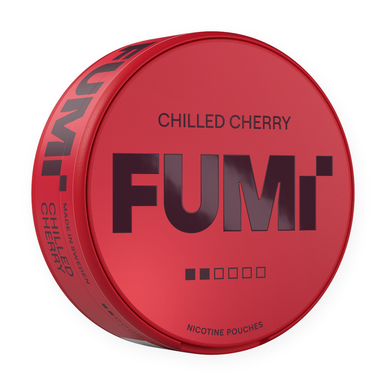
That last point matters and we would rather state it than let it be discovered. Our record files one tag against this listing and the tag is cherry. There is no mint tag, no ice tag, and the name carries no cooling word the way several cans in this range do. So this is a fruit can without a cold layer over the top. If a cold layer is the thing you were after, the honest answer is that this is not the can that does it, and there are better matches elsewhere on our shelves — Fumi's chilled reading of the same fruit at £27.90 is the closest one we stock, and it is marked in stock as this was written.
One limit applies to this whole section. Flavour description is subjective, impressions differ between people and between tins, and the only word here that comes out of the record rather than out of somebody's judgement is cherry. We are not able to tell you how sweet it is on any scale, because no such scale exists in our data, and we are not going to build one for the sake of sounding precise. If the description above reads as useful, take it as a reading of the name and the flavour family. If it reads as vague, that is the honest condition of the information we hold.
The figure on the lid, and what a strength band is for
This is the longest section on the page because the number is the part of a can that gets looked at most and understood least. Everything in it is information about what a printed figure is. None of it is advice, and nothing in it should be read as encouragement toward any figure at all.
What 17mg is
The milligram figure is a value the manufacturer declares and prints on the packaging. We reproduce it in the listing exactly as it is supplied to us, and for this can that value is 17mg. It is a label declaration. It is not a score, not a rating, not a quality mark, and not a measure of how well made a tin is. A can carrying a bigger number is not a better product, a more advanced product, or a later model of a smaller one.
We want to be blunt about a framing this brand attracts, because it turns up constantly and it is wrong. A larger figure is not an accomplishment. It is not a level, not a target, and not something to build toward. There is no ladder here in the sense of a thing to climb, despite the fact that shops — including this one — arrange listings in ascending order because a catalogue has to be sorted somehow. Sorting is a filing convenience. It does not imply a direction of travel for any person.
What the figure does not tell you
A declared number says nothing about taste. It says nothing about how long a pouch stays interesting, how damp it is, how big the portion is, or how it compares with a differently branded tin printed with the same value. Two cans from two manufacturers showing identical figures remain two separate products, because portion size, moisture and flavour construction are independent variables that the number does not describe. Reading across brands on the figure alone is the single most common error people make when they move between lines on our shelves.
Our data also contains nothing comparative. There is no field in our record that ranks one can against another on anything except the printed values themselves. When this site puts two figures side by side — and this page is about to do exactly that — it is placing two printed numbers next to each other, and it is making no claim whatever about what the gap between them means for a human being.
How our three bands are drawn
We sort listings into bands so the catalogue can be browsed, and a band is a shelf label rather than a verdict. There is a medium band for the lower declared figures, the 132-listing strong band that holds this can, and an extra strong band above it. A listing lands in a band because of the figure its manufacturer declared and for no other reason. No product is promoted or demoted by us on any other basis, and the boundaries are administrative lines, not thresholds with meaning.
It is worth noting where that puts this particular can, because the brand's reputation and this listing's actual figure do not point the same way. Pablo as a range is generally associated with the upper end of the declared scale, and plenty of Pablo listings sit on the shelf above this one. This can, at 17mg, is filed in the middle band of the three. That is a statement about where the number falls in our filing system and nothing more — it is not us saying the can is mild, because mild is a judgement about an experience and we do not make those.
We cannot advise which strength suits anyone. That sentence is the position, not a formality at the end of a paragraph. We do not know who is reading this, we hold no information about any individual, and a retail page is not the setting for that discussion in any event. What we can do accurately is tell you what is printed on each can and which shelf it is filed on. If you want to see the spread of declared figures across everything we carry, the full catalogue index is the widest view available.
The format, from opening the tin to general waste
The article itself is a shallow round tin — the standard shape across this whole category — with a lid that lifts clear and presses back onto a lip. The lid face carries the brand, the line name, the flavour and the declared figure. That last item is more useful than it sounds once several tins are stacked in a drawer, because at that point you read the tops rather than picking each one up. Inside, the pouches lie flat in a ring. The underside of the lid is hollow: a shallow well with a rim around it, and that well is the catch compartment.
Our record does not state how many pouches the tin holds. That count is printed on the packaging by the manufacturer and it is absent from our data, so any number from us would be a guess sitting next to a printed fact and competing with it. The same goes for the weight of a single pouch and the diameter of the tin. Where the can states something and our record does not, the can is the authority.
In use, a pouch is seated under the upper lip and left alone. Most people find a fresh one feels bulkier than it looked in the tin and that the impression settles within a minute or two as it takes the shape of the space. After that it is largely unremarkable to hold in place. People talk with one seated and drink with one seated. Some eat with one in and some take it out first; that is a preference rather than a rule, and we are not going to dress a preference up as instruction.
How long one stays in has no single answer and we are not going to publish a figure. The honest spread is wide — ten minutes at one end, the better part of an hour at the other, and the same person varies across a day and across flavours. The taste is not level across that period either. It arrives, holds through a middle stretch, then thins out until what remains is more of a background note than a flavour. With a stewed, jammy fruit like this one the thinning tends to be gradual rather than abrupt, and many people treat the point where the fruit stops being identifiable as the moment to change.
Removal is a matter of hooking the pouch out with a fingertip. Used ones go into the well in the lid, which takes several before it needs emptying and is the reason the format works on a train or in a passenger seat where no bin is within reach. When the well fills, its contents go into general waste — not a sink, not a drain, not a plant pot, not out of a window. Used pouches are small, pale and easy to lose track of on a desk, which is the practical reason for keeping the tin closed and out of reach when it is not in a hand.
Keeping a tin in the condition it arrived in
Almost every complaint that begins "this one was disappointing" turns out, once you ask a couple of questions, to be a handling story rather than a product story. Three things change a can over time: air, heat and the clock. They are worth taking separately, because the fixes are different and only one of them is genuinely unavoidable.
Air, and the press-fit lid
The lid on these tins is a press fit, not a seal. It is built to be opened and closed many times a day, which is a different design problem from keeping something airtight, and it does not solve both. The consequence is simple: moisture in a pouch only travels in one direction over time, and that direction is out. A tin left with the lid resting at an angle on a bedside table will be drier a fortnight later than it was on the day it arrived, and a pouch that has lost moisture reads as duller and shorter than the same pouch would have done fresh.
The fix is unremarkable and it works. Close the lid every time, all the way round rather than at one edge, and press it down rather than dropping it on. Keep the catch well for used pouches only and empty it regularly, because a well packed with spent pouches sitting directly above the fresh ones is not helping them. Some people bin a used pouch immediately and keep the well empty as a matter of habit, which is the tidier approach if a bin is to hand.
Heat, and the places tins get left
Heat does more damage faster than dryness does. A tin on a dashboard in July, a tin in a coat pocket hung over a radiator, a tin sitting on top of a laptop that has been running all afternoon — each gets warm enough to change how the contents behave. A sweet fruit note shows it sooner than a cold one would, because the jammy end of a dark cherry is the part that fades first. A tin that has been hot and then cooled back down does not return to where it started.
Direct sunlight is worth avoiding for the same reason, even through glass on a cold day. The rule that covers all of it is dull: somewhere cool, dark, dry and closed. A kitchen drawer, a desk drawer, the inside pocket of a bag that is not living in a car. Nothing on our shelves requires anything more elaborate than that, and no storage accessory is necessary.
Time, several tins, and the fridge question
Our record holds no expiry date, no batch date and no best-before value for this listing, and we are not going to produce one. Whatever dating the manufacturer prints on the can is the authority. If you have several tins in a drawer, the approach is the same as for anything else in a cupboard: work through the oldest first, keep the rest closed, cool and out of the light, and do not open a second tin before the first is finished unless you specifically want two flavours in rotation.
People ask about refrigeration. We hold no manufacturer guidance on it for this line, so we neither recommend it nor argue against it — anything we said would be opinion wearing the clothes of advice. The one practical note worth passing on is that a cold tin carried into a warm room collects condensation on the outside, so let it come up to room temperature before the lid comes off. Keep every tin, opened or sealed, out of reach of children and pets.
Where this can sits inside the Pablo range we carry
Pablo is one of the larger brands on our shelves, and the brand page collects all 56 listings we hold under the name. The range is split into several lines, of which Gold Edition is one, and the practical thing to know is that a line name tells you which family a tin belongs to and not much else. We do not hold specification data that would let us say what separates one Pablo line from another beyond what is printed on the individual listings.
That has a direct consequence for the links in the next paragraph, and it is worth flagging rather than glossing. The sibling listings our record offers against this page are all from the Exclusive line rather than from Gold Edition, and every one of them is priced at £3.85 against this can's £19.95. Our record does not explain that gap. The cans-per-pack field is empty here and on those listings too, so we cannot tell you whether the difference reflects a single tin against something larger, a different tin size, or simply different pricing. We are telling you that the record does not say, which is less satisfying than an explanation and more honest than one.
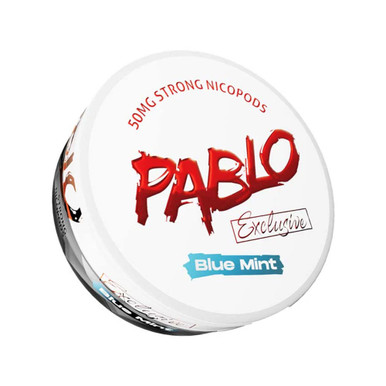
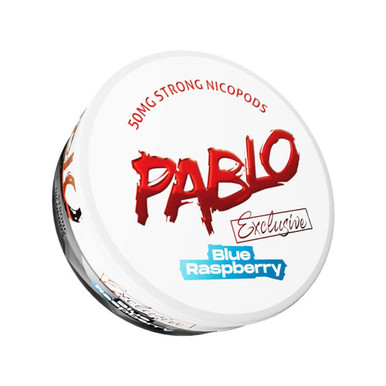
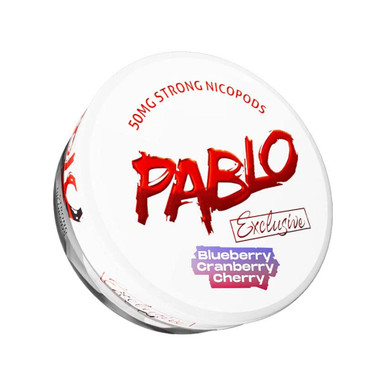
With that stated: the Blueberry Cranberry Cherry can at £3.85 is the nearest thing to this one by flavour family, keeping cherry in the mix but folding it into a three-fruit arrangement where the cranberry adds a tartness a solo dark cherry does not have. Blue Raspberry, same price, runs the opposite way with the fruit idea — bright, sweet and firmly in the confectionery register. Banana Ice at £3.85 pairs a soft creamy fruit with a cold element, and the Bubblegum listing at the same price is not a fruit can at all but the range's sweet-shop flavour. Blue Mint, also £3.85, is the straightforward cold counterweight if you keep one fruit tin and one mint tin going. All five are marked in stock in our record, and each carries its own declared figure on its own page — those figures are not held in this pack, so we are not repeating them here.
Cherry elsewhere on the shelves, and what to keep beside it
Very few people buy one flavour and stop. The usual pattern is two or three tins in rotation, because any single flavour becomes less distinct the more continuously it is used, and a second can with a different character resets that. Since cherry is a narrow grouping here — 20 listings against 148 on the mint shelf — it is worth naming what else carries the fruit and what each one does with it.
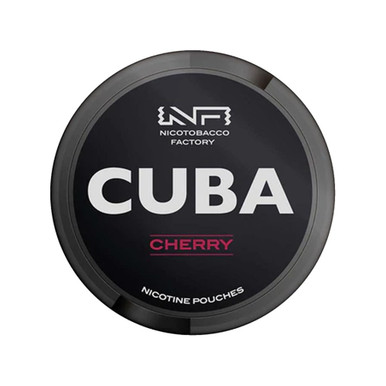
Cuba White Cherry at £39.90 is the closest straight comparison, aiming at the fruit without a cold layer in the way this can does, and it is in stock. The wider Cuba range is one of the biggest we carry and the Cuba brand page collects it if you want to see the spread. Killa Exclusive Cherry Cola at £33.50, also in stock, runs the fruit into a cola note — a different proposition, and a good one if what appeals here is the deep, syrupy end rather than the cherry itself.
One cherry listing needs a warning attached. Rush Cherry Chill Extreme is priced at £19.99, which puts it within pennies of this can, and it sets the fruit against a cold element rather than leaving it plain. Our record currently marks it out of stock, so that link takes you to a page you can read and cannot order from today. We would rather say so here than let you find out at the basket.
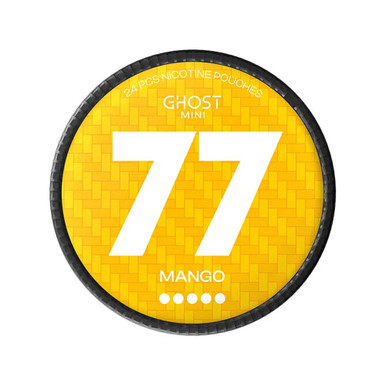
Beyond cherry, the sensible second tin is one that is genuinely different rather than a near miss. On the cold side, Edge Mint at £14.95 is the least expensive mint tin named on this page and in stock, while Klint Avalanche Mint at £36.90 sits at the other end of that price spread — both are plain mint cans rather than fruit ones, which is the point of putting them beside a dark cherry. On the fruit side, Clew Blueberry and Denssi Blueberry Freeze are both £39.90 and both in stock; the first is a plain berry, the second sets the same berry against a cold layer, so the pair is a neat illustration of what that layer changes. Elf Bar Blueberry Raspberry at £29.90 combines two berries instead of one, and the 77 Ghost Mini in mango at £39.90 is both a different fruit and, as the name indicates, a smaller-format tin — a different physical object as well as a different taste, which is sometimes the more useful contrast.
What there is to decide on this listing
Very little, and pretending otherwise would be manufacturing a choice. The listing carries one variant: 17mg at £19.95. There is no alternative figure, no second tin size and no bundle option attached to this product record. If you want a different declared number you are looking at a different listing, not at a different option on this one.
On quantity, the cans-per-pack field is empty, which is a genuine blank rather than a value of one. We cannot tell you from the record whether £19.95 covers a single tin or more than one, and we are not going to reason backwards from the price to a quantity, because that is guessing with extra steps. The packaging and the checkout are the places where that is settled. The only real decision left is how many to order at a time, and that is a storage question as much as anything — the section above covers what an unopened tin wants from wherever you put it.
Ordering, the doorstep and the age check
Ordering works the way it does across the site. The tin goes into the basket at the listed price, checkout collects a delivery address, and an age check runs as part of that process. We do not sell to anyone under 18, and the check is not something we skip because an order is small.
ID may be requested on delivery. Where it is requested and no adult at the address can produce it, the parcel will not be handed over. That is worth knowing in advance if the delivery address is a workplace, a neighbour's house, or anywhere a parcel might be taken in by somebody other than the person who ordered it.
On timings and courier arrangements, the checkout pages hold the current position and this page deliberately does not, because a delivery promise written into product copy is out of date the week after it is published. The one caveat worth repeating is that the stock flag quoted here is the state at the time of writing. It can change without this page changing, and that applies to every listing across everything we stock.
Finding this page again
If you arrived through a search and want a reliable route back, the three shelves this can is filed on are the way to do it. The Pablo listings are the most direct, since the brand page gathers all 56 and the lines are grouped within it. The 20-listing cherry shelf is the fastest if the flavour rather than the brand is what you are tracking, and it is short enough to scan in one screen.
The third route, the strong band, is the broadest and the least specific of the three, because it collects every can from every brand and flavour family whose declared figure falls in that range — 132 of them at present. The bands either side of it, medium and extra strong, work the same way. If none of those matches how you think about the catalogue, the whole index is one page and can be narrowed from there.
Questions people actually ask about this can
Does "Gold Edition" mean it is a premium version?
Not as far as anything we hold is concerned. Gold Edition is the manufacturer's own name for a line within the Pablo range, and our record treats it as part of the product name. We hold no specification, no materials data and no comparative information that would let us say this tin is finer than any other. If the word carries a meaning, that meaning comes from the manufacturer and not from us, and we are not going to invent one for it.
Is this a sweet cherry or a sour one?
Neither extreme. The name points at a ripe, dark reading of the fruit rather than a bright sweet-shop one, which in practice means rounder sweetness with a faint stone-fruit bitterness behind it instead of a sharp sour edge. That is a description offered by people who stock it, not a specification. The only cherry-related fact in our record is the single flavour tag.
Is there any cooling in it?
Nothing in our record suggests so. The flavour tag is cherry on its own, with no mint or ice tag against it, and the name carries no cooling word. If a cold layer is what you want with this fruit, the Fumi chilled version linked above is the nearest match we stock, and the Rush listing also named above pairs cherry with a cold element but is currently unavailable.
How many pouches does the tin hold?
We do not know. The portion count is printed on the packaging and our record does not carry it, so any figure here would be a guess placed next to a printed fact. The can itself is the authority on that, and on the weight of an individual pouch.
Why is this £19.95 when Pablo cans elsewhere are £3.85?
We cannot tell you, and we are not going to speculate. The cans-per-pack field is empty on this listing and on the £3.85 ones, so our record holds nothing that would explain the difference. It could be a quantity difference, a tin-size difference or simply different pricing between lines. Stating that the record is silent is the only accurate answer available.
Is 17mg a lot?
It is the figure the manufacturer declares, and it places this listing in our strong band. Beyond that we will not characterise it, because calling a number high or low is a step toward advising a person, and we cannot advise which strength suits anyone. The number is label information about a product rather than a judgement about anybody reading it.
Is there a version of this flavour at a different figure?
Not on this listing, which is published with one declared figure and no variants. Other cherry cans elsewhere in the catalogue carry their own declared figures, which you can read on their own pages. We do not hold a matched alternative-strength version of this specific product, and we would rather say that than point you at something that is not the same thing.
How long should a pouch stay in?
There is no should, and we are not going to publish a duration. Practice varies enormously — ten minutes at one end, most of an hour at the other, with the same person varying day to day. A number coming from a shop reads as instruction, and instruction is not something we are in any position to give.
Can I keep the tin in the fridge?
People do. We hold no manufacturer guidance on refrigeration for this line, so we take no position either way. The only practical point is condensation: a cold tin brought into a warm room will collect moisture on the outside, so give it time to reach room temperature before opening it.
What do I do with a used pouch when there is no bin nearby?
Use the well under the lid. That hollow exists for exactly this and takes several before it needs emptying, which is what makes the format workable away from a bin. When it is full, the contents go into general waste — not a sink, not a drain, not the ground.
Does an older tin taste different?
An open tin that has been left with the lid loose, kept warm, or stood in sunlight will generally read duller and shorter than it did on the first day, and a sweet fruit note shows that before a cold one does. That is a handling effect rather than a fault. A closed tin kept cool and dark is the entire maintenance requirement.
Is it definitely in stock?
Our record marked it available as this page was written, but stock is the one fact here that changes without the page changing, so the listing itself is the live position. Of everything named above, the one we know to be unavailable at the time of writing is the Rush cherry listing, which is flagged where it appears.
The compliance wording in full
Nicotine is an addictive substance.
Pablo Gold Edition Dark Cherry Nicotine Pouches are sold only to adults aged 18 or over who already use nicotine. An age check runs at checkout, we do not sell to anyone under 18, and ID may be requested on delivery. If it is requested and no adult at the address can produce it, the parcel will not be handed over.
This product is not a licensed stop-smoking medicine and is not offered, described or intended as one. It is not intended for non-smokers, for anyone who does not already use nicotine, for anyone under 18, or for anyone who is pregnant or breastfeeding. Nothing on this page is medical advice, and nothing on it should be read as a suggestion that anybody begin using nicotine or choose any particular declared figure.
Keep the tin closed and out of reach of children and pets, and put used pouches in general waste. Every product fact on this page — name, brand, price, declared strength, flavour tag and stock state — comes from our own record for this listing. Where the record holds nothing we have said so rather than estimating, and the manufacturer's labelling on the can is the authority for anything printed on the packaging.
In short
Pablo Gold Edition Dark Cherry is a deep, ripe, faintly stewed cherry with no cold layer in it, listed at £19.95 with one declared figure of 17mg, filed on the strong band, the Pablo brand page and the narrow cherry shelf, and marked in stock as this was written. The line name is the manufacturer's and implies nothing we can verify. The nearest comparisons on our own shelves are the Cuba White reading of cherry at £39.90 for the same fruit from a different house, and the three-fruit can in the Pablo Exclusive line at £3.85 if you would rather have the cherry folded into something wider. What we know is above. What we do not know, we have said we do not know.
More from Pablo
More strong pouches

More cherry pouches

Where this sits
Pablo Gold Edition Dark Cherry Nicotine Pouches appears in these categories. Browse them, or jump to something close.
You might also like