
Home / Extra Strong / Iceberg Bubble Gum Nicotine Pouches
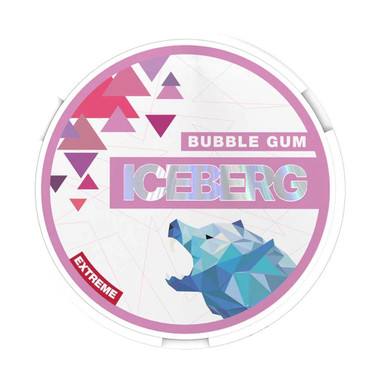
Iceberg · 20mg–50mg · 10-can pack
Read the full guide
Iceberg Bubble Gum Nicotine Pouches
£39.90
✔ In stock — ready to ship
100% tobacco-free
Free over £20
Same-day dispatch
Secure checkout
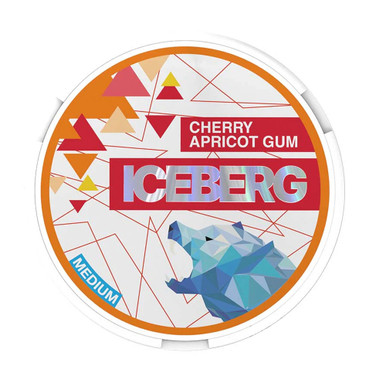
This is an Iceberg product sold as a ten-can pack at £39.90, offered at two strengths — 20mg and 50mg — with the price identical for both. There is one product image on the listing. The listing is currently marked out of stock, so the page is here to be read rather than bought from today. Everything on this page that is presented as fact comes from that short record, and where the record is silent we say so rather than filling the gap.
Those are the numbers an adult customer usually wants first, and putting them in the opening paragraph saves scrolling. The rest of the page is about what they mean in use: what the can itself is like as a physical object, what changes when you come to this listing from a different one on our shelves, and how the two strengths relate to the way we file products across the Extra Strong shelf and its ninety-eight listings.
The full guide to Iceberg Bubble Gum Nicotine Pouches
5,182 words on how it eats, who it suits, how to serve it and what to put beside it.
Iceberg Bubble Gum: the listing, before anything else
This is an adult product. It is sold only to people aged 18 or over who already use nicotine, and the compliance section at the foot of the page sets that out properly rather than in passing.
Two figures on one listing: 20mg and 50mg
The milligram figure printed on a can states nicotine content per portion. That is the entire meaning of it. It is not a score, not a quality marker, and not an instruction, and we are neither able nor permitted to tell you which figure suits any particular person. What we can do is explain how the two numbers behave on a listing and on our shelves, which is information rather than advice.
| Variant | Price | Cans in pack | Availability |
|---|---|---|---|
| 20mg | £39.90 | 10 | Out of stock |
| 50mg | £39.90 | 10 | Out of stock |
The flat pricing is worth a comment because shoppers frequently expect the higher figure to cost more. On this listing it does not: £39.90 buys ten cans either way. That is common enough across the category — the price generally tracks the pack and the brand rather than the number — but it surprises people who have assumed a ladder.
There is a filing oddity here too, and it is better to name it than to leave you puzzled by it. The listing sits on our Extra Strong shelf, but it includes a 20mg variant, and 20mg elsewhere in the shop is filed as Strong. A product page is filed once, usually by its highest variant, so a listing with a 50mg option lands on the heavier shelf and takes its lower variant with it. If you are browsing the Strong shelf expecting to find every 20mg can in the shop, this is one you will miss, and the same is true in reverse of a few listings on the Medium Strength shelf. Shelves are a filing convenience. The variant table is the authority.
The flavour name, and the field that is empty
The product is called Bubble Gum. That is the name on the can and the name on the listing. Our structured flavour field for this product, however, is empty — there is no tag recorded against it, unlike a listing such as Cuba Black Blueberry, where the berry family is recorded as data. So we have a name that describes a flavour and a data field that says nothing, and the honest thing is to tell you which of the two we are relying on.
We will describe the flavour family the name refers to, because that is what the name means, and we will not go further than that. Bubble gum as a flavour family is a confectionery idea rather than a fruit one: sweet, rounded, faintly perfumed, with a soft pink-sweet character that sits somewhere between strawberry, vanilla and something floral that does not correspond to any actual plant. It is a manufactured flavour and has never pretended otherwise. In aroma it reads sweet and slightly synthetic in the way the family always has — you can usually identify it blind in a second, which is more than can be said for a lot of fruit blends.
What we cannot tell you is how far this particular can leans in any of those directions, whether there is any cooling alongside the sweetness, or how heavy the sweetness is relative to other cans. The tag field would normally give us the family and the listing copy would give us the rest; here we have neither, so the description above is the general meaning of the words on the lid and not a tasting note for this specific can.
One more point, and it is not a small one. Bubble gum is a flavour sold by a great many brands across a great many adult product categories, and a sweet flavour name does not make a nicotine product suitable for anyone under 18. This can is an 18+ product for existing nicotine users in exactly the same way the unflavoured and mint listings are, and nothing about the name changes that. We mention it because the question comes up and deserves a direct answer rather than an embarrassed silence.
The can as an object
This is the section that actually repays attention, because the packaging is the part of the product you interact with fifty times before you form an opinion of anything else.
The body and the lid
A pouch can of this type is a short, wide cylinder, roughly the diameter of a large coin and not much taller than a stack of them. It is a two-part object: a body that holds the portions and a lid that both seals the body and provides a second, shallower chamber on its own top surface. The lid pushes on rather than screws on, and it is meant to seat flat and even. When it does, the can is closed. When it is on at an angle, it looks closed and is not, which is the origin of most complaints about a can going off early.
The lid is the hardest-working part of the design and the part most likely to determine how you feel about a brand after a month. A lid with a firm, definite click tells you it is seated. A lid that is loose from new, or that loosens after a fortnight of opening and closing, is a genuine nuisance in a pocket. We do not publish a comparison of lid quality across brands, because that would be an opinion presented as a specification, but it is a reasonable thing to notice for yourself and to weigh when you reorder.
The catch recess
On top of the lid sits a shallow compartment, sealed off from the portions below, intended for used pouches. This is the feature that makes the format workable away from a bin. A finished portion goes into the recess, the can goes back in a pocket, and the recess is emptied into general waste when you next pass a bin. It holds a handful rather than a day's worth, and letting it overfill is what stops a lid closing flat — which in turn is what dries out everything underneath.
The discipline is about thirty seconds a day: empty the recess when you empty your pockets, not when it is full. Used portions go in general waste. They do not go in a sink, a urinal, a drain or a planter, and a can left in a car with a full recess is unpleasant to open two days later.
Portion count, which we do not publish
Our fact sheet for this product does not record how many portions are in a can. We are not going to estimate it. Cans in this category differ, and a figure invented for a web page is worse than no figure at all when it turns out your can holds fewer. The number is normally printed on the can, so the object in your hand answers the question definitively.
What the listing does record is that this is a pack of ten cans, which is a different figure and a more useful one for planning a purchase. Ten sealed cans at £39.90 is £3.99 a can, and that is arithmetic rather than a claim about value.
What fits in a pocket
A can of this size goes into a coat pocket without thinking about it, into a jeans pocket with a slight bulge, and into a shirt pocket only awkwardly. A ten-can pack does not go into a pocket at all — it is a box, and it lives in a drawer at home while one can travels. That is the practical rhythm of a multi-can pack and it is worth picturing before you buy one: you are buying storage plus a carried can, not ten carried cans.
Cans stack, which matters more than it sounds. A drawer with nine identical cylinders in it stays tidy. A bag with three half-used cans rolling around does not, and the loose can at the bottom of a rucksack is the one that ends up with a lifted lid. If you carry one, carry it in the same pocket every day; the whole point of a can this size is that it disappears until you want it.
Using one, in practical terms
The pouch sits between the lip and the gum, usually in the same place each time once a person has settled on a spot. It is not chewed and not swallowed. It goes in dry, it stays where it is put, and it is removed in one piece and binned. Most people press it flat with the tongue once when it goes in and then forget about it.
How long one stays in varies from person to person and we are not going to publish a number, because there is no correct number and because suggesting one would be advice we are not entitled to give. Some take a portion out after a few minutes. Others keep one in far longer. The can carries the strength figure and nothing about timing, and neither do we.
A first thing worth knowing about a can that has just arrived: portions are packed closely, and lifting the first one out of a full can takes a moment of fiddling. After that the can is easier to get into for the rest of its life. That is a property of full cans in general and not a fault.
Disposal, and the manners of it
A used portion is a small damp object and it needs a bin. The recess on the lid is a holding pen, not a destination. In practice that means a used pouch goes into the lid, the lid goes back on, and the contents are tipped into general waste at the next opportunity — a kitchen bin, an office bin, a bin in the street. Not down a sink, where it will sit in the trap. Not in a plant pot. Not out of a car window, which is littering whatever the object is.
The reason to labour the point is that this is the one part of the format other people notice. A can with an overflowing lid, opened on a train table, is an unpleasant thing to be sitting opposite. Thirty seconds of housekeeping keeps the whole business invisible, which is more or less the point of a format this size.
Coming to this can from another one on our shelves
People rarely arrive at a listing cold. Most of the questions we get about a can like this come from someone who already has a can of something else in a drawer and wants to know what will be different. That is a fair, practical question with no claims attached to it, and it splits into four.
Coming from a mint or a cold can
If what you have been using is a cold can — something like the cooling end of the range — the first difference is that a confectionery flavour has no cooling to carry it. Cold is a sensation as much as a taste, and it tends to dominate whatever it is paired with; take it away and what is left is sweetness alone, which some people find flatter and others find easier to sit with for long periods. Neither reaction is right. A can such as Cuba Black Cold Dry at £39.90 is at the opposite end of that axis from a sweet confectionery name, and the Double Fresh can in the same line is another cold-leaning listing at the same money if you want to keep one of each going.
Coming from a fruit can
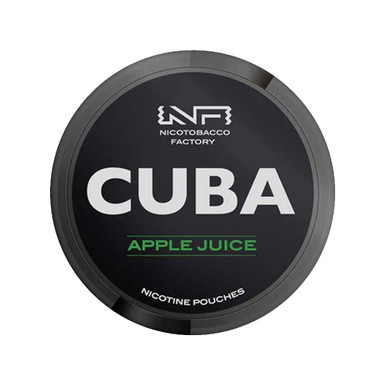
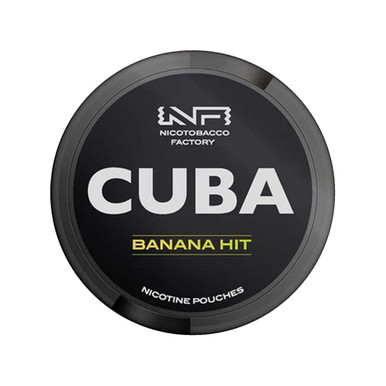
Fruit flavours and confectionery flavours are relatives rather than opposites, and moving between them is the least jarring change of the four. The difference is mostly in how honest the flavour is trying to be: Cuba Black Apple Juice is aiming at a recognisable fruit, whereas a bubble gum name is aiming at a sweet-shop idea that never existed as a fruit. Between the two sit the odd ones — Cuba Black Banana Hit and Pablo's banana can at £3.85 are both banana, a fruit that in flavour form always reads slightly confected anyway.
Coming from a single can to a pack of ten
This is the change people underestimate. A single can is a small commitment: you try it, and if it is not for you, you have spent a few pounds. Ten cans of one flavour is a month or more of the same thing. Confectionery flavours are the ones most likely to wear out their welcome over that distance, because the sweetness is the whole proposition and there is nothing else in the can to notice on day twenty. If you have not had this flavour before, a single-can listing — the £3.85 Pablo can is the cheapest on this page's list — is a more sensible way to find out what a sweet can is like over a week than committing to ten.
Coming from a listing that describes itself
The last difference is about information rather than taste. If you are used to buying from listings with a flavour tag, a strength ladder and a portion count, this listing will feel thin, because it is. There is no flavour tag and no portion count recorded against it. That does not make the product worse; it makes the page less helpful, and you should know that before you order rather than after.
Where it sits in the Iceberg range
Our record holds six same-brand cans against this listing, and the caveat belongs in front of them rather than after: every one of the six is out of stock at the time of writing, exactly as this listing is. They are named here because they are the nearest comparison we hold and because each has its own page carrying its own figures — not because any of them is an order you can place today. the Iceberg shelf currently carries forty listings in total, and availability moves across it a line at a time, which makes the shelf the more reliable place to check.
Three of the six run on the brand's Black line naming rather than on a flavour word. Iceberg Black at £39.90 carries no flavour tag on our record at all, which leaves it in exactly the position this listing is in — a name to go on and nothing in the structured data behind it. Iceberg Black Mint, the same £39.90, is the cool end of that naming and about the sharpest change you could make from a sweet can. Iceberg Black Currant, £39.90 again, takes the same word into dark fruit, which is tart rather than sugary and is the contrast people most often want after a confectionery flavour.
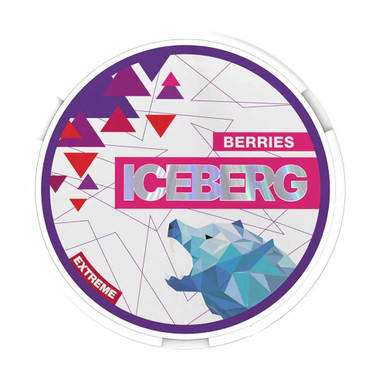
The other three are fruit-named and priced identically. Iceberg Berries is the plain mixed-fruit option at £39.90, the Apple Lemon Pineapple can is the sharp three-fruit one at the same money, and Iceberg Arasaka is the remaining listing in the set, its name carrying no flavour word at all. None of the six can be bought at the moment, so they are worth following as a picture of what the brand covers rather than as something to add to a basket instead of this can.
Browsing a brand shelf is a quick way to see whether a house style suits you. Some brands run a wide spread of flavour families at one or two strengths; others run a narrow flavour set across many figures. Forty listings is enough to see the pattern in a couple of minutes. The same applies to the Cuba shelf, which is where most of the neighbours named on this page live, and to the Pablo range, which is pitched quite differently again.
What people keep alongside a sweet can
A drawer with only one flavour in it gets dull, and a confectionery flavour is the sort most people like to break up. The neighbours recorded against this listing give a reasonable spread, and each is here for a stated reason.
- Cuba Black Cherry at £39.90 — a stone-fruit sweetness that is close enough in register to feel related but different enough to notice.
- the Cuba Black cola can, also £39.90 — cola is the other great confectionery flavour, spiced and slightly bitter under the sugar.
- the blueberry listing from the same line — darker and rounder than a red-fruit flavour, again at £39.90.
- the apple juice can — the sharpest of the Cuba Black fruits on this list.
- Cold Dry and Double Fresh — the two cold options, for when sweetness has stopped registering.
- Maggie Original Jamaican Cherry Tonic Wine at £39.90 — an unusual, herbal-leaning flavour name, and about as far from a confectionery can as this list goes.
- the Siberia Mini can at £39.50 — a small-format listing, useful if you want a different physical size in the rotation as well as a different taste.
- Banana Hit — sweet in the same general direction, so a gentler change than the cold cans.
None of those is a suggestion about strength or quantity. They are flavour families and prices, which is the part of a decision a shop can help with.
Keeping ten cans in good order
Storage is simple and almost entirely about two things: the lid and the temperature. A sealed can is stable in an ordinary indoor cupboard and will stay much as it arrived. An opened can is on a clock, and how fast that clock runs depends on how well you close it and how warm it gets.
Heat is the main enemy. A car is the worst place a can can live — a vehicle in sun runs far hotter than any room, and the daily heating and cooling of a commute is harder on a can than a single hot afternoon. A windowsill is a slow version of the same problem. A drawer, a cupboard or a bedside table solves it entirely, and none of that requires any equipment.
With a ten-can pack the useful habit is sequencing: open one can, finish it, open the next. Nine sealed cans are not ageing. Three open cans are. If you like having two flavours going at once, keep the second flavour in a different product rather than opening two cans of this one.
We do not publish a shelf life for this listing because our record does not carry one. Date markings are printed on the packaging by the manufacturer, and the can itself is the authority on that. What we will say is that an opened can has a shorter practical life than a sealed one, and that a lid seated flat is the cheapest preservation method there is.
Ten cans of one flavour: the honest arithmetic
A multi-can pack is a commitment to a single taste for a stretch of time, and it is worth thinking about that before the price does your thinking for you. Ten cans at £3.99 each is plainly cheaper per can than most singles on the shelf. It is only cheaper in a way that matters if you finish all ten.
Two things determine whether you will. The first is whether the flavour is one you already know you can sit with. A confectionery flavour is a bold, single-idea taste, and bold single-idea tastes are the ones people tire of soonest — not because there is anything wrong with them, but because there is nothing else in the can to find on the twentieth day. Cold cans and cola cans tend to survive repetition slightly better, in our experience of what people reorder rather than any property of the product. The second is whether you keep a second can going. Most people who work through a ten-pack without getting bored are alternating it with something unrelated, which is why the neighbour list further down this page is more useful than it looks.
There is also a storage consequence, covered properly below: ten cans need somewhere to live, and somewhere is not a car and not a windowsill. If you have nowhere indoors and cool to put a box of ten, a smaller purchase is the more sensible one, whatever the per-can arithmetic says.
Choosing between the two strengths
There are two variants and they cost the same, so the decision is not financial. Beyond that, we are going to be careful, because a shop telling a customer which nicotine strength to buy is a shop giving advice it has no business giving.
What we can set out is how the numbers sit. 20mg is filed as Strong elsewhere in the shop, alongside the hundred-and-thirty-two-listing Strong shelf. 50mg sits at the heavy end of the ninety-eight listings on the Extra Strong shelf. The gap between the two figures on this listing is therefore wide by the standards of a single product page — many listings step in fives, and this one steps by thirty. That is a fact about the variant table, not a recommendation.
If you have bought pouches before, you will already know which end of a variant table you normally buy from, and the figure is the only guidance we are willing to provide. If you have not, this is not the listing to learn on, and we would say the same about any ten-can pack.
Out of stock, stated plainly
Both variants are currently unavailable. The page remains live because it is a useful record — the price, the pack size, the strengths and the shelf position are all here — but you cannot add it to a basket today. We do not publish estimated restock dates, because we would be guessing, and we do not take payment for stock we cannot promise.
The two practical responses are to buy a comparable can now, using the neighbours above as a starting point, or to check the brand shelf periodically. Stock in this category tends to arrive brand by brand rather than line by line, so the shelf is a better thing to watch than a single product page.
Ordering, delivery and the age check
Checkout works as it does everywhere else on the site: the listing goes into the basket at the price shown, delivery is calculated at checkout, and a ten-can pack arrives as a single parcel rather than ten.
Age verification is a condition of sale and not a formality. Nicotine pouches are restricted to adults aged 18 or over in the UK. Our order process includes a check, and the courier may ask to see photographic identification when the parcel is handed over. Where nobody aged 18 or over is present with ID, the parcel is not left, and it is not put through a letterbox or handed to a neighbour. Planning to be in is worth the small effort.
Sealed cans that arrive damaged or in the wrong variant should be raised with us rather than with the courier. Opened cans cannot be returned, which is the standard position for any sealed consumable and is not specific to this brand.
Finding your way from here
Three routes cover most needs. By brand: the forty Iceberg listings collect everything we hold under that name. By strength: the shelves run from medium through strong to the ninety-eight extra strong listings, and stepping between them shows how price and pack size move at a fixed figure. By everything: the full product index is the flat list.
The other brand shelves are worth a scroll for contrast — Cuba's range is broad and fruit-heavy, and Pablo's is built round single cans at low prices, which makes it a different kind of shopping entirely.
Questions people actually ask
What does bubble gum taste like in a pouch?
The name refers to a recognised confectionery flavour family — sweet, rounded, faintly perfumed, sitting near strawberry and vanilla without being either. That is what the words mean. How strongly this particular can expresses it, and whether there is any cooling alongside, we cannot tell you, because our fact sheet carries no flavour tag for this listing and we do not publish tasting notes we have not been given.
Is a sweet flavour like this aimed at young people?
No. This is an 18+ product sold to adults who already use nicotine, and a flavour name does not change that. Sweet and confectionery flavours are sold across many adult categories — spirits, coffee syrups, snacks — and their presence on a can is not an invitation to anyone under 18. We verify age at order and the courier may ask for ID at the door.
Why do both strengths cost the same?
Because price on this listing follows the pack rather than the figure. £39.90 buys ten cans whether you choose 20mg or 50mg. That is common in the category but it does surprise people who expect a ladder. It also means the choice between the two variants is not a financial one.
Why is a 20mg can on the Extra Strong shelf?
Because a product page is filed once, and a listing that includes a 50mg variant is filed by its heaviest option. The 20mg variant comes along with it. If you filter by shelf you will miss it when browsing Strong, which is a limitation of shelves rather than a mistake on the listing. The variant table is always the more accurate source.
How many pouches are in a can?
We do not hold that figure for this product, so we are not going to state one. Portion counts differ between brands and sometimes between lines within a brand. The can itself carries the number, printed by the manufacturer, and that is the reliable source. What we do hold is the pack size: ten cans.
Is £39.90 the price of one can?
No — it is the price of the ten-can pack, which works out at £3.99 a can. This catches people out when scanning a shelf, because a £3.85 single can and a £39.90 pack sit next to each other in a list and look wildly different. Reading the pack size before the price is the habit that avoids it.
Can I mix the two strengths in one pack?
Not within a single pack — a pack is ten cans of one variant. You can of course order both variants separately when they are in stock, and plenty of people keep two figures in a drawer for their own reasons. We do not split packs or make up mixed ten-can boxes.
What is the recess on the lid for?
Used pouches. It is a shallow compartment on the top of the lid, separated from the portions underneath, so that a finished pouch has somewhere to go when there is no bin to hand. Empty it into general waste regularly rather than waiting for it to fill, because a full recess stops the lid seating flat and an unseated lid is how a can dries out.
Where is this brand's product made?
We do not hold that information and will not publish a country we cannot evidence. Our record for this listing carries a brand name, a price, strengths, a pack size and a stock flag, and nothing about origin. Any packaging statement on the can itself is a better source than a web page.
Can I put the can in the fridge?
You can, but a cool cupboard does the same job with fewer complications. A fridge is damp, it holds other smells, and a can moving in and out of it collects condensation on the outside. If your home genuinely runs hot and has no cool storage, a fridge is a reasonable compromise — keep the lid on firmly and let the can come back to room temperature before opening it.
Does the flavour fade while a pouch is in?
Flavour in this format is front-loaded in general — the taste is at its most pronounced early and settles down after that. How quickly, and how far, differs between builds and between people, and we hold nothing specific for this can. It is one of the reasons the question "how long do you keep one in" has no standard answer: some people take a portion out when the flavour flattens, others do not use flavour as the signal at all.
Is a can of this a sealed unit until I open it?
Yes, in the sense that a factory-sealed can arrives closed and stays in that condition until the seal is broken. That is why sequencing a ten-pack works: nine unopened cans are still in the state they left the warehouse in, however long the tenth has been rattling around a coat pocket. It is also why we cannot take back an opened can, while a sealed one sent in the wrong variant is straightforward to sort out.
Will there be more Iceberg flavours in stock?
We cannot promise a particular line, and we do not publish restock dates. What we can say is that the brand shelf carries forty listings, so this is not a one-product brand on our shelves, and availability moves. Watching the shelf rather than a single product page is the practical approach.
Legal and compliance information
Sold to adults aged 18 or over only, and intended for people who already use nicotine. We refuse orders where age cannot be confirmed, and the courier may request photographic identification when delivering.
Nicotine is an addictive substance. This applies to both variants of this listing and to every nicotine product we sell, regardless of the figure on the can.
This is not a licensed stop-smoking medicine and holds no medicines authorisation of any kind. It is not intended for non-smokers, for anyone who does not already use nicotine, for under-18s, or for anyone who is pregnant or breastfeeding. We make no claim that this product is good for you or bad for you, and we draw no comparison with any other product on grounds of safety or harm. Questions about nicotine and your own circumstances belong with a qualified healthcare professional, not with a shop.
Keep cans out of reach of children and pets. Used portions go in general waste.
To sum up
Iceberg Bubble Gum is a ten-can pack at £39.90, available on the listing at 20mg and 50mg for the same money, filed on the Extra Strong shelf and currently out of stock. The name tells you the flavour family; our structured record does not, and we have said so rather than inventing a tasting note. What we can describe properly is the can — its lid, its catch recess and how it lives in a pocket — and what changes when you come to it from something else in the range. That is the useful half of the page, and it is where we have spent the words.
More from Iceberg


More extra strong pouches
More iceberg pouches

Where this sits
Iceberg Bubble Gum Nicotine Pouches appears in these categories. Browse them, or jump to something close.
You might also like