
Home / Extra Strong / Iceberg Cherry Nicotine Pouches

Iceberg · 20mg–50mg · 10-can pack
Read the full guide
Iceberg Cherry Nicotine Pouches
£39.90
✔ In stock — ready to ship
100% tobacco-free
Free over £20
Same-day dispatch
Secure checkout
This page describes Iceberg Cherry Nicotine Pouches, a pack of ten cans at £39.90, offered in two declared strengths — 20mg and 50mg — both carrying that same price. The flavour recorded against it is cherry, a single word for a single fruit. That is the whole of what our product record holds, and this page is written from it rather than around it.
The first thing to say is the least convenient. We show this product as out of stock as this is written. Everything below describes the can rather than inviting an order we cannot fulfil today. Stock does move and the product page carries the live position rather than this text, so if the basket button is unavailable when you arrive, the page is right and this paragraph is simply explaining why rather than contradicting it.
The full guide to Iceberg Cherry Nicotine Pouches
5,289 words on how it eats, who it suits, how to serve it and what to put beside it.
The Iceberg Cherry listing, stated plainly
The second is the marker that belongs near the top and not in the footnotes: this is an age-restricted nicotine product, sold only to adults aged 18 or over who already use nicotine. Nothing on this page is written to persuade anybody to consume anything. The complete compliance wording sits in its own section further down.
Ten cans at £39.90 comes to £3.99 a can. That arithmetic is ours and it exists so this listing can be compared fairly against the single-can products elsewhere on the site, several of which are named further down. The figure that matters at checkout, when a pack is available, is £39.90.
One more piece of housekeeping. Our record holds a single flavour tag here and it matches the product name exactly — cherry and cherry. That sounds trivial, and it is worth pointing out because it is not true of every listing we carry. Some products have names carrying more flavour words than our tagging captures. This one does not. What the name says is what the record says, which makes it one of the more straightforward pages on the site to write honestly.
The pouch, once the lid is off
A pouch is a small white sachet, soft rather than rigid, roughly the shape of a flattened jelly bean. It goes under the upper lip, sitting between the lip and the gum with its long axis along the gum line. It is not chewed and it is not swallowed. Once it is placed it stays there without being held, through talking and drinking, and most people stop registering it as an object within a minute or two.
Placement is a small skill that takes about three attempts to acquire. A pouch sitting flat against the gum stays where it is put; one that has gone in folded, or that sits too far forward, tends to shift and gets reseated. Most people settle on one side of the mouth and stay there out of habit rather than for any reason.
The numbers we cannot give you
Our record does not hold a pouch count per can for this product, and it does not hold a pouch weight either. Those are the two questions we are asked most about format and the two we cannot answer from our data, so we are not going to estimate them. Both figures, where the manufacturer declares them, are printed on the can. A gap on the page is better than a number we made up.
The same applies to format designation. Manufacturers use words like slim, mini and regular to describe the footprint of a sachet, those words are not standardised across the market, and our record does not assign one to this listing. If that designation is your deciding factor, the can carries it and the manufacturer's labelling is the authority.
The tin, the lid and what happens to a used pouch
The can is a squat plastic cylinder with a press-on lid — the footprint of a small jar lid, about as deep as a short stack of coins. It sits flat, it does not roll far, and a ten-can pack arrives as a box rather than as something you put in a pocket. Most cans of this type carry a shallow compartment in the lid for used pouches; our record does not confirm it here, so we will not assert it, and one second of handling settles the question.
Disposal deserves a firm sentence rather than a soft one. A used pouch goes in a bin. Not down a sink, not into a drain or a toilet, not onto a verge, and never left anywhere a child or an animal could pick it up. A spent pouch looks like very little, which is precisely why it needs putting in a bin rather than being set down on a surface and forgotten about. The lid compartment, on cans that have one, is for carrying it to a bin, not for storing it.
Cherry, described as a taste and a smell
Cherry is one of the more distinctive fruit directions on a pouch shelf, and because this is a single-fruit listing there is less going on in it than in most — which makes it easier to describe accurately.
As a taste it is dark and sweet with a tart edge that stays visible rather than being buried. It sits deeper than strawberry, rounder than raspberry, and it lacks the leafy, astringent quality that marks out blackcurrant. What belongs to cherry alone is a faint kernel note, slightly almond-like, that shows up behind the fruit and particularly towards the end. That note is the thing that makes a cherry flavour read as cherry rather than as generic red fruit, and a cherry can without it tends to be described as tasting of something else entirely.
Because there is one fruit here and nothing padding it out, the flavour reads as narrow and direct. That is the defining characteristic of a single-fruit can: fewer things happening, each of them more clearly audible.
Aroma on opening
Lifting the lid gives a dark, sweet-sharp smell, more fruit-like than candied, with the tartness perceptible in the aroma as well as in the taste. It is a mid-weight smell — it does not cut across a room the way a mint can does, and it does not sit heavily in one the way a roasted or liquorice direction does. It smells close to how it tastes, which is not true of every flavour and is worth knowing so that the first pouch is not a surprise.
Cherry against cherry-apricot-gum, which is a real difference
The same brand carries a cherry-apricot-gum listing on our shelves, and people reasonably assume the two are near-identical because both begin with the same word. They are not, and the difference is worth stating precisely.
This can is a single fruit presented on its own. The tart edge is exposed, the kernel note is audible at the finish, and the sweetness rises and falls rather than holding steady. It reads as fruit.
The cherry-apricot-gum listing does two additional things. The apricot sits underneath the cherry — soft, honeyed, faintly floral and almost without acidity — and its job is to fill in the space beneath the fruit so that the tart edge never fully surfaces. The gum styling then sustains the sweetness across the whole pouch instead of letting it taper, giving it the candied, slightly artificial roundness of a sweet-shop version of a fruit rather than the fruit itself.
On aroma the split is just as clear. This can smells sharper and more recognisably like fruit on opening. The three-word can smells rounder, sweeter and more confected, with a soft perfumed quality from the apricot that a single-fruit cherry simply does not have.
The short version: one is cherry, the other is cherry as confectionery. Someone who wants the fruit will find the layered one padded and sugary. Someone who finds a plain cherry too sharp at the edges will find the layered one is the version with those edges rounded off. Neither is better and we would not rank them.
How it develops as a pouch goes on
Flavour in a dry pouch is most defined early and thins from there. With a single dark fruit the sweetness usually recedes ahead of the tartness, so a cherry pouch tends to get drier and slightly sharper towards the end, with the kernel note becoming more noticeable as the sugar falls away. Some people regard that as the best part of a cherry can. Others find the sweetness the point and the dry finish a letdown. Both reactions are ordinary.
What people keep beside a single-fruit can
Buying ten cans of one flavour is a commitment to that flavour, and the usual answer is to keep a second, unlike can on the go. Taste fatigue is real — a flavour met repeatedly becomes less distinct — and rotating two cans that are not alike keeps both of them reading as themselves.
For a contrast rather than a variation, the furthest thing from a sweet dark fruit is something dry or cool. Siberia Mini at £39.50 sits outside the fruit group entirely and is the sharpest contrast among the listings near this one. Killa Exclusive Cherry Cola at £33.50 keeps the cherry but takes it into a spiced soft-drink direction, which is a different kind of sweetness rather than more of the same one.
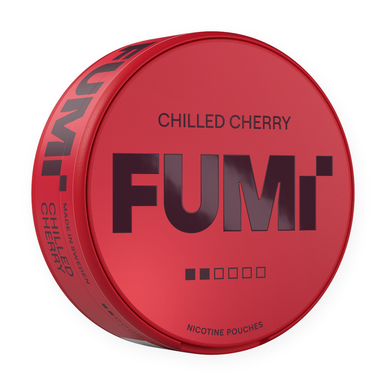
For a cool element over the same fruit, Velo Cherry Ice at £4.19 is a single can that declares one in its name, and Fumi Chilled Cherry at £27.90 is a ten-can pack that does the same. Either is a useful point of comparison if you want to know what a cold edge does to this fruit, because it changes it considerably.
For a straight comparison between makers, the shelf has plenty. Cuba Black Cherry at £39.90 matches this listing's headline price and pack arrangement exactly. XQS Black Cherry is also £39.90, SYX Wild Cherry is £29.90 and UBBS Cherry is £19.95. Four makers, one fruit, four different answers — put any two side by side and the range of interpretation behind a single flavour word becomes obvious very quickly.
If you want the fruit without it being the only thing in the can, Pablo Exclusive Blueberry Cranberry Cherry at £3.85 stacks three fruits into a single can and brings cranberry's dryness into play, and Maggie Original Jamaican Cherry Tonic Wine at £39.90 goes somewhere unlike any of the others named here.
Reading 20mg and 50mg on the lid
Two declared figures are offered on this listing, and both are label information — the nicotine content the manufacturer declares and prints on the can, reproduced here exactly as our record states it. We publish them because anyone buying an age-restricted product is entitled to know what the can declares before they buy it. That is the entire purpose of printing them on this page.
We will not tell you which to choose, and we would rather explain that than just decline. A larger declared figure is not a better product, a more advanced product or a product for a more experienced person. It is a bigger number on a lid. Framing it as a step up, an upgrade or an achievement would be dishonest and irresponsible, and we do not do it anywhere on this site. We also will not attach a figure to a type of person, a job or an occasion. Those are questions about nicotine, and they belong with a pharmacist or a doctor rather than with a shop.
The part we can usefully explain is how the figure drives our shelving. We sort listings into bands by declared strength so a catalogue this size can be browsed at all. Both figures here place this product in the Extra Strong band, which holds 98 listings. Beneath it sit the Strong band and the Medium Strength band, the latter with 135 products in it. Those bands are filing rather than a route map, and their existence is not a suggestion that anyone travel between them in any direction.
Price offers no signal between the two options here either: 20mg and 50mg are both £39.90.
Buying rhythm: how a ten-can box actually gets used
The angle this pack asks for is buying rhythm — single can against a roll, how people reorder, whether to keep a spare — and it is a more practical subject than shop pages usually cover.
The single can and the box are different decisions
A ten-can box is not simply a bigger version of a single can. It removes the reordering question for a stretch of time, it works out lower per can, and it arrives as one delivery instead of several. Against that, it is a larger single outlay, and if the flavour does not suit you then eight or nine cans of it are still in the cupboard.
That asymmetry is why regular buyers almost universally arrive at the same rule: know a flavour before buying ten of it. This site carries single-can listings at far lower headline prices, and the gap between those and £39.90 is pack arrangement rather than the product being dearer. The table below sets the nearby listings out on exactly that basis, since it is the comparison people most often get wrong.
| Listing | Listed price | What that price buys |
|---|---|---|
| This listing, Iceberg Cherry | £39.90 | Ten cans — £3.99 each — out of stock today |
| Pablo Exclusive Blueberry Cranberry Cherry | £3.85 | A single can, three fruits in it |
| Velo Cherry Ice | £4.19 | A single can with a cool element named |
| UBBS Cherry | £19.95 | The lowest-priced cherry listing above single-can level |
| Fumi Chilled Cherry | £27.90 | Ten cans, cherry with a cool note declared |
| SYX Wild Cherry | £29.90 | Another maker's reading of the fruit |
| Killa Exclusive Cherry Cola | £33.50 | Cherry taken into a soft-drink direction |
| Siberia Mini | £39.50 | Outside the fruit group altogether |
| Cuba Black Cherry | £39.90 | Same headline price, same pack size, different maker |
| XQS Black Cherry | £39.90 | Same headline price again |
Three rows there carry the same headline price as this listing and none of them is the same object. That is the lesson of the table: a matching price signals nothing about a matching product, and the cheapest rows are cheap because they are single cans. Check the pack arrangement before comparing any two prices, here or anywhere else on the site.
Reordering, and the mistake almost everyone makes once
The common pattern with a ten-can box is to reorder near the end of it and to reorder in the same quantity, because the per-can arithmetic is better and one delivery is less trouble than three. The mistake, and most people make it exactly once, is running the box completely empty before ordering anything. At that point delivery time stops being a detail and becomes the whole problem.
Ordering while two or three cans remain avoids it entirely. That is not a sales line, it is the same logic anybody applies to anything bought in bulk, and it carries a little more weight here than it would elsewhere because any given listing can be unavailable on the day you want it — as this one is today — and the alternative you would have reached for might be unavailable too.
The spare, and what makes one useful
People who buy in packs frequently keep one can of something else as a spare, and the reasoning is worth spelling out. A spare that duplicates what is already in the box solves nothing when the box runs out; it just delays the same problem. A spare from a different flavour family covers both the supply gap and the taste fatigue, which is why the contrast cans named earlier make the most sensible spares.
For a box of a single dark fruit, a useful spare is something dry, cool or savoury rather than another sweet fruit. Duplicating the direction gives you two cans that blur into one another, which is the opposite of what a spare is for.
What buying in tens does to storage
The last consequence of a box is that nine cans sit somewhere while the tenth is in use. Storage is covered properly below, but the short version is that a sealed can keeps considerably better than an opened one, so the correct arrangement is to open one and leave the rest boxed. That, rather than the per-can price, is the strongest practical argument for a pack over a run of separate purchases.
Where this can falls in the Iceberg range
The second angle here is the brand's range and where this listing sits inside it. Our record names part of that range directly, so we can start with the cans themselves and widen out to the shelf afterwards.
Six same-brand cans are held against this listing, and one thing belongs in front of all of them: every one of the six is out of stock at the time of writing, as this can is. They are linked below because they are the closest comparison we hold and because each has a page of its own carrying its own figures — not because any of them can be ordered today. We stock 40 Iceberg listings in all and they sit together on the Iceberg shelf, where availability changes one line at a time, so the shelf is the more dependable place to look for something buyable.
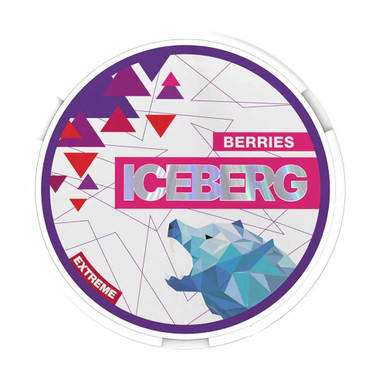
Taking them in order of distance from a single dark fruit: Iceberg Black Currant at £39.90 is the nearest, another single dark fruit with a tart edge of its own, and the closest thing in the brand to a like-for-like swap. Iceberg Berries, the same £39.90, keeps the fruit direction but pluralises it, so the one-fruit clarity this can is built on is exactly what you would be giving up. Iceberg Apple Lemon Pineapple, £39.90 again, goes further still and stacks three named fruits in a single can.
The other three step away from fruit altogether, all at the same price. Iceberg Black Mint is the cool listing of the set, which makes it a partner for a fruit can rather than a replacement for one. Iceberg Black carries no flavour tag on our record at all, so where this listing's name and tag agree exactly, that one gives you nothing to read before buying. the Iceberg Arasaka can is the same case again, a line name with no flavour word in it. All six are unavailable as this is written, which makes them a map of the range rather than a set of alternatives to order instead.
The shape of the range, and how to read it
A forty-listing range generally spreads across three broad groups: the cool and mint listings, the fruit listings, and a smaller set of confectionery or novelty directions belonging to neither. Those groupings are what the flavour shelves cut across, and the brand page shows which listings fall where, each with its own price and declared figures alongside it.
This can sits squarely in the second group, and at the simplest end of it. It is one fruit, named once, with nothing layered over it. That makes it the plainest kind of listing a range like this carries, and — as covered earlier — the same brand's cherry-apricot-gum listing shows what the range does when it builds outward from the same starting fruit.
Which listing suits whom, meaning taste and nothing else
On the question of who each part of a range suits, we mean taste preference and only taste preference. Someone who wants one clear consistent note is looking at the cool group. Someone who wants sweetness that changes as it goes is in the fruit group, and within that, single-fruit cans like this one are for people who want the fruit audible rather than dressed. Someone who finds both of those plain will be in the confectionery corner. None of those preferences is more advanced than another, none is a stage in a progression, and we would not describe them in those terms.
That is worth being explicit about, because a large range invites people to read it as a ladder. Forty listings under one label is a shelf, not a ladder. There is no entry point, no destination and no ordering, and nothing in it is graded against anything else in it. Pick by the flavour words and read the declared figure as the content statement it is.
Looking beyond one maker
If a single brand's range is not where you want to be, other shelves here are substantial. The Pablo range and the Cuba range both have enough in them to browse on their own terms, with quite different pack arrangements and price structures from Iceberg's ten-can boxes. And the cherry shelf, at 20 listings, is small enough to read end to end in a couple of minutes, which for choosing between cherry cans is more useful than any individual product page — including this one.
Looking after cans you are not using yet
These are dry goods and they keep the way dry goods keep. Heat, direct light and an open lid are what cost you flavour, roughly in that order of damage.
Keep cans somewhere cool, dry and dark: a cupboard or a drawer, not a windowsill and not a shelf above a radiator. The classic mistake is a car glovebox in warm weather. Heat drives off the aromatic part of a flavour quickly and a can that has cooked for an afternoon comes back flatter, permanently — nothing recovers it. With a single-fruit flavour the loss shows up as the fruit going vague rather than as the whole can going quiet, which is if anything more irritating.
Keep the lid pressed properly shut. A friction-fit lid seals reasonably when it is home and poorly when it is sitting half-lifted, and a day of that costs more than a fortnight of careful storage saves. Cans carried loose in a bag with keys and coins are the usual culprits. Giving a can a fixed pocket solves it and takes no effort.
With a ten-can box, open one and leave the other nine sealed until each is wanted. We hold no shelf-life figure or best-before date for this product and so we publish none; whatever the manufacturer prints on the packaging is the figure to go by. Keep the box out of reach of children and animals, and keep cans out of the fridge unless the packaging specifically says otherwise, because condensation is not what you want on a dry product.
What there is to choose here
This listing offers exactly one decision: 20mg or 50mg. There is no pack-size choice, since ten cans is the only arrangement we hold for it, and no price consequence, since both are £39.90.
We are not going to guide that decision, for the same reason a responsible counter assistant would not. Recommending a strength for a person is advice about nicotine; it is not a shop's job and it is not within our competence. What we can offer instead is the information, cleanly: two declared figures from the manufacturer's own labelling, both at the same price, both filed in the Extra Strong band, both printed on the can itself. If you know which figure you want, it is on the variant selector on the product page. If you do not, that conversation belongs with a pharmacist.
If the ten-can arrangement rather than the strength is what is stopping you, single-can listings exist on this site and several are named above. Every product page sets out its own pack arrangement, and checking that is the first thing worth doing before comparing prices between any two of them.
Ordering, delivery and the position today
Because this listing shows out of stock as this is written, the honest answer today is that it cannot be ordered. The product page carries the live status and will change long before this description does. Our record describes no reservation, waiting list or backorder mechanism, so we are not going to imply that one exists. Checking the page is the only reliable method available.
When stock is available, the process is the standard one for an age-restricted product. Age confirmation is required at checkout, orders may be verified before dispatch, and photographic identification may be requested by the courier at delivery. If no adult is present to receive the parcel, it is not handed over — that is applied strictly rather than treated as a formality. Orders are dispatched from within the UK.
If you are having a parcel sent to a workplace, make certain someone over 18 will be there to take it. A parcel that cannot be given to an adult goes back, and unpicking a returned ten-can box is more tedious than unpicking a returned single can.
Getting back to this page
Three shelves carry this listing. By declared figure it is on our Extra Strong shelf with 97 others. By maker it is on the Iceberg brand page alongside the other 39 listings we hold. By flavour it is on our cherry listings, a shelf of 20 and one of the tighter ones on the site.
Because the name and the tag agree here, this listing turns up exactly where you would expect it to, which is not universally true across our catalogue — some products carry more flavour words in their names than our tagging records, and they appear on fewer shelves as a result. If the three shelves are not getting you where you want to be, everything we stock is the widest entry point and filters down from there.
Questions we are asked about this one
When is it back in stock?
We do not know and we are not going to invent a date. Our record holds the current position and says nothing about future deliveries, and a made-up restock date is worse than an honest blank because it leaves people waiting on a promise nobody made. The product page updates as stock changes, so checking it is the only dependable approach. We would rather disappoint you now than mislead you.
What is the difference between this and the cherry-apricot-gum can?
This is one fruit on its own — tart edge exposed, kernel note audible at the finish, sweetness that rises and falls. The other adds apricot underneath, which is soft and honeyed and fills in beneath the cherry so the tartness never surfaces, plus a confectionery styling that holds the sweetness steady throughout. This one smells sharper and more like fruit; that one smells rounder and more candied. One is cherry, the other is cherry as a sweet.
Is there a cooling element in this can?
Our record does not say, and unlike some cherry listings on our shelves this one's name does not declare one. Cherry cans vary considerably on that axis and the difference is substantial enough that we are not prepared to assume. That is a genuine gap in what we hold rather than an evasion, and the packaging is where it gets settled.
How many pouches does a can contain?
Not a figure our record holds for this product, so we will not state it. Counts vary between manufacturers and between formats within one manufacturer's range, which means an estimate would be a guess dressed up as information. Where a count is declared it is printed on the can. We would prefer to carry that figure on the listing and at present we do not.
Is 50mg a more serious version of the same can?
No, and we would not characterise it that way. A declared figure is a content statement the manufacturer prints on a lid. It is not a grade, a rank or a badge, and a higher number is not a better can or a more accomplished purchase. We publish figures so people know what a can declares, and we attach nothing further to them.
Are the other Iceberg cans named here in stock?
No, and that is worth saying twice. Six same-brand cans are held against this listing and every one of them is unavailable at the time of writing, as this can is. They appear on the page because they share the brand and the £39.90 price and because each has its own page with its own declared figures, which makes them the most direct comparison we can offer — not because they are an order you can place. Forty Iceberg listings sit on the brand shelf in total, each with its own facts, and stock returns to them one line at a time.
Is this the same product as the Cuba cherry pack?
No. Same fruit, same headline price, same ten-can arrangement, different manufacturer — and two makers working from one flavour word routinely produce cans that taste noticeably unlike each other. The matching price is a coincidence of the shelf rather than evidence of a matching product, and we would not present either as a substitute for the other.
Can I mix strengths or flavours across the ten cans?
No. You choose one declared figure and all ten cans are that figure, and all ten are this flavour. It is a pack rather than an assortment. Wanting both figures means two separate orders, which is one more reason the usual advice about knowing a flavour before buying ten of it is worth following.
Will a cherry can leave a taste behind if I rotate two?
Flavours do linger and dark fruits are among the more persistent. People who rotate a cherry can with something delicate sometimes find the cherry faintly present underneath the next one. That is an observation about taste and nothing more. It is the usual reason an assertive, unlike can is chosen as a partner rather than a subtle one.
Where is it manufactured?
Not in our record, so not on this page. Country of manufacture and importer details appear on the packaging, which is the only place we would send anyone for them. We do not publish facts of that kind from inference, because a guess about origin tends to get repeated afterwards as though it were established.
Is this one right for me?
We cannot answer that and will not attempt to. We sell cans to adults who already use nicotine, and we are not qualified to assess anybody's individual circumstances. Questions about nicotine and your own health should go to a pharmacist or a doctor, who can answer them properly and with knowledge of you.
Compliance, in full
This product is sold only to adults aged 18 or over who already use nicotine. We will not knowingly sell it to anyone else. Age confirmation is required at checkout, orders may be verified before dispatch, and photographic identification may be requested by the courier at the point of delivery.
Nicotine is an addictive substance. That sentence is here because it is true, and because the description of an age-restricted nicotine product has no business omitting it or shrinking it into small print.
This is not a licensed stop-smoking medicine and it is not offered, described or intended as one anywhere on this site. It is not intended for non-smokers, for anyone who does not already use nicotine, for anyone under 18, or for anyone who is pregnant or breastfeeding. We make no health, medical or safety claim about this product in any direction. Questions about nicotine and your own health belong with a pharmacist or a doctor; we sell cans, and we do not hold that expertise.
The short version
Iceberg Cherry is a ten-can pack at £39.90 — £3.99 a can — declared at 20mg and 50mg for the same money, carrying a single dark fruit with a visible tart edge and a faint kernel note at the finish. It is currently out of stock. It is filed in the Extra Strong band, it is one of forty Iceberg listings we hold, and it sits on a cherry shelf of twenty where its name and its tag agree exactly. Our record carries six same-brand cans against it, all at the same £39.90 and all out of stock as well, which is why the brand shelf remains the place to check for something buyable. Where a fact is missing — the pouch count, the format, the cooling character, the origin, the restock date — we have said so instead of filling the gap. The can and the manufacturer's labelling on it outrank everything written above.
More from Iceberg


More extra strong pouches
More cherry pouches
Where this sits
Iceberg Cherry Nicotine Pouches appears in these categories. Browse them, or jump to something close.
You might also like