SYX · 6mg–20mg · 10-can pack
Read the full guide
SYX Tropical Nicotine Pouches
£29.90
✔ In stock — ready to ship
100% tobacco-free
Free over £20
Same-day dispatch
Secure checkout
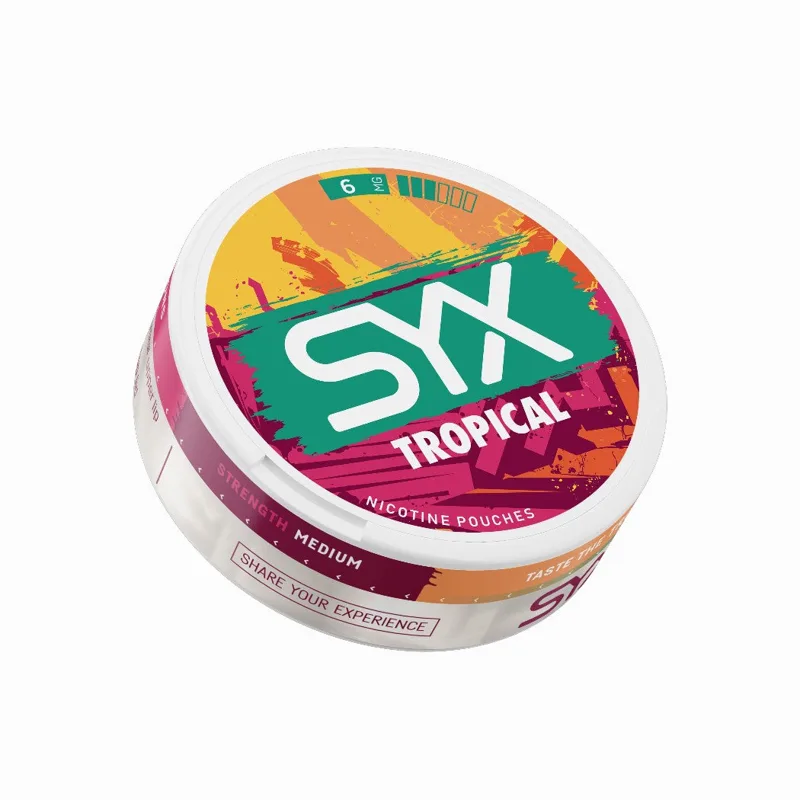
This page covers SYX Tropical Nicotine Pouches. The brand on the lid is SYX. The name of this particular can is Tropical. Our catalogue holds one flavour tag for it — tropical — and three declared strengths: 6mg, 12mg and 20mg. The listing price is £29.90, and that figure covers a pack of 10 cans rather than a single tin. All three strengths carry the same £29.90. Our record shows the listing available at the time of writing, and we hold one image for it.
Three strengths at one price is worth pausing on, because it is not how every listing on this site behaves. On some pages the figure moves when the strength does. Here it does not: whichever of the three you put in the basket, the pack costs £29.90 and contains ten cans. That means the decision between 6mg, 12mg and 20mg is a decision about the number printed on the lid and nothing else. It carries no cost consequence either way, which is a small thing to know but an occasionally useful one.
The full guide to SYX Tropical Nicotine Pouches
5,444 words on how it eats, who it suits, how to serve it and what to put beside it.
SYX Tropical, set out as our record holds it
The other figure to hold in mind is the pack size. Ten cans is the larger of the two arrangements we deal with most often — a good deal of the catalogue arrives as a five-can pack, and a fair number of listings are a single tin. At £29.90 for ten, this works out at £2.99 a can. We publish that division here because the alternative is shoppers doing it in their heads against a single-tin price on another page and arriving at a conclusion that is out by a factor of ten.
What our record does not carry, and what we will therefore not print: the number of pouches inside a can, the weight of a pouch, the physical dimensions of the tin, a manufacturer name, a country, a date, or any flavour detail finer than the single word tropical. Where a field is empty we say it is empty. The can's own printed labelling is the authority for anything the manufacturer has stamped on it, and if the two ever disagree, believe the can.
This is an adult nicotine product and we sell it to people aged 18 or over who already use nicotine. Nicotine is an addictive substance. The full compliance wording sits in its own section near the foot of this page, and it is not boilerplate we are embarrassed about — please read it.
Three numbers on three lids: 6mg, 12mg and 20mg
The milligram figure is a declared label figure. It is the manufacturer's own statement about the pouch, printed on the can and passed through to this page unchanged. We do not test it, we do not adjust it, and we do not translate it into anything else. Treated as what it is — a number on a lid — it is genuinely useful for telling one variant apart from another and for comparing tiles in a listing. Treated as a promise about how a pouch will read to you, it is being asked to do work it cannot do.
Here is how the three variants of this listing sit alongside each other, with nothing added:
| Declared strength | Pack | Price |
|---|---|---|
| 6mg | 10 cans | £29.90 |
| 12mg | 10 cans | £29.90 |
| 20mg | 10 cans | £29.90 |
The spread here is unusually wide for one product name. Six to twenty is more than a threefold range across variants of the same flavour, and most listings we handle offer a narrower choice than that — one figure, or two close together. Whether a wide ladder under one name is a convenience or a complication depends entirely on the person reading it, and we are not going to pretend to know which you are.
We cannot advise which of the three suits you. That is not modesty or a legal shrug — we genuinely have no basis for it. We do not know what you currently use, we have no way of knowing, and there is no honest route from a figure printed on a tin to a recommendation for a named individual. Anyone selling you certainty on that point is inventing it. What we can do is print the figures accurately, keep the variants clearly labelled, and refuse to imply that a higher number is a better product. It is a different product. Higher is not an upgrade and lower is not a compromise.
A note on our own shelving, because this listing exposes how it works. We have filed SYX Tropical on the Strong shelf, which currently holds 132 listings. It gets there on its top declared figure of 20mg, not on its lowest. The same brand's cherry can, which stops at 12mg, sits on the Medium Strength shelf instead. So a shopper browsing by strength will find the 6mg variant of this product filed among considerably firmer company, purely because it shares a listing with a 20mg sibling. That is a limitation of one-shelf-per-listing filing rather than a claim about the pouch, and it is better said out loud than left for you to trip over.
Buying rhythm: the single tin, the pack of ten, and the spare
The first of this page's two longer subjects is how a can like this actually gets bought, which shop pages tend to skip in favour of adjectives. It is a practical matter and it has practical consequences, so it is worth the space.
Why the ten-can pack changes the arithmetic
A single tin and a pack of ten are different purchases wearing the same product name. The pack in front of you is the second kind. £29.90 buys ten cans, and the per-can figure of £2.99 is what you should compare against other listings — never the £29.90 itself. Put that pack price next to Velo Tropical Mango at £4.19 and the second looks cheap by a factor of seven, which is nonsense: the Velo figure is plainly a single tin. The two numbers are answering different questions. Whenever you are comparing across brands on this site, the only fair comparison is per can, and the individual product page is where the pack arrangement for each listing is stated.
That cuts the other way too. A £39.90 figure on Cuba Ninja Coconut or Clew Blueberry is not automatically a more expensive proposition than this one; it depends on what each pack contains, and you should check rather than assume. We would rather print that caution repeatedly than have it inferred wrongly once.
How reordering actually goes
People who use pouches settle into a cadence, and the cadence is set by the pack rather than by any decision. A ten-can pack is a commitment of a certain length; a five-can pack is a shorter one; a single tin is a trial. Whatever that length happens to be for you, the practical result is that a ten-can pack turns reordering into an occasional event rather than a frequent one, and the failure mode changes accordingly. With frequent small orders you notice you are running low often, and the problem solves itself. With one large order you notice rarely, and when you do notice it is usually because you are already at the last can.
The fix is dull and it works: reorder from the second-to-last can rather than the last one. That single habit removes most of the gap between running out and a parcel arriving, and it costs nothing. We have no interest in dressing that up as a service promise. It is just what people who buy in tens tend to learn.
The spare, and why it is usually a different flavour
The other pattern worth naming is the spare can kept away from the main stock — in a bag, a drawer, a coat. Most people who keep one do not keep a duplicate of their main can. They keep something else, and the reason is straightforward rather than romantic: a flavour you have ten cans of stops registering as a flavour. It becomes the background. A second can that reads differently stays interesting for longer precisely because you meet it less often.
Within this brand, the obvious contrast to a fruit can is a cold one, and SYX Peppermint and SYX Cool Mint are both on the shelf at the same £29.90 pack price. If you would rather the spare stayed in fruit but moved register, SYX Icy Cola puts a cola note and a cold edge against the tropical one, and SYX Apple Kiwi at £29.90 is a green, sharper fruit rather than a golden, syrupy one. None of that is a recommendation to consume more than you would otherwise. It is an observation about which cans hold up in rotation.
Ordering two packs, and why we are not pushing it
Some people buy two packs together and split them, one at home and one elsewhere. Others treat one pack as one pack. We are not going to argue for the first, because arguing for it would be arguing for buying more nicotine, and that is not our job. If you already buy in that pattern it is worth knowing the pack arrangements across our shelves differ, so two listings at the same price will not necessarily last the same length of time.
Tropical, described as taste and aroma
Our record holds exactly one word for the flavour of this can: tropical. That is an unusually broad tag even by the standards of this category, and it is honest to start by admitting what it fails to tell you. A tropical note might be built around pineapple, mango, passion fruit, guava, papaya, lychee, coconut, or any combination of them. Our catalogue does not say which, and we have no manufacturer flavour breakdown to consult. The name on the lid is the name on the lid.
What can be said with confidence is what the word conventionally means as a taste. Tropical, as a flavour family, is golden rather than red. It sits in a warmer, rounder, heavier register than a berry can and a distinctly softer one than a citrus can. The sweetness is thick and slightly syrupy, the kind found in a fruit cordial rather than the thin brightness of a lemon. Behind the sweetness there is usually a tart edge, but it is a fruit-acid tartness — the prickle at the back of a pineapple — rather than the clean sourness of a lime.
The characteristic that separates tropical from every other fruit family is the perfumed quality. Mango, passion fruit and guava all carry a strong aromatic component, something floral that arrives in the nose as much as on the tongue. That perfume is the signature of the family, and it is also the part that divides people: those who find tropical flavours generous find it luscious, and those who find them synthetic find it exactly the thing that tips them over. If you already know which camp you fall into, you know most of what this can will do for you.
The aroma from an opened can, then, should read as sweet, warm and noticeably perfumed, with more lift in the nose than a blueberry tin and none of the cold snap of a mint one. What we cannot tell you is which fruits you will pick out, because we do not know which fruits are being aimed at. Taste also varies between people more than anything else on a product page, and our description is an account of a flavour family and a label, not a manufacturer specification.
If you want to hear what a narrower name does, the shelves offer the comparison. Elf Bar Pineapple, also £29.90 names a single fruit and by doing so sets a much more specific expectation — sharp, bright, with the tart prickle at the front rather than folded into the middle. Iceberg Apple Lemon Pineapple at £39.90 names three and lands somewhere between a tropical and a citrus reading, though our record currently shows that one unavailable, so treat it as a comparison to read rather than a can to order today.
How a recognisable fruit note gets built into a dry pouch
The second longer subject on this page is flavour construction: what a flavour has to survive in this format, and why some names translate well onto a pouch and others arrive as a disappointment. None of what follows is a statement about composition — we do not publish what is in a can, and nothing below should be read as doing so. It is about the constraints the format imposes.
The format is dry, and dryness sets the terms
A pouch is a small sealed sachet of dry material. There is no liquid, no heat and no aeration involved in getting a flavour from it — the flavour has to come off a dry surface, slowly, over a stretch of time measured in tens of minutes rather than seconds. That is a narrow channel compared with almost any other way a flavour reaches a person, and it rules certain flavours in and certain flavours out.
What survives well: anything whose identity lives in one or two loud, simple notes. Mint survives brilliantly, because menthol is a single assertive character that needs no support. Strong fruit notes survive well. Cola survives because it is a familiar caramel-and-spice shape people recognise from a fragment. What survives badly: delicate, layered flavours whose charm is in the interplay between several quiet components. A subtle floral tea is a hard thing to put in a pouch, and a flavour built on texture — creaminess, fizz, thickness — is harder still, because a dry sachet cannot supply texture at all.
Why tropical is a comfortable fit
Tropical sits on the right side of that divide. Its identifying characteristic is the perfumed aromatic lift, and aromatic notes are the ones that carry best in this format — they reach the nose as much as the tongue, and the nose does not need volume to register a character. A flavour that announces itself aromatically is a flavour a pouch can deliver recognisably.
The sweetness is the harder half. Sweet fruit in a dry format tends to arrive lighter than the name suggests, because the name is borrowed from things that are wet and generous. A pouch has to suggest that generosity rather than supply it. Flavour builders lean on aromatic intensity to do the suggesting, which is why tropical pouches often read as more perfumed and slightly less juicy than the fruit they are named after. That is a format characteristic, not a fault in any particular can, and it is worth knowing before you open your first one.
The arc, and why cans differ more at the end than the start
Any pouch has an arc. The first stretch is the loudest, the middle settles into a steadier version of the same character, and the tail thins out. The differences between two cans sharing a flavour name are usually least obvious at the front and most obvious at the tail — the front is where flavour is most abundant and most cans manage to be convincing, while the tail is where the construction shows. A well-built fruit note keeps something recognisable at the end; a thin one flattens into a vague sweetness.
That is the real reason to try more than one can carrying the same flavour word, and it is why the tropical corner of our catalogue is worth browsing rather than sampling once. Our tropical shelf currently holds 58 listings, which is a wide field by any measure, and two cans on it can be genuinely different products despite reading identically on a tile. Pablo's Gold Edition Blueberry Peach Ice at £19.95 is a useful thing to put beside a plain tropical can, because a cold note laid over sweet fruit changes the arc completely: it sharpens the front and stretches the perception of the tail. Denssi Blueberry Freeze at £39.90 does the same job from the berry end of the shelf.
The format in practice
A pouch is a small soft sachet that sits between the upper lip and the gum, off to one side. It goes in dry, it softens slightly, and it stays where it is put. Most people find the first few minutes the most noticeable, both for flavour and for the simple fact of having something there, and most stop registering the object fairly quickly. How long a can lasts in that position is genuinely a matter of individual habit — some people keep a pouch in for ten or fifteen minutes, others considerably longer. We are not going to publish a number as though it were guidance.
The can is the familiar shallow round tin. The lid lifts clear and presses back on, and the upper section is a shallow catch compartment intended for used pouches, so that a used one can be stowed rather than carried loose. That compartment is the single most practical feature of the design and the one people notice they have come to rely on. Used pouches go in the bin, not down a drain and not on the ground.
Pouch sizing varies across the catalogue between slim and standard formats, and it makes a real difference to how a can feels in use. Our record for this listing does not state which format these are, so we are not going to guess. If the distinction matters to you — and for some people it matters more than flavour — the can's own labelling will tell you, and it is a reasonable thing to check before committing to a pack of ten.
Hygiene is unglamorous and worth stating: wash your hands before handling pouches, keep the lid on when the can is not in use, and do not leave a can where someone else might open it. That last one is not a throwaway. A pouch can is a small object that looks harmless and is not suitable for anyone under 18 or anyone who does not already use nicotine.
Keeping a pack of ten in good condition
Ten cans is enough that storage becomes a real question rather than an afterthought. A single tin gets used before conditions can affect it much; a pack sits somewhere for a while.
The three things that matter are heat, light and air. Keep the pack somewhere cool, out of direct sun and away from anything that produces warmth — the back of a cupboard rather than a windowsill or the top of an appliance. A car glovebox in summer is the classic mistake, and it is worse for a ten-can pack than a single tin because you stand to lose more of it. Sealed cans hold their condition considerably better than opened ones, which is one genuine advantage of a multi-can pack: nine of them stay shut while one is in use.
For the can actually in use, the lid is the whole story. Press it properly closed each time. A lid left ajar exposes the contents to open air, and a dry pouch that has sat in open air is duller than it should be — the aromatic top notes are exactly the part that goes first, and in a tropical can those top notes are most of its character. Nothing dramatic happens; it simply becomes a less interesting version of itself. Keep the pack upright, and there is no reason to put pouches in a fridge or freezer. Our record carries no storage instruction from the manufacturer, so treat the above as general practice for the format rather than an official direction, and follow the can if it says otherwise.
Where this can sits in the SYX range we carry
We currently hold nine SYX listings, and the range is best understood as two halves. There is a cold half built on mint and menthol characters, and a fruit half, and this can belongs firmly to the second. The full SYX brand page is the place to see them side by side, and it is a small enough range to read in one go, which is not true of every brand on this site.
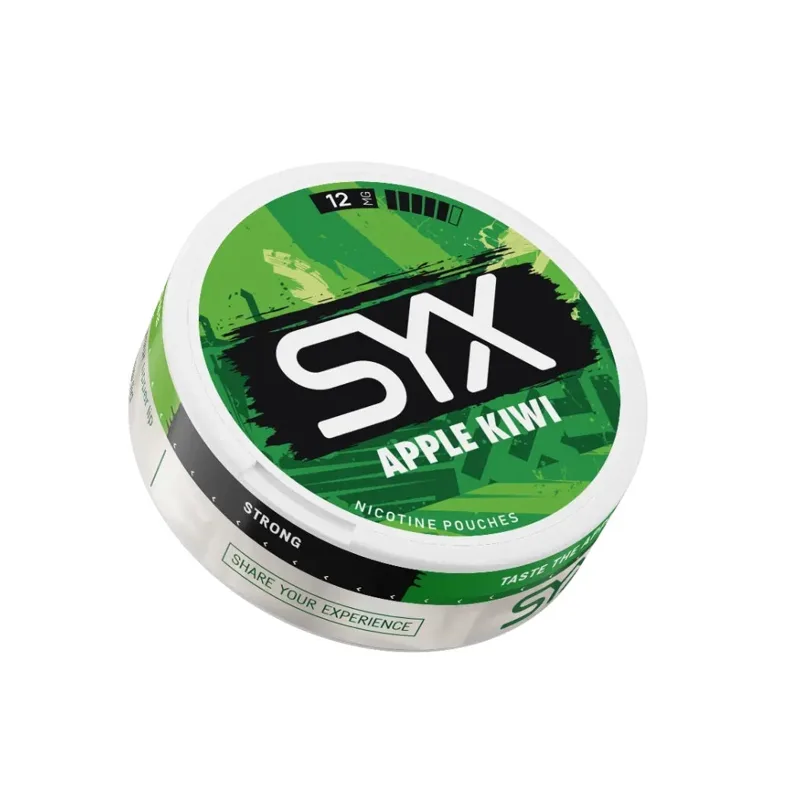
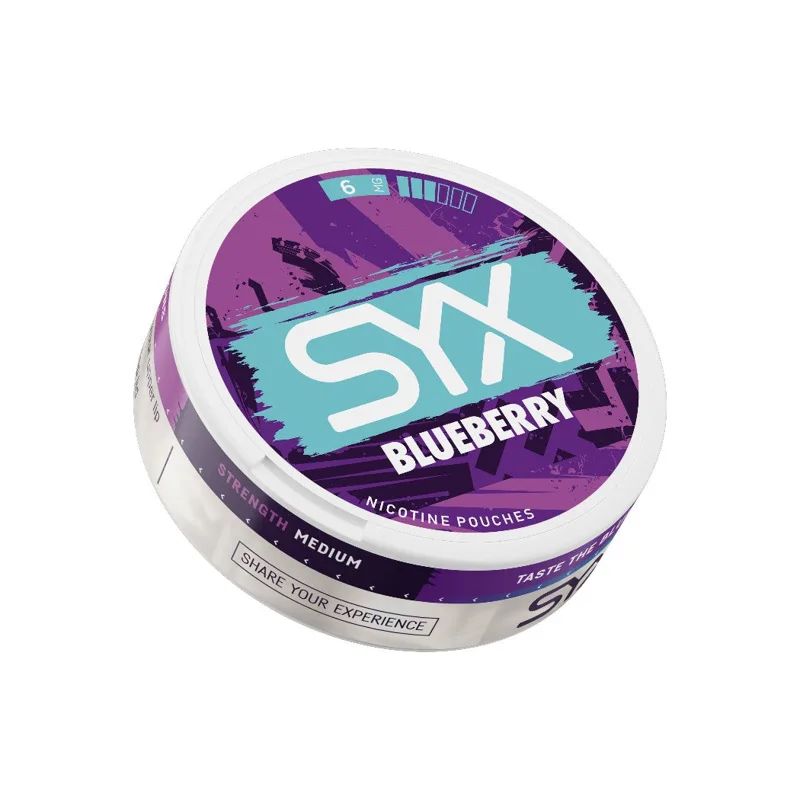
Within the fruit half, the interesting thing is how differently the cans are pitched. This one takes the broadest possible flavour word and aims at a whole family. The SYX blueberry can, also £29.90 names a single fruit and commits to it — soft, evenly sweet, low in acidity, a much quieter can by design. The apple-and-kiwi pairing at the same price is the sharp, green option in the range and the most acidic of the fruit cans. Between those three you have most of the fruit territory the brand covers, and one price across all of them.
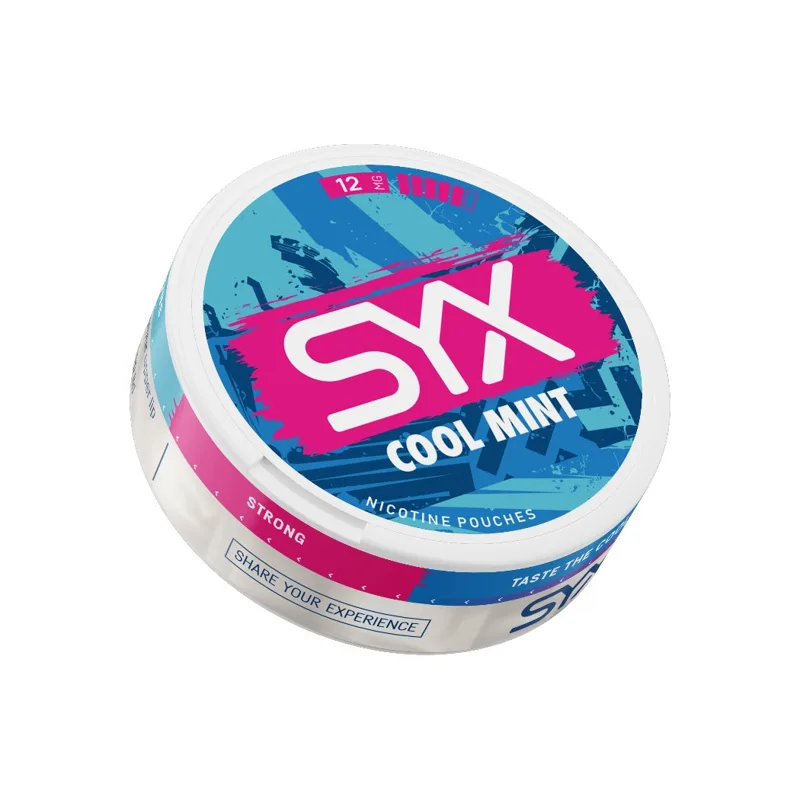
The cold half is where the range changes character rather than shade. SYX Freeze at £29.90 is the most pronounced cold expression the brand offers us, its peppermint can is the sweeter and rounder mint, and the cool mint listing sits between them. Every SYX listing we hold carries the same £29.90 pack price, which makes this one of the easier brands on the site to move around inside: choosing between them is a question of flavour and declared strength only, with cost held constant.
What people keep alongside a tropical can
The most common second can beside a sweet fruit one is something that does not taste like it, and the shelves offer several directions. This is about variety in a rotation, not about volume.
Staying inside the tropical family but changing brand is the smallest step. The Velo mango can at £4.19 is a single tin rather than a pack and names one fruit, which makes it an inexpensive way to hear a narrower tropical reading before committing to anything. Cuba Ninja Coconut at £39.90 goes after the creamy, rounded corner of the same family, and coconut is the least sharp of all the tropical notes — a genuinely different proposition from a pineapple-led one.
Moving one step further out, stone fruit and orchard fruit sit adjacent to tropical without duplicating it. Fumi's Fiery Peach at £27.90 keeps the warm, perfumed quality but adds a spiced edge, and the Killa apple can at £33.50 is crisper and more acidic. A word on that last one: the title we hold is simply "Killa Apple", while the web address for it carries the words "extra strong". Our record does not reconcile the two, so check the declared figure on its own page rather than inferring anything from either.
For a complete change of direction, the 77 apple-and-mint can at £39.90 puts a cold note against an orchard fruit, and the Clew blueberry listing at £39.90 takes the quiet berry route. If you would rather browse than take suggestions, the Cuba range and the Pablo brand page are two of the larger collections we hold, and everything we stock is the place to start from scratch.
Choosing between the three variants
Because price and pack size are identical across 6mg, 12mg and 20mg, the choice reduces to the printed figure. We cannot make that choice for you and will not try. What we can do is describe the shape of the decision honestly.
The figures are a ladder, not a quality scale. A 20mg can is not a better version of a 6mg can and a 6mg can is not a beginner's version of a 20mg one. They are three separate products that share a flavour and a lid design. Anyone who already uses nicotine will have their own basis for reading those numbers, and that basis is not something a shop page can supply or improve on.
One practical consideration does belong here, and it is about pack size rather than strength: ten cans of one declared figure is a large single commitment to that figure. If you are uncertain which of the three you want, a five-can pack or a single tin from elsewhere on our shelves is a smaller way to find out than ten cans is — the Elf Bar pineapple listing and the various single-tin listings are worth checking for pack arrangement on that basis alone. Browsing by shelf is the other route: the Medium Strength listings, the Strong shelf and the Extra Strong shelf each gather cans by their top declared figure, with the filing caveat described earlier still applying.
Ordering, delivery and the age check
Ordering is ordinary. Choose your declared strength on this page, add the pack to the basket, and check out. The pack you receive is ten cans of the single strength you selected — the variants are not mixed, and we do not assemble a sampler from them.
This is an age-restricted product. We sell it only to people aged 18 or over, and photographic ID may be requested on delivery. Refusing or failing that check means the parcel does not get handed over. Order in your own name, at an address where an adult can take delivery, and do not ask a courier to leave a nicotine product with a neighbour or in a porch where its destination is uncertain. None of this is us being awkward; it is the condition on which this category is sold at all.
On delivery timing and courier arrangements, the site's own delivery information is authoritative and we are not going to restate it here in different words and risk contradicting it. What belongs on a product page is the stock position, and for this listing our record currently shows it available. Stock moves, and the tile on the tropical listings page is the quickest way to see whether that is still true.
Finding this can again
Three shelves lead here, and each one is a different way of thinking about a can. If you navigate by how strong things are, this listing is filed on the Strong shelf on its 20mg figure, among 132 others. If you navigate by brand, the nine SYX listings sit together on the brand page. If you navigate by flavour, the tropical shelf and its 58 listings is the widest way in.
Beyond those, the hub pages are the broad routes: everything we stock in one place, the three strength shelves, and the larger brand collections. There is no low-strength shelf link in the hub row on this page, which is a gap in the navigation rather than a statement that we hold nothing below 6mg — we do, and the shelf exists elsewhere on the site. We would rather point out the gap than have you conclude from its absence that the shelf is empty.
Questions we actually get asked
Is the £29.90 for one can or the whole pack?
The whole pack. £29.90 buys ten cans, which is £2.99 a can. This is the single most common misreading on listings like this one, usually because the shopper has just come from a page where the price was for a single tin. Whenever you are comparing two listings on this site, check the pack arrangement on each product page before comparing the headline figures, because a £4 single tin and a £30 ten-can pack are not seven times apart in cost.
Why do all three strengths cost the same?
Because that is what our record holds: 6mg, 12mg and 20mg are all listed at £29.90 for ten cans. We do not set out to explain a manufacturer's pricing and we have no insight into it. The practical consequence is the useful part — the choice between the three variants has no cost attached to it in either direction.
Which of the three should I buy?
We cannot tell you, and we are not going to imply an answer by describing one as standard or one as a step up. We do not know what you currently use and have no way to find out, and there is no honest path from a declared label figure to advice for a particular person. The figures are printed accurately on this page so you can apply your own judgement to them.
Which fruits is "tropical" meant to be?
We do not hold that information. Our catalogue carries the single tag tropical and no breakdown behind it, and we are not going to name pineapple or mango or passion fruit as though our record said so. The can's own labelling is where to look. If a specific named fruit matters to you, a listing that names it — a pineapple can, a mango can — is a more reliable way to get it than a broad tag.
Why is a 6mg variant on the Strong shelf?
Because we file a listing once, on its highest declared figure, and this listing's highest is 20mg. The 6mg variant is part of the same listing and travels with it. It is a filing convention rather than a description of the pouch, and it is the reason we spell out the actual figures in the table above rather than leaving the shelf name to imply them.
How many pouches are in a can?
Our record does not carry a pouch count for this listing, so we cannot tell you. We would rather print that plainly than publish a figure we have assumed from other cans in the category. The can's own labelling should state it, and if you need the number before ordering, that is the place it will be found.
Are these slim pouches or standard ones?
Our record does not say, and pouch format genuinely varies across the catalogue. For some people this matters more than the flavour does, so it is worth checking the can rather than taking a guess from us. We hold one image for this listing, which may or may not answer the question depending on what it shows.
Where does this product come from, and who makes it?
Our record does not carry a manufacturer, a country or any date, so we do not publish one. "SYX" is a brand name printed on a lid and tells you nothing about origin. This is a case where a shop page could easily invent something plausible, and we would rather have an obvious gap on the page than a confident sentence we cannot stand behind.
Can I mix strengths within one pack?
No. A pack is ten cans of the single declared strength you choose at checkout. If you want more than one figure you would need to order more than one pack, and we are not going to encourage that as a default because it means buying more than you set out to.
Does it taste the same as the mango can from another brand?
Almost certainly not, and we cannot tell you how it differs. Two cans sharing a flavour family can be quite different products, and our record holds one broad word for this one and different words for others — that is not enough to build a comparison on. Trying them is the only reliable method, and it is worth doing with single tins rather than ten-can packs where the option exists.
Is it still in stock?
Our record shows this listing available at the time of writing, but stock changes and a page can sit unread for a while. The tile on the brand or flavour shelf is the current answer. Where we link to something on this page that our record shows as unavailable — the Iceberg apple, lemon and pineapple can, for instance — we have said so at the point of linking rather than letting you find out at the basket.
The compliance part, in full
This section is not optional reading and it is not written to be skimmed.
- This is an adult product. We sell it only to customers aged 18 or over, and it is intended for adults who already use nicotine.
- Nicotine is an addictive substance.
- This is not a licensed stop-smoking medicine, and it is not offered, described or intended as one. It is not intended for non-smokers, for anyone who does not already use nicotine, for under-18s, or for anyone who is pregnant or breastfeeding.
- We make no health, medical or therapeutic claims for this product anywhere on this page, in any direction.
- Photographic ID may be requested when your order is delivered, and the parcel will not be handed over without it.
- Keep cans away from children and from anyone who does not already use nicotine. Dispose of used pouches in a bin.
- If you have questions about nicotine use and your own circumstances, a qualified healthcare professional is the right person to ask. We are a shop, and we cannot advise you.
To close
SYX Tropical is a ten-can pack at £29.90 — £2.99 a can — offered at 6mg, 12mg and 20mg for the same money, carrying the single flavour tag tropical, and currently showing as available. It is filed on the Strong shelf on its top figure, it sits in the fruit half of a nine-strong brand range where every listing costs the same, and the flavour word it carries is broad enough that we have told you plainly what it does not pin down.
That is the whole of what we know. Everything above is either a figure from our record, a description of a flavour family, or a note about where our record is silent. If something you need is missing from this page, it is missing because we do not hold it, and the can in your hand is a better authority than any sentence we could write about it.
More from SYX
More strong pouches

More tropical pouches
Where this sits
SYX Tropical Nicotine Pouches appears in these categories. Browse them, or jump to something close.
You might also like