Home / Low Strength / Rush Berry Ice Light Nicotine Pouches
Rush · 6mg
Read the full guide
Rush Berry Ice Light Nicotine Pouches
£19.99
✔ In stock — ready to ship
100% tobacco-free
Free over £20
Same-day dispatch
Secure checkout
Start with the part that changes whether the rest of this page is any use to you. Rush Berry Ice Light Nicotine Pouches are out of stock. Our product record marks this listing unavailable, and it is unavailable as this page is being written. You cannot order this can from us at the moment, and nothing further down should be read as an invitation to try. If you came here from a search result expecting to add a can to a basket, the honest thing we can do is tell you that now rather than in a footnote twelve screens down.
It goes further than this one listing. Every Rush product in our catalogue is currently out of stock — the whole brand, not a single flavour that has run dry. That includes all five of its siblings that this page links to, and it means that if what you actually need is a can that can be dispatched, the Rush shelf is not where to look this week. We say where to look instead further down, and we say it more than once, because a page that quietly lets you assume otherwise is worse than a page that repeats itself.
The full guide to Rush Berry Ice Light Nicotine Pouches
5,639 words on how it eats, who it suits, how to serve it and what to put beside it.
Rush Berry Ice Light: out of stock, and what our record holds
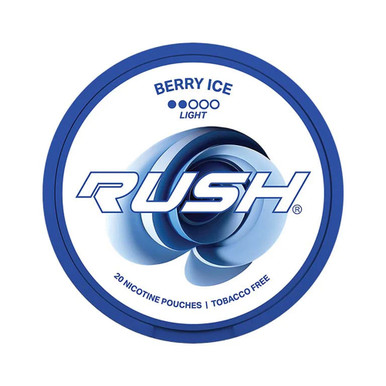
With that established, here is the record. The listing is Rush Berry Ice Light Nicotine Pouches, brand Rush, priced at £19.99. There is a single declared strength against it, 6mg, and one variant line at that figure and that price. The flavour tags we hold are mint and berry. We hold one product image. Our record does not state how many cans £19.99 buys — the pack-size field is empty — and it does not state how many pouches are inside a can. Those are gaps, we know they are gaps, and we would rather print the gap than fill it with a plausible number.
So the full extent of our verified knowledge is: name, brand, price, one strength figure, two flavour tags, and a stock flag reading unavailable. Everything below is either a description of the format this product belongs to, a comparison against other cans sitting on the same shelves at prices we do hold, or a plain statement that we do not know something. There is no ingredient information here, no explanation of what a pouch does once it is in place, and no statement about what using one does to a person in either direction. This is a shop page, written for adults who already use nicotine, and it stops where our knowledge stops.
Reading the word "Light" on this can
Rush has put tier words on its cans. This one says Light. Others in the range say Pro and Extreme. It would be easy to read those three words as rungs on a ladder and to assume the shop endorses climbing it. We do not, and it is worth being blunt about why.
Those words are manufacturer naming. They are printed by the company that makes the product, they are part of the product name in the same way that Berry and Ice are, and they carry no meaning that we have verified or can stand behind. Light is not a category we assign. It is not a stage. It does not describe a person, and it does not describe where anybody ought to be in some imagined sequence. A can named Light is not a starting point, a can named Extreme is not an achievement, and a can named Pro is not a mark of experience or skill. We stock all of them at one price and we file them by the number declared on the label, which is the only part of the naming that connects to anything measurable.
The declared figure here is 6mg. That is the lowest figure across the Rush cans we carry, and it puts this listing in our low strength band, a shelf currently holding fifteen listings. That is a filing decision based on a printed number, nothing more. We cannot advise you which strength suits you. Not "we would rather not" — we genuinely cannot, because that depends on things a shop has no access to and no business guessing at. Anyone telling you a shop can make that call for you is selling something. What we can do is print the numbers accurately, band the cans consistently, and say plainly when a name and a number pull in different directions.
Here they pull the same way, more or less: the can says Light, our filing says low strength, and 6mg is the smallest figure in the range. That is a rare piece of tidiness and it does not hold across the whole Rush shelf, as the sections below make clear.
The taste: berry first, cool behind it
The flavour tags on this listing are mint and berry, and the name reads Berry Ice. Worth noting immediately: there is no "ice" tag in our system. What the can calls Ice, our filing calls mint, because the cool character in this kind of flavouring sits in the mint family as far as our shelves are concerned. So the two tags and the name are describing the same thing in different vocabularies rather than contradicting each other, but if you search our berry grouping and wonder where the ice went, that is the reason.
Taken purely as taste, a berry flavouring of this sort reads as dark and jammy rather than bright and citric. It is closer to blackcurrant and blackberry than to strawberry or raspberry on their own, though most berry blends borrow a little from all of them, and the overall impression is fruit that has been cooked down slightly rather than fruit straight off the bush. There is usually a sweetness to it. Whether you find that sweetness pleasant or cloying is a matter of taste and nobody can settle it for you.
The cool part of the flavour sits underneath rather than on top. In cans tagged this way the mint character behaves less like a flavour in its own right and more like a temperature note, something that makes the fruit read colder than it otherwise would. The aroma when the lid comes off is fruit first with a menthol edge behind it, and that edge tends to be more noticeable in the tin than it is once a pouch is in place.
As with every flavour on this site, the honest caveat is that flavour descriptions are approximations written by people who are not you. We have no way to let you sample a can before you open it, and an opened can is not resaleable. That is a real limitation of buying flavoured anything online and we would rather name it than pretend our adjectives solve it.
The format, in practical terms
A pouch out of a can like this is a small soft rectangle with rounded corners and a dry outer feel. It goes under the upper lip and stays where it is put. Most people find that a pouch feels bulkier in the first minute than it does afterwards, because it settles and takes the shape of the space available to it; after that, holding it in place takes no attention at all.
How long anyone keeps one in varies widely and there is no correct answer. Some people take one out within ten minutes. Others leave one seated for the better part of an hour. The same person will do both on different days. The flavour is not level across that time either — it arrives early, holds for a stretch, and then thins out into something closer to a background note, and a lot of people treat that thinning as their cue to change rather than watching a clock.
The can is a shallow round tin with a lid that lifts clear and presses back on. The lid's underside is hollow: a shallow well with a lip on it. That well is the catch compartment, and it is there to hold used pouches until you can reach a bin. It takes several before it needs emptying, which is the feature that makes the tin workable on a train or in a car. Used pouches go in general waste, not down a sink and not out of a window. The catch compartment does not make the can self-cleaning; empty it when you get the chance, because a lid well left full for a week is unpleasant to open.
Our record does not tell us the portion count or the physical size of this particular can. If the number is stamped on the packaging, the packaging is the authority. We are not going to estimate it from what other brands do, because an estimate dressed up as a fact is exactly the sort of thing that makes product pages untrustworthy.
Six milligrams, and what the number is and is not
The figure on this listing is 6mg. Here is what that is: a number the manufacturer declares, printed on the label, recorded by us, and used by us to decide which strength shelf the listing belongs on. Here is what it is not: a dose recommendation, a measure of how anything will feel, or a figure that can be meaningfully compared across brands as though it were a shared scale.
That last point is the one people most often assume away. A 6mg figure from one manufacturer and a 6mg figure from another are both accurate as label declarations and are not necessarily describing the same thing, because manufacturers do not all measure or declare on identical terms. Pouch size differs. What the figure is expressed per — pouch, gram, can — is not always the same and is not always obvious from the front of the label. We do not hold the methodology behind any manufacturer's declaration, so we cannot reconcile them for you, and a shop that claims it can has gone beyond what it knows.
What the number is genuinely useful for is filing and navigation. It is why this can sits on the low band while the medium strength band, the strong band and the extra strong band hold different sets of listings. If you already know roughly what figure you tend to buy, the bands are a fast way to narrow a catalogue of several hundred cans down to a workable handful. That is navigation, not advice, and the distinction matters enough to repeat.
Keeping a can in usable condition
This is the part of the page worth reading even if you never buy this listing, because condition is the single most common reason a can disappoints and it is almost entirely within your control. A pouch is a small amount of flavoured material in a permeable wrapper inside a tin that is not airtight in any serious sense. It changes over time, and how fast it changes depends on where you keep it.
Dry cans and moist cans
Products in this format are not all made to the same moisture level, and manufacturers do not generally publish where theirs sits. Some cans come out noticeably dry to the touch. Others feel slightly damp from the moment the lid comes off. Neither state is a fault by itself. What matters is the direction of travel: an open can trends drier over time, not wetter, because the moisture that is there escapes and nothing replaces it.
A pouch that has dried past a certain point behaves differently. It sits harder against the lip, the flavour arrives slower and thins faster, and it can feel scratchy rather than soft. None of that is dangerous and none of it is interesting to write about; it is simply a worse version of the thing you paid for. If a can has been open on a windowsill for a fortnight, that is usually what has happened to it.
Heat is the fastest way to ruin a tin
Heat accelerates everything. The worst place to keep a can is a car — a glovebox or a door pocket in summer will reach temperatures that no shelf indoors ever does, and a can that has spent a hot afternoon in a parked car will not be the same can it was in the morning. The second worst places are a windowsill in direct sun, the top of a radiator, and anywhere near a cooker. Warmth drives moisture out faster and can affect the flavouring itself, which tends to flatten rather than change character.
A cool, dark, dry cupboard is the whole of the advice. A drawer is fine. A bedside table is fine. The point is consistency more than coldness: a can that stays at one ordinary indoor temperature will hold up better than one that swings between a cold hallway overnight and a warm pocket all day.
The fridge question
People ask about refrigerating cans, and the honest answer is that it is a preference rather than a technique with a settled answer. Some people keep unopened cans in a fridge and report that they stay closer to how they were bought. Others find condensation forms on a cold tin when it comes back into a warm room, which is the opposite of what anybody storing a dry product wants. We have no manufacturer guidance for this listing and we are not going to invent a temperature. If you try it, bring the can back to room temperature before opening it, and keep it away from food it might pick up odours from — a tin in a fridge door next to strong cheese is an experiment with a predictable result.
The lid, and the small habits that matter
Most of the condition problem is solved by closing the lid properly every single time. A lid pressed back on square holds far better than one balanced on at an angle, and the difference across a fortnight is obvious. Keep the can level rather than on its side, so the pouches sit in their ring instead of shuffling into a heap. Keep used pouches in the catch well rather than dropped back among the unused ones, which is a mistake that is easy to make in the dark and thoroughly annoying to discover later.
Do not decant pouches into a plastic bag or another tin. The can is the container that was designed for them and anything else trades a small convenience for a faster decline. If you carry a couple loose in a pocket for a day, expect them to be drier and firmer than their siblings in the tin by the time you get to them.
How long is an open can good for
We cannot give you a number, because we do not hold one and the answer depends on the storage conditions described above rather than on the calendar alone. What is reasonable to say is directional: an opened can kept cool and closed will be closer to its original condition after two weeks than one left warm and half-open after three days. Any date printed on the packaging is the manufacturer's statement and takes precedence over anything on this page.
If you buy in quantity, the sensible habit is to open one can at a time and leave the rest sealed in the cupboard rather than opening several to compare. Sealed cans age far more slowly than open ones, and the comparison you get from three half-used tins is mostly a comparison of how long each has been open.
Moving between cans on our shelves: what changes and what does not
Because this can is unavailable and its whole brand is unavailable with it, the practical question for most people reading this page is what moving to something else actually involves. Here is an honest account of which differences between cans are real and which are noise.
The declared figure travels least well
The single most misleading assumption is that a milligram figure is a currency you can spend at any counter. It is not. As set out above, declarations are made by manufacturers on their own terms, and we hold no methodology for any of them. Two cans banded on the same shelf of this site are on that shelf because their printed figures fall in the same range, not because we have established they are equivalent in any deeper sense. Treat the bands as a filter, not as a conversion table.
Format and portion size differ more than people expect
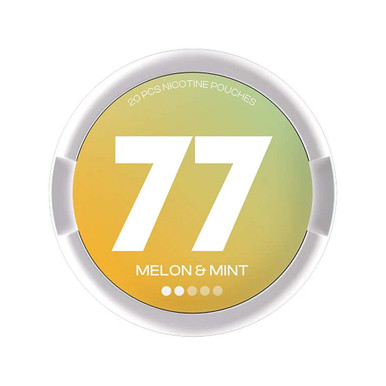
Pouches are not standardised. Some brands run slim, some run broad, some make an explicitly smaller portion and label it mini. A slim pouch and a broad pouch with the same figure on the label are physically different objects and will sit differently. Within our own listings you can see this in the naming: 77 Melon Mint at £39.90 and XQS Blueberry Mint at the same price come from brands with noticeably different house formats, and neither is trying to match Rush. Both, unlike the can on this page, are in stock.
Price structure differs, and it is the field most worth checking
Our prices run from a few pounds to about forty, and that spread is mostly not about quality — it is about how much product a listing covers. Nordic Spirit Frosty Berry at £4.49 and Velo Icy Berries at £4.19 sit at one end; Clew Blueberry and Cuba Black Apple Juice at £39.90 sit at the other. All four are in stock. The £19.99 on this Rush listing sits between them, and because our pack-size field is empty for this product we cannot tell you whether that £19.99 covers one can or several. That is a genuine unknown and it is the reason we are not going to draw you a price-per-can table for this page.
Flavour names are not a shared language
Two cans can carry the same fruit word and taste noticeably different, because flavour naming is marketing copy written brand by brand rather than a controlled vocabulary. Berry on a Rush can and berry on somebody else's can are two companies' interpretations. Our flavour groupings gather listings that share a tag, which is a navigation aid and not a promise that anything inside a grouping tastes alike. ZYN Blueberry Mint at £19.99 and Pablo Exclusive Blueberry Peach Ice at £3.85 are both filed near this listing and both in stock, and neither is a substitute in the sense of tasting the same.
What does not change
The things that stay constant across the catalogue are the boring ones: the format is the format, the catch lid works the same way on almost every tin, storage advice applies identically, and the age rules are the age rules regardless of which brand you put in a basket. If you already use this format, moving brands is a smaller adjustment than the packaging differences suggest.
Where this can sits in the Rush range
The Rush brand page holds twelve listings, and every one of them carries the same £19.99 price. That flat pricing is unusual on our shelves and makes the brand easy to reason about: within Rush, the choice is flavour and declared figure, never cost. It also means that none of the comparisons below involve a price difference, which removes the one variable people usually lean on.
It bears repeating before the links: every Rush listing named here is out of stock, exactly like the one you are reading about. They are worth knowing about if you are mapping the range or waiting for it to return, and they are not worth clicking through to if you need something dispatched.
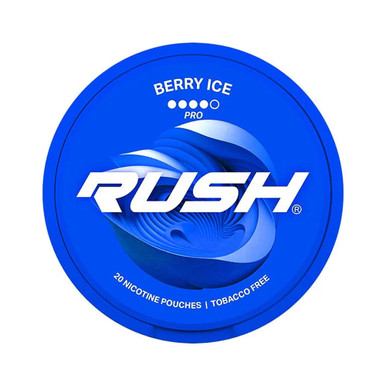
Rush Berry Ice Pro is the closest listing in the range to this one and it is unavailable too. It is the same flavour — the same mint and berry tags, the same Berry Ice name — declared at 11mg instead of 6mg, at the same £19.99. The difference between the two cans, as far as anything we can verify goes, is the number on the label and which of our strength shelves each one is filed on. Pro is not an upgrade and Light is not a trainer version; they are two declarations of the same flavour and we file them apart because the numbers differ.
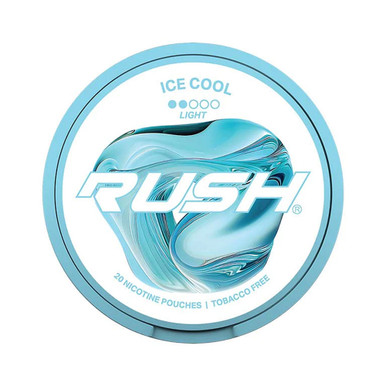
Rush Ice Cool Light, also £19.99 and also out of stock, is the other can in the range carrying the Light word. Its name points at the cool character without a fruit in front of it, so it is the one to note if the berry part is what you would rather do without.
Rush Green Mint Pro sits at the same price, unavailable as well, and is the mint-led listing carrying the Pro word. Rush Boost Mint, again £19.99 and out of stock, is filed with both a mint tag and an energy tag, energy being the name of a flavour grouping on this site rather than any statement about what the can does.
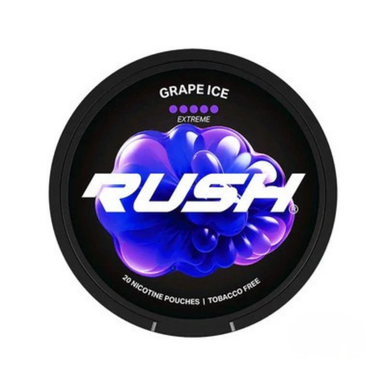
The two cans carrying Extreme are Rush Cherry Chill Extreme, tagged cherry only, and Rush Grape Ice Extreme, tagged mint and grape. Both £19.99, both currently unavailable, and both — despite the word on the can — filed by us on the strong band rather than the extra strong one, because the declared figure is what determines the shelf and the name has no vote.
Cans people keep alongside a berry can
Variety is the ordinary reason people own more than one tin at a time: a single flavour kept up all day tends to fade into the background whether or not anything about the can has changed. The listings below are on nearby shelves, and unlike everything in the Rush range all of them are currently in stock, which is the main reason they are worth your attention today.
Staying inside the berry family, Velo Icy Berries at £4.19 and Nordic Spirit Frosty Berry at £4.49 are the two least expensive berry-and-cool listings near this one, which makes them the cheap way to find out whether a berry blend suits you before spending more. Clew Blueberry at £39.90 takes the fruit in a single-berry direction rather than a blend.
For berry with the cool character kept explicit, ZYN Blueberry Mint at £19.99 is the closest in price to this Rush can, and XQS Blueberry Mint at £39.90 is the same flavour pairing from a different house. Pablo Exclusive Blueberry Peach Ice at £3.85 is the cheapest listing named anywhere on this page and adds a stone-fruit note to the blend.
Moving away from berry for contrast, 77 Melon Mint at £39.90 keeps the cool structure over a lighter fruit, Cuba Black Apple Juice at £39.90 goes to orchard fruit instead, and UBBS Spicy Cherry at £19.95 is the sharpest departure on the list.
One listing on this shelf needs flagging rather than recommending. Denssi Berry Beast Energy Pouches at £39.90 is filed near this can on flavour, and its listing title says energy pouches rather than nicotine pouches — it is a different kind of product from the one on this page. Read its own listing before you add it to anything, because it should not be assumed to be a like-for-like swap.
Choosing between the strengths and pack sizes we list
For this particular listing the choice is narrow, which makes it easy to describe. There is one variant: 6mg at £19.99. There is no second strength and no second pack size under this listing, so there is no decision to make within the page. If you want a different declared figure in the same flavour from the same brand, that is the Pro can, at 11mg and the same price, and it is out of stock along with everything else Rush.
Because our pack-size field is empty, we cannot tell you whether £19.99 buys one tin or a sleeve of them. That is the most consequential gap in this record and it affects how the price compares with anything else on the site. If a listing elsewhere states its pack size and this one does not, the stated one is the sounder basis for a comparison. When Rush stock returns, the listing page and the packaging will be the places that settle it.
On strength bands more generally: the four bands on this site exist to let you filter by the number you already know you buy. The low band this can sits on, the medium band, the strong band and the extra strong band each gather listings whose declared figures fall in a range. We are not going to suggest one over another for you, in either direction, and we would treat any shop that did as a shop to be careful with.
Buying, delivery, and the age check
The mechanics are the same across the site. Ordering runs through the normal basket and checkout, prices shown include what we charge for the item, and delivery options and costs are presented at checkout rather than guessed at here. This is an 18+ purchase and the age check is part of checkout, not an optional extra. ID may be requested on delivery, and if it is requested and no adult at the address can produce it, the parcel does not get handed over. That is not a formality we are willing to be flexible about.
Because this listing is unavailable, none of the above currently applies to it — there is nothing to add to a basket. We do not take payment for out-of-stock listings and we will not tell you a date for return, because we do not have one. Restock timing depends on the supply chain rather than on us, and a made-up date is worse than no date. If you want something you can actually order now, everything we stock filters by availability, and every listing named in the two sections above is in stock as this was written.
Where this page sits on the site
This listing is filed on four shelves. It is in our low strength band on the strength of its 6mg declaration, alongside fourteen other listings. It is on the Rush brand page with the other eleven Rush products, all at £19.99 and all unavailable. It is in the mint flavour grouping, our largest at 148 listings, and in the berry grouping, which holds 76.
Beyond those, the other strength bands are the fastest route sideways: the medium strength band is where the Berry Ice Pro declaration would put you, and the strong band and the extra strong band hold the higher declarations. Two brand pages worth knowing, because both appear repeatedly in the comparisons above, are the Pablo brand page and the Cuba brand page. Everything we stock is the top of the tree if none of those narrow things down usefully.
Questions we are asked about this can
Can I order it right now?
No. Rush Berry Ice Light is out of stock and so is every other Rush listing in our catalogue. There is nothing to add to a basket and we are not taking back-orders on it. This is worth stating flatly because product pages have a habit of implying availability through tone even when the stock line says otherwise. If you need a can dispatched, use the listings in the sections above, all of which were in stock when this page was written, or filter the full shelf by availability.
When is it coming back?
We do not know and we are not going to guess. Restock depends on supply into us rather than on anything we control, and a speculative date on a product page is the kind of small dishonesty that costs a shop more than it gains. The listing page is the only reliable place to see the current position, because it reads from the same record this page quotes.
Is Berry Ice Pro just a stronger version of this?
It is the same flavour with a different number declared on it — 11mg against 6mg — at the same £19.99. Calling it a stronger version implies a ranking we are not in a position to endorse, and "Pro" is a word the manufacturer printed, not a grade we assign. The two cans are filed on different strength bands because their declared figures differ. Which of them anybody should buy is not a question a shop can answer, and both are unavailable at present in any case.
How many pouches are in the can?
Our record does not hold that figure, so we do not have an answer for you. The number is normally printed on the packaging and the packaging is the authority for it. We could estimate from other brands in the same format and we are not going to, because a guess presented on a product page stops looking like a guess very quickly.
Does £19.99 buy one can or several?
We cannot tell you. The pack-size field on this record is empty, and the single variant line reads 6mg at £19.99 without stating a quantity. Every Rush listing shares that £19.99, which is consistent but does not resolve the question. Where a comparison with another listing depends on the answer, treat this one as unresolved rather than assuming a single can.
What is actually in the pouches?
We do not publish ingredient or composition information on product pages, for this listing or any other. The manufacturer's own labelling on the can is the authoritative source and we are not going to paraphrase it from memory. This applies across the site and is a policy rather than an oversight.
Which strength should I buy?
We cannot advise on that, and we would be wary of anyone who would. A shop knows what a label declares and nothing at all about the person reading the page. What we can do is file listings by their declared figures so that you can find the band you already use, and tell you plainly, as here, when a product name and a strength band are not saying the same thing.
Why is a can called Light filed under low strength but Cherry Chill Extreme is not filed under extra strong?
Because we file on the declared figure, not the name. This can declares 6mg and 6mg falls in the low band, so the two happen to agree. Cherry Chill Extreme declares 20mg, which falls in our strong band, so despite the word on the lid it is not on the extra strong shelf. The names are the manufacturer's; the bands are ours; when they disagree we say so rather than quietly re-filing to match the marketing.
Will a berry can from another brand taste like this one?
Probably not exactly, and possibly not closely. Flavour names are written brand by brand with no shared standard behind them, so two cans tagged berry are two companies' interpretations of the word. The flavour groupings on this site gather listings that share a tag to help you navigate, not to promise similarity. The cheaper berry listings named above are the least expensive way to test the question for yourself.
Can I keep an opened can in the car between uses?
You can, and it is the storage choice most likely to leave you with a can you do not enjoy. A vehicle interior gets far hotter than any indoor shelf and swings through a wide temperature range daily, both of which push a can towards the dry, flat end of its life faster than a cupboard would. A cool, dark, dry place indoors is the whole of what we would say about storage.
What do I do with a used pouch when there is no bin?
The hollow well under the lid is there for exactly that. It holds several used pouches, which covers most journeys, and it is the reason the tin design has stayed the same across brands. Empty it into general waste when you next pass a bin. Used pouches do not go down a sink or a toilet and should not be dropped on the ground.
Do you hold anything about this product you have not printed here?
No. Name, brand, price, one declared strength, two flavour tags, one image and a stock flag reading unavailable is the entire record, and all of it is above. Where this page says we do not know something, that is the literal position rather than a way of avoiding a question.
The legal wording, in full
Nicotine is an addictive substance.
Rush Berry Ice Light Nicotine Pouches are sold only to adults aged 18 or over who already use nicotine. We operate an age check at checkout, we do not sell to anyone under 18, and ID may be requested on delivery; where it is requested and cannot be produced by an adult at the address, the parcel will not be handed over.
This product is not a licensed stop-smoking medicine and holds no authorisation of that kind. It is not intended for non-smokers, for people who do not already use nicotine, for anyone under 18, or for anyone who is pregnant or breastfeeding. Nothing on this page is medical advice, nothing on it should be read as a suggestion that anybody begin using nicotine, and nothing on it recommends one declared strength over another for any person.
Keep the can closed and out of reach of children and pets, and put used pouches in general waste. Every product fact above — name, brand, price, declared strength, flavour tags, image count and stock status — comes from our own record for this listing. Where the record is empty, we have said so rather than estimating, and the manufacturer's labelling on the can is the authority for anything printed on the packaging.
The short version
Rush Berry Ice Light is a dark berry flavour over a cool mint base, listed at £19.99 in a single declared strength of 6mg, and it is out of stock, as is every other Rush can we list. Light is a word the manufacturer printed on the lid, not a rung on a ladder and not a judgement about who should buy what; the 6mg figure is why we file it on the low band, and that filing is navigation rather than advice. Store any can of this format cool, dark, dry and closed, and expect an open tin to trend drier rather than better. If you need something you can order today, the berry and mint listings named above were all in stock as this was written, with Velo Icy Berries at £4.19 the cheapest route into the flavour family and ZYN Blueberry Mint at £19.99 the closest match on price. Everything we know about this listing is on this page, and everything we do not know, we have said we do not know.
More from Rush
More low strength pouches
More mint pouches
Where this sits
Rush Berry Ice Light Nicotine Pouches appears in these categories. Browse them, or jump to something close.
You might also like