Home / Low Strength / Rush Mango Freeze Light Nicotine Pouches

Rush · 6mg
Read the full guide
Rush Mango Freeze Light Nicotine Pouches
£19.99
✔ In stock — ready to ship
100% tobacco-free
Free over £20
Same-day dispatch
Secure checkout
This page belongs to Rush Mango Freeze Light Nicotine Pouches. The brand printed on the can is Rush, the product name we hold on the listing is Mango Freeze Light, and the price against it is £19.99. There is one declared strength on the record, 6mg, and one purchase option at that strength and that price. Our record currently marks the listing as out of stock. We hold a single flavour tag against it, mango, and one product photograph.
That short list is the whole of what our product record contains, and it is worth being blunt about the consequence. Everything written below is one of four things: a description of the can and the format, a comparison against other cans sitting on our own shelves, a practical note about ordering and delivery, or a plain statement that we do not hold a piece of information you might reasonably want. We do not print ingredient lists. We do not explain what happens once a pouch is in the mouth. We make no statement about anybody's wellbeing in any direction, favourable or otherwise. Where the honest answer is that our record does not say, that is the answer this page gives, and it gives it without dressing it up.
The full guide to Rush Mango Freeze Light Nicotine Pouches
5,276 words on how it eats, who it suits, how to serve it and what to put beside it.
What this listing holds, in plain terms
Our record does not hold a can count for this listing. Plenty of listings on the site carry one — a figure telling you whether the price buys a single can or a sleeve of several — and this one does not. So we are not going to tell you how many cans £19.99 covers here, because we would be guessing. The can's own labelling, and the manufacturer's own description on the packaging, are the authority for that, and they are the authority for anything else printed on the object that we have not reproduced above.
Availability: this can, and the whole Rush shelf
The most useful thing we can tell an adult reading this page today is that they cannot buy from it. The listing is marked out of stock, and that is not a temporary blip on one line while the rest of the brand carries on. Every Rush listing we hold a link for is in the same position. Our Rush shelf lists twelve products, and the six Rush cans closest to this one on that shelf are all marked unavailable alongside it.
Being specific about that is more respectful than letting you find out at the basket. Rush Berry Ice Light, the berry listing that carries the same Light word in its name and the same £19.99 price, is out of stock. So is Rush Berry Ice Pro, the berry can with Pro rather than Light on it, also at £19.99. Rush Boost Mint, the mint entry at the same £19.99, is out of stock. Rush Green Mint Pro, the second mint listing on the shelf, likewise. The two cans carrying Extreme in their names, Rush Cherry Chill Extreme at £19.99 and Rush Grape Ice Extreme at the same price, are both marked unavailable too.
So the Rush pricing is consistent at £19.99 across all seven of those listings, and the stock position is consistent as well: none of them can be added to a basket at the moment. We have left the pages up rather than deleting them, because an adult who already uses this particular can is better served by a page that says plainly where things stand than by a dead link. If you want a can you can actually order today, the sections below on mango listings and on our strength shelves are the practical part of this page, and everything in them points at stock we currently hold.
We cannot tell you when or whether this listing will return. We do not publish restock dates, because we would be publishing a promise made of nothing. The stock flag on the listing is updated from our own records, so the page itself is the most current thing we have to offer on the question.
The word "Light" on this can, and what it is not
The listing reads Mango Freeze Light. Light is part of the manufacturer's own name for this product, in the same way that Pro is part of the name on one of the berry cans and Extreme is part of the name on the cherry and grape ones. It is a word the brand chose to print. We hold it because it is on the product, not because we have translated it into anything.
We are not going to treat it as a tier, a grade, a rung or an entry point. It is not a recommendation from us, and it is not a statement that this can is where anybody ought to begin. The idea that a set of names on a brand's shelf describes a route through them — Light, then Pro, then Extreme — is a story about packaging, not a fact we hold, and we do not know what the brand means by any of the three. The only figure on this listing with a defined meaning is the 6mg declared strength, and the section further down explains what that figure is and what it deliberately does not say.
The same applies to Freeze in the middle of the name. Our flavour tagging for this listing is one tag, mango, and nothing else. Freeze is part of the product name the manufacturer printed; it is not a flavour tag in our system and not a descriptor we have verified. We mention it because it is on the can and you will read it there, not because we can tell you what it tastes of.
Mango, as a flavour tag and as a taste
The single tag we hold is mango, which is why this listing files onto the mango shelf, sixteen products deep at present. That tag is what determines where the can appears when you browse by flavour. It is a filing decision, not a tasting note written by us.
On taste, the honest scope of what can be said is narrow. Mango as a flavour note in a dry pouch tends to read as a rounded, slightly thick sweetness with a soft edge rather than a sharp one — closer to the middle of a stone fruit than to the bright, acidic top note you get from citrus or a green apple. Where a mango note is carried well, the sweetness arrives first and the more resinous, faintly perfumed part of the fruit sits behind it. Where it is carried thinly, it can read as generic sweetness with a tropical suggestion rather than anything specifically mango. Which of those two this particular can does, we are not going to claim, because we do not hold a tasting record for it and we are not going to write one from imagination.
The word Freeze in the product name conventionally suggests a cooling character alongside the fruit, and you will find plenty of listings across the catalogue where a cooling note and a fruit note are named together. Again: that is the manufacturer's naming, our record carries only the mango tag, and we cannot tell you the balance between the two in this can. Aroma, when a can is opened, is a related but separate matter — a mango-tagged can usually announces itself on the lid coming off more clearly than, say, a plain mint, but how much so varies from can to can and we have no measurement to offer.
The format in practice: the can, the pouch, the lid
A nicotine pouch listing of this kind is a small cylindrical can with a screw or snap lid. The pouches sit stacked inside the lower compartment. Most cans in this category carry a shallow upper compartment in the lid — a catch compartment — intended for used pouches, so that a spent one can be put somewhere until it can be thrown away properly rather than being carried loose. Whether this particular can has that compartment is a question about the object, and since our record holds one photograph and no specification, the can in your hand is the authority. The great majority of cans we stock do have one.
The pouch itself is a small sealed sachet. In use it is placed between the lip and the gum and left there; it is not chewed and it is not swallowed. How long people keep one in varies widely — some take a pouch out after ten or fifteen minutes, others leave one in for half an hour or considerably longer — and the honest answer is that there is no standard duration and we are not going to supply one. The can's own labelling is where the manufacturer's guidance sits, if there is any, and an adult who already uses pouches will have their own habit.
Disposal is the unglamorous but genuinely important part. A used pouch goes in general waste. It does not go down a sink or a lavatory, it does not go in a food-waste caddy, and it does not go on the floor or out of a window. The catch compartment in the lid exists precisely so that there is somewhere to put one when a bin is not to hand. A can with used pouches sitting in the lid should be emptied at the next bin rather than left to accumulate, which is as much about the state of the can as anything else.
Cans should be kept closed when not in use, kept upright where practical, and kept out of reach of children and pets — which is not an aside, but the single most important handling instruction on any listing of this type.
Keeping a can usable: dryness, moisture, heat and time
This is the part of pouch ownership that most often disappoints people, and it has nothing to do with the brand on the lid. A can of dry pouches and a can of moist pouches behave very differently once opened, and both of them respond badly to being ignored in the wrong place.
Take dryness first. A dry-style pouch arrives with very little free moisture in it. Left with the lid off, or with the lid on loosely in a warm room, it loses what little it has, and the result is a pouch that feels papery and takes a long time to do anything once it is in the mouth. Flavour in a dry pouch is bound up with how readily the sachet takes up moisture in use; a pouch that has been sitting open on a desk for a fortnight will be slower and flatter than one from a can that has been kept shut. Nothing is wrong with the pouch — it has simply dried out further than it was meant to, and there is no reliable way to put the moisture back. Trying to, by breathing on it or adding water, is a bad idea and we would not suggest it.
Moist-style pouches have the opposite failure mode. They carry more free liquid, which is what makes them feel plumper between the fingers, and that liquid wants to go somewhere. A moist can left in a hot car, a coat pocket against a radiator or a bag in direct sun will often show a little pooling in the base, and the pouches at the bottom of the stack end up wetter than the ones at the top. That is a presentation problem and a mess problem rather than anything mysterious. Storing a can upright and level, rather than on its side, keeps the stack even and keeps any free liquid at the bottom where it belongs.
Heat is the common enemy of both styles. Warmth accelerates every change a can is going to undergo: flavour notes flatten out first, because the lighter, more volatile part of a fruit note is the part that leaves, and a mango-tagged can stored warm for a long period will tend to read duller and more generically sweet than a cool-stored one. Cold is far less of a problem than heat, although a can taken out of a fridge and opened immediately will sometimes carry a little condensation on the inside of the lid, which is worth wiping rather than letting sit.
Light matters less than heat but is not nothing. A can left on a windowsill is getting warm as well as bright, and the two arrive together. A drawer, a cupboard, a bedside table, the inside pocket of a bag — anywhere dark, dry and roughly room temperature — is entirely adequate. There is no need for anything more elaborate, and there is certainly no need for a fridge; people who keep cans cool tend to be storing several at once rather than managing a can in daily use.
On the question of how long a can lasts, the manufacturer's own date marking on the packaging is the only figure worth going by, and our record does not hold it. What we can say is what the practical failure looks like: a can that has been open a very long time is likely to be drier, flatter in flavour and less pleasant to use than a fresh one, and the sensible response is a new can rather than persistence with the old one. If you keep several cans in rotation, using the oldest first and keeping them all in the same dark, cool place is the whole of the discipline required. Anyone stocking up in quantity — which, with Rush unavailable across the board, currently means shopping from everything we stock rather than from this brand — is worth thinking about storage before the parcel arrives rather than afterwards.
The figures on our shelves, and why we do not arrange them as steps
The 6mg on this listing is the manufacturer's declared figure, carried through to our record and used by us for one purpose: deciding which strength shelf the can appears on. On that basis this listing sits on our Low Strength shelf, which holds fifteen products. That is a bracket in a filing system. It is not a verdict on the can and it is not advice.
Here is what the number does tell you. It tells you what the manufacturer declares, it lets you compare one can's declared figure against another can's declared figure, and it tells you which of our shelves a can will turn up on. That is genuinely useful when you are browsing a catalogue of several hundred listings and want to narrow it down, and it is the reason the shelves exist at all.
Here is what it does not tell you, and we would rather say this at length than let it be inferred. It does not describe an experience. It does not translate into a sensation, a duration or an intensity that we can put into words, and we are not going to try, because doing so would be a claim about effects and we do not make those. It does not come with a basis we can explain: our record carries the figure as declared and does not tell us how the manufacturer arrived at it or what it is declared per, and we are not going to invent that detail. It is not comparable across brands in any strict sense, because two brands declaring the same figure have not necessarily measured or defined the same thing. And it is emphatically not a scale of quality — a larger number is not a better can, a smaller number is not a lesser one, and nothing on this site should be read as arranging our stock from worse to better.
Our shelves run Low, Medium Strength, Strong and Extra Strong. Those four names are sorting brackets and nothing else. They are not rungs, they are not a route, and there is no implied direction of travel through them. We are not going to describe a can as a place to begin or a place to end up, we are not going to frame any listing as something to be earned or worked towards, and we will not tell you which bracket suits you. We cannot advise on that. It is not a coy refusal or a legal formality — we genuinely do not have the information about any individual reader that such advice would require, and it would be advice about nicotine, which is not ours to give. An adult who already uses these products knows their own habit better than a product page ever will.
What we will do is be accurate about the numbers themselves. This listing declares 6mg. Where a can's declared figure is not on its listing, it is not on our record, and we will say so rather than filling the gap. Where two listings sit on the same shelf, that means their declared figures fall in the same bracket and nothing more than that. If you want to see how wide the range on our shelves actually is, the bracket pages are the honest way to look at it: each one shows what it holds, and you can read each listing's own declared figure on its own page.
Where this can sits within Rush on our shelves
Rush, as we hold it, is a twelve-product brand with a flat price structure. Every Rush listing linked from this page carries the same £19.99, which makes the brand unusually simple to think about: the choice within it is about flavour and about the word on the can, never about price. The flavour spread across the listings we link runs mango here, berry twice over, mint twice over, cherry once and grape once.
The words the brand attaches — Light, Pro, Extreme — appear alongside the flavours in combinations rather than as a straight matrix. Berry appears with both Light and Pro. Mint appears with Boost on one can and Pro on another. Cherry and grape appear with Extreme. Mango, on this listing, appears with Freeze and Light. We are describing the naming as we hold it, and we are not going to interpret it, because the brand has not told us what those words mean and we are not prepared to guess on a nicotine product page.
What we can say plainly is that the whole of that shelf is currently unavailable, so the comparison is academic rather than practical at the moment. If Rush is specifically what you are after, the brand page is the place to watch, since it reflects our stock position as it stands. If what you actually want is a mango can you can order, the next section is the useful one.
Mango cans we can currently sell, and what separates them
The mango shelf is the natural place to go from here, and most of what sits on it is available. The differences between these listings are mostly brand, price and how the can is sold, and we have set them out in those terms rather than by guessing at flavour.
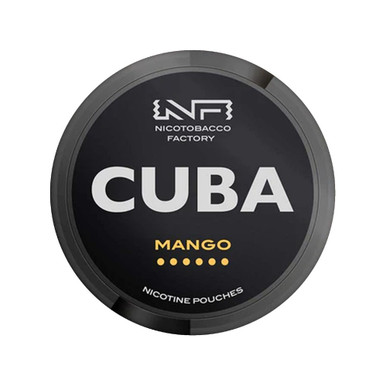
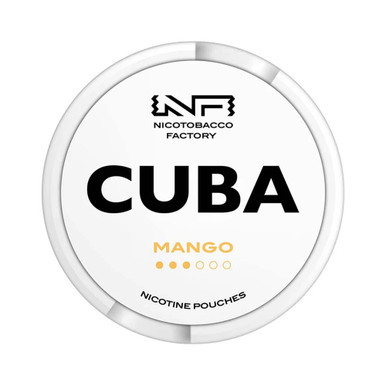
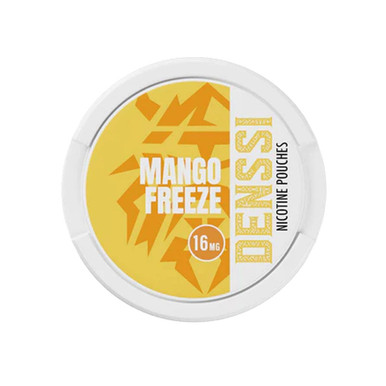
At the top of the price range there are three cans at £39.90, all in stock. 77 Ghost Mini Mango is the mango entry in 77's Ghost Mini line, where Mini refers to the format name the manufacturer uses rather than to anything about the declared figure. Cuba White Mango is the mango can in Cuba's White range and sits at the same price. Denssi Mango Freeze is the closest neighbour by name to this listing — same two words, Mango Freeze, from a different brand — also £39.90 and available. If the name on this page is what brought you here, that is the listing to read next.
Below those, Killa Mango Ice is in stock at £33.50. Our web address for it contains the words extra strong, which reflects how it was filed rather than a figure we hold in its title; its own page carries its declared strength and is the place to read it. Fumi Fiery Mango is £27.90 and available, with Fiery being part of the manufacturer's flavour name.
Two mango listings are priced very differently from the rest, and the reason is worth understanding. Pablo Exclusive Mango Ice is £3.85 and Velo Mango Flame is £4.19, both in stock. Prices in that region almost always mean the listing is sold as a single can, where a listing at £30 or £40 is usually a sleeve of several. Our record does not always hold the can count, so the safe habit is to read the quantity on each listing before comparing prices between them. A £3.85 line and a £39.90 line are frequently not two prices for the same amount of product.
One mango listing to flag before you click it: Edge Mango is £14.95 and is currently out of stock, like this page. It is on the mango shelf and it is worth knowing about, but you cannot order it today.
Two cans on the shelf that are nothing like mango
Not everyone browsing a fruit listing wants only fruit, and the catalogue holds two neighbours worth naming for contrast. UBBS Coffee is £19.95 and in stock, which puts it within five pence of the price on this page. Coffee as a flavour tag sits at the opposite end of the catalogue from mango: roasted and bitter-leaning rather than sweet and fruit-leaning, and people who keep one of each tend to be after exactly that contrast rather than a middle ground.
XQS The Spearmint is £39.90 and available, and represents the other large flavour family on the site. Spearmint reads as sweeter and softer than peppermint, and either way a mint can and a mango can are the two most different things you can have open at once. If you keep two cans on the go, one fruit and one mint is by far the most common pairing across the catalogue, and this is a reasonable example of the mint half.
What there is to choose on this listing
Very little, and it is better to say so than to manufacture a decision. There is one declared strength, 6mg. There is one purchase option, at £19.99. There is no second size, no second strength and no multipack option on this record. Our record does not hold a can count, so we cannot even offer you a per-can comparison against other listings.
The one thing that would matter — whether to order it at all — is settled by the stock flag, since you cannot. So the real choice this page presents is between waiting on the brand and buying something else from the mango listings or from a different shelf entirely. We have named the in-stock mango options above with their prices. Beyond that, the decision is yours, and we are not going to nudge it.
Ordering, delivery and the age check
Ordering from the site works the same way on every listing. Add the can to the basket, and the basket applies an age check before checkout will complete. The site sells only to adults aged 18 or over, and the check is not decorative — orders that fail it are not dispatched. That applies uniformly across the catalogue; there is no listing on the site exempt from it.
On delivery, ID may be requested at the door. Where it is requested and no adult at the address can produce it, the parcel is not handed over. The sensible practice is to have the order sent somewhere an adult will be present with identification available, rather than to an address where a parcel will be left unattended. We do not set the courier's policy on attended delivery and we do not publish a courier's internal rules, so what the driver asks for on the day is the driver's call within that framework.
Because this listing is out of stock, none of the above is immediately relevant to this can — you cannot place the order in the first place. It applies to whatever you order instead, and it applies to the other unavailable Rush pages too, should they return.
Finding your way around from here
Three routes lead out of this page and each is useful for a different question. If you want the flavour, mango is the shelf. If you want the brand, Rush is the shelf, with the caveat about stock above. If you want to browse by declared figure, the four strength brackets are the way in, and they are linked in the section on shelf figures further up.
Beyond that, the Pablo pages are worth a look if the £3.85 single-can pricing on the mango listing caught your attention, since that brand accounts for a large share of the low-priced single cans on the site. Cuba's listings are the counterpart at the other end, with a broad flavour spread at consistent higher prices. And if none of that narrows it down, the full catalogue is browsable in one place and is the most straightforward way to see the range as it actually stands, stock included.
Questions we are actually asked about this can
Can I order it right now?
No. Our record marks this listing out of stock, and the basket will not take it. That is not a display quirk on this page — the same applies to every Rush listing we link, all of which are marked unavailable at the same £19.99 price. The in-stock mango alternatives are named above with their prices, and the brand page reflects our position on Rush as it stands.
When will it be back?
We do not know, and we do not publish restock dates. A date on a product page would be a guess dressed as information, and it would be the sort of guess that sends someone back three times for nothing. The stock flag on the listing itself is updated from our own records, so the page is the most current answer we have.
How many cans does £19.99 buy?
Our record does not hold a can count for this listing, so we cannot tell you. Some listings on the site carry a count and some do not, and this is one of the latter. The manufacturer's packaging is the authority. We would rather leave the gap visible than fill it with a number we have not verified, particularly on a page where the price comparison against other cans depends on it.
Does "Light" mean it is a good place to begin?
No, and we will not present it that way. Light is part of the manufacturer's name for the product, sitting alongside Pro and Extreme on other cans in the same range. We do not know what the brand intends by any of those words, we are not translating them into levels, and nothing on this page is a suggestion that anybody begin using nicotine or choose a particular can. We cannot advise on which strength suits any individual.
What does 6mg actually mean?
It is the strength the manufacturer declares for the product, which we carry on the record and use to decide which strength shelf the can appears on — here, our Low Strength bracket. It lets you compare declared figures between listings. It does not describe an experience, we do not explain what it does, and it is not a quality ranking. Our record does not tell us how the figure was arrived at, so we do not publish an interpretation of it.
What does it taste like?
The one flavour tag we hold is mango. Beyond describing how a mango note generally reads in a dry pouch — rounded and sweet rather than sharp — we have no tasting record for this specific can and will not write one. The word Freeze in the product name is the manufacturer's, and we cannot tell you how much cooling character sits behind the fruit. The can's own labelling is the authority.
Is it made in the same place as the other Rush cans?
We do not hold that information and we do not publish it. Our record carries a brand name, not a production location, and we are not going to infer one from a brand name or a product name. The packaging is where any such statement would properly appear.
Why is this £19.99 when a similar mango can is £3.85?
Almost always because the two listings are sold in different quantities — a single can against a sleeve of several — rather than because one is many times the product of the other. Since our record does not hold a can count here, we cannot do that arithmetic for you on this page. Read the quantity on each listing before comparing prices; it is the single most common source of confusion across the catalogue.
Do I need to keep a can in the fridge?
No. A dark, dry cupboard or drawer at ordinary room temperature is sufficient for a can in use. Cool storage is something people do when they are keeping several cans at once, not something the format requires. Keeping a can out of heat and direct sun matters considerably more than keeping it cold, and keeping it closed matters most of all.
How long should I keep a pouch in?
There is no standard figure and we are not going to invent one. Habits across our customers vary from a few minutes to well over half an hour. If the manufacturer gives guidance, it will be on the packaging, and that is the place to read it. This is not us being evasive — the honest position is that it varies by person and we hold no data on it.
Where do used pouches go?
In general waste. Not down a drain, not in food waste, not on the ground. Most cans in this format have a shallow compartment in the lid for holding a used pouch until a bin is available, and emptying that at the next bin rather than letting it fill up is the whole of the routine.
Can you tell me which of your cans is closest to this one?
By name, the closest thing we stock is the Denssi listing that carries the same Mango Freeze wording, at £39.90 and in stock. By price, the coffee listing at £19.95 is within pence, though it is a completely different flavour family. We can match on the facts we hold — name, price, brand, tag, stock — but we cannot tell you that two cans taste alike, because we hold no tasting records.
The required wording, set out in full
Nicotine is an addictive substance.
Rush Mango Freeze Light Nicotine Pouches are sold only to adults aged 18 or over who already use nicotine. The site operates an age check before checkout completes, we do not sell to anyone under 18, and ID may be requested on delivery. Where it is requested and cannot be produced by an adult at the delivery address, the parcel will not be handed over.
This product is not a licensed stop-smoking medicine and holds no authorisation of that kind. It is not intended for non-smokers, for anyone who does not already use nicotine, for anyone under 18, or for anyone who is pregnant or breastfeeding. Nothing on this page is medical advice, nothing on it is a suggestion that anybody begin using nicotine, and nothing on it recommends one declared strength over another for any person or circumstance.
Keep the can closed and out of reach of children and pets. Dispose of used pouches in general waste. Every product fact stated above — name, brand, price, declared strength, flavour tag, stock status — comes from our own product record for this listing, and where that record holds nothing, we have said so rather than estimating. The manufacturer's labelling on the packaging is the authority for anything printed on the can itself.
The short version
Rush Mango Freeze Light is a 6mg listing at £19.99 with one mango flavour tag, one purchase option, no can count on our record, and an out-of-stock flag — as has every other Rush can we hold a link for. Light is the manufacturer's word, not a grade. The 6mg is a declared figure that tells you which of our four shelf brackets the can files under and nothing about how it will be. If you want mango you can order today, the in-stock listings and their prices are set out above, and the Denssi can with the same two words in its name is the nearest match by name. If you want Rush specifically, the brand page is where our stock position will show up first.
More from Rush
More low strength pouches

More mango pouches
Where this sits
Rush Mango Freeze Light Nicotine Pouches appears in these categories. Browse them, or jump to something close.
You might also like