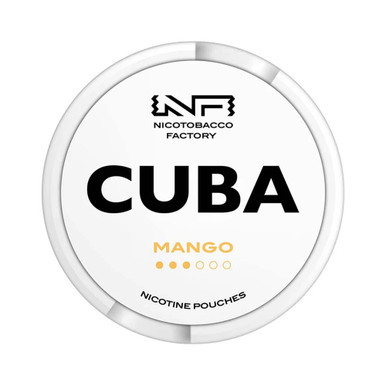
Cuba · 16mg
Read the full guide
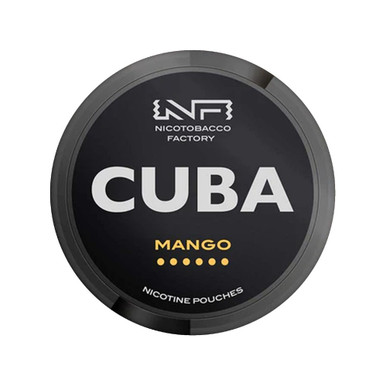
Cuba White Mango Nicotine Pouches
£39.90
✔ In stock — ready to ship
100% tobacco-free
Free over £20
Same-day dispatch
Secure checkout
This listing is Cuba White Mango Nicotine Pouches: £39.90, one declared strength of 16mg, flavour recorded in our data as mango, and in stock at the time of writing. Four facts, all of them checkable against the listing itself, and the rest of this page is description, comparison and a handful of honest gaps.
Mango is one of the flavour categories we actually sort by, which makes this can easier to place than most. Our mango shelf holds 16 listings — a small, well-defined corner of the catalogue rather than a sprawling one, and small enough that a customer who wants to see everything we carry in this flavour can do so in a single sitting. That is unusual and it is useful, and this page leans on it heavily, because the most informative thing we can say about any one mango can is how it sits against the other fifteen.
The full guide to Cuba White Mango Nicotine Pouches
5,037 words on how it eats, who it suits, how to serve it and what to put beside it.
The Cuba White Mango can, stated plainly
Several named ranges make up Cuba's listings with us, White among them. Manufacturer documentation explaining what those names signify has not reached us, so no explanation of them will appear here. What we hold is the price, the declared figure, the flavour category and the other forty-six Cuba listings on our shelves, and this page is built out of those.
Housekeeping before anything else: this is an adult nicotine product, sold only to people aged 18 or over who already use nicotine. The compliance section sits near the foot of the page and is worth reading in full.
Mango as a flavour, and what that word actually covers
Mango is less specific than it sounds. In the pouch category it covers at least three distinguishable ideas, and knowing which one a can is aiming at matters more than the word on the lid.
The first is ripe mango: heavy, sweet, faintly floral, with a soft and almost thick quality to it. The second is green or under-ripe mango: much sharper, more acidic, with a distinctly tart edge and far less sugar to it. The third is mango as a tropical blend component, where the mango note is doing most of the work but sits alongside pineapple, passionfruit or citrus and never quite stands alone. Cans in all three modes get called mango, and the distance between the first and second is considerable.
We are not in a position to tell you which of those three this can is, because our data records the flavour category and not a tasting description, and we have not run a tasting panel whose results we could publish. What we can say is the general shape of what a mango-named pouch does: a recognisable sweet-tropical fruit character arriving early, holding through the middle, and thinning towards the end. Tropical flavours as a family tend to be sweeter than berry ones and rounder than citrus ones. They are also among the flavours that fade least abruptly, because there is usually more than one note in them and they do not all disappear at the same moment.
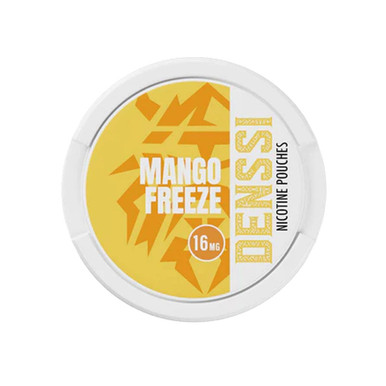
The name of this can signals no cooling element at all. Some mango pouches elsewhere in the category pair the fruit with a cold sensation and say so on the lid — Denssi Mango Freeze at £39.90 is the clearest example we list, with the cold element stated in the product name itself. This one carries no such signal, so it should read as a fruit flavour rather than a cold one.
The shape of the flavour over the life of a pouch is worth setting out, because people who are used to one flavour family and move to another often expect the wrong curve. A single-note flavour — a hard mint, say — tends to arrive at full strength and then decline more or less steadily. A multi-note flavour like a tropical fruit usually behaves differently: the brightest, most volatile part shows up first and goes first, and what remains through the middle is the heavier, sweeter base. The practical result is that the last third of a tropical pouch often tastes noticeably rounder and less lively than the first third, without tasting wrong. That is the normal behaviour of the family and not a sign that a can has been badly kept.
It also helps to know what a mango can is usually competing with on a shelf. Tropical is one of the largest flavour groupings in the category as a whole, and most of the listings in it are blends rather than single fruits — pineapple, passionfruit, guava and citrus appear constantly as supporting notes. A can named for one fruit and nothing else is making a narrower claim than a can named "tropical", and if you have previously bought tropical blends and found them muddled, a single-fruit name is the thing to look for. Whether this particular can honours that narrowness in practice is something the tin will tell you and we cannot.
That is taste and aroma described as taste and aroma. We are not going to tell you what the pouch does beyond the flavour, and we would treat with suspicion any product page that did.
The tin, the pouch and the practical mechanics
Nothing about this can departs from the standard format, but the detail is worth having on the page.
The tin is a shallow round cylinder with a lid that lifts clear and presses back down. The face carries the brand, the range and the flavour, and the declared strength figure is printed where it can be read without opening anything — a detail that earns its keep as soon as you own more than one can. Inside, pouches lie flat in a ring around the base.
The pouch count is missing from our product data for this listing, and we will not print a figure we cannot stand behind, which leaves the can itself as the source. The same is true of net weight, of pouch dimensions and of the portion size — whether this is a regular or a slim shape is not something we hold, and the printed tin answers it.
The upper part of a tin of this type is normally a catch lid, a separate compartment for used pouches reached by turning or lifting the top. It is a bin rather than a feature, and its whole value is that you are not carrying a used pouch in a tissue while looking for somewhere to put it. Used pouches belong in a bin — the catch lid or general waste — and never down a sink, a drain or a toilet, never on the ground, and never anywhere a child or an animal could reach.
A pouch sits between the lip and the gum, usually the upper lip, usually to one side. It should lie flat and stay where it is put; one that keeps shifting has generally been placed too far forward. Nothing needs chewing or adjusting. On duration, we publish no recommended time and are not going to make one up: across the category people go by the taste rather than the clock and take a pouch out when the flavour has thinned, which for most people lands somewhere between twenty and forty minutes with a great deal of individual variation. Manufacturer guidance printed on the can takes precedence over that observation, every time.
Two further mechanics that come up often enough to be worth writing down. The first is eating and drinking: most people take a pouch out before a meal, principally because chewing around one is awkward, and hot drinks noticeably shorten the useful life of a pouch's flavour, which is worth knowing if you drink a lot of tea and find your cans running down faster than you expected. The second is the ring itself — pouches are best taken from the edge of the ring rather than dug out of the middle, which keeps the rest lying flat, and they are best taken with dry fingers, because every damp hand that goes into a tin puts a little moisture where it is not wanted. Neither of these is a rule. They are the two habits that separate a can that stays good to the last pouch from one that does not.
The format is built around a single pouch at a time, and using more than one at once is not something we describe, suggest or encourage. We have nothing further to say on quantity.
What the figure 16mg is for
This listing declares 16mg and offers no alternative. The number is the manufacturer's stated strength, printed in a standard place across the category, and its function is comparison: it lets you put two cans side by side and say which one declares higher. That is the entirety of what it does on this page.
It does not predict taste, duration or perceived intensity, because portion size, material, flavour and personal habit all sit between the printed figure and the experience. Two cans carrying the same number can read very differently. A customer treating the figure as a precision instrument is asking more of it than it can give.
As a sorting device, 16mg files this can on the Strong shelf, which holds 132 listings. The medium-strength category sits below it and the extra strong category above. Those three shelves exist so the catalogue can be arranged by declared figure. They are a filing system and nothing else, and we are not going to turn them into a recommendation by implication or otherwise.
We do not advise on strength. We will not name a figure as a sensible place to begin, will not describe any number as suitable for any person or situation, and will not answer the question when it is asked. Those are principled refusals, not oversights.
Rotating a mango can: the three ways people do it
The single most useful piece of shopping advice a shop can give about a sweet tropical can is what to keep beside it, and the reason is unremarkable: a sweet, fruit-forward flavour stops registering after several in a row. Palate fatigue is not a fault in any can and it is not solved by a stronger one. It is solved by a differently shaped flavour. People go about that in three distinct ways, and it is worth setting out all three rather than producing a list of names.
One: stay in mango and change the treatment
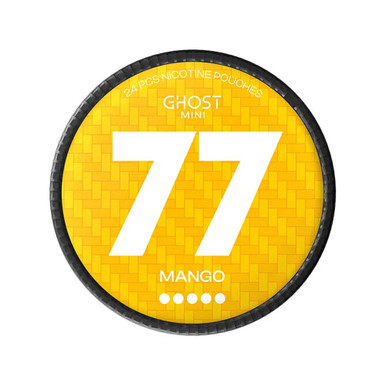
The narrowest rotation keeps the fruit and changes what is done to it. Denssi Mango Freeze at £39.90 is the obvious partner here — the same price as this listing, the same fruit, and a cold element stated in the name that this can does not signal. Moving between the two gives you a real change of sensation without leaving the flavour at all. Killa Mango Ice at £33.50 does the same thing at a lower price and from a different brand, and Velo Mango Flame at £4.19 is the cheapest mango listing in this comparison set by a very long way — as always, open the listing and read what that money buys, because our catalogue mixes single cans and multi-can packs and the prices reflect that rather than a discount. the 77 Ghost Mini Mango can at £39.90 keeps the fruit and changes the portion instead, coming from a line that names itself as mini. Four alternatives inside one flavour is a lot, and it is why the mango category is worth browsing as a whole at 16 listings.
Two: move one step sideways in the fruit family
The middle option changes the fruit but keeps the sweetness. Clew Blueberry at £39.90 is the same money as this can and swaps a tropical sweetness for a darker berry one, which is a genuine change of direction without being a shock. Elf Bar Blueberry Raspberry at £29.90 does something similar for less, with two berries rather than one. Cuba Ninja Coconut at £39.90 stays inside the tropical family but goes soft and creamy rather than bright, which is about the gentlest sideways step available.
Three: leave the family entirely
The widest rotation abandons sweet fruit altogether, and there are two routes. The acidic one is Fumi Fiery Lime at £27.90, where citrus sharpness does the resetting. The plain one is mint: Edge Mint at £14.95 is the cheapest straightforward mint in this set, and Klint Avalanche Mint at £36.90 is the cold-forward version at a much higher price. Mint is the traditional partner to a sweet can precisely because it has so little in common with one.
There is a fourth thing people do which is not really a rotation at all, and it is worth naming because it causes disappointment: buying two cans that sit in the same place on every scale and then wondering why the variety did not help. Two sweet tropical cans from different brands are, for rotation purposes, close to the same can. If the point of the second tin is to give you somewhere else to go, it has to differ on at least one scale by a visible margin. The mango-to-mango moves in the first category work because the cold element changes, not because the brand does. A brand change on its own is the least effective variable there is.
Most people who keep two cans keep one from category one or two and one from category three. Most people who keep three add a cheap spare to a bag. None of that is advice about how much to use — it is a description of how customers organise a drawer, and we are not suggesting anybody should be buying more than they were going to.
Placing this can on four scales
Flavour words are vague and comparisons are not, so it helps to place a can on a few fixed scales rather than pile up adjectives. Four of them cover most of what a pouch flavour does. The table below is our placement for a mango-named can of this sort; the paragraphs after it explain what each placement is and is not telling you.
| Scale | Where a mango can of this type sits | The short reason |
|---|---|---|
| Cool | Low | Nothing in the name signals a cooling element; this reads as fruit, not cold. |
| Sweet | High | Tropical fruit is the sweetest family on a pouch shelf; this is the dominant scale here. |
| Sharp | Low to moderate | Ripe tropical fruit carries some acidity but far less than citrus or green fruit. |
| Bitter | Low | There is no rind or peel character of the sort citrus and cola profiles carry. |
On the cool scale. Low means low, not absent — fruit flavours often carry a faint lift that people read as freshness without it being a cooling sensation in any real sense. The practical consequence is that if you are used to a can that arrives cold, this one will feel like a different kind of product even though the format is identical. Anyone who wants the fruit with the cold has an obvious route: the same fruit in a can that says so on the lid.
On the sweet scale. This is the scale doing the most work, and it is worth being honest about what high sweetness costs as well as what it gives. It gives a flavour that is immediately recognisable and easy to like. It costs staying power across a day — sweet cans are the ones people tire of first, which is the entire reason the rotation section above exists. Anyone who has previously found tropical cans cloying should read the high placement as a warning rather than an inducement; anyone who finds plain cans thin will read it the other way. We are describing the placement, not arguing for it.
On the sharp scale. The low-to-moderate placement is a genuine range rather than a hedge, because it depends entirely on which of the three mango ideas the manufacturer has aimed at, and we do not hold that information. A ripe-mango treatment sits low; a green-mango treatment sits considerably higher. If you open the can and find it tarter than you expected, that is the explanation, and it is not a fault.
On the bitter scale. Low across the board. Bitterness on a pouch usually comes from a rind, peel or roasted character, and a tropical fruit profile has none of those. This matters mostly as a point of contrast: a citrus can will have a bitter floor under the tang, and a cola or coffee-type can will have more again. A mango can generally does not, which is part of why it reads as simple.
Using the scales against a can you already know. The table is only worth anything if you can anchor it to something. The method is simple: take a can you have used enough to describe, place it on the same four scales yourself, and read the differences rather than the absolute positions. If your current can is a cold mint, it sits high on cool, low to moderate on sweet, moderate on sharp and low on bitter, which means the move to this one is mostly a large jump on the cool and sweet scales with the other two roughly unchanged. If your current can is a citrus, the jump is on sharp and bitter instead, with sweetness rising. Framed that way, the question stops being "will I like it" — which nobody can answer for you — and becomes "am I willing to move two scales a long way", which you can answer yourself in a few seconds.
What the table cannot do. It cannot tell you whether you will like the can, it cannot be verified against a laboratory, and it is not a manufacturer's statement. It is a shop placing a flavour family on four scales so that a customer who knows one can can guess at another. Treat it as a rough map and the printed can as the territory.
Reading the Cuba shelf around this listing
Cuba runs to 47 listings on its brand page, spread across several named ranges, and nearly all of them sit at £39.90. A flat price across a brand has a specific effect on shopping: it removes money from the decision entirely, so what is left is flavour and the declared figure on each individual page. It also means there is no cheap way to try the brand — an unfamiliar can costs exactly what a familiar one does.
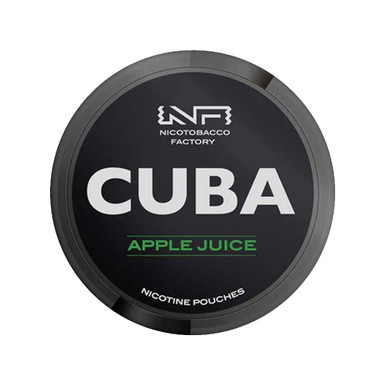
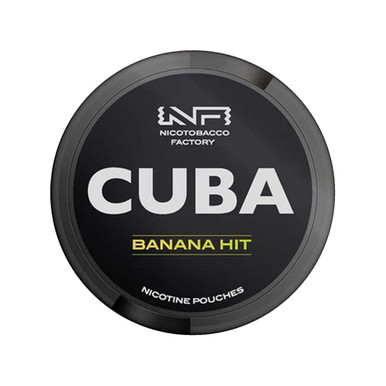
By flavour, this can sits in the sweet-fruit half of the shelf. Cuba Black Cherry and Cuba Black Blueberry, both £39.90, are the dark-fruit neighbours; Cuba Black Apple Juice at the same price is the lighter, juicier one; and Cuba Black Banana Hit, also £39.90, is the softest of them and the closest the brand gets to a creamy tropical note. Those four plus this listing cover most of the brand's sweet-fruit ground.
At the other end, Cuba Black Cold Dry at £39.90 is the brand's plain, cold listing and about as distant from a sweet tropical can as the shelf goes, while Cuba Black Cola, again £39.90, sits in the spiced soft-drink register that belongs to no fruit family. Knowing where both extremes are makes the middle of the shelf considerably easier to read.
One habit worth keeping: check the declared strength on each Cuba listing individually rather than assuming a brand-wide figure. Ranges within a brand can differ, the figure is printed on every page, and it takes seconds.
Looking after the tin
A pouch can is a small sealed environment and the things that spoil it are unexciting and avoidable.
- Close it properly. A lid balanced on top is the commonest reason a tin goes flat before it is finished. Press it down, and do it straight away rather than later.
- Keep it cool and out of the sun. Gloveboxes in summer, dashboards, sunlit windowsills, radiator shelves and bags left in hot cars all draw moisture out even with the lid on. A drawer or cupboard at room temperature is the whole requirement.
- Keep it dry. A bathroom shelf is a poor home for an open tin, and wet fingers put moisture inside every time the can is opened. Dry hands, dry can.
- Do not decant. Another container loses you the sealed lid, the catch lid, the printed strength figure, any date marking and the manufacturer's own guidance. The can is the right container for its own contents.
- Out of reach of children and animals. This one is not a preference. Full tins, part-used tins, empty tins and used pouches all go somewhere they cannot be reached, closed.
On refrigeration we make no claim in either direction. We hold no information on whether it helps or harms and a storage instruction invented by a retailer is worth nothing. If the manufacturer has printed a storage instruction or a date marking on the can, that is the authority and this page is not.
What this listing gives you to decide
One variant: 16mg at £39.90. There is no second strength, no multi-can option and no portion choice on this page. The only question is whether you want mango at this price, and it is quicker to say that than to dress it up as a selection.
If a different declared figure is what you want, that means a different listing rather than a different option here. The medium shelf, the Strong shelf and the extra strong listings are how the catalogue is divided for that purpose. We will tell you the shelves exist and where this can falls among them, and we will not point you along them.
Ordering, delivery and the check on the doorstep
The listing is in stock as we write, so the process is the plain one: add the can at £39.90, check out, and it is dispatched as a parcel. Stock changes and the listing is the live source rather than this sentence.
Nothing about shipping cost, courier or timescale appears on a product listing here. All of it belongs to the site's delivery information, because that is the one page where it can be kept right; spread across several hundred listings it would be stale on most of them inside a month.
Age verification. This is a nicotine product sold to over-18s only. Age checks apply when you order, and ID may be requested on delivery. A courier can refuse to release a parcel to anyone who cannot show they are 18 or over, and the order will not complete if that check is not satisfied. Anyone who accepts parcels on your behalf has to satisfy that check themselves. We will not sell to under-18s, nor to an adult who is buying for one.
How to find this page again
Three routes lead here. By flavour it is on the mango shelf, which is one of our smaller and more manageable categories at 16 listings. By declared strength it is on the Strong shelf with 131 others. By brand it is on the Cuba page with 46 others.
If you have not yet settled on whether you are shopping by flavour, brand or figure, the full product listing holds everything in one place and the category filters will narrow it faster than scrolling. The Pablo brand shelf is a different starting point again if it is a brand rather than a flavour you are looking for.
Things customers ask about this can
Is it a cold mango or a plain one?
Nothing in the name signals a cooling element, so it should read as fruit rather than cold. Cans that pair the fruit with a cold sensation generally say so on the lid, and the mango shelf holds examples that do. We have not tasted and scored these cans as a shop, so we are describing what the naming indicates rather than reporting a comparison we ran.
Is this a ripe or a green mango flavour?
We do not hold that information. Our data records the flavour category and not a tasting description, and the difference between a ripe and an under-ripe mango treatment is genuinely large — one is sweet and heavy, the other tart and much sharper. The printed can and any material the manufacturer publishes are the only reliable sources for which of the two this is.
How many pouches does a can hold?
Not a figure we hold, so not a figure we will print. It is on the can. This is the question customers most want answered before spending £39.90, and we would rather leave a visible gap than publish something a customer could count and contradict.
Why are some mango cans a few pounds and this one nearly forty?
Because the listings do not all contain the same thing. Our catalogue includes single cans and multi-can packs and each listing is priced for what it holds, so a comparison between two prices tells you nothing until you have opened both pages. Read what each listing includes before treating a difference as a saving.
Is the White version the same as the Black one?
They are separate listings with separate pages, and the differences we can speak to are the ones in our data — the range name, the price and the declared strength on each page. Check the strength figure on both rather than assuming they match. We hold no manufacturer documentation explaining what distinguishes the ranges and will not characterise it.
Is there a time a pouch should come out?
There is no recommended time from us and there will not be an invented one. What holds across the category is that people follow the taste instead of a clock, removing a pouch once the flavour has gone thin, which for most people happens somewhere between twenty and forty minutes with a wide spread either side. Anything the manufacturer prints on the can outranks this answer.
What are the contents?
We do not publish ingredient or contents information on product pages and will not paraphrase one here. The printed can carries the manufacturer's own statement of contents and is the correct place to read it, together with any material the brand publishes itself.
Which strength should I get?
Not a question we answer. We print the declared figure on every listing and sort the catalogue by it so that customers can see where each can falls, and that is the appropriate limit of a retailer's role. Strength recommendations are not something this shop gives, and no figure will be called suitable for a particular person or set of circumstances.
Does the flavour last the whole pouch?
Tropical profiles generally hold better than single-note ones because there is usually more than one element in them and they do not all fade at once, but every pouch thins towards the end and this one will too. We are describing a pattern across the category rather than making a claim about this specific can, which we have not measured.
What if I do not use nicotine at all?
No. This is an adult nicotine product for people aged 18 or over who already use nicotine and it is not intended for anybody else. Nothing on this page is addressed to people who do not already use nicotine, and nothing here should be read as an invitation to begin.
Why is the mango category so much smaller than the mint one?
Because that is how the catalogue has fallen rather than for any deliberate reason. Mint is the largest flavour grouping we run and mango is one of the smaller ones at 16 listings. The practical upside of a small category is that you can read all of it — sixteen product pages is an afternoon at most, and it is the only realistic way to see what your options actually are within a single flavour before spending anything.
Will this can taste the same as the last one I bought?
We do not publish anything on batch-to-batch variation and do not measure it, so we cannot answer that. What we would point out is that a difference people put down to a batch is very often a difference in storage instead — a tin that has spent time somewhere warm or been left open will not taste like one that has not. If a can seems off, where it has been kept is the first thing worth checking, followed by any date marking the manufacturer has printed on it.
Do you rank the mango cans against each other?
No. We do not publish ratings, review scores, popularity claims or a best-of ordering for any category, including this one. What we publish is price, declared strength, stock position and an honest description of each, and we leave the ranking to the person who is going to be tasting it.
Compliance: the part that is not optional
This is the section to read before buying anything on this page.
- 18+ only. Sold exclusively to adults aged 18 or over. We do not sell to under-18s and we do not sell to an adult buying on behalf of an under-18.
- For adults who already use nicotine. This product is intended only for people who already use nicotine. Nothing on this page is directed at anyone else or should be read as an invitation to start.
- Nicotine is an addictive substance. Stated plainly, because it applies to this product.
- Not a licensed medicine. This is not a licensed stop-smoking medicine, and it is not intended for non-smokers, for people who do not use nicotine, for under-18s, or for anyone who is pregnant or breastfeeding.
- ID may be requested on delivery. Couriers may ask for proof of age at the door, and a parcel will not be released if that check cannot be satisfied.
- Keep out of reach of children and animals. Full tins, part-used tins, empty tins and used pouches alike, kept closed.
- No medical advice. No part of this page constitutes medical, dosage or health guidance. A healthcare professional, not a retailer, is the right person to ask about nicotine and your own circumstances.
In summary
Cuba White Mango is a nicotine pouch can at £39.90, declared at 16mg, in stock as we write, carrying a sweet tropical fruit flavour with no cooling element signalled in its name. On our four scales it places high on sweetness, low on cool and bitter, and somewhere between low and moderate on sharpness depending on which mango idea the manufacturer has gone for — which is the one thing about the flavour we genuinely cannot pin down for you.
The gaps on this page are stated rather than filled: no pouch count, no portion size, no tasting panel, no account of what the range names mean. If you want to compare before committing, the sixteen listings on the mango shelf are a short enough read to do properly, and the Cuba brand page covers the rest of what this manufacturer offers through us.
More from Cuba
More strong pouches

More mango pouches
Where this sits
Cuba White Mango Nicotine Pouches appears in these categories. Browse them, or jump to something close.
You might also like