Home / Medium Strength / ZYN Blueberry Mint Nicotine Pouches
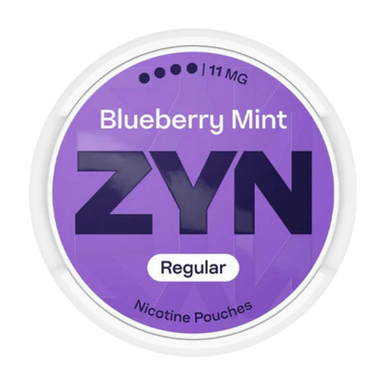
ZYN · 11mg · 5-can pack
Read the full guide
ZYN Blueberry Mint Nicotine Pouches
£19.99
✔ In stock — ready to ship
100% tobacco-free
Free over £20
Same-day dispatch
Secure checkout
ZYN Blueberry Mint Nicotine Pouches costs £19.99, comes as a 5-can pack, declares a single strength of 11mg, and is currently in stock. The brand is ZYN and the product name is Blueberry Mint.
The detail that sets this listing apart from its neighbours is in the tagging. Our flavour field holds two entries on this one — mint and berry — where almost every comparable listing on the brand's shelf holds a single word. That is not a cosmetic difference in our database. It is the reason this can is filed on four shelves rather than three, and it is the only hard, recorded, non-interpretive difference between this can and the two other dark-fruit listings we carry from the same brand. We will come back to that comparison properly, because it is where most of the confusion on this part of the catalogue lives.
The full guide to ZYN Blueberry Mint Nicotine Pouches
4,933 words on how it eats, who it suits, how to serve it and what to put beside it.
Two tags on one listing: ZYN Blueberry Mint
Everything presented as fact here comes out of that record — price, pack, declared figure, tags, stock. The rest is either a description of the physical format, which anyone holding a can can check, or a comparison against other listings on our own shelves. Where the record is empty, the page says so. That is a slower way to write a product description and it is the only one we are willing to use on a product restricted to adults aged 18 or over who already use nicotine.
The number on this lid, and the limits of what it tells you
This is the section the listing most needs, because a single figure on a can carries more weight in people's heads than it deserves.
What the figure is
It is 11mg. It is a declaration printed on the can by the manufacturer, and our entire responsibility with respect to it is to reproduce it accurately, which we have done. It is one figure with no variant choice — unlike some listings on our shelves, there is no second or third option hiding behind this page.
What the figure is not
It is not a dose. It is not a recommendation. It is not a quality grade, a tier, or a rank. A can declaring a larger number is not a better, more advanced or more desirable product than one declaring a smaller number, and we are not going to write a sentence that implies otherwise. Numbers on lids get read as a ladder to climb, and there is nothing in a declared figure that supports reading it that way.
Most importantly: we cannot advise you on which declared strength suits you. We want to be flat about that rather than bury it in a disclaimer. The question depends entirely on an individual's own existing use, it is not something a shop can assess from a listing page, and any retailer offering you an answer is guessing with your money. This is not caution for its own sake — it is that the information required to answer it simply does not exist on our side of the transaction.
What the ladder actually looks like on our shelves
Here is the arithmetic, presented as arithmetic. Across the brand's listings we hold, declared figures run from 1.5mg at the bottom to 13.5mg at the top. ZYN Black Cherry, in stock at £19.99, spans most of that range on its own with four figures — 1.5mg, 3mg, 6mg and 11mg — all at the same price. ZYN Blackcurrant Forest, in stock at £19.99, sits at the top with 13.5mg. This listing sits at 11mg, which means it shares a figure exactly with the top variant of the black cherry can.
That shared figure is useful, because it gives you a clean comparison. Same brand, same price, same declared number, same five-can pack — and a genuine difference in what is tagged on them. If you want to know what the tags do to a can while holding everything else constant, those two listings are the experiment.
And what our shelf names do to the figure
At 11mg this listing is filed in the Medium Strength band with 134 others. Our bands — low, medium, strong and extra strong — are shelves we built for browsing. The boundaries between them are decisions we made, not an industry scale, and a different retailer sorting identical figures would draw the lines somewhere else. The band tells you where we filed something. The figure on the lid is the fact. When those two seem to disagree, trust the figure.
One more honest note. Filing is done per listing, not per variant. So a listing declaring four figures lands in one band rather than being split across three, which is why the black cherry listing appears in the medium band with a 1.5mg variant inside it. If you browse by band expecting a precise sort, it is not one.
Blueberry and mint, described as taste and aroma
Blueberry is the soft, round end of the dark-fruit family. It has very little of the acidity a currant carries — where blackcurrant is sharp and slightly resinous, blueberry is mellow, jammy and low in tartness, with a faintly floral quality at the edge of it. On its own it is a gentle flavour rather than an assertive one, which is part of why it so often appears paired with something else.
Mint is the something else here. The mint direction in this format is broad, covering everything from a soft spearmint to a sharp peppermint, and our tag does not tell us which of those this can sits closest to. What the tag does tell us, unambiguously, is that a cooling element is declared on this listing. That is a categorical statement rather than a shade of one.
Put together, the aroma on opening is the fruit with a clean, sharp top note running over it — you get the dark fruit and then something that reads as cool sitting above it. It is a noticeably different smell from a single-tag fruit can, which arrives in one register and stays there.
In the mouth the pairing does what pairings of this kind usually do: the mint gives the sweetness somewhere to go. Blueberry's low acidity means a plain blueberry flavour can read as flat or cloying after a while, and a cooling element cuts across that and resets the palate between moments. Whether that makes for a better can or merely a busier one is a matter of preference and not something a product page gets to decide on your behalf.
What we will not put a number on is how long any of it lasts. Duration is not in our record, it varies widely between individuals and occasions, and inventing a figure for a description would present a guess as a specification.
The three dark-fruit cans, compared properly
This deserves setting out plainly, because three listings from the same brand at the same price with similar-sounding names is exactly the situation in which shops write nonsense.
| Listing | Flavour tags on our record | Declared figure | Price | Stock |
|---|---|---|---|---|
| Blueberry Mint (this page) | mint, berry | 11mg | £19.99 | In stock |
| Black Cherry | cherry | 1.5mg, 3mg, 6mg, 11mg | £19.99 | In stock |
| Blackcurrant Forest | berry | 13.5mg | £19.99 | In stock |
Read across that table and the position is clear. This listing is the only one of the three with a cooling element declared on it. That is the real, recorded difference, and it is the one worth acting on — if you want a cooling note with your dark fruit, this is the can, and if you specifically do not, the other two are.
Between the other two, the difference our data records is one word each: cherry against berry. By food-naming convention, cherry signals a sweeter, rounder stone fruit and berry signals the sharper currant-and-bramble direction. Beyond that convention, our record gives us no basis for a finer comparison between them, and we are not going to manufacture one. We can tell you what the words usually mean; we cannot tell you what the two cans taste like side by side, because nobody has given us that information and guessing would be worse than admitting it.
The names, incidentally, are all doing the same trick with their adjectives. "Black" in front of cherry signals the darker, sweeter, preserve-like reading of the fruit. "Forest" attached to blackcurrant signals the mixed wild-berry family sitting behind the lead fruit. Neither is a statement about where anything comes from, and we hold no origin information for any of the three.
If you want the same idea as this can from a different maker, XQS Blueberry Mint at £39.90 is in stock and carries almost exactly the same name at double the price. That is the most direct cross-brand comparison in our catalogue for this listing. Pablo Silver Edition Blueberry Peach Ice at £39.90, also in stock, adds a third flavour idea to the same base. Nordic Spirit Frosty Berry at £4.49, in stock, takes the berry-plus-cooling idea at the opposite end of the price range — though as always the quantity behind that price differs from the five cans here, and comparing the two headline figures directly would tell you nothing.
Storage, moisture and the condition of a can over time
The second long section on this page is about keeping a can usable, which is the most practical thing anyone can tell you about owning one and the thing product descriptions almost never cover.
Why condition changes at all
A pouch is a sealed portion that arrives in a particular physical condition, and that condition can change once a can is opened. The direction it changes in is always the same: drier. It is a one-way process and it cannot be reversed. Nothing you do brings a dried-out can back to where it was, which is why storage is worth two minutes of attention rather than none.
We are describing physical condition and handling here, not what happens once a pouch is in place. Our record holds price, declared strength, flavour tags, pack size and stock position, and nothing about moisture content, and we are not going to speculate about what any of that does beyond how a can feels in the hand and how long it stays pleasant to use.
Drier and moister pouches, as a handling matter
Formats across the category vary in how they feel. Some pouches are noticeably drier to the touch and sit in a can loosely; others feel softer and denser. This is a real difference between products and it affects the handling in ways people notice — a drier portion tends to hold its shape better in the fingers, while a softer one seats more readily.
We cannot tell you where this can sits on that spectrum, because we do not hold that specification and nobody publishes it in a form we could reproduce. What we can tell you is that whichever end a can starts at, an opened can left with the lid off will move toward the drier end and will not come back, and that the flavour goes flat as it does so.
The rules, such as they are
Keep the cap seated. This is most of the advice and it accounts for most of the problem when a can goes off. The cap is a press fit, it seals, and resting it on top is not the same as pushing it home. A can left open on a worktop overnight has lost condition by morning.
Keep it out of heat. A car in summer is the single worst place available, and a sunny windowsill is second. Heat and direct sunlight both accelerate the drying, and they do it to unopened cans as well as opened ones. A drawer, a cupboard, a bag pocket, anywhere at ordinary room temperature — all fine.
Keep the pack together. With five cans in a purchase, four of them will be sitting unopened while you work through the first. That is a genuine storage question rather than an afterthought. Keep the unopened cans sealed, stored together somewhere cool and dark, and open them one at a time. An unopened can keeps considerably better than an opened one — obvious, and still routinely ignored by people who break every seal at once to smell them.
The fridge question. People keep opened cans in fridges. Our record does not tell us whether the manufacturer suggests it, so we will describe the practice rather than endorse it. What holds reliably either way is that cold storage preserves a can in the condition it is already in; it does not rescue one that has dried. And a lid left off costs a can far more than a few degrees of ambient temperature ever will.
The catch compartment, and the thing everyone forgets
The cap has a shallow second chamber under it, sealed off from the pouches below. It exists so that a used pouch has somewhere to go when there is no bin to hand. It holds several. It is a staging post rather than a destination.
Emptying it is the single most neglected piece of can maintenance there is, and a can left with a full compartment for a week is genuinely unpleasant to open. There is no fixing that after the fact — you empty it and the can still smells. Doing it whenever you are near a bin anyway costs nothing. Used pouches go in general waste from there: never down a drain, never in a food-waste caddy, never on the ground. The empty can is plastic and goes wherever your council directs plastic of that sort, which varies and is not something we can answer for a given postcode.
What a can looks like at the end of its life
Worth describing, because the point at which a can stops being worth using is not obvious and people tend to push past it. The first thing to go is the aroma on opening — a can that smelled strongly of fruit and cooling on day one smells of considerably less by the time it has been badly stored for a fortnight. The flavour follows the aroma down. The portions themselves feel less yielding between the fingers and sit less readily once placed.
None of that happens on a schedule we can publish, because it depends entirely on how the can has been kept. A can stored properly and worked through at an ordinary rate generally does not reach that state at all — you finish it first. A can left open in a warm room can get there in days. The variable is the lid and the temperature, not the calendar, and that is the whole reason this section exists.
The format, for completeness
A pouch is a small soft sealed rectangle with rounded ends, about the footprint of a short stick of chewing gum and thinner than one. It has a slight give. You take one out with finger and thumb and place it between the upper lip and the gum line. There is nothing to unwrap, nothing to activate, no preparation and no waiting stage — the whole operation from cap off to seated runs to a couple of seconds.
Once in place it stays there. The first few minutes are when anyone is most conscious of it, and that is when most people nudge it once into whatever position suits their own mouth. After that the awareness falls away. It needs no chewing and no holding. Speech is unaffected once it is seated. How long anyone keeps one in varies enormously between people and between days, and since that figure is not in our record we are not going to publish one.
The brand's range around this can
We hold twenty-two listings on the ZYN shelf, all of them at £19.99. Flat pricing across a brand shelf is unusual and it has a useful consequence: within this brand, cost plays no part in the decision at all. You are choosing between flavours, declared figures and formats, and nothing else.
This can occupies the fruit-and-mint middle of that range. ZYN Cool Mint X, in stock, is the same cooling direction with the fruit taken out — the purest version of half of what this listing does. The blackcurrant listing, in stock at 13.5mg, is roughly the opposite: the fruit half without the cooling half, taken sharper.
Away from both axes, ZYN Citrus, in stock, is bright acidity rather than dark sweetness, and it is the flavour on this shelf least like the one on this page. ZYN Coffee Mini, in stock, is the range's only roasted flavour and also a mini format, meaning a physically smaller portion — two variables changing at once, which is worth knowing before ordering it as a comparison. ZYN Guava Spice X, in stock, pairs a tropical fruit with a spice direction and is the most compound flavour idea the brand's range holds with us.
One same-brand listing in the dark-fruit-and-cooling territory is unavailable: ZYN Icy Blackcurrant XX at £19.99 is not currently in stock. That is a genuine shame in context, because it is the brand's other cooling-plus-dark-fruit listing and would have been the closest same-brand comparison to this page. The page is live if you want to see what we carry when we carry it; it cannot be ordered today.
Second cans, and why people keep them
Most people who buy these regularly hold two or three cans rather than one. The reason is straightforward: a single flavour in constant rotation stops registering, because the palate adapts to whatever it always gets. A second can in a different direction is the ordinary fix, and knowing about it costs nothing.
Because this listing already spans two flavour families, the contrast has to come from further away than usual. The sharper dark fruits are one route: Fumi Blackcurrant at £27.90, in stock, gives you the acidity this can deliberately avoids. The plain cooling direction is another: Edge Spearmint at £14.95, in stock, is the cheapest route to it on our shelves and Klint Arctic Mint at £36.90, in stock, is a considerably more expensive one to broadly the same idea.
For a change of register without leaving the berry family, 77 VB Edition Arctic Berry at £39.90 is in stock and names its cooling element openly, and Velo Strawberry Ice at £4.19, in stock, moves to a soft red fruit instead of a dark one. One option that would otherwise belong on this list, Rush Berry Ice Pro at £19.99, is not currently available.
If you would rather browse than take suggestions, the Pablo range and the Cuba range are the two largest brand shelves we hold after this one, and the full catalogue is the top of the tree.
Comparing this against anything else on our shelves
A short, general note, because this listing sits at an intersection where people make the same mistake repeatedly.
There are four variables in play across our catalogue and they are easy to conflate: the flavour, the declared figure, the pack arrangement, and the price. Three of the four are recorded on every listing. The fourth — pack arrangement — is recorded on most but not all, and is the one that quietly decides what a purchase actually costs. This page's five-can pack at £19.99 is not comparable to a single can at £4.19 in any direct sense, and the fact that both numbers sit on the same shelf makes it very easy to pretend otherwise.
Flavour, meanwhile, is recorded at a level of detail that is useful for browsing and not useful for choosing. A tag of "berry" covers currants, bilberries, soft reds and confected blue-raspberry styles that correspond to no fruit at all. The product name carries more information than the tag does in almost every case, which is why this page keeps quoting names rather than leaning on tags.
The declared figure is the only one of the four that is precise, and it is also the one we can tell you the least about, because what it means for any individual is not a retail question. That combination — precise data we will not interpret, and imprecise data we can only partly interpret — is the honest shape of what a shop knows about its own stock. We would rather lay it out than pretend to a confidence we do not have.
Buying it, and the check on delivery
The listing is in stock as the record stands. Stock moves and the live status on the page itself is the authority — a description is written once and the listing updates continuously.
This is an 18+ product. We sell it only to adults aged 18 or over who already use nicotine. Age verification forms part of the order process and ID may be requested on delivery. A courier can decline to release a parcel if it is not produced, which is the process working as intended. One practical consequence worth planning around: a failed doorstep check sends a parcel back to the depot, which turns a short wait into a long one. If nobody who can produce ID will reliably be at the address, sort that out before ordering rather than after a first attempt has failed.
Delivery timings, carriers and charges are handled at checkout and in our delivery information rather than quoted inside a description that could be stale by the time it is read.
Four shelves, and finding this again
Two flavour tags mean this listing is filed in more places than most. It appears on the mint shelf, which holds 148 listings and is the largest flavour shelf we keep; on the berry shelf, which holds 76; on the brand's own shelf with twenty-one others; and in the medium band on the strength of its 11mg figure.
That is a genuine advantage if you are browsing and a mild annoyance if you are trying to count things, since the same listing shows up on two flavour shelves. If none of those routes suits, everything we stock is the top level, and the bands — strong and extra strong — are the fastest narrowing when you already know the figure you are looking for.
Questions we can actually answer
What does the 11mg figure mean for me personally?
We cannot tell you, and we would rather say that plainly than offer a comforting non-answer. It is a manufacturer's declaration printed on the can, which we reproduce accurately. It is not a dose, not a ranking and not a recommendation, and a larger figure does not indicate a better product. Which declared strength is appropriate for an individual depends on that person's own existing use, and a shop has no way to assess it from a listing page.
Is the mint strong or mild in this one?
Our record does not say. The flavour field holds the word "mint" and nothing finer — it does not distinguish spearmint from peppermint or soft from sharp. What the tag does tell you definitively is that a cooling element is declared on this listing, where the black cherry can and the blackcurrant one carry no mint tag at all. Beyond that categorical fact, we do not hold the detail.
How is this different from the blackcurrant listing?
Three recorded differences. This one carries mint and berry tags; that one carries berry alone, so it has no cooling element declared. This one declares 11mg; that one declares 13.5mg. And this one is a five-can pack, where the pack size on that listing is missing from our record entirely — worth checking on its own page before ordering. Both are £19.99 and both are in stock.
Do you stock the same flavour from another brand?
Yes — the XQS blueberry mint listing at £39.90 is in stock and carries almost exactly the same name. Whether it tastes the same is not something our record can answer and we are not going to guess. The Pablo blueberry peach listing at £39.90, also in stock, builds on the same base with a third flavour idea layered in.
Why are there two flavour shelves for one can?
Because there are two tags on it. Our shelves are driven by the flavour field, so a listing with two entries appears on two shelves. It is filed on both the mint listings and the berry listings, and that is deliberate rather than a duplication error — someone browsing either shelf should find it.
How long does one last?
We do not hold that figure and will not estimate it. Duration varies substantially between individuals and between occasions, and the informal range people report is wide enough that publishing any single number would mislead more than it helped. Our record covers price, declared strength, flavour tags, pack size and stock. The flavour fading is the usual prompt to take one out.
Does storing a can in a fridge help?
People do it and our record does not say whether the manufacturer suggests it, so we are describing rather than recommending. The reliable points are these: the drying process is one-way, cold storage preserves rather than restores, and a lid left off does far more damage than ambient temperature. Keep the cap properly seated and the can out of heat and sunlight, and the fridge becomes a marginal question.
Can I buy a single can rather than five?
Not on this listing, which our record gives as a five-can pack at £19.99. Other listings on our shelves are priced per can, which is why headline prices are not directly comparable across the catalogue. The Nordic Spirit frosty berry can at £4.49 and the Velo strawberry ice one at £4.19, both in stock, are single-can prices and not cheaper versions of what is on this page.
What is out of stock among the things you have linked?
Two listings. The icy blackcurrant listing from this brand at £19.99 and the Rush berry ice pro can at £19.99 are both currently unavailable. We have flagged each of them where they appear rather than sending you to a page you cannot order from. Everything else named above is in stock as our record stands.
Is 11mg near the top of what you sell?
Not for the catalogue as a whole. It is the joint-second highest figure among the ZYN listings we hold, behind 13.5mg, but the wider catalogue runs well above that, which is why a strong shelf and an extra strong shelf exist separately. We are stating that as arithmetic about our filing, not as a suggestion that higher is somewhere to aim.
Does the berry tag mean blueberry specifically?
Not by itself. Our berry tag is a browsing category covering currants, blue and bilberries, soft reds and confected styles alike, and it does not distinguish between them. The product name is what tells you blueberry. That is true right across the shelf — the 77 arctic berry listing at £39.90 and the Fumi blackcurrant one at £27.90, both in stock, carry the same tag as this can and name three different fruits between them.
Is there a version of this without the mint?
Not under this name. The nearest thing within the brand is the blackcurrant listing at £19.99, in stock, which is a dark fruit with no cooling element declared — but it is a sharper fruit than blueberry, so it is a change of two things rather than a removal of one. We do not hold a plain blueberry can from this brand and we are not going to imply that something else is one.
Where is it made?
We cannot tell you. Our record holds no manufacturing or origin detail for this listing, and repeating something we have read elsewhere and cannot verify would be worse than admitting the gap. The can's own labelling is the authoritative source for anything of that kind.
What is a sensible thing to keep alongside it?
Something that is not a sweet dark fruit, since that is where contrast comes from. The Edge spearmint listing at £14.95 and the Klint arctic mint one at £36.90, both in stock, are the two ends of the plain cooling direction on our shelves, and the Fumi blackcurrant can at £27.90, in stock, gives you the sharp fruit this listing deliberately does not.
The compliance wording this page must carry
Nicotine is an addictive substance. This product contains nicotine.
It is sold only to adults aged 18 or over who already use nicotine. We do not sell to anyone under 18, and age verification forms part of the ordering process. ID may be requested on delivery, and a courier may decline to release the parcel if it cannot be produced.
This product is not a licensed stop-smoking medicine and is not offered, described or intended as one. It is not intended for non-smokers, for anyone who does not already use nicotine, for anyone under 18, or for anyone who is pregnant or breastfeeding.
We make no health or medical claim about this product in any direction, and nothing above should be read as advice on whether to use nicotine or in what quantity. We cannot advise you on which declared strength is appropriate for any individual.
Keep out of reach of children and pets. Every factual statement on this page — the £19.99 price, the 11mg declared figure, the five-can pack, the mint and berry tags and the in-stock position — comes from our own catalogue record, and where we hold nothing the page says so.
The short version
Five cans at £19.99, one declared figure at 11mg, two flavour tags, in stock. The two tags are the whole story: this is the only one of the brand's three dark-fruit listings with a cooling element declared on it, which makes it the easy choice if that is what you want and the easy one to avoid if it is not. The number on the lid is a declaration and nothing more, our strength bands are housekeeping rather than a scale, and the single most useful thing we can tell you about owning the can is to push the lid properly shut. Browse on from the brand shelf or from the berry listings if this is not the one.
More from ZYN

More medium strength pouches
More mint pouches
Where this sits
ZYN Blueberry Mint Nicotine Pouches appears in these categories. Browse them, or jump to something close.
You might also like