Killa · 16.5mg
Read the full guide
Killa Melon Nicotine Pouches
£33.50
✔ In stock — ready to ship
100% tobacco-free
Free over £20
Same-day dispatch
Secure checkout
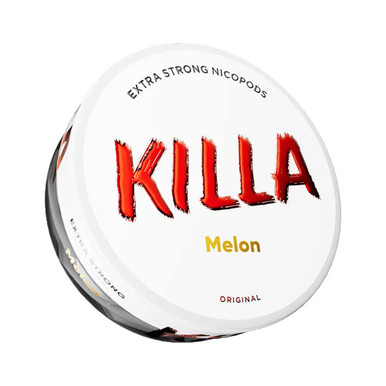
Killa Melon Nicotine Pouches are listed at £33.50. The label carries a single declared figure, 16.5mg, and one variant stands behind the listing at that figure and that price. No size choice, no second strength. Our record shows the can as available as this is written and holds one photograph of it.
Those facts are the whole of our knowledge. What follows is built from them, from what can honestly be said about the category, and from a clear statement of where our record falls silent — which it does in four places on this listing, including one that goes to the flavour itself.
The full guide to Killa Melon Nicotine Pouches
4,981 words on how it eats, who it suits, how to serve it and what to put beside it.
What this listing holds, and what it does not
Two naming points, briefly, before anything else. Killa is a trade name: the word a manufacturer prints on its tins, no different in kind from any other brand word in this catalogue. It says nothing about the contents and is treated here as nothing but a name, which is why the can is filed on this brand's shelf with 30 others. And the web address for this page contains the words extra strong while our own band for the can reads Strong; the address inherits naming that came with the product, the band is our own filing across 385 listings, and where the two differ we would sooner point it out than smooth it over. The printed figure is 16.5mg in either case.
"Melon" on the lid and "watermelon" in our data
This listing has a genuine inconsistency in it and it is the most interesting thing on the page, so it goes near the top rather than in a footnote.
The product is named Melon. Our classification holds exactly one flavour term for it: watermelon. Those are not the same word and they are not the same flavour.
Melon as a general term covers a wide group. Honeydew is pale, soft and mildly sweet with a faintly floral finish. Cantaloupe is deeper, muskier and more aromatic, with a heavier scent than taste. Galia sits between them. Watermelon is the outlier of the group in almost every respect — thinner, wetter, higher and brighter in sweetness, with a distinctly clean, faintly vegetal finish that none of the others has. Put a honeydew and a watermelon side by side and nobody would confuse them.
So the name points at a family and the tag points at one specific member of it, and we cannot tell you which is right. There are two plausible explanations and no way to choose between them from here: either the product is a watermelon construction that the manufacturer has named with the broader word, or our tag has narrowed a general melon note to the most common member of the family. Both happen in catalogues of this size.
What we are not going to do is pick one and present it as fact. The can is filed on our watermelon shelf, among 23 listings, because that is where the tag puts it, and anyone who arrived from that shelf should know that the product itself says Melon. If the distinction matters to you — and between honeydew and watermelon it reasonably might — the can and its label are the only things that will settle it.
One further note on what the tag does not include. There is no mint or ice term in our record for this listing, which suggests a fruit construction with no declared cooling element. That is an inference from an absence and absences are weaker evidence than tags, but it is what our data indicates, and it distinguishes this listing from several cooled melon cans elsewhere in the catalogue.
The can, considered as an object
Most product copy treats the container as packaging. It is worth treating as a product in its own right, because it is the part you handle every single time and the part that determines whether carrying one is effortless or irritating.
Shape and footprint
Cans in this category share a form: a short cylinder, roughly the diameter of a large coin and not much taller than it is wide. The proportions are dictated by what is inside — pouches sit in a ring around the inner wall or stacked flat, depending on the maker — and the result is a container that lies flat rather than protruding. In a jacket pocket it does not change the line of the fabric. In a jeans pocket it is noticeable but does not dig in when you sit.
The footprint is worth comparing to things people already carry. It takes less room than a set of keys, about as much as a tin of lip balm or a small pot of mints, and less than a phone in any dimension that matters. It is one of the few consumable formats that genuinely disappears into a coat.
The lid, and why there are two chambers
The lid is the part of the design worth understanding, because it does two jobs rather than one.
Its first job is the seal. The can is a sealed container and the lid is what seals it; everything in the storage section below follows from that. Its second job is disposal. Most cans in this format have a shallow second chamber built into the lid, walled off from the fresh pouches underneath, and that chamber exists to hold used pouches.
That second chamber is the single most practical feature of the format and it is almost never mentioned on a product page. Without it, a finished pouch has nowhere sensible to go for however long it takes to reach a bin, and the alternatives are all bad. With it, the correct disposal route becomes the easy one. When the chamber fills, it empties into a household bin — not a sink, not a lavatory, not a drain, and not out of a car window. Pouches should not go into plumbing.
Closures vary. Some lids screw, some click on. The difference is not academic if you carry a can loose in a bag: a clicked lid can be popped by pressure, and a can that has spent an afternoon open in a rucksack is in the same condition as one left open overnight on a worktop. We do not hold a note of which closure this particular can uses, and we would rather say so than read one off a single photograph.
The portion count we do not hold
Our record contains no figure for how many pouches are in this can. That is the second silence on this listing, and it is an unsatisfying one because the count is a reasonable thing to want before buying.
Cans in this format almost always carry a portion count printed on the label, and that printed figure is the one to rely on. We are not going to infer a number from the price, from the size of the can in a photograph, or from what a neighbouring product happens to contain. An inferred figure presented in a confident sentence is indistinguishable from a real one to the person reading it, and that is exactly why we will not publish one.
Pockets, bags and gloveboxes
Where a can actually lives affects its condition, which is the part people notice only after a can has gone flat on them. A jacket pocket is a good home: shaded, roughly room temperature, not compressed. A trouser pocket is warmer, because you are the heat source, and a can carried that way every day will be drier after a fortnight than one that has not been.
A glovebox is the worst common option. A parked car in summer reaches temperatures nothing in a cupboard ever will, and the cycle of heating and cooling over days is precisely what drives moisture out of a sealed container. It is also, in a shared or family car, a place a child can reach, which is a far more important objection than the flavour one.
Opening it
A small point that matters more than it sounds: these cans are designed to be opened one-handed, which is why the lid sits proud of the body and why the diameter is what it is. That is a description of the design rather than an endorsement of any use of it, and it is the reason the format is the shape it is rather than being, say, a flat box.
When the can is empty
An empty can is a small plastic container and goes wherever your local authority puts small plastic containers. Empty the lid chamber into a bin first — an empty can that still has used pouches in the lid is the version of this object you least want left around a house. Some people keep an empty can as a dedicated disposal tin when they are somewhere without a bin for a long stretch, which is a sensible reuse rather than anything we are proposing as a system.
The pouch itself
The pouch is a small soft sachet with a fabric-like outer, placed between the lip and the gum and left there. It is not chewed and it is not swallowed. Pouches are used singly.
Portion formats have a loose shared vocabulary — slim portions long and flat along the gum line, minis shorter and thicker, standard portions in between — and the distinction is about where the bulk sits rather than how much is there. Our record gives no format designation for this listing, the third silence, and the can resolves it at a glance.
How long a pouch stays in is a personal pattern and no figure is published on this page, because a number printed by a retailer reads as an instruction whatever wording surrounds it. The describable part is the sequence: in, until the flavour has gone, then out by hand and into the lid chamber.
16.5mg, read as what it is
The declared figure is 16.5mg, reproduced exactly as our record holds it. It is a specification published and printed by the manufacturer. It belongs to the can, not to the buyer. It is not a grade, not a score, and not a ranking against anything.
Our catalogue uses three bands so that a browse can be narrowed. This one is filed on the Strong band, 132 listings deep, with the Medium band below and the Extra Strong band above. The order follows the size of the declared figures and carries no further meaning. A can in a higher drawer is not better made, better value or more desirable than one in a lower drawer.
The bands are not a route through anything. There is no sequence here to advance along, nothing to work towards, and no reading on which a larger number is an achievement. A band is a filter. Where the figure is not the axis you care about, the whole catalogue without a strength filter applied is generally the better entry point, since most people choose by flavour or brand.
Nor do the figures convert between manufacturers, since each company sets its own by its own method. Within a brand the comparison is firmer, and every Killa listing carries its own figure on its own page.
We cannot advise which strength suits any individual and we are not going to try. That is a plain statement of what a shop is and is not able to do. We do not know who is reading, and the question belongs with someone qualified to answer it rather than with a catalogue.
Moving between cans on our shelves: what changes, and what does not
People rarely buy one product forever, and the practical question is what actually differs when you move from one can to another. Five things change and one does not, and separating them makes the catalogue easier to navigate.
Brand to brand
This is the largest change available and the one most often underestimated. Two makers building the same named flavour will produce noticeably different results, because every decision behind a construction is theirs: which version of the fruit to aim at, how emphatic to make it, how long to stretch it, and whether to add anything alongside. Moving from one house's watermelon to another's is usually a bigger change than moving from watermelon to a different fruit within a single house.
That is also why flavour names are poor guides across brands. The name tells you the target, not the construction, and the construction is where the difference lives.
Format to format
Slim, mini and standard portions feel materially different in use even when everything else is held constant, because the bulk sits in a different place. Someone accustomed to one can find another actively uncomfortable at first. Format is also the variable least consistently published — we do not hold it for this listing, and plenty of others are the same — so it is frequently discovered rather than chosen.
Declared figure to declared figure
Between two cans from the same maker, a difference in declared figures is meaningful, because the method behind both numbers is the same. Between two makers it is much weaker information, for the reasons already set out. This is the variable people weight most heavily and the one that travels least reliably.
Price to price
Our prices range widely, and the range is real but not directly comparable, because listings cover different quantities and we do not hold the quantity for every one of them. A £4.19 listing and a £39.90 listing are almost certainly not selling the same amount of product. Any per-can or per-pouch comparison needs the counts, and on this listing we do not have them.
Flavour family to flavour family
Moving between families — fruit to mint, fruit to coffee, sweet to spiced — changes the most on the surface and is the easiest change to predict, because family characteristics are broadly stable. Moving within a family is subtler and, as noted above, depends far more on who built the can than on what the fruit is called.
What does not change
The mechanics. Every can on these shelves is the same object in essentially the same shape, with the same lid arrangement, the same one-at-a-time use and the same disposal route. Whatever else differs, none of the practical handling does, which is why moving between cans in this category is low-friction compared with moving between almost any other kind of product.
Killa's shelf, as our catalogue lists it
Thirty-one listings sit under this brand, every one priced at £33.50. Flat pricing across a whole range is unusual, and its practical effect is that moving between cans inside this brand involves no money at all — it is purely a flavour decision.
The closest relative here is Killa Exclusive Strawberry Watermelon at £33.50, which carries a watermelon tag like this one but pairs it with a strawberry note, so it is the same brand and an overlapping flavour with a second fruit added. If you like the melon side of this can and want more body behind it, that is the in-brand comparison.
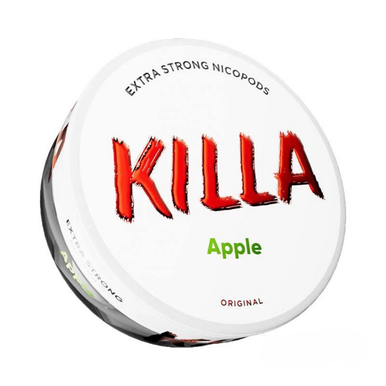
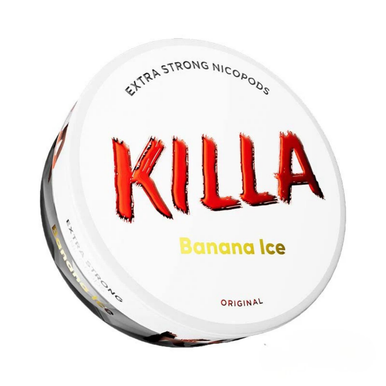
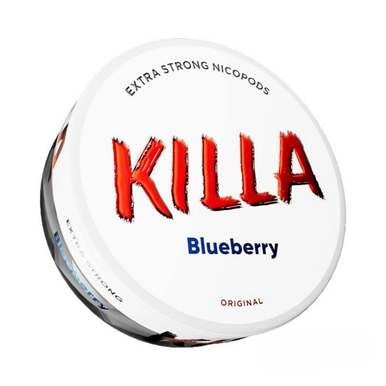
Elsewhere in the range, Killa Blueberry is a darker berry with skin character behind it, and Killa Apple is orchard fruit — crisper and more acidic than a melon of any kind. Killa Banana Ice combines a heavy, rounded fruit with a declared cooling element, which is a construction this listing does not appear to share.
Further out again, Killa Bubblegum is the most openly confectionery name the brand puts on our shelves, Killa Cola brings a spiced and faintly bitter edge that no fruit listing in the range has, and Killa Cappuccino is the only coffee-family can we hold from this maker. Each carries its own figure on its own page, which is where to read it.
The watermelon shelf, and what else is on it
Twenty-three listings share the watermelon tag with this can, which makes it a middling shelf — big enough to browse properly, small enough to see the whole thing.
Clew Watermelon at £39.90 and Cuba White Watermelon at the same price are two straightforward single-fruit constructions from different houses, which makes them the cleanest available test of how much a maker changes a named flavour. Iceberg Watermelon at £39.90 is a third in that group.
Two listings add a cooling element to the same fruit. Denssi Watermelon Freeze at £39.90 says so in its name, and Velo Wintry Watermelon at £4.19 does the same with a different word and at by far the lowest listed price in this section. Cooling changes the shape of a watermelon note considerably — it is already a light, wet, high-sweet flavour, and a cool element makes it lighter still.
For something further away, Elf Bar Blueberry Raspberry at £29.90 moves to a darker, denser pair of berries, and Fumi Fiery Lime at £27.90 goes to citrus with an unusual warm word attached, which is a genuine change of construction rather than a variation. 77 Ghost Mini Mango at £39.90 changes both the fruit and the portion format, since it names a mini explicitly. And Edge Mint at £14.95 is the complete departure — no fruit at all, and the second-lowest price named on this page.
If you would rather browse whole ranges, the Pablo shelf and the Cuba listings are two of the broader brand groupings we run.
Keeping a can in decent condition
Put the lid back on. That is the whole of the primary instruction and it prevents most of what goes wrong with a can. The reason it bears repeating is that the failure is silent: a can left open overnight looks exactly the same in the morning and simply has less flavour left in it than it had.
Warmth does the same thing on a longer timescale. Sunlit windowsills, parked cars, bags left against radiators — none destroys a can immediately, but a fortnight of warming and cooling pulls moisture out, and moisture is where the flavour lives in a dry format. A drawer or a cupboard away from any heat source is enough. What the can wants is a steady shaded place, not a cold one.
Some people refrigerate cans in hot weather. We hold no manufacturer statement that this is intended for the product, so it is reported as a practice rather than recommended as one. Any storage instruction printed on the can takes priority over every word on this page.
A can that has already dried will not come back. The pouches feel stiffer and the flavour is shorter, and the only useful response is to store the next one better. On dates: cans carry markings applied by the manufacturer and those are the reference, because our catalogue holds no date information at listing level and cannot tell you how long a given can has left.
The most important storage point has nothing to do with flavour. Keep cans out of reach of children and away from anyone the product is not intended for, and include the lid chamber in that — a can accumulating used pouches on a worktop is precisely the one that should not be within reach. Empty it into a bin.
What there is to decide on this listing
One figure at 16.5mg, one price at £33.50, one variant. Nothing to configure, which makes the decision short.
The cost of that simplicity is that the usual adjustment is unavailable. On a multi-variant listing you can hold the flavour constant and move between declared figures; here the only change available is to a different product, which means using the strength bands rather than this page. We are not going to indicate a direction along them in either sense.
Pack count is the fourth silence on this listing. Our record holds no value for how many cans £33.50 covers. Combined with the missing portion count, that blocks the comparison people most often want — cost per can, cost per pouch — and there is no honest way to produce it from this page. We will not reconstruct a figure from a neighbouring listing. The product listing and the basket at checkout are where the quantity becomes visible, and on a purchase of this size it is worth looking before ordering rather than after.
Ordering, delivery and proof of age
The listed price is £33.50. Ordering is the ordinary sequence: add to basket, check the basket, complete the checkout. Delivery methods, costs and timescales are shown at checkout because they depend on the order and the address, and any figure printed on a product page would be wrong for some readers.
This is an age-restricted product. Sales are to adults aged 18 or over only. Checks may be applied at the point of order, and ID may be requested on delivery before a parcel is handed across. A courier declining to release a parcel where age cannot be confirmed is the system working correctly rather than a fault with your order. We will not knowingly supply a purchase made on behalf of anyone under 18.
On availability: our record shows this listing as in stock at the time of writing, but a description prepared in advance is not a live stock feed. The listing itself is authoritative, and a single-variant product has no alternative size to fall back on if it goes out.
Where this page sits on the site
Three shelves hold this can. The brand shelf gathers the rest of the maker's range. The Strong band gathers every listing filed into the same strength drawer. The watermelon shelf gathers the 23 listings sharing that flavour tag, with the caveat set out earlier that the product itself is named Melon.
Above all three sits the full catalogue, which is where to start when you do not yet know which axis you want to browse along. Every brand shelf on the site behaves the same way as this one's, so the structure only has to be learned once and the whole catalogue opens up from any product page.
Questions about this can
Is this watermelon or is it another kind of melon?
We cannot resolve it. The product is named Melon and the only flavour term in our record is watermelon, and those are different things — honeydew and cantaloupe taste nothing like watermelon. Either the manufacturer has used the broad word for a watermelon construction, or our tag has narrowed a general melon note to the commonest member of the family. We are not going to pick one and state it as fact. The can and its label are the only sources that settle it.
Why is it on the watermelon shelf then?
Because that is the tag our data holds, and shelves are built from tags. It would be worse to leave the can unfiled than to file it on the shelf its tag indicates, but anyone arriving from that shelf deserves to know that the product name says something broader. This page says so as near the top as we could reasonably put it, which is the only remedy available to us short of information we do not have.
Is there a cooling element in it?
Our record holds no mint or ice term for this listing, which points to a fruit construction without a declared cool note. That is reasoning from an absence rather than a positive fact, and an absent tag is weaker evidence than a present one. Several melon cans elsewhere in the catalogue name a cooling element explicitly in the product name, and this one does not, which is consistent with the same reading.
How many pouches are in the can?
Not a figure we hold. We will not estimate it from the price, from a photograph or from what a comparable can contains, because a confident guess is worse than an acknowledged gap. Cans in this format normally carry a portion count printed on the label, and that printed number is reliable in a way nothing we inferred would be. If the count is part of your decision, check the listing or the can before ordering.
Does £33.50 buy a single can?
We cannot tell you. The pack count field is empty in our record for this listing, and prices in that region on this site cover both single cans and multiples depending on the product. It is a real gap rather than a reluctance to answer. The basket at checkout shows exactly what quantity is being bought, and it is the right place to confirm the position before paying.
What does 16.5mg mean?
It is the strength figure the manufacturer declares for this product, printed on the packaging and reproduced on our listing. That is the whole extent of what we can tell you about it. We do not interpret it, we do not translate it into an expectation, and we do not set it against other companies' figures, since each manufacturer arrives at its declared number by its own method and there is no shared unit between brands.
Is that a strong one?
Our catalogue files it in the upper of three bands, which is a statement about how we shelve things and not a verdict on the product or an answer about any person. Bands exist so that 385 listings can be narrowed to something browsable. We cannot advise which strength suits anyone, and a shop that attempted to would be far outside what a shop can responsibly say. That question belongs with someone qualified.
Why does the web address say extra strong?
Because the address inherits naming that arrived with the product, while the strength band is our own filing decision applied consistently across the catalogue. The two were produced by different processes and they do not always agree. We would rather explain the mismatch than edit one to match the other. Neither changes the declared figure on the label, which is 16.5mg whatever words sit around it.
What is the second compartment in the lid for?
Used pouches. Most cans in this format have a shallow chamber built into the lid, separate from the fresh pouches below, and it holds finished ones until a bin is available. Empty it into a household bin, never into a sink or a drain. It is a minor piece of design that carries a disproportionate amount of the format's practicality, since a used pouch away from home otherwise has nowhere appropriate to go.
Does the lid screw or click?
We do not hold that detail for this can and we are not going to determine it from a photograph. It matters slightly if you carry a can loose in a bag, because a clicked lid can be popped open under pressure while a screw lid generally cannot. It will be obvious the first time you open it. This is the kind of small specification that manufacturers rarely publish in a form a catalogue can capture.
How should the can be stored?
Lid on, somewhere cool and shaded, out of reach of children. Warmth and an open lid are the two things that dry a can out and between them they account for most cans that go flat before they are finished. Any storage instruction printed on the can itself takes precedence over this page. We hold no shelf-life or date data at listing level, so the marking on the can is the only date reference available.
Where is it made, and by whom?
We hold no origin or manufacturing information for this listing and we are not going to infer any from the brand name or the packaging design. Anything you read elsewhere assigning an origin to this can on the basis of its naming is reading in something that is not there. The can and the manufacturer are the only reliable sources for that, and we would rather leave the question open than answer it with something invented.
Is a can from this brand different to handle from the others you stock?
Not in any way we can identify. The container format is broadly standard across the category — a short cylinder, a lid with a second chamber, pouches sitting inside — and the variations between makers are small ones like the closure type and the exact diameter. Whatever differs between two cans on our shelves, the handling generally does not, which is the reason moving between products in this category involves almost no adjustment on the practical side.
Is it available right now?
Our record shows it as available at the time of writing, but this page is prepared in advance and is not a live stock feed. The listing reflects the current position and overrides this paragraph wherever the two disagree. Availability moves around in this category and a single-variant listing has no second size to drop back to when it goes.
Legal and compliance information
This product is sold only to adults aged 18 or over who already use nicotine. We do not sell to anyone under 18, and we will not knowingly supply an order placed on behalf of someone under 18. Age checks may be applied at the point of order, and ID may be requested on delivery before a parcel is released.
Nicotine is an addictive substance.
This product is not a licensed stop-smoking medicine and makes no medicinal claim of any kind. It is not intended for non-smokers, for anyone who does not already use nicotine, for under-18s, or for anyone who is pregnant or breastfeeding. Nothing on this page is medical advice, and nothing on it is a suggestion that anyone should use nicotine or should choose any particular declared figure. If you have a question about your own use, take it to a qualified healthcare professional rather than to a retailer.
Keep out of reach of children and away from animals.
To finish
Killa Melon is a one-variant listing at £33.50 carrying a declared figure of 16.5mg, filed on the Strong band and tagged under watermelon despite being named Melon — a discrepancy this page has set out rather than resolved, because resolving it would mean inventing the answer. We hold no portion count, no pack count, no format designation and no note of the lid closure. The brand name is the manufacturer's word and has been treated as a name and nothing more. Whatever is not on this page is on the can.
More from Killa
More strong pouches
More watermelon pouches
Where this sits
Killa Melon Nicotine Pouches appears in these categories. Browse them, or jump to something close.
You might also like