Home / Extra Strong / Pablo Exclusive Watermelon Lemon Nicotine Pouches
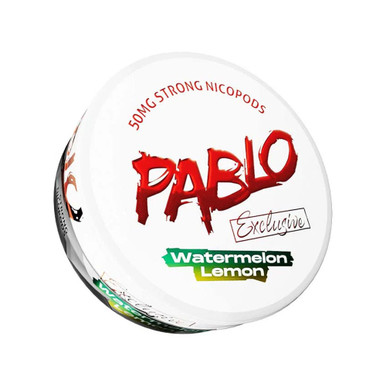
Pablo · 50mg
Read the full guide
Pablo Exclusive Watermelon Lemon Nicotine Pouches
£3.85
✔ In stock — ready to ship
100% tobacco-free
Free over £20
Same-day dispatch
Secure checkout
This page covers Pablo Exclusive Watermelon Lemon Nicotine Pouches, priced at £3.85 and carrying a single declared strength of 50mg. The flavour record holds two entries: watermelon and citrus. There is one variant on the listing rather than a set of options, one product image, and the can is in stock at the time of writing.
That is the complete set of facts our catalogue holds for this product. Brand, product name, price, declared figure, two flavour tags, availability. Anything on this page beyond those seven things is either a description of the physical object — which is common to the whole category and not specific to this tin — or a comparison against other listings on our own shelves, or an explicit admission that something you might reasonably want to know is not recorded on our side.
The full guide to Pablo Exclusive Watermelon Lemon Nicotine Pouches
5,107 words on how it eats, who it suits, how to serve it and what to put beside it.
What is on the listing for Pablo Exclusive Watermelon Lemon
There is one small mismatch in that list worth dealing with straight away, because it looks like an error and is not one. The product name says lemon; the flavour record says citrus. Those are the same thing in different vocabularies. Our shelves file fruit into families rather than into individual fruits, and lemon belongs to the citrus family, so the tag reads citrus while the name on the can reads lemon. The name is the manufacturer's; the tag is ours, and it exists to make the can findable rather than to describe it. Where the two disagree in wording, the can's own name is the more specific of the two.
A second gap, which is more consequential. Our record does not carry a cans-per-pack figure for this listing. The £3.85 is the price we hold, and nothing in the record states how many tins that covers. You will see listings elsewhere in this catalogue at £4.49 and at £39.90, and gaps of that size usually mean a listing holds more than one can — but we have not been told that about this one, so we are not going to say it. The listing page and the basket are where that gets settled.
Finally, the point that shapes every paragraph below: this is an age-restricted nicotine product for adults who already use nicotine. The compliance section at the foot of the page sets out the full position.
Watermelon against lemon, as a matter of taste
Two flavour names, in an order the manufacturer chose, and that order is the most informative thing about the name. Watermelon leads. Lemon follows. In flavour naming that ordering is a reasonably dependable signal of which note is meant to be the body of the thing and which is meant to be the edge on it, though it is a convention rather than a specification and our record does not confirm the proportions.
Watermelon as a flavour note is distinctive mainly for what it lacks. It is sweet, but mildly so, and it has almost none of the packed intensity of a berry or a stone fruit. What it has instead is a light, watery, faintly green quality — the taste is thin in a way that is a description rather than a criticism, and that thinness is precisely what makes it recognisable. Most people identify watermelon instantly and then struggle to describe it, which tells you something about how much of it is texture-of-flavour rather than flavour proper. In confectionery and in dry formats it usually reads sweeter and more rounded than the actual fruit does, because the fresh-cut, slightly vegetal note is the hardest part of it to carry.
Lemon is the opposite kind of note. It is sharp, bright, and immediately identifiable at the front of the mouth, with a peel-and-pith bitterness sitting underneath the obvious sourness. Whether a lemon note reads as juice or as peel makes a substantial difference to a flavour, and our record does not tell you which of the two this can leans toward. The name gives you lemon and nothing further.
Put together, the combination is a common and sensible one: a soft, low-intensity fruit given definition by a sharp one. The lemon gives the watermelon an edge it does not have on its own, and the watermelon gives the lemon something to sit in so it does not read as plainly sour. That is the logic of the pairing as a piece of naming. Whether this particular can executes it in a way you like is not something we can tell you, and anyone who claims otherwise from a two-word flavour record is making it up.
One absence worth naming, since it comes up: nothing in this can's name or record carries a cooling descriptor. No ice, no freeze, no frost, no arctic. If a cold finish is what you are after, the absence of that word is the only signal available, and a can that does print one in its name is the more reliable purchase.
How a flavour name turns into something you can taste in a dry pouch
This section is about the general problem rather than about this can specifically, because the general problem explains a lot of what people find surprising when they move between cans on these shelves.
A drink gives you flavour with a great deal of help. There is volume, there is temperature, there is often carbonation, there is the physical act of swallowing, and there is a quantity large enough that the flavour arrives all at once and fills the mouth. A dry pouch has none of that. It is a small object resting in one place, delivering a flavour slowly and in one spot rather than everywhere at once. Everything about how flavour reads in this format follows from that single structural difference.
Named flavours read as references rather than reproductions. A watermelon note in this format is recognisably watermelon in the sense that you would name it correctly in a blind test. It is not a mouthful of watermelon, and it was never going to be. The most common source of disappointment with any can on this site is expecting a reproduction and getting a reference. Once you have adjusted the expectation, the whole category makes more sense.
Sharp notes carry better than soft ones. This is why so many cans in the catalogue pair a quiet fruit with a loud partner, and why mint and citrus turn up in so many two-word names. A sharp note announces itself early and holds its shape; a soft note can fade into general sweetness if nothing is holding it up. The watermelon-and-lemon pairing on this can is a textbook instance of that construction, and the 77 Melon Mint listing at £39.90, in stock, is the same construction with mint doing the job lemon does here.
Position in the name usually maps to position in the experience, but not always. Manufacturers are not consistent about this and we hold no rule that would let us predict it. Denssi Watermelon Freeze, £39.90 and available, puts the fruit first and the cold descriptor second; Cuba Black Watermelon at £39.90, also in stock, gives you the fruit with nothing after it at all. Reading the name carefully is worth more than reading anything we can add to it.
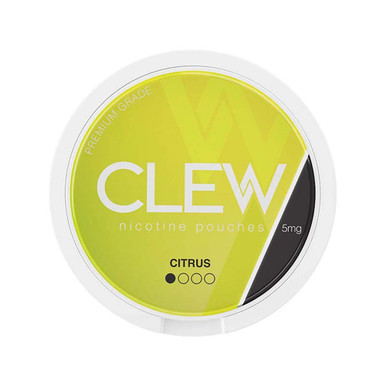
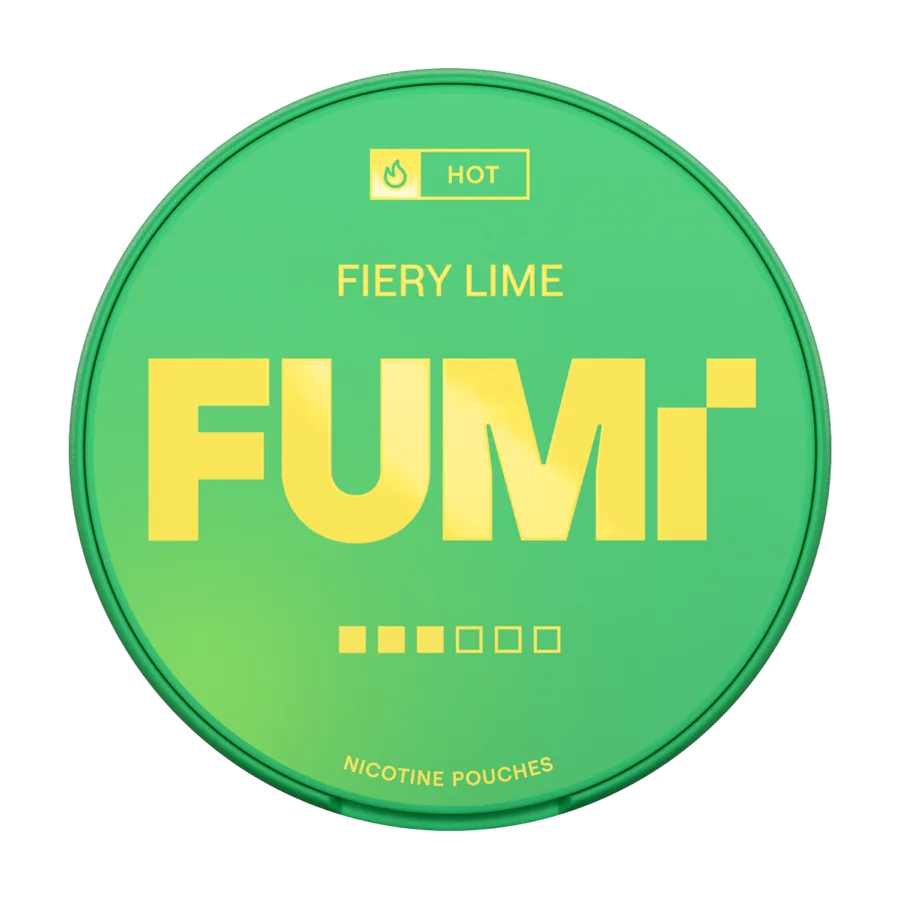
The same fruit name means different things to different houses. A citrus note from one brand and a citrus note from another are not interchangeable, even where the tag on our shelves is identical. Clew Citrus at £39.90 and Fumi Fiery Lime at £27.90 are both in stock, both sit in the citrus family, and neither is a substitute for the other or for this can. The shelf tag groups them; it does not equate them.
And a single flavour tag hides more than it shows. Our record for this can carries two tags. Two tags cannot express proportion, order of arrival, how long each note holds, or how the balance shifts over the life of a pouch. If you want that level of detail, nobody on our side has it, and the honest answer is to buy one can rather than several and find out.
The format, stated once in plain terms
A pouch is a small, soft, dry white sachet, roughly the size of a short flat bean. It goes between the upper lip and the gum, usually off to one side, and the lip holds it in place without any effort on your part. There is nothing else to the product. No device, nothing to charge, no battery, no refill, no spare parts, no cleaning. The tin and the pouches inside it are the entire object, which is the single largest practical difference between this format and most other things sold under the same age restriction.
It is also silent and still in use. Nothing needs to be held, nothing needs to be operated, and there is no gesture involved. That is a description of the object and nothing more; where it is acceptable to use one is covered later and is not a question we answer.
How long anyone keeps a pouch in is a matter of individual habit, and our record holds nothing on it. Manufacturers sometimes print guidance on the tin, and where they do, that is the authority. We will not publish a duration, a frequency or a quantity here, because doing so would amount to instructing you in the use of a nicotine product, and that is not our role.
Disposal: a used pouch goes in a bin. Not down a sink, not down a drain, not on the ground. The lid compartment found on most tins in this format exists so that a used pouch has somewhere to sit until you reach a bin, and it should be emptied rather than left to fill. Tins, opened or sealed, belong out of reach of children and animals.
Reading the 50mg on the lid
The listing declares 50mg and offers nothing else — there is no strength selector on this page, so the figure is a property of the can rather than a choice you are being invited to make.
What the number is: a manufacturer's declaration, printed on the tin, reproduced by us exactly as we received it. We have one additional use for it, which is filing. Cans are sorted onto strength shelves by their declared figure, which is why this one sits on the Extra Strong shelf among 98 listings, and why the catalogue separately runs a Strong shelf and a medium-strength shelf for cans printing lower numbers.
What the number is not: a score, a grade or a target. A higher declared figure does not make a can better, more serious or more worthwhile, and the shelves are not arranged as a sequence you pass through. There is nothing at one end of the range to reach and no reason to treat the catalogue as a progression. A can declaring a low figure is exactly as much a product as a can declaring a high one, and we would say the same thing on either page.
The figures are also not directly comparable between brands. Each manufacturer declares according to its own method, which we do not hold and could not reconcile if we did. Two cans printing the same number from two different houses are not thereby equivalent.
And the part that matters most: we cannot tell you which strength suits you. Not from your history, not from your build, not from what you bought last time, not from anything. We do not know you, we are not qualified to make that assessment, and a retailer that offered to make it would be overstepping badly. We print the figure accurately and file the can correctly. The decision is entirely yours to make.
Carrying a tin, and whose rules apply where
Two things get bundled together under the word discretion, and they deserve separating. One is a plain physical fact about the product. The other is a question about permission, which is not ours to answer and which we are going to decline clearly rather than vaguely.
The physical fact. The whole product is one small rigid tin. It fits a coat pocket, a trouser pocket, the inside pocket of a bag, a glovebox or a desk drawer, and there is no second component to remember. Nothing has to be charged before you leave the house, nothing runs out of power, and nothing needs a flat surface or a free hand to prepare. In use there is no sound and no equipment. Those are descriptions of an object, and they are the same descriptions we would give for every can on the Pablo shelf or anywhere else in the catalogue, because they are properties of the format rather than of any particular brand.
The permission question. People ask whether they can use one at work, in a restaurant, in a cinema, on a train, on a plane, in a hospital waiting room, in a car with passengers, in a gym. The honest answer is that we have no idea, and more importantly that our opinion would carry no weight if we did.
Here is why we will not answer it. Whether a product may be used in a given place is set by whoever controls that place. Employers set workplace policies and they differ between employers and often between sites of the same employer. Venues set house rules and post them or state them on request. Transport operators — rail, bus, coach, ferry, airline — set conditions of carriage, and airlines in particular set separate rules for what may be carried, what may be in hold baggage and what may be used on board. Schools, hospitals and public buildings have their own policies. None of these bodies has told us what their rules are, none of them is bound by anything we print, and all of them can change their rules tomorrow without telling us.
A shop that published a confident list of where you may and may not use a nicotine product would be inventing information and exposing its customers to the consequences. So the answer we give is the same every time: ask the operator. Read the staff handbook, check the posted notice, look at the conditions of carriage, ask at the desk. If you are travelling internationally, check what the destination country permits to be brought in, because rules on nicotine products vary widely between jurisdictions and a UK retailer's product page is not a source of customs guidance.
One thing we will state plainly, because it belongs here rather than buried in the compliance block. The unobtrusiveness of the format is not a feature we are marketing and it is not a way around anything. This product is for adults aged 18 or over who already use nicotine. It is not to be used to get around a rule, a policy, or an age restriction, and nothing on this page should be read as an invitation to do so.
Where Watermelon Lemon sits among the Pablo listings
Pablo runs to 56 listings with us, and the range is organised into named lines rather than being a single undifferentiated block. This can belongs to the Exclusive line, which carries most of the fruit names and where the £3.85 figure on this page recurs across sibling after sibling.
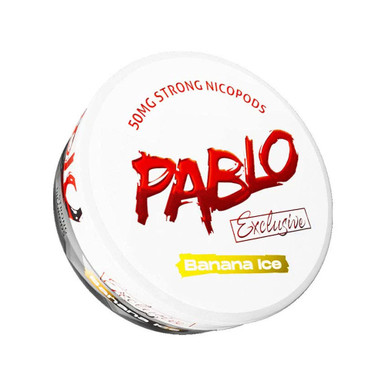
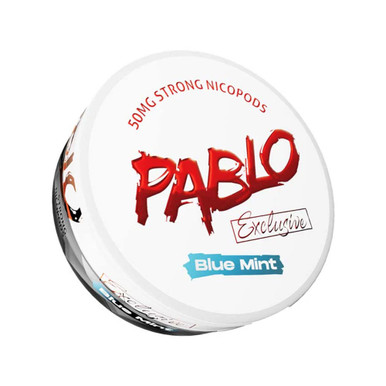
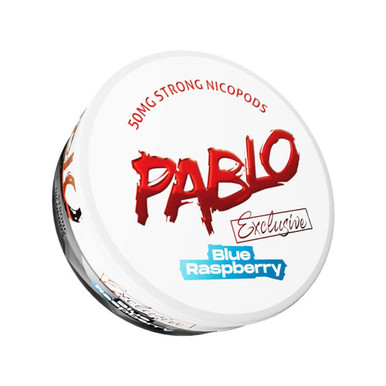
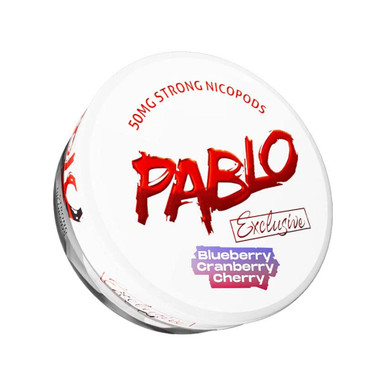
The shared price is the useful part, because it turns comparison within the line into a purely flavour-based question. Exclusive Blue Raspberry, £3.85 and in stock, moves from fruit into confectionery naming. Exclusive Banana Ice at the same £3.85 pairs a soft fruit with a cold descriptor, which is the construction this can does not have. Exclusive Blueberry Cranberry Cherry, also £3.85 and available, is the line's three-fruit name and sits in the berry family rather than this one. Exclusive Blue Mint, in stock at £3.85, is the mint-forward option. And Exclusive Bubblegum, £3.85, is the furthest from a fruit name in the set.
The closest relative to this can within the brand is not in the Exclusive line's berry corner at all. Pablo Exclusive Lemonade, £3.85 and in stock, is the brand's other citrus-family listing, and the comparison between the two is a genuinely interesting one: lemonade as a name implies the made-up drink rather than the fruit, where this can names the fruit itself alongside the watermelon. If citrus is the part of this can you care about, that is the sibling to look at.
Pablo also runs a Gold Edition line. We should say what that name does and does not mean, because it invites an assumption. On our records, Gold Edition listings differ from Exclusive ones in declared figure and in listed price, and that is the whole of what we can tell you. It is a manufacturer's name for a line, not a quality grade we have verified, and nothing in our record justifies treating it as the superior half of the range.
Cans people run alongside this one
Most regular buyers keep more than one tin going. A flavour you have had every day for two weeks stops registering, and a spare is useful in its own right. These are comparisons rather than recommendations, with price and stock position given so you know what you are opening.
Staying with watermelon, Nordic Spirit Melon Fresh at £4.49 is in stock and is the closest thing on our shelves to this can's fruit half without the citrus edge. Going the other way and keeping the citrus while dropping the melon, Killa's Exclusive Lemonade at £33.50 is available and approaches the same family from a different house.
For a complete change of direction — usually the better reason to buy a second can — the Maggie Original Jamaican Cherry Tonic Wine listing at £39.90 is in stock and is about as far from a light fruit pairing as this catalogue goes. The broader Cuba brand pages are worth a look if you want a house with a different flavour style across the board, and the full catalogue is there for browsing without a filter.
Two shelves are the efficient way to do this rather than picking listings one at a time. The watermelon shelf holds 23 listings and the citrus shelf holds 25, and this can appears on both. Between them they cover almost everything you might consider as a substitute for this one.
One warning so you do not waste a click: the Iceberg Watermelon Lime page is out of stock as this page was written. It is the nearest thing in the catalogue to a direct structural equivalent of this can — a melon fruit with a citrus partner — and at £39.90 the listing is live, but it is not orderable at the moment.
Looking after an open tin
Close the lid properly between uses. Not resting on the rim — seated. Air is the main thing that changes an open can over time, and a lid that is nearly closed is an open can with extra steps.
Keep it cool and out of direct light. A parked car in summer is the worst place a tin can be, and a sunny windowsill is not much better. Heat is not reversible in this context; a can that has been left somewhere warm does not come back to its original condition once it cools. A drawer, a cupboard, a bag or an ordinary room is all that is required, and no special storage is needed beyond that.
Keep sealed tins sealed until you are ready to use them, and if you hold several, work through them one at a time rather than opening the lot. Three open tins age at three times the rate of one. On refrigeration we take no position either way: our record says nothing about it and the manufacturer's own labelling is where to look.
And the point that is worth repeating however many times it appears on a page: tins belong out of reach of children and animals, open or not. A small printed container that rattles is an interesting object to exactly the people who should not have it.
What there is to choose between here
Not much, on this page. The listing offers one declared strength, 50mg, at one price, £3.85, with no variant selector and no recorded pack-size option. That is unusually simple by the standards of this catalogue and it removes most of the decisions this section would normally walk through.
The real choosing happens outward rather than inward. If 50mg is not the figure you want, the answer is a different listing rather than a different option on this one, and the strength shelves are the quickest filter — 98 listings sit alongside this can under Extra Strong, and the Strong and medium shelves hold the cans declaring lower figures. Filter first, then read the listings, because a shelf sorts only by the printed number and tells you nothing at all about flavour.
On pack size, the answer is the one given at the top and it does not get better with repetition: we hold no cans-per-pack figure for this product. If it matters to you whether £3.85 buys a single tin, check the listing page and the basket. Do not infer it from the price and do not infer it from this description.
Ordering, delivery and proving your age
The can is in stock at the time of writing at £3.85. Stock moves, and the live listing rather than this paragraph is the authority wherever the two disagree.
This is an 18+ product. An age check runs as part of checkout and applies to every order without exception, regardless of how long an account has been open. ID may also be requested on delivery, and if it is requested and no adult at the address can produce it, the parcel goes back. The courier has no discretion there and neither do we.
Dispatch follows a cleared age check. Delivery timings, carriers and postage costs live in the shop's own delivery information rather than on product pages, because they apply across the catalogue and change independently of any one listing — a delivery estimate written into a product description is a promise that goes stale here first.
If a parcel arrives damaged, or a tin does not match what the listing said, get in touch rather than sorting it out yourself. The usual limitation applies and we would rather state it up front: opened age-restricted consumables are not generally returnable, which is a matter of hygiene and law rather than commercial preference.
Getting back to this page later
Four routes, and they all work. By brand, the can is on the Pablo shelf with the other 55 listings. By strength, it is filed under Extra Strong. By flavour it appears twice — once on the watermelon shelf and once on the citrus shelf — which is the practical advantage of a two-tag record and makes it findable from either direction.
The fourth route is simply to browse everything unfiltered, which is worth doing if you are not sure what you want and would rather scan the whole range than a slice of it. The site's filters stack — brand plus strength, flavour plus strength — and stacking two of them is almost always faster than scrolling a long shelf.
Questions people ask about this one
Why does the tag say citrus when the can says lemon?
Because they are two different vocabularies doing two different jobs. The name is the manufacturer's and it names the specific fruit. The tag is ours and it names the family, so that the can turns up when someone browses the citrus shelf alongside the other 24 listings there. Lemon is a citrus fruit, so there is no contradiction — just a difference in precision. Where you want the specific answer, the can's own name is the better guide.
Which of the two flavours is stronger in the pouch?
We do not know and we are not going to guess. The name puts watermelon first, and naming order is a reasonably reliable convention for which note leads, but it is a convention and not a specification. Our record carries two tags and no proportions. Nobody on our side has tasted this can and written down a ratio, and a description that invented one would be worse than this answer.
Is there a cold or iced version of this flavour?
Not under this name — nothing in the record or the product name carries a cooling descriptor. If a cold finish is the priority, look for cans that print ice, freeze, frost or arctic in the name, because that word is the only signal available. Within the watermelon family the Denssi Watermelon Freeze listing does carry one, which makes it the nearest structural match to what you are describing, though it is a different brand at a different price.
How many pouches does the tin hold?
Our record does not carry a count for this listing and we will not estimate one. Counts vary between brands and between lines within the same brand, and two tins of the same external size do not necessarily hold the same number. The figure is printed on the can. An invented number on a product page is worse than an admission that we do not have one.
Why is this £3.85 when similar cans are £39.90?
Because listings differ in what they contain, and the price attaches to the listing rather than to any judgement about the product. A listing holding several cans will carry a larger figure than one holding fewer. We have not been given a cans-per-pack figure for this product, which is why we flag the gap instead of explaining it away. Check the listing and the basket before ordering, and do not read the price as a statement about quality in either direction.
Can I use one at work or on a train?
We cannot tell you, and we would not be a reliable source if we tried. Employers, venues, rail and bus operators, airlines and public buildings all set their own rules, those rules differ between organisations, and they change without anyone informing a retailer. Ask the operator directly, check the posted policy, or read your staff handbook. If you are travelling abroad, check the destination country's own rules, which vary considerably.
Does the Gold Edition line taste better than the Exclusive line?
We hold nothing that would let us answer. On our records the two lines differ in declared figure and listed price and nothing else is recorded. Gold Edition is a manufacturer's name for a line, not a grade we have checked, and treating it as a premium tier is an assumption rather than information. Price on this site reflects what a listing contains and how a brand positions itself, not a ranking we have made.
Do unopened cans have a shelf life?
Manufacturers print date markings and the can is the authority on itself. Our record holds no shelf-life figure for this listing, so we cannot give you a period in months and are not going to invent one. Practically, the sensible approach is the ordinary one: keep sealed tins cool and away from sunlight, buy what you will actually get through, and read what is printed on the tin.
What is the closest thing you stock to this can?
Structurally — a melon fruit paired with a citrus one — the nearest match in the catalogue is the Iceberg Watermelon Lime listing, but it is out of stock at the time of writing, so it is not a purchase today. Among things you can actually order, the watermelon shelf and the citrus shelf between them hold 48 listings, and working through those two is more useful than any single recommendation we could make.
Does the tin include the compartment for used pouches?
Most tins in this format carry one — a shallower space under the lid, sometimes a full false floor and sometimes a crescent to one side, so a used pouch has somewhere to sit until a bin turns up. Our record does not say which arrangement this particular tin uses, and rather than guess we will point you at the can itself, which answers it immediately. Whichever style it is, empty it into a bin rather than letting it fill up.
Why does every brand print the strength on the lid?
Because the lid is the only surface of a can anyone actually reads once it is sitting in a drawer or the bottom of a bag. Brand mark, flavour name and declared figure all go on that top face, and the convention holds across the whole catalogue. It earns its keep the moment you own more than one tin: a lid that does not state its own figure is a lid you end up levering off just to identify what you are holding.
Will you recommend a strength for me?
No, and the answer will be the same if you ask by email. We do not know you, we are not qualified to assess it, and directing anyone toward a particular nicotine strength is not a thing a shop has any business doing. What we will do is reproduce the declared figure exactly as printed and file the can on the correct shelf so you can find what you are actually looking for. The decision is yours alone.
Legal and compliance information
Nicotine is an addictive substance.
This product is sold only to adults aged 18 or over who already use nicotine, and on that basis alone. We do not sell to under-18s. An age verification step runs at checkout, and ID may be requested on delivery; where it is requested and cannot be produced by an adult at the address, the parcel will not be released.
Pablo Exclusive Watermelon Lemon Nicotine Pouches are not a licensed stop-smoking medicine and are not authorised, licensed or intended for any such purpose. This product is not intended for non-smokers, for anyone who does not already use nicotine, for under-18s, or for anyone who is pregnant or breastfeeding. Nothing on this page constitutes medical advice, and nothing on it should be read as encouragement to begin using nicotine or as a recommendation of any strength for any person.
Keep this product out of reach of children and animals. Every factual detail on this page — the product name, the brand, the £3.85 price, the declared 50mg figure, the watermelon and citrus tags and the stock position — comes from our own product record. Where that record is silent, the page says so rather than estimating. The can and the manufacturer's labelling on it are the authoritative source for anything printed on the packaging.
In brief
Pablo Exclusive Watermelon Lemon: one declared strength at 50mg, one price at £3.85, two flavour tags reading watermelon and citrus, in stock as this was written, and no cans-per-pack figure on our record. It sits in the Exclusive line among 56 Pablo listings, on the Extra Strong shelf among 98, and on both the 23-listing watermelon shelf and the 25-listing citrus shelf.
Seat the lid, keep the tin cool, bin used pouches, and keep the can away from children and animals. What we hold is above. What we do not hold is above as well.
More from Pablo
More extra strong pouches

More citrus pouches

Where this sits
Pablo Exclusive Watermelon Lemon Nicotine Pouches appears in these categories. Browse them, or jump to something close.
You might also like