Killa · 16.5mg
Read the full guide
Killa Exclusive Lemonade Nicotine Pouches
£33.50
✔ In stock — ready to ship
100% tobacco-free
Free over £20
Same-day dispatch
Secure checkout
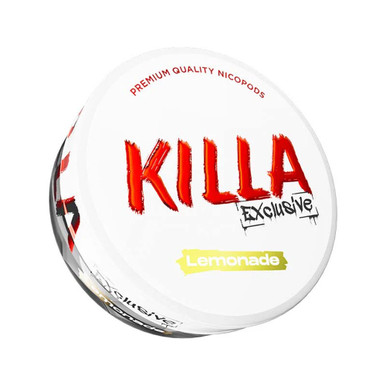
Killa Exclusive Lemonade Nicotine Pouches is priced at £33.50 and carries one declared strength, 16.5mg. There is a single variant, so the figure and the price are locked together and there is nothing to choose between. Our flavour field for the listing reads citrus. Availability showed as in stock when this text was written, and the listing has one image against it.
That paragraph is the complete set of verified facts. It is worth being blunt about what is missing, because the gaps come up repeatedly further down: we do not hold a can count for the £33.50, we do not hold a pouch count for a can, we do not hold the physical pouch format, we hold nothing about moisture, and we hold no origin, production date or shelf life. None of those blanks will be filled in by guesswork on this page. Each one lives on the packaging, and the packaging is the authority.
The full guide to Killa Exclusive Lemonade Nicotine Pouches
5,042 words on how it eats, who it suits, how to serve it and what to put beside it.
Killa Exclusive Lemonade: the record in full
The name needs a note as well. Killa is the manufacturer's trade name, printed on the lid, and that is the entire significance we attach to it — it is not a description of the contents and not a claim about anything the product does. Exclusive is the manufacturer's own label for a group of products inside its catalogue; it is not a statement that the can is rare, limited or withheld from general sale.
Finally, the obvious but necessary point: this is an adult nicotine product for people aged 18 or over who already use nicotine. The full wording sits in its own section towards the end.
Lemonade, described as a taste
Our record files this as citrus, which is accurate but broad — the citrus shelf holds everything from a bitter grapefruit reading to a sweet orange soda. The manufacturer's name narrows it considerably, and lemonade is a specific thing rather than a synonym for lemon.
What distinguishes a lemonade from a lemon is sugar and roundness. A straight lemon flavour leads with acid: sharp at the front, mouth-watering, with a peel-like bitterness sitting underneath it. A lemonade softens all of that. The acidity is still there and still the backbone of the flavour, but it arrives wrapped in sweetness rather than ahead of it, and the bitter peel note is largely absent. The overall shape is rounder, fuller and a good deal more forgiving.
There is usually a suggestion of fizz in a flavour built this way — not literal carbonation, obviously, but a bright prickle at the front of the mouth that the brain reads as a sparkling drink rather than a cordial. Whether you notice that in this can is down to you; some people find it strongly, some not at all.
Cooling is minor here. This is not a can built around a chill, and anyone moving to it from a mint expecting the same cold sheet across the palate will find it absent. What replaces the cold is the acidity, which does some of the same work of keeping the flavour lively but does it in a completely different register. The finish is shortish, clean, and slightly sweet-sour rather than sugary.
Opening the lid
Citrus cans are the loud ones. Where a mint tin gives you a quiet cold note that stays inside the can, a lemonade aroma jumps out of it — bright, sweet-sharp, unmistakably lemon, with a sugary top to it. It carries across a room in a way almost nothing else in the category does. That is worth knowing if you are the sort of person who opens a can at a desk in an open-plan office, because it is genuinely noticeable to people sitting nearby.
Lemonade next to a lime or an orange
Within citrus there are three broad directions and they are easy to tell apart. A lime reading is the sharpest and the greenest, with a distinctly bitter edge that most lime cans do not try to hide. An orange reading is the sweetest and the roundest, with more perfume to it and much less acid attack. A lemonade sits between them but closer to the orange side in structure while keeping the lemon's acidity — sweet enough to be comfortable, sharp enough to stay bright. If you find lime cans too austere and orange cans too soft, this is the shape of thing that usually lands in between.
16.5mg printed on the lid
The declared figure for this listing is 16.5mg. That is the manufacturer's statement of the nicotine content of a pouch, expressed in milligrams, printed on the packaging as label information. It describes the contents of a pouch and nothing else.
It does not describe a person, it is not a grade, and it is not a score to be beaten. We place this listing in the Strong band, a shelf of 132 products, and we run a Medium band below it and an Extra Strong band above it. Those three shelves are a filtering tool we built so that a catalogue of 385 listings can be narrowed to something readable. They are not a progression. A can in a higher band is not more advanced, not a reward and not a destination, and nothing on this site should be read as suggesting anyone move up it.
We cannot tell you which strength is appropriate for you. We hold no information about any individual and would not act on it if we did, and a retailer steering customers between nicotine strengths is a retailer doing something it has no standing to do. The declared figure is printed on the can. Anything about nicotine and your own circumstances is a question for a pharmacist or a doctor.
One labelling point worth carrying around: different manufacturers declare differently, some per pouch and some per gram of pouch content. Two cans can therefore print the same number and not be describing the same quantity. Compare figures within a brand with reasonable confidence and across brands with rather less, and let the tin in front of you be the reference for itself.
The pouch, the lip, the bin
The pouch sits under the upper lip, off to one side, laid flat rather than folded over on itself. It holds itself in position. It is not chewed and not swallowed, and it comes out in one piece at the end. Most people nudge a fresh one into place in the first minute and then stop thinking about it.
Pouch bodies vary across the market — slim, regular, and shorter mini formats — and our record does not state which this can uses, so the label answers that. Format affects how present a pouch feels more than almost anything else, which is why an unfamiliar brand can feel odd before you have registered anything about its flavour.
How long a pouch stays in is personal habit plus whatever the manufacturer prints on the packaging. Descriptions in this category run from about twenty minutes to an hour. In a citrus can specifically, flavour tends to peak early and fall away faster than in a mint, because acidity fades quicker than cooling does — so the useful flavour window on a lemonade can is often shorter than people expect coming from a mint. We are not going to attach a recommended duration to it; that would be advice, and advice is not ours to give.
Spent pouches go in general waste. Not a sink, not a toilet, not a food caddy, and never left within reach of a child or an animal. The empty tin is plastic and can go to household plastics recycling as far as your council accepts that grade, which differs by authority and is not something we can check for a postcode.
Condition: what it means, how it goes, and how to hold onto it
Condition is the word for whether a can is still the thing you bought. It is not the same as freshness in a supermarket sense and it has nothing to do with safety, which is not a subject this page addresses in any direction. It simply means: are the pouches still the texture and the flavour they were when the seal came off? Almost everything that determines the answer happens after the can reaches you, which makes this the one part of the product entirely in your hands.
The two ways a can goes wrong
There are really only two, and both are undramatic. The first is moisture loss. A can that has been left with its lid not properly seated, or kept somewhere warm and dry for weeks, ends up with stiff pouches that seat awkwardly and give a flatter, shorter flavour. The second is heat. Warmth does not dry a can out so much as tire the flavour, and a citrus can shows it earlier than most, because the bright top notes are the first thing to go. A lemonade that has spent a fortnight in a car reads duller and more generically sweet than the same can kept in a drawer.
Neither failure reverses. Once a can has dried or cooked, that can is what it now is. This is why the whole of this section is about prevention rather than remedies — there are no remedies, and anything claiming otherwise is folklore.
The lid is ninety per cent of it
The single habit that matters is closing the lid fully every time. These tins close by friction rather than by thread, which means a lid can sit on the rim looking perfectly shut while leaving a gap all the way round. Pressed home properly it seats with a small definite give. Learn what that feels like once and most storage problems disappear, because a can left genuinely closed in an ordinary indoor cupboard will hold its condition for a long time without any further thought.
Where a can should live
Cool, dark, dry, and stable. A drawer, a cupboard, a bedside table — anywhere that does not swing between temperatures. The places that cause trouble are all obvious once listed: a car in summer, a windowsill in sun, the shelf above a radiator, the top of a fridge where the motor warms it, a bathroom cabinet where humidity rises and falls twice a day, a kitchen worktop beside a hob. A bag carried everywhere is a moderate risk too, less from temperature than from the lid being worked loose by movement.
Cold storage, if you buy in quantity
Keeping sealed cans in a fridge is a reasonable thing to do if you buy more than you will use quickly, because cool and dark are exactly the conditions that preserve condition. Two caveats. A chilled can brought into a warm room collects condensation on the inside of the lid, so let it come up to room temperature before opening it — otherwise you have introduced the very moisture problem you were avoiding. And a fridge is where food lives, so a nicotine product in one needs to be in a sealed, clearly separate container, high up, and unmistakably out of reach of children. For most households a lidded box in a cool cupboard achieves the same thing with fewer ways to go wrong.
A freezer is a different matter and we would avoid it. Every trip in and out cycles moisture, and moisture cycling is the fastest route to a clumped, unusable can.
Things people try that do not work
Adding a drop of water to a dry can is the most common. It does not rehydrate anything evenly; it clumps the contents and turns a merely disappointing can into a ruined one. Putting a can on a radiator to "loosen" it makes the heat problem worse. Decanting pouches into a sandwich bag for a night out leaves them drier by morning than the tin would have. Transferring the contents of a crushed can into an empty tin that still closes properly is the one transfer that is actually sensible, and it is a good reason to keep an empty or two.
Why a citrus can shows its condition first
Worth a paragraph of its own, because it is specific to what is on this page. Bright, volatile top notes are the part of any flavour that fades earliest, and citrus is almost entirely top notes. A mint can that has been treated badly loses some of its edge but keeps its cooling, so it still reads as a mint. A lemonade that has been treated badly loses the lemon first and is left with the sweetness underneath, which reads as vague and slightly flat rather than as anything identifiable. That makes a citrus can an unusually good indicator of how your storage habits are actually working. If your lemonade tins keep arriving at that vague stage before you finish them, the problem is almost always the lid or the location rather than the product.
Rotation, and the date on the tin
Our record carries no shelf life, no production date and no best-before for this listing, so the only date that exists is the one printed on the packaging. Read it there. The habit that costs nothing is to use cans in the order you bought them instead of reaching past three older tins for the newest one, and to keep the currently open can somewhere you actually go each day rather than in a coat you wear occasionally.
Telling "gone off" from "different"
Cans vary between batches, and a can that tastes unlike the last one is not automatically a can in poor condition. Dryness you can feel with a fingertip; a tired flavour is harder to judge and easy to confuse with an ordinary batch difference or with your own palate on a given day. If a can seems genuinely wrong rather than merely different, keep the tin, note the batch code printed on it, and contact us — we can treat that as a supply question. What we cannot do is diagnose it from a description, because we hold no batch data at all.
The Killa shelf this can belongs to
We list 31 products under the Killa brand, and every can named in this section is £33.50, the same as this one. A flat price across a shelf is quietly useful: it means nothing about price is signalling anything about the product, so browsing the shelf is purely a question of which flavour you want.
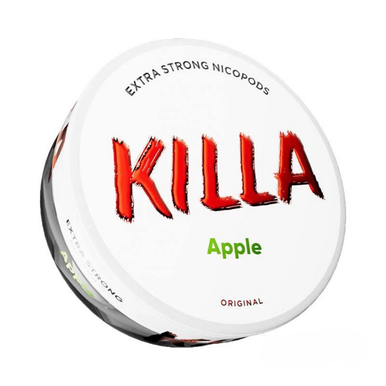
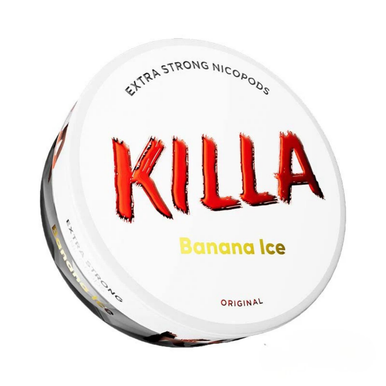
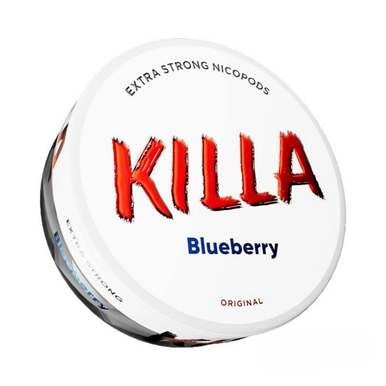
On the fruit side, Killa Apple at £33.50 is crisp and orchard-sweet and the nearest thing on the shelf to this can in terms of brightness, though it trades acidity for a cleaner sweetness. The Killa Blueberry can at the same price is darker, jammier and considerably rounder, and Killa Banana Ice, also £33.50, sets a soft creamy fruit over a cold base — a long way from a lemonade in every direction.
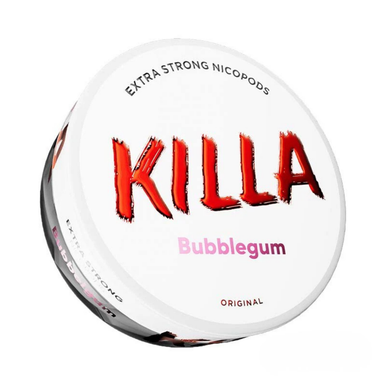
At the confectionery end, Killa Bubblegum at £33.50 is straightforwardly sweet with none of the acidity this can is built on, and the Killa Cola can at the same figure is the closest relation to a lemonade on the shelf — another soft-drink flavour, syrupy and faintly spiced, with enough acidity to keep it from sitting flat. The outlier is Killa Cappuccino, £33.50, roasted and milky with a bitter edge, which is about as far from a citrus can as the brand's range goes.
Inside this same series there is an orange, two mints and a liquorice, all at £33.50 with 16.5mg on the lid. The orange is the obvious neighbour and is dealt with in the next section, since it is the can most people set beside this one.
Moving between cans on our shelves
Very few people who buy pouches regularly stay on one product indefinitely. They move — a different flavour, a different brand, whatever was in stock — and our shelves are designed to make that easy. They also make it easy to misjudge, because the things that differ between two listings are not always the things a product tile displays.
Moving inside a flavour family
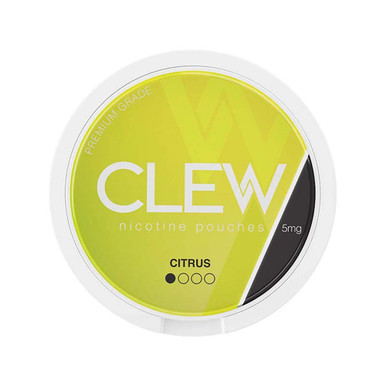
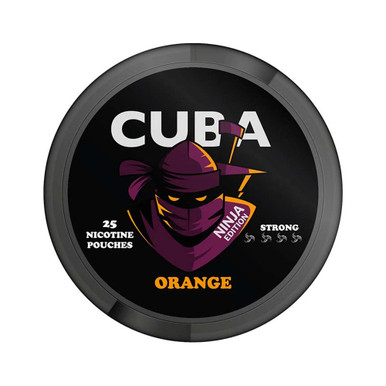
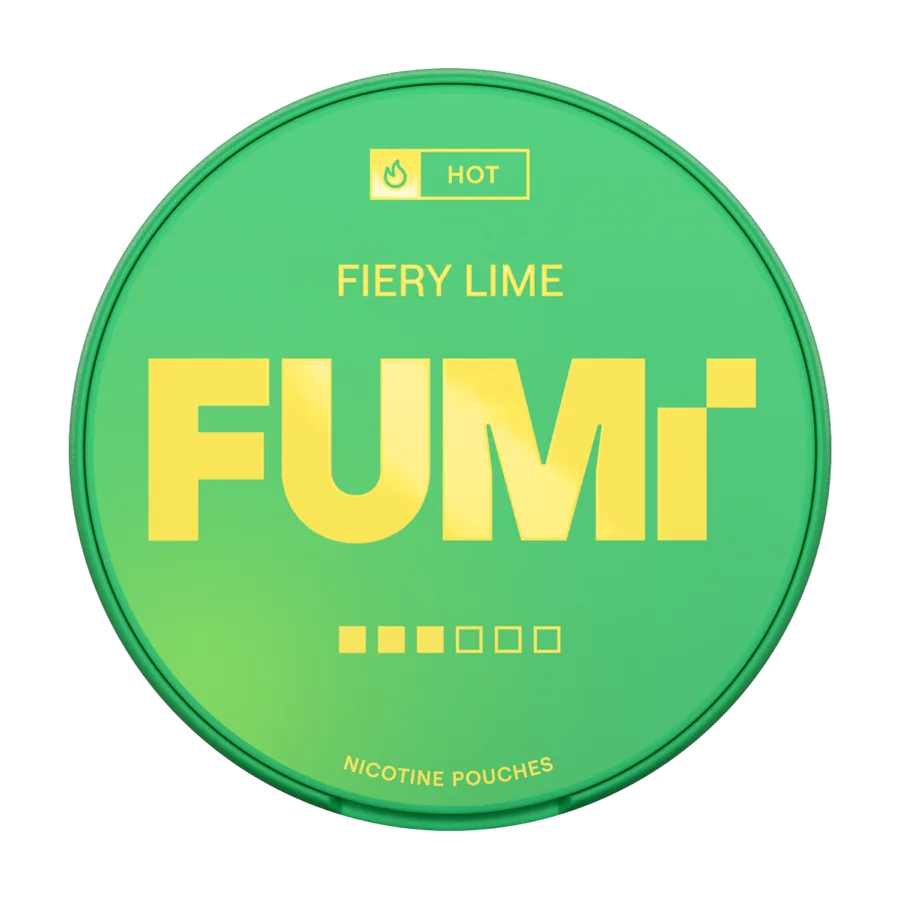
The smallest move is from one citrus can to another, and it is genuinely small: the structure of the flavour stays recognisable and only its balance shifts. The Killa Exclusive Orange can at £33.50, from this very series, is the shortest step available — same brand, same series, same declared figure, same price, with the acidity dialled back and a rounder, more perfumed sweetness in its place. Clew Citrus at £39.90 is a broader reading of the family that does not commit to one fruit. Cuba Ninja Orange, also £39.90, and Fumi Fiery Lime at £27.90 take the sweet and the sharp ends respectively — the lime being the one that will feel most unlike a lemonade despite sharing a shelf with it.
Moving across families
Going from citrus to mint, or to a berry, is a larger change than the shelf structure implies, because the flavours are not built the same way. A mint is organised around a cooling sensation; a citrus is organised around acidity. Swapping one for the other is not a matter of degree, and people who do it often report that the new can seems to have "no flavour" for the first day, which is usually the palate recalibrating rather than a fault in the can. If you are moving families, a day or two before forming a judgement is fair to the product.
What a listing page can and cannot tell you
Our pages carry price, declared figure, flavour tag, stock status and an image. That is real information and it is enough to choose between two cans on flavour. It is not enough to compare formats, because we do not hold format, and a price difference between two listings usually reflects quantity rather than quality. Anywhere that gap matters, the product packaging and the supplier's own statement are the sources, and we would rather you asked us than assumed.
Single-fruit cans and blends
One distinction inside citrus is worth drawing before you browse the shelf, because the names do not always make it obvious. Some cans name one fruit and taste of one fruit. Others name two or three, or name nothing in particular, and deliver a blend in which no single component dominates. The two behave differently over a week of use: a single-fruit can is more legible and easier to get tired of, a blend is harder to place and tends to last longer before it stops registering. This lemonade is firmly in the first group — it is one idea, clearly stated. Whether that suits you depends on whether you want a flavour you can name or one you cannot, which is a preference rather than a quality judgement.
The size of the shelves you are moving between
Scale matters when browsing. Our citrus shelf holds 25 products, which is small enough to read end to end in a couple of minutes. The mint shelf, by contrast, runs to 148 and needs a second filter applied before it becomes navigable. If you are exploring rather than repeating an order, starting from the smaller shelf is simply less work.
Buy one before buying several
The dullest advice on this page and the most useful. Flavour descriptions — including the ones above, written as carefully as we can manage — are approximations of something subjective. A can in your hand settles in five minutes what a paragraph cannot settle at all. Since we cannot tell you how many tins £33.50 represents, the case for testing something unfamiliar before committing is stronger here than it would be on a listing where the format is spelled out.
Cans people keep beside a citrus one
Keeping a second can open is common practice, mostly because a single flavour used constantly stops registering. Every product below is stocked by us at the price shown, and the reason attached to each is its flavour or its price and nothing else.
For outright contrast rather than variation, the Edge Mint can at £14.95 is about as far from a lemonade as the site goes in construction — a plain, quiet mint built around cooling rather than acidity, at a much lower listing price. People who keep a citrus and a mint open at the same time generally do so precisely because the two are built on different principles, so neither ever starts to taste like the other.
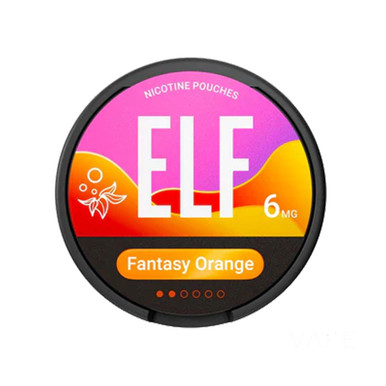
Staying inside citrus but changing brand, Elf Bar Fantasi Orange at £29.90 is a sweeter and more perfumed reading of the family with far less acid pressure at the front, which makes it the gentler of the two to sit with over a long stretch. Iceberg Apple Lemon Pineapple at £39.90 is a different proposition again: a blended can where lemon is one voice among three rather than the whole flavour, with apple supplying crispness and pineapple a tropical sweetness over the top. If a single-fruit can starts to feel narrow, a blend is the usual next step, and it stays inside the same broad territory rather than abandoning it.
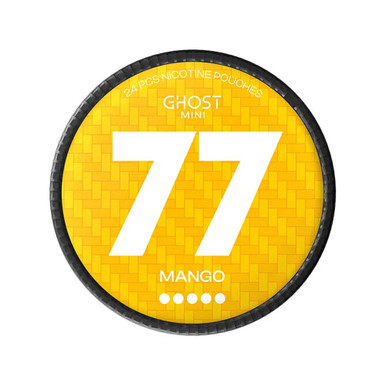
Away from citrus but still in fruit, 77 Ghost Mini Mango at £39.90 keeps a tropical sweetness in a mini-format body, which changes the physical object as well as the taste and is worth knowing before you order it expecting a standard pouch. Denssi Blueberry Freeze at £39.90 puts a soft berry profile over a cold base, so it reads as a hybrid of the fruit and mint directions rather than committing to either.
At the far end of the price range we list Velo Orange Spark at £4.19, another citrus can entirely. That figure and this page's £33.50 are not comparable without knowing both formats, and we do not hold the format for either — so treat the two prices as facts about listings rather than as a value comparison, and check the packaging before drawing a conclusion.
One variant, one price
Some listings here carry three or four declared figures under a single price and ask the customer to choose. This one does not: 16.5mg at £33.50 is the whole of it. That removes the strength decision entirely and leaves two questions — whether the flavour suits you, and how many you want. The second is the awkward one, since our cans-per-pack field is empty and we will not fill it by inference. Check the product page before you commit.
Ordering, ID and delivery
The listing showed as in stock when this description was written; the live product page is always the more accurate source for availability.
Age verification runs at checkout for every nicotine listing on this site without exception. It is a legal requirement rather than a house preference, orders can be held or cancelled where verification cannot be completed, and the courier may ask for photographic ID at the door. If nobody who can produce it is there, the parcel is not left.
Delivery charges, carriage options and timescales are set out in the site's delivery pages rather than here, because those details change and a product description is a poor place to fix them. Nothing above should be read as a commitment about a delivery date.
Where the site keeps this can
Three shelves carry this listing. The citrus flavour shelf holds 25 products and is the natural place to browse from if flavour is what you are shopping by. The brand shelf collects all 31 Killa listings in one view. The Strong band gathers 132 products that share a filing rather than a figure.
If you would rather see everything, the full catalogue is the place to start. Customers who navigate by brand frequently move from here to the Cuba shelf or the Pablo shelf, both larger ranges with their own spread of flavours. Customers who navigate by declared figure use the bands — a filtering convenience, once again, and not a scale with a top.
Questions we get about this can
Is this lemon or lemonade?
The manufacturer's name says lemonade, and the description above is written to that. The difference is real: lemon leads with acid and peel bitterness, lemonade wraps the acid in sweetness and drops most of the bitterness. Our own flavour field simply says citrus, which covers both and distinguishes neither. If the precise character matters to you, the can's own description will be more specific than our one-word tag.
Is it fizzy?
No — nothing in a pouch is carbonated. Flavours built around a soft drink often produce a bright prickle at the front of the mouth that reads as fizz, and some people notice that clearly while others do not at all. It is a characteristic of the flavour, not a property of the product.
How many cans is £33.50?
We do not know. The cans-per-pack field is empty in our record for this listing and we are not going to deduce a figure from the price, because that is exactly how confident errors get published. The product page and the packaging carry the format. Ask us before ordering if it matters and we will check the supplier's statement rather than guess.
Does the flavour last as long as a mint?
Generally not. Acidity fades faster than cooling does, so citrus cans as a group tend to have a shorter bright window than mints, and this one behaves that way. That is a description of how the flavour develops, not a criticism — plenty of people prefer a flavour that is vivid early over one that hangs on quietly. Individual experience varies, and we are not putting minutes on it.
Why is a citrus can filed in the Strong band?
Because flavour and strength are separate filings and every listing has to sit in one strength band. The band is ours and it is broad; the declared figure of 16.5mg is the manufacturer's and it is precise. Where the two seem to disagree, the printed figure is the one that counts. Bands exist so a 385-listing catalogue can be filtered, nothing more.
Will a citrus can taint the rest of my tin if I keep it in a bag with a mint?
Closed tins do not transfer flavour between each other, so no. An open tin left in a warm bag alongside strongly scented things is a different matter, and the risk there is mostly to the can with its lid ajar. Keep lids fully closed and the question does not arise.
Is 16.5mg a strong figure?
It is higher than some numbers on our shelves and lower than others. We will not label it as strong or moderate in any evaluative sense, because that is an opinion presented as a measurement and it edges towards telling people what to buy. The number is printed on the tin, the listing is filed under Strong, and the only comparison worth anything is with whatever you already use.
Where is this made?
We do not publish that. Origin, manufacturer and importer details are not in our record for this listing and we will not infer them from the brand. All of it is printed on the packaging alongside the required warnings, which is the correct and reliable place for it.
Can I keep pouches in a pill box or a smaller tin?
You can, but a small container that does not seal will dry them out faster than the original tin, and an unlabelled container holding a nicotine product is a genuinely bad idea in a household with children or anyone who might not know what it is. If you need to carry a few, carry the can. If the can is damaged, transfer to another can that closes properly rather than to something improvised.
Should I buy this or the orange one?
We are not going to choose for you, but we can describe the difference honestly: the orange can is rounder, sweeter and more perfumed with much less acid attack, while this one keeps a lemon sharpness under its sweetness. Both are £33.50 with the same declared figure, so nothing but taste is at stake. A fair number of people keep both open and alternate.
What does "Exclusive" mean on the lid?
It is the manufacturer's own name for a group of products within its catalogue, in the way another brand might use Edition or Series. It does not indicate a limited run, a restricted release, or anything held back from general sale, and we have no information that would suggest otherwise. Read it as part of the product name rather than as a statement about availability — the stock position on the live product page is the only thing that describes availability.
Why does my can smell stronger than it tastes?
That is normal for citrus cans generally. Aroma is the most volatile part of a flavour, so it is concentrated in the headspace of a closed tin and released all at once when the lid comes off, while the taste arrives gradually and at a lower intensity. A big smell and a moderate taste is the expected pattern rather than a sign of anything wrong. It is also why citrus tins are the ones people notice being opened across a room.
Do you know when a sold-out can comes back?
Not from a description page. Stock status here reflects the moment of writing, and restock timing depends on supply arrangements we do not publish and would not want to promise against. The live product page shows current availability, and if something is out, ask us and we will tell you what we actually know.
Required notices
We sell this only to adults aged 18 or over who already use nicotine. Age confirmation takes place at checkout, orders may be verified before dispatch, and the courier may request photographic ID on delivery — with no adult present to show it, the parcel goes back rather than being left.
Nicotine is an addictive substance. That belongs in the body of the page in plain type rather than in a footnote.
This product is not a licensed stop-smoking medicine and nothing on this site presents it as one. It is not intended for non-smokers, for anyone who does not already use nicotine, for under-18s, or for anyone who is pregnant or breastfeeding. We make no health, medical or safety claim about it in any direction whatsoever. Anything concerning nicotine and your own circumstances is a conversation for a pharmacist or a doctor, not for a shop.
Closing
Killa Exclusive Lemonade is a single-variant listing at £33.50 carrying a declared 16.5mg, filed under citrus, with a flavour that keeps a lemon acidity inside a rounder sweetness and very little cooling behind it. It sits on a 31-listing brand shelf priced flat, a 25-product citrus shelf and a 132-product strength band. The parts of the record that are blank — can count, pouch count, format, moisture, origin, dates — have been left blank here rather than filled with plausible invention. The tin and the manufacturer's printing on it are the final authority on all of them.
More from Killa
More strong pouches

More citrus pouches
Where this sits
Killa Exclusive Lemonade Nicotine Pouches appears in these categories. Browse them, or jump to something close.
You might also like