
Home / Extra Strong / Iceberg Melon Peach Nicotine Pouches
Iceberg · 20mg–50mg
Read the full guide
Iceberg Melon Peach Nicotine Pouches
£39.90
✔ In stock — ready to ship
100% tobacco-free
Free over £20
Same-day dispatch
Secure checkout
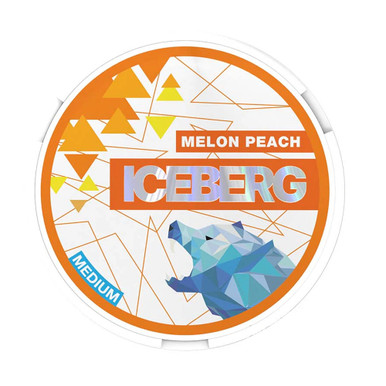
This page is the listing for Iceberg Melon Peach Nicotine Pouches. The brand printed on the lid is Iceberg, the product name is Melon Peach, and the price we show is £39.90. Two declared strengths sit against it — 20mg and 50mg — and both are priced at £39.90, so the figure on the can is not a price step here. There is one product image on file.
Two things about our record need saying at the top rather than buried further down, because a reader who spots them later will reasonably wonder why we did not mention them.
The full guide to Iceberg Melon Peach Nicotine Pouches
5,202 words on how it eats, who it suits, how to serve it and what to put beside it.
The Melon Peach can, and what our record actually holds
The first is stock. This listing is marked out of stock at the time of writing. We do not hold a restock date, an expected delivery week, or any indication of whether it will return at all, so we are not going to imply one. The page stays up because the record is worth keeping and because people search for a can by name long after it has gone off the shelf, but if you have arrived here intending to buy today, the honest answer is that this particular listing cannot be bought today. What is on the shelf sits under the Iceberg brand shelf, which carries forty lines in total, and on the wider tropical flavour shelf, which carries fifty-eight.
The second is the flavour tagging, which does not match the product name, and we would rather say so plainly than write around it. The name on the can is Melon Peach. The flavour tags on our record are watermelon and tropical. There is no peach tag. There is no plain melon tag either — the melon half of the name has been filed under watermelon, which is the nearest category we run. That mismatch is a filing decision on our side, not a statement about what is in the can, and it means the shelves this page appears on are not a perfect description of it. Where this page describes taste below, it describes the name on the can and the categories we have filed it under, and it flags where those two things pull in different directions.
Beyond that, the record is thin in a way that is worth stating once so that the rest of the page can be read properly. We do not hold a pouch count per can. We do not hold a cans-per-pack figure, which means we cannot tell you whether £39.90 buys one tin or several — the field is simply empty on this line, and filling it with a guess would be inventing a fact about a price. We hold no weights, no dimensions, no dates and no ingredient detail. The can in your hand, and the manufacturer's own labelling on it, is the authority on every one of those points. This is an age-restricted nicotine product sold to adults who already use nicotine, and the wording we are required to carry sits in its own section near the bottom.
A fruit blend, described as taste and aroma
Melon and peach are both soft fruits, and a blend built from two soft fruits behaves differently on the palate from a blend with something sharp in it. There is no citrus edge here to cut through, and — importantly for anyone arriving from a cold can — our record carries no mint tag, no menthol tag and no ice tag against this listing. We are not going to assert a cooling note we have no record of. Read this as a fruit flavour and nothing else.
What comes off the can first
Aroma in this format is a short event. The lid comes off, there is a moment of scent from the tin itself, and after that the flavour is something you taste rather than something you smell. That first moment on a fruit can of this type reads sweet and slightly artificial in the way that fruit confectionery does — recognisable as fruit without being mistaken for the fruit itself. That is not a criticism. A dry pouch has no juice in it and nothing that behaves like juice, so the aroma is always a representation rather than a reproduction, across every fruit can we stock.
The melon side
Melon is the thinner and quieter of the two notes. Watermelon, which is how our system files this one, tends to read as watery and light, with a faint green edge borrowed from the rind rather than the middle of the fruit, and a sweetness that is present but never thick. Honeydew and cantaloupe characters sit in the same family and read rounder and slightly more perfumed. What melon contributes to a blend is usually dilution in the good sense — it keeps the whole thing from turning into syrup, and it gives the flavour some space.
The peach side
Peach is the heavier note and generally the one that people identify first, even in a blend where melon is named alongside it. Stone fruit carries a rounded, slightly floral sweetness with a soft edge of tartness underneath, and there is often a skin-side character — faintly fuzzy, faintly bitter — sitting behind the flesh-side sweetness. In a two-fruit blend of this kind the peach usually supplies the body and the melon supplies the length, which is why the pairing is common across the category rather than unusual.
How the two read together, and how the tags read against the name
Taken as a pair, the expected shape is a sweet, soft, low-acid fruit flavour with the peach forward and the melon behind it, thinning out towards the end rather than finishing sharply. That is the shape the name describes. What our tags describe is slightly different — watermelon and tropical — and tropical as a category tends to imply the mango, pineapple and passionfruit end of the fruit spectrum rather than the orchard end that peach belongs to. If you came to this page from the tropical shelf expecting something in that family, the name on the can is pulling the other way. If you came looking for peach specifically, note that we have not tagged it as peach, and that our nearest peach line on the shelf is the Fumi Fiery Peach can at £27.90, which is a separate product from a separate maker and is filed on its own terms.
What the format does to any flavour
One general point that applies here and to every can on this site. A pouch delivers its flavour over a long, flat curve rather than in a single moment, and the curve tends to be front-loaded — most people report the flavour being clearest early and tailing off steadily, with the sweetness usually fading before the underlying character does. Fruit flavours in particular tend to lose their brightness before they lose their body, so the last part of a fruit pouch often reads plainer than the first. That is the normal behaviour of the format and not a fault in a particular can.
The pouch itself: lid, lip, and bin
The format is the same across every listing we carry, so if you already use pouches there is nothing new here. A pouch is a small sealed portion that goes in the mouth, sits between the lip and the gum, and stays there. It is not chewed. It is not swallowed. Nothing is lit, nothing is charged, nothing is carried except the tin.
Getting one out
Lid off, one pouch out, lid back on. The only awkward moment is a completely full can, where there is no gap to get a fingertip into until the first pouch has been lifted — most people tip the tin slightly or use a nail edge. That is true of nearly every tin of this shape rather than being particular to this one.
Placement
Most people place a pouch under the top lip, towards the front, where the lip holds it flat against the gum. Under the bottom lip works too and some people prefer it. Once it is in, it stays where it is put and needs nothing doing to it. It can be shifted along the gum if it is uncomfortable where it started. If it is uncomfortable everywhere, take it out — there is nothing about this format that asks anyone to persist with something that does not suit them, and comfort varies from person to person for reasons we cannot predict.
How long people keep one in
We are not going to publish an average, and the reason is that the honest range is far too wide for an average to describe anybody. Some people take one out after a few minutes. Others leave one in far longer. A number published in the middle of that range would read as guidance about how to use the product, which is exactly what we are not in a position to give. The manufacturer's guidance on the can is the guidance to follow. The only pattern we can report without stepping over that line is that people most commonly take one out when the flavour has gone.
Disposal
A used pouch goes in a bin. Most cans of this shape have a compartment in the lid intended to hold used pouches until a bin is available, and it is genuinely useful when you are away from one. It is a holding place rather than storage: a used pouch is damp, and leaving several of them sitting in the lid over a long period puts moisture immediately above the unused ones. Empty it when you can. Do not put pouches down a drain or a toilet, and do not leave a used one where a child or an animal could reach it.
The strength ladder: what 20mg and 50mg are, and what they are not
This listing carries two declared figures, so the question of what those numbers mean is unavoidable on this page. We will answer it as a question about labelling, because that is the only form of the question we are able to answer honestly.
The figure is a declaration, not a measurement we have made
The milligram figure printed on a can is a number the manufacturer declares and prints. We republish it exactly as it is given to us. We do not test cans, we do not verify figures, and we do not convert between one maker's declaration and another's. When this page says 20mg and 50mg, it is telling you what is written on two versions of this can and nothing more than that.
Why two cans with the same number are not the same thing
This matters more than anything else in this section. Different manufacturers arrive at their printed figures in different ways and against differently-sized portions, and there is no industry-wide convention that makes one brand's number directly readable against another's. Two cans from two makers showing an identical number are two independent declarations that happen to coincide. They are not a statement of equivalence, and we would be misleading you if we presented them as one. The same caution applies within a brand across different formats. If you are used to a figure from another maker — the Killa Apple can at £33.50, say, or the Clew Watermelon line at £39.90 — the number on this can is not a translation of that one.
Both variants cost the same
Worth noting because it is unusual enough to be misread. The 20mg and the 50mg are both £39.90. The higher figure is not a premium tier and the lower one is not an economy tier; the price is flat across the variant choice. Whatever a reader decides between them, price is not a factor in the decision, and nothing about the pricing should be read as the shop steering anyone towards either one.
How our strength bands work as navigation
We file every nicotine line on the site into one of three bands so that the catalogue can be browsed by that field. This listing sits on the Extra Strong band, which is our largest at ninety-eight lines. The other two are Medium Strength and the middle band we call Strong. Those bands are filing categories — a way of narrowing a long catalogue down to a shorter list — and nothing more. They are not a ranking, not a quality order, and not a progression that anybody is expected to move along. A can on a higher band is not a better can, and we will not describe it as one.
What we will not do
We will not tell you which figure to choose. We will not describe a strength as suitable for a person, a situation or a level of experience, and we give no medical, health or dosage guidance of any kind. If you want to know what each option carries, this page sets that out. If you want to be told what to take, no page on this site is going to do that, and any page that does is worth reading sceptically.
Keeping a can in usable condition
The second thing worth spending real space on here is condition, because a fruit can that has been badly kept is the most common reason for a can reading as disappointing, and it is the one variable that is entirely in the owner's hands. We hold no storage instructions from this manufacturer, so everything below is general practice across the format, and the can's own labelling takes precedence over all of it.
Dry pouches and moist pouches
Pouches come in two broad conditions, and they behave differently in storage. A dry pouch feels light and slightly powdery in the hand and stays fairly comfortable in the tin for a long time. A moist pouch feels heavier and softer, and depends on retaining that moisture — once it dries out, it does not come back. We do not hold a record of which condition this particular can is in, so read the can itself. The practical difference is that a moister pouch is the one that suffers most from a lid left off, a hot car, or a long spell in a bag in summer.
Heat is the main enemy
Warmth is what degrades a can fastest, and the usual culprits are entirely ordinary: a glovebox, a parcel shelf, a windowsill that gets afternoon sun, a coat pocket left on a radiator, a bag next to a hot laptop. Direct sunlight is worse than ambient warmth because a metal or plastic tin picks up heat quickly. A cupboard, a drawer or an inside pocket is enough. Nothing elaborate is required — the point is simply to keep the tin out of the sun and off anything warm.
The lid does most of the work
Closing the lid properly after every single pouch is the single most useful habit, and the one most often skipped. A lid pushed on at an angle leaves a gap that is invisible and completely effective at letting a can go stale. Press it down evenly. On a can with a catch compartment, make sure a used pouch has not caught under the rim and stopped the lid seating flat, which is a common and easily missed cause of a can going flat quickly.
Cold cans and warm rooms
Some people keep unopened cans in a fridge. We are not going to recommend or discourage it, because we hold no storage instructions from the maker and the can's labelling is what counts. What is worth knowing is the practical consequence: a cold tin opened in a warm room draws damp air in as it warms, and that moisture ends up in the tin. If you do keep cans cold, let one come up to room temperature before opening it.
Rotation, and how a tired can reads
If you keep more than one can on the go, use them in the order you opened them rather than reaching for whichever is nearest. A can that has been open a long time, or kept somewhere warm, tends to read as flatter and softer rather than simply weaker — the shape of the flavour changes as well as its volume, and on a fruit blend the bright top end usually goes first, leaving the heavier, duller part behind. That is why a long-open fruit can can taste oddly syrupy rather than faded. There is no useful way to revive one.
Carrying one about
A tin travels well because it is rigid and closed, but two things are worth thinking about. The first is pressure: a can in a back pocket, sat on all day, will have the lid worked loose by the end of it, which is the most reliable way to flatten a can without noticing. An inside jacket pocket or a bag pocket is steadier. The second is warmth, which is the same point made earlier in a different setting — a tin against the body all day is a warm tin, and a tin in a bag on a train in July is warmer still. Neither ruins a can on its own; both shorten how long it reads the way it did when it was opened.
Where to keep them in a house
Out of reach of children and animals, in a place you can be confident about — not a low drawer, not a coffee table, not a coat pocket hung at child height. This is an adult product and storage is part of handling it properly. A high shelf or a lockable drawer is better than a bag left on the floor.
Where this can sits in the Iceberg range
Iceberg is a brand we carry in some depth: forty lines sit under the brand on our shelves, spread across mint, menthol, citrus and fruit names. This is the melon and peach entry in that line-up.
One honest limitation about this page in particular. Our record for this listing carries no linked sibling products — the related-products field for the Iceberg range is empty on this line, which means we cannot point you at specific companion cans from the same brand by name from here. That is a gap in our data rather than a statement that no others exist; the brand shelf plainly shows forty. If you want to see what else carries the same name on the lid, the brand shelf is the route, and it is a better route than any list we could improvise.
Across the brand as we carry it, the pattern is a house style rather than a single flavour family: cold mint and menthol names sitting alongside fruit names like this one, mostly at the same £39.90 price point, and mostly filed on the largest of our three strength bands. This can is one of the fruit entries rather than one of the cold ones.
What people keep alongside a fruit can
Most people who use pouches regularly keep more than one flavour in the house, for the simple reason that a single flavour used continuously stops registering. Here is what sits near this one on our shelves, and why each is worth a look — all of these are separate products from separate makers, and each page carries its own details.
On the melon side, Nordic Spirit Melon Fresh is the obvious neighbour and is listed at £4.49, a very different price point from this one — although as noted above, we hold no cans-per-pack figure for the £39.90 listings, so the two prices are not directly comparable. Clew Watermelon at £39.90 sits on the same watermelon shelf as this can, which runs to twenty-three lines and is one of our smaller flavour categories.
On the tropical and stone-fruit side, Elf Bar Pineapple at £29.90 is a single-fruit can rather than a blend, and Fumi's peach entry is the nearest thing we carry to the peach half of this name. Denssi Tropical Fury, also £39.90, appears on the same tropical shelf but is filed by us as an energy pouch rather than a nicotine one — a different category of product entirely, and its own page carries what we hold on it.
For something further from fruit-on-fruit, Cuba Black Apple Juice at £39.90 brings an orchard sharpness this blend does not have; 77 Apple Mint, same price, pairs fruit with a mint note; Pablo Exclusive Banana Ice is listed at £3.85 and takes the soft-fruit idea in a different direction; the Killa apple line at £33.50 is another apple option at a mid-range price; and Maggie Original Jamaican Cherry Tonic Wine at £39.90 is the most unusual name on this list and worth a look purely because it does not resemble anything else on the shelf.
Choosing between the two figures on this listing
There are exactly two decisions available on this page and neither of them is about price, since both variants are £39.90. The first is 20mg or 50mg. The second is whether to buy at all, which — given the stock position — is currently answered for you.
What we can set out is what each option consists of. The 20mg variant carries the lower of the two declared figures at £39.90. The 50mg variant carries the higher declared figure at £39.90. Both are the same flavour, the same brand and the same can. Both are filed by us on the Extra Strong band, because our banding follows the listing rather than the individual variant.
What we will not do is tell you which to pick, describe one as suited to anyone in particular, or suggest that moving between them is a natural direction of travel. The figures are on the page so that the choice can be made with the information visible. If you already use pouches and already know which printed figures you get on with, you will know what to do with this; if you do not, the answer is not on a shop page, and we are not going to pretend otherwise.
Buying, delivery and the age check
The practical side. This is an age-restricted product and we sell it only to adults. Age verification applies at the point of ordering, and ID may be requested on delivery — a courier may refuse to complete the handover where age cannot be confirmed, and that refusal is the courier doing their job. Ordering on behalf of someone under 18 is not something we will knowingly process.
On stock: as set out at the top, this listing is marked out of stock, so nothing on this page should be read as an invitation to place an order for it today. We do not operate a notify-me list on this page and we hold no expected return date. If a can from this brand is what you are after, the brand's shelf is where to check what is actually available, since availability changes line by line rather than brand by brand.
On price: £39.90 is what we show against both variants. Because our record has no cans-per-pack figure, we cannot tell you what that price covers in units, and we would rather say that than imply a quantity we do not hold. It is a question worth asking before ordering rather than after, and the product page's own cart and description are where that will be resolved.
Delivery terms, carriers and timings are the same as for the rest of the catalogue and live on our delivery pages rather than in a product description, which is the right place for them since they change independently of any one can.
Finding your way around from this page
If this listing is not what you need — and if you are buying today, it cannot be — there are a few sensible directions out of here.
By flavour: the tropical category runs to fifty-eight lines and is the broadest fruit shelf we run, while the watermelon shelf is a much shorter list at twenty-three. By brand: the Pablo shelf and the Cuba shelf are two of the larger maker pages on the site and both carry fruit names. By strength band: Medium Strength, Strong and the Extra Strong band this can sits on each narrow the catalogue by that one field. And if none of those is the right cut, the full shop listing holds everything we carry in one place.
Questions we are asked about this can
Why does the name say peach when the tags say watermelon?
Because the name comes from the manufacturer and the tags come from us. Our flavour categories are a fixed set, and when a product name does not map cleanly onto them it gets filed under the nearest ones — in this case watermelon and tropical. There is no peach category on our system for it to sit in. The mismatch is a filing artefact and should not be read as a claim about what the can contains. The name on the can is Melon Peach.
Is this can available?
No. It is marked out of stock at the time of writing. We do not hold a restock date and we are not going to estimate one. The brand shelf is the place to see what is currently on the shelf from the same maker, because stock moves line by line.
How many cans do I get for £39.90?
We do not hold that information. The cans-per-pack field is empty on this record, which is why this page has repeatedly declined to imply a quantity. Several other listings on the site show prices in the £3.85 to £4.49 range and several show £39.90, and without the pack field we cannot tell you how those compare in units. It is the first thing to check on the product page itself before ordering.
Is 50mg twice as strong as 20mg?
Those are the two figures printed on the two versions of the can, and the arithmetic relationship between the numbers is plain enough. What we will not do is turn that into a statement about effect, suitability or experience, because that would be dosage guidance and it is not ours to give. We publish what is declared. What it means for any individual is not something a shop page can answer.
Does it have a cooling note?
Our record carries no mint, menthol or ice tag against this listing, so we are not going to say that it does. The tags we hold are watermelon and tropical. If a cold note is specifically what you are after, look at cans that are actually filed that way rather than at a fruit listing, and read the can's own labelling rather than a shop page.
How long does a pouch last?
We will not publish an average. The range across people is far too wide for a single figure to describe anybody, and a number in the middle of it would function as usage guidance rather than information. What we can say is that people most commonly take one out when the flavour has faded, and that flavour fade and anything else are separate questions we are not in a position to link.
Can I keep used pouches in the lid?
Yes, that is what the compartment is for, and it is genuinely useful away from a bin. Treat it as temporary. Used pouches are damp, and a lid full of them sits directly above the unused ones, so empty it when you get the chance. It is also the most common reason a lid does not seat flat, which lets air into the can.
Should I put an unopened can in the fridge?
Some people do. We hold no storage instructions from this manufacturer, so we will neither recommend nor discourage it, and the can's own labelling takes precedence over anything a shop page says. The practical note is that a cold tin opened in a warm room brings damp air in with it, so people who store cold generally let a tin warm up before opening it.
Is this the same as the melon cans from other brands you stock?
No, and we would not present it as such. Different makers build flavour names differently and a shared word on two lids does not make two cans comparable. The melon lines we carry — the Nordic Spirit and Clew entries linked above among them — are separate products at separate prices from separate manufacturers, each described on its own page from its own record.
Will you tell me which strength to buy?
No. We will tell you what each variant declares, what it costs, and how our shelves are organised, and we will compare listings on those fields all day. We do not recommend strengths to people, we give no medical or dosage advice, and we do not describe any option as suitable for anyone in particular. That applies to every page on this site and not just this one.
Is the 20mg version a different can from the 50mg one?
They are two variants of the same listing: same brand, same name, same flavour, same £39.90 price, with a different declared figure printed on each. Our record treats them as one product line with two options rather than as two separate products, which is why there is one page rather than two. We hold no information about whether the cans differ in any other respect, and we are not going to guess at packaging differences we cannot see.
Why is there only one image?
Because that is what we hold — one image is on file against this listing. We are not going to describe angles, textures or packaging details that we cannot see, and where this page has described the can as a shallow tin with a lift-off lid it is describing the standard format across the category rather than claiming to have inspected this particular one.
The statements we are required to carry
This is an 18+ product. We sell it to adults who already use nicotine, and to nobody else. It is not for anyone who does not already use nicotine, and nothing on this page is an invitation to anyone to start.
Nicotine is an addictive substance. That applies to both declared variants on this listing exactly as it applies to every other nicotine product we sell.
This product is not a licensed stop-smoking medicine. It is not intended for non-smokers, for people who do not already use nicotine, for under-18s, or for anyone who is pregnant or breastfeeding. Nothing here should be read as medical advice or as guidance about how much to use.
ID may be requested on delivery. Age checks apply both when an order is placed and when it is handed over, and a courier may refuse the handover where age cannot be confirmed. Keep cans stored securely and out of reach of children and animals.
In short
Iceberg Melon Peach is a fruit-named can from a brand we carry forty lines deep, priced at £39.90, declared in 20mg and 50mg at the same price, filed by us under watermelon and tropical despite the peach in its name, and marked out of stock at the time of writing. We hold one image, no pouch count and no cans-per-pack figure, and we have said so at each point rather than filling the gaps. Where you want to know what is actually on the shelf, the brand and flavour shelves linked above are the reliable route; where you want detail about the can itself, the can and its own labelling are the authority.
More from Iceberg


More extra strong pouches
More tropical pouches
Where this sits
Iceberg Melon Peach Nicotine Pouches appears in these categories. Browse them, or jump to something close.
You might also like