Home / Extra Strong / Cuba Black Pineapple Nicotine Pouches
Cuba · 43mg
Read the full guide
Cuba Black Pineapple Nicotine Pouches
£39.90
✔ In stock — ready to ship
100% tobacco-free
Free over £20
Same-day dispatch
Secure checkout
Our catalogue entry for Cuba Black Pineapple Nicotine Pouches is a short document, and repeating it in full at the top of the page seems more useful than dressing it up. Brand: Cuba. Range: Black. Product name: Black Pineapple. Declared strength: 43mg, and there is only the one. Price: £39.90. Flavour classification: tropical. Stock: we are showing this listing as out of stock at the time of writing, and there is a section below dealing with what that does and does not mean.
Everything else that a customer might reasonably want — how many pouches a tin holds, what a tin weighs, what format the pouches are, how many cans that price represents, where the product is produced, how long it keeps — is absent from our record. Where any of those come up below, the paragraph says so rather than reaching for a plausible answer. It makes for a page with several admitted holes in it, which is preferable to a page with several invented facts in it.
The full guide to Cuba Black Pineapple Nicotine Pouches
5,150 words on how it eats, who it suits, how to serve it and what to put beside it.
What we hold on Cuba Black Pineapple
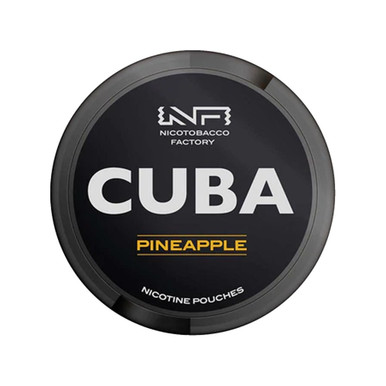
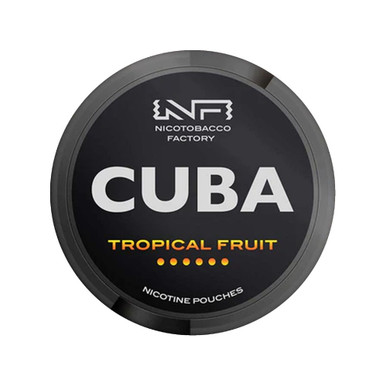
The object is a round pouch tin of the usual design: a shallow plastic cylinder, a press-on lid, printing on top that identifies the brand, the range, the flavour and the declared figure at a glance. Inside, the pouches lie flat in a ring and are identical to one another.
This is an adult nicotine product sold only to over-18s who already use nicotine. The required wording sits in its own section near the end.
Pineapple as a taste: acid at the front, sweetness behind it
Pineapple is the assertive one. Where most fruit flavourings lead with sugar and put whatever structure they have underneath, a pineapple flavouring inverts that order: the first thing to register is the acid, and the sweetness comes in behind it a moment later. That inversion is the single most useful thing to know about this can, and it is what makes pineapple either the flavour someone keeps coming back to or the one they decide is not for them, with fairly few people in between.
The acidity reads as bright and slightly citrus-adjacent — not lemon, but in the same general family of sharpness, with a tang that sits on the sides of the tongue rather than in the middle. It is clean rather than sour. There is no vinegar quality to it and no bitterness; it is the specific brisk sharpness that a ripe pineapple has, and a flavouring that gets pineapple right has to get that part right or the whole thing collapses into generic tropical sweetness.
Behind the acid sits the second characteristic, which is harder to name and just as important: a green, faintly vinous note with a whisper of ferment to it. Real pineapple carries this — it is the reason the fruit reads as slightly wild compared with, say, an apple — and in a flavouring it comes through as an almost savoury thread running under the sweetness. Some people describe it as a rind quality. Whatever you call it, it gives the flavour a backbone and stops it reading as flat sugar.
There is a third thing worth mentioning because people notice it and wonder whether it is a fault. Real pineapple has a slight prickle to it, a dry mouth-tightening quality, and a good pineapple flavouring reproduces a suggestion of it. In a pouch this can come across as a faint astringency, a sense of the mouth drawing in very slightly. It is part of the flavour rather than a defect.
The aroma sequence runs the opposite way to the taste, which is unusual. Take the lid off a can of this and the smell is noticeably restrained — a light sweet-sharp impression and not much more. It is the taste that arrives loudly and the smell that keeps quiet, which is the reverse of how the heavier tropical flavours behave. If you are used to opening a can and being met by the fruit, do not read this one's subdued aroma as a weak flavour. Those are two different things and with pineapple they point in different directions.
Set against the other fruit directions we carry, then: this is the sharp one. It is not round, it is not soft, and it does not spread slowly. It is direct, it has an edge, and the sweetness in it is a supporting part rather than the lead.
A single pouch, from lid off to bin
The larger of this page's two main threads is the format, and the clearest way to set it out is chronologically — one pouch, followed from the moment the tin opens to the moment it is thrown away. Nothing here is specific to pineapple; it is the same sequence for everything we sell.
Lid off
The lid lifts clear with a thumb. Lids vary in stiffness between manufacturers and a new tin is usually tighter than one that has been opened a dozen times, which is normal. The pouches inside are laid flat in a ring, and because they are uniform there is no selection to make — the nearest one is as good as any other. Take one, and put the lid back on straight away rather than leaving the tin open on a table for the duration. That habit alone does more for the condition of a can than anything else in this section.
In
A pouch goes into the mouth and is placed between lip and gum, most commonly at the front behind the top lip. The lip holds it against the gum line and that is what keeps it in position. Behind the bottom lip is equally workable and a decent proportion of people prefer it; there is no correct answer and it is not worth agonising over. What the pouch is not for is chewing, biting through or swallowing — it stays whole and it stays where it is put.
The middle stretch
Having settled it, you leave it alone. It will not wander off on its own, and eating is the only ordinary activity that tends to disturb one. If the specific spot you chose starts to feel uncomfortable, shifting it along a little or across to the other side usually resolves it, since the irritation is generally about where an edge is resting rather than about the pouch as such. If it is uncomfortable in every position you try, take it out. There is no merit in persevering with something that does not sit well, and comfort is individual enough that nothing written here can predict yours.
This is also the stretch over which the flavour does its work. With a sharp fruit the arc is quite defined: the acid is most pronounced early, it eases back after a while, and what remains toward the end is the sweeter, softer part of the flavour without much of the edge. The point at which the sharpness has gone is, for many people, the point at which the pouch has stopped being interesting.
Out
People take a pouch out after anything from a few minutes to the better part of an hour, and the span is wide enough that publishing an average would mislead more readers than it would help — so we do not publish one. The most commonly cited reason for removing one is that the taste has finished. We set no duration, we recommend none, and we do not advise on how many anyone should use across a day. The manufacturer's own usage wording, printed on the can, is the guidance that applies.
After
Under the lid there is a shallow compartment, walled off from the fresh pouches below, and a used pouch goes in there when there is no bin nearby. It holds a modest number and then it is full, at which point the lid stops closing flush and the tin is effectively left open — which is how most cans that dry out end up drying out. Clear it early rather than late.
When a bin is available, a used pouch goes into general waste. Not into a sink, not into a lavatory, not out of a window. The tin itself is plastic and can go into household recycling to whatever extent your own council accepts that grade, which varies across the country and is not something we can look up for your address. Your local authority's own guidance is the one that applies to you.
Arriving at this can from a different one
The second thread is for someone who already uses pouches and is coming to this listing from a different can — another brand, another range, another flavour family. It is entirely about practical mechanics and expectations, it makes no claim about what any product does, and it contains no suggestion about what anyone ought to be using.
Three things that genuinely differ between cans
- The shape of the flavour over time. This is the difference people notice first and the one least often anticipated. Flavourings do not simply have a level; they have an arc. A sharp fruit like this one is at its most pronounced early and eases through the middle. A heavier, sweeter flavour tends to hold a broader, flatter line. A mint can often keeps a cooling character going after the flavour itself has thinned. Coming to a pineapple can from a sweet or a mint one, the thing that will feel unfamiliar is the timing rather than the taste.
- Lid engineering. Trivial but real. Some cans seat with a positive click and some are looser; some catch compartments are deeper than others. None of it changes how a pouch works, but it changes how the tin behaves in a pocket, and a looser lid is worth knowing about before you put one in a bag with your keys.
- Price structure. Our catalogue runs from a few pounds a line to around forty, and the figures are not describing a common unit. We do not hold cans-per-pack data for this product, so we cannot tell you what this £39.90 covers — and the same gap applies to most of the listings you would be comparing it against. The practical instruction is to read each listing and then read the basket, which states the quantity before payment.
Three things that do not change at all
- How a pouch is used. Lip, gum, leave it, take it out, bin it. That sequence is the same across every product on this site, so there is nothing to relearn when moving between brands.
- Who it is for. Every listing here is 18+ and sold only to adults who already use nicotine. That does not vary by brand, flavour or strength band.
- The status of the printed figure. Every declared milligram number in our catalogue is the manufacturer's own, published by us as given. This point is important enough to state on its own, immediately below.
The declared number will not carry across
Of everything in this section, this is the part we are most firm about. The 43mg on this listing is what the manufacturer declares for their own pouch. It is not expressed on a scale shared with any other company. Two cans from two makers showing identical digits have the digits in common and nothing further guaranteed, because the declarations are arrived at differently and against differently built pouches.
We therefore publish no conversion chart, no equivalence table and no rule of thumb for moving between brands, and we would be sceptical of anybody who does offer one. We do not hold the technical detail that would be needed to construct such a thing honestly, and approximating it would be worse than leaving the question alone. Each can's own page and its own printed label are the authorities for that can. We do not advise on which figure is appropriate for any individual and we are not going to start on this page.
Why this listing currently says out of stock
Our record carries a stock flag for every product, and for this one the flag is currently set to out of stock. That means the site will not let the can be added to a basket, because we cannot ship what we do not have.
What the flag does not carry is a reason. Our data records the state and not the cause, so we genuinely do not know why this listing is unavailable, and we are not going to construct an explanation to fill the silence. It is not a statement that the product has been discontinued, that we have dropped it, or that anything is wrong with it — it is a single field with two possible values, and it currently holds one of them.
We also do not hold a restock date, so we cannot give you one. The live listing page updates before this description does and will always be the more accurate of the two. If availability matters to you, that is the page to watch rather than this paragraph, which was written at one moment and will be read at another.
43mg, described as a printed value and nothing else
There is a single row in our variant table for this product: 43mg at £39.90. No second strength exists on this listing, so there is no internal comparison and nothing on this page is written to help anybody choose between figures.
The figure itself is the manufacturer's declared nicotine content per pouch. We reproduce it unchanged, we do not round it, and we attach no meaning to it beyond arithmetic. Forty-three is more than thirty-five and less than fifty. That exhausts what a number can establish on its own, and we make no statement about what any figure means for any person.
Our shelves sort the catalogue into declared bands so that a long stock list can be filtered. This can sits on the Extra Strong shelf with ninety-seven others; the Medium Strength band and the Strong band hold the levels beneath it. Those pages are a filing convenience. They are not rungs and no progression between them is being suggested or invited.
The acid end of the tropical shelf
Because pineapple is the sharp member of the tropical family, the comparison that matters for most readers is not fruit against fruit generally but sharp against soft. Our tropical flavour shelf carries fifty-eight listings, and they spread across that axis considerably.
At the sharp end, Elf Bar Pineapple at £29.90 is the most direct comparison we hold — the same fruit from a different maker, at a different price, with its own declared figure stated on its own page. Working outward from there, SYX Apple Kiwi at £29.90 brings acidity from a different pair of fruits, and kiwi in particular carries a sharpness that sits in similar territory to pineapple's. Killa Apple at £33.50 is crisper than it is sharp, which is a related but distinct quality — apple has definition at the edges rather than genuine acid.
At the soft end, and therefore as a deliberate counterweight, Fumi Fiery Peach at £27.90 takes a gentle stone fruit and puts a warm treatment on it, while Nordic Spirit Tropical Mix at £4.49 is a blend rather than a single fruit, which tends to round off any sharp edge a component might have had on its own. The Denssi Tropical Fury listing at £39.90 sits in the same broad category — it is a separate product with its own page stating what it actually contains, and that page rather than this one is where to read about it.
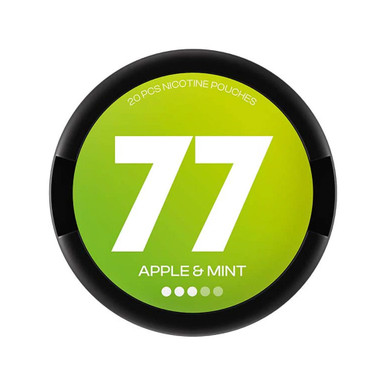
Two more listings come up in the same baskets and neither is a tropical fruit at all. 77 Apple Mint at £39.90 sets a mint character against fruit instead of pairing fruit with fruit, which for someone tiring of sweetness is often where they land. Pablo Exclusive Banana Ice at £3.85 is at the other end of both the flavour and the price range — soft fruit with a cold element, listed at a figure so different from this one that the quantity question is worth settling before comparing them. The Pablo brand page collects that maker's listings if that is the direction you were heading.
Cuba Black cans that stand up next to a sharp one
Within the brand, the Cuba page gathers all forty-seven listings we hold. Every Cuba Black can on our sibling list is £39.90, the same as this one, so choosing between them costs nothing to weigh up — the price does not move and the decision is purely about taste.
The instinct when you already have a sharp can is to reach for a soft one as the alternate, and the range supports that. Cuba Black Banana Hit at £39.90 is the thickest, lowest-acid flavour on the sibling list and therefore the most complete opposite to this one. Cuba Black Apple Juice, also £39.90, sits between the two poles: juicier and rounder than a pineapple but with more definition than a banana.
If you would rather keep some sharpness but change the fruit entirely, the dark fruits are where to look. Cuba Black Cherry at £39.90 carries depth with its tartness rather than brightness, and Cuba Black Blueberry at the same price is the smaller, tarter berry reading. Neither tastes anything like pineapple while still giving you an edge to taste.
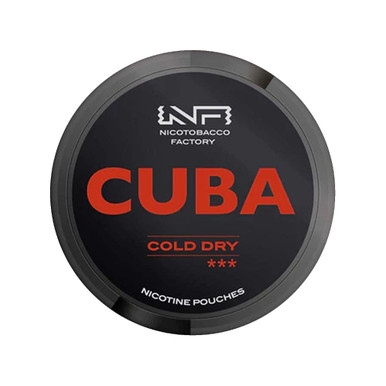
And for a change of category rather than a change of fruit, Cuba Black Cola at £39.90 is a manufactured flavour idea with no fruit reference at all, while Cuba Black Cold Dry at the same price is built around a cold character instead of a flavour in the fruit sense. Either makes the contrast total, which is what some people want from a second can.
Outside the brand entirely, Maggie Original Jamaican Cherry Tonic Wine at £39.90 is the most unusual flavour idea on our nearby list — a cherry built around a tonic-wine character — and Siberia Mini at £39.50 is a small-format can whose declared figure is stated on its own listing. Neither is put forward ahead of anything else; we do not rank our stock.
Why assertive flavours get rotated faster
One observation that comes up often enough in customer correspondence to be worth writing down, offered purely as a description of what people report rather than as advice about anything.
Flavour fatigue is real and it is not evenly distributed. A quiet, rounded flavour can be used day after day for a long time before it stops registering, because there was never much for the palate to get used to in the first place. An assertive one — and a sharp pineapple is about as assertive as our tropical shelf gets — tends to reach that point sooner. The very quality that makes it interesting on the first day is the quality that makes it familiar by the second week.
The consequence is that people who buy sharp flavours are more likely to be running two cans than people who buy soft ones, and they tend to alternate on a shorter cycle. That is not a problem to be solved and it is certainly not a reason to buy more; it is simply an explanation of why the alternatives above take up as much of this page as they do. A page about a sharp can that ignored the question of what sits next to it would be leaving out the part customers actually ask about.
The counterpoint worth stating is that none of this is a rule. Plenty of people use one flavour indefinitely and find nothing wrong with it, and plenty of others rotate three cans for reasons that have nothing to do with fatigue. We have no data on any of it beyond what people tell us, and we are not going to dress anecdote up as a finding.
Keeping the tin in good order
A pouch tin is a simple object and there are only three ways to spoil one.
The first is heat. A car in July, a windowsill in direct sun, a shelf above a radiator — these are the places cans go off, and no flavour is robust against it. A drawer, a cupboard or an inside pocket is entirely adequate. Cool, dark and dry is the whole of the instruction.
The second is an unclosed lid, which almost always traces back to a catch compartment nobody emptied. Press the lid down until it sits flush rather than balancing it on top. A can that spent the night effectively open will have drier pouches and a flatter taste in the morning, and neither comes back.
The third is time, and it is the one that cannot be managed away. Any date marking on the packaging belongs to the manufacturer and is the one that counts; our record holds no shelf-life information and we publish none. If you keep several cans, work through them in the order you bought them rather than letting one migrate to the back of a drawer for six months.
On the fridge, since people ask: some customers refrigerate cans and report that the flavour holds longer. We take no position on that, having not tested it, and we do not publish claims we cannot support. Whatever the manufacturer prints on the can about storage outranks anything a shop tells you. Wherever cans end up, keep them out of reach of children and of anyone in the household who does not use nicotine.
What we can and cannot tell you about quantity
This section exists because the price of this listing raises an obvious question that we are not able to answer, and pretending otherwise would be dishonest.
Our cans-per-pack field for Cuba Black Pineapple is empty. Not zero, not one — empty. So this page cannot tell you whether £39.90 represents a single can or a larger quantity. It would be easy to guess from the figure and from what similar lines tend to be, and we are not going to, because a guess printed in a description gets read as a fact and then turns up as a complaint when the parcel arrives.
Two places carry the answer properly. The listing page states what the unit is, and the basket states it again with the quantity spelled out before any payment is taken. The basket is the final authority. It takes a moment to read and it resolves the whole question, which matters particularly if you are comparing this against something on our shelves priced at four pounds — those two numbers may not be measuring the same thing at all.
Ordering, carriage and what happens at the door
Buying from us is ordinary: basket, checkout, delivery. The stock position shown on the live listing at the moment of ordering governs, which for this particular product is the whole story at present.
Age verification is a legal requirement and is not treated as a formality. This is an 18+ product sold only to adults who already use nicotine. You may be asked to verify your age when the order is placed, and the courier may ask again at the door. A driver is entitled to request identification and entitled to take the parcel away if nobody present can produce it. That has a practical consequence worth knowing in advance: safe-place drops and deliveries to neighbours may not be available on an age-restricted order, and a failed handover means another journey. Being in is the simple solution.
Delivery options, timings and the returns position live on the relevant pages of this site rather than here. A description page is a poor place to keep changing information, and an out-of-date delivery estimate is worse than no estimate.
Routes back to this listing
Three paths lead here. By flavour, this can appears among the fifty-eight cans in the tropical category. By brand, it sits with the rest of the range on the page holding all forty-seven Cuba listings. By declared strength, it is one of the ninety-eight cans filed in the Extra Strong band.
For a wider view, the full stock index lists everything we carry with price and declared strength on each card, in no particular order of merit — nothing on it is promoted, ranked or recommended. Given that this listing is currently unavailable, the flavour shelf is probably the more useful of the two starting points, since it will show you what is actually in stock in the same category today.
Things people ask about this can
When will it be back in stock?
We do not know. Our record holds a stock flag and nothing else — no reason for the current state and no expected date — so any answer we gave you would be invented. The live listing page reflects the position as it stands and updates before this description does, which makes it the only reliable place to check.
Is pineapple a sweet flavour or a sharp one?
Sharp first, sweet second, and the order matters. The acidity is what registers at the start and the sweetness fills in behind it, which is the reverse of how most fruit flavourings are built. There is also a green, faintly vinous note underneath and a slight dryness on the tongue that comes from the fruit itself. If you want sugar-forward, this is not the direction this can goes in.
Why does the can not smell very strong?
Because with this flavour the aroma and the taste do not match in intensity. A pineapple flavouring tends to be restrained in the tin and assertive in the mouth, which is the opposite of the heavier tropical flavours. A quiet open can is normal here and is not an indication that anything is wrong with it.
How many pouches does a tin contain?
Our product record does not carry a pouch count, so we do not publish one. The printed can states it. We would rather leave the question open than answer with a number we were never given, especially since that number is what people use to decide how much to order.
Is there a lower-strength version?
Not in our catalogue. This listing has exactly one variant, 43mg at £39.90, and nothing else appears under this product name. Whether the manufacturer produces other strengths of this flavour is not information we hold, so we cannot answer that part. Other flavours in the range are separate listings with their own declared figures on their own pages.
Does £39.90 cover one can?
We cannot tell you, because our cans-per-pack field for this product is blank. The listing states the unit and the basket confirms the quantity before payment, and the basket is the last word. Check it before you commit, particularly when comparing against a line on this site priced in single-figure pounds.
Is 43mg the same as 43mg on another brand?
As a printed number, yes. As anything else, we cannot say. Manufacturers declare against their own formats using their own methods, so the same digits do not imply comparable cans, and we publish each figure exactly as given without converting between makers. We do not hold what would be required to make that comparison honestly.
How long will a pouch keep its flavour?
The range people report is wide and we will not average it into a single misleading number. What is fair to say about this particular flavour is that the sharp element eases before the sweeter part does, so the character changes through the time a pouch is in rather than simply getting quieter. Whatever usage wording the manufacturer prints on the can is the guidance that applies.
Which can should I buy instead while this one is unavailable?
We describe alternatives but we do not choose between them, and we do not rank our own stock. The sharp end of the tropical shelf and the softer counterweights are both set out above with prices, and every listing mentioned has its own page carrying its own stock position and declared figure. Which of those suits you is not something a shop can determine.
Where is this product made?
We do not hold that information and will not imply any. Our record contains a brand name, a range name, a product name, a price, a declared strength, a flavour tag and a stock flag — nothing about production. Cuba is a name chosen by a manufacturer for a product line and should not be read as a place of origin. The packaging and the maker are the sources for that question.
Is the slight dryness on the tongue normal?
It is part of the flavour rather than a fault. Pineapple carries a faint astringency in the fruit itself — the mouth-tightening prickle you get from eating fresh pineapple — and a flavouring that aims at the fruit properly tends to carry a suggestion of it. If you have come from rounder, sweeter cans it will be unfamiliar, but it is characteristic of this flavour direction rather than a sign of anything being wrong with the tin.
Does this can have any ice or menthol in it?
Our flavour classification for this listing is tropical, with no cold descriptor attached to it and none in the product name. On that basis we would not describe it as an iced can. If a cold element is specifically what you want, the listings on the tropical shelf that carry a cold word in their names are the ones describing it, and each of those pages speaks for its own product rather than this one speaking for it.
What is the difference between the Black range and Cuba's other ranges?
Black is a range name inside the Cuba brand, and that is genuinely all our record tells us. We file this can under that range without holding any note of what the manufacturer intends the word to signify, so we are not going to interpret somebody else's branding for them. The Cuba brand page collects everything we carry across all of that maker's ranges, and each listing there states its own flavour, price and declared figure.
Can you tell me if this strength suits me?
No. We do not give advice on strength, quantity or suitability for any person or circumstance, and nothing on this page is medical guidance of any kind. Everything written above about the number 43 describes what is printed on a tin. For questions about nicotine and your own situation, speak to a medical professional rather than a retailer.
Notices that have to be on this page
This product is sold only to adults aged 18 or over, and only to those who already use nicotine. It should not be purchased for anybody else.
Nicotine is an addictive substance.
Cuba Black Pineapple is not a licensed stop-smoking medicine and no medicinal claim is made for it here or anywhere else on this site. It is not intended for non-smokers, for people who do not already use nicotine, for under-18s, or for anyone who is pregnant or breastfeeding. Nothing above constitutes medical advice and nothing above is an encouragement to anyone to begin using nicotine.
Proof of age may be requested at the point of purchase and again by the courier on delivery. Keep the can out of reach of children and of anyone in the household who does not use nicotine.
Closing note
Cuba Black Pineapple is a one-strength 43mg can at £39.90 in the Cuba Black range, carrying a sharp, acid-forward pineapple flavour with a green note underneath it, filed under tropical, and currently showing as unavailable. It is reachable by flavour, by brand and by strength band. Everything above comes from our record, from a description of the tin, or from a plain statement that our information stops at a particular point.
More from Cuba
More extra strong pouches
More tropical pouches
Where this sits
Cuba Black Pineapple Nicotine Pouches appears in these categories. Browse them, or jump to something close.
You might also like