Home / Medium Strength / Nordic Spirit Tropical Mix Nicotine Pouches
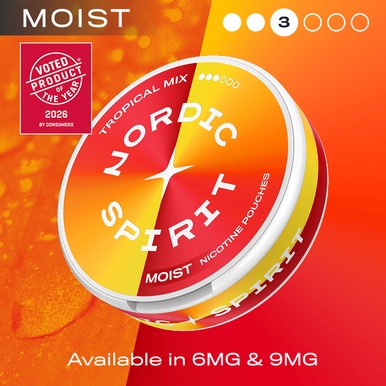
Nordic Spirit · 6mg–9mg
Read the full guide
Nordic Spirit Tropical Mix Nicotine Pouches
£4.49
✔ In stock — ready to ship
100% tobacco-free
Free over £20
Same-day dispatch
Secure checkout
This is the listing page for Nordic Spirit Tropical Mix Nicotine Pouches. Our product record carries six pieces of information about it and no more: the brand is Nordic Spirit, the product name is Tropical Mix, the price is £4.49, it is listed in two declared figures — 6mg and 9mg — the flavour tag on it is tropical, and it is in stock at the time this page was written. Everything else you read below is one of three things: a description of the physical object, a comparison against other cans sitting on our own shelves, or a plain statement that a particular piece of information is not something we hold.
That last category is going to come up more than you might expect on a page this length, and we would rather be upfront about it. A product description can be filled out in two ways. You can find out more, or you can make more up. We have taken the first route as far as our records go and then stopped, which is why you will find sentences below that say, in effect, we do not know. Those sentences are doing real work. A £4.49 can is a small purchase, but it is still your money, and a confident paragraph about something we have not verified is worth less to you than an honest blank.
The full guide to Nordic Spirit Tropical Mix Nicotine Pouches
5,283 words on how it eats, who it suits, how to serve it and what to put beside it.
The Tropical Mix can, and the short list of things we actually know about it
Both declared figures are the same price. The 6mg can is £4.49 and the 9mg can is £4.49; there is no premium on the higher number and no discount on the lower one. That matters mainly because it removes price from the decision entirely. Whatever leads someone to pick one figure over the other, on this particular line it is not cost.
The object itself, and how the format behaves in the hand
The can is the standard round pouch tin that the whole category has settled on. It is a shallow cylinder, a little wider than a bottle cap and not much deeper than a stack of coins, with a lid that lifts clear of the body and presses back down onto it. The lid is where the printed information lives — brand across the face, product name beneath it, declared figure placed where you can read it without opening anything. That printing does more work than it looks like it does. If you keep two or three different cans in the same drawer, the face of the lid is how you tell them apart at arm's length, and a can with a clearly printed figure is a can you do not have to open to identify.
Inside, the pouches sit flat, arranged in a ring around the floor of the tin. They are soft, slightly yielding, and shaped to lie along a curve rather than sit as a block. In the top of the lid there is a second, shallower compartment — the catch lid, or just the catch — which is there so a used pouch has somewhere to go when there is no bin to hand. It is part of the can rather than an accessory you buy separately, and on a tin this size it will take a handful before it wants emptying. Emptying it is a matter of tipping the contents into a bin; used pouches go in general waste, not down a sink and not into a drain.
In use the pouch sits tucked up under the lip, between gum and lip, where it stays put without being held. It is not chewed and it is not swallowed. Most people settle it with a fingertip and then forget about it. How long anyone keeps one in is entirely personal — some take it out after a few minutes, some leave it considerably longer — and it is not something we are going to put a number on, because the honest answer is that it varies from person to person and we have no basis for a recommendation. The can and its own packaging are the place to look for anything the manufacturer says on the subject.
One practical note about the catch lid that people find out the hard way: it is a temporary holding place, not storage. Used pouches left in the lid for a long stretch will make the can smell of themselves, and the next unused pouch you take out will have been sitting a few millimetres from that. Tipping the catch out when you remember to is the whole of the maintenance this product requires.
Before the detail goes any further, one piece of housekeeping. This is an adult nicotine product, sold only to people aged 18 or over who already use nicotine. The full compliance wording is set out at the foot of this page and it is not there for decoration.
Tropical, as a word on a label
The flavour tag our record holds for this can is a single word: tropical. The product name adds one more: Mix. Between them that is the whole of the flavour information we have, and it is worth being precise about what those two words do and do not tell you.
Tropical, used on a label in this category, is a family name rather than a specific taste. It is the same sort of shorthand a drinks aisle uses. It conventionally covers the sweeter, softer, non-citrus fruits — the mango, pineapple, passionfruit, guava, banana end of things — and it usually signals a rounder profile than a berry name and a much rounder one than a straight citrus name. That is a convention of naming, not a recipe, and it is the convention we can honestly report.
Mix tells you that the manufacturer considers this a blend of more than one fruit note rather than a single-fruit can. What it does not tell you is which fruits, in what proportion, or which of them leads. We do not hold that breakdown. Nordic Spirit have not published it to us in any form our record captures, and we are not going to reverse-engineer a fruit list out of a photograph of a lid. If the exact composition of the blend matters to you, the can's own printed labelling is the authoritative source and always will be.
What we can say with confidence is what the tag does on our site. The tropical tag is why this can appears on the tropical flavour shelf, which holds fifty-eight lines at the time of writing, and it is the reason it does not appear on the mint or berry shelves. Tags are filing, not description. They tell you which drawer the shop has put something in.
Cool, sweet, sharp, bitter — the four axes, and what we can and cannot place on them
People describing pouch flavours to each other tend to converge on the same four rough axes without ever agreeing to. It is a useful framework, so it is worth setting out properly, and then being honest about how far a single-word tag lets us apply it to this particular can.
The cool axis
Cool is the cooling sensation on the lip and gum, quite separate from taste. It is the axis with the widest spread in this category, running from cans with no cooling character at all to cans built almost entirely around it. Names are a reasonable guide here: ice, frosty, arctic, freeze and polar in a product name conventionally signal that cooling is a deliberate part of the design. Tropical Mix carries none of those words. Its name contains no cooling term and its tag contains no mint tag alongside the tropical one — compare it with cans that carry both, which we file on two shelves rather than one. On the naming evidence, this is a fruit-forward can rather than a cooling-forward one. That is an inference from the label and we are flagging it as such.
The sweet axis
Sweetness is the axis most people notice first and the one that fades most obviously over the life of a pouch. Fruit-named cans in general sit higher on it than mint-named or coffee-named ones, and blends tend to sit higher than single fruits, because a blend usually has at least one rounder note in it doing the work that a single sharp fruit would not. A tropical family name suggests the rounder end. Again: suggests. We hold no measurement of sweetness for this or any other can and no manufacturer publishes one in a form we could quote.
The sharp axis
Sharp is the bright, slightly acidic lift that citrus and some berries bring, and it is the axis where the tropical family divides against itself. Pineapple and passionfruit sit toward the sharp end; mango and banana sit well away from it. A blend labelled tropical could genuinely be built at either end, or balanced between them, and the word Mix does not resolve the question. This is the single biggest thing a one-word tag cannot tell you about a can, and it is why we would rather point you at the printed can than write a confident sentence here.
The bitter axis
Bitterness is the least discussed and the most real of the four. It is what people mean when they say a can tastes darker, or drier, or has a back-end to it. Coffee-named and some spice-named cans are built around it deliberately. Fruit-named cans very rarely are. Nothing in this can's naming or tagging points toward the bitter axis at all.
So the honest summary is this: on the evidence of the label, Tropical Mix reads as a sweeter, fruit-forward, non-cooling can with an unresolved position on the sharp axis. Three of the four axes we can speak to loosely from naming convention. One of them we cannot. If you would like a can where the naming resolves that ambiguity for you, the cooling-named lines elsewhere in the same range do exactly that — Frosty Mint, also £4.49, puts the word cool right in the name and carries a mint tag to match, and the Frosty Berry can at the same price pairs a cooling word with a fruit family so you know both halves before you spend anything.
6mg and 9mg, read as numbers printed on a lid
The two figures on this line are 6mg and 9mg. Those are declared strength figures — the number the manufacturer prints on the can — and on our site they are used for one purpose, which is filing. Both of these figures put this product on the medium band, a shelf that holds a hundred and thirty-five lines at present. Cans with higher declared figures are filed on the strong shelf and higher again on the extra strong shelf. Those band names are our filing labels. They are not grades, not rankings, and not a ladder.
| Declared figure | Price | Shelf it files under |
|---|---|---|
| 6mg | £4.49 | Medium Strength |
| 9mg | £4.49 | Medium Strength |
We will not tell you which of the two to buy. That is not modesty and it is not a dodge — we are not in a position to advise anyone on a suitable strength, we do not know anything about the person reading this, and giving that sort of steer would be both useless and wrong. What we can do is lay the numbers out plainly, keep the price identical across both so that cost does not distort the choice, and leave the decision where it belongs.
The other thing worth saying about declared figures is that they are not comparable across brands in any simple way. A number on one manufacturer's can and the same number on another's are both accurate as declarations and are not necessarily describing an identical object, because format, pouch size and construction all differ between makers. Treat the figure as a label from that manufacturer rather than as a universal unit, and treat cross-brand arithmetic with suspicion.
How a recognisable fruit note gets built into a dry pouch — and the parts of that we will not write
This is a topic people ask about, and it is one where a product page can very easily slide from description into invention. So here is the boundary, stated first: we do not publish ingredients, formulations or anything about how a product works internally. Not for this can, not for any can. What follows is about the perceptual and commercial side of flavour — how a taste is described, named, sequenced and recognised — and nothing about what is in the tin.
A pouch is not a drink, and the comparison misleads people
The most common disappointment with a fruit-named pouch comes from an unexamined assumption that it will taste like the drink of the same name. It will not, and it is not trying to. A drink arrives all at once, in volume, across the whole mouth, at a temperature. A pouch is a small dry object sitting in one place under the lip. Those are different enough experiences that the same flavour name will read differently in each. A tropical juice and a tropical pouch can both be honestly named tropical and taste very little like one another. Setting that expectation correctly is most of what makes a fruit-named can land well.
Flavour in a pouch is a sequence, not a single state
A useful way to think about any pouch flavour is as three phases rather than one taste. There is an opening, usually the brightest and sweetest part, in the first stretch after the pouch goes in. There is a body, which is what the can mostly tastes like and which is the phase people actually mean when they describe a flavour to a friend. And there is a long tail, where the character thins out and what remains is the quietest part of the profile. Cans differ enormously in how those three phases are balanced. Some are front-loaded and fade fast; some hold a flat line for a long time. Our record does not hold that curve for this can or any other, and it is one of the few things a description genuinely cannot substitute for trying.
Why blends are named the way they are
Single-fruit names — blueberry, cherry, apple — set a precise expectation and are judged against it. Blend names are a different commercial decision. A name like Tropical Mix deliberately names the family rather than the members, which gives the manufacturer latitude and gives the buyer less certainty. Neither approach is better; they are different trades. If you prefer the precision, the single-fruit naming elsewhere in this range gives it to you: the Blueberry can names one fruit and nothing else, at the same £4.49, and is the clearest naming in the whole Nordic Spirit line-up. If you prefer the blend, this can is a blend and says so.
Why cooling words appear in so many names
Across this category, cooling terms are attached to fruit names far more often than you would expect from the fruit alone. That is a naming convention doing a specific job: it tells you before purchase that there is a second dimension to the can beyond the fruit. Cans that carry a cooling word usually carry a mint tag in our records alongside their fruit tag, which is why some products sit on two flavour shelves. This one sits on a single flavour shelf, with a single tag. That is the simplest possible tagging, and simple tagging is informative in itself.
Nordic Spirit across our shelves, can by can
Fourteen Nordic Spirit lines are listed on the brand's own page at present, and the ones most relevant to this can are set out below. This is a map of what we stock, not a recommendation of what to buy. Every one of these is priced at £4.49, the same as Tropical Mix, and all of them are in stock as this is written.
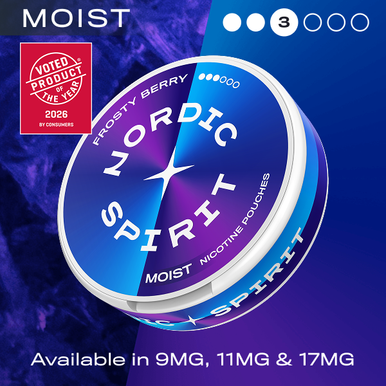
On the berry side, Forest Berries is the straightforward one — a berry tag, no cooling word in the name, and the same 6mg and 9mg pair that this can carries. Frosty Berry takes the berry family and adds a cooling term to the name, which as described above generally means a second dimension alongside the fruit. And the Max Foresty Berry can is the same berry idea carrying the Max prefix, which on this brand's naming signals a higher declared figure and therefore a different strength shelf — the price stays at £4.49 regardless.
On the mint side, the cooling-named cans are the obvious contrast with a fruit blend like this one. Frosty Mint is mint-tagged and cooling-named, about as far from a tropical blend as this brand's range goes.
And then there is the odd one out. Dark Fizz is £4.49 like the rest and in stock, but our record carries no flavour tag at all for it — the flavour field is simply empty, which is why it appears on the brand page and the strength band and on no flavour shelf whatsoever. We mention it here as a contrast rather than a suggestion: Tropical Mix is tagged, Dark Fizz is not, and if knowing the family before you buy matters then that difference is the whole point.
What people keep in the drawer alongside a tropical can
Most people who use pouches regularly do not keep one can. They keep two or three and rotate, because a single flavour used continuously tends to flatten out perceptually. What follows is a run through cans on our shelves that sit near this one in one way or another, with the reason for each stated plainly, and with stock position noted where it matters.
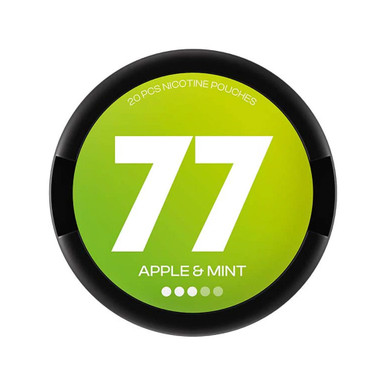
Staying inside the fruit families, Fumi Green Apple at £27.90 comes at a green-apple angle that sits much further along the sharp axis than a tropical blend does, which makes it a genuine contrast rather than a near-repeat. SYX Apple Kiwi, £29.90 pairs apple with kiwi, putting one foot in each camp. Cuba Black Apple Juice at £39.90 takes the juice angle on the same fruit. And the 77 Apple Mint can, also £39.90, is tagged for both apple and mint, so it is a fruit can with the cooling dimension added rather than a pure fruit one.
On the stone-fruit and peach side, which is the nearest neighbour to a tropical blend in most people's mental map, Velo Peach Ice at £4.19 is the closest thing on our shelves to this can on price — nineteen pence below it — and carries a cooling word in the name where this one does not. XQS Fizzy Peach, £39.90 takes the same fruit in a fizz-named direction. Pablo's Silver Edition Blueberry Peach Ice at £39.90 puts peach behind a berry and adds a cooling term, and sits on a different strength band from this can entirely.
Two cans in this neighbourhood are currently out of stock, and we would rather say so here than let you find out at the basket. Klint Apple Mint, listed at £36.90, is unavailable at the time of writing; the listing stays up so you can see the price and check back, but you cannot order it today. The same applies to Pouch Nurdz Peach Blue Razz at £19.99, which is also unavailable right now. Both pages are worth a look if you want to know what exists, and neither is worth a click if you want something in a basket this afternoon.
One more, with a warning attached. Denssi Tropical Fury at £39.90 is tagged tropical, which is why it turns up beside this can on the flavour shelf — but it is an energy pouch, not a nicotine pouch. Our record shows no nicotine content for it and no declared strength figure at all. It is a completely different product that happens to share a flavour family, and anyone browsing the tropical shelf should read the listing before assuming otherwise. We flag it because the shelf puts them side by side and the names do not make the distinction obvious.
Keeping a can in the condition you bought it in
Pouch cans are not fragile, but they are not indifferent to how they are treated either, and a little care costs nothing.
Keep the lid pressed fully shut when the can is not in use. The seal between lid and body is the only thing standing between the contents and the air, and a lid sitting slightly proud — which happens easily if the catch compartment has not been emptied and is holding the lid open by a fraction — will let a can dry out faster than it should. That is the single most common storage mistake and also the easiest to avoid.
Keep it somewhere cool and out of direct sun. A car dashboard in summer, a windowsill, the top of a radiator, the shelf above a cooker — those are the places that reliably do a can no favours. Heat is harder on flavour than time is. A can kept in a drawer, a bag pocket or a cupboard at ordinary room temperature is in an entirely normal place.
On refrigeration, people ask and the honest answer is that we have no manufacturer guidance to pass on. Some people keep cans in a fridge, some do not. We hold no storage instruction from Nordic Spirit for this line, so we are not going to invent one; the can's own labelling is where any such instruction would appear, and it should be read as authoritative over anything written here.
Keep cans out of reach of children and animals, which applies at all times and regardless of where in the house you have decided to keep them. And keep the can shut when travelling — a can rattling loose in a bag with the lid not properly seated is the other common way people end up with a disappointing tin.
Picking between the two figures — what the page can and cannot do for you
This line offers a choice of exactly two things: 6mg or 9mg. There is no pack-size choice on it. Our record holds no cans-per-pack figure for this product at all, which means we cannot tell you whether a multi-can pack exists elsewhere in the market, how many cans it would contain, or what it would cost. The listing is for the can at £4.49 and that is the extent of what we can state.
On the choice between the two declared figures, the useful facts are short. They cost the same. They file on the same shelf. They carry the same flavour tag and the same name. The only difference our record shows is the printed number. We cannot advise which figure is appropriate for any individual, we do not attempt it, and any page that does should be read with caution. If you already use nicotine and already know which declared figures you get on with, you know more about your answer than this page does.
If you want a sense of how the wider shelf is laid out before deciding anything, the medium band with its hundred and thirty-five lines is where both versions of this can live, and stepping through it is a more informative exercise than reading another paragraph here.
Ordering, delivery and the age check
Ordering is the ordinary thing: the can goes in the basket at £4.49, you pick the declared figure you want at that point, and you check out. Because both figures are the same price, adding one of each costs exactly twice £4.49 and no more.
Age verification is not optional and it is not a formality. We sell this product to adults aged 18 or over only, and only to people who already use nicotine. Age is checked when you buy, and ID may be requested on delivery. If it is requested and an adult at the address cannot produce it, the parcel does not get left. That applies to a single £4.49 can exactly as it applies to a full basket, and the courier has no discretion about it.
On delivery times, costs and thresholds, the checkout is the live and accurate source. Those figures change, this page does not change with them, and quoting a delivery promise in body copy that might be six months stale would be worse than saying nothing. Stock is the same story: this can shows as available as the page was written, and the listing itself is the only thing telling you the position right now.
Where this page sits on the site, and how to get anywhere from here
This can is filed in three places. It sits on its brand page alongside the other thirteen Nordic Spirit lines, it sits on the medium strength band with both of its declared figures, and it sits on the tropical shelf with fifty-seven other tropical-tagged lines. Three shelves, three different ways of arriving at the same can.
If you would rather start wider, the full index of everything we stock is the top of the tree and every category hangs off it. From there the two main ways of narrowing down are by declared figure or by flavour family. By figure, the bands run from the medium shelf through the strong band and on to the extra strong band with its ninety-eight lines; those names are filing labels for where a declared number falls, nothing more. By brand, the two largest houses we carry have pages of their own — the Pablo range runs to fifty-six lines and the Cuba brand page collects that maker's cans in one place. Both of those are much larger ranges than Nordic Spirit's fourteen, and both are priced on a different basis, so they are worth a look if you are comparing the shape of the market rather than shopping for one can.
Questions we get asked about this can
Which fruits are in the blend?
We do not know, and we are not going to guess. Our record carries the flavour tag tropical and the product name Tropical Mix, and that is all. The word mix tells you the manufacturer considers it a blend of more than one note; it does not name the notes. The can's own printed labelling is the authoritative source for anything the manufacturer publishes about the flavour, and we would send you there rather than write a fruit list we cannot stand behind.
Is there a cooling element to this one?
Our record does not say, and the naming suggests not — there is no cooling term in the product name and no mint tag alongside the tropical one, where cans built around cooling in this category almost always carry at least one of those signals. That is an inference from the label rather than a fact from the manufacturer. If a cooling character is what you specifically want, the cans that name it explicitly are a surer bet than this one.
Why is the 9mg the same price as the 6mg?
Because that is how the line is priced. Both declared figures are £4.49 on our shelf. There is no premium attached to the higher number. We have no insight into the manufacturer's pricing decisions and would not speculate about them, but the practical effect for you is that cost plays no part in choosing between the two.
How many pouches are in a can?
Our product record does not carry a pouch count for this line, so we cannot state one. The count is printed on the can itself by the manufacturer and that printed figure is the one to rely on. We would rather leave this answer short and accurate than fill it with a number we have not verified.
Can I buy a multi-can pack?
Not from this listing, and our record holds no cans-per-pack figure for this product, so we cannot tell you whether one exists. What is on this page is a single can at £4.49 in your choice of the two declared figures. If you want more than one, the way to do it here is to add more than one to the basket.
Which strength should I get?
We cannot answer that, and we will not pretend otherwise. Recommending a declared strength to an individual is advice we are not in a position to give — we know nothing about the person asking, and a number on a can is not a piece of guidance we can responsibly hand out. The two figures on this line are 6mg and 9mg, they cost the same, and the choice is yours to make.
How long does a pouch last?
It varies by person, and we do not hold a figure from the manufacturer to quote. Flavour in any pouch changes over the time it is in — brightest at the start, settling into a body, thinning toward the end — but how long an individual keeps one in is personal and not something a product page can sensibly prescribe. Anything the manufacturer says on the subject will be on the can and its packaging.
What do I do with a used pouch?
Put it in the catch compartment in the lid if there is no bin to hand, and empty that compartment into general waste when you get the chance. Used pouches do not go down a sink, a toilet or a drain. Emptying the catch reasonably often also keeps the can itself in better condition, since the lid seals properly when nothing is propping it open.
Do you publish ingredients or technical information?
No. We publish what our product record holds — name, brand, price, declared strengths, flavour tag and stock position — and nothing beyond it. Ingredient lists, technical specifications and regulatory printing belong to the manufacturer and appear on the can and its packaging. Where we do not hold something, this page says so rather than filling the gap with plausible-sounding text.
Will I be asked for ID?
You may be. Age is verified at the point of purchase and ID may be requested on delivery. An adult at the address has to be able to produce it, or the parcel will not be left. This applies to every nicotine product on the site, at every price point, and a single small can is no exception to it.
Is it in stock right now?
It showed as in stock when this page was written, but the listing is the live answer and this text is not. Several cans mentioned further up this page are currently unavailable and we have said so where that is the case. The only reliable signal for any product is the stock status shown on its own listing at the moment you look.
Legal and compliance information
Nicotine is an addictive substance.
This product is sold only to adults aged 18 or over who already use nicotine. We do not sell to anyone under the age of 18. Age is verified at the point of purchase and ID may be requested on delivery; where it is requested and an adult at the address cannot produce it, the delivery will not be completed.
Nordic Spirit Tropical Mix Nicotine Pouches are not a licensed stop-smoking medicine and are not authorised, sold, supplied or intended as one. This product is not intended for non-smokers, for people who do not already use nicotine, for anyone under 18, or for anyone who is pregnant or breastfeeding. Nothing on this page is medical advice, nothing on it is a recommendation of a particular declared strength for any individual, and nothing on it should be read as encouragement to anyone to begin using nicotine.
Keep out of reach of children and animals. Every factual statement on this page — the product name, the brand, the £4.49 price, the 6mg and 9mg declared figures, the tropical flavour tag and the stock position — comes from our own product record for this listing. Where that record holds nothing, this page says so. The can and the manufacturer's own labelling remain the authoritative source for anything printed on the packaging.
The short version
Tropical Mix is a £4.49 Nordic Spirit can, listed at 6mg and 9mg with no price difference between them, tagged tropical and filed on three shelves. The tag tells you the family and not the fruits, and we have not invented the fruits. If you want the cooling dimension named on the label instead, the Frosty Mint can does that at the same price; if you want single-fruit precision, Blueberry is the plainest naming in the range. Everything else we carry is one step away through the main shop index. Where this page could not tell you something, it said so instead of guessing.
More from Nordic Spirit
More medium strength pouches
More tropical pouches
Where this sits
Nordic Spirit Tropical Mix Nicotine Pouches appears in these categories. Browse them, or jump to something close.
You might also like