Home / Medium Strength / Pouch Nurdz Nurdz Peach Blue Razz Nicotine Pouches
Pouch Nurdz · 6mg–12mg
Read the full guide
Pouch Nurdz Nurdz Peach Blue Razz Nicotine Pouches
£19.99
✔ In stock — ready to ship
100% tobacco-free
Free over £20
Same-day dispatch
Secure checkout
Pouch Nurdz Nurdz Peach Blue Razz Nicotine Pouches cannot be ordered at the moment. The listing is out of stock in both declared strengths. We have put that first rather than at the bottom, because a description that reads like an invitation to buy something we cannot send is a waste of your time and a slightly dishonest use of ours.
The wider position is the same. Our catalogue carries seven Pouch Nurdz listings and not one of them is available; the whole of this brand's shelf is currently unbuyable. So if you have arrived here mid-search, wanting a can rather than a description of one, skip ahead to the section headed around variety further down, where the cans our record does show as in stock are named with their prices.
The full guide to Pouch Nurdz Nurdz Peach Blue Razz Nicotine Pouches
5,035 words on how it eats, who it suits, how to serve it and what to put beside it.
Start with the availability, because it changes what this page is for
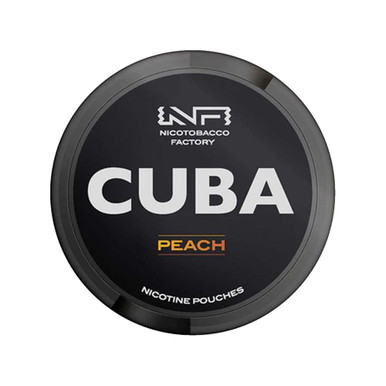
With that said, here is the record itself. This listing is priced at £19.99. It comes in two declared strengths, 6mg and 12mg, and the price is the same for both. Our catalogue files it under two flavour tags, tropical and sweet. The cans-per-pack field is empty, so we do not know how many cans £19.99 buys. We hold a single image. That is the entire contents of our record, and everything else you read below is either a description of the format, a comparison with another listing, or a plain admission that we do not have the information.
This is an adult nicotine product and this page is written for adults aged 18 or over who already use nicotine. The compliance section at the foot sets out the legal position in full.
The can as an object
Most of what can be said usefully about a pouch listing is about the container, so this section takes it seriously rather than treating it as packaging to be skipped over.
The shell
A pouch can is a moulded plastic cylinder, wider than it is tall, of a size that closes inside a fist. There is nothing structural about it beyond that: a base that holds the contents, a wall a couple of millimetres thick, and a lid. It weighs very little full and almost nothing empty. The material is rigid enough that sitting on one in a back pocket will not crush it, though it will announce itself.
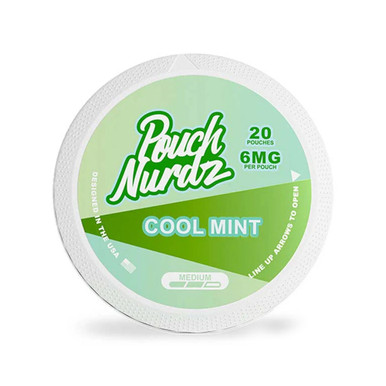
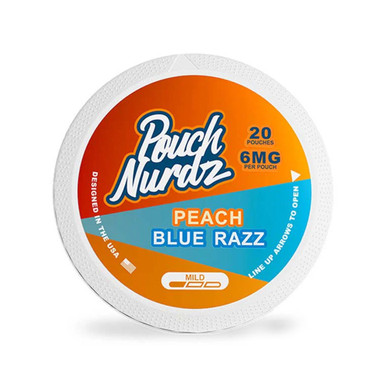
The printing carries the brand, the flavour name and the declared figure. On this listing the flavour name printed is Peach Blue Razz, which is long enough that it tends to be set across two lines on a lid of that diameter. If you keep several flavours from the same brand together, the lid is the only thing distinguishing them at a glance, and long flavour names in the same house typeface are harder to tell apart in a drawer than you would expect.
Can diameters are not standardised across this category, which matters more than it sounds. Brands that use a slimmer portion tend to use a narrower can, and brands using the larger portion use a wider one, so a shelf of cans from different makers is not a neat stack. If you have a tin, a drawer insert or a car cubby that a particular brand's cans fit exactly, a can from a different maker very often will not. Our record does not state the dimensions of this can, so we cannot tell you which group it falls into; the photograph on the product page gives an impression and the object itself gives the answer.
The lid and the compartment inside it
The lid on cans of this type is not solid. It is hollow, with an inner disc that lifts out, and the space behind that disc is a catch compartment for used pouches. This is a genuinely well-solved problem in an otherwise plain object: a used pouch is something you need to put somewhere immediately and a bin is very often not within reach, so the can carries its own.
The compartment holds several used pouches before it becomes impractical. What it does not do is stay pleasant indefinitely, and a compartment that gets emptied once a week rather than once a day will tell you so when you open it. The routine that works is to tip it into the nearest bin whenever you happen to be standing beside one, rather than waiting until it is full.
When the compartment is full and there is still no bin, the ordinary fallbacks are a tissue in a pocket or simply waiting. Neither is elegant. What people should not do is the thing that gives the whole category a bad name in shared spaces: leaving a used pouch on a table, a windowsill, a bar top or the ground. Somebody else has to pick that up. The compartment exists precisely so that the answer is never the pavement.
The outer lid seals by pressure against the rim of the base. There is no screw thread and no gasket. It is a good enough closure for everyday use and not a good enough one to leave the can open on a worktop overnight.
How many pouches are inside
We cannot tell you. Our record holds no pouch count for this listing, and it holds no pack size either, which means we cannot even say with confidence whether £19.99 buys you a single can or a box of them. Both patterns exist in our catalogue at prices in that region, which is exactly why guessing would be irresponsible rather than merely unhelpful.
The count is normally printed on the can, often on the base. If the figure matters to your arithmetic — and at £19.99 it reasonably might — treat the packaging as the authority and settle it before ordering rather than after. Where you see us state a pouch count on another product page, it is because the record holds one; the absence here is a gap in our data rather than a secret.
What fits in a pocket
One can sits comfortably in a coat pocket, a jacket pocket or the small pocket of a bag. Two cans stack awkwardly and tend to separate. A jeans front pocket takes a can but makes its outline obvious; a back pocket is where cans get sat on and where lids get loosened. People who carry one daily tend to settle on a fixed pocket and stop thinking about it, which is also the best defence against leaving it somewhere.
If you are carrying a can around other people's children or animals, the pocket is the point. A can in a bag on the floor is a can within reach of a curious toddler or a dog, and the lid is not child-resistant in any meaningful sense. That is a practical warning about a plastic container, not a health statement.
Peach Blue Razz described as a flavour
The name pairs two confectionery flavours rather than two fruits, and it is worth separating them.
The peach half
Peach as a flavour note is soft, rounded and low in acidity. It reads as syrup rather than juice — nearer to tinned peach halves or a peach-flavoured sweet than to a firm peach eaten off the stone. It carries a slight floral edge at the top, which is what distinguishes it from apricot, and its body is thick and gentle. As the sweeter and heavier of the two halves, it is usually the part that sits underneath in a pairing like this.
The blue razz half
Blue razz is short for blue raspberry, and blue raspberry is a sweet-shop invention rather than a fruit. Nothing grows that tastes like it. It is a confectionery flavour with a bright, sharp, almost tart top and a strong artificial-berry character, familiar to most people in this country from slush drinks and hard sweets rather than from anything in a fruit bowl. It is louder than peach and sits higher.
The reason the two get paired so often across this category is that they occupy different registers. Peach fills the bottom of the flavour; blue razz sits on top of it and provides the edge. A peach-only can tends to read as flat and slightly cloying; a blue-razz-only can tends to read as thin and sharp. Together they cover more ground.
The aroma at the lid
A flavour built this way announces itself when the lid comes off — sweet-shop rather than fruit-bowl, with the sharper berry note arriving first and the peach behind it. It is a carrying aroma rather than a discreet one. Whether that matters to you depends entirely on where you open the can.
How a pairing like this behaves over time
Two-part flavours rarely fade evenly, and the general pattern in this category is that the sharp top note goes before the soft base note does. On a peach and berry pairing that means the bright half tends to thin out first and leave the syrupy half behind it, so the taste at the twenty-minute mark is not the taste at the first minute. That is not a defect and it is not specific to this brand; it is what happens when a flavour is assembled from parts that behave differently.
People who like this kind of pairing tend to like the early part of it most. People who find sweet-shop berry notes too loud sometimes find the later, peach-dominated stretch the more agreeable one. Both reactions are common and neither is the correct way to experience the can. We mention it because a flavour description that only covers the first thirty seconds is a description of half the thing.
A note on the tropical tag
Our catalogue files this listing under the tropical shelf, which holds fifty-eight products, as well as under the much shorter sweet shelf of twelve. The sweet tag is obviously right. The tropical tag is harder to defend on the plain meaning of the word: peaches are stone fruit from temperate orchards and blue raspberry is not a fruit at all, so neither half of the name is tropical in any literal sense.
We are flagging that rather than quietly leaving it, because someone filtering the shop by flavour deserves to know how the filing works. In practice our tropical shelf functions as a broad sweet-fruit grouping rather than a botanical category, and this can is there because of the company it keeps rather than because of where the fruit grows. If you browse that shelf expecting mango and pineapple throughout, you will find other things as well.
The format in practice
A pouch is a small soft sachet, sealed at both ends, that sits between the lip and the gum — most often along the upper row and off to one side. It is put in with a finger, settled, and then left. No chewing, no holding it in place, no device.
How long one stays in is a matter of habit and we do not publish a recommended time, because a recommended time would be dosage guidance and that is not ours to give. Descriptively: the flavour is strongest early and fades, and most people take a pouch out somewhere between twenty minutes and an hour, generally once the taste has gone. A flavour built on confectionery notes, as this one is, tends to fade a little sooner than a herbal one, because those bright top notes are the first part of a flavour to go.
Positioning is the only part of the format that takes any learning at all, and it takes about a day. A pouch placed too far forward sits against the lip and is obvious to the person using it; placed too far back it is harder to retrieve. Most people find a spot within the first few uses and then stop thinking about it entirely. Moving it around with the tongue is the main way it ends up somewhere it should not be, and the fix is to leave it alone once it is settled.
There is nothing else to the kit. No charging, no refilling, no accessories, no spare parts, nothing to clean. That is worth saying plainly because it shapes what owning a can involves: the whole of the equipment is the can itself, and the only recurring task in the routine is remembering to empty the lid.
Disposal is by hand into a bin, or into the catch compartment described above until a bin appears. Not down a sink and not on the pavement. One pouch at a time is the ordinary pattern.
The milligram figure, and what it does not settle
Both variants of this listing carry a declared figure — 6mg and 12mg — and both cost £19.99. This section explains what that number is, as information. It is not advice, and we will not tell you which figure to pick.
A declaration about one pouch
The figure is the maker's declared nicotine content for a single pouch, expressed in milligrams. It is a statement about a unit, not about the can. Totalling it up across a can produces a number with no practical use and we would not encourage anyone to calculate it.
Two variants, one product
It is worth being clear that 6mg and 12mg here are two options within one listing rather than two different products. The flavour build is the same in both, the price is the same in both, and the packaging differs only in the printed figure. Where a brand wants a genuinely different flavour it gives it a different name; where it wants a different declared figure it prints a different number on the same flavour. Peach Blue Razz is one flavour with two numbers.
Why the number does not travel between brands
Declared figures are set by each manufacturer for their own products, and the way a pouch is constructed differs from maker to maker. The consequence is that the same printed number on two cans from two different brands does not describe the same experience, and a customer who has settled on a figure in one range cannot carry it straight across to another and expect a match. Our strength bands exist to make the catalogue browsable, not to assert equivalence between brands.
The bands on this site
Both figures on this listing fall inside our medium-strength shelf, which runs to one hundred and thirty-five listings. Higher declared figures are gathered on the strong shelf and then on the extra-strong shelf above that. Those are filing decisions of ours and the boundaries between them are lines drawn across a continuous range; a listing at the top of one band sits closer to the bottom of the next band than the two labels imply.
What the figure tells you about flavour
Nothing. A 12mg can is not more strongly flavoured than a 6mg can of the same thing, and choosing on the number in the hope of a bigger taste is choosing on the wrong variable. Flavour intensity is a separate decision made separately by the maker, and within a single flavour the two variants are built to taste alike.
The rest of the Pouch Nurdz range
Six siblings share the shelf with this listing, all at £19.99, all in the same 6mg and 12mg pair, and — to repeat the point, because it matters — every one of them is out of stock as well. These links describe the range; none of them is a can you can put in a basket today.
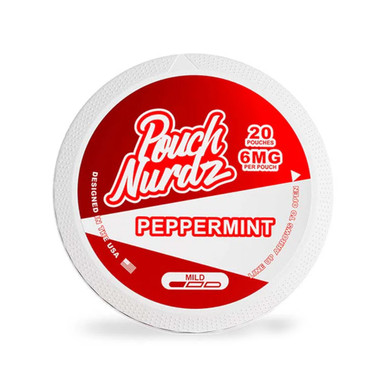
The range leans heavily towards mint. The Peppermint listing is the sharp, sweet-shop reading of mint, currently unavailable. The Spearmint can is the softer, leafier one, also unavailable. Wintergreen from the same brand is the odd one in that group, since wintergreen tastes very little like garden mint, and it cannot be ordered either. Cool Mint is the range's straightforward mint, out of stock at £19.99, and Double Mint layers two mint characters together, also out of stock.
The one listing that stands apart from both the mints and this fruit pairing is the Freeze can, which carries a cold-sounding name but is tagged in our catalogue only as sweet, with no mint tag at all. It is the same £19.99 and it is unavailable like the rest. Among seven listings, then, this one and Freeze are the two that sit outside the mint group, and Peach Blue Razz is the only outright fruit name in the range.
Keeping a can in usable condition
Store cans somewhere cool, dry and dark — a cupboard, a drawer, a shelf away from a window. The enemies are heat and open air, in that order.
Heat degrades flavour before it does anything else, and it does it by driving off the lightest aromatic notes first. On a can built around a bright berry top note, that is precisely the part you would miss, so a can left in a car through a warm afternoon comes back duller than it went in. Cold is not a solution; refrigeration adds moisture at the lid and achieves nothing useful.
Open air is the slower problem. The press-fit lid is a decent seal when it is closed and no seal at all when it is not, so the habit of closing the can immediately after taking a pouch is the whole of good practice. A can left open dries at the edges over days.
Travel deserves its own line. A can in hand luggage is a can that spends a few hours in a warm cabin and then sits in a hot hotel room; a can in a checked bag spends that time in a hold instead. Neither will ruin a can outright, but both will take the edge off a bright flavour faster than a kitchen drawer at home would. The practical answer for anyone taking several cans away is to keep the ones not in use somewhere shaded and to accept that the last can of a long trip will not taste quite like the first. Rules about carrying these products vary by country and by carrier, and those rules belong to the airline, the border and the destination — we do not publish them and you should check them yourself rather than take a product page's word for it.
Keep cans out of reach of children and animals, and go by the date printed on the packaging rather than by anything we say — our record holds no shelf-life figure for this listing, so we cannot tell you how long an unopened can keeps and we are not going to estimate.
What our record shows as available, for variety or for now
This section does the job the sibling section cannot. Everything named here is marked in stock in our catalogue at the time of writing, with one clearly labelled exception.
Staying close to the flavour, Velo Peach Ice is the nearest peach note we can point at, listed at £4.19 and available. XQS Fizzy Peach takes peach in a sweet-shop direction at £39.90 and is in stock. Pablo Silver Edition Blueberry Peach Ice pairs peach with a berry, which is structurally the closest thing on our shelves to what this listing is doing, at £39.90 and available.
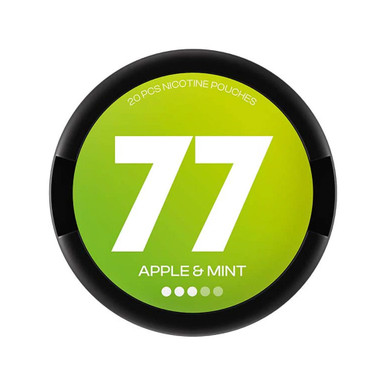
Widening to fruit generally: Fumi Green Apple is £27.90 and in stock, SYX Apple Kiwi is £29.90 and available, and Cuba Black Apple Juice is £39.90 and in stock, all three sitting on the sharper side of fruit rather than the syrupy side. Nordic Spirit Tropical Mix is the cheapest available thing on the tropical shelf we can name here, at £4.49 and in stock. 77 Apple Mint at £39.90 is available and puts a fruit note against a mint one.
Two entries need a caveat rather than a recommendation. Klint Apple Mint is listed at £36.90 but is out of stock, exactly like the can you are reading about — it is named here for completeness of the fruit-and-mint grouping, not as something you can order. And Denssi Tropical Fury Energy Pouches is listed at £39.90 and marked available, but note that its own title says energy pouches rather than nicotine pouches; we are not going to characterise what is in it from a title alone, so read that product page before assuming it is the same kind of thing as this one.
Deciding between the variants, and the gap in our data
The choice between 6mg and 12mg is yours. We are not allowed to suggest a figure as appropriate for a particular person and we would be guessing if we tried. The facts, restated: two declared figures, identical £19.99 price, identical flavour build, both inside the medium band.
The pack-size question is one we simply cannot answer, because the field is blank in our record. That is an unusual gap and we would rather name it than paper over it. It means the price-per-can cannot be worked out from this page, and any arithmetic you do on £19.99 needs a figure that only the product page or the packaging can supply. When a listing is out of stock as this one is, that gap is academic; if it returns, it is worth settling first.
Where this sits on the site
Three routes lead here. By flavour, the can appears on both the tropical and the sweet shelves, with the caveat about the tropical tag noted above. By strength, both variants sit in the medium band. By brand, it sits with its six siblings on the Pouch Nurdz shelf, all seven of them currently unavailable.
For wider browsing, the complete shop listing holds everything we carry, available and otherwise, and is the only view that reflects live stock properly. The medium band as a shelf in its own right is the largest single strength grouping we publish and a reasonable place to start if the declared figure is what you are filtering on. If you would rather browse by maker, the Pablo shelf and the Cuba shelf are both long and both unrelated to this product; they are mentioned only because they are well stocked places to go when the brand you wanted is not.
Buying, delivery and the age check
None of this applies to this listing while it is unavailable, but the process is worth stating because it is the same everywhere on the site.
Sales are to adults aged 18 or over. The checkout is built on that footing and identification may be asked for when the parcel is handed over. A courier who is not satisfied that the recipient is over 18 will not complete the delivery, and the parcel will come back. That is worth planning around if the address is a workplace, a student house or anywhere the parcel might be received by somebody other than you.
Prices are in pounds sterling and are what you pay. Where a listing has variants, the one selected at the basket is the one that ships; with both strengths here at the same £19.99, price will not flag a mis-selection for you.
We do not publish restocking dates, for this listing or for the brand as a whole. We do not know when or whether these cans return, and inventing a date to keep somebody on the page would be a poor trade for a customer's trust.
Questions people actually ask
Is Peach Blue Razz in stock?
No. Both the 6mg and the 12mg variants are out of stock and neither can be ordered. The same is true of every other Pouch Nurdz listing in our catalogue, so switching flavour within the brand is not an option either. The page stays published because the catalogue record exists and because people search by product name, not because there is stock behind it.
What is blue razz supposed to be?
Blue raspberry, shortened. It is a confectionery flavour rather than a fruit — there is no blue raspberry growing anywhere — and most people in this country know it from slush drinks and boiled sweets. As a taste it is sharp, bright and unmistakably artificial in character, which is not a criticism; that is what the flavour is designed to be, and it is why it pairs well with something as soft as peach.
Why is it filed under tropical when peach is not tropical?
Because our tropical shelf works in practice as a broad sweet-fruit grouping rather than a strict botanical one. We have flagged the mismatch rather than defending it. If you are filtering by flavour and expecting mango, pineapple and passion fruit throughout that shelf, you will also find stone fruit and confectionery-berry listings like this one.
How many cans is £19.99?
Our record does not say. The cans-per-pack field is empty for this listing, and because our catalogue contains both single cans and multi-can packs at prices in that region, inferring an answer from the price would be unreliable. The product page and the packaging are the places to check.
How many pouches does a can hold?
Also not recorded. We hold no pouch count and no pouch weight for this listing. Both figures are normally printed on the can itself. We would rather tell you the record is silent than publish a number that looks authoritative and is not.
Does the 12mg taste stronger than the 6mg?
It should not. The declared figure refers to nicotine content per pouch and has no bearing on how much flavour is built into the pouch. Within a single flavour from a single brand, both variants are normally made to the same flavour specification. Both are also priced identically at £19.99 here, so there is no cost signal pointing one way or the other.
Is there a milder or a stronger version of this flavour?
Not beyond the two we list. Our record for this product holds 6mg and 12mg and nothing else — no mini version, no extra-strong edition, no third figure. Higher declared figures across the catalogue generally are gathered on the strong and extra-strong shelves, but those hold other brands rather than other versions of this can.
Will it come back into stock?
We do not know. We do not publish restock forecasts, and we are not going to imply a return date we cannot stand behind. Checking the product page from time to time is the only reliable method. If what you need is a can rather than this particular can, the availability section above lists what our record currently shows as in stock.
Can I be told when it is available again?
We do not hold that information in a form this page can promise anything about. Rather than describe a notification process we cannot guarantee from a product description, the honest answer is to point you at the product page itself, which reflects live stock, and at the shop index, which shows what is currently orderable across the whole catalogue.
Is this one of the mint flavours?
No. Peach Blue Razz is the only outright fruit name in the Pouch Nurdz range as we hold it. Four of the other six listings carry mint names, one is the cold-named Freeze can that our tagging files as sweet, and this is the fruit one. Our tags for this listing are tropical and sweet, with no mint tag recorded.
Is the peach or the berry the dominant note?
In pairings built this way the sharper note usually leads and the softer one carries the body, so the berry tends to be the first thing noticed and the peach the thing underneath it. We are describing the general construction of peach-and-berry flavours rather than measuring this specific can, because our record holds only the two flavour tags and no tasting note. The can itself is the authority on how the balance actually falls.
Is this sweeter than the mint flavours in the range?
Almost certainly, in the sense that a fruit-and-confectionery pairing is built on sweetness while a mint is built on a leaf or a cooling character with sweetness behind it. That said, our catalogue tags the mint siblings as both mint and sweet, so sweetness is part of their construction too. What we can say without guessing is that this listing carries no mint tag at all, so nothing in it is meant to read as mint.
Why does the page still describe the can if I cannot buy it?
Because the description is the part that stays true. Stock changes; what the flavour name means, how the format works, what the declared figure does and does not tell you, and which gaps exist in our record are all still worth reading whether or not a can is in a box today. The alternative — pulling the page — would leave a search for the product name pointing at nothing at all.
Will I need identification for the delivery?
Possibly, so plan on it. These are age-restricted goods sold only to adults aged 18 or over, and the courier may ask for proof of age before handing a parcel over. Deliveries left unattended may not be available for this kind of order. An adult over 18 being present at the address is the safest assumption.
Compliance and the legal position
This product is for adults aged 18 or over who already use nicotine, and it is sold on that basis only. We do not supply under-18s.
Nicotine is an addictive substance. We state that on every product page without softening it and without adding a reassurance after it.
This product is not a licensed stop-smoking medicine and we do not present it as one. It is not intended for non-smokers, for anybody who does not already use nicotine, for under-18s, or for anyone who is pregnant or breastfeeding. No health claim is made here in any direction — not that the product is good for anybody and not that it is bad for anybody — and nothing on this page is written to encourage a person who does not use nicotine to begin.
Proof of age may be requested at delivery. Keep the product away from children and animals. For anything touching on your own circumstances and nicotine, ask a suitably qualified professional; a product page is not the place and we are not qualified to be it.
To close
Peach Blue Razz is a £19.99 listing from Pouch Nurdz in 6mg and 12mg, pairing a soft syrupy stone-fruit note with a sharp sweet-shop berry one, filed by us under tropical and sweet — the first of those tags being generous — with no pouch count and no pack size on record, and out of stock along with the entire brand. If a description was what you came for, that is it in a sentence. If a can was what you came for, the availability section above is the part of this page that can actually help.
More from Pouch Nurdz
More medium strength pouches
More tropical pouches
Where this sits
Pouch Nurdz Nurdz Peach Blue Razz Nicotine Pouches appears in these categories. Browse them, or jump to something close.
You might also like