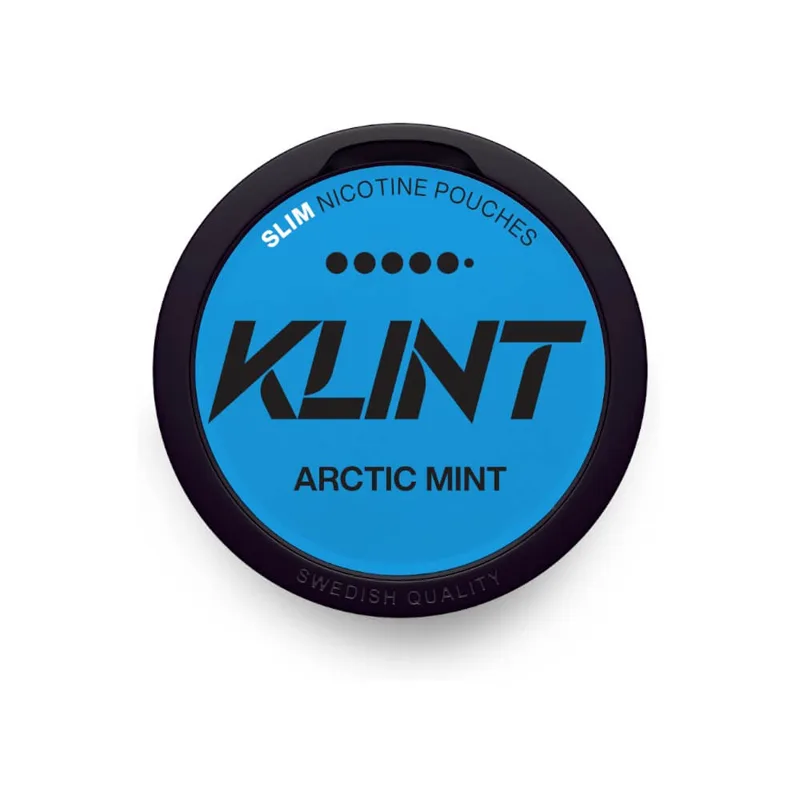
Home / Medium Strength / Klint Apple Mint Nicotine Pouches
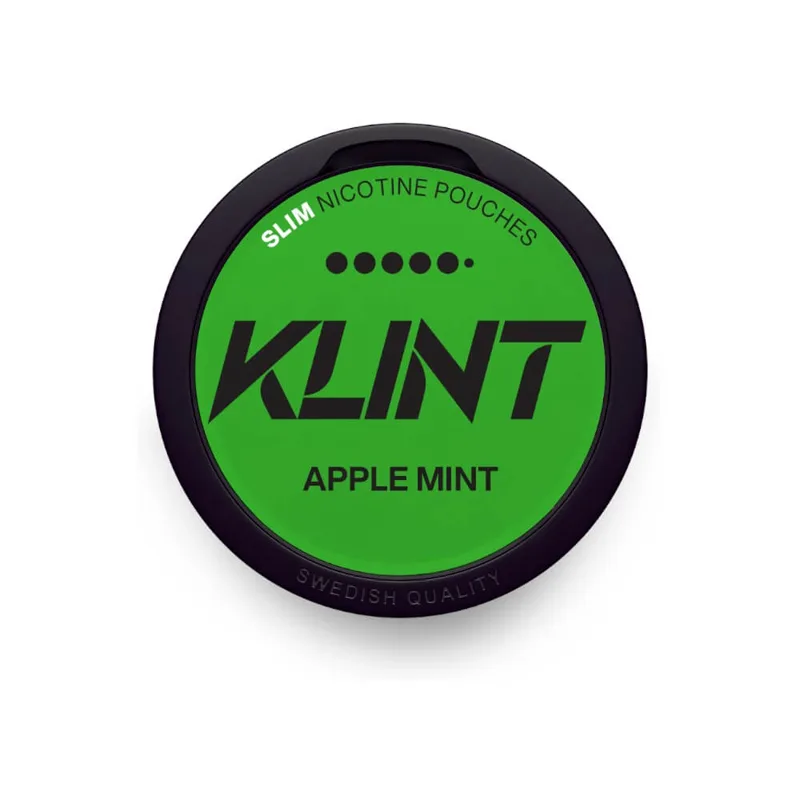
Klint · 11.5mg · 10-can pack
Read the full guide
Klint Apple Mint Nicotine Pouches
£36.90
✔ In stock — ready to ship
100% tobacco-free
Free over £20
Same-day dispatch
Secure checkout
This listing is currently out of stock. That belongs at the top rather than buried under a thousand words of description, because it is the fact most likely to change what you do next. You can read the rest of this page, and it will tell you accurately what the can is, but you cannot add it to a basket today. If the flavour is the thing you came for rather than the brand, the section on neighbouring cans further down is the useful part; if the brand is the thing you came for, the position is thinner than you might hope, because two of Klint's six listings here are in stock at the time of writing and four, this one included, are not.
With that said, here is what the listing covers. Klint Apple Mint Nicotine Pouches is sold as a ten-can pack at £36.90. Our record holds one declared figure against it, 11.5mg, and it is filed on the Medium Strength shelf among a hundred and thirty-five other listings. There is a single photograph on the listing. Two flavour tags are attached to it in our data, mint and tropical, and the second of those is worth a section of its own further down because it does not obviously match the product name.
The full guide to Klint Apple Mint Nicotine Pouches
5,538 words on how it eats, who it suits, how to serve it and what to put beside it.
Klint Apple Mint, and the first thing you need to know
Klint is a small presence on our shelves. The brand's shelf here runs to six listings in total, which makes it one of the more compact ranges we carry — a fraction of the size of the larger houses. A short range is not a criticism; it means the brand is easier to read end to end, and it means that when one of six listings goes out of stock, as this one has, the gap is more noticeable than it would be in a range of thirty.
The can as an object: lid, well and catch
Since the flavour is not available to buy today, the physical thing is worth describing properly, because the can is what you actually live with and it is almost never described anywhere.
A pouch can in this format is a short cylinder, near enough the footprint of a large bottle cap and about twice as deep. It is built in two parts. The lower part is the well, and that is where the fresh pouches sit, arranged in a ring around the inside wall or packed flat depending on the maker. The upper part is a shallow tray under the lid — the catch compartment — separated from the well by its own floor. That tray is the single most useful feature of the design and the one most people do not notice on their first can. It exists so that a used pouch has somewhere to go when there is no bin within reach.
The lid on cans of this kind normally clicks rather than screws. A click lid is faster one-handed, which matters if you are holding anything else, but it has a corresponding weakness: a can knocked about loose in a bag can pop. Anybody who has emptied a rucksack to retrieve a dozen loose pouches learns this once. The practical fix is dull and it works — give the can a pocket of its own, or the same compartment in the same bag every time, rather than letting it roam.
On carrying: the can goes in a coat pocket without a bulge, in a jeans pocket with one, and in any bag without thinking about it. A ten-can box does not go in a pocket at all. That is the real difference between buying a box and buying a can, and it shapes how people handle a purchase like this one — the box lives in a cupboard at home and one can travels. We will come back to that under storage, because the two habits interact.
One deliberate omission. We are not going to describe what is inside a pouch, how it is made, or anything about how it works. That is not coyness; it is that a retail description is not the right place for it, and the can's own labelling and the manufacturer's own material are the proper source. What we can describe is the outside of the object, and that is what this section has done.
Ten cans in a box, and the count we do not hold
Our record is explicit on one quantity and silent on another, and the difference matters when you are working out what £36.90 actually buys.
The figure we hold is ten cans per pack. That is a firm number from our data, and it means the price on this listing is a box price rather than a single-can price. Simple division puts it at £3.69 a can, and that arithmetic is worth doing before you compare this listing with anything else on the site, because the shop is full of lines that are priced per can and lines that are priced per box, sitting next to each other on the same category page with no visual distinction between them.
The figure we do not hold is how many pouches are in each can. That field is not in our record, and we are not going to print a typical number and let you assume it is this product's number. Most cans in this category hold somewhere in the region of twenty pouches, but "most cans in this category" is not the same thing as "this can", and the gap between those two statements is exactly where misleading product copy lives. The can's own labelling states its count. If you need it settled before ordering, ask and we will check a physical unit rather than infer one.
That gap has a practical consequence: we cannot tell you how long a box of ten lasts. Nobody can, from a description, because it depends entirely on individual habit, and we are not in a position to comment on anyone's habit. What people actually do is buy once, notice how long the box lasted, and plan every order after that against their own observed figure. That is a slower answer than a number on a page, and it is the only one that is true.
Apple over mint: the flavour as taste and aroma
Apple Mint is a compound flavour name and both halves are doing work, which already separates it from the rest of this brand's shelf.
The apple in pouch flavourings is almost always a green apple rather than a red one — the sharp, sweet-tart, slightly acidic profile you would associate with a hard eating apple rather than the softer, honeyed character of a ripe red variety or the cooked, spiced character of apple in a pudding. It reads bright. There is usually a thin, skin-like tartness at the front of it that keeps it from being simply sweet, and that tartness is the part that survives when the flavour is sitting against a mint.
The mint underneath is the base rather than the headline. In a fruit-and-mint pairing the mint tends to sit behind the fruit and set the length of the finish: the apple arrives first and the mint is what you are left with. On the aroma side, opening a can of this kind of flavour usually gives you the mint before the fruit, which is the opposite way round from how it tastes — the mint note is the more volatile of the two and reaches you first from the open can, while the apple is the more prominent on the palate. That inversion between smell and taste is characteristic of the pairing and it catches people out.
Where this sits against a plain mint is straightforward: it is sweeter, rounder and shorter-edged. A plain mint is a single-note flavour that holds one line the whole way through. An apple mint has an arc to it — fruit, then mint — and people who find a plain mint monotonous over a long sitting often keep a fruit-mint for that reason. That is a description of taste and nothing more; we are not suggesting either is better or that one suits anybody in particular.
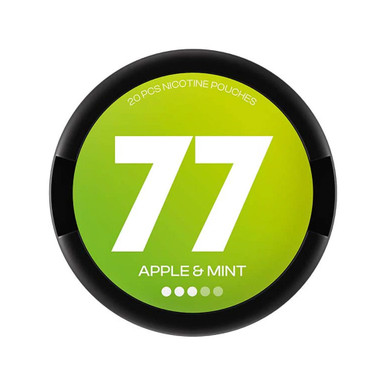
The obvious comparison on our own shelves is 77 Apple Mint at £39.90, which is the same flavour idea from a different house. Two brands taking on apple and mint will not produce the same result, and our record holds the names rather than the recipes, so we cannot tell you how they differ in the glass. What we can say is that the pairing exists in more than one range here, which is the useful thing to know when one of them is unavailable.
A flavour tag that does not match the name
Our data attaches two flavour tags to this listing: mint and tropical. The first is uncontroversial. The second does not fit the product name, and we would rather point that out than quietly let it pass.
Apple is not a tropical fruit by any ordinary reading. It is an orchard fruit from temperate growing, and it has nothing in common with the mangoes, pineapples and passion fruits that the tropical shelf normally collects. So the tag is either a tagging error in our own catalogue, or it reflects something about the flavour's actual profile that the name does not convey — a tropical undertone in the blend that Klint have not put in the title. We do not know which, and we are not going to pick the more flattering explanation and present it as fact.
What this means for you is procedural. If you found this page by browsing the fifty-eight listings on the tropical shelf and you were expecting mango or pineapple, this can is named for apple and mint and you should read it as such. If you found it under the mint category and its hundred and forty-eight listings, the tag is doing what you would expect. Either way, the can's own front panel is the authority on what Klint say this tastes of, and where our catalogue tagging and the product name disagree, the product name is the more reliable guide.
We flag things like this rather than tidying them away because a customer who orders on the strength of a category tag and receives something else has been misled, even if nobody intended it. A visible inconsistency you can factor in is better than an invisible one you cannot.
Using a pouch, and getting rid of it afterwards
The handling is common to every can in the format and does not vary by brand. A pouch is taken from the well between finger and thumb and placed between the upper lip and the gum, generally off to one side rather than centred. Once positioned it should stay put; if it will not settle, it is usually sitting too far forward, and moving it back slightly resolves it. It is not chewed and it is not swallowed.
How long anyone keeps one in is individual. Across the format people describe anything from around twenty minutes to about an hour, and plenty of people fall outside both ends. We do not give a number, we do not suggest how many to use, and we do not comment on spacing, because none of that is a shop's business and because we have no way to know anything about you. If you want guidance rather than description, that conversation belongs with a pharmacist or a doctor.
Disposal is the one place this page gives a firm instruction. A used pouch goes into the catch tray if there is no bin, and out of the catch tray into general waste at the first opportunity. It does not go down a sink, a drain or a lavatory. It does not go into a recycling stream. It does not get left on a surface, in a car door pocket, or anywhere a child or an animal could pick it up. Empty the catch tray regularly rather than letting it fill, both because a full tray stops the lid seating properly and because an unemptied tray is the most common way a used pouch ends up somewhere it should not be.
11.5mg, read as a number rather than a rating
This listing declares one figure: 11.5mg. It is printed by the manufacturer and it appears here so that you can tell this can apart from other cans and find the same thing again next time. That is the whole of its function on this page. It is not a score, it is not a grade, and a can printing a larger number is not a better can, a more serious can, or a more worthwhile purchase than one printing a smaller one. The category's naming habits push hard in the opposite direction and we would rather not join in.
We sort the whole shop into three bands for navigation. This can is on the Medium Strength shelf; above it sit the Strong and Extra Strong bands. Those bands are a filing system so that somebody who already knows what they buy can cut a long list down quickly. The order they appear in on a menu is not a ladder and not an invitation.
We cannot tell you which strength suits you. Not from what you have bought before, not from anything you could describe to us, and not from any rule of thumb. We do not hold that expertise and it would be wrong for a retailer to pretend otherwise. What we can do is state the printed figure accurately on every listing and file it the same way every time. Anything beyond that is a matter for somebody medically qualified, not for the shop.
Moving between cans on our shelves: what changes and what does not
Because this line is unavailable, the realistic question for most people reading is what happens if you move to a different can. It is worth setting out plainly what actually varies between listings here and what is constant, because the two get muddled.
What genuinely changes is the flavour, the printed figure, the brand's own naming conventions, and the unit the listing is priced in. Those four are the real variables. Flavour is self-evident. The printed figure varies can to can and does not mean the same thing between brands in any way we can verify — 11.5mg on one house's lid and a similar number on another's are two manufacturers' declarations, not two readings from one instrument, and we would be overstepping to tell you they are equivalent. Naming conventions vary enormously: some houses append words like ice, freeze or max to flavour names as range branding, and those words tell you about the line rather than about the can.
The unit is the one that costs people money. This listing is ten cans for £36.90. On the shelves around it, Velo Peach Ice sits at £4.19 and Nordic Spirit Frosty Berry at £4.49, while Pablo Silver Edition Blueberry Peach Ice and Cuba Black Apple Juice are both £39.90. Those are not four points on one scale. Our record for this page does not tell us what each of those other listings ships, so we are not going to convert them for you — but the arithmetic you need is always the same. Find what the line contains, divide, and compare like with like. A £4.19 line and a £36.90 line can work out at very similar money per can.
What does not change between cans is the handling, and this is the reassuring half. The format is the format. A pouch from one brand goes in the same way as a pouch from another, sits in the same place, comes out the same way, and is disposed of identically. The can construction — well below, catch tray above, click lid — is near-universal across the brands we stock. The storage considerations are the same. The age restriction and the checks at the door are the same on every order regardless of what is in it. So moving between brands is a smaller step than it looks from a category page: you are changing a taste and a printed number, not learning a new object.
The practical upshot is that people who are relaxed about brand tend to shop by flavour and figure across the whole catalogue, and people who are loyal to a brand shop that brand's shelf and accept a narrower flavour choice. Neither approach is better. They just fail in different ways: brand loyalty fails when a six-listing range has a gap in it, and flavour loyalty fails when a specific flavour is only made by one house.
Six listings on the Klint shelf
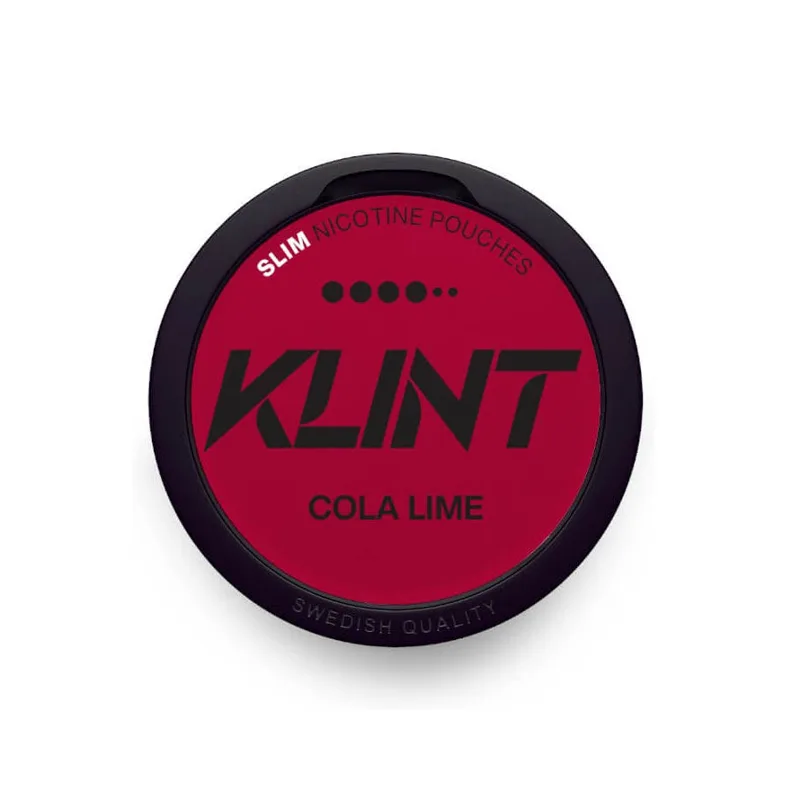
The brand's shelf here holds six listings and this page is one of them. The other five are Klint Arctic Mint, Klint Avalanche Mint, Klint Blueberry, Klint Cola Lime and Klint Freeze Mint. Every one of them carries the same £36.90 that this listing does. A flat price across an entire range is worth noticing, because it removes cost from the decision altogether: choosing within this brand comes down to flavour and to what is actually on the shelf, and to nothing else.
Availability is the awkward part and we would rather set it out than let you discover it one page at a time. At the time of writing, two of the six are in stock — Arctic Mint and Avalanche Mint, both of them plain mints — and four are not: this can, the blueberry, the cola lime and the freeze mint. That is a thin shelf by any reading. If you are set on this brand in particular rather than on this flavour, the practical position is that Klint can currently offer you a mint and very little else.
The naming still tells you the shape of the range even where the stock does not. Three of the six are mints by name — arctic, avalanche and freeze — and the other three either pair mint with a fruit or drop it entirely: apple with mint here, blueberry on its own, cola with lime. So this is a mint-led range with a small fruit wing, which is a common shape for a six-item line and the reason most Klint pages end up filed on the mint shelf.
What our record on this page does not carry is the declared figure for any of those five siblings. We hold their names, their prices and whether they are in stock, and that is the limit of it, so we are not going to print a milligram number for a can whose own listing we are not writing. Each sibling page states its own figure. If you are matching a number rather than a flavour, open the sibling listing and read it there rather than assuming a brand uses one figure throughout. Brands frequently do not, and a flat price across a range is no indication at all that the printed numbers are flat with it.
One point on the mint names. Arctic and avalanche and freeze are all names built on the idea of cold, and none of them is describing something the can does to you. They are flavour names, in exactly the way that "ice" is a flavour name on a drinks label, and we are not going to inflate them into effects.
What people keep beside an apple-mint can
Rotations are a shopping habit rather than anything else, and with this line unavailable the neighbouring shelves are where the practical interest is.
If it is the apple you are after, three listings here come at it from different directions. SYX Apple Kiwi at £29.90 keeps the apple and adds a second fruit rather than a mint, which shifts it from a fruit-and-mint pairing to a fruit-and-fruit one. Cuba Black Apple Juice at £39.90 goes at apple as a juice idea — a rounder, sweeter reading of the fruit than a sharp green one. And the 77 house's take on the exact same pairing sits at £39.90 as noted above.
If it is the mint you are after, Edge Spearmint at £14.95 is the plainest and cheapest mint among the cans near this one — spearmint being the softer, sweeter, less astringent side of mint rather than the sharp side. Klint's own mint-named cans cover similar ground inside the brand, although as the section below sets out, most of that range is unavailable at the moment.
If what you actually want is contrast rather than a substitute, the neighbouring listings run a long way from apple and mint. Fumi Dark Spice at £27.90 is a warm, spiced idea with no fruit or mint in it at all. UBBS Cola Ice at £19.95 is a confectionery-drinks flavour. Killa Banana Ice at £33.50 is a soft, sweet fruit rather than a sharp one. Those three will not be mistaken for this can by anyone.
For browsing at the brand level rather than the product level, the Pablo shelf and the Cuba shelf are two of the wider ranges in the shop and both carry their own fruit-and-mint pairings under their own naming systems. Working through a brand shelf is slower than searching a flavour, but it is how you find the pairings that nobody has tagged the way you would expect.
Storing a box of ten, and keeping a can usable
A ten-can box changes the storage question, because most of what you have bought will be sitting unopened for a while.
Keep the box somewhere cool, dry and out of direct sun. Heat is what dries a can out, and the usual offenders are predictable: windowsills, dashboards, the shelf above a radiator, a bag left in a car in summer. A cupboard or a drawer is enough, and nothing more elaborate is needed.
Open one can at a time. This is the one habit that genuinely matters with a multi-can box and the one people most often skip. An unopened can keeps better than an opened one, and if you open three at once all three begin drying together while you work through the first. Take a can out, use it, then take the next one. The box is the store and the open can is the one in circulation.
Close the lid properly every time, and keep the catch tray empty. A tray with a used pouch in it can hold the lid slightly proud, and a lid slightly proud is an open can whether it looks like one or not. Wipe the rim if it picks up anything.
On fridges: our record carries no manufacturer storage instruction for this listing, so we are not issuing one. Some people refrigerate cans and some do not. A cool, dark, dry place away from heat is the uncontroversial approach and covers most situations. If Klint print storage instructions on the packaging, those instructions beat anything written here. Keep the box and every can in it out of reach of children and animals, and do not leave a can loose on a kitchen surface or a coffee table.
One figure, one price, ten cans: what there is to decide
The decision on this listing is small, which is worth saying because people go looking for options that do not exist. Our record holds a single variant: 11.5mg at £36.90 for ten cans. There is no second figure, no smaller pack, no single-can option and no bundle.
So the questions are whether you want apple and mint together, whether 11.5mg is the figure you already buy, whether ten cans is more than you want to commit to in one purchase, and — today — whether you are willing to wait for stock. If any of those is a no, this page is not going to talk you round. A ten-can box in particular is a real commitment to one flavour, and the honest observation is that people who have not had a flavour before more often buy a single can of something first, where a single can is what the listing sells. This listing does not offer that.
Because the line is unavailable, there is a fifth question that is really the practical one: whether you want to wait, or whether one of the neighbouring listings will do. Nobody can tell you when a line will return, us included, and we are not going to invent a restock date.
Ordering, delivery and the door
When a line is in stock, ordering is the same as anywhere on the site: add to basket from the product page, and the basket states the exact quantity, the exact price and any delivery charge before you commit. The checkout is the authoritative statement of what you are buying, not this description and not a category listing.
While this line is out of stock, the add-to-basket control is unavailable, and that is the reliable signal — the live listing beats this paragraph, which was written on a particular day. We do not take orders for stock we do not have.
Age verification applies to every order without exception. Sales are to adults aged 18 or over only. You confirm your age at checkout, orders may be checked before dispatch, and the courier may ask for photographic ID at handover. If no adult is present who can produce identification, the parcel is not left. It is worth choosing a delivery address on that basis rather than discovering it on the day. On delivery timescales, carriers and charges, our record for this page holds nothing, so this page states nothing; the site's delivery information is the current source.
Getting back to this page
Four routes lead here and each suits a different memory. By brand, the Klint shelf holds all six of the brand's listings in one place, and a six-item shelf is short enough to read in full. By flavour, the mint category collects a hundred and forty-eight listings and the tropical category fifty-eight, and this page is filed under both for the reasons discussed above. By figure, the Medium Strength band is where it sits. And if none of those is how you remember it, the whole catalogue is on a single index with a search box that accepts a brand name or a flavour word.
Crossing two routes narrows things fastest. Brand plus flavour, or flavour plus band, will usually take a long catalogue down to a handful. For a line that is out of stock, the brand shelf is the most useful of the four, because it shows you at a glance what else from the same house is actually available.
Questions we get about this one
When will it be back in stock?
We do not know, and we are not going to put a date on this page that we cannot stand behind. Restocks depend on supply into us rather than on anything we control, and a guessed date is worse than no date because people plan around it. The live listing is the accurate signal: when the add-to-basket control returns, the line is available. If you want to be told, contact us and ask rather than relying on a description written on one particular day.
How many pouches are in each can?
We do not hold that figure. Our record carries the pack count — ten cans — but not the pouch count inside a can, and we are not prepared to print a category-typical number and let it be read as this product's number. The can's own labelling states it. If you need it confirmed before ordering, ask us and we will check a physical unit rather than infer one from what other brands do.
Why is it tagged tropical when it is called Apple Mint?
That is a fair question and we cannot answer it definitively. Apple is an orchard fruit, not a tropical one, so the tag either reflects an error in our own catalogue tagging or something in the blend that the product name does not convey. We have flagged it rather than quietly removing it, because a customer browsing the tropical shelf deserves to know the mismatch exists. Read the product name and the can's own front panel as the reliable description.
Is 11.5mg a lot?
That is not a question we can answer, and it is not one a shop should answer. The figure is a number the manufacturer prints so that one can can be told from another. We file it in the Medium Strength band for navigation, and that band sits below two others in our menus purely as a sorting order, not as a scale of anything. We cannot advise which figure suits you. If you want a view from somebody qualified to give one, that is a pharmacist or a doctor, not us.
What else does Klint make, and is any of it available?
Six listings on our shelf, all at £36.90: this one, Arctic Mint, Avalanche Mint, Blueberry, Cola Lime and Freeze Mint. At the time of writing only Arctic Mint and Avalanche Mint are in stock, and the other four including this one are not. Our record on this page holds their names, prices and availability but not their declared figures, so open a sibling listing to read its own number rather than assuming the brand uses one figure across the range.
Can I buy a single can rather than ten?
Not on this listing. Our record holds one variant only, and it is the ten-can pack at £36.90. There is no single-can option, no smaller pack and no bundle. Other listings elsewhere in the shop are sold as single cans — the wide price range across our category pages is largely explained by that difference in unit — but we cannot convert this one into a single-can purchase, and we would rather say so than leave you looking for an option that is not there.
Does the apple taste sweet or sharp?
Apple in this format usually reads as a green apple: sweet but with a distinct tart edge rather than the soft, honeyed character of a ripe red variety. With a mint underneath, the fruit tends to arrive first and the mint sets the finish. That is a general description of how the pairing behaves, not a tasting note for this specific can, which we have not published. Klint's own wording on the packaging is the authoritative description of what they intended.
How long does a ten-can box last?
We cannot work that out for you, for two reasons. We do not hold the pouch count per can, and we have no basis for assuming anything about how much anyone uses — that is individual, and commenting on it is not a retailer's place. The method people actually use is to buy once, note how long the box lasted, and plan subsequent orders against their own figure. That takes one purchase to establish and it is accurate, which no estimate on a page would be.
Should I open all ten cans to check them?
No, and this is the one storage habit worth being firm about. An unopened can keeps better than an opened one, so opening the whole box at once starts every can drying at the same time. Take one out, use it, then take the next. Keep the box somewhere cool and dry, away from radiators, windowsills and cars in warm weather, and out of reach of children and animals.
Do you have reviews or ratings for this product?
No, and we do not publish them anywhere on these listings. There are no star scores, no aggregate figures and no quoted customer opinions on this page, and that absence is deliberate. What the page contains is the record we hold — name, brand, price, pack count, declared figure, flavour tags and stock position — together with general information about the format, and an explicit note wherever our record has a gap in it.
Is the flavour the same as the 77 version of apple mint?
We have no way of knowing and we are not going to speculate. Two manufacturers producing a flavour under the same two-word name will not produce identical results, and our record holds product names rather than formulations. We can tell you that the pairing exists in more than one range on our shelves and at different prices, which is useful when one of them is unavailable. Beyond that, each can's own labelling is the only description we would stand behind.
Compliance, stated without hedging
This product is sold only to adults aged 18 or over who already use nicotine, and we will not sell it to anyone else. Age confirmation is required at checkout, orders may be verified before dispatch, and photographic ID may be requested by the courier on delivery. If nobody at the address can produce identification, the parcel is not handed over.
Nicotine is an addictive substance. It is stated here in full and in plain sight, because a description of an age-restricted nicotine product should not bury it.
This is not a licensed stop-smoking medicine and it is not offered, described or intended as one. It is not for non-smokers, not for anyone who does not already use nicotine, not for under-18s, and not for anyone who is pregnant or breastfeeding. We make no health, medical or safety claim about this product in any direction, and nothing above should be read as one. Questions about nicotine and your own circumstances belong with a pharmacist or a doctor. Keep the box and every can out of reach of children and animals.
In short
Klint Apple Mint is a ten-can pack at £36.90 declaring 11.5mg, filed in the Medium Strength band, and it is out of stock at the time of writing. It sits in a six-listing brand range where every item costs the same and only two of the six are currently available, both of those being plain mints. Its tropical flavour tag does not match its name and we have said so rather than tidying it away. We hold the pack count but not the pouch count per can, and we have not filled that gap with a plausible figure. The packaging in front of you, and Klint's own printing on it, is the authority over everything on this page.
More from Klint
More medium strength pouches
More mint pouches
Where this sits
Klint Apple Mint Nicotine Pouches appears in these categories. Browse them, or jump to something close.
You might also like