Home / Medium Strength / Fumi Green Apple Nicotine Pouches
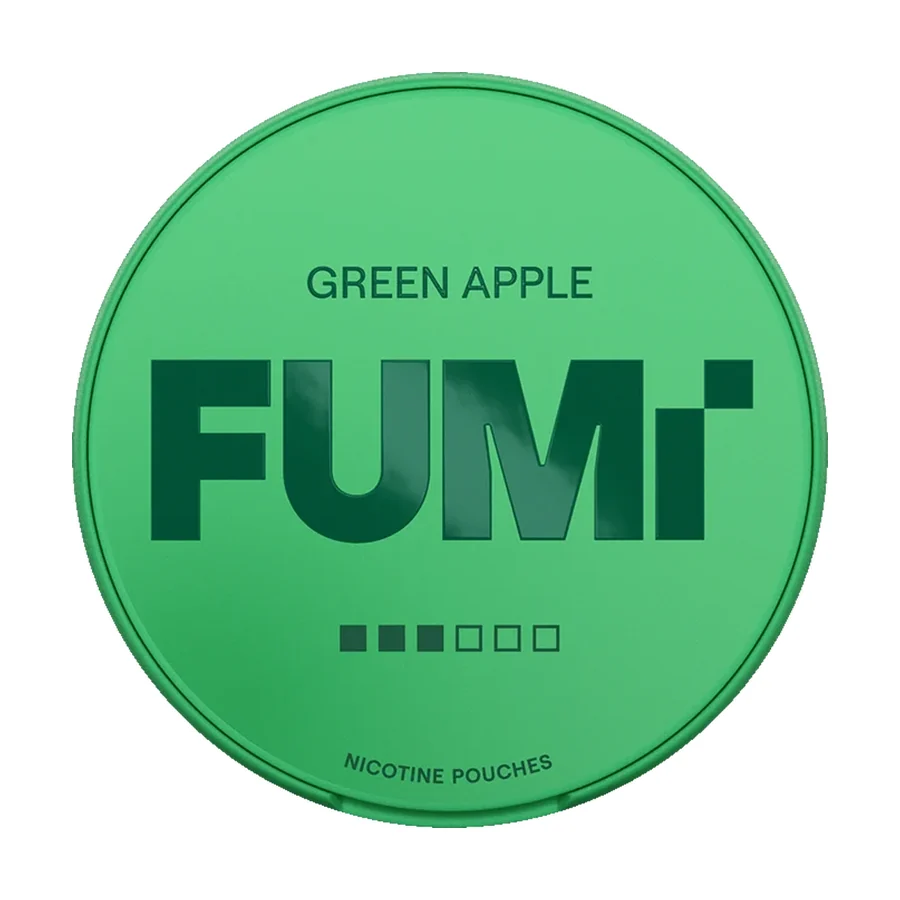
Fumi · 8mg · 10-can pack
Read the full guide
Fumi Green Apple Nicotine Pouches
£27.90
✔ In stock — ready to ship
100% tobacco-free
Free over £20
Same-day dispatch
Secure checkout
This page describes Fumi Green Apple Nicotine Pouches. The listing is a pack of ten cans at £27.90, in a single declared strength of 8mg. Our record shows it in stock at the time of writing, and carries one product image. Those are all the facts our system holds against this product, and every factual statement on this page is drawn from them rather than from anywhere else.
Ten cans for £27.90 is £2.79 a can if you divide it out. That division is ours, offered only so the listing can be lined up against the single-can products we also sell. The number that applies at checkout is £27.90 for the ten. We do not publish a pouch count for this product, because the number of portions in a Fumi can is not a field our record holds. The printed can answers that; we are not going to guess at it in a web page.
The full guide to Fumi Green Apple Nicotine Pouches
5,429 words on how it eats, who it suits, how to serve it and what to put beside it.
The box in front of you
Before anything else: this is an age-restricted nicotine product for adults aged 18 or over who already use nicotine. Nicotine is an addictive substance, and a full compliance section sits at the foot of this page. Nothing here is an encouragement to consume anything; it is a plain account of a box, a flavour word, one number and a price.
One oddity worth flagging straight away
The flavour category recorded against this listing in our system is tropical. The product is called Green Apple. Those two things do not agree with one another, and we would rather say so at the top of the page than let you find it out from a filter. A green apple is an orchard fruit. It is not a tropical one by any ordinary reading of the word, and nobody standing in a greengrocer's would file it next to pineapple and mango.
The consequence is practical rather than academic. Because the record says tropical, this box appears on our tropical grouping alongside 57 other listings, and it does not appear on any apple or orchard filter. If you are browsing by flavour and expecting to find it somewhere else, that is why. We have left the record as it stands rather than quietly reclassifying it, because the tag is part of how the site is organised and changing it on one page and not in the catalogue would only make things worse. Read the tag as a filing decision, not as a description of the taste.
Green apple, described as taste and aroma
What follows is a description of flavour and smell. It describes nothing else, and nothing else should be read into it.
Green apple, as a flavour word, does not mean the same thing as apple. Apple on its own tends to mean the soft, sweet, slightly floury character of a ripe red eating apple, or the pressed, browned, autumnal character of juice. Green apple means something sharper and narrower: high acidity, a bright and almost squeaky sweetness sitting on top of it, and a distinct cut to the finish that a red apple never has. It is the flavour of a fruit picked before it has gone soft.
The three parts of a green apple note
Split it into three. First the acid — sharp, mouth-watering, the part that makes you aware of the sides of your tongue. Second the sweetness, which in a green apple reading is thin and glassy rather than syrupy, more boiled sweet than jam. Third the aromatic part, the one people notice without being able to name it: a faint green, leafy, almost stalky smell sitting behind the fruit.
That third part is what makes a green apple recognisable. Take it away and you have something sharp and sweet that could be any pale fruit. It is also the hardest of the three to carry, which is a point the next section returns to.
Where it lands next to the other pale fruits
Pale fruit flavours crowd together and are easy to mix up. Pear is rounder and more perfumed, with none of the acid. Kiwi is sharper but has a musky, seeded quality behind it. White grape is sweet with almost no edge. Green apple has the clearest acid of the group and the tidiest finish.
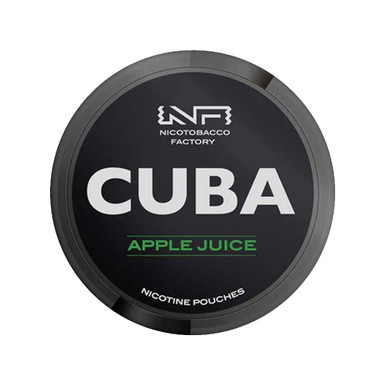
If you want to hear the difference in practice rather than on a page, SYX Apple Kiwi at £29.90 puts apple and kiwi in the same can and lets you taste the join, while Cuba Black Apple Juice at £39.90 names the pressed-juice reading in its own title rather than the fresh one. The three are not interchangeable, and a person who likes one can dislike another.
Aroma when the can is opened
Most of what people call flavour in this format arrives through the nose on opening. A green apple can should smell bright and slightly sour, with that leafy note behind it, and it should not smell of syrup. If a can smells flat when you first take the lid off, that is usually about how it has been kept rather than about the flavour itself, and the storage section further down covers what to do about that.
Building a recognisable apple in a dry portion
This is the part of the page worth reading slowly, because it is the part that explains why two cans with the same word on the front can taste like two different fruits. We are not talking about what is in the pouch — our record holds nothing about formulation and we will not invent it. We are talking about what a flavour has to achieve in this format in order to be recognised, and about why some flavour words survive the journey into a small portion better than others.
Why some flavours travel and some do not
A flavour word has to do two jobs at once in a pouch. It has to be identifiable within a second or two, and it has to stay identifiable for as long as the pouch is in place. Those two jobs pull in opposite directions. A flavour built to announce itself immediately tends to be loud and simple, and loud simple flavours become tiring. A flavour built to last tends to be subtle at the start, and a subtle start reads as a weak can.
Mint sits at one extreme: instantly identifiable, and unmistakable even at low intensity. That is most of why mint dominates this category — not because it is the most interesting flavour anybody can think of, but because it survives the format best. Coffee sits near the other extreme, built from dozens of bitter and roasted notes and the hardest kind of thing to carry in a portion this small.
Fruit sits between the two. A fruit note has a recognisable core and a fragile aromatic halo. The core travels; the halo is what gets lost. Green apple is a fruit whose entire identity depends on that halo — the leafy, stalky part — which makes it one of the more demanding words a manufacturer can print on a can.
The four-stage life of a fruit note
People who have used one format for a while tend to describe flavour in stages without being prompted, and the stages are worth naming.
- The opening. What you smell before anything else happens. Almost entirely aroma, very little taste.
- The arrival. The first thirty seconds or so, when the flavour is at its loudest and least subtle.
- The body. The long middle, where the character either settles into something recognisable or flattens into sweetness.
- The tail. What is left at the end, and what stays on the palate afterwards.
Green apple is easy to build for the arrival and hard to hold through the body. The acid is the first thing to go, and once it has gone the remaining sweetness stops reading as apple. Our record does not tell us which of those two things this can does, and we are not going to claim one on a manufacturer's behalf.
Sharp, sweet and the line between them
The most common failure in a fruit flavour is not weakness, it is flatness — a sweet note with no structure. Sharpness is what gives a fruit shape. Too little and the can reads as sugar; too much and it stops reading as fruit and starts reading as sour, which is a different and more divisive thing.
The fruit range on our shelves spans that line in both directions. XQS Fizzy Peach at £39.90 names an effervescent, confectionery-leaning reading in its title. Pouch Nurdz Peach Blue Razz at £19.99 pairs a soft fruit with a sharp one and has to hold both at once. Velo Peach Ice at £4.19 names a soft fruit with a cooling element layered over the top, which is a third approach again. Comparing what the titles claim is a legitimate way to shop; comparing what we claim about how they taste would not be, because we have not tasted them into a database.
The cooling question
A large share of the fruit cans in this category carry a cooling element as well as the fruit — usually signalled by the words Ice, Freeze, Frost or Chill in the product name. This listing does not carry one of those words. The title is Green Apple, with nothing after it, which by the ordinary convention of the category means the fruit is meant to stand on its own.
That distinction is worth understanding before you buy ten cans. A cooling element acts as scaffolding for a fruit note, giving it an edge that does not fade at the same rate the fruit does. A fruit without one has nothing to stand behind. Some people prefer exactly that; others find an uncooled fruit goes dull on them. Neither position is wrong, and we are not going to tell you which one you hold.
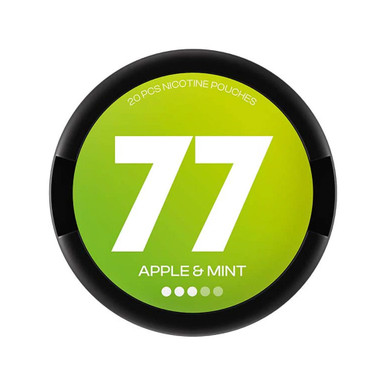
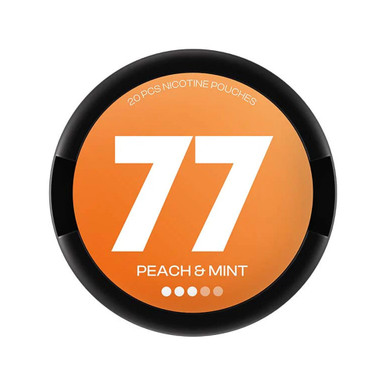
If you want the contrast on your own shelf rather than in theory, 77 Apple Mint at £39.90 puts apple next to mint in the same can, which is the most direct comparison available to you here, and Pablo Silver Edition Blueberry Peach Ice at £39.90 shows what a doubled fruit with a cooling element looks like as a piece of product design.
What our record cannot tell you
Being honest about the limits of the page matters more than filling it. We do not hold the intensity of this flavour, the balance of sharp against sweet, whether the leafy note survives into the body, whether there is any cooling at all despite the absence of the word in the title, or how the flavour compares against any other apple product we sell. None of that is in our system. Where a page elsewhere on this site states those things, treat it with the same scepticism you should treat this one: the honest position is that a shop knows what is on the label and on the invoice, and the rest is the customer's to judge.
The portion, the can and the lid
A pouch of this kind is a small sealed portion, soft, roughly the shape of a flattened jellybean. It is placed between the upper lip and the gum and left there. It is not chewed, it is not moved around the mouth and it is not swallowed. Settling one takes a second or two; most people find a position they prefer within the first few and then stop thinking about it.
The can is the standard squat cylinder the whole category uses — about the diameter of a jar lid, a few coins deep, with a press-on friction lid rather than a screw thread. The lid seats with a small click and comes off with a thumbnail. Cans in this format conventionally carry a shallow second compartment under the lid for used portions, which is the single most useful piece of design in the category and the one most customers notice last.
How long anybody keeps a portion in is a matter of personal habit and varies widely between people. We do not hold usage data for this product, and we would not publish guidance about it if we did, because how much of anything a person uses is not something a shop should be advising on. Disposal is short: a used portion goes in the catch compartment or straight into general waste. Not down a sink, not down a drain, not on the ground. That is the whole of it.
The format itself behaves the same way across essentially every can we sell. Whether you are holding this box, Nordic Spirit Tropical Mix at £4.49 or Klint Apple Mint at £36.90, the object in your hand works identically. What changes between listings is the flavour word, the declared figure, the pack arrangement and the price.
Carrying it, and whose rules apply where
The second thing worth reading slowly on this page is about where a can goes and who decides what happens there. This section is deliberately unhelpful in one specific way, and the reason for that is at the end of it.
The physical facts of carrying a can
A can of this size fits in a trouser pocket, a coat pocket or a bag pocket without much thought. It is light, and there is nothing in it to leak. It will pop open in a bag if something heavy sits on the lid, which is the main reason people end up with loose portions in a bag lining. A pack of ten is a different proposition: it is a box, it lives in a cupboard, and one can travels at a time.
The format needs no equipment, no charging, no refill and no maintenance. There is nothing to break and nothing to forget except the can. Those are physical facts about the format, stated plainly, and they are as far as we are going to go with them.
Why we will not tell you where you can use it
Customers ask us, regularly, whether they can use these on a train, in an office, in a hospital waiting room, in a school car park, in a cinema, in a restaurant, at an airport or on a plane. It is a completely reasonable question and we are not going to answer it, in either direction, and we would ask you to be suspicious of any shop that does.
The reasons are straightforward. Rules of that kind are set by the operator, the employer, the venue or the authority with control over the place — not by a manufacturer and certainly not by an online shop that has never seen the building. They vary between operators and between countries, they change without telling us, and they are often a written house policy rather than a matter of general law.
If a retailer tells you the format is fine everywhere, that retailer is guessing on your behalf with nothing at stake if it is wrong. You are the one who would be asked to leave, or spoken to at work, or pulled up at a border. The honest answer is: ask the operator, read the employer's policy, check the terms of the country you are travelling to before you travel, and treat the absence of a stated rule as missing information rather than as permission.
The practical consequences of that
Two things follow, and both are about planning rather than permission. A ten-can box is a stock purchase rather than a travel one — a box crossing a border is a different conversation from a single can in a pocket, and the rules on quantity are the destination's to state, not ours. And if you are unsure about a place, find out beforehand rather than afterwards.
We can tell you what is in the box, what it costs, what the declared figure says and what the flavour word is. Everything about where a product may be used belongs to whoever controls the place.
8mg on the can, as a number
This listing carries one declared strength: 8mg. Some listings on this site carry several; this one does not, so there is no strength choice to make here. What follows is information about what that number is and is not, and it is not advice. We do not suggest a figure to anybody, for any reason.
The figure printed on a can of this kind is a manufacturer's declaration about the product. It is a number on a label. It is not a measure of what any individual experiences, and figures are not reliably comparable between brands, because manufacturers do not all declare on the same basis. Two cans printed with the same number, made by different companies, are not a like-for-like pair — they are two separate declarations that happen to share a digit. This is the single most misunderstood thing in the category and the reason we keep repeating it across the site.
Our strength shelves sort listings into bands, and those bands follow the declared figures. This box sits on the medium-strength shelf, which currently runs to 135 listings — the largest of the three by some distance. Above it sit the strong shelf at 132 listings and the extra-strong shelf. A listing lands in a band because of the number its manufacturer declared, and for no other reason. The band is a navigational convenience. It is not a recommendation, not a ranking and not a scale of suitability for any person.
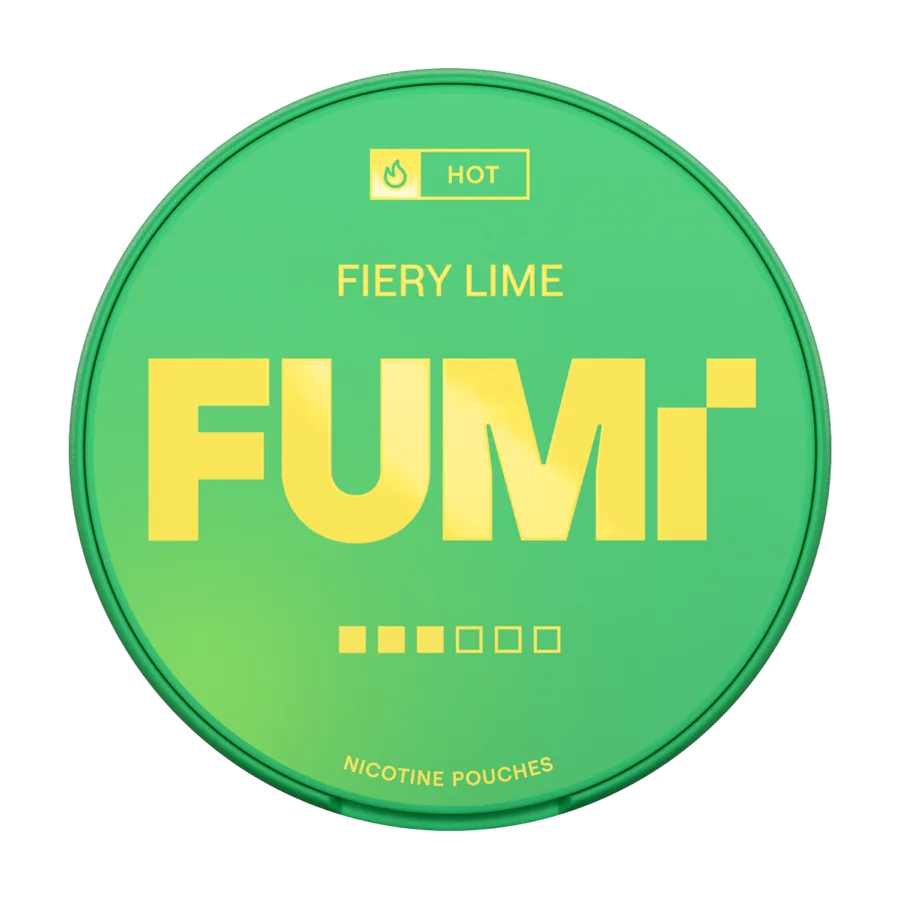
Where a listing offers a range, the shelf placement follows the range rather than any single variant, which sometimes produces results that look odd side by side. Fumi Fiery Mint is the same brand at the same £27.90 and reaches a different band because its own declared range goes higher. That is not a judgement about either product. It is arithmetic applied to two labels.
Sixteen cans wearing the same name
Fumi runs to sixteen listings with us, and the whole of the Fumi shelf sits at one price: £27.90 for ten cans, with no variation between flavours and, on the listings that offer more than one strength, no variation between strengths either. A flat price across a range is unusual enough to be worth naming, and it changes how you shop the brand. There is no cheaper option to settle for and no premium option to stretch to. The only question is which flavour word you want in the cupboard.
Within that range the flavours group into families. There is a bright fruit group, which this can belongs to along with Fumi Fiery Mango and Fumi Fiery Lime, both at the same £27.90. There is a darker group in Fumi Blackcurrant and Fumi Chilled Cherry. There is a mint presence. And there is Fumi Dark Spice, which names something warm and savoury rather than a fruit at all and is the obvious outlier.
The word Fiery appears on several Fumi listings and does not appear on this one. We do not hold a definition of what the brand means by it, so we are not going to tell you it means heat, or sharpness, or intensity. What we can say with confidence is that the absence of it from this title means this can is presented plainly, as a fruit and nothing else.
A second can for the cupboard
Ten cans of one flavour is a lot of one flavour. The most common thing people do about that is keep a second, deliberately different can alongside, and rotate. It is not a rule, and plenty of people happily work through a box of ten without wanting anything else, but if you are the sort of person who goes off a flavour by repetition it is worth knowing before you order.
For maximum contrast, a mint is the usual choice, because it is the furthest thing from a plain sharp fruit that this category offers. The Klint apple and mint can at £36.90 is the half-step version of that — the same orchard fruit with a mint behind it — and it is the most direct way to hear what a mint does to an apple without changing the fruit. For a fruit that is different in kind rather than in family, Denssi Tropical Fury at £39.90 is filed as an energy pouch rather than alongside this one, and its own listing sets out what it is — worth reading before you add it, since it is a different sort of product from this box.
For a near neighbour rather than a contrast, the apple-adjacent listings do the job: the SYX pairing mentioned earlier, the Cuba Black juice reading, and the 77 apple-and-mint can. Three apples, three different intentions, three different prices. That is a more interesting shelf than three cans of the same thing.
Keeping a can in usable condition
Storage is dull and it is the thing most likely to spoil a box you have already paid for. Ten cans will be in your house for a while, so it matters more here than it would with a single can.
Keep the box somewhere cool, dry and out of direct sunlight — a cupboard away from the hob, a drawer, a shelf in a cool room. Not a windowsill, not a radiator top, not a car glovebox in summer. Heat is the main enemy of a flavour note, aromatic character is the first thing to suffer, and the leafy part of a green apple is precisely the part most likely to fade.
Keep the lid on the can you have opened. The lid is a friction fit and it is there to keep the contents from drying out and the aroma from escaping. A can left open on a worktop overnight will not be as good in the morning. Press the lid home rather than resting it on top.
We do not hold a moisture format for this product — whether these are a drier style or a moister one is not recorded in our system, and the two behave differently in storage, with the moister styles being the ones people more often keep cool. Since we do not know which this is, the safe approach is the conservative one: cool, dark, closed, and use the box at a sensible rate rather than buying faster than you get through it. Check the printed can for anything the manufacturer says about storage, and treat that as authoritative over anything on this page.
One thing that is not about condition at all: keep the box out of reach of children and away from pets. That applies to every product in this category and it applies to a ten-can box more than to a single can, simply because there is more of it in the house.
Ten cans, one figure, one decision
The choices on this listing are unusually few, which is either a relief or a frustration depending on how you shop.
- Strength: there is no choice. This listing is 8mg and nothing else.
- Pack size: there is no choice. This listing is ten cans and nothing else. We do not offer a single can of it.
- Price: £27.90, the same as every other listing on the Fumi shelf.
- Flavour: this is the only decision in front of you, and it is the whole of the decision.
Which reframes the question. You are not choosing a specification; you are committing to a flavour ten cans at a time. If you would rather test a flavour before buying a box of it, the single-can listings elsewhere are the cheaper way to do it — the Velo peach can at £4.19 and the Nordic Spirit tropical mix at £4.49 are priced for that kind of experiment, though neither is this flavour or this brand.
On strength, we will say once more what we said above: we do not advise. If you are moving between listings and want to compare declared figures, the three strength shelves are the place to do that, and the numbers on them are declarations rather than measurements.
Ordering, the age check and delivery
Orders on this site go through age verification. This is an 18+ product and we sell it only to adults who already use nicotine. The check happens as part of the order process, and ID may be requested again at the door on delivery — the courier is entitled to ask, and entitled to decline to hand the parcel over if nobody of age is there to receive it. If you know you will be out, have it sent somewhere a named adult will be.
The price you see on this listing is the price of the ten-can box. Delivery, timescales and anything else about the mechanics of the order are set out in the site's own delivery and terms pages rather than here, because those change and a product description is the wrong place to pin them down. Stock is live at the time of writing and shows as available; if that changes between now and your visit, the listing itself is the authority rather than this paragraph.
A box of ten is a stock order in the ordinary sense. People who have settled on a flavour tend to reorder on a rhythm rather than when they run out, which is worth thinking about before the last can rather than after it.
How you got here, and where to go next
This page sits at the bottom of three different routes through the site, and knowing which one you took explains what else you are likely to want.
By brand, it hangs off the Fumi listing page with fifteen siblings. By strength, it sits in the medium band with 134 others. By flavour, it sits — for the reasons set out at the top of this page — on the tropical filter rather than on anything apple-shaped. Above all of those, the full catalogue holds everything we stock, which is the right starting point if you are browsing rather than looking for something specific.
Two brand pages are worth knowing about as landmarks even if you have not come through them: the Pablo range and the Cuba range are both large, both spread across several sub-ranges, and both structured differently from Fumi's flat sixteen. Between them they account for a large share of the fruit listings on the site.
Questions we actually get asked about this box
Why is a green apple filed under tropical?
Because that is the flavour category recorded against the listing in our system, and we have not overwritten it. It does not match the product name, and we have said so at the top of the page rather than hiding it. In practical terms it means the box appears on the tropical filter and not on any apple filter. If you are hunting for it by flavour, that is where it lives. We would rather explain a strange tag than quietly change one record and leave the rest of the catalogue inconsistent.
How many pouches are in each can?
We do not hold that figure. Our record carries the brand, the flavour word, the declared strength, the price, the pack size and the stock status, and a pouch count is not among them. The printed can is where that is answered. We are not going to state a number we cannot source, because a made-up count is worse than an admitted gap — you would plan a reorder around it.
Can I buy a single can instead of ten?
Not on this listing. This product is sold as a pack of ten cans for £27.90 and there is no single-can option recorded for it. If a single can is what you want, the site carries plenty of products sold that way at much lower unit prices, but they will be other brands and other flavours. Whether a single Fumi can exists anywhere else is not something our record tells us, so we cannot say.
Is 8mg strong?
We will not answer that, and the reason is not evasiveness. A declared figure is a manufacturer's declaration about a product, not a measure of anyone's experience, and it is not reliably comparable between brands. What we can tell you is where the number places the listing in our own filing: 8mg puts this box in our medium band. That is a navigational fact about our shelves. It is not a statement about how anybody will find it, and we do not recommend figures to people.
Does this one have a cooling element?
Our record does not say. What we can point to is the title: it reads Green Apple, with none of the words — Ice, Freeze, Frost, Chill — that the category conventionally uses to signal a cooling element. By that convention the fruit is meant to stand alone. That is an inference from a naming pattern rather than a fact from our system, and we have flagged it as such. The can itself is the authority.
Why does every Fumi product cost the same?
Because that is the price we hold for the range: £27.90 for ten cans, across all sixteen listings, regardless of flavour and, where a listing offers more than one, regardless of strength. We do not know the commercial reasoning behind it and will not invent one. From a shopping point of view the effect is simple — within this brand, price carries no information, so flavour is the only thing you are choosing between.
Can I use these at work or on public transport?
We are not able to tell you, and we would be wary of any shop that claims it can. Rules about where a product may be used are set by employers, venues, transport operators and the relevant authorities. They differ from one place to the next, they change, and they are frequently a matter of written policy rather than of general law. Ask whoever controls the place. Treat the absence of a stated rule as missing information rather than as permission.
How should I store a box of ten?
Cool, dry, dark and closed. A cupboard or a drawer away from heat, not a windowsill and not a car in summer. Keep the lid pressed home on whichever can is open. We do not hold the moisture format for this product, so we cannot tell you whether it is one of the styles people keep cool or one of the drier ones, and the conservative approach covers both. Whatever the printed can says about storage takes precedence over this paragraph.
Is it in stock right now?
Our record showed it in stock when this page was written, and the listing itself carries the live position. If the two disagree, believe the listing. We do not hold restock dates and would not publish a guess at one, because a guessed date is the kind of thing people plan around and then blame you for.
What is the difference between this and the other cans on the tropical shelf?
Mostly that this one is not tropical. The other 57 listings in that grouping include genuine tropical fruits — pineapple, mango and the rest — and this box is there because of a filing decision rather than because it belongs with them. On the shelf it will look like a near neighbour of those cans. On the palate, a sharp orchard fruit and a ripe tropical one have very little in common.
The legal position
This product is sold only to adults aged 18 or over who already use nicotine. We do not sell it to anyone under 18, and it is not intended for, aimed at or suitable for anyone who does not already use nicotine.
Nicotine is an addictive substance.
This is not a licensed stop-smoking medicine and is not offered as one. It is not intended for non-smokers, for people who do not already use nicotine, for under-18s, or for anyone who is pregnant or breastfeeding. Nothing on this page is medical advice, dosage guidance or a suggestion that any particular strength is suitable for any particular person or in any particular circumstance. Questions about nicotine and your health belong with a qualified professional, not with a product description.
Age verification applies to orders placed on this site, and ID may be requested on delivery. Keep this product out of reach of children and away from pets, and dispose of used portions in general waste.
Where that leaves the box
Ten cans for £27.90, one declared figure of 8mg, in stock, filed under a flavour tag that does not match the fruit on the front. Green apple is a sharp, bright, leafy reading rather than a soft sweet one, and it is a flavour whose identity depends on the fragile part rather than the sturdy part — which makes it a more interesting thing to commit ten cans to than a mint would be, and a slightly riskier one.
We hold no pouch count, no moisture format and no tasting note from the manufacturer, and we have said so at each point rather than filling the gaps with confident sentences. If this is not the can, the other fifteen Fumi listings sit at exactly the same price, and every product page on this site is written from the same records with the same gaps admitted in the same places.
More from Fumi
More medium strength pouches

More tropical pouches
Where this sits
Fumi Green Apple Nicotine Pouches appears in these categories. Browse them, or jump to something close.
You might also like