Home / Medium Strength / Nordic Spirit Frosty Mint Nicotine Pouches
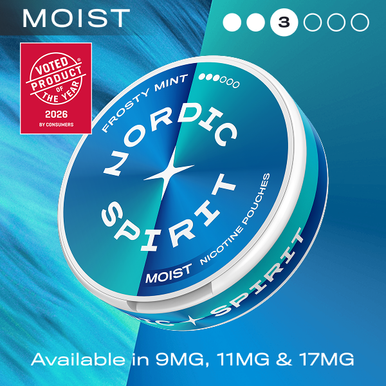
Nordic Spirit · 9mg–11mg
Read the full guide
Nordic Spirit Frosty Mint Nicotine Pouches
£4.49
✔ In stock — ready to ship
100% tobacco-free
Free over £20
Same-day dispatch
Secure checkout
This listing is Nordic Spirit Frosty Mint Nicotine Pouches at £4.49, held in two declared strengths — 9mg and 11mg — priced identically. It shows as in stock as this page is written.
Our flavour record for it contains one word: mint. Not spearmint, not peppermint, not a named variety, and nothing second alongside it. That single tag is what puts this can on the mint shelf and keeps it off every other flavour shelf on the site, and it is also the honest limit of what we can tell you about the flavour before you open the tin. The rest of this page is the object described, comparisons against cans we actually stock, and clear notes wherever we hold nothing.
The full guide to Nordic Spirit Frosty Mint Nicotine Pouches
4,955 words on how it eats, who it suits, how to serve it and what to put beside it.
Frosty Mint, and the single word our record uses for it
The tin itself is the category standard: a round, shallow can with a lift-off lid, one ring of pouches inside, and a shallow catch compartment built into the lid for used ones. The lid face carries brand, product name and declared figure — the three things you read when you are choosing between cans in a drawer without opening any of them.
The necessary note before anything else: this is an adult nicotine product, sold only to people aged 18 or over who already use nicotine. The full wording sits at the foot of the page.
Which mint? The naming problem on a shelf of 148
Our mint shelf holds 148 products, which makes it the largest flavour category we keep, and it is the one where names do the least useful work. That is worth unpicking, because it affects how you should read this listing.
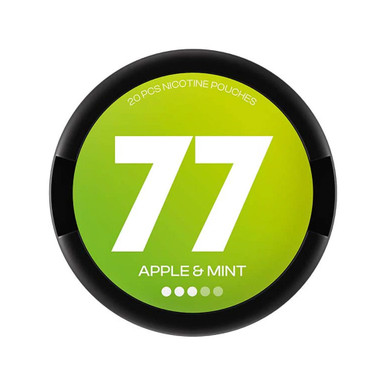
Across the category, mint cans are named in four rough ways. Some name a variety — spearmint, peppermint — and give you a genuine clue, as Velo Bright Spearmint at £4.19 and Edge Spearmint at £14.95 both do. Some name a temperature instead: Klint Arctic Mint at £36.90, SYX Cool Mint at £29.90, XQS Arctic Freeze at £39.90. Some name a quantity — White Fox Double Mint at £34.90 being the obvious example. And some pair mint with a fruit and let the fruit do the identifying, like 77 Apple Mint at £39.90.
This can is in the second group. Frosty is a temperature word. It tells you the maker wants the cold element noticed, and it tells you nothing whatsoever about which mint is underneath it. Our tag does not resolve that either, because our tag is the family and not the variety.
So the honest summary is this: you know from the name and the tag that this is a mint can with the cold foregrounded. You do not know from either whether the mint under it reads as the sweeter, softer, spearmint-ish sort or the sharper, more direct sort, and we are not going to decide that for you in a sentence that would look exactly like a fact. The can and the manufacturer's own labelling carry whatever fuller description exists.
Laid out as a table, the naming groups look like this. The right-hand column is the only genuinely comparable thing across makers — what the name commits to — because flavour itself is not standardised between brands and we are not going to pretend it is.
| Listing | Price we show | What the name commits to |
|---|---|---|
| Nordic Spirit Frosty Mint (this page) | £4.49 | a temperature, no variety |
| Velo Bright Spearmint | £4.19 | a named variety |
| Edge Spearmint | £14.95 | a named variety |
| SYX Cool Mint | £29.90 | a temperature, no variety |
| White Fox Double Mint | £34.90 | a quantity, no variety |
| Klint Arctic Mint | £36.90 | a temperature, no variety |
| XQS Arctic Freeze | £39.90 | two temperature words, no mint named |
| 77 Apple Mint | £39.90 | a fruit plus mint |
Most of the shelf, in other words, tells you the register and withholds the variety, and this can is typical rather than unusual in that. The price column spans nearly ten times over and that spread is mostly about how many cans a listing holds, not about what is in a pouch.
Why mint is the biggest shelf we keep
It is worth stating the number plainly, because it changes how you should browse. The mint shelf holds 148 products, comfortably the largest flavour category we keep and a good deal larger than the fruit shelves. Nothing about that gap is a statement on which flavours are better; it is simply how many cans in the catalogue carry each tag, and mint has been the default flavour family in this category for as long as the category has existed.
The practical effect is that browsing mint by scrolling does not work. A shelf of 148 is not a list you read, and because most of those cans name a temperature rather than a variety, the names will not narrow it for you either. Three approaches work better.
The first is to browse by brand and let the range do the narrowing: this brand's fourteen listings can be taken in at a glance, and the mint cans among them are a handful. The second is to browse by band, since the medium band cuts the shelf down considerably and is the band this can sits in. The third is to sort by naming group as the table above does — variety, temperature, quantity, fruit-plus-mint — which is crude but is the only cross-brand structure the naming actually supports.
What does not work is treating a flavour shelf as a ranking. Shelves on this site are filing, arranged so people can find what they already use, and position on one means nothing at all.
Cold as a taste rather than a temperature
One thing worth separating out, because it confuses people who are choosing between cans by name.
The cold in a mint can is a taste sensation, not an actual change in temperature. Nothing about a pouch is chilled, and a can kept in a warm room produces the same cooling impression as one taken out of a cold bag. Words like frosty, arctic and freeze are describing the register of a flavour, in the same way that a sharp flavour is not literally cutting anything.
That matters practically because the cooling register behaves differently from a fruit register over the life of a pouch. It tends to announce itself early and clearly, hold for a stretch, and then recede fairly plainly, so people generally find a cold can easy to read: you know where you are with it from the first minute. A complex fruit blend is often the opposite — slower to arrive and more ambiguous throughout. Neither is better. But if predictability is what you want from a can, the cold end of the shelf is where people tend to look, and this is a can from it.
As for aroma, a freshly opened cold-tagged tin gives up its cooling character immediately, more so than most fruit cans do. That is a general observation about the naming family rather than a measurement of this particular product, and we hold nothing product-specific on it.
The four axes, and what we can honestly put on them
Cool, sweet, sharp and bitter are the four words people reach for when describing a pouch flavour to somebody else. Rather than write a paragraph of confident tasting notes we have no basis for, here is what our record actually supports on each axis and what it does not.
| Axis | What our record supports | What we cannot say |
|---|---|---|
| Cool | Present. A mint tag and a temperature word in the name both point to it. | How far along the axis it sits. Intensity is not something our data holds. |
| Sweet | Nothing recorded. No fruit tag sits alongside the mint one. | Whether there is a sweet register underneath the cold. Mint cans vary widely. |
| Sharp | Nothing recorded. Sharpness usually travels with fruit, and there is no fruit tag here. | Whether the mint reads as sharp in its own right, which some do. |
| Bitter | Nothing recorded. | Anything at all. This axis is not something we have data on for any can. |
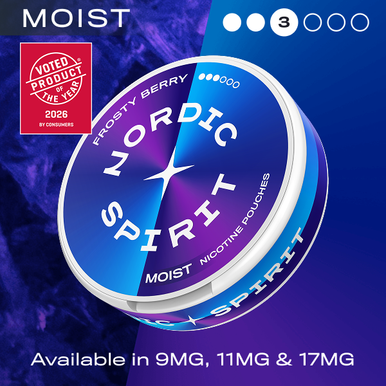
Read that table and you have the shape of the can as our records know it: one axis clearly in play, three unrecorded. Compare it with a two-tag can such as Frosty Berry at the same £4.49, where the berry tag puts a second axis into evidence, and the value of the tags becomes obvious. They are coarse, but they are the only cross-brand flavour information anybody can rely on.
The axes remain useful even where our data is thin, because they work in the other direction. If you already know this can, you can place it on all four yourself, and then use the same four words to choose the next one off the full catalogue with some idea of what you are getting into.
Pairing by what stays the same
Almost everyone who buys pouches regularly runs more than one can, because a single flavour uninterrupted stops registering after a while. The usual way to think about pairing is by contrast. A more useful way, when you are looking at a shelf of several hundred products, is to hold one thing constant and change everything else.
Same brand, same price, different family
The simplest rotation keeps you inside a range where the price does not move. Every Nordic Spirit can we list is £4.49, so a second can from this brand costs exactly what the first one did. The fruit end of it is the natural counterpart: Forest Berries, tagged berry and nothing else, listed at 6mg and 9mg; or the Blueberry can, which commits to a single named fruit rather than a family. Either one is as far from a cold mint can as this range travels.
The half-step is Frosty Berry, which our record tags mint and berry. Keeping the cold and adding fruit is a smaller change than dropping the cold entirely, and it is the pairing people tend to land on when they want variety without leaving the register they like.
And then there is Dark Fizz, the outlier of the range at the same £4.49. One thing to know before adding it: our record holds no flavour tag for it at all, so unlike every other can mentioned here you cannot see the family before you buy.
Same family, different maker
The second pattern keeps you in mint and changes who made it. This is where the naming groups above earn their keep, because a shelf of 148 mint cans is unnavigable without some way of sorting it. If you want a named variety rather than a temperature word, the Velo spearmint can at £4.19 is the nearest thing to this one on price and names its variety on the front. If you want the temperature foregrounded as this can does, Klint Arctic Mint and XQS Arctic Freeze are built on the same naming idea from other makers. If you want a mint that has been doubled up in the naming, the White Fox listing at £34.90 is the one that says so.
Same declared figure, different everything else
The third pattern is the one people use when they are settled on a figure and want the flavour to change completely. Both of this can's figures sit in the medium band, a shelf of 135 products, which is a large pool to draw from without moving bands at all. Within it you can go from cold mint to a fruit-and-cold construction such as Pablo Silver Edition Blueberry Peach Ice at £39.90, or to something that shares no vocabulary with this can whatsoever.
The deliberately unrelated can
Which brings up the last pattern, and the one that produces the most interesting second can: pick something with no overlap at all. Fumi Dark Spice at £27.90 and UBBS Cola Ice at £19.95 are both a long way from a mint can — one built on a spice idea, the other on a soft-drink naming with a cold word attached. A can like that will not blur into your main one, which is the entire point of a rotation.
A caution that applies to all four patterns: before reading anything into the prices above, check what each listing actually contains. Some are single cans and some are not, and a listing holding several cans is priced for several cans. The gap between £4.19 and £39.90 on this page is mostly a difference in the box.
Where this can sits in the brand's line
Fourteen Nordic Spirit products sit on the brand page, and the ones nearest this listing divide fairly neatly.
On the mint side there is this can, the plain Mint can, and Max Frosty Mint, which takes the same naming and attaches the Max prefix. On the fruit side there are Forest Berries, Blueberry and Max Foresty Berry at 17mg. Frosty Berry bridges the two with its double tag, and Dark Fizz sits outside the scheme entirely with no tag at all. Every one of them is £4.49.
About that prefix, since it appears twice in the range: Max is manufacturer naming attached to a larger declared figure on the label. It is a word on a can and a shelf on this site. It is not a rank, not a tier and not a destination, and nothing here suggests that a bigger printed number is a better can or somewhere anyone should be heading.
And about the brand name itself: Nordic is a trademark, not a geographical statement. We hold no origin information for this listing, and a word in a brand name is not evidence of where anything comes from.
9mg, 11mg, and why the band still says medium
Two listings, 9mg and 11mg, both £4.49. No premium attaches to the larger figure, so cost plays no part in the choice.
The figure is the manufacturer's declared amount per pouch, printed on their can. We publish it because it is on the label and because it is how an adult who already uses nicotine finds the product they use. It is not a measurement of ours, not a score, and not advice. We will not tell anyone which figure to choose and we do not describe any figure as suitable for any person or situation.
The bands on this site are filing labels. Both figures here fall in the medium band, so that is where the can is filed; larger figures appear on the strong shelf or the extra strong shelf. A can on a higher shelf is a can with a bigger number printed on it and nothing more than that. The shelves exist so people can find what they already use, which is the only job they do.
The tin in a pocket, the pouch in place
Format is the same across every can in this brand and broadly the same across the category, so this section applies well beyond this listing.
The can is small enough to close a hand around and flat enough to sit in a coat pocket without making a shape. The lid lifts with a thumb under the rim and presses back down; on a fresh tin it is stiffer than it will be later, and it settles to its working tension after a few openings. A lid that no longer holds shut has been crushed at some point, and the contents are better moved somewhere sealed than left in it.
A pouch is a small, soft, slightly flattened thing with rounded ends. It goes between the lip and the gum, most often the upper lip, laid along the gum line rather than bunched in one place. Most of the complaints people have about the format come down to placement: too far forward and it presses against the inside of the lip, too far round and it shifts when you talk. Once it is settled it needs no attention at all.
On how long to keep one in, we are not going to publish a number as guidance. The manufacturer prints their own on the can and that is the one to read. What can be said generally is that the flavour in any pouch is front-loaded, and that the cooling register in a cold-tagged can tends to be the most obvious thing early on and the most obviously gone later. A pouch kept in long past that point is largely texture.
Used pouches go in a bin, or in the lid's catch compartment until there is one. It holds a few, which covers an afternoon out; empty it the same day rather than leaving it, because there is no pleasant way to open a can that has been carrying used pouches for a week. Nothing goes down a sink, a drain or a toilet, and nothing is left anywhere a child or an animal could reach.
On how many pouches a tin holds: we do not hold that figure. Our record carries no pouch count and no cans-per-pack number for this listing, so the printed can is the only place to read it. We would rather point at the packaging than publish an estimate that would be read as a fact.
Carrying a can about
A small point, but one that comes up more often than flavour questions do: where the can goes when it is not on a shelf.
The tin is rigid enough to survive a coat pocket and round enough to roll in a bag, which is the main thing to plan around. Cans that end up loose in a rucksack tend to come out with the lid partly turned, and a lid that has been worked round by movement is not sealed even if it looks closed. An inside pocket, a zipped compartment or a small case keeps it shut and flat.
The other thing worth thinking about is which can you are carrying. If you keep two on rotation and both are from this brand, the tins are the same shape and size and the only difference is the printed face — which is easy to misread in a pocket. People who run a mint can and a fruit can together usually end up keeping them in different places for exactly that reason.
Whatever you carry it in, the same rule applies as at home: out of reach of children and animals, and not left anywhere that gets hot. A car glovebox in July is the worst of both.
Looking after it between uses
Close the lid properly every time — pressed down, not resting. That one habit does more for a can than anything else, because an imperfectly closed tin dries out gradually enough that nobody notices until the last third is duller than the first.
Keep it out of heat and direct sunlight. The three places cans reliably deteriorate are a car in summer, a sunlit windowsill and a shelf above a radiator, and they all do the same thing: warm the can through and let it cool, over and over. A drawer, a bag or a cupboard asks nothing of you and avoids all of it.
The fridge is a preference rather than a recommendation. It does no harm and our data says nothing about whether it changes anything. If you do it: lid shut, away from open food, and out of reach of children and pets — the last of which applies wherever a can is kept, opened or sealed.
And buy at the rate you get through them. A can in circulation is a better can than one that has stood open for months. That is a practical observation and not a statement about shelf life; the printed date on the packaging is the authority there.
Ordering, ID and delivery
Choose 9mg or 11mg, add the can, and fill out the rest of the order from everything we stock if you want to. Mixing brands, flavours, price points and declared figures in one basket is completely ordinary — running two or three cans in rotation is what most regular buyers do, and there is no reason to split an order to do it. If you would rather browse by maker, the Pablo shelf and the Cuba shelf are the two deepest alternative ranges we hold.
Age verification applies to every order without exception. This is an 18+ product sold to adults who already use nicotine. Age is checked at checkout, and ID may be requested on delivery; if an adult at the address cannot produce it when asked, the parcel will not be handed over. A £4.49 can is treated exactly as a large order is.
Stock is live and this page is not. The listing reads as in stock at the time of writing; the listing itself is the current answer if that has changed by the time you read this.
Three ways back to this page
By brand: the Nordic Spirit shelf shows all fourteen listings we hold from this range at once, which is the quickest way to compare the line-up. By flavour: the mint shelf, though at 148 products it is a long scroll, and a can with two tags will meet you on the berry shelf as well. By strength: the medium band, which holds this can and 134 others.
If none of those suits, the shop index lists everything in one place, including the cans that carry no flavour tag at all and therefore never appear on a flavour shelf.
Things people ask about this can
Is this spearmint or peppermint?
We do not hold that detail. Our flavour record for this product says mint and stops there, and the product name uses a temperature word rather than a variety name. If a named variety is what you are after, some cans state it on the front — the spearmint listings on this page do — and the packaging on this one is the place to look for whatever the manufacturer specifies.
How cold is it?
Not something we can quantify. The mint tag records that a cooling element is there and the name foregrounds it, but intensity is not in our data and it is not comparable across brands in any reliable way. Anyone who tells you exactly how cold a can is, is describing their own experience of it rather than a specification.
What is the difference between this and Frosty Berry?
A recorded one: that can carries a berry tag alongside its mint tag, and this one carries mint alone. Both are listed at 9mg and 11mg and both are £4.49, so the flavour record is the only thing separating them on our side. In plain terms, one is a cold mint can and the other is a cold fruit can.
How many pouches are in the can?
We do not publish a count, because our record does not hold one. There is no cans-per-pack figure either. The printed can carries that information and is the reliable source for it; an estimate from us would read as a fact and would not be one.
Is the 11mg more expensive?
No. Both listings are £4.49, and so is every other can in this range including the 17mg one. Nothing about the declared figure changes the price within this brand, which is unusual enough across the wider shelf to be worth knowing.
Which figure should I choose?
Not a question we will answer. We publish the declared figures that are printed on the cans and leave the decision to the adult buying. We do not advise on strength, do not suggest moving between figures, and do not describe any figure as appropriate for anyone.
Does it lose its cold before it loses its flavour?
The cooling register in cold-tagged cans generally does recede over the life of a pouch, and many people notice it going before anything else. That is an observation about how these flavours behave in general, not a measurement of this product, and our record holds nothing product-specific about it.
Can I take a pouch out and put it back in later?
It is a common question and the honest answer is that we do not publish guidance on it. Whatever the manufacturer says on the can is the instruction that applies. What can be said about the format is that a pouch is on its flavour curve from the moment it goes in, so one that has been out for a while is not starting again; and that the catch compartment in the lid is designed for finished pouches rather than as a place to park one you intend to reuse.
Is it sold in a multi-can pack?
Not here. This is a single-can listing at £4.49 with no cans-per-pack figure in our record. Some listings on this page are multi-can products and are priced for what is in the box, which is why prices across the shelf vary so widely without saying much about the pouches themselves.
How does this differ from the plain Mint can in the same range?
On our side, by the name and by the declared figures on each listing. Both carry a mint flavour tag, so the tag does not separate them; the difference in the names is that this one puts a temperature word in front. What relationship the manufacturer intends between the two — whether one is a colder version of the other or a different flavour entirely — is not recorded in our data, and we are not going to assert it. Each listing shows its own figures and price.
And how does it differ from Max Frosty Mint?
That listing carries the Max prefix, which is manufacturer naming attached to a larger declared figure printed on the can, and its own page shows the figure and the shelf it falls on. This listing is 9mg and 11mg in the medium band. The price is £4.49 on both. The prefix is a name and a number, not a rank, and nothing here presents it as a step up from anything.
Why is this so much cheaper than most cans on this page?
Because the prices on this page are attached to listings, not to pouches, and the listings are not all the same thing. This is a single can at £4.49. Several of the others are multi-can listings priced for what is in the box. Until you have checked what a given listing contains, a price comparison across brands tells you very little — which is why we keep saying so rather than putting a price table front and centre.
Do you restock this regularly?
We do not hold restocking schedules and would rather not guess at one. What the listing shows is the current position: in stock as this page is written. If a figure is unavailable when you look, the other cans in the range each show their own position on their own pages, and the brand shelf is the quickest way to see all of them together.
Where is it made?
We do not hold origin information for this listing and will not infer any from the brand name, which is a trademark rather than a place. Whatever the manufacturer states about origin will be printed on the packaging along with the rest of the technical detail.
Can I order several different cans together?
Yes, and most people do. There is no restriction on mixing brands, flavours or declared figures in a single basket, and the rotation patterns described above are the ordinary way people buy rather than an unusual one.
Will I need to show ID?
Possibly. Age is verified at checkout and ID may be requested on delivery; an adult at the address has to be able to produce it, or the delivery will not be completed. This is standard on every nicotine product we sell and does not change with the size of the order.
Do you publish ingredients or technical information?
No. We publish what our product record holds — name, brand, price, declared strengths, flavour tag and stock status — and nothing else. Ingredient lists, specifications and any other printed information belong to the manufacturer and appear on the can and its packaging. Where our record is silent, this page says so instead of filling the space.
Compliance and legal wording
Nicotine is an addictive substance.
This product is sold only to adults aged 18 or over who already use nicotine. We do not sell to under-18s. Age is verified at the point of purchase, and ID may be requested on delivery; where it is requested and an adult cannot produce it, the delivery will not be completed.
Nordic Spirit Frosty Mint Nicotine Pouches are not a licensed stop-smoking medicine and are not authorised, sold or intended as one. This product is not intended for non-smokers, for people who do not already use nicotine, for anyone under the age of 18, or for anyone pregnant or breastfeeding. Nothing on this page is medical advice, and nothing on it should be taken as encouragement to begin using nicotine or to move to any particular declared figure.
Keep out of reach of children and animals. Every factual statement above — the name, the brand, the £4.49 price, the 9mg and 11mg declared figures, the mint flavour tag and the stock position — is taken from our own product record for this listing. Where the record holds nothing, this page says so rather than estimating. The can and the manufacturer's labelling are authoritative for anything printed on the packaging.
Summing up
Frosty Mint is the cold mint can in a range where every listing costs £4.49, offered at 9mg and 11mg with no price step between them, and filed on the brand page, the medium band and the mint shelf. Our record gives it one flavour word and a temperature word in its name, which is enough to tell you the family and not enough to tell you the variety — so we have said that plainly rather than writing around it. Add fruit to the same idea and you are at Frosty Berry; take the cold away entirely and you are at Forest Berries; everything else we stock is one step away at the main index.
More from Nordic Spirit
More medium strength pouches
More mint pouches
Where this sits
Nordic Spirit Frosty Mint Nicotine Pouches appears in these categories. Browse them, or jump to something close.
You might also like