Home / Extra Strong / Cuba Black Tropical Fruit Nicotine Pouches
Cuba · 43mg
Read the full guide
Cuba Black Tropical Fruit Nicotine Pouches
£39.90
✔ In stock — ready to ship
100% tobacco-free
Free over £20
Same-day dispatch
Secure checkout
This page is the description for Cuba Black Tropical Fruit Nicotine Pouches. The price is £39.90. There is one declared strength on this listing, 43mg, and the flavour is tropical. We list it as in stock at the time of writing. Those are the facts we hold, and everything below is either a description of the object, a comparison with other cans on our shelves, or a plain admission that we do not hold a particular piece of information.
That last category matters more than people expect. It is easy to write a thousand words about a can of pouches by inventing detail — a pouch count, a weight, a history, a place. Where our data is silent, this page says so and points you at the printed can.
The full guide to Cuba Black Tropical Fruit Nicotine Pouches
5,438 words on how it eats, who it suits, how to serve it and what to put beside it.
Cuba Black Tropical Fruit: what this listing actually covers
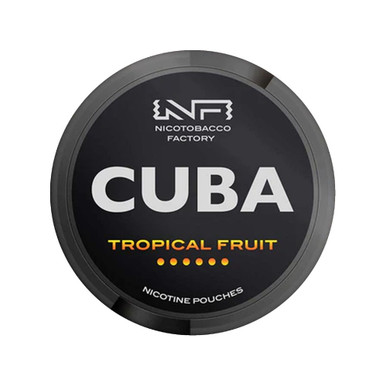
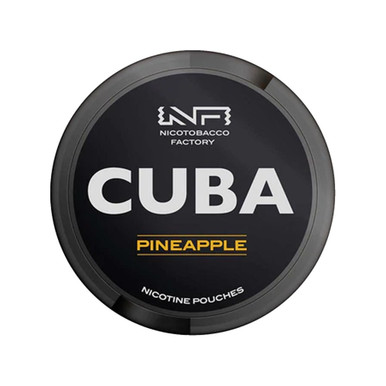
The object itself is a pouch tin: a shallow, round, lidded container that fits inside a closed hand and drops into a coat pocket without making a shape. The lid lifts off and presses back down. Printed on that lid you get the brand, the line, the flavour and the strength figure, which is the one piece of printing that earns its place, because if you keep more than one can in the house the top of the lid is the only part of the can you ever look at.
A note on the name before anyone reads something into it. Cuba is the brand. Black is the line within that brand. Tropical Fruit is the flavour name. None of those three words tells you anything about where the product is made, and we hold no information at all about where it is made, so this page will not be making a guess at it. A brand name is a brand name.
One more piece of housekeeping up front: this is an adult nicotine product, sold only to people aged 18 or over who already use nicotine. The full compliance wording sits in its own section near the bottom of this page, and it is worth reading rather than scrolling past.
Tropical, taken purely as a taste
The flavour list we hold for this can has exactly one entry on it, and that entry is tropical. It is not a list of named fruits. We are not going to invent one, because the moment we start writing "pineapple, mango and a touch of passionfruit" we are asserting a composition that we cannot see on our data and that the manufacturer has not published to us. If the can breaks the flavour down further, the can is where you will read it.
What we can describe honestly is the flavour family the name puts you in. Tropical, as a flavour-industry category, is the warm, sweet, soft-edged fruit register rather than the sharp, cold, orchard-fruit one. It reads as yellow and orange rather than red or purple. Against a berry pouch, a tropical pouch tastes rounder and less tart; against a citrus pouch, it tastes sweeter and less astringent; against a mint pouch, it does not really compare at all, because they are answering different questions.
The aroma off an opened can is the same thing at lower volume. Take the lid off and you get the flavour before you get anything else, in a concentrated form, because the can has been sealed on it. That first smell is usually a stronger impression of the flavour than the pouch itself gives, which is normal for the format and not a sign of anything.
Tropical also fades in a recognisable way. Sweet fruit flavourings tend to go together, so what you notice is not one component dropping out but the whole taste getting quieter until it is gone, the way chewing gum flavour goes.
If you want to see the width of the category rather than one can's reading of it, the tropical flavour shelf runs to 58 listings, which spreads across single-fruit cans, mixed-fruit cans and cans that put a cold edge on top of the fruit. This one is a mixed tropical rather than a single named fruit, which is the most common way the category is done and the least specific.
43mg on the lid: what the number is and what it is not
This listing carries one strength figure, 43mg, at £39.90. There is no second variant to choose between on this page. The figure is the nicotine content the manufacturer declares, printed on the can, and reproduced by us exactly as given to us. We do not round it, convert it or re-express it.
It is worth being precise about what that figure is. It is a declaration — a number the manufacturer prints, which we pass on accurately so that someone who already knows the figure they are looking for can find it without opening every page on the site. It is information. It is not a rating, not a score and not a recommendation. We are not in a position to advise anybody on what strength is appropriate for them, and we do not.
Read purely as arithmetic, 43 is a larger number than the figures printed on most cans we stock, which is why this listing files under our Extra Strong shelf rather than one of the others. That shelf currently holds 98 listings. The bands we use — extra strong, strong, medium — are a filing system for the catalogue, not a ladder anyone is expected to climb. We also run a Strong shelf and a Medium Strength shelf, and a can sits on one of them because of the number printed on it, not because of anything we think about it.
The important caution is about comparing figures across brands. Different manufacturers declare against different pouch formats and express the figure in different ways, so two cans showing similar numbers are not automatically equivalent objects. We publish what each manufacturer publishes. We do not normalise between them, we do not hold the underlying technical detail that would let anyone do so honestly, and we would rather say that than produce a comparison table that looks authoritative and is not. For any specific can's figure, that can's own page and that can's own labelling are the sources.
The pouch, the tin and the catch lid in practice
A nicotine pouch is a small, sealed, soft pouch that is placed in the mouth, between the lip and the gum, and left there. It is not chewed and it is not swallowed. That is the whole of the format, and it is identical across every product on this site regardless of brand, line, flavour or figure on the lid.
The physical routine is unremarkable. Lift the lid, take one out, press the lid back down. The pouch goes in at the front of the mouth, most often up under the top lip, and the lip holds it in place. It can be moved from one side to the other if it is sitting somewhere uncomfortable, and if it is uncomfortable everywhere, taking it out is the obvious answer — comfort is individual and nothing about this format requires anyone to persist with a pouch that does not suit them.
How long people keep one in varies so widely that publishing an average would mislead rather than help. Some take one out after a few minutes; others leave one in far longer. The reason most often given is simply that the taste has gone, which on a sweet fruit flavour is a fairly clear moment. We do not set a time, we cannot tell you what yours should be, and any usage guidance printed on the can is the guidance to follow.
The lid is the other half of the design and the part people underrate. Pouch tins of this kind carry a catch compartment in the top — a shallow chamber walled off from the main body where the unused pouches sit. Used pouches go in there. It is practical rather than clever: a used pouch has somewhere to go when there is no bin within reach. It fills up. Empty it more often than feels necessary, because a lid that stops seating properly is the start of most of the storage problems discussed further down this page.
Final disposal is general waste — a bin, not a sink, not a toilet, not a car window. The empty tin is plastic and goes with household recycling to whatever extent your local authority accepts that plastic, which varies by council and is not something we can answer for your postcode.
On portion size: we do not hold the pouch dimensions or the format designation for this product, so this page will not state whether these are slim, regular, mini or anything else. The can carries that. What is safe to say is that every pouch in a given can matches every other one in it, so after the first you know what the rest of the tin is like.
Forty-three milligrams on a shelf of ninety-eight: how this can sits against its neighbours
This is the section most people came for. The question is not "what is this can like" but "what is it like compared to the others you sell", and that is a question about a catalogue rather than about a person, which is why we can answer it at length.
What "the same strength" means on our shelves, honestly
Our strength shelves are bands, not exact matches. When a can lands on the extra-strong band alongside 97 other listings, it means the declared figure on each of those cans was high enough to put it in that band. It does not mean all 98 print the same number, and it certainly does not mean all 98 are interchangeable objects. If you want the precise figure for any one of them, the only correct way to get it is to open that product's page and read the figure we have published there from its manufacturer, exactly as we have published 43mg here.
That is an unsatisfying answer, and we would rather give it than the satisfying wrong one. We will not write "this is the strongest can we sell" across brands, because the data underneath that sentence does not support it. What we can do is lay out the shape of the shelf in terms of brand, line, flavour and price.
The flat-price structure of the Cuba Black line
The first thing that stands out when you put this can next to its immediate neighbours is that the price does not move. This can is £39.90. So is Cuba Black Apple Juice, so is Cuba Black Cherry, so is Cuba Black Cola, and so is every other Cuba Black listing we carry. Across the line, £39.90 is simply what the listing costs.
That has a practical consequence: price drops out of the decision entirely. You are not weighing a flavour you fancy against a cheaper one you fancy less. The only variables left are the flavour name on the lid and the figure declared on each individual page. Most brand shelves on this site have some price spread across them, and having none makes the Cuba Black listings unusually simple to compare.
The price spread outside the line
Step outside Cuba and the picture changes completely, and this is where a shelf comparison gets genuinely informative. Cans that also file under fruit flavours on our site run from a few pounds to the high thirties, and the spread is not subtle.
At the low end, Pablo Exclusive Banana Ice is listed at £3.85 against this listing's £39.90 — and Nordic Spirit Tropical Mix sits at £4.49 while carrying the same broad tropical flavour idea as the can on this page. Those two are the clearest illustration that a price on a pouch listing is telling you about what the listing contains as much as about the product inside it, and that comparing a £3.85 line to a £39.90 line as if they were the same purchase is a mistake.
In the middle, Fumi Fiery Peach is £27.90 and SYX Apple Kiwi and Elf Bar Pineapple are both £29.90. Of those three, the Elf Bar listing is the closest in flavour intent to this one — pineapple is squarely inside the tropical register — while SYX Apple Kiwi sits on the sharper, greener edge of fruit and Fumi Fiery Peach is a stone-fruit reading with a warm name on it. Killa Apple is £33.50 and is another orchard-fruit can rather than a tropical one.
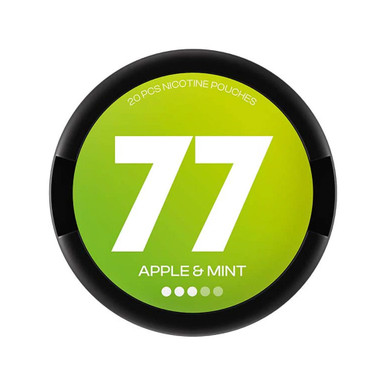
At the top of the range, level with this listing at £39.90, you find 77 Apple Mint, which puts a fruit and a mint together rather than committing to either, and Maggie Original Jamaican Cherry Tonic Wine, which is the most unusual flavour description on this part of the shelf and nothing like a straight tropical fruit. Siberia Mini is £39.50, fifty pence under, and is the one nearby listing here whose name signals a cold register rather than a fruit one.
There is one more listing worth naming for completeness, with a caveat attached. Denssi Tropical Fury Energy Pouches is £39.90 and carries a tropical flavour name, so it appears alongside this can when you browse by flavour. It is a differently-labelled product from a different brand, and what is in it and what it declares are set out on its own page rather than assumed from this one. We mention it because it will show up next to this can in a flavour listing and it is better that you know why than that you guess.
Reading a shelf comparison sensibly
The honest summary: within the Cuba Black line, comparison is easy, because the price is fixed and only the flavour changes. Across brands, it is mostly about flavour family and price, because those are the two things we hold for everything. Comparison on declared figures across brands we decline, for the reasons above — and comparison on how one can suits a person is not something a shop is in a position to offer at all. If you would rather run it yourself, the full product listing is the place to start.
Where this can sits inside the Cuba range
The Cuba shelf holds 47 listings, one of the larger single-brand shelves we run. Those 47 split across lines — Black is one — and within the Black line the pattern is a broad flavour spread at a single price point. Tropical Fruit occupies the mixed-fruit position in that spread: not one named fruit, which distinguishes it from most of the line's other fruit entries, and not a mint or a cold flavour, which distinguishes it from the line's other wing.
Around it on that fruit half sit the single-fruit cans. Cuba Black Blueberry at £39.90 is the dark-berry entry and about as far from a tropical reading as the fruit half gets. Cuba Black Banana Hit, same price, is the closest single fruit to this can's register — banana belongs to the same soft, sweet, yellow-fruit family that "tropical" draws on — and is the obvious one to try if you want the tropical idea narrowed to one named thing. Cuba Black Apple Juice, also £39.90, goes the other way: orchard rather than tropical, and named after the juice rather than the fruit, which tells you something about the sweetness it is aiming at.
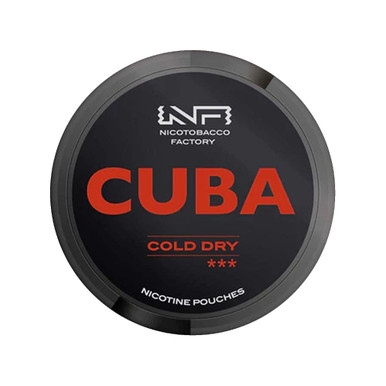
The non-fruit end of the line is where the range stops resembling this can at all. Cuba Black Cola at £39.90 is the soft-drink flavour rather than a fruit one, and Cuba Black Cold Dry at the same price is named for a cold, dry character rather than for any fruit at all — it is the furthest point from Tropical Fruit inside the line, and people who keep both are usually keeping them for completely different moments of the day rather than as alternatives to each other. Cuba Black Cherry, £39.90, sits between the two wings: a named fruit, but a darker and sharper one than anything tropical.
Everything else the brand does is visible on the Cuba brand page, and each listing there carries its own declared figures on its own page. Do not assume a figure carries across from this listing to another one in the same line — check each.
What people keep alongside a tropical can
The pattern in repeat orders is rarely one can bought over and over. It is two or three kept at once, with the person reaching for whichever they fancy — a flavour you have had continuously for a fortnight stops registering the way it did on the first day. What follows is what tends to sit alongside this can, described only through flavour, brand and price.
The commonest second can is a contrast rather than a near-match. If the can in your pocket is a sweet mixed fruit, the thing that stays interesting next to it is usually something cold or something dark, not another sweet fruit. the Cold Dry can from the same line does that job at the same £39.90 without leaving the brand, and the Siberia Mini listing at £39.50 does it from a different brand entirely at almost the same price.
The second commonest is a narrower version of the same idea. Somebody who likes tropical often wants to know which specific fruit inside it they are actually responding to, and the way to find out is to put a single-fruit can next to the mixed one. the Elf Bar pineapple listing at £29.90 and the Banana Hit can at £39.90 are the two most direct tests of that, and the Pablo Exclusive banana listing at £3.85 is the cheapest way to try the same question from another brand's angle.
The third pattern is simply price-driven. Not everybody wants two listings at £39.90 sitting in a drawer at once, and the mid-priced fruit cans are where that lands: the Fumi peach listing at £27.90, the SYX apple and kiwi can at £29.90, and the Killa apple listing at £33.50 all give you a different fruit for less than a second Cuba Black listing costs. the Nordic Spirit tropical listing at £4.49 is the least expensive way to keep a second tropical option in the house at all.
Two further listings come up often enough to name. the 77 apple and mint can at £39.90 is for people who want a fruit that has a cold edge built into it rather than keeping a separate cold can, and the Maggie cherry tonic wine listing at £39.90 is the one people reach for when they specifically want the second can to taste nothing like anything else in the drawer.
If none of those is the shape of what you are after, the tropical listings and the Pablo shelf are both reasonable places to browse sideways from here, and everything we file under Cuba covers the rest of this brand.
Dry pouches, moist pouches, heat and light: keeping a can usable
This is the other section we want to spend real time on, because it is the one that actually changes whether a can you have paid for is worth opening in three weeks, and because almost nobody writes it down.
What condition means on a pouch
Pouches come out of a sealed can in a particular physical state, and that state changes once the seal is broken. In practical terms a pouch is either fairly dry to the touch or noticeably moist, and most cans sit somewhere along that line. That is a description of how the object feels between your fingers and nothing else — anything beyond the feel and the taste is not information we hold and not something this page will speculate about.
The taste consequence we can state, because taste is observable. A can that has dried out tastes flatter than the same can did when it was opened, and sweet fruit flavours show this earlier than cold ones do, which makes a tropical can one of the more obvious places to notice it.
The lid is the whole storage strategy
Ninety per cent of keeping a can in good condition is putting the lid back on properly, straight away, every time. Not resting it on top. Not leaving it a quarter-turn off. Pressed down until it seats.
This is where the used-pouch compartment becomes a storage issue rather than a convenience. Once that chamber is over-full, the lid stops closing flush, and a lid that does not close flush is a can that is drying out slowly whether or not it looks closed. Emptying the catch lid is not housekeeping for its own sake — it is the thing that keeps the seal working.
Heat, cold and the places people actually leave cans
Room temperature, out of direct sunlight, is the whole of the guidance. A drawer, a cupboard, a bedside table, a bag — somewhere that does not get hot and does not get bright.
The places that cause problems are predictable. A car is the worst: a dashboard or a door pocket in summer gets far hotter than a room does, and cars are where most complaints about a can having gone flat actually originate. A windowsill is second, because direct sun does the same thing more slowly. A bathroom shelf is third, for the opposite reason — steam and temperature swings are not what a sealed tin wants either.
Cold is the more common question. Some people keep cans in the fridge. We do not hold manufacturer storage instructions for this product, so we are not going to say refrigeration is recommended or that it is not. If the can's own printing gives storage guidance, that outranks anything on this page.
Rotation, and buying more than you will get through
The practical consequence is a buying one. A sealed can keeps its condition far better than an opened one, so if you keep several at a time, open one and leave the rest sealed rather than running four half-used tins in a drawer. It also argues against over-buying a flavour you have not tried: if tropical turns out not to be the register you wanted, a stack of unopened £39.90 listings is an expensive way to find out. That is one reason we list lower-priced options like the £4.49 Nordic Spirit tropical can and the £3.85 Pablo banana listing alongside the larger ones.
The things we will not tell you about condition
We do not hold a shelf life, a best-before period or a manufacturing date for this product, and we are not going to estimate one. If there is a date on the can, that date is the answer and this page is not. We also cannot tell you whether a can that has been open for a month is still fine, because "fine" is a judgement about your own experience of it rather than a fact about the object. If a can smells or tastes wrong to you, the sensible thing is not to use it, and that is as far as we will go.
One strength, one price: what there is to choose between here
This listing does not offer a choice. There is a single declared strength, 43mg, at a single price, £39.90, and we hold no can count for the pack, so there is no larger or smaller bundle to weigh up either.
The decisions that do exist are one step out from here. A different flavour at the same price inside the same line, where everything runs at £39.90 and only the lid changes. A different brand at a different price, where the range runs from £3.85 up to £39.90 across the listings named on this page. Or a filter by declared figure, using our Extra Strong shelf and its 98 listings, the Strong shelf or the Medium Strength shelf.
What we will not do is tell you which to pick. We have no basis for it, and a shop steering a person toward a particular nicotine strength is a shop doing something it should not. The bands exist so that somebody who already knows what they are looking for can find it in one click, and for no other reason.
Ordering, delivery and the age check
Ordering is the same as anything else on the site: the listing goes in the basket at £39.90, and you check out. We list this product as in stock at the time of writing, though stock moves and the listing page is always more current than a description written before you arrived.
Age verification is not a formality. This is an age-restricted product, sales are to over-18s only, and ID may be requested on delivery. If a check is requested and cannot be satisfied, the item does not get handed over — worth knowing before the driver is at the door, and worth making sure the name on the order matches the name on the ID. Do not order on behalf of anyone under 18; there is no version of that sentence with an exception in it.
On delivery timing, packaging and courier arrangements, our checkout and delivery pages carry the current position. Those things change, and a product description is the wrong place to pin them down.
Finding this can again, and finding your way sideways from it
Three routes lead back to this listing, and they correspond to the three ways people think about pouches. By brand: the Cuba brand page collects all 47 of the brand's listings we carry in one place, which is the route for someone working through a brand's flavours. By flavour: the tropical flavour shelf and its 58 listings suits someone who knows the taste they want and does not mind whose name is on the lid. By declared strength: the extra-strong band, 98 listings, is the route for someone filtering on the number — a filing bracket, as set out above, rather than a statement that its contents are equivalent.
Beyond those three, the whole catalogue in one place is there if you would rather scroll than filter, and the Pablo listings and the Strong band are the adjacent shelves people most often move to from here.
Questions we get asked about this can
Does the name mean these come from Cuba?
No. Cuba is the brand name and Black is the line name within it. Neither word tells you where the product is made. We hold no country-of-origin information for this listing at all, so we are not going to state one, imply one or guess at one. If origin matters to you, the printed can and the manufacturer's own labelling are the places that would carry it, and they outrank anything we could say.
How many pouches or cans do I get for £39.90?
We do not hold a pouch count or a can count for this listing. Our product data has no figure in either field, and we are not going to invent one to make the page look more complete. The printed packaging carries the count. We know that is a frustrating answer on a listing at this price, and it is still better than a made-up number.
Is this available in any strength other than 43mg?
Not on this listing. Cuba Black Tropical Fruit is published here with one declared figure, 43mg, and one price, £39.90. Other Cuba Black flavours are separate listings with their own declared figures on their own pages — do not assume 43mg carries across the line. The cola listing, for instance, is its own page with its own published figure, and reading it there is the only reliable way to know.
Which fruits are in "tropical"?
The flavour data we hold for this product says "tropical" and nothing more specific. It is a mixed tropical rather than a single named fruit, but we have not been given the breakdown and we are not going to construct one. The can may list it. If you want a named single fruit instead of a blend, the Elf Bar pineapple listing at £29.90 is the most direct tropical example we carry.
Is 43mg here the same as 43mg on another brand's can?
Not necessarily, and we would not claim it is. Manufacturers declare against different pouch formats and express figures in different ways, so the same printed number on two different cans is not proof of two identical objects. We publish each manufacturer's declaration as given and do not convert between them. We do not hold the technical detail that would let anyone do that honestly, and we would rather say so than produce a comparison that looks precise and is not.
How long should I keep one in?
We cannot tell you. The range across people is wide enough that any average we published would be misleading, and we are not in a position to advise anyone on their own use. The guidance that counts is whatever the manufacturer prints on the can. What we can say descriptively is that the most common reason people give for taking one out is that the taste has gone, which on a sweet fruit flavour is usually a fairly clear moment.
Can I keep the can in the fridge?
We do not hold manufacturer storage instructions for this product, so we are not going to recommend refrigeration or rule it out. Some people do it. If the can itself carries storage guidance, follow that rather than anything on this page. What we will say generally is that heat and direct sunlight are the two conditions people most often regret — a car dashboard in summer is where most complaints about a can having gone flat actually start.
What do I do with a used pouch?
The lid has a catch compartment in the top, separate from where the unused pouches sit, and that is where a used one goes when there is no bin to hand. Empty it regularly. An over-full compartment stops the lid seating flush, and a lid that does not seat flush is the main way an opened can dries out. Final disposal is general waste — a bin, not a sink, not a toilet.
Can you recommend a Cuba Black flavour for me?
No, and not out of unhelpfulness. Taste is personal and we do not know yours. What we can do is describe where each flavour sits: the blueberry can is the dark-berry end, the banana can is the closest single fruit to this one, the apple juice can is the orchard-fruit reading, and the cold dry can is the furthest point from all of them. All are £39.90.
Is it in stock?
It is listed as in stock at the time this description was written. Stock changes, and the live listing page is always more current than a body of text written in advance. If it shows as unavailable when you arrive, the tropical shelf is the sensible place to look for something in the same flavour register while it is out.
The legal position, stated plainly
This is an age-restricted product and the following is not small print.
- 18+ only. Cuba Black Tropical Fruit is sold exclusively to adults aged 18 or over who already use nicotine products. We do not sell to anyone under 18 under any circumstances, and we do not sell to adults who do not already use nicotine.
- Nicotine is an addictive substance. That is a statement of fact about what is in this can, and it applies to this product exactly as it applies to every other nicotine product on this site.
- This is not a licensed stop-smoking medicine. It is not authorised or intended for that purpose, and it is not intended for non-smokers, for anyone who does not already use nicotine, for under-18s, or for anyone who is pregnant or breastfeeding.
- ID may be requested on delivery. Age verification applies at checkout and can be repeated at the door. If a check is requested and cannot be satisfied, the order will not be handed over.
If you have questions about nicotine and your own health or circumstances, those questions belong with a qualified healthcare professional, not with a shop. We sell products. We do not give medical advice, we do not assess whether a product is appropriate for an individual, and nothing anywhere on this page should be read as us doing either.
In short
Cuba Black Tropical Fruit is a £39.90 listing carrying one declared strength of 43mg and a mixed tropical flavour, filed on the Extra Strong shelf and sitting inside a Cuba Black line where every listing carries the same price and only the flavour on the lid changes. We hold no can count, no pouch count and no country of origin for it, and we have said so rather than filled the gaps.
If this is not the can you are after, the sideways routes are straightforward: the rest of the Cuba range if you want the brand but a different flavour, the tropical shelf if you want the flavour but a different brand, and the full shop if you want to start again from the top.
More from Cuba
More extra strong pouches
More tropical pouches
Where this sits
Cuba Black Tropical Fruit Nicotine Pouches appears in these categories. Browse them, or jump to something close.
You might also like