Home / Extra Strong / Iceberg Watermelon Mint Gum Nicotine Pouches
Iceberg · 20mg–50mg
Read the full guide
Iceberg Watermelon Mint Gum Nicotine Pouches
£39.90
✔ In stock — ready to ship
100% tobacco-free
Free over £20
Same-day dispatch
Secure checkout
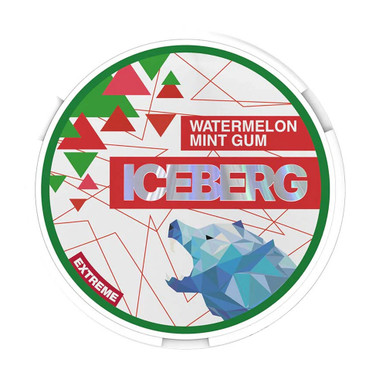
Iceberg Watermelon Mint Gum is listed at £39.90 with two declared strengths, 20mg and 50mg, and the same price attached to both. Our flavour field records two tags, mint and watermelon. There is one image. The listing is marked out of stock at the time of writing. The can-count field is empty, so we do not know whether that £39.90 is a single can or a multi-can pack, and we are not going to reason our way to a number from the price when the record simply does not hold one.
That is the whole catalogue entry. The rest of this page is an attempt to be useful within it: what the three words in the product name mean as flavour language, how a flavour of this shape behaves over the time a portion is in, how the two milligram figures are filed, and what else on our shelves is close enough to be worth comparing. Where we are describing the category in general rather than this can in particular, the sentence will say so. Where our record is blank, we will leave it blank in public rather than fill it in privately.
The full guide to Iceberg Watermelon Mint Gum Nicotine Pouches
4,949 words on how it eats, who it suits, how to serve it and what to put beside it.
The listing, and the three words printed on it
This is an adult product, sold only to people aged 18 or over who already use nicotine. The compliance section near the bottom of the page sets that out in full.
Reading the name: two flavours and a style
Three-word flavour names in this category usually decompose the same way. The first word is the base, the second is the modifier, and the third — when there is one — describes the treatment rather than a further ingredient. Here the base is watermelon, the modifier is mint, and the treatment is gum, meaning a confectionery handling of the pair rather than a fresh-produce one.
Our structured data carries the first two and not the third. The tags on this record are mint and watermelon, which puts the listing among the one hundred and forty-eight products on the mint shelf and the twenty-three on the watermelon shelf. Nothing in our tagging records the word Gum, so the sweetest and most distinctive part of the name is the part our filing is silent about. It is a small inconsistency and it is better named than glossed over, because a customer filtering by tag will see this can sitting beside straightforward mint products and straightforward melon products that are aiming at something quite different.
Where this lands on the cool, sweet, sharp and bitter axes
The most useful way to describe a flavour in this format is not a list of notes but a position on a few axes, because the axes are what people actually compare when they move between cans. Four of them cover almost everything: how cool it is, how sweet it is, how sharp it is, and whether there is any bitterness at the end. The following is what the name commits to on each. It is a reading of the words rather than a tasting of the can, and we will be explicit about the difference.
Cool
Present, and this is the axis the name moves furthest along. Mint in this category almost always brings a cooling character, and cooling is unusual among flavour attributes in that it is felt as a temperature rather than tasted as a flavour. It also behaves differently over time: where a taste tends to be strongest at the start and fade, a cooling impression often builds for a short while and then holds at a level, which is why minted products feel longer-lasting than fruit ones even when the fruit note is objectively as strong. How far this particular can goes along that axis is not something our record states, and the range within the mint family is enormous — from a faint freshness to something extremely cold.
Sweet
High, and the name says so twice. Watermelon is a sweet, low-acid fruit to begin with, and the word Gum signals a confectionery treatment, which in flavour language means sweetness kept up and edges taken off. A can built this way is unlikely to read as dry or austere. What sweetness does to a minted flavour is soften it: a sweet mint and a bare mint are very different things, and the sweetness here is likely to be doing the work of making the cooling comfortable rather than stark. Whether it crosses into being too much is a matter of personal tolerance for sweetness and not something a page can settle for you.
Sharp
Low, and this is the axis where the name is most informative by omission. Sharpness in a fruit flavour comes from acidity, and watermelon has very little of it — that is its defining characteristic as a fruit. Nothing in the name adds any: mint is not sour and a gum treatment actively reduces the impression of sourness. So this is a flavour with almost no bite on the sides of the tongue. If you like a fruit can that makes you wince slightly, this name is pointing away from that, and a citrus-paired product is the direction to look instead.
Bitter
Slight, and only from the mint. Mint carries a faintly herbal, faintly medicinal edge underneath the cooling, and in a sweet construction that edge usually shows up at the finish rather than at the front — the last impression after the sweetness has gone. It is what stops a sweet minted flavour from being simply sugary. Coffee and liquorice flavours sit much further along this axis; a melon-and-mint confection sits barely on it.
A fifth axis people forget: how much it announces itself
Four axes cover taste, but there is a fifth thing customers notice and rarely have a word for, which is how loudly a can announces itself on opening. Some products give off almost nothing until a portion is in; others fill the immediate air around the can the moment the lid comes off. Minted and confectionery-styled flavours tend to sit at the loud end of that scale, because both rely on volatile aromatic character rather than on subtle background notes, and a name carrying both words is unlikely to be discreet. This matters more than it sounds for anyone who opens a can in company. We have no measurement of it for this product and we are not going to claim one, but the two flavour words in the name both point the same way, and that is a fair thing to expect rather than a specification.
The arc across the time a portion is in
Flavours in this format have a shape over time and it is fairly consistent across brands. The sweetness and the fruit arrive first and are at their most obvious in the opening minutes. The cooling comes up slightly behind them and then plateaus. The fruit fades before the mint does, so the middle and later part of the experience is more minted than the beginning was, and the finish is where any herbal or bitter edge becomes noticeable. That arc is the general behaviour of a sweet-fruit-plus-mint construction rather than a measurement of this can, and the point of describing it is that it explains a common complaint: people who say a melon-and-mint can "turns into a mint can" are describing the arc rather than a fault.
Against a plain melon can and a melon-and-citrus one
We stock all three shapes, so the comparison is worth making concretely. A plain watermelon can is soft, sweet, watery and short — one axis engaged, and gently. A watermelon-and-lime can takes the same base and adds acidity and a green, slightly resinous citrus-peel aroma, which gives it a sharp front edge and a drier finish; the melon gets definition from taste. A watermelon-and-mint can takes the same base and adds a sensation instead of a taste, plus a herbal aroma that runs alongside rather than cutting across; the melon gets length and coolness instead of edge. Put crudely: lime makes the melon sharper, mint makes it colder and longer, and adding Gum to either makes it rounder and sweeter than it would otherwise be. They are three genuinely different propositions wearing one shared word.
How a recognisable flavour gets built in a dry pouch
This section is about flavour construction as a piece of craft, which is a more interesting subject than product pages usually allow, and it also explains why two cans with the same name on the lid can be so far apart.
A name is a hierarchy, not a list
Flavour names are written in order of intended prominence far more often than not. Watermelon Mint Gum tells you the melon is meant to be the thing you identify and the mint is meant to be what it arrives with. A can named the other way round would be signalling the opposite balance. This is a convention rather than a rule, and plenty of products break it, but it is the single most reliable piece of information a name gives you after the flavours themselves. The third word is different in kind: it is not competing for prominence, it is describing how the first two have been handled.
Cooling is a sensation, and that changes the design problem
Because cooling is felt rather than tasted, it does not compete with a fruit for the same perceptual space — it layers over it. That is why mint pairs successfully with almost anything and why so much of our catalogue is minted: one hundred and forty-eight listings carry the tag. It also creates a specific difficulty for whoever builds the flavour, because a cooling impression that is too strong flattens the fruit underneath it. The fruit has to be built loud enough to be identifiable through the cold, which usually means pushing it towards the sweeter, more obvious version of itself rather than the subtle one. That is a plausible reason why so many melon-and-mint products are sweet rather than delicate, and it is also a reason a gum treatment makes sense on a can like this.
What a confectionery treatment actually changes
Calling something a gum flavour is a statement about target rather than about content. It means the flavour is aiming at the memory of a sweet rather than at the memory of a fruit, and in practice that means three things: the sweetness is kept high, the sour and bitter edges are trimmed, and a slightly perfumed top note is allowed in that no real fruit has. The result is a flavour that is easier to identify blind and less like anything you could pick up in a greengrocer's. People who dislike confectionery names usually dislike exactly that perfumed quality; people who like them are usually after the roundness. Neither reaction is wrong and we are not going to argue you into one.
Why a dry format behaves differently from a wet one
A pouch is a dry, pre-portioned object that sits still in one place for a long time, and that shapes what a flavour can do. There is no sudden burst and there is no way to take a bigger mouthful — the flavour arrives over the first minute or two and then declines slowly. That rewards flavours with a clear identity and punishes subtle ones, because a faint note that would be charming in something you taste in a single sip becomes imperceptible when it is spread over a long, low curve. It is also why cooling is so heavily used across the category: a sensation holds its level far better across that curve than a taste does.
Why the same name on two cans is not the same flavour
There is no standard for what watermelon means, no standard for how cool a mint should be, and no standard for what a gum treatment involves. Each is a decision made independently by whoever builds a given product. Two cans reading Watermelon Mint can therefore differ more from each other than one of them differs from a can with a different name entirely — Fumi Watermelon Mint at £27.90 and ZYN Watermelon Mint at £19.99 carry effectively the same name as this listing and are three separate products built by three separate makers. Buying two of them and comparing is the only way to find out how they differ, and that is an honest answer rather than an evasive one.
What we are not in a position to describe
We have no manufacturer's flavour description for this listing, no cooling rating, no sweetness scale and no tasting note written by anyone who has had it. Everything in the two sections above is either a reading of the product name or a general account of how this kind of flavour is constructed. We are not going to cross the line into describing a taste we have no record of, because a confident invented description is worse than an honest gap — you would have no way of knowing which sentences to trust.
The can, the portion and the housekeeping
The format is common to everything we sell, so this is short. A pouch is a small soft rectangle that sits between the lip and the gum. It is not chewed and not swallowed, it goes in dry, and it comes out in one piece. Most people settle on a preferred spot early and then stop thinking about it. How long anyone keeps one in is an individual matter that we do not publish a figure for.
The can is a short cylinder with a push-on lid, and the lid's upper surface is a shallow sealed recess meant for finished portions until you reach a bin. Used pouches belong in general waste — not a sink, not a drain, not a plant pot, not a car window. Emptying the recess routinely rather than when it overflows is also the main thing that keeps the lid closing flat, and a lid that closes flat is what keeps the rest of the can in the condition it arrived in. A can kept somewhere cool, dark and dry, with the lid properly seated, will still be the product you bought in a month. A can that lives on a sunny windowsill with its lid at an angle will not.
Two figures on one page: 20mg and 50mg
The milligram figure on a can states nicotine content per portion, and that is the entirety of its meaning. It is not a grade, not a score and not an instruction. We publish it because it is printed on the product and customers need to know what they are ordering, and we do not interpret it for anyone.
| Variant | Price | Cans per pack | Availability |
|---|---|---|---|
| 20mg | £39.90 | Not recorded | Out of stock |
| 50mg | £39.90 | Not recorded | Out of stock |
Same price, either variant
People often expect the larger figure to carry a larger price and on this listing it does not. £39.90 is the price either way. Pricing in this category generally follows the brand and the pack rather than the declared figure, so this is normal rather than a mistake on the page. It does mean the number is not something you are paying more for, which occasionally surprises someone who assumed the two ran together.
Why a 20mg variant sits on the Extra Strong shelf
A page is filed once, by its highest variant, so a listing carrying a 50mg option lands on our Extra Strong shelf and takes its 20mg option along with it. A 20mg can with no higher sibling would ordinarily be filed on the Strong shelf. If you browse by band expecting it to be a complete index of declared figures, this is the sort of listing that will be somewhere you did not expect, and the same happens in reverse to a few pages on the Medium Strength shelf. The variant table above is the authority; the shelf is a convenience.
What the number does not carry
It does not carry a recommendation, and we will not supply one. We cannot advise which figure suits any individual, because that is a judgement about a person rather than a fact about a product, and we know nothing about the person reading. A higher figure is not better, not more advanced, not a stage and not an accomplishment, and we do not present our shelves as a progression. Two cans from different brands declaring the same figure are not automatically comparable either, because declared content is one variable among several and the rest are not in our record.
Iceberg's shelf, and the related cans attached to this one
Iceberg runs to forty listings with us, spread across mints, single fruits, fruit pairings and a group of confectionery-styled names of which this is one. A melon-mint-gum can sits at the intersection of two of those groups, which is a fair description of what the brand tends to do: familiar flavour families given a sweeter treatment than a straight-fruit range would allow. The Iceberg shelf is where the rest of it lives.
Six related cans are attached to this record and every one of them is £39.90, which is the same figure as this listing. That flat pricing is worth knowing because it means moving around inside the brand costs nothing to reason about. The one with the closest construction is Iceberg Black Mint, which keeps the cooling and drops the fruit — the single most informative comparison available if you want to know how much of what you like here is the mint. Iceberg Black sits beside it as the range's plainer dark can.
On the fruit side, Iceberg Berries is a mixed-fruit can with no cooling named, which is the reverse experiment: fruit held, mint removed. Iceberg Black Currant brings acidity that a melon simply does not have, and Iceberg Apple Lemon Pineapple is the three-fruit blend in the group. Iceberg Arasaka is named rather than described, so its flavour is not something we can tell you from the record. Iceberg's forty listings reached through the shelf covers everything else under the name.
What goes in the drawer beside a melon-and-mint can
Almost nobody runs one flavour exclusively, and the reason is perceptual rather than fickle: a flavour you meet constantly stops registering, and something unlike it brings the first one back. Two or three cans in rotation is the ordinary pattern.
The same idea from other makers
77 Melon Mint at £39.90 is the nearest structural match at the same price, which makes it the cleanest comparison on this list. Fumi's watermelon and mint can is a cheaper route to the same pairing at £27.90, and the ZYN version at £19.99 sits between them. Three products, one idea, three different interpretations of how cool and how sweet it should be — which is precisely the point made in the construction section above.
Mint without any fruit attached
If what you want is the cooling on its own, Clew Cool Mint and Denssi Cold Mint are both £39.90 and both strip the fruit out entirely, which is a useful thing to keep alongside a sweet can for exactly the reset described above. Edge Mint at £14.95 does the same job for considerably less money, and the mint shelf's one hundred and forty-eight listings make it the largest flavour family we hold by a wide margin.
Melon without the mint, and the cheap spare
Velo Watermelon Ice at £4.19 and Nordic Spirit Melon Fresh at £4.49 are both single cans at small money, which makes either an easy way to keep a melon flavour in the drawer without committing to a full-price listing. They are also the practical answer for anyone who wants to work out whether the melon or the mint is the part they actually like: buy the melon cheaply on its own and the question answers itself.
Leaving the family altogether
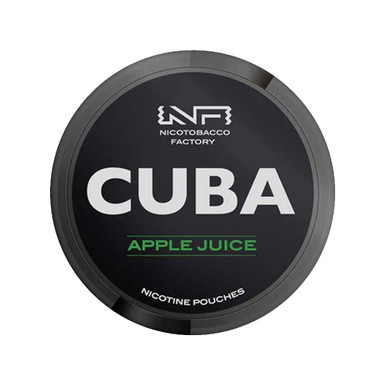
For genuine contrast, Cuba Black Apple Juice at £39.90 is a fruit aiming at being recognisably itself rather than at a sweet-shop idea, which is the opposite design intent from a gum-named can. Pablo's banana can at £3.85 is the cheapest thing in this comparison and a completely different fruit register — banana is one of the few flavours that reads slightly confected even when nobody intended it to.
What there actually is to choose between here
One flavour, one price, two declared figures, and a pack size our record does not state. That is a narrow set of decisions and it would be dishonest to inflate it into a buying guide. The 20mg and the 50mg differ in the number on the label and in nothing else on this listing — same flavour, same £39.90, same stock position.
We cannot tell you which to choose. That limit applies to every page on this site and it is not a dodge: a strength recommendation is a judgement about an individual, and a shop that has never met you is not in a position to make it. What we can give you is the label information, which is above, and the assurance that we have not arranged the shelves to push anyone up them.
Out of stock, and why we will not guess at a date
Both variants are unavailable at the time of writing and our record holds no restock date. Availability here depends on supply we do not control, so any date on this page would be invention with a confident typeface. The page remains useful for comparison: the flavour discussion holds regardless of the warehouse, and every alternative linked above is a separate listing with its own stock position. If it is the pairing rather than the brand you want, two of those alternatives carry almost the same name.
Ordering, dispatch and the door
When a listing is orderable the process is the ordinary one — basket, checkout, dispatch as a small parcel. Cans travel well and need no special handling.
The age check is where the process is deliberately not ordinary. This is an 18+ product and we sell it only to adults who already use nicotine. You will be asked to confirm your age when you order, and identification may be requested by the courier on delivery. A courier can refuse to hand an age-restricted parcel to anyone who cannot show they are old enough, and such a parcel will not be left in a porch or passed to a neighbour. Choosing a delivery address where somebody will actually be present saves everyone a wasted journey.
Where this page sits in the site
Three axes run through the catalogue and this listing sits on all of them. By flavour it appears under mint and under watermelon, which are two very differently sized shelves. By brand it sits with Iceberg. By declared figure it is filed on the Extra Strong band because of its 50mg variant. If none of those is the cut you want, everything we stock is the flat list, and the Pablo shelf and the Cuba shelf are the two other large ranges that supplied comparisons on this page.
Things people ask about this can
Does the mint overpower the melon?
We do not hold a figure for how cool this can is, so we cannot answer it for this product specifically. What is generally true of the construction is that the fruit fades before the cooling does, so the later part of a portion is more minted than the first part, and people who feel the mint takes over are usually describing that arc rather than an imbalance at the start. If you want the fruit to stay in front, a can without a cooling element is the reliable way to get it.
What does Gum add that Watermelon Mint on its own would not?
It describes a treatment rather than a third flavour. In practice a gum-named product keeps sweetness high, trims the sour and bitter edges, and allows a slightly perfumed quality that a fruit-faithful version would avoid. So the expectation the word sets is rounder and sweeter rather than fresher. It is worth noting that our flavour tags do not record the word at all — they list mint and watermelon only.
Is this the same as your other watermelon listings?
No, and the differences are larger than the shared word implies. A plain melon can is soft and short with almost no acidity. A melon paired with a citrus fruit gains a sharp front edge and a drier finish. This one gains a cooling sensation and a longer, herbal finish instead. They sit on the same flavour shelf and behave quite differently in the mouth.
How many cans do I get for £39.90?
Our record does not say. The can-count field on this listing is empty, and while some Iceberg products at this price are recorded as ten-can packs, plenty of records simply have the field blank, so inferring a number from the price would be pattern-matching rather than reporting. If the quantity is what decides it for you, choose a listing that states its pack terms.
How many pouches are in a can?
Not recorded, and we do not estimate portion counts. The number is normally printed on the can itself, which makes the object a better source than this page. Counts vary between brands and between formats, so borrowing a figure from a different product would be worse than leaving the question open.
Why do the two strengths cost the same?
Because price in this category follows the brand and the pack rather than the declared figure. Both variants are £39.90. That is normal across a great many listings on the site and it is not an error. It also means there is no financial pressure in either direction between the two figures, which we think is the right way round.
Which strength should I get?
We cannot tell you. That is a decision about a person and we know nothing about the person reading. The label information is that this listing offers 20mg and 50mg at the same price, and that the figure refers to nicotine content per portion. We do not describe any figure as suitable for anyone, and we do not treat the higher one as a goal.
Is it a sweet flavour or a fresh one?
The name points at both, which is the honest answer. Watermelon is sweet and low in acidity, a gum treatment keeps sweetness high, and mint contributes coolness. So the likely shape is sweet with a cool finish rather than either austere or purely sugary. How far it leans in either direction is a formulation detail we have no record of.
Is a sweet-sounding name aimed at younger people?
No. This is an 18+ product for adults who already use nicotine, exactly as our unflavoured and plain mint listings are, and a confectionery flavour name does not change that in any respect. We would rather answer the question directly than leave it hovering, because it is a reasonable one to ask of any sweet name in an age-restricted category.
When will it be back?
We do not know and we hold no restock date. Supply is outside our control and a date guessed here would carry more authority than it deserves. If it is the melon-and-mint pairing you are after rather than this brand, two of the listings linked above carry essentially the same name and have their own availability.
Why is it tagged mint when mint is the second word in the name?
Our flavour tags are a set rather than an ordered list, so they record which families a product belongs to without saying which one leads. Alphabetical ordering in the data is the reason mint appears first, not a judgement about prominence. The product name is the place to read the intended hierarchy, and it puts watermelon in front. The tags are for filtering; the name is for describing.
Is the mint shelf really the biggest one you have?
By flavour family, yes — one hundred and forty-eight listings carry the mint tag, against twenty-three for watermelon. That imbalance is worth knowing when you browse, because a mint filter returns a genuinely unmanageable number of results and a watermelon filter returns a list you can read in a minute. It also explains why so many fruit products on the site have a cooling partner: mint is the most heavily used modifier in the category by a long way.
Do you publish reviews or scores for it?
No. We do not carry customer reviews, star ratings or aggregate scores anywhere on the site, and we will not quote opinions we cannot show you the source of. This page is the catalogue record with an explanation built around it. A cheap single can from the same flavour family will tell you more about your own preference than a number out of five ever could.
Legal position and compliance
This is an age-restricted product. It is sold only to adults aged 18 or over, and only to adults who already use nicotine. Age confirmation is required at checkout and identification may be requested on delivery; a courier will not hand an age-restricted parcel to anyone unable to show they are old enough, nor leave one unattended.
Nicotine is an addictive substance. That statement stands on its own, with no qualification and no comparison attached to it.
This product is not a licensed stop-smoking medicine and it is not intended for non-smokers, for anyone who does not already use nicotine, for under-18s, or for anyone who is pregnant or breastfeeding. We make no health, medical or safety claim about it in any direction, and we give no guidance on strength, quantity or frequency for any individual. Those questions belong with a suitably qualified professional.
Keep cans out of the reach of children and animals. The recess in the lid is a temporary holding place for used portions; empty it into general waste rather than treating it as storage.
The short of it
Iceberg Watermelon Mint Gum is a £39.90 listing at 20mg and 50mg for the same money, tagged mint and watermelon, with one image, no recorded can count and no stock at present. The name describes a sweet, low-acid fruit given a cooling partner and a confectionery treatment, which places it high on the cool and sweet axes, low on sharp and barely on bitter. That makes it a different animal from a plain melon can and a different one again from a melon paired with citrus, even though all three share a word. The milligram figures are label information and nothing else. Everything we could not verify has been left marked as missing rather than quietly filled in.
More from Iceberg

More extra strong pouches
More mint pouches
Where this sits
Iceberg Watermelon Mint Gum Nicotine Pouches appears in these categories. Browse them, or jump to something close.
You might also like