Home / Medium Strength / Fumi Minty Blueberry Nicotine Pouches
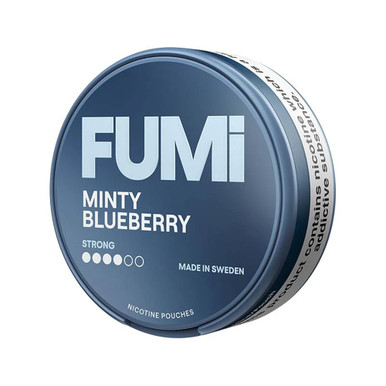
Fumi · 8mg · 10-can pack
Read the full guide
Fumi Minty Blueberry Nicotine Pouches
£27.90
✔ In stock — ready to ship
100% tobacco-free
Free over £20
Same-day dispatch
Secure checkout
Fumi Minty Blueberry Nicotine Pouches are listed here at £27.90, in one declared strength — 8mg — and the listing covers 10 cans. The brand is Fumi; the maker's own name for the product is Minty Blueberry. Our records show it in stock, with one image on the listing. That is the complete set of facts we hold about this product, and everything below is either built on those facts or is an honest statement that we do not hold something.
Three of those figures do more work than the rest. The ten-can count turns £27.90 into £2.79 a can, which is a different proposition from the single-can prices that sit next to it on the same shelves. The single strength means this listing has no strength choice on it at all, which is unusual enough to be worth a section. And the flavour tag in our data is berry and nothing else, despite the word "Minty" sitting in the product name — a small discrepancy, but one that decides which shelves this can appears on, so it gets explained rather than smoothed over.
The full guide to Fumi Minty Blueberry Nicotine Pouches
5,086 words on how it eats, who it suits, how to serve it and what to put beside it.
What the Fumi Minty Blueberry listing actually says
This page runs longer on two subjects than on the others: the can as a physical object, because the lid arrangement is the part of the format people ask about most, and the set of practical questions that come up when somebody arrives at this can from a different one. Where our information runs out, the page says so rather than filling the gap.
The standing note before anything else: this is an age-restricted nicotine product, sold to adults who already use nicotine. The full wording is at the foot of the page.
The pouch in practice, from lid to bin
A nicotine pouch is a small sealed pouch of material that is placed in the mouth, tucked under the top lip, and left there. It is not chewed and it is not swallowed. Nothing is heated, nothing is exhaled, and there is no device, no charging and no refilling — the can is the whole of the product and the pouch is the whole of the portion.
Once a pouch is in place it stays where it is put. Most people settle it along the upper lip line, slightly off-centre, and move it once or twice over the course of its use because sitting in exactly the same spot for the whole time gets uncomfortable. Moving it is a matter of pushing it with the tongue; it does not need to come out. Speaking, drinking and working carry on normally, and after the first minute or two most people stop noticing the pouch is there at all.
How long one stays in is a genuinely individual matter and we do not publish a figure for it. The practical answer is that a pouch is finished when its taste has gone flat, and that point arrives at different times for different people. Some take one out well before that and some leave it in past it. There is no timer on the can and no instruction from us about it, because a time recommendation would be an instruction about consumption and we do not give those.
Disposal is the part that catches people out, so it is worth being direct about it. A used pouch does not go down a sink or a drain and should not be flicked into a hedge. It goes in a bin, and if a bin is not to hand it goes into the lid compartment, which is what the compartment is for. The pouch comes out slightly wet and holds its shape, so it is easy enough to handle and does not fall apart between fingers.
Two habits make the format easier to live with. The first is keeping the can somewhere consistent — a jacket pocket, the same spot in a bag — so that it is not being hunted for. The second is emptying the lid compartment regularly rather than letting it fill up, which keeps the can pleasant to open and stops the compartment from becoming the reason you do not want to open it. Neither of those is a rule. They are just what people who have used the format for a while tend to end up doing.
The can as an object: lid, compartment, and what fits in a pocket
Almost everything written about pouches is written about what is inside the can. The can itself gets ignored, which is odd, because it is the part you handle every single time and the part that decides whether the product is a nuisance to carry. This section is about the object.
The shape is a short cylinder, roughly the diameter of a large coin and not much deeper than it is wide. It is the standard pouch-can footprint and it is standard for a practical reason: that shape sits flat in a pocket without a corner digging in, and it can be opened one-handed with a thumb while the other hand is holding something else. A taller container would not fit the same pockets; a wider one would not be openable with one thumb. The form has settled where it has because those two constraints are real.
The lid is the part worth understanding. On a can of this type the lid does two jobs. Closed, it seals the can and keeps the contents in condition. Opened and turned over, the underside of the lid is a shallow compartment — the catch compartment — intended to hold used pouches until a bin is available. It is not a large space and it is not meant to be a long-term store. Treating it as a temporary holding area between one bin and the next is the way it works best; treating it as somewhere to accumulate a week's worth is how a can becomes unpleasant.
The seal matters more than it looks. A can that does not close properly will let the contents dry out over weeks, and the one thing that reliably ruins a can is a lid that has been forced, cross-threaded or bent. Cans are not indestructible. Sitting on one, or letting one roll around loose in the bottom of a bag with keys, will eventually deform the rim, and a deformed rim does not seal. If a can has stopped closing cleanly, the contents are on a clock from that point.
Pocket practicality is the last part of it. A single can goes in a coat pocket, a jeans pocket, a jacket's inside pocket or the small front section of a rucksack without any thought. Ten cans is a different object entirely. That is a block roughly the size of a paperback, and it is not a pocket item — it is a drawer item, a glovebox item or a shelf item, from which single cans get taken. This is the practical consequence of buying at the £27.90 ten-can level rather than picking up singles, and it is worth knowing before the parcel arrives: what you are receiving is a supply, not a purchase you carry around intact.
We do not hold a figure for how many pouches are inside one can of this product. The field exists in our data and it is empty for this listing, so we are not going to estimate it. The listing image is the only place that information may appear, and if the count matters to your arithmetic, read the image before ordering rather than assuming a number from another brand. Portion counts are not standard across the shelf and treating them as though they were is how people end up surprised.
Blueberry, a cool edge, and what our data does not tag
Taken as a taste, blueberry is one of the rounder fruit notes on the shelf. It is not sharp in the way a citrus or a green apple is sharp; it sits lower and sweeter, with a slightly jammy, dark-fruit quality and very little acidity at the front. That roundness is exactly why blueberry so often gets paired with a cool note by makers — on its own it can read as soft, and a cool edge gives it definition.
The maker has named this product Minty Blueberry, which tells you the intention: a blueberry note with a cool, mint-side lift running alongside it rather than a straight fruit. In practice that combination usually presents as fruit first and cool second, with the cool part arriving as a lift at the end rather than as a separate mint flavour competing for attention. The aroma when a can is opened is the fruit rather than the mint — dark berry, slightly sweet, mild rather than loud.
Here is the honest complication. Our flavour data gives this listing a single tag: berry. It does not carry a mint tag, despite "Minty" appearing in the maker's name for the product. We are not going to pretend that is not a discrepancy. What it means in practice is straightforward — this can appears on our berry shelf alongside the other 76 berry-tagged listings, and it does not appear on the mint shelf, so anyone browsing by mint will not find it. Whether the tag or the name is the better description of what is in the can is not something we can settle from our records.
What we do not have is a tasting note from the maker. No sweetness scale, no cooling scale, no description of how the blueberry and the cool part are balanced against each other. Any page that gives you those figures for this product has invented them. The description above is a description of what the words "minty" and "blueberry" denote as flavours, offered so you know what is being aimed at, not a measurement of what is in this particular can.
For a sense of how differently the same fruit family gets handled across our shelves, Cuba Black Blueberry at £39.90 and SYX Blueberry at £29.90 are both blueberry listings at quite different price points, and Clew Blueberry is a third. Same fruit name on the front of the can, three different makers' interpretations of it. Flavour names are a maker's shorthand, not a standard, and two cans reading "blueberry" are not obliged to taste alike.
8mg: what the figure is, and what it is not
This listing declares one strength, 8mg, and that is the whole of the strength information we hold. There is no second variant on this product — the variants list contains a single entry, 8mg at £27.90, and nothing else.
What the number is: it is the milligram figure the maker declares for this product, published here exactly as we hold it. What we do not hold is the basis it is calculated on, so we are not going to tell you what it is per of. That sounds pedantic and it is not — it is the difference between a figure you can read across between brands and a figure you cannot, and we would rather be plain that we do not know than imply a comparability we cannot back.
What the number is not: it is not a flavour rating. An 8mg can is not a milder-tasting can than a 15mg one by virtue of its number, and a higher figure does not mean more flavour. Strength figures and flavour intensity are unrelated fields in our data and unrelated properties in the can. It is also not a measure of how long a pouch lasts, how big the pouch is or how many are in a tin.
Where 8mg sits on our shelves is a matter of category placement, and that we can tell you. This can is filed on our Medium Strength shelf, which currently carries 135 listings. Above it we keep a Strong shelf and above that an Extra Strong shelf, and cans are sorted into those bands by their declared figures. That is a filing arrangement for browsing, nothing more. It says where a listing appears in our navigation; it says nothing about who anything suits.
We will not tell you which band to shop in, and we cannot advise on whether 8mg is the right figure for any individual. That is not evasiveness or a legal formality — we genuinely do not have the information that would be needed to answer it, and it is not a question a shop should be answering. We publish the declared figures, we file the cans by them, and the choice is the customer's.
Moving to this can from another on our shelves
Nobody arrives at a product page from nowhere. People come to a specific can from another specific can already on these shelves — a different brand, a different format, a different strength band, a different flavour family — and the question underneath is always some version of "what actually changes if I move?". The answers divide cleanly into things that change, things that do not, and things we cannot tell you either way. None of them need a claim attached to be answered. This section takes them in the order they usually arrive.
Does it work the same way as the can I use now? If you are already using pouches, yes, in the mechanical sense. Pouch in, under the lip, left there, taken out, binned or put in the lid compartment. There is no brand-specific technique, no priming step and no device. Anything you have worked out about placement on another brand carries straight across.
Is the pouch the same size? We do not hold a pouch-size field for this listing, and pouch dimensions do vary across the shelf — slim formats, mini formats and regular formats all exist, and different makers use the words differently. Since we cannot tell you which this is, the honest answer is that it may sit differently under the lip from whatever you are used to, and the only way to find out is the can itself. That is a real limitation of our information and not something a description can fix.
Will the flavour be what I expect from the name? Not necessarily, and this is the single most common source of disappointment when people move between brands. As noted above, flavour names are a maker's shorthand. A blueberry from one maker and a blueberry from another are two separate recipes that happen to share a word. If you have a blueberry can you get on with, moving to a different maker's blueberry is a change, not a like-for-like substitution.
Do the milligram figures mean the same thing across brands? We cannot tell you that they do. Different makers declare on different bases, and since we do not hold the basis for this listing we cannot line it up against another brand's number and promise the comparison holds. Treating an 8mg figure from one brand as interchangeable with an 8mg figure from another is an assumption, and it is not one we will encourage.
Is the price comparable to what I pay now? Only if you do the arithmetic on what each listing contains. This one is £27.90 for 10 cans, or £2.79 a can. Something like Nordic Spirit Blueberry at £4.49 or Velo Strawberry Ice at £4.19 sits at a very different headline figure, and we do not hold can counts for those listings, so we are not going to assert whether they are singles or multiples. The instruction is the same either way: read what a listing contains before reading across between two prices. A headline number on its own tells you very little on a shelf where both singles and ten-packs are sold.
What if I do not get on with it? Then you have nine more cans of something you do not get on with, which is the one real drawback of buying at a multi-can level in a flavour you have not had before. There is no way around that other than knowing it in advance. It is the honest argument for trying a brand at single-can level first where the shelf offers one, and the honest argument against treating a ten-can price as automatically the better deal.
No part of that section is a claim about what this product does. It is a set of format and purchasing facts, which is the only kind of answer we are in a position to give.
Where Minty Blueberry falls in the Fumi range
The Fumi shelf carries 16 listings on this site, and a pattern is visible across the ones we hold. Pricing is consistent — the Fumi listings we stock sit at £27.90, and they hold that figure across strengths where a listing has more than one. That means, within this brand, choosing between flavours is a flavour decision and not a budget one, which is not true everywhere on the shelf.
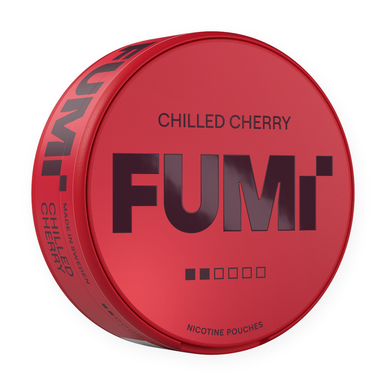
The naming convention tells you something too. Fumi uses a modifier in front of the fruit — Minty, Fiery, Chilled, Salty — and the modifier is doing the work of describing the register the fruit is being handled in. Fumi Chilled Cherry is the cold treatment of a dark red fruit; Fumi Fiery Mango is a warm treatment of a tropical one; Fumi Fiery Lime applies the same warm modifier to a sharp citrus instead. This listing is the cool treatment of a soft dark berry. Read the modifier and you have a reasonable idea of where a Fumi can is pointing before you open it.
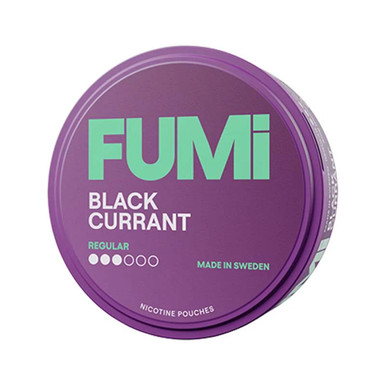
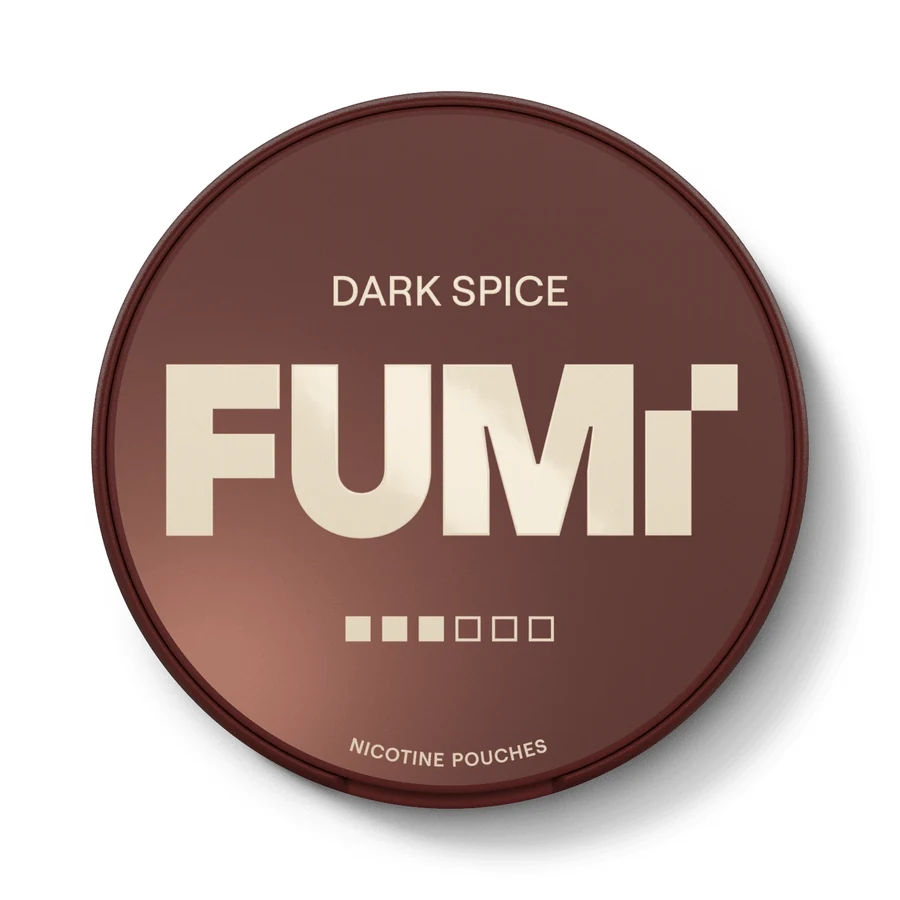
Within that, the range covers a spread of flavour families rather than variations on one. Fumi Blackcurrant stays in the dark-fruit territory this can occupies but without a cool modifier attached. Fumi Dark Spice leaves fruit behind entirely for a warmer, spice-led register, and is the outlier of the ones we stock. Fumi Fiery Mint goes the other way and builds on mint rather than fruit. All four sit at the same £27.90.
Where this particular can sits, then, is at the soft, cool, fruit-forward corner of the range: the least sharp of the fruit options and the one furthest from the spice end. If you have worked through the warmer Fumi cans and want the same brand handled differently, this is the other side of it.
What people keep alongside it
Ten cans of one flavour is a lot of one flavour. The most common thing customers do about that is keep a second can of something different in rotation, and the usual logic is contrast rather than similarity — a second berry can that tastes almost the same solves nothing. Everything below is suggested on the flavour, brand or price we hold for it, and for no other reason.
For a sharper berry next to this one, the Pablo Silver Edition Blue Raspberry can at £39.90 takes the blue-fruit register in a more acidic direction, and ZYN Blackcurrant Forest at £19.99 sits in darker, less sweet territory. If the contrast you want is a red berry instead of a blue one, the 77 Strawberry listing at £39.90 is the straightforward version of that, and XQS Berrynana Twist at £39.90 is berry combined with something else entirely rather than berry on its own.
Some people rotate on price rather than flavour, keeping one multi-can listing as the standing supply and picking up a cheaper single alongside it for variety. On that basis the Velo Strawberry Ice listing at £4.19 and the Nordic Spirit blueberry can at £4.49 are the low-headline options among the berry-adjacent listings on this page, though as noted we do not hold can counts for either and the comparison is between headline figures only.
Outside the berry family, Denssi Berry Beast Energy Pouches at £39.90 sits on an adjacent shelf and is a different product category rather than a different flavour of the same thing — worth reading the listing itself rather than assuming. If you would rather browse the whole berry set and pick your own second can, the berry category page lists all 76 of them, and the full shop listing is the top of the tree if you want to start wider than that.
Keeping a can in usable condition
A can of pouches is not fragile, but there are three things that reliably shorten its usable life, and all three are avoidable.
The first is heat. A can left on a dashboard in summer, on a windowsill in direct sun or on top of a radiator will not be the same can in a fortnight. Warmth dries contents out and takes the edge off a flavour, and neither of those is recoverable. A drawer, a cupboard or any interior shelf out of direct light is all that is needed. There is nothing special about the storage requirement — it is the same as for anything else you would rather did not dry out.
The second is the seal. Closing the lid properly every time is the whole of it. A lid pushed on at an angle, or left resting rather than seated, will let the contents go over time. This matters more with a ten-can purchase than a single, because cans seven through ten may be sitting unopened for a considerable stretch and an unopened, properly sealed can is in a much better state at the end of that stretch than a half-used one that has been opened and closed carelessly.
The third is the lid compartment, which is a storage question disguised as a hygiene one. Used pouches left in the compartment for days make the can unpleasant and can carry moisture back into a can you are still using. Empty it when you pass a bin.
With ten cans, a simple approach works: keep nine in one place, unopened, out of heat and light, and carry one. Open the next when the carried one is done. There is no rotation scheme needed beyond that and no reason to open several at once.
One strength, ten cans: the only choice on this listing
Most product pages on this site have a strength decision on them. This one does not, and that simplifies things considerably. The listing has a single variant — 8mg at £27.90 — and no alternative to weigh against it. If 8mg is not the figure you are looking for, the decision is a different listing rather than a different option on this one.
Pack size is fixed too. 10 cans is what the listing covers; we do not hold a single-can option for this product. So the genuine question on this page is not "which version" but "this listing or another one", and the ten-can commitment is part of that question rather than separate from it.
If a different declared figure is what you are after, the strength shelves are the efficient way to look: the medium band holds 135 listings including this one, with the Strong band and the Extra Strong band above it. Browsing by band is filing, not advice — it narrows the shelf to listings that declare figures in a similar range, and the choice remains entirely yours.
Ordering, age checks and delivery
This is an age-restricted product and it is sold to over-18s only. Age verification happens as part of checkout, and ID may be requested on delivery — if the person handing over the parcel asks for it, that is the process working as intended rather than anything unusual. We cannot complete an order without the age check being satisfied.
On delivery specifics — timings, carriers, thresholds, the exact options available to your address — we are not going to print figures on a product page that may be out of date by the time you read it. The checkout carries the current options, and that is the accurate place for them.
Our records show this listing in stock. Stock moves, and the listing itself is always the live position; if the page and this paragraph ever disagree, the listing is right and this paragraph is old.
Where this page sits on the site
This listing is filed on three shelves. By declared strength it sits on the Medium Strength shelf. By maker it sits on the Fumi brand page with the other 15 Fumi listings. By flavour tag it sits on the berry shelf — and, as explained above, only there, because our data does not carry a mint tag for it.
If you are browsing rather than looking for something specific, the whole shop is the top of the tree. Brand pages are the most useful entry point when you already know a maker you get on with — the Pablo range and the Cuba range are two of the larger ones we carry — and the strength bands are the most useful when the declared figure is the thing narrowing your choice.
Questions we are actually asked about this listing
How many pouches are in one can?
We do not hold that figure for this listing. The portion-count field in our data is empty for this product, and we are not going to estimate it from what other brands do, because counts are not standard across the shelf. The listing image is the only place that number may appear. If the count is material to your arithmetic — working out a per-pouch price, for instance — check the image before ordering rather than assuming.
Why is it on the berry shelf and not the mint shelf?
Because our flavour data carries exactly one tag for this listing, berry, and no mint tag, even though the maker's name for the product is Minty Blueberry. Shelf placement follows the tags in our data rather than the words in a product name. The practical effect is that the can appears on the berry page and does not appear on the mint page. We hold no note explaining why the tagging came out that way.
What is in it?
We do not publish an ingredient list for this product and we do not hold one. That is a flat limitation of our information rather than a policy of withholding. The can itself is the place that information appears, and anything printed on it is the maker's statement rather than ours. We are not going to reconstruct a composition from the flavour name.
Where is it made?
We do not hold country-of-origin information for this listing. Our product data covers name, brand, price, declared strength, pack size, flavour tag and stock position, and origin is not one of the fields in it. Any origin claim you find attached to this product elsewhere did not come from us, and we cannot confirm or contradict it.
Is 8mg right for me?
We cannot advise on that, and we would not, because it is not a question a shop is in a position to answer for an individual. What we can tell you is what the figure is — the declared milligram number for this product, published as we hold it — and where it files on our shelves, which is the medium band. The choice of which figure to buy is entirely yours to make.
Can I buy just one can?
Not on this listing. The listing covers 10 cans at £27.90, which works out at £2.79 a can, and we do not hold a single-can variant for this product. Other listings on the site are priced at single-can level, but we do not hold can counts for most of them, so we cannot reliably point you at a single-can version of this exact flavour.
How long should I keep a pouch in?
We do not publish a time and we are not going to suggest one. It varies considerably between people, and a figure from us would be an instruction about consumption rather than information. The practical marker most people use is taste: a pouch has done what it is going to do when its flavour has gone flat, and when that happens differs from person to person.
Are the pouches dry or moist?
We do not hold a moisture field for this listing, so we cannot tell you. It is a real difference between products on this shelf and it does affect how a pouch feels in place, so it is a reasonable thing to want to know. The honest position is that our data does not record it for this product and we will not guess at it.
Does it taste the same as other blueberry cans you sell?
There is no reason to expect it to. A flavour name is a maker's shorthand rather than a standard, so the Clew blueberry listing at £39.90 and this one share a word on the front of the can and nothing more than that. We hold no comparative tasting data across our listings and we are not going to invent any. Assume different makers' versions of the same fruit are different products.
Is the price per can or per pack?
Per pack. £27.90 covers the 10 cans this listing contains. This trips people up because the same shelf carries listings priced at single-can level, so two figures sitting side by side may be measuring completely different quantities. Always read what a listing contains before comparing its headline price with anything else.
Is it in stock?
Our records show it in stock at the time this page was written. Stock changes, and the listing itself always carries the live position — if the two ever disagree, trust the listing. We do not hold restock dates and cannot tell you when something will return if it goes out.
Does the lid compartment need emptying?
Yes, regularly. It is designed as a temporary holding space for used pouches until a bin is available, not as a store. Left to fill up, it makes the can unpleasant to open and puts moisture back into a can you are still using. Emptying it whenever you pass a bin is the whole of the maintenance this product requires.
The legal position, in full
This product is sold to adults aged 18 or over who already use nicotine. We do not sell it to anyone under 18, and age verification forms part of the checkout process. ID may be requested on delivery, and the parcel will not be handed over without it if it is asked for.
Nicotine is an addictive substance.
This is not a licensed stop-smoking medicine and it is not intended for non-smokers, for anyone who does not already use nicotine, for anyone under 18, or for anyone who is pregnant or breastfeeding. We make no health, medical or therapeutic claim of any kind about this product, in either direction. If you have a question about nicotine and your own circumstances, that is a question for a healthcare professional and not for a shop.
To close
Fumi Minty Blueberry is a ten-can listing at £27.90 — £2.79 a can — in a single declared strength of 8mg, tagged berry in our data, filed on the medium band, in stock at the time of writing. The can is the standard pocket cylinder with a catch compartment in the lid. The flavour intention is a soft dark berry with a cool edge, and the honest qualification is that we hold no tasting note from the maker and no portion count for the can. Everything else on this page that we could not confirm, we said we could not confirm.
More from Fumi
More medium strength pouches
More berry pouches
Where this sits
Fumi Minty Blueberry Nicotine Pouches appears in these categories. Browse them, or jump to something close.
You might also like