Home / Medium Strength / Pablo Silver Edition Grape Ice Nicotine Pouches

Pablo · 10mg · 10-can pack
Read the full guide
Pablo Silver Edition Grape Ice Nicotine Pouches
£39.90
✔ In stock — ready to ship
100% tobacco-free
Free over £20
Same-day dispatch
Secure checkout
Pablo Silver Edition Grape Ice comes to this page as a ten-can pack priced at £39.90, with one declared strength of 10mg and no second variant. Our catalogue holds it under the full name Pablo Silver Edition Grape Ice Nicotine Pouches, attributes it to Pablo, and carries one product photograph. If you want the per-can figure for comparison purposes, £39.90 across ten cans is £3.99 each.
Four shelves claim this can on our site: Medium Strength, our Pablo brand page, the Grape shelf and the Mint shelf. That last one needs explaining rather than glossing over, and we will get to it properly in a moment, because a grape can filed under mint looks like a mistake and is not quite one.
The full guide to Pablo Silver Edition Grape Ice Nicotine Pouches
4,909 words on how it eats, who it suits, how to serve it and what to put beside it.
The can, the pack and the price
On the words "Silver Edition": that is the manufacturer's own name for a group of their flavours. It is not a rating, not a tier, and not our description of the can's standing. Pablo publishes several differently named sub-ranges and we stock cans from more than one of them. None of those names tells you that a can is superior to another, and we will not be arranging them into an order that the packaging does not support.
Reading Grape Ice on four axes
The most useful way to describe a flavour on a product page is not with adjectives piled up but with a few axes you can place a can against, because that is what lets you compare it with something you have already had. We use four: cool, sweet, sharp and bitter. Here is where this one lands on each.
Cool
Present and deliberate, but not the headline. The word "Ice" in the name is doing real work — there is a definite chill running underneath the fruit, and you feel it most in the first two or three minutes and again faintly at the back end of a portion. What it is not is a mint-led chill. It sits below the grape rather than in front of it, and it reads as temperature rather than as a flavour in its own right. Place it around the middle of the cool axis: clearly cooler than a plain fruit can, clearly less cold than anything with mint in the name.
Sweet
This is the loud axis and the one that defines the can. The grape here is the dark, purple, confectionery sort — the note people associate with grape sweets and cordials rather than with a bunch of table grapes. It is rounded, slightly perfumed, and generous. If you find candied fruit flavours cloying in general, this is not the can that will change your mind, and that is worth knowing before you commit to ten of them.
Sharp
Modest but genuinely there. Under the sweetness is a thin line of acidity that keeps the fruit from going completely flat — a grape-skin tartness that shows up at the edges of the taste rather than in the middle of it. It is most noticeable early, while the cool is still active, because the two together give the profile a bit of a snap. As the portion goes on, the sharpness fades before the sweetness does, which is why the last stretch tastes rounder and simpler than the first.
Bitter
Low, but not zero. There is a faint dry note on the finish that reads as grape skin or stalk rather than as anything unpleasant, and it is the thing that stops the profile being purely a sweet. People who dislike this can usually dislike it for the sweetness, not for this. People who like it often point at this dry edge as the reason it does not become tiring.
Putting the four together
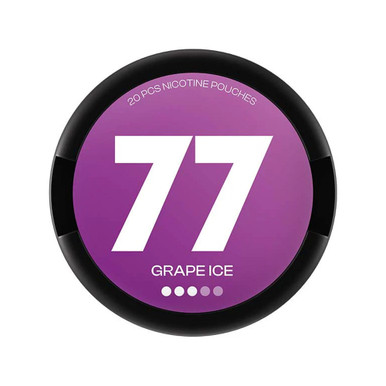
The overall shape is a sweet fruit can with a cold layer under it and a thin sour-and-dry frame around the edges. The aroma when the lid comes off matches: sweet and jammy first, with a cold snap behind it, and no green or herbal note at all. If you want the same grape idea from a different maker, Elf Bar Grape Ice at £29.90 and Killa Grape Ice at £33.50 are both in stock and both take the concept somewhere slightly different. 77 Grape Ice at £39.90 would be the third comparison, but it is currently listed as out of stock, so that page is there to look at rather than to buy from today.
What our listing record actually contains
It is worth spending a paragraph on the boundaries of what we know, because most product pages on the internet blur that line and this one would rather not. Our catalogue record for this product holds: the full title, the brand, the price, the pack size of ten cans, one declared strength of 10mg, two flavour tags, the category memberships, an availability flag, and one image. That is the complete set.
What it does not hold is longer and more interesting. It does not hold a pouch count per can. It does not hold the portion weight, the pouch dimensions, or whether the pouches are built dry or moist. It does not hold a description of the can's lid or any internal compartment. It does not hold an ingredient list, a manufacturing location, a batch date, or any shelf-life figure. It does not hold anything about who makes the product on Pablo's behalf or where.
Everything in the sections above is drawn either from that record or from general, non-product-specific facts about how this kind of pouch is used — how it sits, how people handle disposal, what air and heat do to an open can. Where the two run out, this page says so rather than producing a confident sentence to fill the space. If you need a specification we have not published, the can and the manufacturer's own material are the places to find it, and a shop that invents it for you is not doing you a service.
One consequence worth naming: because the record carries a single image, this listing shows one photograph of the can and no shots of the pouches themselves or of the lid. That is a limitation of the data rather than a decision about what to show you.
Living with the pouch day to day
None of the above matters much if the format does not suit you, so here is the practical side without ornament. The pouch is a small dry sachet. It sits under the upper lip and stays put. No device is involved. There is nothing to charge, nothing to light, nothing to assemble and nothing to wash up. The can is the only hardware.
Positioning is a matter of a few seconds. Tuck it slightly to one side rather than centrally and it interferes less with speech and is less constantly present to the tongue. It will shift a little while it beds in. That settling is normal, and fiddling with it usually prolongs it rather than fixing it.
On duration, we will describe rather than prescribe. The flavour arc is the thing most people follow: the cool and the sharpness lead early, the sweetness holds through the middle, and the whole profile flattens towards the end. Most people we hear from take a pouch out somewhere in that flattening, which for a lot of them falls between twenty minutes and an hour, with wide variation either side. There is no correct duration, no figure we are going to recommend, and nothing to build up to.
When it comes out, it goes in a bin. That is the entire disposal protocol. Cans of this general design commonly carry a compartment in the lid for holding spent pouches until a bin turns up, which is how most people handle it away from home. Our catalogue record does not describe the physical construction of this particular can, so we cannot confirm that feature here from our own data — treat it as a general point about the format.
Food and drink: hot drinks shorten the flavour life of a pouch quite noticeably, which with a sweet fruit profile like this one tends to strip the sharp edge first and leave the sugar-note behind. Cold drinks have far less effect. Some people pull a pouch before a meal, others leave it. None of this needs managing carefully; you will settle into a habit within a couple of days.
A point about the first can from a new pack, since this listing sells ten of them. The first pouch out of a freshly opened can is usually the most vivid one you will get from that can, because nothing has been lost to air yet. That is not a reason to treat the first as representative and the rest as a decline — a well-kept can stays consistent for a long while — but it does mean that judging a product on a single pouch taken from a can that has been open on a desk for a fortnight is judging your storage rather than the product. If you are assessing whether this grape suits you, assess it in the first day or two of a can.
The format is unobtrusive by nature. That is a statement about the object, not a hint about where to use one. Workplaces, venues and transport operators write their own rules, those rules differ, and knowing the ones that apply to you is your job and not something a product description can do for you.
10mg on the label, and what a label figure is worth
One strength is declared for this product: 10mg. There is nothing else on the listing to choose between.
That figure is the manufacturer's declaration for the can, and we republish it because accuracy about what is printed on a product is the minimum a shop owes a customer. It is not our measurement. More importantly, it is not a universal scale. Two cans from two different makers showing the same number are not thereby equivalent, because how a pouch is built — the portion mass, the fabric, the moisture, the flavour loading — varies and none of that appears in a milligram figure. Use the number to filter our catalogue. Do not use it to predict how one brand relates to another.
Within our own filing, 10mg places this can on Medium Strength, a shelf of 135 products. We also run the Strong band and the Extra Strong band above it. Those bands are our own editorial lines, drawn so that a catalogue of this size can be browsed at all. They are not an industry standard and they are not a progression.
We are not able to advise which strength is right for any individual. We do not know enough about any particular person to have an opinion worth acting on, and a product page is the wrong place for one regardless. Nothing about a larger printed figure makes a can better, more advanced, or more of an achievement. It is a different product with different numbers on it, sold to people who already know what they are buying.
The Pablo cans we carry, and where this one falls among them
We hold 56 Pablo products. That is a substantial brand presence on a site of our size, and it means a Pablo shopper has real choices to make within one manufacturer rather than having to leave the brand to find variety. The fifty-six Pablo listings are all on one page if you want to see the whole thing at once. Below is how the parts of it relate, described as plainly as we can manage.
Silver Edition, the sub-range this can belongs to. On our shelves the Silver Edition cans we stock share a pattern: they are listed as ten-can packs at £39.90, they carry a 10mg declaration, and the flavour set runs across both fruit and mint directions. Grape Ice is the grape entry in that set. If you like the pack format and want a different flavour inside the same sub-range, that is the place to look first, and the brand page above is the fastest way to see what we currently have.
Pablo Exclusive, the other line we carry in depth. These are listed individually at £3.85, which makes them the low-commitment way into a Pablo flavour. The direct comparison to this page is Pablo Exclusive Grape Ice — the same fruit idea inside a different line, at £3.85, currently in stock. If you are curious about the grape direction but hesitant about buying ten cans of it, that listing exists precisely for the situation you are in.
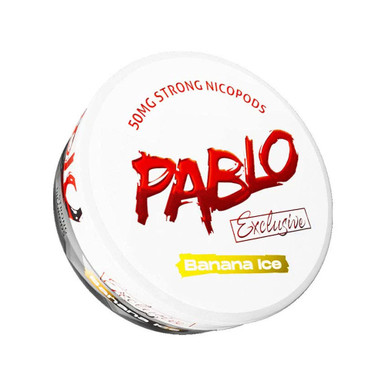
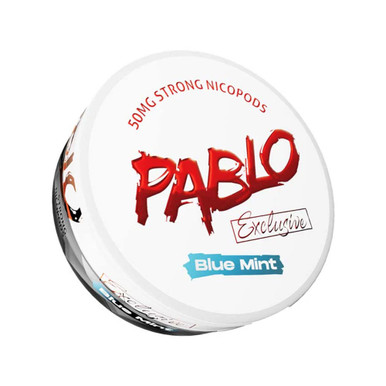
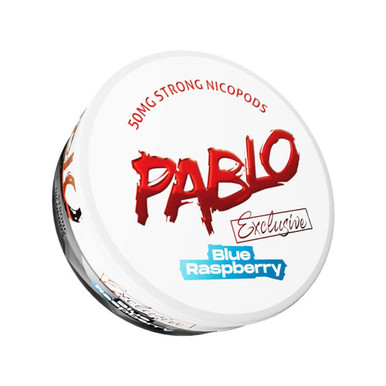
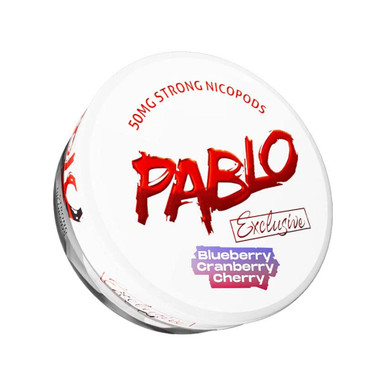
The rest of the Exclusive flavours we stock. They spread wide. Pablo Exclusive Blue Raspberry is the nearest neighbour to grape in the sweet-fruit direction. Pablo Exclusive Blueberry Cranberry Cherry stacks three dark fruits into one can and is the most complicated fruit profile we hold from the brand. Pablo Exclusive Blueberry Peach Ice pairs berry with stone fruit and adds the cool layer. Pablo Exclusive Banana Ice goes somewhere none of the others do. Pablo Exclusive Bubblegum is the confectionery end of the range outright. Pablo Exclusive Blue Mint is the one that crosses from fruit into mint. All six are priced at £3.85 and all six were listed in stock when this page was written.
What the sub-range names do not tell you. Nothing about quality, nothing about which is stronger, nothing about which came first. Manufacturers name product families for marketing reasons and we are not in a position to decode the intent behind any of them. If you want to know how two Pablo cans differ, the answer is on the flavour and the pack line, not in the sub-range word.
A note on who each part suits. The honest version is short. The ten-can packs suit people who already know the flavour family they want and would rather not reorder every couple of weeks. The single-can listings suit people who want to try something. That is the whole of the distinction, and anyone dressing it up further is guessing.
The shelves this can is filed on — including the odd one
Our record gives this product two flavour tags: grape and mint. The grape tag is self-explanatory. The mint tag is there because of the "Ice" in the name, and it is worth being straight about what that means, because a shopper filtering for mint and landing here has a fair right to be puzzled.
This is not a mint can. The cooling element is real and it is part of the profile, but the flavour that leads is grape. If you came to this page from the Mint shelf expecting a mint, the tag has slightly oversold the case and you would be better served elsewhere on that shelf — Klint Arctic Mint at £36.90 or SYX Cool Mint at £29.90 are two in-stock examples of cans where mint genuinely is the flavour. If you came from the Grape shelf, the tag was accurate and you are in the right place.
Our tags exist to route people to shelves, not to describe a taste in full. A single word cannot distinguish a cool-finished fruit from a fruit-tinted mint, and our filing errs towards including a can on a shelf rather than hiding it. That means a few cans turn up on shelves where they are technically at home and practically a bit out of place. This is one of them, and now you know.
The grape shelf itself is small. The fourteen cans we file under grape are a much shorter list than our mint listings, which run to 148 products. If grape is what you are after, you can read the entire grape shelf in a couple of minutes, which is not something you can say about the mints.
What people keep next to it
A ten-can pack of one flavour is a long run of the same taste, and most people break it up with something else on the side. Reasons attached to each suggestion below.
Same fruit, different maker. The most informative comparison you can make is another grape can, because it shows you how much of what you taste is "grape" and how much is this particular house's version of it. Elf Bar Grape Ice at £29.90 and Killa Grape Ice at £33.50 are both available now. Rush Icy Grape Pro at £19.99 would be a fourth angle on the same fruit, but it is out of stock at present — worth noting the page exists rather than expecting to order it.
Same brand, cheaper trial. Pablo Exclusive Grape Ice at £3.85 keeps you inside the brand while changing the line, and is the cheapest grape comparison on this page.
A proper mint, to reset the palate. If everything you own is sweet, everything starts tasting the same. Edge Spearmint at £14.95 is the plainest contrast available here, and Klint Arctic Mint at £36.90 is the colder one. Both in stock.
Something from another part of the map entirely. Fumi Dark Spice at £27.90 has nothing whatever in common with a sweet grape, which is the point of keeping one around. Nordic Spirit Frosty Berry at £4.49 is the cheap berry option if you want to stay in fruit but move off grape. Both listed as available.
How many is too many. Two cans on the go is manageable. Four is how people end up with a drawer of half-used cans that have all gone quiet at once. If you are buying a ten-can pack, the sensible pattern is one of these plus one contrasting can, rotated as the mood takes you, and nothing else open at the same time.
Keeping the other nine cans in good shape
Buy ten cans and you have made a storage decision whether you meant to or not. The unopened ones will be sitting somewhere for weeks, and that somewhere has consequences.
The single most effective thing is the dullest: keep the lid closed on the can in use. Air is what flattens a flavour, and on a can like this the first casualty is the sharp edge and the cool top note, leaving the sweetness disproportionately loud. A can left open across an evening is measurably duller the next day.
Heat is the second variable. A can in a sunlit window, on a shelf above a radiator, or in a car through a warm afternoon will change faster than the same can in a drawer. Nothing sophisticated is required — a cupboard away from the cooker and out of the sun handles it entirely.
Refrigeration divides people. Plenty of buyers of multi-can packs keep the unopened cans in a fridge on the grounds that cold and dark is cold and dark, and we make no claim either way about whether it helps. What we would say is that consistency beats cleverness: choose one place and leave them there, rather than cycling cans between a cold fridge and a warm room repeatedly.
Cans across the market differ in how dry or moist the pouches are, and moister builds are less forgiving of being left open or warm. Our record does not state which build this can uses, so we are not going to tell you — but if you find a can has gone quiet on you sooner than expected, storage is the first thing to examine rather than the product.
Two last points. Open one can at a time; three part-used cans ageing in parallel is a worse outcome than one can used through, and variety is better bought than improvised. And store the pack as the age-restricted product it is — out of sight, out of reach of children, and not in a shared drawer where it is anybody's.
The choice this listing does and does not give you
It gives you one: buy it or do not. There is a single strength, 10mg, and a single pack, ten cans at £39.90. No single-can option appears on this page and no alternative strength is listed.
Which makes the decision a question of confidence rather than configuration. If you already know that a sweet, cool grape is something you want a lot of, the pack is straightforward value at £3.99 a can. If you are testing the idea, ten cans is a large way to test it, and the cheaper route is sitting two paragraphs up: a single Pablo Exclusive Grape Ice can at £3.85, or one of the other grape cans from a different maker if you would rather sample the fruit across houses.
On pack economics more broadly: the per-can price on multi-can listings is often close to what single cans cost elsewhere in the catalogue, so the saving is rarely the main reason to buy a pack. The main reason is not having to reorder. Weigh it on that basis.
Checkout, delivery and proving your age
Buying is the standard route — add the pack from this listing, check out, done. £39.90 covers the ten cans.
Because this is an age-restricted product we sell it only to adults aged 18 or over. Age verification runs at checkout and photo ID can be requested by the courier at the door. Plan for the check rather than hoping to avoid it: if whoever receives the parcel cannot satisfy it, the delivery can be refused. That applies to every order of this type we send out.
Stock: this pack was listed as available when this description was written, and availability across the site changes daily. The badge on the live listing is always the authoritative answer, not a sentence in a description. Where we have linked to pages that were out of stock at the time of writing, we have said so on the link rather than letting you find out on arrival.
Routes onward from this page
If the can is not for you, the shelves are faster than the search box. The Grape shelf is small enough to read end to end at fourteen products. The Mint shelf is the opposite at 148 and is where to go if the cool part was the appealing bit. Medium Strength collects the 135 products sharing this band if you sort by the printed figure.
By brand, our Pablo brand page holds all 56 of the Pablo listings, and Cuba's own page is the neighbouring brand shelf most often looked at next. The other strength views are the Strong band and the Extra Strong band, kept as browsing aids rather than as a ladder. And if you would rather scan the lot without filters, the whole catalogue in one list is a single page.
Straight answers to the common questions
Why is a grape can filed under mint?
Because the "Ice" element earns it a cooling tag in our system, and our cooling tag is mint. It is a filing decision, not a description. The flavour that leads this can is grape; the mint tag tells you there is a cold layer, not that you are buying a mint. If you want an actual mint, the mint shelf has 148 better candidates than this one, several of them linked above.
How many pouches are in a can?
Our record does not hold that number for this product, so we will not state one. We know the pack contains ten cans; the count inside each can is not in our data. The manufacturer prints it on the label, and that is the reliable source. We would rather admit the gap than publish a figure we cannot stand behind.
Is there a stronger version of Grape Ice?
Not on this listing, which declares 10mg and nothing else. We cannot tell you what the manufacturer produces for other markets — that is outside our catalogue. Other grape cans we stock come from other makers with their own figures; Killa Grape Ice at £33.50 is one such page, and its own listing carries its own declaration. We are not going to suggest that a larger number would be a better purchase for you.
Does "Silver Edition" mean it is a premium version?
No, and we would say so even if it were flattering to the product. It is the manufacturer's name for a family of flavours. We hold no information indicating that it denotes quality, specification or standing relative to any other Pablo line. Treat it as a label that helps you find the right can, and judge the can on its flavour, pack size and price.
How sweet is it, really?
Sweet is the dominant axis. It is a confectionery-style grape rather than a fresh-fruit one, with a thin tart edge and a faint dry finish keeping it from being one-note. People who find candied flavours tiring will find this tiring. People who like that direction generally rate the grape here as a clear, recognisable version of it. Ten cans of a flavour you find cloying is the main risk on this listing, which is why the page keeps pointing at single-can alternatives.
Are the pouches dry or moist?
Not stated in our record, so we cannot answer it from here. The difference is real — drier pouches sit lighter and release more slowly, moister ones feel softer and start faster — but guessing at it on a product page would be inventing a specification. The can's own labelling is the place to check if it matters to your choice.
What do I do with a used pouch?
Bin it. Not the sink, not the street, not a plant pot. Most cans of this general design include a lid compartment intended to hold used pouches until you find a bin, and that is how most people manage it when out. We cannot confirm that feature for this can specifically because our record does not describe the packaging construction.
Is the ten-pack cheaper than buying singles?
Per can it comes to £3.99. Several single cans in our catalogue sit above and below that figure, so the honest answer is that the pack is not a dramatic discount — it is a convenience purchase that saves you reordering. Compare the per-can number against whatever single listing you were considering rather than comparing £39.90 against £3.85, which is a pack-size comparison dressed up as a price one.
Will you tell me which of your grape cans is best?
No. We stock several and they differ by maker, price, pack size and how the fruit is built, and which one suits a given person is not something we can know. What we can do is lay out the differences, which this page and the individual listings try to do. Anything beyond that would be us guessing on your behalf and calling it advice.
How does this compare with the other £39.90 packs you stock?
Several of our ten-can listings share the £39.90 price, which means the price line tells you nothing useful about how they differ — the difference is entirely in the flavour and the maker. 77 Grape Ice carries the same £39.90 for a grape profile from a different house, though it is currently out of stock. When two packs cost the same, ignore the price and read the flavour description, because that is the only axis actually in play.
Does the cool part fade faster than the fruit?
In our experience of the profile, yes — the cooling and the tart edge are both front-loaded, and the sweetness is the last thing standing. That is typical of fruit-and-ice constructions generally rather than unique to this can. It is one reason some people take a pouch out partway rather than running it to the end: the back half of the arc is a simpler, sweeter thing than the front half, and not everyone wants both halves.
Can I mix cans from this pack with other products in the same can?
There is no reason to, and a practical reason not to. Decanting pouches from one can into another loses the labelling, which on an age-restricted product with a declared strength is information worth keeping attached to the thing it describes. Keep each product in its own can, keep the lids on, and if you are carrying two flavours, carry two cans.
Do you check age on delivery?
Age verification runs at checkout and photo ID may be requested by the courier when the parcel arrives. It is not applied to a sample of orders; it is the standard for age-restricted goods. If the person at the door cannot complete the check, the delivery can be refused and the parcel will not be left.
Some of the products you linked are out of stock. Why link them?
Because they are real products we carry and stock comes back. Where a linked page was unavailable at the time of writing — 77 Grape Ice and Rush Icy Grape Pro on this page — we have said so at the link rather than sending you to a page that cannot be bought from without warning. The listing itself carries the current position.
The required notices
- Sold to adults aged 18 or over who already use nicotine. We do not supply under-18s, and orders that fail age checks are not fulfilled.
- Nicotine is an addictive substance.
- This product is not a licensed stop-smoking medicine, and it is not intended for non-smokers, anyone who does not already use nicotine, under-18s, or anyone pregnant or breastfeeding.
- Photo ID may be requested on delivery.
- Store out of the reach of children.
To finish
Ten cans, £39.90, 10mg on the label, a sweet purple-grape profile with a cold layer under it and a thin dry edge holding it together. Filed on grape correctly and on mint for the cooling, which is a shelving decision rather than a flavour claim. The sub-range name carries no grade, the strength figure is label information we cannot advise on, and the honest advice for anyone unsure is to try a single can of something comparable before buying ten of this. The links above will take you to those.
More from Pablo
More medium strength pouches
More mint pouches
Where this sits
Pablo Silver Edition Grape Ice Nicotine Pouches appears in these categories. Browse them, or jump to something close.
You might also like