Home / Extra Strong / Maggie Original Jamaican Kola Nicotine Pouches
Maggie · 16mg–60mg
Read the full guide
Maggie Original Jamaican Kola Nicotine Pouches
£39.90
✔ In stock — ready to ship
100% tobacco-free
Free over £20
Same-day dispatch
Secure checkout
This page covers Maggie Original Jamaican Kola Nicotine Pouches. The brand is Maggie, the product name on our listing is Original Jamaican Kola, and the price is £39.90. Our record carries two declared strengths against this product, 16mg and 60mg, and both variants are priced at £39.90, so the figure you choose does not move what you pay. The listing shows as in stock at the time of writing, and we hold one product image for it.
Before anything else, the plainest fact on the page: this is a nicotine pouch. It is a small dry pouch that sits in a round can, and it is used the way every other pouch on this site is used. It is not a drink, it is not a confection, and nothing about it is consumed as a liquid. The reason that needs saying out loud on this particular listing is the name, which reads like the name of something else entirely. Kola here is a flavour name printed on a lid. That is the whole of what it is.
The full guide to Maggie Original Jamaican Kola Nicotine Pouches
5,013 words on how it eats, who it suits, how to serve it and what to put beside it.
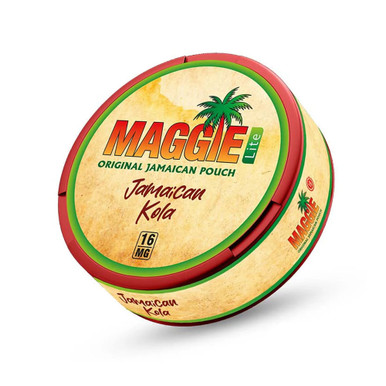
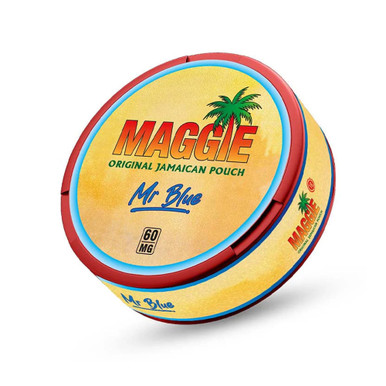
The Kola can, exactly as we hold it
The word Jamaican in the title is part of the manufacturer's own product name, carried across into our catalogue title unchanged. It is not a statement about where this product is made, and we are not going to turn it into one. We hold no manufacturer, no factory, no country and no date against this listing, so there is nothing here we could honestly say about origin even if we wanted to. Read the name as a name.
Two further gaps are worth flagging at the top rather than burying. First, the flavour field on this listing is empty — we hold no flavour classification for it at all, which is why you will not find this can filed under a flavour shelf on our site the way many others are. Second, we hold no pouch count and no cans-per-pack figure. Both of those are absences in our data rather than tidy omissions, and where the printed can carries a number, the can is the authority and this page is not.
This is an adult nicotine product, sold only to over-18s who already use nicotine. Nicotine is an addictive substance. The full compliance wording sits in its own section further down, and it is worth reading whether or not you have read it on another page here.
Kola, treated as a taste rather than a name
Because our record holds no flavour tag for this listing, everything in this section is an honest account of what the flavour family called kola generally tastes like, offered so that the name on the lid means something to you before you buy. It is not a manufacturer specification, and it is not a claim about what is in the pouch. We do not publish composition for any product on this site.
A kola note, pulled apart, has four strands that most people would recognise once they are pointed out. The first is a dark sweetness with a caramel character — not the bright sweetness of a berry, but something heavier and closer to burnt sugar, with a soft vanilla roundness sitting inside it. The second is a citrus lift at the top, nearer to peel than to juice, sharp and thin, arriving early and fading quickly. The third is a band of warm spice through the middle, the part that people reach for words like cinnamon, clove or nutmeg to describe without ever quite agreeing on which. The fourth is a dry, faintly bitter root note underneath everything else, and that last strand is the one that makes a kola flavour read as a kola flavour rather than as spiced sweetness.
That bitter floor is worth dwelling on, because it is the element most often misjudged. A lot of flavours in this category treat any bitterness as a fault to be sanded off. In a kola it is load-bearing. Take it out and the whole thing collapses into something flat and sugary that tastes like a near miss. Leave too much in and the sweetness cannot carry it. The distance between a kola pouch that works and one that does not is almost entirely a question of how that floor is balanced, and it is the reason this flavour family divides opinion more sharply than most.
There is also something a dry pouch simply cannot supply, and it would be dishonest to pretend otherwise. A large part of how a kola flavour is experienced in its more familiar form comes from carbonation — a physical prickle rather than a taste at all. None of that exists here. A pouch has to deliver its bite through the citrus top note and the spice band instead, which is why a kola in this format often reads as rounder, warmer and slower than the version held in memory. That is not a flaw; it is a consequence of the format, and knowing it in advance tends to make the first can less of a surprise.
On aroma, an open can of a kola-named pouch usually leads with the citrus, then the spice, with the caramel sitting behind both. Against the fruit-named cans on the same shelf it reads as darker and less immediate. Against a cold or mint-named can it reads as warm, since there is no cooling register in a kola construction at all.
All of that said, taste is the least transferable thing on a product page. Two people can use the same can on the same day and describe it in terms that barely overlap. Treat the above as a map of the territory rather than a photograph of it.
Moving between cans on our own shelves: what actually changes
The angle this page is written through is the one we find most useful when somebody is standing in front of a catalogue this size. People rarely buy a single can in isolation; they move — from one brand to another, from one declared figure to another, from a familiar flavour family into an unfamiliar one. It is worth being precise about which of those moves changes something real and which of them changes nothing but the label.
The declared figure changes, and it changes what shelf a can lives on
The milligram figure is the variable that moves most violently across our catalogue, and it is the one that decides where a can is filed. We sort everything into three bands. The medium band holds the lower declared figures, the strong band sits above it, and the extra strong shelf, which currently runs to 98 listings, holds the top of the range. This product is filed on that top shelf on the basis of the higher of the two figures printed against it.
What that filing does is help you find things. What it does not do is tell you anything about how a can will suit any particular person, and we are not going to pretend otherwise. We publish the figure because it is printed on the can and because it is a useful sorting key. We do not attach advice to it, we do not describe any figure as appropriate for anybody, and no part of this page should be read as a recommendation to choose one number over another.
Price changes, and we cannot always explain why
The price spread across our shelves is wide and it is not always self-explanatory. This listing sits at £39.90. So does Cuba Black Apple Juice, which is a different brand on a different shelf at an identical figure. Siberia Mini at £39.50 lands within pennies of it. And then Pablo Exclusive Banana Ice at £3.85 sits an order of magnitude below all three.
That gap is real and we are asked about it constantly. The honest answer is that our record does not hold a cans-per-pack figure for any of those listings, so we genuinely cannot tell you from our own data what a given price is buying you in units. Where a quantity is printed on the packaging, the packaging is the place to read it. We would rather say that plainly than invent an explanation that sounds tidy on a product page.
The flavour record changes, and sometimes it is simply absent
Some listings carry a flavour classification and some do not. This one does not. Others on our shelves carry a tag so broad it barely narrows anything down, and a handful carry a tag that sits awkwardly against the name on the lid. We publish what we hold. When the field is empty, as it is here, we say so rather than filling it with a guess, which is why the flavour section above is framed as a description of a flavour family rather than as a specification.
What does not change, no matter which can you pick up
Three things stay constant across almost everything on these shelves, and they are the reason moving between cans is less disorienting than the numbers suggest. The format is the first: a round can, a lift-off lid, pouches in a ring. The second is that the printed can always outranks our page, on every fact, for every listing. The third is our position on advice, which does not move at all — we will describe, compare and file, and we will not tell anyone what to use.
There is a fourth constant worth naming, which is that moving between cans costs you almost nothing except the price of the can. There is no device to buy into, no compatibility to check, nothing that ties you to a brand once you have bought from it. That is unusual enough across retail generally that people arriving from other categories sometimes assume there must be a catch. There is not one. A can from one manufacturer and a can from another sit in the same pocket and are used the same way, and the only thing you carry between them is your own preference about flavour and figure.
The practical upshot is that a can you dislike is a small mistake rather than a large one, which is the main reason we are relaxed about telling you when we do not hold a piece of information. If we cannot tell you the pouch count on a listing, you are not being asked to commit to anything beyond one purchase at a stated price.
If you want to see the scale of what you are moving around inside, the full catalogue is the place to start, and the brand shelves narrow it fastest. The Cuba brand page and the Pablo shelf are two of the larger ones and are a reasonable way to see how much the price and the declared figure move between manufacturers without leaving the same site.
The can itself, considered as an object
The second thread this page runs on is duller and more practical: the physical thing you end up carrying. Product copy tends to skip past the container as though it were packaging rather than part of the product. In this category it is part of the product, because the can is what lives in a pocket, gets opened in awkward places and takes whatever a jacket does to it over a week.
The lid, and the way it behaves
The can is the round shallow tin used across most of this category — circular, sized to sit inside a closed palm, with a lid that lifts clear and presses back down. The brand, the product name and the declared figure are printed on the lid face, which sounds like a trivial detail until there are three cans face-down in the same drawer and the lid top is the only thing distinguishing them.
Lids vary in how firmly they hold, and that variation is not something we can quantify for you per listing because we do not hold it. What is generally true of the format is that a lid which has been opened and closed many times holds less firmly than a new one, and that a can carried loose in a pocket alongside keys is more likely to work its lid loose than one carried in a bag. If a can has taken a knock and the lid no longer seats flat, it will not keep its contents in the same condition it did when it was new.
The catch compartment, and what it is for
Most cans in this format, including the round tins this brand uses, have an upper section under the lid that is separate from the ring of unused pouches below. That upper section is the catch compartment, and it exists so that a used pouch has somewhere to go when there is no bin within reach. It is a sensible piece of design and it is the single most practical feature of the can.
It also has a limit, and it is worth being blunt about it. The compartment is small and it is not sealed. Leaving used pouches in it for days rather than hours is the fastest way to make a can unpleasant to open, and it does nothing good for the unused pouches sitting directly underneath. Empty it when you empty your pockets. Used pouches go in a bin, not down a drain and not on the ground.
Portion count, and the number we do not have
The question we cannot answer for this listing is how many pouches are in it. Our record holds no count, and we are not going to estimate one from what is usual in the category, because an estimate published on a product page stops looking like an estimate very quickly. The printed can carries whatever the manufacturer has declared. If you need the number before you buy rather than after, that is a fair reason to hold off, and we would rather say so than paper over the gap.
Pocket, bag, desk drawer
In practice the format travels well because of its shape rather than any cleverness. A round tin of this size goes into a coat pocket, a jeans pocket at a push, the small pocket of a rucksack, a glovebox, a desk drawer. It does not travel well squashed under something heavy, and it does not travel well left somewhere hot, which is the subject of its own section below. People who keep more than one flavour going tend to keep one can on them and the rest somewhere fixed, simply because two round tins in the same pocket is one too many.
16mg and 60mg: two figures, one price
Our record lists this product with two declared strengths and an identical price against each.
| Declared strength | Price | Stock at time of writing |
|---|---|---|
| 16mg | £39.90 | In stock |
| 60mg | £39.90 | In stock |
That is a wide gap between two figures on one listing, and it is the thing most worth understanding about this line. The 60mg figure is a large number by the standards of our catalogue, and the 16mg figure is not. We publish both because both are declared. We do not publish the basis on which either figure is expressed, because we do not hold it, and reading it off the can is the correct way to get it.
What we will not do — here or anywhere else on this site — is present the higher figure as an upgrade, a target, a progression or an achievement. It is not a score. A bigger number on a lid is a different product specification, not a better one, and we have no view on which of the two variants suits any individual person. We cannot advise you on that, we are not qualified to, and anyone telling you otherwise on a shop page is overreaching. Both variants cost £39.90, which at least removes price from the decision entirely.
The Maggie shelf, and the six other cans on it
The Maggie brand page holds seven listings, of which this is one. It is a small shelf by the standards of this site, and an unusually consistent one — every listing on it carries the same £39.90 price and the same pair of declared figures, 16mg and 60mg. That flatness makes the range genuinely easy to compare, because moving between the cans is a flavour-name decision and nothing else. Nothing about price, format or declared figure moves underneath you.
The other six all carry flavour-style names, and, as with this one, our record holds no flavour classification for any of them. So what follows is a description of what each name points at, not a specification of what each can delivers.
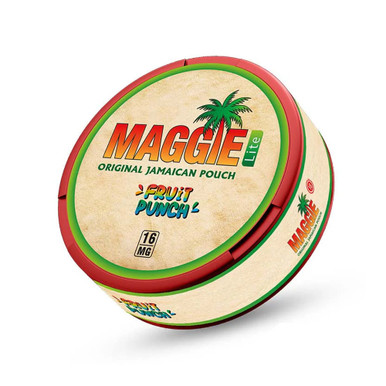
Mr Blue is the odd one out, because it is a coined name rather than a descriptive one — it does not tell you what it tastes of, and our record does not fill in the blank. Summer Fruits points at a mixed-berry direction, the sort of blend where no single fruit is meant to dominate. Fruit Punch points at a broader multi-fruit blend again, typically sweeter and more tropical in register than a berry mix.
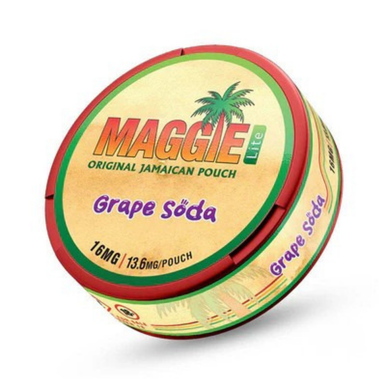
Grape Soda names a sweet, aromatic grape direction, which is a distinctly different shape from a berry — rounder, more perfumed, less sharp. Cherry Tonic Wine is the most elaborate name in the range and points at something dark, sweet and bitter-edged rather than a plain fruit. And Sweet Plantain is the most unusual of the seven, naming a soft, starchy-sweet, low-acid direction that has very little company anywhere on our shelves.
Against that set, the can on this page is the one built on spice and a bitter floor rather than on fruit. If you already run one of the fruit-named cans in the range, this is the one that will not blur into it, which is the practical reason people pair them. All seven Maggie listings sit on the same page if you would rather see them together than read about them.
What people keep alongside a can like this
Running more than one can at a time is common, and the usual reason given is that a single flavour family stops registering when it is the only thing in rotation. If that is why you are here, the useful pairing is something structurally unlike a spiced, bitter-floored flavour rather than a near neighbour.
On the darker, sweeter side, the Black Cola can from the Cuba range sits in a recognisably similar flavour territory at the same £39.90, and is the closest comparison we stock to what is on this page. Black Cherry, also £39.90, goes syrupy and aromatic with a sour lift instead, which is a genuine contrast rather than a variation.
On the fruit side, Black Blueberry is soft and evenly sweet, and Black Banana Hit is creamy and almost entirely without acidity — the furthest thing in structure from a kola note that we list at this price. Both are £39.90.
If you would rather step outside that range entirely, the Siberia Mini listing at £39.50 sits within pennies of this can on price and comes from a completely different manufacturer, and Iceberg Arasaka at £39.90 is another listing at this exact price whose name is coined rather than descriptive — our pack entry for it gives us a title and a figure and nothing else, so we are not going to characterise its taste from this page. And if price is the point of the exercise rather than flavour, the Pablo banana listing at £3.85 and the Black Apple Juice can sit at opposite ends of what we charge across the site.
Keeping a can in usable condition
A dry pouch is not delicate, but it is not indifferent to how it is kept either, and most of the complaints we hear about a can going flat or feeling dusty come down to storage rather than to the product.
Heat is the main thing. A car on a warm day is the worst place a can can spend an afternoon, and a windowsill in direct sun is the second worst. Somewhere cool, dry and out of the light is the whole of the advice: a cupboard, a drawer, a bag that does not live in a car. Cold is less of a problem than heat, though there is nothing to gain from a fridge and a can that moves between cold and warm repeatedly will attract condensation inside the lid, which is not what you want against a dry pouch.
The lid does the rest of the work. Press it back down properly every time rather than balancing it on, and a can that has lost its seat because it has been sat on is a can to use sooner rather than later. Keep the catch compartment empty between uses. And if you keep several cans going at once, use them in the order you bought them rather than letting one sit at the back of a drawer for months — not because anything dramatic happens, but because a can that has been open a long time is simply not the same as a fresh one.
Finally, and it should not need saying but it does: cans belong somewhere children cannot reach them. This is an adult nicotine product and the packaging is small, round and easy to open.
Choosing between the two variants
There are two decisions to make on this listing and only one of them is ours to help with. The flavour is fixed — this page is a single flavour name, and the choice between it and the other six on the brand shelf is described above in as much detail as we honestly hold.
The other decision is between 16mg and 60mg, and on that one our position is fixed and unhelpful by design. We will tell you what the two figures are. We will tell you that the price is the same either way, £39.90, and that both show as in stock. We will not tell you which to buy, we will not describe either as suitable for anyone, and we will not frame the gap between them as a ladder to be climbed. If you already use nicotine and you already know what figures you use, you do not need a shop page to tell you. If you do not, a product page is the wrong place to be looking for that answer.
One practical note that is not advice: because both variants sit at the same price on the same listing, the choice is not a value calculation. Nothing is being saved or spent by taking one over the other.
Buying, delivery and the age check
Everything on this site is sold to adults only, and age verification is part of the process rather than an afterthought. You must be 18 or over to order. We may ask for proof of age at the point of purchase, and the courier may ask for ID on the doorstep — that is not a formality that gets waived because an order looks routine, and an order that cannot be age-verified does not get handed over.
Orders are picked from the same stock the listing reflects, which is why we date the stock statement on this page rather than presenting it as permanent. Stock moves. If something goes out between you reading this and ordering it, the listing is what governs, not this paragraph.
Prices on this page are the ones held against the listing at the time of writing: £39.90 for either variant. Delivery terms, returns and payment are handled in the site's own policy pages rather than restated here, because a product page that paraphrases a policy tends to end up contradicting it.
Finding your way around from this page
If this can is not the one, the fastest routes out are by figure or by brand. By figure, the three bands are medium, strong and extra strong, and this listing sits on the last of those. By brand, the Maggie shelf holds the seven cans in this range, while Cuba and Pablo are two of the larger brand shelves we keep and cover a much wider spread of prices and declared figures.
If you would rather not narrow anything down at all, everything we stock is on one page and can be filtered from there. This listing does not appear on any flavour shelf, for the reason given at the top: we hold no flavour classification against it.
Questions we are actually asked about this one
Is this a drink, or something to do with one?
No. It is a nicotine pouch and it is used like every other pouch on this site. The name on the lid is a flavour name, and the flavour family it points at happens to be one people know from elsewhere. Nothing about this product is liquid, nothing about it is consumed, and the name should not be read as describing anything other than a taste. We say this at length because the name genuinely does confuse people who arrive at the listing cold.
Does "Jamaican" mean it comes from Jamaica?
It means the manufacturer chose that word as part of the product name. It is not an origin statement and we do not treat it as one. We hold no manufacturer, no country and no production information against this listing, so we cannot tell you where it is made. If that matters to you, the printed can and the manufacturer are the places to ask, not us.
Why is there no flavour listed?
Because the flavour field on our record for this product is empty. We only publish what we hold, and we would rather show a gap than fill it with an assumption. It also means this can does not appear on any of our flavour shelves, which is worth knowing if you usually browse that way. The description of the kola flavour family further up this page is our own account of the name, clearly labelled as such.
How many pouches are in a can?
We do not hold that figure for this listing, so we cannot tell you. The same is true of a cans-per-pack number — our record has nothing against that field either. Whatever is printed on the packaging is the authoritative answer. We know this is an unsatisfying response on a page that is otherwise fairly detailed, and we would rather give it than publish a number we have made up from what is typical.
Why are both strengths the same price?
Because that is what our record holds: 16mg at £39.90 and 60mg at £39.90. We do not set the manufacturer's pricing structure and we do not have an explanation for it beyond the fact of it. The practical consequence is simply that the choice between the two variants is not a money decision, since nothing changes on the bill either way.
Which of the two should I get?
We cannot tell you that. We do not give advice on strength to anybody, we do not describe any figure as suitable for any person, and we do not treat the larger number as a goal. Both figures are printed information about the product, nothing more. If you already use nicotine you will have your own view; if you are unsure, a shop's product page is not the right source for an answer.
How long do people keep one in?
It varies, and we do not publish a figure for this listing because we do not hold one. Manufacturers generally print guidance on the packaging, and that is the thing to read. What we can say about the format in general is that a pouch is used for a period and then removed, and that the used pouch goes in the catch compartment under the lid or straight in a bin.
Is it in stock?
Both variants showed as in stock when this page was written, and the listing itself is the live answer rather than this paragraph. Stock changes without this text changing, so if the two disagree, believe the listing. The Maggie shelf will also show you at a glance which of the seven cans are currently available.
Will this taste like the other Maggie cans?
Not especially. Five of the other six are fruit-named in one direction or another and one is the coined Mr Blue name; none of them is built on the spice-and-bitter structure that a kola name points at. That is precisely why people who run two cans from this range often pick this one plus a fruit one, rather than two fruit ones — the two stay distinguishable.
Can I use it indoors, at work, or on public transport?
That is not ours to answer. Venues, employers, airlines and transport operators set their own rules about what may be used on their premises and services, and those rules differ and change. We are a shop; we do not speak for any of them. Check whatever policy applies where you are, and treat the absence of a rule as an absence of information rather than as permission.
Do you have reviews or ratings for this can?
We do not publish ratings, review scores or customer comments on product pages, so there is nothing of that kind to point you at here. Everything factual on this page comes from our own catalogue record for the listing, and everything descriptive is written as description and labelled as such. Where we have no data, as with the flavour field and the pouch count, the page says so.
The compliance part, in full
This product is sold to adults aged 18 or over who already use nicotine. We do not sell to under-18s, and ID may be requested at the point of purchase and again by the courier on delivery.
Nicotine is an addictive substance.
This is not a licensed stop-smoking medicine and it is not intended for non-smokers, for anyone who does not already use nicotine, for under-18s, or for anyone who is pregnant or breastfeeding. Nothing on this page is medical advice, and nothing on it should be read as guidance on what strength any individual should use. We make no claim about the effects of this product in any direction.
Keep out of reach of children and animals. Dispose of used pouches responsibly in a bin.
In short
Maggie Original Jamaican Kola is a nicotine pouch in a round can, listed at £39.90 with two declared figures against it, 16mg and 60mg, at the same price either way. The name is a flavour name pointing at a sweet, spiced, faintly bitter family, and the word Jamaican in it is the manufacturer's naming rather than a statement about origin. We hold no flavour tag and no pouch count for it, and we have said so rather than guessing. Everything else — the other six cans on the brand shelf, the three strength bands, the wider catalogue — is a link away.
More from Maggie
More extra strong pouches
More maggie pouches
Where this sits
Maggie Original Jamaican Kola Nicotine Pouches appears in these categories. Browse them, or jump to something close.
You might also like