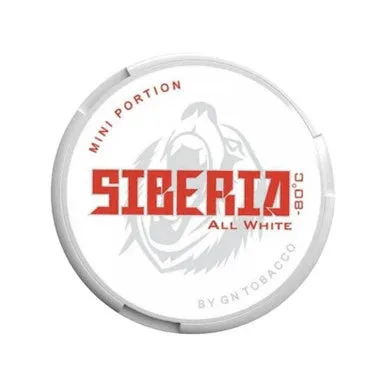
Home / Extra Strong / Siberia Original Nicotine Pouches
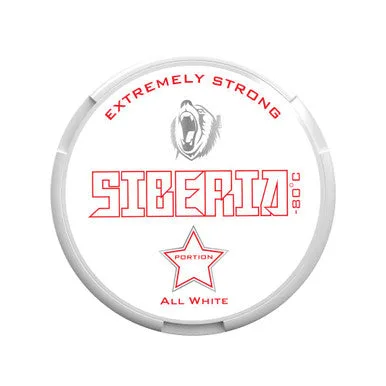
Siberia · 33mg · 10-can pack
Read the full guide
Siberia Original Nicotine Pouches
£39.50
✔ In stock — ready to ship
100% tobacco-free
Free over £20
Same-day dispatch
Secure checkout
This is the page for Siberia Original Nicotine Pouches. Brand: Siberia. Product name on the listing: Original. Price: £39.50. Declared strength: 33mg, with one purchase option at that figure. Quantity: 10 cans. Stock: available. Images held: one. Flavour tags held: none — the field is empty, which is not the same as saying the product has no flavour, and the difference is dealt with properly below.
That is the complete record. There is no seventh or eighth fact we are holding back. Everything else on this page falls into one of four categories: description of the format as a format, arithmetic on the price and quantity, comparison against other listings on our own shelves, or an explicit note that we do not hold something. We publish no ingredient lists, no explanation of what a pouch does in use, and no statement about anyone's wellbeing in either direction.
The full guide to Siberia Original Nicotine Pouches
6,242 words on how it eats, who it suits, how to serve it and what to put beside it.
The listing: Siberia Original, as our record has it
The word Original is worth addressing at the top, because it carries an implication we cannot support. It is the manufacturer's name for one of five formats in this line. We cannot tell you that it came first, that it is the reference version, that it is the one the others are variations on, or that it is the proper one to be using. Our record holds it as a product name, in the same way it holds Mini, Slim, Super Slim and Ultra Slim. Read it as a label on a can, because that is all we can verify it to be.
The object: can, lid, stack, pouch
Start with what arrives. A can in this format is a squat cylinder, small enough to sit in a closed hand, with a lid that comes off the top. Inside, the lower compartment holds the pouches in a stack. Above that, in the lid itself, the great majority of cans in this category have a shallow second compartment — the catch compartment — which exists for one purpose: somewhere to put a used pouch when there is no bin within reach. Our record carries one photograph and no specification sheet, so whether this particular can has that upper compartment is settled by the can and not by us, though it would be unusual if it did not.
Our record does not give a portion count per can. It gives ten cans and a price, and nothing about how many pouches are inside each one. We are not going to fill that in, because a portion count is exactly the sort of figure that gets copied onwards once a shop prints it, and we would be copying it from nowhere. The packaging states it.
The lid itself is worth a sentence, because it is the part that wears. Cans of this type open either by twisting or by a snap catch, and the mechanism determines how easily the thing can be opened in one hand, how positively it closes, and how much the closure can be trusted after a few weeks in a pocket. A lid that no longer seats properly is the most common reason an open can goes off condition faster than it should, and it is worth noticing rather than working around. We hold one photograph of this can and no description of its closure, so which type this is, and how firm it feels, is something the object in your hand will tell you straight away and our record cannot tell you at all.
Taking a pouch out is a one-handed operation once you are used to the can and a two-handed one before that. The stack sits flat, and pouches lift out from the top. A pouch is a small sealed sachet, and it stays sealed — it is placed between the lip and the gum and left there, and it is not chewed, bitten through or swallowed. That is the whole of the mechanics.
Footprint: what the Original format is actually choosing
Here is the honest centre of the format question, and it is narrower than the marketing around these ranges suggests. The five Siberia format names differ in the physical proportions of the pouch. That is the difference. A format with a larger footprint occupies more room under the lip and is more noticeable while it is in; a narrower or shorter one occupies less and is less noticeable. Everything people describe as the feel of a format comes back to that.
We do not hold measurements — no millimetres, no pouch weight, no dimensions at all, for any of the five listings — so we are not going to publish figures. What we can say is that the format names are about shape and nothing else, and that the practical consequences are about placement: how far along the lip a pouch will sit comfortably, whether it can be moved from one side to the other without being obvious, whether it sits still or shifts when you talk. Those are real considerations and they are the reason a format choice matters to people who already use these products.
What the format is not choosing is intensity. It is not a grade, and moving between formats is not moving up or down anything. On our record, this listing, Siberia Mini and Siberia Slim all carry the same declared figure of 33mg. Three different format names, one declared number. If the format names described a scale of severity, that could not be true. It is true, and it is the clearest available evidence that the names are about shape.
How long people keep a pouch in varies from a few minutes to well past half an hour, and we are not going to publish a typical duration because we hold no data on it and the variation between individuals is genuine. Any guidance from the manufacturer will be on the packaging. Some people find that a larger-footprint format changes how long they want one in, simply because a more noticeable pouch is more noticeable for longer; others find it makes no difference. That is as far as we can honestly take it.
Disposal, finally, is not an afterthought. A used pouch goes into general waste — not a sink, not a lavatory, not a food-waste caddy, and not the floor or a hedge. The lid compartment is the interim solution, and it wants emptying at the next bin rather than filling up over a week. Cans go back closed, stand upright where possible, and stay out of reach of children and pets, which is the single most important instruction attached to any product of this kind.
The blank flavour field on this listing
We hold no flavour tag here. All five Siberia listings share that blank, so it is a feature of how this range sits in our data rather than an oversight on one page.
A blank field is a statement about our record and not about the product. It does not mean the product is unflavoured. It does not mean its character is indescribable. It means nobody has entered a value, so we have nothing to report, and reporting nothing is the only honest option available. If we wrote a tasting note here it would be fiction with a shop's name on it, and a fabricated tasting note is worse than an absent one because it reads as though somebody checked.
The practical effect is on navigation. Our flavour shelves are generated from that field, so this listing appears on none of them. Browse by mint, fruit, coffee, cola or anything else and it will not be in the results. It appears on exactly two shelves: the Extra Strong bracket, which holds ninety-eight listings, and the brand shelf. If you found this page, you found it by brand, by bracket, or because you already knew what you were looking for.
Where the product's own description exists, it is on the can. The manufacturer's labelling is the authority, and an adult who already uses this line knows it better than our database does.
33mg, and the four brackets it gets sorted into
The figure is the manufacturer's declaration, carried onto our record as given. We use it for a single operational purpose: to decide which strength bracket a listing appears on. This one goes into Extra Strong. Nothing else in our system consumes that number.
What the figure genuinely gives you is a basis for comparing listings — this declared figure against that one — and a way of narrowing several hundred products into a browsable subset. That is not a small thing in a catalogue this size, and it is why the brackets exist.
What it does not give you, we would rather spell out than leave to inference. It does not describe an experience; translating a number into a sensation would be a claim about effects, and we do not make claims about effects. It does not come with a stated basis: our record does not tell us how the manufacturer arrived at the figure, or what it is declared per, and we will not invent that detail to make the number feel more solid than it is. It is not reliably comparable between brands, because two manufacturers printing the same number have not necessarily measured or defined the same quantity. And it is not a grade. A bigger number is not a better product.
That last point deserves more than a sentence, because the shape of a shop encourages the opposite reading. Our brackets are Low, Medium Strength, Strong and Extra Strong. Presented as a list they look like a sequence, and a sequence invites the idea of a starting point and a destination. There is no such sequence in how we think about the catalogue. The brackets are drawers in a filing cabinet. Nothing in our stock is arranged from lesser to greater, no listing is a more advanced version of another, and we are not going to describe any can as something to be handled, earned, tested against or worked towards. That vocabulary does not belong on a product page, it is not information, and it would be an appeal of exactly the kind these products should never carry.
We cannot advise which declared strength suits any individual. That is not a hedge. We hold nothing about any reader that would make such advice possible, and advice about nicotine is not ours to give in any case. What we can do, and do do, is state each listing's declared figure accurately, tell you which bracket it files under, and leave the rest alone. An adult who already uses these products is better placed on that question than a product description will ever be.
Reading a bracket page, and what ninety-eight listings look like
Since the Extra Strong bracket is one of only two routes to this page, it is worth explaining what that page actually is, because people reasonably expect more precision from it than a bracket can give.
A bracket is a band, not a value. Ninety-eight listings sit in this one, and they do not all declare the same figure — they declare figures that fall within the same band, which is a much looser statement. Two cans on the same bracket page can be some distance apart on their own labels, and two cans a pound apart in price can sit in different brackets entirely. The bracket tells you roughly where to look. The individual listing tells you what the manufacturer actually declares. If the figure matters to you, the listing page is the one to read, every time.
The other thing a bracket page cannot do is sort by anything we do not hold. Because this listing carries no flavour tag, filtering the bracket by flavour will drop it out of the results even though it is in the bracket. That is worth knowing if you are working through ninety-eight listings and wondering why a can you have seen before has vanished from the list. The same applies to the other four Siberia listings, all of which share the blank field.
It is also the reason the bracket page and the full catalogue view give quite different impressions of the range. The bracket is a slice defined by one number; the catalogue is everything, including the substantial share of it that is out of stock at any given time. Between the two, the catalogue view is the more honest picture of what is genuinely orderable and the bracket is the faster way to narrow down if the declared figure is the thing you care about.
Carrying a can, and the rules that are not ours to state
A can of this size goes in a pocket or a bag without much thought, and that is the end of what we can usefully say about carrying one, because everything else in that territory belongs to somebody else.
Employers set their own policies about what may be used on their premises and during working hours, and those policies vary enormously between organisations and are not published by us. Venues, transport operators and airlines set their own rules, and airlines in particular have their own requirements about what may be carried and where. Other countries have their own laws on these products, and those laws differ sharply from one jurisdiction to the next — some permit sale, some restrict it, some prohibit it outright. We do not publish any of that, we do not summarise it, and we would not want an adult relying on a shop's product page for it.
What we would say is that the rules exist and are worth checking at the source rather than assumed from the format. The fact that a product is small and quiet does not make it permitted somewhere, and we are not going to imply that it does. If you are travelling, the relevant authority is the airline and the destination country. If you are at work, it is your employer. If you are at a venue, it is the venue. Those are the people who can answer, and we are not going to put words in their mouths from a product description.
The brand word, and what we will not build out of it
Siberia is the manufacturer's own name for this range. It is not a statement about where the product is made, and we are not going to treat it as one. Our record holds a brand name and a product name; it holds no production location, no company history and no dates, and we do not publish information we do not have.
We are flagging this because an evocative brand word is a standing invitation to write atmosphere, and atmosphere is where invented facts come from. There is no regional description on this page, no climate, no character sketch. If there is an origin statement to be read, the packaging carries it.
The same restraint applies to the range's general standing. Ranges that sit at the upper end of declared figures collect talk, and a shop can trade on that talk very easily. We would rather not. Nothing here presents the use of any listing as an achievement or a mark of anything, and nothing here treats a can as a dare. That framing sells by appealing to something other than the product, which is the reason it is out of bounds.
The five listings on the Siberia shelf
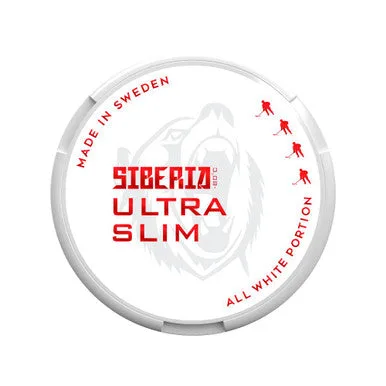
The brand shelf holds five products, and all five are marked in stock at present. This page is one; the others are the Mini and the Slim linked above, plus Siberia Super Slim at £39.50 and Siberia Ultra Slim, also £39.50.
On price, four of the five sit at £39.50 and one does not: the Slim listing is £21.95. That gap is quantity rather than a discount. This listing and the Mini are both recorded as ten cans, which puts them at £3.95 per can. The Slim listing is recorded as five cans, which puts it at £4.39 per can — less at checkout, slightly more per unit, and half the commitment to a single format. For the Super Slim and Ultra Slim listings, our sibling records carry a price but no can count, so we cannot give a per-can figure for either and will not estimate one; their own pages are where to check.
On declared figures, read each listing's own page. This one, the Mini and the Slim all show 33mg on our record. We are not going to state a figure for the Super Slim or Ultra Slim from this page, because the information we hold at this level is price and stock, not strength.
What sits near this listing on the wider shelves
Because the flavour field is empty, the neighbours here come from the bracket rather than from anything tasted. Most of them are Cuba's Black range, all at £39.90 and all available, and it happens to be one of the more evenly spread groups of flavour names on the site.
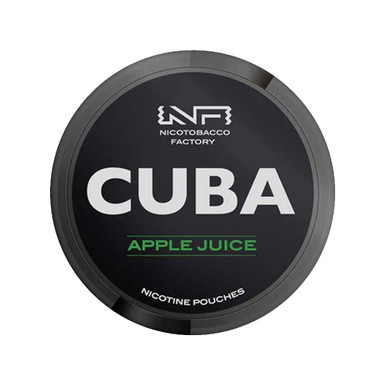
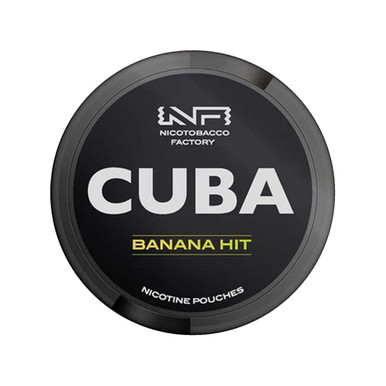
Cuba Black Apple Juice names apple as juice rather than as a sharp green note, and Cuba Black Cherry is the darker stone-fruit option alongside it. Cuba Black Blueberry covers berry, typically softer and rounder than cherry in how the name is used. Cuba Black Banana Hit heads in a creamier, less acidic direction, and Pablo Exclusive Banana Ice at £3.85 is the single-can route into that same family for anyone who would rather spend under four pounds than nearly forty.
Outside fruit, Cuba Black Cola is the soda-confectionery entry. Cuba Black Cold Dry and Cuba Black Double Fresh are the two cooling-led names in the group, both £39.90 and in stock, and they are what people generally reach for as a counterweight to anything sweet. Maggie Original Jamaican Cherry Tonic Wine at £39.90 is the most elaborately named listing in the set — that entire phrase is the manufacturer's flavour name, not our description — and it is here because it shares a shelf, not because we are claiming a resemblance.
One neighbour cannot be ordered today: Iceberg Arasaka is £39.90 and marked out of stock, so it is worth a look but not a basket. For browsing the group rather than the individual listings, Cuba's own shelf covers most of the above, and the Pablo shelf is where the low-priced single cans are concentrated.
The neighbours by price and availability
The names above tell you what each neighbouring listing calls itself. The table below gives the only other two things our record holds about them at this level — the price, and whether they can be ordered today — because a set of ten titles is easier to weigh when the numbers sit in one place. Each of them is already linked once in the section above, so the table is names only.
| Listing | Price | Orderable today |
|---|---|---|
| Pablo Exclusive Banana Ice | £3.85 | Yes |
| Cuba Black Apple Juice | £39.90 | Yes |
| Cuba Black Banana Hit | £39.90 | Yes |
| Cuba Black Blueberry | £39.90 | Yes |
| Cuba Black Cherry | £39.90 | Yes |
| Cuba Black Cola | £39.90 | Yes |
| Cuba Black Cold Dry | £39.90 | Yes |
| Cuba Black Double Fresh | £39.90 | Yes |
| Maggie Original Jamaican Cherry Tonic Wine | £39.90 | Yes |
| Iceberg Arasaka | £39.90 | No — out of stock |
Two things come out of that. The first is how tightly the group clusters. Eight of the ten sit at exactly £39.90, forty pence above this listing's £39.50, and one sits at £3.85. That is a difference in kind rather than degree: the £39.90 entries are priced the way multi-can purchases are priced across this catalogue, and the £3.85 entry is priced the way a single can is, which is why it is the one to look at if you would rather not put forty pounds behind a flavour name that is new to you.
The second is that our neighbour records genuinely stop there. They carry a title, a price and a stock flag — no can count, no declared figure, no flavour tag. A per-can comparison between this sleeve and any of the £39.90 entries therefore cannot be made from this page, because the arithmetic needs a quantity we do not hold at this level. Each of those listings holds its own record on its own page, and the Cuba brand page is the quickest way to step through the Black entries one after another. One of the ten, as the table says, cannot be ordered at all at present.
Keeping a sleeve and an open can in decent condition
Ten cans arriving at once is a storage question before it is anything else. The nine unopened and the one in use want slightly different attention.
Unopened cans want dark, dry and roughly room temperature — a drawer, a cupboard, a lidded box on a shelf. The thing to keep them away from is heat. A windowsill in summer, the shelf above a radiator, a glovebox, the warm side of a kitchen: warmth speeds up every change a can undergoes, and it does so whether or not the lid has ever been off. Cold is a much smaller problem than heat, though a can brought straight out of cold storage and opened will sometimes carry condensation on the inside of the lid, which is better wiped than left.
The open can is where habits matter. Lid properly on between uses, not resting loose. A dry-style pouch left exposed loses the little free moisture it has and ends up papery and slow; there is no way to restore it, and adding water produces a worse pouch rather than a revived one. A moist-style pouch left lying on its side lets liquid settle to one edge and the stack goes uneven. Standing a can upright solves the second problem entirely and costs nothing.
With a sleeve, the useful discipline is order: work through the cans in the sequence they arrived rather than grabbing whichever is nearest, and keep the unopened ones grouped so that is possible. Our record holds no date marking or shelf-life figure — the packaging carries it — so the practical rule is to move through a sleeve at a steady pace instead of leaving the last two cans in a drawer for a year.
Reordering, and what the stock flag is telling you
A ten-can sleeve changes the rhythm of reordering rather than the mechanics of it. With single cans the decision comes round constantly; with a sleeve it comes round once and then not again for a while, which in practice means it is easy to forget about until the last lid is already off. The habit worth having is to reorder while two or three unopened cans are still in the box, because nothing about what a stock flag says today tells you what it will say in a fortnight.
That is what the flag is, and all it is: the state of the record at the moment the page loaded. It is not a forecast. We do not publish restock dates, we hold no expected-arrival information, and we would rather leave a gap on the page than fill it with a guess that somebody then plans an order around. Where a listing is unavailable, the page stays up with its price and its record intact so the information remains readable even when the button does not work, and the Iceberg listing among the neighbours above is a live example of precisely that.
If this listing were the one showing unavailable, the five-product Siberia shelf is where you would see at a glance which of the others could still be ordered, and the ninety-eight-listing Extra Strong shelf is the wider net for anything declaring in the same range. Today all five listings in the brand are marked available, which is a better position than a good deal of the catalogue is in. The five-can Slim listing is worth knowing about for a separate reason here: at £21.95 it is the smaller outlay within the brand, which some people prefer for no reason more complicated than that the decision comes round sooner and fewer cans sit unopened in a drawer.
What there is to decide here
On this listing itself, almost nothing. One declared figure, one price, one quantity, one purchase option. There is no size choice, no strength choice and no multipack variant on the record. The decision, if there is one, is between this listing and its four siblings, and it comes down to two axes only.
The first is quantity and outlay: ten cans at £39.50 here, five at £21.95 on the Slim line, and an unstated count on the two remaining listings. The second is pouch footprint, which is what the format names are about. Neither axis is a quality judgement and neither is a progression. If you already use one of these formats, the reason to consider another is that you want a different shape under the lip or a different amount of it at once.
We are not going to tell you which format or which declared figure to pick, and nothing on this page is a suggestion that anybody begin using nicotine or increase what they already use.
Ordering, delivery and age verification
The basket applies an age check before checkout can complete. We sell only to adults aged 18 or over, the check covers every listing on the site with no exceptions, and an order that fails it is not dispatched.
At the door, ID may be requested, and where it is requested and no adult at the address can produce it, the parcel is not handed over. A ten-can sleeve is worth a moment's thought on that front: have it sent somewhere an adult will be in, with identification available, rather than to an address where it will be left on a step. The courier's rules on attended delivery are the courier's and we do not publish them, so what is asked for on the day sits with the driver within that framework.
Checking a sleeve against this page when it arrives
Two minutes when the parcel is opened, and it is the same two minutes whether the order was one can or ten. Count the cans against the ten on the record. Read the brand and product name on the label and check that they say Siberia and Original, since the five formats in this line are packaged as a family and the format word is the part that differs between them. Check the figure printed on the can against the 33mg we show. Check that every lid is seated and that none of them has been opened.
If anything printed on the can disagrees with anything printed on this page, the can wins. That is not modesty. The manufacturer's labelling is the authority for the product and our record is a transcription of it, and a transcription is the thing that can drift. The same rule covers everything the can states that we do not: the portion count inside it, any date marking, and any instruction the manufacturer attaches to the product. All of that sits on the packaging, and this page deliberately does not paraphrase it.
Then the storage question above applies straight away rather than later — nine cans put somewhere dark, dry and cool, one in use. And if the point of the order was to compare formats, the comparison is best made against the Mini format listing or one of the three slimmer names, every one of which is a single click away on the brand shelf with its price attached.
Getting back here, and where else to look
This page is reachable from two shelves and no others: the brand shelf, which holds all five formats with their prices, and the Extra Strong bracket, which is much wider at ninety-eight listings. There is no flavour route in, for the reason given above.
If the format question is what you are weighing, the brand shelf is the efficient place to compare, since every alternative is one click away with its price attached. If you want to see what else shares this listing's declared-figure range, the bracket is the place. And if you would rather ignore both and simply look at the catalogue, everything we stock is browsable in one list with stock status shown, which is the most honest view of what is genuinely orderable at any moment.
Questions this listing raises
Does Original mean it is the standard one?
We cannot tell you that. Original is the manufacturer's name for one of five formats, and our record holds it as a product name and nothing more. We have no information that it came first, that the others derive from it, or that it is the reference version of the line. Treating a product name as a ranking is exactly the sort of inference this page avoids.
Is £39.50 the price of one can?
No. This listing is recorded as ten cans, so £39.50 works out at £3.95 per can. A surprising number of listings in the same price region across the catalogue are single cans, and a number of others carry no can count on our record at all, so the quantity is always worth reading before two prices get compared.
How big is an Original pouch?
We do not hold dimensions for it, or for any of the other four Siberia formats, so we are not going to publish measurements. The format names describe the pouch's shape and footprint, and the practical difference is how much room it takes under the lip and how noticeable it is. The packaging is where measurements, if stated, would appear.
Is Original stronger than Slim?
Both carry the same declared figure on our record, 33mg, so there is nothing between them on that measure. More generally we would not frame one format as a stronger version of another even where figures differed, because a declared number is not a description of an experience. Each listing's own page carries its own figure.
What flavour is it?
Our flavour field for this listing is empty, so we cannot tell you. That is a gap in our record rather than a statement that the product is unflavoured, and we are not going to convert one into the other. The manufacturer's description on the can is the authority, and all five Siberia listings share the same blank field in our system.
Which strength is right for me?
We cannot advise on that. We hold no information about any individual reader, and a recommendation about nicotine is not something a shop should be giving. What we will do is state declared figures accurately and file listings into brackets so they can be found. The brackets are a filing system and not a route to follow in either direction.
Where is it made?
We do not hold that information and do not publish it. The brand name is a name, not a location, and we are not going to read a geography into it. Any statement of that kind would be on the packaging, which is the authority for everything printed on the can.
How many pouches are in a can?
Our record gives a can count for the listing — ten — but no portion count inside each can, so we cannot tell you. It is the kind of figure that gets repeated once a shop publishes it, which is a good reason not to publish one we have not verified. The packaging states it.
Can I buy a single can rather than ten?
Not on this listing. It has one purchase option: 33mg at £39.50 for ten cans. The Slim listing is the smaller commitment within this brand at £21.95 for five, and outside the brand there are single cans at well under five pounds, one of which is linked in the neighbours section above.
Does a bigger declared number mean a better can?
No, and nothing on this site is arranged to suggest it. The figure decides which bracket a listing files under and allows comparison between declared figures. It is not a quality score, not a ranking and not a sequence. We do not present any listing as an upgrade on another, and we would not describe using one as an accomplishment.
How long does an unopened can keep?
We do not hold a date marking or a shelf-life figure, so we cannot give you a period. The packaging carries the manufacturer's marking and that is the number to go by. What we can say practically is that heat is what shortens the useful life of a can, and that storing a sleeve somewhere dark, dry and cool-ish is worth more than any other precaution.
Can I take a can abroad or into work?
That is not a question we can answer. Airlines, destination countries, employers and venues each set their own rules, those rules differ widely, and we do not publish or summarise them. The right source is the airline, the country's own authority, or your employer, depending on which one you are asking about. We would rather say that plainly than offer a reassurance we are in no position to give.
Why do two cans in the same bracket declare different figures?
Because a bracket is a band rather than a single value. Ninety-eight listings sit in Extra Strong and their declared figures fall within the same range rather than matching. The bracket is there to narrow a large catalogue down; the individual listing is where the manufacturer's actual declared figure appears. If the number matters to you, read it on the listing.
Everything in this range is available — will it stay that way?
We cannot say. All five Siberia listings are marked in stock today, which is better than the position on plenty of the catalogue, and the Iceberg listing linked above is a current example of a neighbour you cannot order. We do not publish restock forecasts, so the stock flag on each page is the most current thing we have.
Do the neighbouring listings show a declared figure?
Not at the level our record holds them on this page. For a neighbour we carry a title, a price and a stock flag, which is why the table above has three columns rather than six. Their own pages hold their own records, including declared figures where those are held. We are not going to carry a number across from one listing to another to fill a column, because that is exactly how a figure ends up attached to the wrong can.
Is every can in the sleeve the same declared figure?
This listing has one purchase option, 33mg, and our record holds no mixed option, so there is nothing in what we hold to suggest variation inside the sleeve. We hold no packing specification, though, so that is a description of our record rather than of the box. The figure printed on each can is the authority, and reading it when the parcel is opened is a sensible two seconds.
Why is a listing still shown when it cannot be bought?
Because the record is worth reading even when the purchase is not available. Taking the page down would remove the price, the brand, the name and the stock position all at once, and somebody looking for exactly that information would be left with nothing at all. The flag on the page says plainly that it cannot be ordered. We hold no restock date, so that flag is the whole of what we are able to tell you.
Does putting a can in the basket hold it for me?
We do not publish a reservation policy, so treat the stock flag as accurate at the moment the page loaded and no further than that. The point at which an order is actually placed is the checkout, which is also where the age check runs. If availability matters to you and the basket has been sitting open for a while, reloading the listing is more reliable than trusting a page from an hour ago.
The legal position for this product
Nicotine is an addictive substance.
Siberia Original Nicotine Pouches are sold only to adults aged 18 or over who already use nicotine. The site applies an age check before checkout completes, we do not sell to anyone under 18, and ID may be requested on delivery. Where it is requested and no adult at the address can produce it, the parcel is not handed over.
This product is not a licensed stop-smoking medicine and has no authorisation of that kind. It is not intended for non-smokers, for anyone who does not already use nicotine, for anyone under 18, or for anyone who is pregnant or breastfeeding. Nothing on this page is medical advice, nothing on it suggests that anybody take up nicotine, and nothing on it recommends a declared strength or a format as suitable for any person or situation.
Keep cans closed and out of reach of children and pets, and put used pouches in general waste. Every product fact stated here — name, brand, price, declared strength, can count, stock — comes from our own record for this listing, and where the record is blank we have said so instead of estimating. The manufacturer's labelling on the packaging is the authority for anything printed on the can itself.
To sum up
Siberia Original is a ten-can sleeve at £39.50, £3.95 a can, with one declared figure of 33mg, no flavour tag in our record, and stock available. Original is a format name and we cannot tell you it means anything more than that. The format question across this range is about the shape of the pouch and how it sits, and the clearest proof of that is the three listings in the line sharing one declared figure between three different names. The 33mg decides which shelf the can files under and nothing else; it is not a grade, not a sequence, and not something we will advise you on. The brand shelf is the place to compare the five, and the bracket page is the place to see what else declares in the same range.
More from Siberia
More extra strong pouches
Where this sits
Siberia Original Nicotine Pouches appears in these categories. Browse them, or jump to something close.
You might also like