
Home / Extra Strong / Iceberg Mango Banana Nicotine Pouches

Iceberg · 20mg–50mg
Read the full guide
Iceberg Mango Banana Nicotine Pouches
£39.90
✔ In stock — ready to ship
100% tobacco-free
Free over £20
Same-day dispatch
Secure checkout
This page is about Iceberg Mango Banana Nicotine Pouches. The record behind it is short, and it is more honest to lay the whole thing out at once than to dispense it a fact at a time.
Held: a price of £39.90; two declared strengths, 20mg and 50mg, both at that same price; two flavour tags, mango and tropical; one product image; and a stock flag currently reading out of stock.
The full guide to Iceberg Mango Banana Nicotine Pouches
5,174 words on how it eats, who it suits, how to serve it and what to put beside it.
Starting with what the record says
Not held: the pack arrangement. Our record does not say whether £39.90 buys a single can or a box of several, and on this site that distinction accounts for most of the difference between a four-pound listing and a forty-pound one. We are not going to infer it. Also not held: the pouch count per can, and any format designation. Those three are answered by the listing page, the checkout and the packaging respectively.
And one more absence worth pointing at directly, because it sits in the product name. Banana is not among the flavour tags. Mango is recorded and tropical is recorded; the second fruit in the name has no tag of its own. The consequence is practical rather than mysterious: on a shelf view this can surfaces under mango and under tropical and never under banana. That is how the listing was recorded, and flagging it here saves anybody wondering why a search for one of the two named fruits does not turn it up.
A marker before going further. This is an age-restricted nicotine product for adults aged 18 or over who already use nicotine. The compliance section near the foot of the page is part of the listing and not an appendix to it.
The object itself is the familiar press-lid tin: a shallow plastic cylinder, brand and flavour printed on the lid, a catch compartment moulded into the top of it. Whatever the pack arrangement proves to be, one can is that.
How a tropical pairing gets assembled
Flavours in this format behave differently from flavours in a drink or a confection, and understanding why explains most of the gap between what a name suggests and what a can delivers. This section is about construction in general. It is not a specification for this particular listing, which we hold two tags for and no tasting note.
A flavour with nothing to ride on
Fruit flavour in a juice or a soft drink rides on liquid, sugar and often carbonation, all of which keep re-presenting it. Fruit flavour in something chewed keeps being released as the thing breaks down. A pouch offers neither. It sits in one place and releases what it has, once, over a declining curve.
What that does to a fruit note is remove its animation rather than its content. The flavour is present and identifiable; it simply arrives without lift. People describing their first pouches often reach for the word "flat", and that is a fair description of the mechanism rather than a criticism of the recipe.
Mango is one of the fruits this format suits
Some fruits translate better than others, and the rule of thumb is that fruits whose identity lives in sweetness and aroma do well, while fruits whose identity lives in sharpness do badly. Mango sits firmly in the first group. It is a broad, sweet, resinous fruit with a heavy aromatic signature and comparatively little acidity holding it together, which is close to an ideal brief for a dry format. A mango note in a pouch usually reads as recognisably mango rather than as generic sweetness, which cannot be said of every fruit on a shelf.
What mango lacks, in this format as much as in a bowl, is edge. It is a rounded flavour with no bite at the end of it, which is why makers so often pair it with something else or layer a cooling character over the top. Denssi Mango Freeze at £39.90 takes the cooling route and says so in the title; Fumi Fiery Mango at £27.90 names a different kind of addition entirely.
Banana is the odd one on any fruit shelf
Banana occupies a strange position in flavour vocabulary, and it is worth explaining because it accounts for most of the disagreement about cans that use it. For a great many people, the confectionery version of banana is more familiar than the fruit — the flavour of banana sweets and banana milkshake rather than the flavour of a banana. Those two references are not the same. The fruit is soft, mild and slightly green at the edges; the confectionery version is sharper, more perfumed and considerably louder.
A maker building a banana note therefore has to pick a side, and the choice is not obvious from the word on the lid. Our record does not tell us which reading Iceberg has taken, and given that banana is not even tagged on this listing we are doubly unwilling to guess. For a comparison point that names its intent more specifically, Pablo Exclusive Banana Ice at £3.85 attaches a cooling word to the fruit, which at least settles one variable before you open it.
What a pairing is for
Two-fruit names are structural rather than decorative. A single fruit in a flat format can read as one-note, and a second fruit gives the flavour somewhere to go — one arrives first, the other sits behind it and changes its shape. In a mango-and-banana pairing both fruits come from the soft, sweet, low-acid corner, which makes this an unusual combination: most pairings put a sharp fruit against a sweet one, and this one does not.
The likely result of pairing two soft fruits is a flavour that is broad and creamy rather than bright, with the mango's resinous aroma doing most of the identifying work and the banana adding body underneath. That is a reasonable expectation from the construction rather than a description of the can, and the can remains the authority.
| Axis | Mango | Banana | The pairing, in principle |
|---|---|---|---|
| Sweetness | High | High | Sweet-led with no counterweight |
| Acidity | Low | Very low | Among the least sharp fruit combinations on a shelf |
| Aroma | Heavy and resinous | Distinctive, often confected | Aromatic, and forward on opening |
| Bitterness | Absent | Absent | No bitterness at all |
| Cooling | Added separately if at all | Added separately if at all | Not indicated by this product name |
Ripeness is the variable nobody names
There is a further axis that product names almost never mention and that accounts for a surprising amount of the difference between two cans of nominally the same fruit: which stage of ripeness the flavour is built around. A barely ripe mango and an overripe one are quite different things to taste, one firm and faintly green and the other heavy, soft and almost honeyed. The same is true of banana to an even greater degree, where the gap between a firm fruit and a very ripe one is about as wide as the gap between two different fruits.
A maker has to choose a point on that scale and very few of them say which. It is one of the reasons two cans sharing a fruit name can read as unrelated, and it is entirely invisible from a listing. Our record certainly does not carry it. If a particular reading of a fruit is what you are after, the only reliable way to find it is to try the can, which is an argument for meeting an unfamiliar flavour in the cheapest available format rather than the largest.
Why the same fruit differs between makers
Nothing standardises a flavour name across houses. Mango from one maker and mango from another are independent attempts at a shared reference, and they can differ more than the common word implies — one leaning towards ripe and jammy, another towards firm and green, another towards the tinned version of the fruit. Velo Tropical Mango at £4.19 and Elf Bar Pineapple at £29.90 sit in the same broad family as this listing and demonstrate how wide that family is.
The flavour as taste and aroma
Everything in this section describes flavour and smell. No claim of any other kind is made and none should be inferred.
A mango-led tropical pairing sits at the sweet, low-acid, no-bitterness corner of the shelf. Against the mint family it has no cooling to speak of unless one has been added. Against roasted or herbal directions it has nothing in common at all. Against the berry group it is heavier and rounder, with less brightness and less tartness. Against the confectionery directions it is usually more clearly fruit, though a banana note can push it towards the sweet-shop end depending on which reading the maker has taken.
Aroma on opening is forward. Tropical fruits are among the more assertive smells on a shelf and an open can makes itself known in a small room. As with most sweet-led directions, the nose promises a shade more than the mouth delivers — a normal pattern, noticeable on a first pouch and unremarkable thereafter.
Over the life of a pouch the aromatic part thins before the plain sweetness does, so what remains towards the end reads as broadly sweet rather than as specifically tropical. The flavour narrows rather than merely quietening. We hold no timing information for this product and are not going to estimate any; how long a pouch stays interesting is individual.
The mango grouping on this site runs to sixteen listings, which is short enough to read in full, while the tropical grouping at fifty-eight is one of the broader flavour shelves we keep.
The pouch, as an object in use
A nicotine pouch is a small soft sealed pouch that goes in the mouth and stays there. It is not chewed and not swallowed. That is true across this site.
It sits at the front of the mouth, between the lip and the jaw, held by the lip alone. Most people move it about, more in the first week than later. If it will not sit comfortably anywhere, taking it out is the right answer.
Duration is too variable to average honestly. Reported times run from a few minutes to most of an hour, and the reason usually given for removing one is that the taste has gone. We publish no figure and suggest none; the usage guidance printed on the can by Iceberg is what applies.
Used pouches go in the catch compartment moulded into the lid. It takes three or four before the lid stops sitting flat, and a lid that does not sit flat makes the can awkward to carry and lets the contents dry out faster. From the compartment they go to a general waste bin — not a sink, not a drain, not out of a window. The tin is plastic and goes with household recycling as far as your local authority takes that grade, which varies by council and is not something we can answer for a given address.
Two mechanical points. The pouches lie flat in a ring around the base of the tin, so the first is fiddly and the rest are not, and an open can turned over empties the ring in one motion. And nothing sticks to anything, so no knack is needed to separate them.
Carrying one, and whose rules govern where
This is the section where a lot of product pages start making implied promises, so it is worth being explicit about what is description and what is not.
The can as a thing you carry
A tin is small, light and rigid, and it survives a bag or a coat pocket without complaint. There is no device involved, nothing to charge, nothing to switch on, and nothing that produces anything in the air around you. Opening one is quiet. A pouch in place shows as a slight fullness under the lip to somebody looking, and alters the shape of one or two consonants for the first minute until you stop registering it.
All of that is a description of a physical object. It is not an argument for using one anywhere in particular, and nothing in it should be read as a suggestion about setting.
The disposal problem when you are out
One genuinely practical point that gets overlooked. The catch compartment in the lid is what makes a pouch portable at the finish as well as the start, and it holds only three or four. Away from a bin, a can with a full compartment leaves you with nowhere sensible to put the next one, which is how used pouches end up in places they should not be. Emptying the compartment when you pass a bin, rather than when it is full, is the whole of the solution. A used pouch is general waste and belongs in a bin. Not a drain, not a gutter, not a plant pot, and not out of a car window.
Why we will not tell you where it is permitted
People do ask a shop to confirm that a product is acceptable in some particular kind of place — an office, a train, a pub, a hospital, a flight. It is a reasonable question to want answered and we are not going to answer it, for reasons that are practical before they are principled.
Whoever runs a place writes the rules for that place. An employer states its position in its own policies, and two employers in the same trade will state it differently. A venue posts its rules or does not. A transport operator publishes conditions of carriage that bind on its services and nowhere else. Schools, hospitals, sports grounds, airlines, landlords — each maintains its own, each revises them without notifying retailers, and large organisations frequently apply different rules at different sites. Any answer we gave would be a retailer speculating about a document it has never read.
The reliable answer is therefore an unglamorous one. We do not know the rules where you are going, we hold no information of that kind in any form, and the people who wrote them are the ones to ask. Read the policy, look for the signage, or put the question to whoever is responsible for the premises.
Across a border, it is a different question again
Rules on nicotine products vary between countries, sometimes sharply. Quantities that are unremarkable here can be restricted elsewhere, and some jurisdictions prohibit categories of product outright. We hold no information about the law anywhere other than as it applies to selling this product in the UK, and we are not equipped to advise on what anybody may carry where. Official sources for the destination are the place to check, and checking before travelling is considerably less trouble than resolving it at a border.
The underlying point
An unobtrusive format is a fact about a format. It is not a permission, and we do not intend to use it as a selling point. A page that leaned on how little anybody would notice would be quietly encouraging people to work around rules set by parties with far better standing to set them than a shop has. Describing the object accurately and leaving the rules to the people who wrote them is the more useful arrangement for everyone.
The two figures on the label
Two declared strengths are recorded here, 20mg and 50mg, both at £39.90. The milligram number is the nicotine content Iceberg declares for a single pouch. We reproduce it exactly as supplied, do not verify it independently, and would treat the printed can as correct over this page if the two ever differed.
The only comparison available between them is arithmetic: 50 is larger than 20. That compares two label declarations against each other and does nothing else. It does not describe how either will seem to any particular person, and it is not a suggestion about which to order. We hold no information about the reader of this page, and a shop that acted otherwise would be overstepping.
A higher declared figure is also not a better product, which is worth stating rather than leaving implied. Shelves arranged in ascending order invite that reading and we would rather close it off. Across the site, listings are filed into bands by declared figure: the Extra Strong shelf collects ninety-eight of them, while the Strong grouping and the Medium Strength grouping hold the lower declarations. Each listing sits on one band only, so the shelves never duplicate a product between them.
Iceberg's shelf, and a hole in our data
The Iceberg shelf holds forty listings, which puts it among the wider brand ranges we carry, and this can is one entry on it.
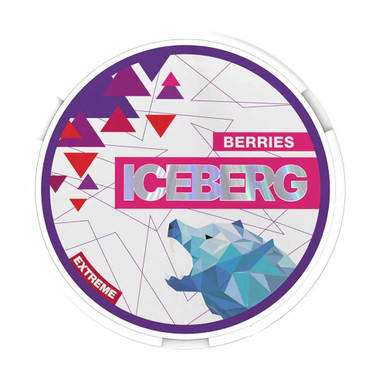
The sibling cans our record names all carry the same £39.90 as this listing, which indicates a flat price across the range rather than one that moves with flavour. Iceberg Berries and Iceberg Black Currant hold the berry ground, Iceberg Apple Lemon Pineapple is the closest of them to this can in that it is also a multi-fruit build, though with far more acidity in its components, and Iceberg Black Mint moves to the mint family. Two more, Iceberg Arasaka and Iceberg Black, are named in a way that reveals nothing about the flavour inside, which is a house habit worth knowing about before ordering one unseen.
All six of those siblings are flagged out of stock on our record at the time of writing, as is this can. That is a range-wide position rather than a comment on any one listing, and the practical upshot is that the brand shelf may be thinner than its headline count implies. Those forty listings are all reachable from the brand shelf, which is the honest route from here to the rest of what Iceberg makes.
The other way to place the can is by declared figure rather than by maker, which puts it in the extra strong band alongside products it has nothing else in common with. Brand shelves and strength bands cut the catalogue in different directions and neither is the more correct one; which is useful depends entirely on what you are sorting by.
Keeping something different alongside it
Most people who use pouches regularly keep two or three flavours going rather than one, because a single flavour met constantly stops registering. The principle worth applying is that the second can should be a contrast and not a variation — two tropical cans in rotation is two versions of the same thing.
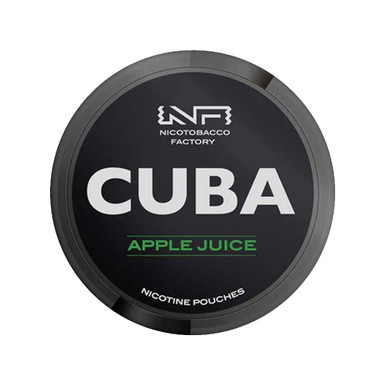
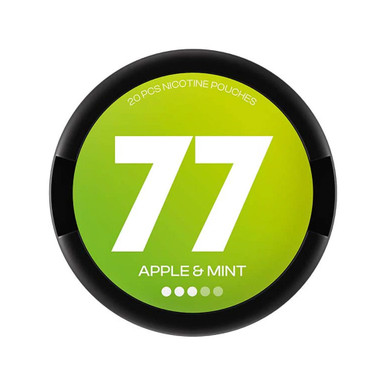
For more of the same, the tropical shelf is broad and Iceberg Pineapple Mango Coconut at £39.90 is the same maker's three-fruit take on the family, though it too is currently marked out of stock. For a genuine change of direction, the orchard fruits go somewhere else entirely: Cuba Black Apple Juice at £39.90 brings the acidity this pairing does not have, and Killa Apple at £33.50 is a plainer reading of the same fruit. Further out still, 77 Apple Mint at £39.90 layers a cooling character over a fruit, which is a different construction rather than a different flavour, and Maggie Original Jamaican Cherry Tonic Wine at £39.90 belongs to no conventional family at all.
It is worth noticing that the suggestions our system generates for this listing run wider than its own flavour — apple and cherry sit in that list alongside the tropical options. That is not a mistake. Related listings are drawn from more than flavour alone, so price band, brand and declared figure all pull products into the set, and the result is a broader neighbourhood than a pure flavour match would give.
The Pablo range is priced per can throughout, which makes it inexpensive ground for trying something unfamiliar, while the Cuba brand page gathers listings priced the way this one is. None of the above is a recommendation; it describes how customers tend to arrange a shelf.
One caution about mixing pack shapes, since it catches people out. A rotation built from one large pack and one single can works well, because the certainty is where the commitment is and the experiment costs little. Built the other way round — a large pack of the unfamiliar flavour and a single can of the reliable one — it tends to end with a box of something untouched. That is an observation about how purchases go rather than advice about how many cans anybody ought to have, and nothing in this section should be read as a suggestion to keep more of anything than you were already going to.
Keeping a can in condition
Heat and air are the two things that change a can. Sealed and unopened, it will sit in a drawer or cupboard for a long stretch without attention. Once opened, the contents begin a slow and entirely normal drift and the flavour follows.
Seating the lid firmly every time does more to slow that than anything else. A lid cannot seat properly over a full catch compartment, so emptying that compartment is a storage measure rather than a matter of neatness.
Heat is the fast problem. A car in sun, a windowsill, a shelf above a radiator or a pocket left somewhere warm will change a can in an afternoon more than a fortnight in a cool cupboard will. Cool, dark and dry is the entire instruction. A fridge is unnecessary and introduces condensation, because a cold can opened in a warm room collects water on its inner surfaces, and water arriving from outside does the contents no good.
Where several cans are in the house, opening the oldest first and putting new arrivals at the back is worth the small effort. Cans carry no visible age once out of a box, and without some such habit the last one opened is often the one that has waited longest.
Separately from all of that: keep a can out of reach of children and away from anyone it is not intended for. That is a condition of having it in the house, not a storage tip.
What is actually decidable here
One decision: 20mg or 50mg. Both are £39.90, so price does not separate them, and we are not going to steer the choice. The figures are label declarations and the relationship between them is arithmetic.
There is no pack-size decision, because no pack arrangement is recorded. Whether £39.90 buys one can or several is stated on the listing page and at checkout rather than here, and we would rather say that than produce a confident number we do not have.
If a tropical pairing is unfamiliar ground and you would rather meet it cheaply first, single-can listings from other makers are the low-cost route, and everything we stock can be narrowed by shelf to find one.
Ordering, delivery and the doorstep
The stock flag reads out of stock at the time of writing, so this listing cannot be ordered today. Stock positions change and it may read differently when you see it, but putting that at the top of the section seemed fairer than burying it.
When it is available, £39.90 is the price for whichever declared strength is selected, and delivery is by courier to a UK address with the timescales shown at checkout being the ones that apply.
Age verification applies to every order. This product is sold to adults aged 18 or over only. Age may be checked when the order is placed and photographic identification may be requested by the courier before the parcel is handed over. A delivery that cannot be verified will not be completed, which is worth knowing before somebody else is waiting in for it.
Ways out of this page
Four routes lead away from here. The mango grouping, at sixteen listings, is the narrowest and quickest to read. The tropical grouping, at fifty-eight, is broader and takes longer. The brand shelf is for anybody who came for Iceberg rather than for a fruit. And the strength bands are for anybody sorting by the number on the label.
If none of those is the question, the full catalogue index holds everything, though narrowing outward from a small shelf is usually faster than scrolling inward from the whole. For somebody who arrived wanting mango specifically and has found this listing unavailable, the sixteen mango listings are the shortest path to an alternative, and it is worth reading which of them attach a cooling or other qualifier to the fruit before treating any of them as a like-for-like swap.
Questions we get asked
Why is banana not one of the flavour tags?
Because it is not in our record. The flavour field holds mango and tropical, and the second fruit in the product name has no tag of its own. That reflects how the listing was recorded rather than anything about what is in the can. The practical effect is that it will not appear under a banana heading on a shelf view, which is why we flag it rather than leave it to be discovered.
How many cans does £39.90 buy?
We do not hold that figure. The pack arrangement field is empty for this listing, and since prices here run from under four pounds for a single can to around forty for a multi-can pack, the difference is not a detail. We will not infer it from the price. The listing page and the checkout state what is being bought.
How many pouches are in a can?
Not recorded either. The field is absent from our data and we would rather say so than publish a number based on what cans typically contain. The printed can carries it, and every pouch inside one tin matches every other, so there are no surprises after the first.
Which fruit dominates?
We cannot say. Our record holds flavour tags rather than a tasting note, and the order of words in a product name is not a dependable guide to which note leads. Given that only one of the two named fruits is tagged at all, we are particularly unwilling to guess here. The can is the authority on the balance.
Is there any cooling in this one?
Our record does not say, and the product name includes no cooling word, which is suggestive without settling it. Makers who build a cooling character into a fruit generally name it in the title, as several other mango listings on this site do. Since we cannot confirm it either way, the packaging is where to look.
Why do both strengths cost the same?
Because that is what the record shows. Both variants are £39.90 and neither carries a premium. It is worth saying because people often assume the larger declared figure costs more, and on this listing it does not. Price is no guide to the declared figure here and the declared figure is no guide to price.
Is the 50mg the proper version?
No. Both are recorded declarations and neither is the real one with the other as a lesser alternative. A larger number on a label is a larger number on a label, not an upgrade and not a mark of quality, and which figure suits a person is not something a retailer can know or should guess at.
Can I use one in the office or on a train?
That is not something we can tell you. The rules for a workplace belong to the employer and the rules on a service belong to the operator; they differ from one another and they change without anybody informing a shop. Read the policy, look for the signage, or ask whoever runs the place. A retailer guessing about somebody else's rules would be doing you no service at all.
What about taking them abroad?
We hold no information about the law outside the UK and cannot advise on it. Rules on nicotine products differ between jurisdictions, and some restrict quantities or prohibit categories entirely. Official sources for the destination are the right place to check, and doing so before travelling is much easier than dealing with it on arrival.
What do I do with a used pouch when there is no bin nearby?
It goes in the catch compartment in the lid until you reach one. That compartment holds three or four, so the workable habit is emptying it whenever you pass a bin rather than waiting until it is full. A used pouch is general waste. Not a drain, not a gutter, not a plant pot, and not out of a car window.
When will it be back?
We do not know. Our record holds a stock flag rather than a restock schedule, so any date offered would be made up. Checking the brand or flavour shelves from time to time is more dependable than waiting on an estimate that does not exist.
Why does the related-products list include apple and cherry?
Because related listings are not selected on flavour alone. Price band, brand and declared strength all pull products into the set, so a tropical listing can sit beside an orchard-fruit one or something from no recognised family at all. It is working as intended rather than misfiring. If you want a strictly flavour-matched list, the flavour shelves do that job properly and the related set does not.
Is a tropical flavour a sweet one?
Generally yes, and this pairing more than most, since both named fruits come from the low-acid end. That makes it sweet-led with very little sharpness to balance it and no bitterness at all. Whether that reads as pleasant or as too much is a matter of preference and we have no way of predicting which it will be for you. It is a description of taste and nothing more.
Who makes it, and where?
We hold the brand name and nothing beyond it. Country of origin, manufacturing arrangements and company details are not fields in our record, and we do not publish facts of that kind unless we hold them. Packaging is normally where such things are declared.
Compliance and legal
This product is for adults aged 18 or over who already use nicotine. It is not sold to under-18s, and nothing on this page is addressed to anybody who does not already use nicotine.
Nicotine is an addictive substance.
This product is not a licensed stop-smoking medicine and no medicinal claim is made for it. It is not intended for non-smokers, non-nicotine-users, under-18s, or anyone who is pregnant or breastfeeding. Nothing on this page constitutes medical advice, and anybody with a question about their own circumstances should raise it with a qualified professional rather than with a retailer.
Age may be verified when an order is placed, and photographic identification may be requested by the courier on delivery. Orders that cannot be verified will not be completed. Keep out of the reach of children and away from anyone the product is not intended for.
The short of it
Iceberg Mango Banana is priced at £39.90, declared at 20mg and 50mg for the same money, tagged as mango and tropical but not as banana, and currently showing out of stock. The pack arrangement and pouch count are absent from our record and belong to the listing page and the packaging. Flavour names describe taste; milligram figures describe labels; and where the rules of a place are concerned, the people who wrote them are the ones to ask.
More from Iceberg


More extra strong pouches
More tropical pouches
Where this sits
Iceberg Mango Banana Nicotine Pouches appears in these categories. Browse them, or jump to something close.
You might also like