
Home / Extra Strong / Iceberg Pineapple Mango Coconut Nicotine Pouches
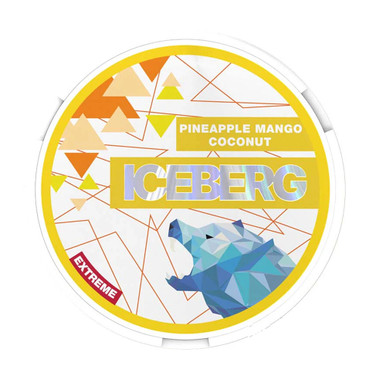
Iceberg · 50mg
Read the full guide
Iceberg Pineapple Mango Coconut Nicotine Pouches
£39.90
✔ In stock — ready to ship
100% tobacco-free
Free over £20
Same-day dispatch
Secure checkout
Everything we can verify about Iceberg Pineapple Mango Coconut Nicotine Pouches fits in a short paragraph, so it goes first. The brand is Iceberg. The manufacturer's name for it is Pineapple Mango Coconut. There is one declared strength, 50mg, and one price, £39.90. Our flavour classification carries two tags: mango and tropical. One photograph is on file. The availability field reads out of stock.
That last item shapes the rest of the page, so it is better dealt with up front than discovered at the bottom. You cannot buy this today. No date is held for its return, no reservation list exists, and we are not going to offer a guess to keep you reading. The record stays published because an accurate record is worth having, but treat this as reference material rather than as a shop shelf.
The full guide to Iceberg Pineapple Mango Coconut Nicotine Pouches
5,236 words on how it eats, who it suits, how to serve it and what to put beside it.
Iceberg Pineapple Mango Coconut: the entry in full
The three-fruit name against a two-tag classification is the first thing on this listing that needs a straight explanation. The lid names pineapple, mango and coconut. Our tagging records mango and tropical. Mango is there; pineapple and coconut are not, and neither of them has a tag of its own on this entry. The word tropical is presumably doing the work for them, but that is us reading our own data rather than reporting it. Practically, it means our filters will surface this can under mango and under tropical, and a search of ours for pineapple or for coconut will not find it. That is a shortcoming in our classification, not a statement about what is in the can.
The blanks are worth listing too. No cans-per-pack figure, so the £39.90 cannot be resolved into a price per can. No portion count. No weight, no format designation, no moisture description, no shelf-life statement. Those fields stay empty throughout this page. Nowhere below is a typical figure borrowed from the category and presented as though it belonged to this listing.
The format, stripped to the mechanics
A pouch is a small sealed portion placed in the mouth between the lip and the gum, left in position, then taken out and thrown away. It is not chewed and it is not swallowed. That is all there is to the mechanism, and everything else people say about it is either preference or speculation.
Placement comes down to what suits you. The front of the upper lip is where the majority settle, because the lip holds the portion in place and it can then be ignored. Behind the lower lip is a common alternative. Some tuck one to one side. If a position rubs, shift it; if none is comfortable, take it out rather than persist.
On how long a portion stays in, we publish nothing, because the honest answer is that it varies from a few minutes to most of an hour depending entirely on the person. What usually prompts removal is the flavour going quiet. We set no times, suggest no number per day and offer no guidance of any sort on quantity. The usage wording the manufacturer prints on the packaging is the instruction that applies, not anything a retailer writes.
The container deserves a line of its own, since it is the part you handle every day. It is a shallow plastic disc, a little over a centimetre deep, with a lid that lifts clear rather than hinging and presses back onto the rim until it seats. Inside, the portions stand in a ring against the wall, which stops a can turning into a jumble when it is carried about. Moulded into the top of the lid is a second, smaller chamber kept separate from the unused portions, and that chamber is for finished ones. The lid face carries the brand, the flavour name and the declared figure, and that printing is the only way to tell two otherwise identical cans apart without opening both.
For disposal: general waste, or the shallow catch chamber in the lid when there is no bin nearby. Never a sink or a drain. The can is plastic and can go in with household recycling to whatever degree your own council accepts that grade, which differs by area and is not something we can check for an address.
What else £39.90 buys on our shelves right now
The comparison most people actually want is not between this can and the concept of a pouch, but between this can and the other things sitting near it in our catalogue. This section does that, using nothing but prices and tags from our own records.
Start with the group priced identically. At £39.90 you are looking at the same money as Denssi Mango Freeze, which is the closest parallel we stock on tags — mango, at the same price, from a different maker, with a cool element implied by the name that this listing's tags do not record. Cuba Black Apple Juice is also £39.90 and heads for orchard fruit rather than tropical. 77 Apple Mint, same price again, pairs apple with mint, which is a different kind of proposition entirely. And Maggie Original Jamaican Cherry Tonic Wine occupies the same price point with the most unusual flavour description in this whole group.
Step down the ladder and the tropical idea keeps appearing at lower prices. Killa Apple is £33.50. Elf Bar Pineapple comes in at £29.90 and is the only listing in this neighbourhood that names pineapple on the lid, which makes it interesting to anyone who arrived here for the pineapple element specifically. Fumi Fiery Mango is £27.90 and is the second mango-named can on the list. Then the price falls away sharply to Velo Tropical Mango at £4.19 and Pablo Exclusive Banana Ice at £3.85. Every can named so far in this section is in stock. The one exception in the group is Iceberg Mango Banana at £39.90, which shares this listing's brand and its mango tag and is, like this one, unavailable — worth knowing about, not worth clicking through to buy today.
A spread from £3.85 to £39.90 across ten products with overlapping flavour tags looks like nonsense until the reason is stated, and the reason is mostly that the listings are not all counting the same thing. Some of our entries are priced as one can. Others are priced as a pack containing several. Our record for this Iceberg listing has no cans-per-pack figure in it whatsoever, which means we cannot tell you which of those it is, cannot calculate its cost per can, and cannot therefore tell you honestly whether it is expensive or cheap relative to the £3.85 entry. Anyone ranking these ten on headline price alone is ranking numbers that may describe different quantities of goods, and we would rather point that out than let the table imply a conclusion it does not support.
What can be compared fairly across the group is flavour territory, and there the picture is clear enough. If mango is the part of this name that drew you, the Denssi mango can at £39.90 and the Fumi mango listing at £27.90 are the two direct parallels, with the Velo tropical mango can at £4.19 as a third. If pineapple was the draw, the Elf Bar pineapple listing is the only other can here that names it. If it was the blended-fruit idea rather than any single fruit, the Iceberg mango and banana can is the other multi-fruit entry in the group, though it is out of stock as this one is. And if coconut was what you came for, we have to be blunt: no other listing in this group names coconut, and we hold no coconut tag at all in our classification, so we cannot point you at one.
The wider shelves are worth a look for the same exercise at scale. Our tropical shelf runs to 58 listings and the mango shelf to 16, and this can appears on both. The band it sits in, Extra Strong, holds 98 cans in total across every flavour we carry. Combining a flavour shelf with a band is the quickest way to see the real shortlist rather than a long list.
There is a pattern in that price ladder worth naming, because it makes the catalogue easier to read once you have seen it. The listings clustered at £39.90 tend to come from the brands we carry in depth rather than in single lines, and the listings down at £3.85 to £4.49 tend to be from ranges we hold in a different form. That is a pattern in how our catalogue was assembled, not a statement about quality, and nobody should read a higher price as a mark of a better can or a lower one as a mark of a worse one. Two products at the same price can be entirely unalike, and two products at very different prices can be closer than the numbers suggest. The price field tells you what it costs. It is not doing any other work.
One honest limit on all of the above: these are comparisons of records, not of products in the mouth. We run no tasting panels and publish no scores, so nothing here ranks one can above another on quality. Price and tags will get you to a shortlist of three or four. They will not choose for you, and we are not going to pretend otherwise.
Three fruits, described as flavours
The name promises a blend, and a blend is a different thing to describe from a single fruit, because what matters is not only the components but which of them leads.
Pineapple is the sharpest of the three by some distance. Its character is acidic and bright, with a distinctive sweet-sour tension and a slightly resinous edge underneath that no other common fruit has. In a flavouring it tends to sit at the front and announce itself early, and it is the component most likely to read as tangy.
Mango is the round one. Sweet, thick-tasting, with a soft perfumed quality and very little acidity to speak of. Where pineapple is angular, mango is broad. It fills out the middle of a blend and is usually the part that people identify as making a tropical flavouring taste rich rather than merely sweet.
Coconut is the odd component, and the most interesting of the three, because it barely behaves like a fruit flavour at all. It has almost no acidity, very little sugar character of its own, and what it contributes instead is a creamy, slightly nutty, faintly milky impression. In a blend it works as a softener: it rounds off the edges of the sharper components and gives the whole thing a smoother finish. Coconut is also the component that translates least reliably into a dry format, because so much of what makes coconut recognisable in real life is texture and richness rather than aroma alone.
Put those together and the shape of a pineapple-mango-coconut blend is reasonably predictable in outline: a sharp, bright opening from the pineapple, a broad sweet middle from the mango, and a softened, rounder finish where the coconut does its work. Which of the three leads depends entirely on how the flavouring is balanced, and that is precisely what our record does not tell us. We hold two tags, mango and tropical. We do not hold a note on the balance, and we are not going to invent one.
A blend also behaves differently over the life of a portion than a single-fruit flavouring does, and this is worth knowing because it accounts for most of the confusion people report about tropical cans. Components do not fade at the same rate. The lightest and brightest elements — the pineapple end of a blend like this — are the first to thin out. The broad sweet middle holds longer. Anything creamy or rounded tends to be the last impression standing. The practical effect is that a blended can tastes like a different blend at minute fifteen than it did at minute two: sharper and more complicated at the start, plainer and rounder later. Neither version is the flavour going wrong. It is the sequence the format imposes on anything with more than one component in it.
On aroma, blended tropical flavourings usually present as sweeter on opening than they taste in use, with the pineapple element most audible in the scent because it is the most volatile of the three. A coconut component is generally quieter in the can than it is on the tongue.
Keeping a can in usable condition
Storage is where a perfectly good can most often goes wrong, and because the damage is invisible, people frequently blame the product instead of the shelf they left it on. This section is therefore longer than a storage section usually deserves.
The rules are simple. Cool, dry, dark, lid on properly. A drawer indoors is close to ideal. A cupboard is fine. A bag pocket is fine. A windowsill, a dashboard, a car door bin, a shelf above a radiator and a coat left on a hot pipe are all bad, and they are bad in the same way for the same reason.
That reason is heat, and heat is the single biggest enemy of flavour in this format. The components that make a flavouring recognisable are largely volatile, which is exactly why you can smell a can when you open one. Warmth accelerates their escape. A can that has spent a July afternoon in a parked car has lost some proportion of its flavour to the air inside the lid, and there is no getting it back. The frustrating part is that nothing looks different afterwards — the portions appear identical, the can is intact, and the only symptom is that the flavour reads flat and general rather than specific. Blended tropical flavourings suffer this more visibly than most, because the first thing to go is the bright top note, which in a blend like this is the pineapple element carrying much of the identification.
The lid is the other half of storage and the half entirely within your control. Seated flush all the way round, it keeps the contents in roughly the condition they arrived in. Perched on at an angle — which is what happens when you press one side down and assume the rest has followed — it leaves a gap, admits air continuously, and will eventually be knocked open by keys in a bag. Two seconds of pressing round the rim with a thumb is the entire discipline.
Something should be said about dry and moist portions, since this is the storage question we are asked most and since our own record is silent on which this is. Products in this category are made across a spectrum from genuinely dry to noticeably moist, and the two behave differently in storage. Drier portions are more tolerant of time and handling and tend to lose flavour gradually. Moister ones generally present their flavour more readily and are less forgiving of heat and of an imperfectly closed lid. We hold no moisture description for this listing, so we are not going to tell you which end of that spectrum it sits at. The packaging and the can itself will tell you more in five seconds than we can from a database field that was never filled in.
Cold is not the answer to heat, incidentally. Refrigerating a can is unnecessary, and a can taken from a fridge into a warm room collects condensation on the inside of the lid, which is not an improvement. Room temperature, out of the sun, is what the format wants. Freezing is worse again and has nothing to recommend it.
Carrying a can is a form of storage too, and it is the form most people get wrong without noticing. A can in an inside coat pocket is in a reasonable environment. A can in a bag that spends the day in direct sun through a car window is not, and neither is one in a trouser pocket that gets sat on, because repeated pressure works the lid loose long before the plastic gives up. A can sharing a bag with keys and coins will lose its lid printing to scuffing, which sounds cosmetic until you own three cans from the same brand and cannot tell which is which without opening all of them. If you carry more than one, a small inner pocket or a pouch of its own solves both problems at once.
One last practical note. An opened can that is going to be used slowly benefits from being kept somewhere with a stable temperature rather than somewhere that swings — a drawer rather than a windowsill, an inside pocket rather than a car. Repeated cycles of warm and cool do more damage than a constant moderate temperature, because each warm phase drives off a little more and the cool phase does not put any of it back. And because our record carries no shelf-life figure, we will not tell you how long an opened can stays good; the manufacturer's printing on the packaging is where that information belongs.
50mg, considered as a printed number
One declared figure sits on this listing: 50mg, at £39.90. There is no second variant, which means there is no decision to make within the listing itself.
That figure is the manufacturer's declaration about the product's content and it appears here because it is printed on the packaging and you are entitled to see what the listing says. It is not a grade, not a score and not a measure of quality. We are not going to tell you that a bigger number is a better buy, a more serious purchase or a mark of anything at all, because it is none of those things.
The figure is also a poor predictor of what a can is like to use. It says nothing about how heavily the flavouring is applied, how long the flavour holds, how a portion feels in place, or how one maker's stated number compares with another's. Manufacturers arrive at these declarations in different ways, so matching numbers across brands do not make matching products.
Our shelves sort declared figures into three bands purely so that the filters do something useful. This listing is filed in the top band, alongside the 97 other cans on the Extra Strong shelf. Beneath it sit the Strong band and Medium Strength. Those are shelves for browsing, not advice about where anybody belongs, and we will not treat them as advice.
Iceberg as a block in the catalogue
Iceberg is one of our larger brand ranges: the Iceberg shelf holds 40 listings. Across those, the flavour spread is broad — mint readings, berry readings, tropical readings, confectionery readings — with declared figures concentrated toward the upper end of our banding. That describes a catalogue, not a manufacturer.
A warning has to come before the sibling links rather than after them: none of the Iceberg cans named below is in stock. Every one of them is in the same position as this listing. They are here so that the shape of the range is visible and so that the names mean something when you meet them again, not as alternatives you can order this week.
The closest relative by flavour is Iceberg Mango Banana at £39.90, the only other mango-tagged can in the brand's range on our shelves, and the one to compare against if mango is the part of this name that matters to you. Iceberg Apple Lemon Pineapple, also £39.90, is the only other listing in the range that names pineapple, which makes it the nearest thing we hold to the pineapple element here. Neither can be bought at present.
Further out, Iceberg Berries and Iceberg Black Currant are both £39.90 and take the berry direction instead of the tropical one, while Iceberg Black Mint at the same price is the range's mint-named entry and about as far from a tropical blend as the brand goes on our shelves. Two more, Iceberg Black and Iceberg Arasaka, are £39.90 each and carry names that tell us nothing about flavour at all; we hold no tag against either that would let us describe them honestly, so we will not try. All of those are out of stock too, and the brand shelf is where live availability actually lives.
For a comparison across makers rather than within one, the Pablo range and the Cuba range are the other substantial blocks we carry, and both are represented in the price comparison further up by the £3.85 Pablo banana can and the Cuba apple juice listing.
What tends to sit alongside a tropical can
People who buy this format regularly usually keep more than one flavour going at a time. The reason given is nearly always the same: a flavour used continuously stops registering, whereas the same flavour alternated with something unlike it keeps its outline. That is an observation about how people buy, not a suggestion about how anyone should.
Where a blended tropical can is the main line, the useful second can is normally something with no overlap at all. The 77 apple and mint listing at £39.90 is a clean contrast — cool and orchard against warm and tropical. The Maggie cherry tonic can, same price, is the most distinctive flavour description in our neighbour list and about as far from this one as our catalogue reaches. Killa's apple can at £33.50 is a simpler, single-fruit contrast.
Where you would rather stay tropical and simply change which fruit leads, the shortlist is Elf Bar's pineapple can at £29.90 for the sharp end, the Denssi mango listing at £39.90 for the round end, and the £4.19 Velo tropical mango for the same fruit at a tenth of the headline price. All three are in stock and all three sit with this one on the tropical shelf, if you would rather browse the full 58 than take our three.
There is only one version of this listing
Some listings ask you to choose between declared figures or pack sizes. This one does not, and rather than dress up an empty section we will simply say so. One strength, 50mg. One price, £39.90. No alternative pack size on the record, and no format variant. The only decision this listing presents is whether to buy it, and at the moment not even that, because it is unavailable.
It follows that there is no value comparison to run within the listing. Because the cans-per-pack field is also empty, there is no reliable per-can comparison to run against other listings either. The price stands as shown, undecomposed, and we would rather say that plainly than construct a false precision around it.
Ordering and the checks attached to it
For when something here is in stock: the catalogue is at everything we stock, and availability appears on each listing rather than being revealed at the checkout, so an unavailable can is visible as such before you invest any time in it.
These are age-restricted goods and the checks apply on both sides. Sales are to adults aged 18 or over only. An age verification check may be run against an order, and the carrier may ask for photographic identification at the door before releasing a parcel. If nobody able to satisfy that check is present, the parcel is not left behind, which is the law being followed rather than the driver being awkward.
Postage, carriers and timings live at the checkout rather than on this page, because they change and a product page quoting them would go stale. It is sensible to expect an age-restricted delivery to behave a little differently from an ordinary one at the final step.
Getting around the rest of the site
There are five routes to this listing. By brand, the full Iceberg range. By flavour, either the mango listings or the tropical listings, since this can is tagged on both. By declared figure, the top band. And in the complete catalogue along with everything else.
Stacking filters beats scrolling one. Mango plus a band, or tropical plus a brand, cuts several hundred listings down to a handful in one step. If you are surveying rather than hunting, the other two bands — the medium shelf and Strong — hold the rest of what we carry between them, and working across all three is the only way to see the whole spread in one go.
Questions, with the gaps left visible
Can I buy this right now?
No. The listing is marked out of stock and there is no way to complete a purchase of it today. We do not hold a restock date, we do not run a notification list for it, and we are not going to make up a timeframe. If tropical flavours at the top of our banding are what you are after, the tropical shelf and the Extra Strong band are both linked from this page, and the price comparison above lists ten alternatives with their costs attached.
Why does the classification not mention pineapple or coconut?
Because our tagging is coarser than the name on the lid. We hold two tags against this listing, mango and tropical, and no tag for pineapple or coconut exists on this entry. We are not going to add one retrospectively on the basis of a product name. The practical consequence is that our filters find this can under mango and tropical only, and that is a limitation of our classification rather than a comment on what the can contains.
Do you stock anything else with coconut in it?
Not that we can point you to. There is no coconut tag in our flavour classification at all, and no listing in the neighbour group for this product names coconut on its lid. That means we have no honest way of finding you a coconut alternative, and rather than offer a tropical blend and imply it contains coconut, we would rather tell you plainly that we cannot help with that particular request.
How many pouches come in a can?
We do not hold that number. The portion count is absent from our record, as is any cans-per-pack figure, and we are not prepared to supply the count that is usual across the format and let it read as a fact about this product. The manufacturer prints a count on the packaging and that is the place to find it.
Is there a lower-strength version?
Not on this listing. It carries one declared figure, 50mg, with no second variant. Our catalogue does hold cans with lower declared figures on other shelves, and the Medium and Strong bands are where those are filed, but we are not going to put any of them forward as suitable for you. Choosing a declared figure is the buyer's decision and not one a shop should be influencing.
Why is it the same price as cans that look completely different?
Because price in this catalogue reflects what a listing costs us and what it was set at, not a formula based on flavour or declared figure. Several unrelated products sit at £39.90 for that reason. It is also worth repeating that we do not hold cans-per-pack figures for most of these listings, including this one, so identical headline prices do not necessarily mean identical quantities of goods.
Will it taste the same as a mango can from another brand?
Almost certainly not, and it is worth understanding why. A flavour word names a target, not a recipe. Each maker reaches that target with its own balance of flavouring, sweetness and base, applied at its own concentration. Two cans tagged mango can differ in which aspect of the fruit they aim at and how heavily it is laid on. A shared tag tells you the neighbourhood and very little about the house.
Can I keep a can in the fridge?
You can, but there is no reason to and a small reason not to. Refrigeration offers no benefit for this format, and a cold can brought into a warm room collects condensation inside the lid, which does the contents no favours. A cool, dark, stable spot at room temperature is what the format wants. Heat is the thing to avoid, not warmth in general, and a drawer indoors handles that perfectly well.
How long does an opened can keep?
We hold no shelf-life figure for this listing, so there is no number we can honestly give you. What we can say is that the lid being properly seated makes far more difference than anything else within your control, and that heat shortens the useful life of any can in this format regardless of what the packaging says. For a stated period, the manufacturer's own printing is the only reliable source.
Where is this made?
Unknown to us. We hold no country of origin on this record and we are not going to infer one from a brand name. Manufacturer details appear on the packaging of products in this category, and that is the place to look. We would rather leave the question open than answer it with something that merely sounds authoritative.
Does a can smell through the lid?
Not to any noticeable extent when the lid is on properly. The aroma you get from one of these is released when the lid comes off rather than seeping continuously, so a closed can in a bag or a pocket is not something people around you will detect. A lid put back on crooked is a different story, and the same crooked lid is the reason a can eventually empties itself into a coat pocket, so it is worth pressing the rim down flush every time.
Can I put a used pouch back in the can with the fresh ones?
Please do not. The chamber in the lid exists precisely so that you do not have to, and it is kept separate from the unused portions for obvious reasons. When there is a bin available, general waste is where a finished portion belongs. When there is not, the lid compartment holds it until there is. What it should never go into is a sink, a drain, or the ground outside.
Are there reviews or a rating?
No, and we will not be inventing any. There is no score, no rating and no customer feedback attached to this listing. Everything on this page is drawn from the catalogue record — brand, name, price, declared figure, flavour tags, image count and availability — or is presented plainly as general information about how this format behaves. None of it is a verdict on the product.
The required notices
Age restriction: 18+. This product is sold only to adults aged 18 or over who already use nicotine. Age verification may be carried out when an order is placed, and ID may be requested by the carrier at the point of delivery. A parcel that cannot be handed to a verified adult will not be left.
Nicotine is an addictive substance. The flavour name, the format and the figure on the lid make no difference to that.
This product is not a licensed stop-smoking medicine and carries no medicinal authorisation. It is not intended for non-smokers, for anyone who does not already use nicotine, for under-18s, or for anyone who is pregnant or breastfeeding. We make no health or medical claim about it in either direction. If you have a question about nicotine and your own health, a qualified professional is the person to ask, not a product page.
Closing note
The verified facts here are few: Iceberg, a 50mg declaration, £39.90, tags for mango and tropical, one image, and an availability field reading no. The rest of this page is the format described honestly, the surrounding shelves priced out, storage explained at proper length, and a clear statement of the several fields we simply do not hold — including, awkwardly for a can with coconut in its name, any coconut tag at all.
More from Iceberg


More extra strong pouches
More tropical pouches
Where this sits
Iceberg Pineapple Mango Coconut Nicotine Pouches appears in these categories. Browse them, or jump to something close.
You might also like