Home / Medium Strength / Rush Mango Freeze Pro Nicotine Pouches

Rush · 11mg
Read the full guide
Rush Mango Freeze Pro Nicotine Pouches
£19.99
✔ In stock — ready to ship
100% tobacco-free
Free over £20
Same-day dispatch
Secure checkout
This is the listing page for Rush Mango Freeze Pro Nicotine Pouches. Brand: Rush. Product name as it appears on the lid: Mango Freeze Pro. Flavour on our records: mango. Declared strength: 11mg. Price: £19.99. There is one variant on the listing and only one — 11mg at £19.99 — and we hold a single image for it.
This can is out of stock. That is the first thing worth saying, because it changes what this page is for. You cannot order it today. There is no incoming date on our record, no back-order option and no waiting list attached to the listing, and we are not going to invent one. If you have arrived here from a search result or a category tile expecting to add a can to a basket, that is not currently possible, and the rest of this page is written on that understanding — as a reference for what the product is, where it sat on our shelves and what else on those shelves is comparable, rather than as an invitation to buy something we do not have.
The full guide to Rush Mango Freeze Pro Nicotine Pouches
5,963 words on how it eats, who it suits, how to serve it and what to put beside it.
Rush Mango Freeze Pro, and the stock position before anything else
The same applies to the whole Rush range as we list it. Every Rush can we carry is out of stock at the time of writing, siblings included. There is no in-stock Rush can to send you to instead. We will still link the other Rush listings further down this page, because it is useful to see the shape of the range and because a listing page is worth reading even when the tile says unavailable — but each of those links goes to a page you cannot buy from either, and we have flagged every one of them as such at the point where it appears. If you want something you can actually order today, the sections comparing this can to other brands will be more use to you than the Rush section, and we have written them with that in mind.
The can itself is the standard round tin used across this category: shallow, circular, a lid that lifts clear of the body and presses back down onto it, printing on the lid face carrying the brand, the product name and the strength figure. Pouches sit in a ring inside. The upper section of the can is a separate shallow compartment — the catch lid — meant to hold used pouches until you can get to a bin.
What our record does not hold, and what we therefore will not print: the pouch count per can, the weight of a pouch, the dimensions of the can, the manufacturer, any country, any date, and how many cans the £19.99 covers. Our listing records the price and nothing about pack quantity, so we cannot tell you whether that figure buys one can or several. Where our record is empty we say so on the page rather than estimating, and the can's own printed labelling is authoritative for anything the manufacturer has stamped on it. The word "Rush" is a brand name on a lid and nothing more.
An adult nicotine product, sold to over-18s who already use nicotine. Nicotine is an addictive substance. The full compliance wording sits at the foot of this page.
Mango, as a taste and as an aroma
Mango is a flavour that pouch manufacturers reach for often, and one that comes out differently almost every time. There is no single mango note in the way there is a single spearmint note, because the fruit itself covers an enormous range — from the hard, pale, faintly resinous green fruit through to the soft orange kind that goes almost custardy when ripe. A flavour house choosing to build a mango can has to decide which end of that range it is aiming at before it writes a single line of the formulation, and the decision is audible in the finished can.
As an aroma, mango sits in the upper-middle register. Open a can built on it and the first thing off the top is usually not the fruit itself but the lift around it — a faint, slightly green sharpness that reads as unripe and sits high in the nose. Underneath that comes the fleshy part: rounder, warmer, with a hint of something almost floral about it. That combination of a high green edge over a soft round body is what makes mango recognisable at a sniff rather than merely fruity. Cans that get it wrong tend to lose the green top and land as generic tropical sweetness, which is pleasant enough but no longer specifically mango.
As a taste, the fruit arrives in three movements. There is a bright opening, a broad middle and a long soft finish, and the finish is what separates mango from the citrus flavours it is sometimes shelved beside. Orange and lemon stop cleanly. Mango does not stop — it thins out and lingers, and it leaves a faint impression on the tongue afterwards that people either like a great deal or find slightly cloying. Both reactions are reasonable and both are common.
The "Freeze" in the name points at the second component. The product name signals that a cold register has been built over the fruit rather than the fruit being left to stand on its own. What that does to mango in particular is interesting: the cold sharpens the green top note, pulls the round middle tighter and shortens that long soft finish considerably. A cold mango is a more angular thing than a warm one. If you have had the fruit in cans without a cold element and found it too round or too sweet, the cold-built version is a genuinely different reading of the same fruit rather than the same can with something added on top. Our listing records the flavour classification as mango and nothing further; the balance between fruit and cold is the manufacturer's, and the can's own description is the authority on it.
One honest limitation. Our product record for this listing carries a single flavour tag — mango — and no tasting note, no ingredient list and no manufacturer copy. Everything in this section is a description of how mango behaves as a flavour in this format generally, written so that you know what family the can belongs to. It is not a transcription of what this specific can tastes like, because we do not hold that, and we would rather tell you where the description comes from than pass off a general account as a specific one.
Placing it: cool, sweet, sharp and bitter
The most useful way to compare cans across a shelf is not by flavour name but by where they land on a few simple axes. Flavour names are marketing; axes are comparable. Four of them cover most of what people actually notice: how cool the can reads, how sweet it reads, how sharp it reads and whether there is any bitterness at the back. Plotting a can on those four tells you more about whether it will suit you than the word on the lid ever does.
Cool. On the cold axis, a mango can with "Freeze" in its name should be read as sitting in the middle-to-upper part of the range rather than at the top of it. The top of the cold range in this category belongs to the dedicated cold cans — the arctic and polar and double-mint builds where cold is the entire proposition and the flavour is essentially a carrier for it. A fruit can with a cold element is doing something different: the cold is there to cut the fruit, not to be the point. Expect a definite chill through the middle of the pouch's life rather than the immediate cold snap of something like the Klint arctic mint can at £36.90, which is in stock and which puts cold first and everything else second.
Sweet. Mango is intrinsically a sweet fruit and mango cans are, as a group, among the sweeter things on a pouch shelf. This is not a criticism; it is simply where the flavour lives. What varies is the kind of sweetness. Some cans go for a bright, almost boiled-sweet reading, all top and no body. Others go for the fleshy, rounder sweetness of the ripe fruit. A cold-built mango usually pulls back the sweetness a notch, because the cold register competes with it. Against the rest of our shelves, expect this to sit clearly above the mint cans and clearly below the dessert-and-confectionery cans, in the broad band where most fruit sits.
Sharp. Sharpness in a mango can comes from that green, faintly unripe edge at the top of the aroma, and it is the axis on which mango cans differ most from one another. Some builds keep the green edge prominent and the can reads tart and angular. Others bury it and the can reads soft. The cold element tends to push a can towards the sharp end, because cold and green sharpness reinforce each other. If you generally like the tart end of the fruit shelf, a cold mango is likely to read closer to your preference than a warm one.
Bitter. Mango does not naturally carry much bitterness, and this is where it differs from, say, a grapefruit or a coffee can. What you sometimes get instead, late in the pouch's life, is a faint dryness at the back of the mouth as the sweetness thins out. That is not bitterness exactly, but it occupies the same position in the sequence, and people who are sensitive to bitterness often notice it. It is more pronounced in cans kept in a warm place, which is one of the reasons the storage section below is worth reading.
Putting those four together gives you a rough shape: moderately cool, distinctly sweet, moderately sharp, minimally bitter, with a finish that thins rather than stops. If that shape appeals, the mango shelf is worth browsing generally. If it does not — if you want the flavour to stop cleanly, or you want cold to dominate — you are better served elsewhere, and the sections below point at where.
A last note on plotting. These axes describe taste and aroma only. They are not a description of anything the product does, and a can sitting higher on one axis than another is not better or worse, only different. We are describing a flavour profile in the way a coffee merchant might describe a bean, and the comparison ends there.
The word "Pro" on the lid, and what it is not
Rush names its cans with a word on the end — this one is Pro, others in the range carry Light or Extreme — and it is worth being precise about what that word is and is not, because it is easy to read it as something it is not.
It is a product name. That is all we can honestly tell you it is. "Mango Freeze Pro" is the full name of this product in the same way that "Mango Freeze Light" or "Mango Freeze Extreme" would be the full name of a different product. The word is printed on a lid by a manufacturer as part of how it distinguishes one can from another in its own catalogue. Our record carries the name and the declared figure for this can and does not carry any statement from the manufacturer about what the naming convention means.
It is not a grade, a level, a rank or a stage. We are not going to present these words as a sequence to be moved along, because that is not how our record describes them and because framing a nicotine product as something to progress through would be wrong regardless. There is no starting can and no destination can. Nobody graduates from one to another, and nothing on this page should be read as suggesting otherwise.
It is not a number. This is the practically important part. Our listing holds a declared strength for this can — 11mg — and our listings for the other Rush cans do not carry declared strength figures at all. So if the question is "how does a Pro compare with an Extreme in milligrams", the honest answer is that we do not hold that information and cannot work it out from the names. We are not going to guess, and we would treat any guess as unreliable. If the figure matters to you, the printed labelling on the can the manufacturer produced is the place it will be stated, not this page.
The practical upshot is that the Rush names are useful for telling one Rush can from another and useless for anything else. When we compare this can to other cans below, we compare it on the declared figure we actually hold and on flavour, and we leave the naming convention out of it.
11mg as a figure printed on a can
The declared strength on this listing is 11mg. Here is what that is, kept deliberately narrow.
It is a number the manufacturer declares and prints, and it is the number we reproduce on the listing. It is stated per pouch, which is the convention across the category, so it is not a figure for the can as a whole. It allows you to compare one listing against another listing that uses the same convention, and that is the entirety of what we can responsibly say it does. It is not a measure of how a pouch will feel, it is not a dose, and it is not a recommendation.
Where 11mg sits on our shelves is a matter of how we sort things. We group listings into bands by their declared figure, and 11mg falls into the medium band — the medium-strength shelf holds 135 listings, which makes it the busiest band we have. Above it sit the strong band and then the extra strong band, which is where the highest declared figures in our catalogue collect. Those bands are our own filing system for making a large catalogue navigable. They are a sorting mechanism, nothing more.
We cannot advise you on which figure is right for you, and we will not try. That is not modesty or a legal hedge dressed up as one — it is that we do not have the information that would be needed to do it, and it would not be appropriate for a shop to do it in any case. People who already use these products generally know from their own experience which band on a shelf they normally buy from, and that experience is worth considerably more than anything a product page could tell them.
One more caveat on comparing figures across brands. Two cans carrying the same declared number are not thereby the same, because the format differs, the pouch size differs and the flavour build differs, and all of those change how a can is experienced. The number is one line of information on a label. It is a useful one for narrowing a catalogue and a poor one for predicting anything else.
The pouch in the mouth, and the can in the pocket
The mechanics of this format are the same across nearly every can on our shelves, and they are worth setting out plainly because they are the part of the product that a description of flavour never covers.
A pouch is a small sealed sachet. It goes between the upper lip and the gum and stays there. It does not need to be moved around, chewed or repositioned once it has settled, and most people find it disappears from conscious attention within a minute or so of going in. It is not a food and it is not swallowed. Our record does not hold the pouch dimensions for this listing, so we cannot tell you whether it is a slim format or a wider one; the can's own labelling will say, and the tile image gives some idea of the can but not of what is inside it.
How long people keep one in varies widely, and the honest range is broad — commonly somewhere between twenty minutes and an hour, with plenty of people at both ends of that. The manufacturer's own guidance is printed on the can and should be taken as the authority. We are describing observed common practice, not recommending a duration, and nothing here should be read as a suggested schedule.
The catch lid is the shallow upper compartment in the can. Its purpose is to hold used pouches so you are not carrying one around loose or looking for a bin immediately. It is a practical feature and a small one, but it is the difference between the can being a self-contained object and not. Empty it when you empty your pockets rather than letting it fill, because a full catch compartment makes the lid sit badly and stops the can closing properly, which matters for the reasons in the storage section.
Disposal is straightforward: used pouches go in general waste. They do not go down a sink, a drain or a toilet, and they should not be left where a child or an animal could reach them. That last point is not a formality. A used pouch left on a table or in an open bin is exactly the sort of thing a small child picks up, and the catch lid exists partly so that it does not end up there.
As an object in a pocket, the round tin is about as convenient as this category gets — flat enough for a jacket pocket, rigid enough not to crush, and with a lid that stays shut unless you open it. It will sit in a trouser pocket but tends to be uncomfortable there over a full day. Our record does not carry the dimensions, so that is a description of the standard format rather than a measurement of this particular can.
Where this can sits in the Rush range we list
We list twelve products under the Rush brand shelf, and as noted at the top of this page, none of them can be bought from us at present. Here is the shape of the range as we hold it, with the stock position stated on each.
The range pairs a flavour with a name word. On the cold-and-fruit side, the Rush berry ice can listed at £19.99 takes the same £19.99 price point as this one and puts the cold over berry rather than mango; it is out of stock. Alongside it, the Light-named berry ice can, also £19.99 is the same flavour direction under a different name word, and it is out of stock as well. We do not hold declared strength figures for either, so we cannot tell you how their numbers relate to the 11mg on this listing.
On the mint side, the Rush green mint can at £19.99 is the range's straightforward cold can and shares the Pro name word with this listing, and it is unavailable. The Rush boost mint listing, also at £19.99 is the other mint in the range, and it is unavailable too.
The two darker fruit cans complete the picture. The Rush cherry chill can at £19.99 takes a stone fruit and puts a cold register over it, and we have none in stock. The Rush grape ice can, the same £19.99 does the same thing with grape, and it is out of stock. Both carry Extreme as their name word, which — as set out above — tells you which can it is and nothing about a number.
What is consistent across the Rush cans we list is the price: every one of them sits at £19.99. What is not consistent, and what we cannot supply, is the declared strength, because our records carry that figure only for this listing. That is a gap in what we hold, and it is a real one — it means we cannot build you a strength comparison within the brand even though we can build you a flavour one.
Cans people keep alongside a mango, and why
Most people who use these do not run a single can. They run two or three and move between them, because a flavour you have had continuously for a week stops registering as clearly as it did on the first day. That is not a claim about the product; it is a plain observation about how taste works, and it is the reason the question "what goes with this" is worth answering properly.
There are three sensible directions to go from a cold mango, and the shelves support all three.
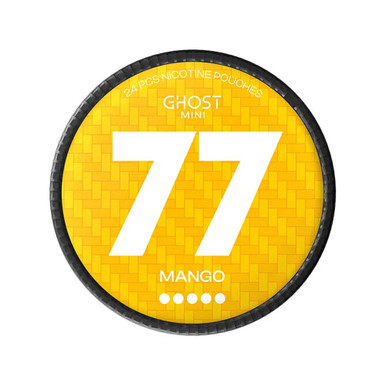
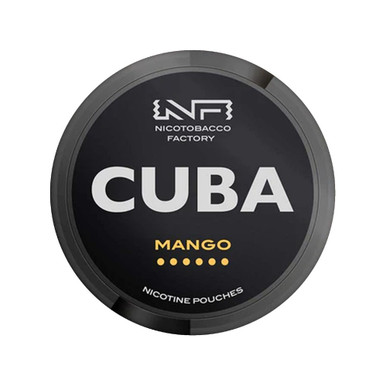
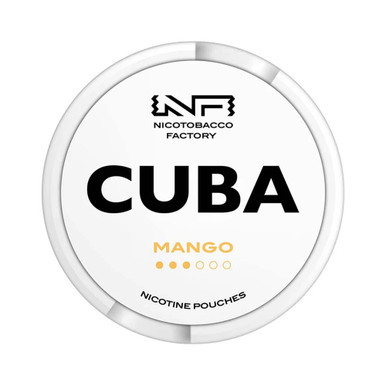
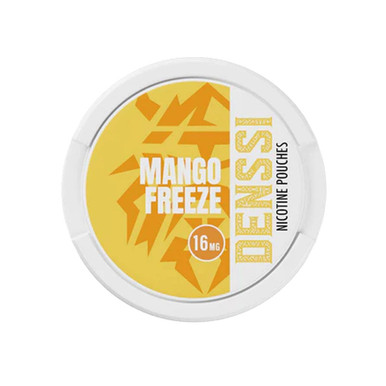
The same fruit, read differently. If mango is the thing you want and you simply want a second can of it, our mango shelf runs to sixteen listings and spans an unusually wide price range. At the top of it, the Cuba White mango can at £39.90 is in stock and comes from a range that tends to build fruit round and full rather than cold and angular. The Denssi mango freeze can, also £39.90 is in stock and is the closest thing on our shelves by name to this listing — same fruit, same cold framing, different manufacturer. The Killa mango ice can at £33.50 is in stock and sits in the extra strong band rather than the medium one, so it is a different proposition on the declared figure even though the flavour family matches. The Pablo mango ice listing at £3.85 is in stock and is the cheapest route to the same flavour family we have. The Fumi mango can at £27.90 is in stock and, judging by its name, is built with a warm edge rather than a cold one, which makes it the most distinct reading of the fruit on the shelf. The Edge mango listing at £14.95 would be the lowest-priced full-size mango we carry, but it is out of stock, so it is worth knowing about rather than worth clicking through to buy.
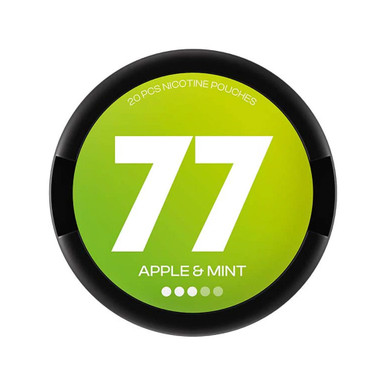
The cold without the fruit. The other obvious pairing is a straight cold can to alternate with a sweet one, because the contrast between the two is what keeps both of them registering. Klint's arctic mint at £36.90 is in stock and is a cold-first can in the way described earlier. The 77 apple mint can at £39.90 is in stock and sits halfway between the two directions — a cold can with a fruit note rather than a fruit can with a cold note, which is a genuinely different balance. The SYX apple kiwi listing at £29.90 is in stock and is the sharp, green, orchard-and-tropical option rather than a cold one, and it makes a good partner for mango precisely because both live in the same green-sharp territory without tasting alike.
Something completely away from it. The third approach is to keep a can that has nothing in common with your main one. The Nordic Spirit blueberry can at £4.49 is in stock and is about as far from a cold mango as the fruit shelves get — dark, soft, low on sharpness and low on cold. The name is a brand name and a flavour, and says nothing about where the product comes from. At the other end of the catalogue, the Pablo shelf and the Cuba shelf are the two ranges we carry with the broadest flavour spreads, and both are worth a browse if what you want is variety rather than a particular fruit.
One practical note on pairing. Keeping two cans on the go works best when the two are genuinely different on at least two of the four axes described earlier. Two sweet fruit cans an axis apart will blur into each other within a day. A sweet fruit can and a cold can will not.
Keeping a can in reasonable condition
These cans are simple to store and easy to spoil through inattention, and the failure mode is always the same: a can that has been left open or left warm goes dry, and a dry pouch loses the top of its flavour first. On a mango can that is a particular shame, because the green top note is the part that makes it specifically mango rather than generically tropical.
Three things matter. Keep the lid on. A can with the lid properly seated loses very little; a can left open on a desk overnight is noticeably flatter the next morning. Keep it out of direct heat. A windowsill in summer, a dashboard, a radiator shelf and a trouser pocket on a hot day are all worse than a drawer. Keep the catch compartment empty. Used pouches sitting in the top of the can stop the lid closing flush, which quietly undoes the first point.
Some people keep cans in a fridge. It is a common practice in this category and it does no harm, but it is not necessary for a can you are going to work through in a reasonable time, and a cold can taken straight out of a fridge can read differently for the first pouch or two. Whatever the manufacturer has printed on the can about storage takes precedence over anything on this page.
Keep cans, open or sealed, out of reach of children and pets. A can of pouches is small, brightly printed and easy for a child to open, and it should be stored on that basis rather than left in a coat pocket on a hook at hand height.
What there is to choose on this listing
Very little, which is worth stating plainly rather than manufacturing a decision.
There is one variant: 11mg at £19.99. There is no second strength, no multipack option and no flavour choice within the listing. Our record does not state how many cans £19.99 covers, so we cannot give you a per-can figure or compare the value against a multipack, and we are not going to estimate one.
And there is the overriding point that the variant that does exist is not currently purchasable. So the real decision on this page is not which version to pick — it is whether to note the product for later or to go and look at something on the 135-listing medium band that is in stock today. The comparison sections above are the honest answer to that question, and the mango and cold shelves are where most people arriving at this page will find what they were after.
Ordering, delivery and the check at the door
Since this can is out of stock, nothing in this section applies to it today. It applies to anything else you order from us, and it is written out in full because the age requirements are the part of buying from a shop like ours that people most often want stated clearly before they start.
We sell only to adults aged 18 or over who already use nicotine. An age verification step runs at checkout as part of the order process. It is not a formality and orders that fail it are not dispatched.
ID may be requested on delivery. If it is requested and an adult at the address cannot produce it, the delivery will not be completed. Carriers apply this at their own discretion, so it is sensible to assume it will happen rather than to be surprised by it. Deliveries of this category are not left with neighbours, not left in porches and not posted through doors on the basis that nobody was in.
Prices on this page are the prices on our listing at the time of writing, in pounds sterling. Delivery charges, timescales and any thresholds are set out at checkout and in our delivery information, not here, because they change and a product page is the wrong place to record something that changes.
Where this page sits in the site
Three shelves carry this listing, and they are the three routes back out of it.
By declared figure, it files under the medium band, our largest at 135 listings. By brand, it files under Rush, which holds twelve listings, all of them currently unavailable. By flavour, it files under mango, sixteen listings spanning from under four pounds to just under forty.
Above all of those sits the full catalogue, which is the right place to start if you are browsing rather than looking for something specific. If you are filtering by declared figure rather than flavour, the strong band and the extra strong band are the two shelves above this one in our own sorting, and the brand shelves for Cuba and Pablo are the two largest single-manufacturer collections we hold.
Questions we get about this can
Is it coming back into stock?
We do not know, and we would rather say that than imply a date we cannot stand behind. Our record marks this listing as out of stock and carries no expected restock date, no supplier ETA and no back-order flag. The same is true of every other Rush listing we hold. If a product page on any shop gives you a confident restock date with nothing behind it, treat it with suspicion; we are choosing not to do that here.
Can I order it anyway and wait?
No. There is no back-order or pre-order facility attached to this listing, and no waiting list you can join from this page. An out-of-stock listing on our site is exactly that — a page that exists so the product remains findable and comparable, not a checkout route. If you want something in the same flavour family today, the mango shelf and the cans named in the pairing section above include several that our record shows as available.
How strong is 11mg compared with other cans?
Numerically, 11mg sits in the band we label medium, which is the middle of the three strength shelves we sort by. That is a statement about how we file listings, not about how a can will be experienced. Two cans with the same declared figure can differ considerably because pouch size and flavour build differ. We cannot tell you which figure suits you — we do not have the information to, and it would not be our place. Your own experience of what you normally buy is the better guide.
What does "Pro" mean on the lid?
It is part of the product name. Rush uses a word at the end of several of its product names — Pro, Light, Extreme — to distinguish one can from another in its own catalogue. Our record does not carry a manufacturer statement explaining the convention, and we hold a declared strength figure only for this listing and not for the others, so we cannot translate those words into numbers. They are not levels, grades or stages, and nothing about them describes a sequence to move along.
Does the can have a mint flavour as well as mango?
Our record carries a single flavour classification for this listing: mango. The word "Freeze" in the product name indicates a cold register has been built into the flavour, which in this category usually means a cool character running alongside the fruit rather than a separate mint flavour. We hold no ingredient list and no manufacturer tasting note, so the can's own printed description is the only authoritative answer to what is in the flavour.
How many cans do I get for £19.99?
We do not hold that. Our listing records the price as £19.99 and carries nothing about pack quantity — no cans-per-pack figure at all. Some listings in our catalogue state a multipack quantity and some do not, and this one does not. We are not going to assume it is a single can or assume it is a roll, because either assumption could be wrong and both would mislead on price per can. The product packaging and the manufacturer's description are where that will be stated.
How long does one pouch last?
Commonly somewhere between twenty minutes and an hour, though the spread is wide and plenty of people sit outside it in both directions. It depends on the individual and on the can. The manufacturer prints guidance on the packaging and that is the authority; what we have given you is a description of common practice, not a recommendation about how long to keep one in.
Is there anything else on the site that is close to this?
By name, the nearest thing we list is the Denssi mango freeze can, which pairs the same fruit with the same cold framing at £39.90 and which our record shows as available. By flavour family and price, the Pablo mango ice listing at £3.85 and the Killa mango ice can at £33.50 are both in stock and both take mango in a cold direction, though the Killa sits in the extra strong band rather than the medium one. All three are linked in the pairing section above.
Do you know who makes Rush, or where?
No. Our record holds the brand name, the product name, the price, the declared strength, the flavour classification and the stock status, and nothing about the manufacturer, the company behind it or any place of origin. We do not publish that sort of detail unless it is in our record, and for this listing it is not. Anything printed on the can itself by the manufacturer is the authority.
Can I get a sample before committing?
We do not run a sampling scheme, and for this listing the question is academic in any case since there is nothing in stock to sample from. Where people want to try a flavour direction without committing much, the lower-priced listings in the same family are the usual route — the Pablo mango ice can at £3.85 and the Nordic Spirit blueberry can at £4.49 are the two cheapest in-stock cans linked from this page.
Why is an out-of-stock product still listed?
Because a catalogue is more useful with its gaps visible than with them hidden. Keeping the page up means the product stays findable, stays comparable against the cans that are available, and keeps its place on the brand and flavour shelves so those shelves reflect what the range actually contains. What matters is that the unavailability is stated plainly wherever it appears, which is what we have tried to do on this page and on every link out of it to another unavailable listing.
Compliance, age and the law
Nicotine is an addictive substance.
This product is sold only to adults aged 18 or over who already use nicotine, and on no other basis. We do not sell to anyone under 18. An age verification step operates at checkout, and ID may be requested on delivery — if it is requested and no adult at the address can produce it, the delivery will not be completed.
Rush Mango Freeze Pro Nicotine Pouches are not a licensed stop-smoking medicine and are not authorised or intended for any such purpose. This product is not intended for non-smokers, for anyone who does not already use nicotine, for anyone under 18, or for anyone who is pregnant or breastfeeding. Nothing on this page is medical advice, nothing on it is a recommendation of any particular strength for any person, and nothing on it should be read as encouragement to begin using nicotine.
Keep this product out of reach of children and pets, and put used pouches in general waste where they cannot be reached. Every factual detail on this page — name, brand, price, declared strength, flavour classification, variant list and stock status — comes from our product record for this listing. Where that record is empty, we have said so rather than estimating. The can and the manufacturer's own labelling are authoritative for anything printed on the packaging.
Last word
Rush Mango Freeze Pro is a medium-band mango can listed at £19.99 in a single declared strength of 11mg, with a cold register built over a sweet, moderately sharp fruit. It is out of stock, as is every other Rush can we list, so this page is a reference rather than a route to a basket. If you want the same fruit from something we can actually supply, the mango shelf has several in-stock options at every price point we cover; if you want the cold rather than the fruit, the mint-led cans linked above are the better direction. Everything we hold on this listing is on this page, and everything we do not hold has been marked as such.
More from Rush
More medium strength pouches
More mango pouches
Where this sits
Rush Mango Freeze Pro Nicotine Pouches appears in these categories. Browse them, or jump to something close.
You might also like